On This Day in Bulgaria

June in Bulgarian history

June runs from Botev Day on 2 June, when sirens sound across the country at noon for those who died for Bulgaria's freedom, to Enyovden on 24 June, the midsummer feast of herbs picked at dawn, and Petrovden on 29 June. Schools break up and the Black Sea season begins.

30 June dates, each printed in full below.

June at a glance

The June dates

June has no national public holiday. If you hear the sirens at noon on 2 June, stop for a moment: the people around you will.

  1. 1 June: A Football Match Nobody Remembers, Two Name Days, and Vratsa Throws a Party
  2. 2 June: Botev Day Honours the Poet-Revolutionary
  3. 3 June: Asen Karastoyanov Is Born, Operetta Master and Symphonist
  4. 4 June: The 2005 Croatia Match and Марта's Name Day
  5. 5 June: The Night the Eagles Learned to Fly
  6. 6 June: England Win 3-0 in Sofia, and a Bulgarian Decline Sets In
  7. 7 June: The 1908 Election, and Roses in Kazanlak
  8. 8 June: The Day Luxembourg Arrived in Sofia and Left with Eight Goals Against
  9. 9 June: The 1923 Coup That Toppled an Elected Government
  10. 10 June: The First Multi-Party Election in 59 Years
  11. 11 June: Bulgaria Beat Malta 2-0 in Sofia
  12. 12 June: Georgi Bogdanov, Revolutionary and Thessaloniki Bomber, Dies
  13. 13 June: Bulgaria v Israel, 1965
  14. 14 June: The 1913 Earthquake That Levelled Veliko Tarnovo
  15. 15 June: Bulgaria Beat Poland 4-1, and Three Name Days Quietly Go About Their Business
  16. 16 June: Bancho Banov, the Actor Who Also Graduated as a Doctor
  17. 17 June: An Exiled Tsar Wins a Landslide, Breaking 55 Years of Tradition
  18. 18 June: Rumen Radev Is Born, Flies MiG-29s, Becomes President, Then Prime Minister
  19. 19 June: Gancho Tsenov Is Born, and the Theory That Made Him an Outcast
  20. 20 June: Ivan Grigorov Is Born, and Three Forenames Celebrate
  21. 21 June: The Last Free Election for 59 Years
  22. 22 June: Ivan Shishmanov, the Scholar Who Helped Build a Nation
  23. 23 June: Maria Grozdeva, the Pistol Champion Who Kept Coming Back
  24. 24 June: Enyovden, Midsummer and a Crowd of Name Days
  25. 25 June: Dimitar Peshev, the Man Who Halted a Deportation
  26. 26 June: Cherven Bryag's Town Day and the Battle of Elena
  27. 27 June: Emanuil Vidinski, Writer, Poet and Ethno-Rock Musician
  28. 28 June: Nikola Kirov, the Ilinden Writer Two Nations Claim
  29. 29 June: Petrovden Name Days and the Death of Angel Wagenstein
  30. 30 June: The Composer Who Helped Build Bulgaria's Music Schools

1 June

A Football Match Nobody Remembers, Two Name Days, and Vratsa Throws a Party

Bulgaria's calendar today gives you a 1977 friendly match that left no mark on the national memory, two forenames celebrating, and the municipal day for a city that once minted the country's renegade governors. Here's what's worth knowing if you live here.

First published 1 June 2026 · Adrian Dane · 4 min read

A Football Match Nobody Remembers, Two Name Days, and Vratsa Throws a Party

What happened on this day

On 1 June 1977, Bulgaria's national football team played the Republic of Ireland in a friendly match. Wikipedia records it. The Bulgarian Football Union's archives presumably record it. Beyond that, the match has left almost no trace in the national memory, which tells you everything you need to know about its significance.

Bulgaria's footballing golden era came later, the late 1980s and the 1994 World Cup semi-final run, when Hristo Stoichkov and the rest turned Bulgarian football into something approaching a religion. A 1977 friendly against Ireland, played between two middling European sides in the depths of the Cold War, was the kind of match that fills fixture lists and empties quickly from public memory. No dramatic result survives in the common record, no legendary goal, no controversy that made the sports pages stick.

For context: Bulgaria qualified for the 1974 World Cup but went out in the group stage; Ireland didn't qualify for a World Cup until 1990. The 1977 fixture was the kind of game both sides used to test squad depth and give fringe players international caps. Worth mentioning if you're the kind of expat who enjoys obscure football trivia over a beer, utterly skippable otherwise.

Today's name days

Yustinian and Yustina celebrate today. The names trace back to the Latin Justinianus, tied to the Byzantine emperor Justinian I, who reigned in the 6th century and left his mark across the Balkans through military campaigns, legal reforms, and the construction of fortresses that still stand in modern Bulgaria. The names carry a whiff of imperial grandeur, though they're relatively rare in contemporary Bulgaria compared to the big hitters like Ivan or Elena.

If you know a Yustinian or Yustina, today is the day they expect a call, a visit, or at minimum a "честит имен ден" (chesh-TEET ee-MEN den). The golden rule: never arrive empty-handed. A box of banitsa from any decent bakery, a bottle of wine, or flowers in odd numbers (never even) covers the etiquette. The Bulgarian name-days guide has the full calendar and the saint origin stories if you want the deeper lore.

Vratsa celebrates today

Vratsa, population around 57,000, sits in the northwest roughly 120 kilometres from Sofia, pressed against the dramatic limestone cliffs of the Vratsa Balkan range. The cliffs loom over the city like a natural fortress, which is fitting because Vratsa's history is a long catalogue of rebellion, defiance, and producing governors who made Sofia nervous.

The city's name comes from vrata, meaning gate or door, a reference to the mountain passes that made it a strategic chokepoint for centuries. During Ottoman rule, Vratsa was a major administrative and trade hub, and the National Revival period turned it into a hotbed of revolutionary fervour. The poet and revolutionary Hristo Botev died near Vratsa in 1876 leading a rebel detachment, and the city has never let anyone forget it. The Botev monument, the museum, the annual commemorations, they're all central to Vratsa's identity.

Vratsa's other claim to fame: Ledenika Cave, one of Bulgaria's most visited show caves, a ten-kilometre network of limestone chambers and underground rivers lit for tourists. If you're driving through the region, it's worth the detour. The city itself has a pleasant Revival-era quarter, a solid regional museum, and a reputation for producing some of Bulgaria's most stubborn local politicians, a trait locals wear with pride.

Why this matters for British expats

Vratsa's municipal day will involve speeches, possibly a fair in the central square, maybe fireworks in the evening, but unless you're planning a day trip northwest, it won't touch your routine.

The value here is cultural literacy. Vratsa is one of those cities that punches above its weight in Bulgarian national consciousness, the kind of place where locals will gently correct you if you confuse it with Vidin or mistake it for just another regional town. Knowing that Vratsa celebrates today, that it's the city where Botev died, that the limestone cliffs behind it are a natural landmark visible for miles, these are the details that signal you've been paying attention.

If you're the kind of expat who enjoys tying Bulgarian geography to its revolutionary history, Vratsa is a textbook case. The city sat on the edge of Ottoman administrative reach, close enough to Serbia and Wallachia that rebels could slip across borders when the authorities came looking. That proximity shaped everything: the local character, the dialect, the reflexive distrust of central authority that still colours regional politics today. It's the kind of knowledge that earns you a nod of respect over coffee.

Sources and further reading

Details for Vratsa draw on the city's English Wikipedia entry, which covers its history, the Botev connection, and Ledenika Cave. The 1977 football match detail comes from Wikipedia's structured sports-event records, though the match itself has left almost no trace in the Bulgarian or Irish national football memory. Name-day details follow the standard Bulgarian cultural calendar.
Questions about 1 June

Who was playing in the Bulgaria v Republic of Ireland match on 1 June 1977?

Bulgaria's national football team played the Republic of Ireland in a friendly match. No detailed record of the result, the lineup, or any memorable moments survives in the common public memory, which suggests it was a routine fixture between two mid-tier European sides during the Cold War era.

What should I bring if I'm invited to a Yustinian or Yustina name-day lunch?

Never arrive empty-handed. A box of banitsa, a cake from any decent bakery, a bottle of wine, or flowers in odd numbers (never even) are all acceptable. The gesture matters more than the expense.

Is there anything to see in Vratsa today?

Vratsa will likely hold speeches and possibly a fair in the central square for its municipal day. Any other day is fine for visiting Ledenika Cave, the Botev museum, or the Revival-era quarter. The city is worth a day trip if you're interested in Bulgarian revolutionary history and dramatic limestone scenery.

Sources for 1 June

Back to the June dates

2 June

Botev Day Honours the Poet-Revolutionary

2 June is Bulgaria's most solemn national remembrance day. Sirens sound at noon, the entire country stops, and every Bulgarian old enough to have been through primary school can recite at least one Botev poem from memory. Here's what British expats need to know.

First published 2 June 2026 · Adrian Dane · 6 min read

Botev Day Honours the Poet-Revolutionary

At noon today, sirens will sound across every Bulgarian town and village. Traffic stops. People stand. The entire country observes a minute of silence. If you're new here and you hear the wail, don't panic, it's not an air raid or a flood warning, it's Botev Day, the country's most solemn national remembrance.

2 June is the day Bulgaria honours Hristo Botev, who was killed on 1 June 1876 (20 May Old Style). He was 28, leading a small rebel detachment against Ottoman forces near the summit of Vola in the Balkan mountains. A single bullet to the chest ended one of the shortest and most mythologised military campaigns in Bulgarian history. Within a generation his poems had been canonised in the school curriculum, and within two he'd become the kind of cultural monument the British reserve for Wilfred Owen or Rupert Brooke, the poet who died for the cause he wrote about.

Who was Hristo Botev?

Botev was born in Kalofer in 1848, a small town in the Karlovo valley that now treats his memory with the kind of civic pride other places reserve for their football teams. His father was a schoolteacher, one of the National Revival figures who believed education was the path to liberation. Botev inherited the idealism and skipped straight to the armed-struggle conclusion.

He spent most of his twenties in exile, teaching, writing, editing revolutionary newspapers in Romania and Russia, and planning an insurrection he knew was probably doomed. His poems from this period are short, furious, and melodramatic in exactly the way that works on teenagers. Every Bulgarian over 35 can recite at least two stanzas of "Моята молитва" ("My Prayer") or "Хайдути" ("The Outlaws") without prompting. The lines have the rhythm of folk songs and the intensity of someone who knew he wasn't going to make it to thirty.

In May 1876, when the April Uprising was already being crushed by Ottoman forces, Botev and about 200 volunteers hijacked an Austrian steamship on the Danube, crossed into Bulgaria near Kozloduy, and marched south into the mountains. The plan was to link up with other rebel bands. The reality was three days of skirmishes, dwindling supplies, and Ottoman regulars closing in from several directions. Near the peak of Vola, Botev was shot. Accounts differ on whether it was a sniper, a stray bullet, or friendly fire. The detachment scattered; most were killed or captured within the week.

The campaign achieved nothing militarily. Two years later, the Russian army did what Botev's 200 couldn't. But his death at 28, leading a hopeless charge, turned him into the kind of martyr-poet every national liberation movement dreams of: young, brilliant, tragic, and permanently frozen at the moment of maximum sacrifice.

Kalofer's role today

Kalofer is where the main national ceremony happens every 2 June. The town's population is around 2,200, but on Botev Day it swells with politicians, military delegations, school groups, and families making a pilgrimage. Wreaths are laid at the Hristo Botev monument in the town centre, speeches are given, and the entire event is broadcast live on national television. If you've ever seen footage of a British Remembrance Sunday ceremony at the Cenotaph, the tone is similar: formal, respectful, heavy on the symbolism.

The town also runs the Hristo Botev Museum, which occupies his childhood home. It's a modest National Revival house with wooden ceilings, period furniture, and a permanent exhibition of his manuscripts, letters, and personal effects. If you're the kind of expat who enjoys cultural-literacy field trips, it's worth the visit. The museum is open year-round, though obviously 2 June is not the day to show up hoping for a quiet browse.

Shabla's municipal day

Shabla, up on the Black Sea coast near the Romanian border, also celebrates its municipal day on 2 June. The town's population is around 3,200, and it's best known for two things: the Shabla lighthouse, the oldest functioning lighthouse on Bulgaria's Black Sea coast (built 1856), and the Shabla Lake complex, a cluster of coastal freshwater lakes that are a major bird migration stopover.

Shabla's 2 June celebrations are smaller and more local than Kalofer's, usually a municipal council ceremony, some folk music, and a fair in the town square. If you're up on the northern coast and curious, it's a pleasant detour. The lighthouse is worth the visit in its own right: 36 metres tall, white stone, still operational, and offering views across to Cape Kaliakra on a clear day.

Why this matters for British expats

Botev Day is not a day off, but at noon the entire country observes a minute of silence. Banks, government offices, and schools will mark the moment. If you're in a supermarket at noon, the tills will pause. If you're on a Shumen street, traffic will stop. The siren is a long, rising wail that lasts about 30 seconds before the minute of silence kicks in. First-timers often mistake it for an emergency alert; by your second June here, you'll know to just stand still and wait it out.

There are no road closures in Shumen itself, no processions, no disruption to your normal errands. But if you're planning a day trip to Kalofer or anywhere in the Karlovo valley, expect heavy traffic and limited parking. The main ceremony draws thousands, and the roads into the town are narrow mountain routes that don't love coach traffic.

The cultural weight of the day is significant. Botev sits at the intersection of literature, national identity, and the liberation narrative, which means he's one of the untouchable figures in Bulgarian public life. Streets, schools, stadiums, and mountain peaks carry his name. The currency used to feature his face. Criticising him in polite company would be roughly equivalent to standing up in a British pub on Remembrance Sunday and questioning whether the poppy appeal is worth it. You'd get a reaction.

For British expats, the immediate takeaway is knowing when to stand still at noon, and recognising that the poems your Bulgarian colleagues half-remember from school are not just nationalist nostalgia but the foundation text of modern Bulgarian identity. Botev's lines about freedom, sacrifice, and the mountains are the emotional shorthand the country uses to talk about itself. Knowing one or two of them exist, even if you never read the translations, signals you're engaging with more than just the admin side of living here.

For more of the practical picture, see the Shumen.UK health guide.

Sources and further reading

The Bulgarian Wikipedia entry on Hristo Botev and the English Wikipedia article offer comprehensive biographical detail and context on the April Uprising. The Kalofer museum's exhibition catalogue and regional municipal listings confirm the town's central role in the annual commemoration. Details on Shabla draw from the town's official tourism material and the broader Black Sea coastal heritage register.

Questions about 2 June

Is 2 June a public holiday in Bulgaria?

No. It's a national day of remembrance, but not a non-working public holiday. Banks, offices, and shops operate as normal, though most observe the minute of silence at noon.

Who was Hristo Botev?

Hristo Botev was a poet and revolutionary born in Kalofer in 1848. He spent his twenties in exile writing incendiary poems and planning an uprising against Ottoman rule. He was killed in June 1876 leading a small rebel band in the Balkan mountains. His poems are now core curriculum in Bulgarian schools.

What happens at noon on Botev Day?

Sirens sound across the country at noon, and everyone stops for a minute of silence. Traffic halts, people stand, shops pause. It's the most universally observed moment in the Bulgarian calendar.
Should I visit Kalofer on 2 June?

Only if you're comfortable with crowds and formal ceremonies. The town hosts the main national commemoration, which draws thousands. Parking is difficult, roads are busy, and the tone is solemn. Any other day of the year is better for a relaxed museum visit.

Sources for 2 June

Back to the June dates

3 June

Asen Karastoyanov Is Born, Operetta Master and Symphonist

3 June 1893: the day Bulgaria gained a composer who would shape the country's operetta tradition, write four symphonies, and teach generations at the State Music Academy. Here's what you need to know about the man whose marching songs once soundtracked the post-war years, and why his name still anchors Sofia's classical-music landscape.

First published 3 June 2026 · Adrian Dane · 5 min read

Asen Karastoyanov Is Born, Operetta Master and Symphonist

Composers rarely get the statues or the street names, but they build the soundtrack everyone else hums without noticing. Asen Karastoyanov was born on 3 June 1893 in Samokov, a town best known today for its carpets and its proximity to Rila. By the time he died in 1976, he had written five operettas, four symphonies, a flute concerto, and a body of mass songs that became the unofficial soundtrack of post-1944 Bulgaria. Literary critics get monuments if they're lucky; composers get their works performed for decades and their names attached to conservatoire textbooks.

What happened on this day

Karastoyanov came from a civil-service family in Samokov, the kind of household where a musical education was encouraged but not assumed. He studied flute from 1914 to 1918 at the Music School in Sofia, under Nikola Stefanov, then continued at the Berlin Higher Music School (1921–1922) studying flute with E. Prill and harmony with P. Juon. The real formative period came in Paris (1930–1931), where he studied composition at the École Normale de Musique under Paul Dukas, the composer of The Sorcerer's Apprentice, and counterpoint at the Schola Cantorum under Paul Le Flem. In 1932 he added a final polish at the Leipzig Conservatory, studying music theory and composition with Günter Raphael.

That European training gave him the technical scaffolding, but the geography of his career between 1923 and 1929 shaped his ear. He conducted wind and symphonic orchestras in Asenovgrad and Pernik, two industrial towns where the audience wanted marches, folk-infused dances, and the occasional ambitious symphonic programme. The operettas that followed in the late 1930s and early 1940s reflect that dual register: rooted in Bulgarian folk melody, structured with the harmonic vocabulary of French and German conservatoires.

From 1933 onwards, Karastoyanov taught music theory at the State Music Academy in Sofia. He received a professorship in 1945 and spent the next three decades shaping the theoretical grounding of Bulgarian composers, conductors, and instrumentalists. His textbooks on harmony, counterpoint, and the harmonic foundations of Bulgarian folk song became standard issue. Students who went through the Academy between the 1940s and 1970s studied Karastoyanov's harmony exercises whether they knew his operettas or not.

His operettas were the popular successes: "Ai Zavalyo Ahmed" (1937), "Aman Be, Hasan!" (also known as "Elixir for Rejuvenation", 1938), "The Wedding of Shahrizad" (1940), "Mikhail Strogov" (1941), and "Bulgarians from Old Times" (1959). After 1944, his mass songs, particularly the "Brigade Songs", became fixtures of state cultural events. The symphonic output was less visible to the wider public but represents the other half of his ambition: four symphonies ("The Miner", "The Danube", "The Rhodope", "The Proto-Bulgarian"), a symphonic poem on Yoan Kukuzel (the medieval Byzantine composer), suites drawing on Bulgarian regional music, and concertos for flute, cello, and violin.

He received multiple national honours and orders, the kind of institutional recognition the Bulgarian state reserved for composers who successfully balanced folk authenticity with formal sophistication. He died in Sofia in 1976. The archive of his work lives at the Union of Bulgarian Composers and in the repertoires of Bulgarian orchestras, where his suites and concertos still appear on programmes.

Why this matters for British expats

But if you've ever sat through a Bulgarian orchestral concert, attended a folk-festival programme with a symphonic component, or noticed the name Karastoyanov on a conservatoire building plaque, today is the day that name anchors to a biography. Karastoyanov's operettas are still performed by Bulgarian theatre companies, particularly the lighter pieces like "Aman Be, Hasan!" which remains a crowd-pleaser. His four symphonies, while less famous internationally than the operettas, represent the serious ambition of mid-20th-century Bulgarian classical composition: the attempt to forge a national symphonic voice without abandoning European formal rigour.

For British expats, the immediate cultural-literacy value is this: Karastoyanov is the kind of composer whose name comes up in Bulgarian cultural conversations with a quiet assumption that you'll know who he is. He's not in the Shakespeare-reverence tier (that's reserved for poets like Vazov and Botev), but he sits comfortably in the second rank: the figures whose work shaped the country's cultural infrastructure without becoming global export products. Knowing that 3 June is his birthday, that he studied under Dukas in Paris, and that his operettas are still performed today is the kind of localized knowledge that earns you a nod of respect over coffee. It shows you are engaging with the country's artistic fabric.

If you're planning to attend a classical concert in Sofia, Plovdiv, or Varna this year, there's a reasonable chance you'll encounter one of Karastoyanov's orchestral suites or his flute concerto. The Bulgarian cultural calendar occasionally features anniversary concerts marking the birthdays of major composers; 2026 marks 133 years since his birth, which won't trigger a major festival but might prompt a radio programme or a conservatoire recital.

The State Music Academy where he taught for over four decades is still the country's primary training ground for classical musicians. Walk past it in Sofia and you're walking past the building where Karastoyanov spent most of his professional life drilling harmony exercises into students who went on to become Bulgaria's mid-to-late 20th-century compositional establishment. His textbooks on counterpoint and polyphonic harmony remain in use, translated into Russian in the 1960s when Bulgarian music pedagogy had a brief moment of regional influence.

The broader takeaway: Bulgaria's classical-music tradition is a quiet presence in the country's cultural life, overshadowed internationally by folk music and chalga but institutionally robust. Karastoyanov is one of the architects of that tradition, the composer who bridged the gap between pre-war European training and post-war socialist-state cultural policy without losing either his folk roots or his formal sophistication.

If this is your kind of context, the Shumen guide on Shumen.UK is the natural next read.

Sources and further reading

Biographical details and the catalogue of Karastoyanov's works are drawn from the Bulgarian Wikipedia biography, which lists his European training, his teaching career, and the full range of his compositions from operettas to symphonies. The Union of Bulgarian Composers maintains an online archive of his life and work. Evgeni Pavlov's 1979 monograph "Asen Karastoyanov" (published in Sofia) remains the standard biographical study.

Questions about 3 June

Who was Asen Karastoyanov?

Asen Karastoyanov (1893–1976) was a Bulgarian composer, conductor, and music pedagogue. He studied flute, harmony, and composition in Sofia, Berlin, Paris, and Leipzig, then spent over forty years teaching music theory at the State Music Academy in Sofia. He wrote five operettas, four symphonies, concertos for flute and cello, and a body of mass songs that became widely performed in post-1944 Bulgaria. His textbooks on harmony and counterpoint remain standard references in Bulgarian music education.

Are Karastoyanov's works still performed today?

Yes. His operettas, particularly "Aman Be, Hasan!" and "Bulgarians from Old Times", are still staged by Bulgarian theatre companies. His orchestral suites and concertos appear on classical-concert programmes in Sofia, Plovdiv, and Varna. The flute concerto is a repertoire piece for Bulgarian flautists. His mass songs, while less prominent now than in the immediate post-war decades, are occasionally revived for commemorative concerts.

Is 3 June a public holiday in Bulgaria?

No. 3 June is an ordinary working day. Banks, government offices, and schools operate on normal Wednesday hours. The date marks Karastoyanov's birth and may prompt a commemorative concert or radio programme in anniversary years, but it carries no official public-holiday status.

Where can I hear Karastoyanov's music if I'm in Bulgaria?

The Bulgarian National Radio archives hold recordings of his symphonies and operettas, available online. Classical-concert programmes in Sofia (particularly at the Bulgaria Hall and the State Opera) occasionally feature his orchestral suites. The State Music Academy sometimes stages student performances of his chamber works. Check the Bulgarian cultural calendar or the Union of Bulgarian Composers website for upcoming events.

Sources for 3 June

Back to the June dates

4 June

The 2005 Croatia Match and Марта's Name Day

Bulgaria's calendar today gives you a World Cup qualifier that still stings slightly and one forename celebrating. Here's what you need to know if you live here.

First published 4 June 2026 · Adrian Dane · 4 min read

The 2005 Croatia Match and Марта's Name Day

What happened on this day

4 June 2005 is not a date most Bulgarian football fans revisit fondly. Bulgaria faced Croatia at the Vasil Levski National Stadium in Sofia in a 2006 FIFA World Cup qualifier, and lost 3-0. The defeat came midway through a qualification campaign that never quite found its rhythm. Bulgaria finished fourth in their group behind Croatia, Sweden and Iceland, missing out on both automatic qualification and the playoff spots.

The 2005 match was part of the post-Hristo-Stoichkov era, when the national team was navigating the gap between its golden generation of the 1990s (USA '94 semi-finalists, a team that still occupies an almost mythical place in Bulgarian sporting memory) and whatever came next. The Croatia fixture arrived at a moment when expectations were being quietly downgraded and the phrase "rebuilding phase" was doing a lot of editorial work in the Bulgarian sports press.

Bulgaria's World Cup qualification record since 1998 tells the story plainly: the country has not appeared at a World Cup finals tournament since France '98. The 2005 Croatia match sits in the middle of that long absence, neither the beginning of the drought nor its low point, just one more disappointing result in a campaign that confirmed Bulgaria would be watching the 2006 tournament from home.

For British expats who follow football, the comparison that lands hardest is this: imagine England not qualifying for a World Cup for nearly three decades straight, and you'll understand the weight the '94 semi-final still carries in Bulgaria. Every subsequent qualification cycle is measured against that peak, and every failure deepens the nostalgia.

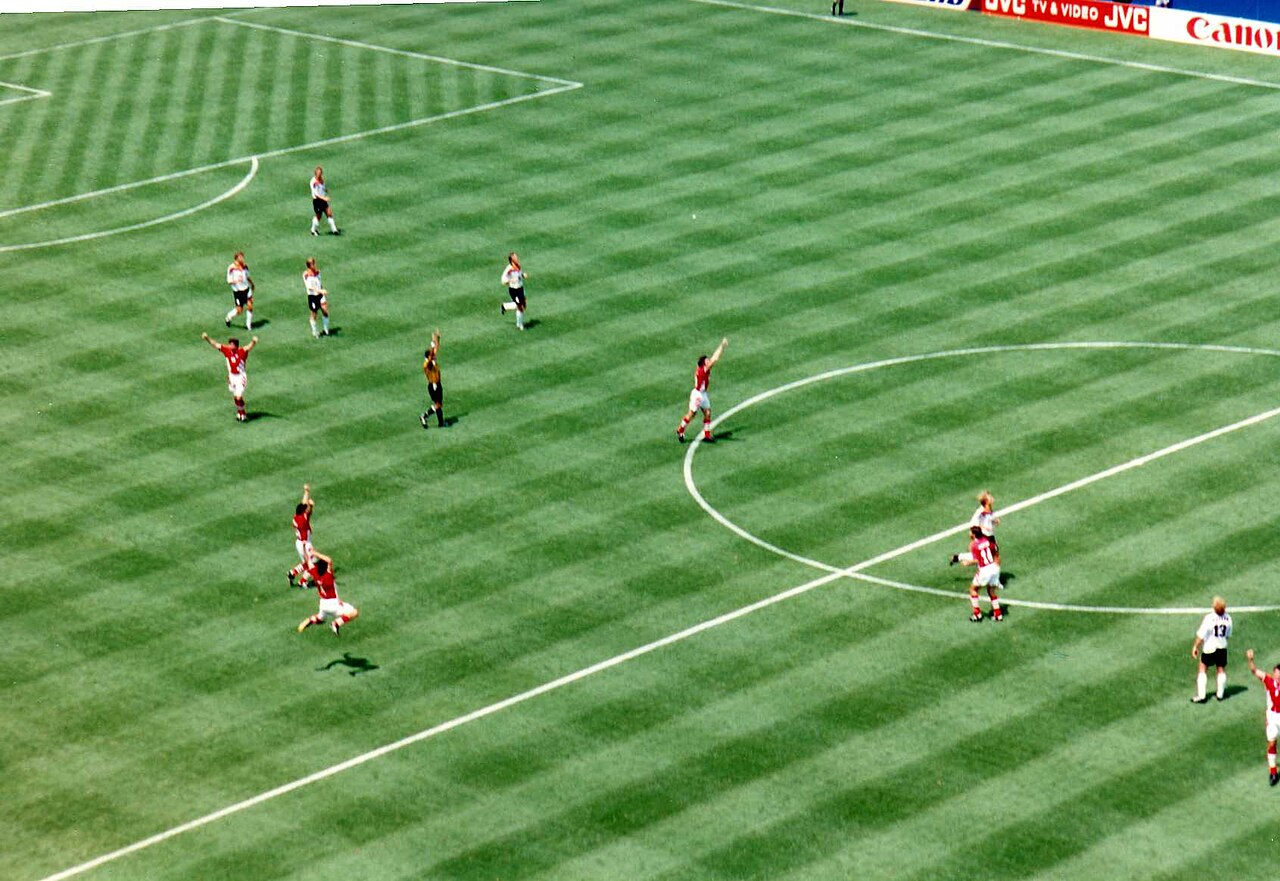
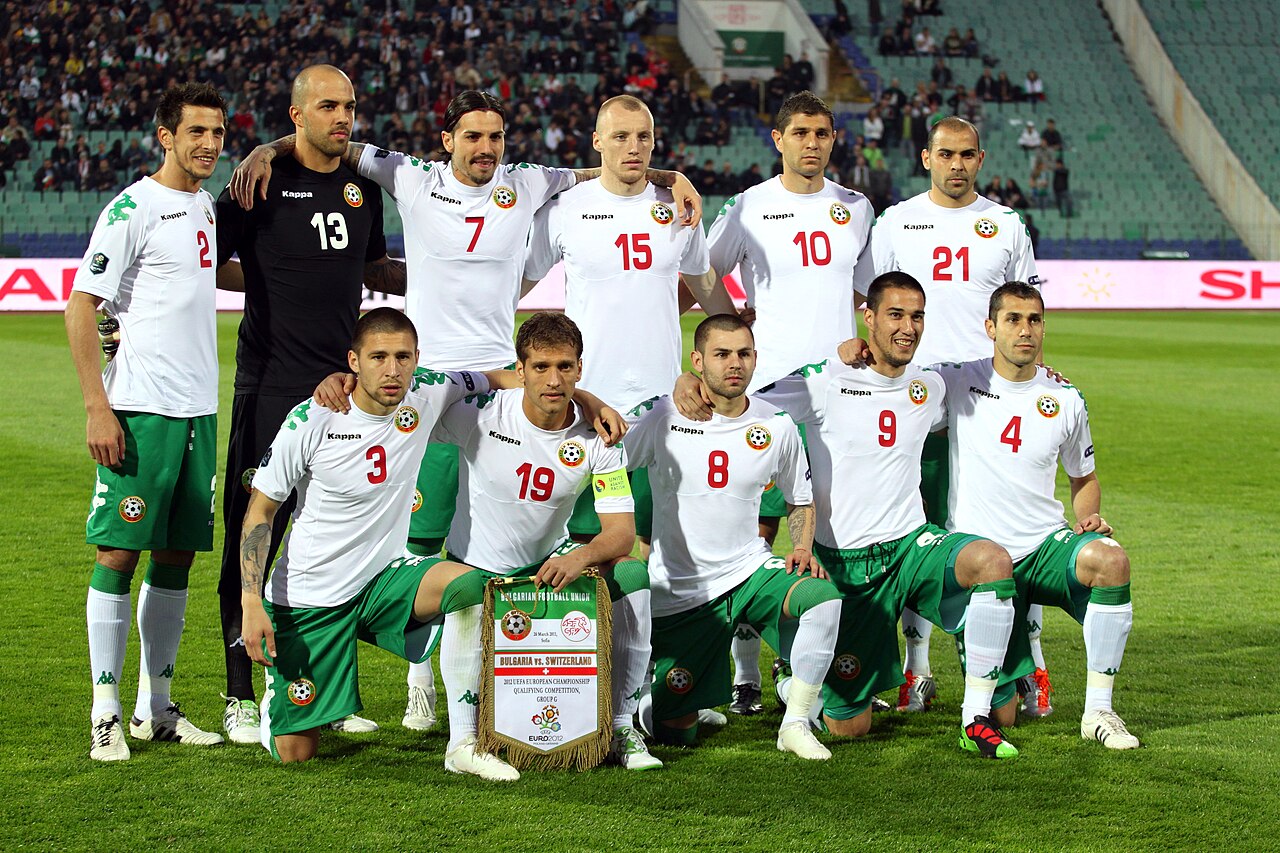
The Bulgarian national team during the 2006 World Cup qualification campaign
The Bulgarian national team during the 2006 World Cup qualification campaign. Photograph via Wikimedia Commons.

Today's name day

Марта (MAR-ta) celebrates today, honouring Saint Martha the Righteous, the sister of Lazarus and Mary of Bethany in the New Testament. Martha is traditionally the patron saint of housewives, cooks and servants, remembered for her hospitality when Jesus visited her home. The name appears less frequently than Мария or Елена in contemporary Bulgaria, making today a quieter name-day occasion, but for the Martas who do celebrate, the etiquette is the same as any other name day.

The golden rule for British expats invited to a Marta's lunch or coffee today: never arrive empty-handed. A cake from any decent bakery, banitsa from the market, chocolate, or flowers in odd numbers will all work. Even-numbered flowers are reserved for funerals, so count before you hand them over. If you're genuinely caught off-guard and shops are shut, a bottle of wine is a universally acceptable fallback.

The Bulgarian name-days guide has the full list of saints' origins and greeting etiquette. The standard phrase is "честит имен ден" (chesh-TEET ee-MEN den), which translates as "happy name day" and covers every situation from a formal office greeting to a text message to a colleague.

Why this matters for British expats

The 2005 football match matters culturally in a way that's invisible unless you've spent time around Bulgarian men of a certain age. The 1994 World Cup semi-final against Italy is the high-water mark of modern Bulgarian sport, the kind of result that gets replayed on national television every few years and referenced in toasts at weddings. Every qualification campaign since has been measured against that peak, and every failure (2005 included) reinforces the sense that Bulgarian football is living in the long shadow of its own greatest moment.

If you're the kind of expat who enjoys understanding the cultural subtext of a conversation, knowing that Bulgaria hasn't qualified for a World Cup since 1998 is the kind of fact that earns you a quiet moment of respect when football comes up over coffee. It shows you have grasped one of the defining disappointments of the past quarter-century of Bulgarian public life. The subject comes up more often than you'd think, usually framed as a contrast with the heroic past rather than a straightforward lament about the present.

For Martas celebrating today, the practical takeaway is simple: if your colleague, neighbour or landlord is called Marta, acknowledge it. A quick "честит имен ден" and a pastry or a box of chocolates will be remembered longer than you expect. Name days are low-stakes social rituals, but they're rituals nonetheless, and getting them right earns goodwill.

Sources and further reading

Details for the 2005 World Cup qualifier draw on publicly available match records from the 2006 FIFA World Cup European qualification campaign. Bulgaria's national team history and the 1994 World Cup context are standard reference points in Bulgarian sports coverage, widely documented across the Bulgarian name-days guide for Saint Martha and contemporary name-day etiquette. The immediate practical information (bank hours, government office schedules, school terms) reflects the standard Bulgarian weekday calendar for early June.

Questions about 4 June

What should I bring if I'm invited to a Marta's name-day lunch?

Never arrive empty-handed. A cake or banitsa from a local bakery, a box of chocolates, or flowers in odd numbers are all acceptable. Even-numbered flowers are for funerals only in Bulgarian tradition.

Is the 2005 Bulgaria v Croatia match still talked about?

Not specifically, no. The match itself is a footnote in a disappointing qualification campaign. What gets talked about is the broader pattern: Bulgaria hasn't qualified for a World Cup since 1998, and the 1994 semi-final remains the defining peak of modern Bulgarian football.

How do I pronounce the name-day greeting?

"Честит имен ден" is pronounced chesh-TEET ee-MEN den. It translates as "happy name day" and works in any context, from a formal office greeting to a text message.

Sources for 4 June

Back to the June dates

5 June

The Night the Eagles Learned to Fly

Four years ago today, Bulgaria beat Georgia 5-2 in their best attacking performance in nearly a decade. Here's why that match still matters, and what it tells you about Bulgarian football if you're trying to understand the sport here.

First published 5 June 2026 · Adrian Dane · 4 min read

The Night the Eagles Learned to Fly

What happened on this day

On 5 June 2022, in the Boris Paichadze Dinamo Arena in Tbilisi, Bulgaria's national football team put five past Georgia in a UEFA Nations League match that ended 5-2. Kiril Despodov scored twice, Todor Nedelev added another two, and Atanas Iliev sealed the rout with a fifth. Georgia pulled two back late but by then the damage was done.

The scoreline matters because Bulgaria's national team, the Eagles (Лъвовете, though technically "the Lions" in Bulgarian), had been in a years-long slump. Their previous five-goal competitive haul came in 2013 against Malta, a team ranked well below them. By 2022, Bulgaria sat 75th in the FIFA rankings, Georgia 86th. This was a rare night when the team looked like it remembered how to attack.

The match was part of the UEFA Nations League C group stage, a competition designed for Europe's mid-tier nations. Bulgaria finished second in the group behind North Macedonia, which tells you something about the level. But for one evening in Tbilisi, under hostile away-crowd pressure, the Eagles played with the kind of verve Bulgarian football fans had nearly forgotten existed.

The broader context is sobering: Bulgaria qualified for seven World Cups between 1962 and 1998, reaching the semi-finals in 1994 (losing to Italy 2-1). Since then, the national team has failed to qualify for a major tournament. The 2022 Georgia match sits inside that long drought as a brief, tantalising glimpse of what attacking football looks like when it works.

The Vasil Levski National Stadium in Sofia, home ground of the Bulgarian national team
The Vasil Levski National Stadium in Sofia, home ground of the Bulgarian national team. Photograph via Wikimedia Commons.

Why this matters for British expats

If you live in Bulgaria and wonder why football here occupies such a strange cultural space, simultaneously beloved and bitterly disappointing, the 2022 Georgia match is the kind of result that frames the tension. British expats arrive expecting football culture to resemble what they know from the Premier League or even lower-league England: packed stadiums, chanting supporters, a reliable sense of local pride. What you get instead is a national team that occasionally dazzles, then vanishes back into mediocrity for years at a stretch.

Most Bulgarian men over 30 remember exactly where they were when Hristo Stoichkov put Bulgaria into the 1994 World Cup semi-finals. The Georgia match doesn't carry that weight, but it's part of the same conversation: fleeting moments of brilliance in a landscape of missed opportunities.

The match also illustrates why Bulgarian football remains a niche interest for British expats unless you actively seek it out. The Bulgarian sport calendar lists major football fixtures, but attending a match at the Vasil Levski National Stadium in Sofia (capacity 43,000, rarely more than half full) feels less like the tribal intensity of English football and more like a regional League Two fixture with better weather.

For expats who follow the sport, the practical takeaway is simple: Bulgarian football is a study in underachievement. The talent exists, Kiril Despodov now plays for CSKA Sofia and is one of the league's standout attackers, but the national team remains stuck in a cycle of managerial changes, federation politics, and structural underfunding. Knowing that the 2022 Georgia match was an outlier, not a turning point, prepares you for the reality of Bulgarian football better than any optimistic headline would.

The 1994 semi-final run still shapes how Bulgarians talk about the sport: it's the benchmark, the moment when the country proved it could compete at the highest level, and the shadow that every subsequent generation plays under. The Georgia match was a reminder that the capacity for brilliance hasn't disappeared entirely. It's just rare, fleeting, and four years ago already feels like ancient history in a country still waiting for the next golden generation.

Sources and further reading

Details of the match draw on the official UEFA Nations League records and contemporary match reports. Bulgaria's broader football history and the 1994 World Cup context are well-documented across the Bulgarian sport calendar and international football archives. The Vasil Levski National Stadium remains the home ground for the national team, and tickets for matches are available through the Bulgarian Football Union's official channels, though advance planning is rarely necessary given typical attendance levels.

Questions about 5 June

Is Bulgarian football popular with British expats?

Not particularly. Most British expats in Bulgaria follow the Premier League via streaming rather than local football. Bulgarian league matches and national team fixtures draw smaller crowds than equivalent English games, and the atmosphere is quieter. If you're a serious football fan, attending a match at the Vasil Levski Stadium is worth doing once for the experience, but it's not a substitute for what you're used to back home.

Who is Kiril Despodov?

Kiril Despodov is one of Bulgaria's most talented current attacking players. He scored twice in the 2022 Georgia match and plays for CSKA Sofia in the Bulgarian top division. He's the kind of player who occasionally lights up a match but has struggled to translate domestic form into consistent national-team success. Bulgarian football fans will know his name; most British expats won't unless they follow the local league closely.

Why does Bulgaria struggle in international football?

A combination of structural underfunding, federation politics, and a lack of youth development infrastructure. Bulgaria's 1994 World Cup semi-final run was built on a golden generation that included Hristo Stoichkov, but since then the national team has failed to qualify for any major tournament. The domestic league is weak compared to Western European standards, and most top Bulgarian players leave for better leagues abroad early in their careers.

Can I watch Bulgaria matches in Shumen?

Yes, but you'll need to check which local pubs show Bulgarian national team matches. The games are broadcast on Bulgarian television (usually bTV or Nova), and most sports bars will have them on if there's enough demand. For big matches, the Vasil Levski Stadium in Sofia is the venue, but tickets are rarely sold out and can be bought on the day.

Sources for 5 June

Back to the June dates

6 June

England Win 3-0 in Sofia, and a Bulgarian Decline Sets In

On 6 June 1979, at the Vasil Levski Stadium in Sofia, England beat Bulgaria 3-0 in a European Championship qualifier, a comfortable away win on the road to Euro 1980 and a chastening night for a Bulgarian side already well past its 1960s peak.

First published 6 June 2026 · Adrian Dane · 4 min read

England Win 3-0 in Sofia, and a Bulgarian Decline Sets In

What happened on this day

On 6 June 1979, at the Vasil Levski Stadium in Sofia, England beat Bulgaria 3-0 in a European Championship qualifier. Kevin Keegan opened the scoring before half time and England added two more after the break, a comfortable away win in front of a subdued home crowd.

The result kept England firmly on course to win their qualifying group and reach the 1980 European Championship finals in Italy, which they duly did. For Ron Greenwood, who had taken over from Don Revie in 1977, it was a satisfying night on the road: a clean sheet, three goals, and no fuss against a side England were expected to beat.

For Bulgaria it was the opposite. The team that had reached the latter stages of the World Cup in the 1960s, built around the great Georgi Asparuhov, was a fading force by the end of the 1970s. They would finish bottom of the qualifying group and miss out on Italy. The Sofia defeat was less a single bad night than a marker of a longer decline that kept Bulgaria away from major tournaments until the golden generation of the 1990s arrived.

Why this matters for British expats

If you are planning a weekend trip to Sofia, the Vasil Levski Stadium is still there, a short walk from the centre, and still hosts the national team. It seats around 43,000, and on match days the atmosphere is exactly what you would expect from a country that takes its football seriously.

The value here is cultural. Football is one domain where Bulgarians and the British meet on familiar ground, and the fortunes of the national team are a reliable conversation starter. Bulgaria's real triumph over a major power came later, at the 1994 World Cup in the United States, where they beat the holders Germany on the way to the semi-finals. That is the result a Bulgarian football fan will bring up over a beer, and knowing about it earns you a flicker of respect.

If you are following England this summer, the 1979 visit to Sofia is a small reminder that the fixture has history on both sides. England have usually had the better of it, but Bulgaria have produced enough upsets over the decades, most famously that 1994 run, to make the rivalry worth knowing about.

Follow-on reading: Shumen.UK homepage.

Sources and further reading

The match is recorded as England 3-0 Bulgaria, a Euro 1980 Group 1 qualifier played at the Vasil Levski Stadium in Sofia on 6 June 1979, with Kevin Keegan among the scorers. England went on to win the group and qualify for the finals in Italy.

Questions about 6 June

How did England usually get on against Bulgaria in this era?

England generally had the better of the fixture. The 1979 win in Sofia was a routine away victory on the road to Euro 1980. Bulgaria's own golden era came later, in the 1990s, when they reached the World Cup semi-finals in 1994.

Is the Vasil Levski Stadium still in use?

Yes, it's Bulgaria's national stadium, located in central Sofia. It's been renovated several times since 1979 and still hosts international matches, cup finals, and the occasional rock concert. If you're visiting Sofia, it's worth a walk past, even if there's no match on.

Did England qualify for Euro 1980?

Yes. England won their qualifying group, with the win in Sofia one of the results that took them to the 1980 finals in Italy. It was a steady period for Ron Greenwood's side after the disappointments of the mid-1970s.

Why is this match worth knowing about?

It is a small but telling fixture: a confident England away win at a time when Bulgarian football was sliding from its 1960s peak. For British expats, it is the kind of detail that shows you have looked past the package-holiday version of the country and into its sporting history.

Sources for 6 June

Back to the June dates

7 June

The 1908 Election, and Roses in Kazanlak

Bulgaria's calendar today gives you a parliamentary election from 1908 and the most photogenic festival of the year. Here's what's worth knowing if you live here.

First published 7 June 2026 · Adrian Dane · 6 min read

The 1908 Election, and Roses in Kazanlak

On 7 June 1908, Bulgaria held a parliamentary election that returned the ruling Democratic Party with a comfortable majority. Four months later, Tsar Ferdinand declared full independence from the Ottoman Empire, ending the awkward principality status Bulgaria had held since the Congress of Berlin in 1878. The two events are connected: the 1908 election gave Ferdinand the parliamentary backing he needed to make the constitutional changes that elevated him from Prince to Tsar and reshaped Bulgaria's place in the Balkans.

And on the first weekend of June 2026, over in Kazanlak, they're crowning the queen of roses and opening the distilleries to the public. If you live in Bulgaria and you have never been, today is the day to correct that.

What happened on this day

The 1908 election was held on 25 May by the old calendar, which converts to 7 June in the Gregorian calendar we use now. The ruling Democratic Party, led by Prime Minister Aleksandar Malinov, won 166 of the 203 seats in the XIV Ordinary National Assembly. The Bulgarian Agrarian National Union (BZNS) came second with 23 seats, establishing the Agrarians as the second-largest parliamentary group for the first time. Voter turnout was 50.2%, respectable for an early-20th-century election in a still-consolidating state.

Malinov's government had taken power the previous year and spent its first months dismantling the authoritarian measures of the previous administration. The 1908 mandate gave him the breathing room to pursue electoral reform and, more significantly, to prepare the ground for Bulgarian independence. On 22 September 1908, Ferdinand declared Bulgaria an independent kingdom, upgraded his own title from Prince to Tsar, and set in motion a series of constitutional amendments that increased the monarch's powers at the expense of the National Assembly.

The election results themselves were not controversial by the standards of the era, but the by-election schedule that followed reads like an administrative nightmare: one MP died, several were elected in multiple constituencies and had to choose which seat to keep, four results were annulled, and another MP resigned. By-elections on 12 April 1909 and 11 July 1910 eventually filled the gaps.

Malinov's government lasted until 1911, when Tsar Ferdinand dismissed him during negotiations over the formation of a Balkan alliance. The timing was not coincidental: Ferdinand wanted a more Russophile cabinet to smooth relations ahead of what became the First Balkan War in 1912. The Democratic Party's 1908 majority had served its purpose, delivering independence and constitutional reform; once those were locked in, Ferdinand moved on.

The Rose Festival, Kazanlak

If the 1908 election is the dry constitutional history, the Rose Festival is the postcard.

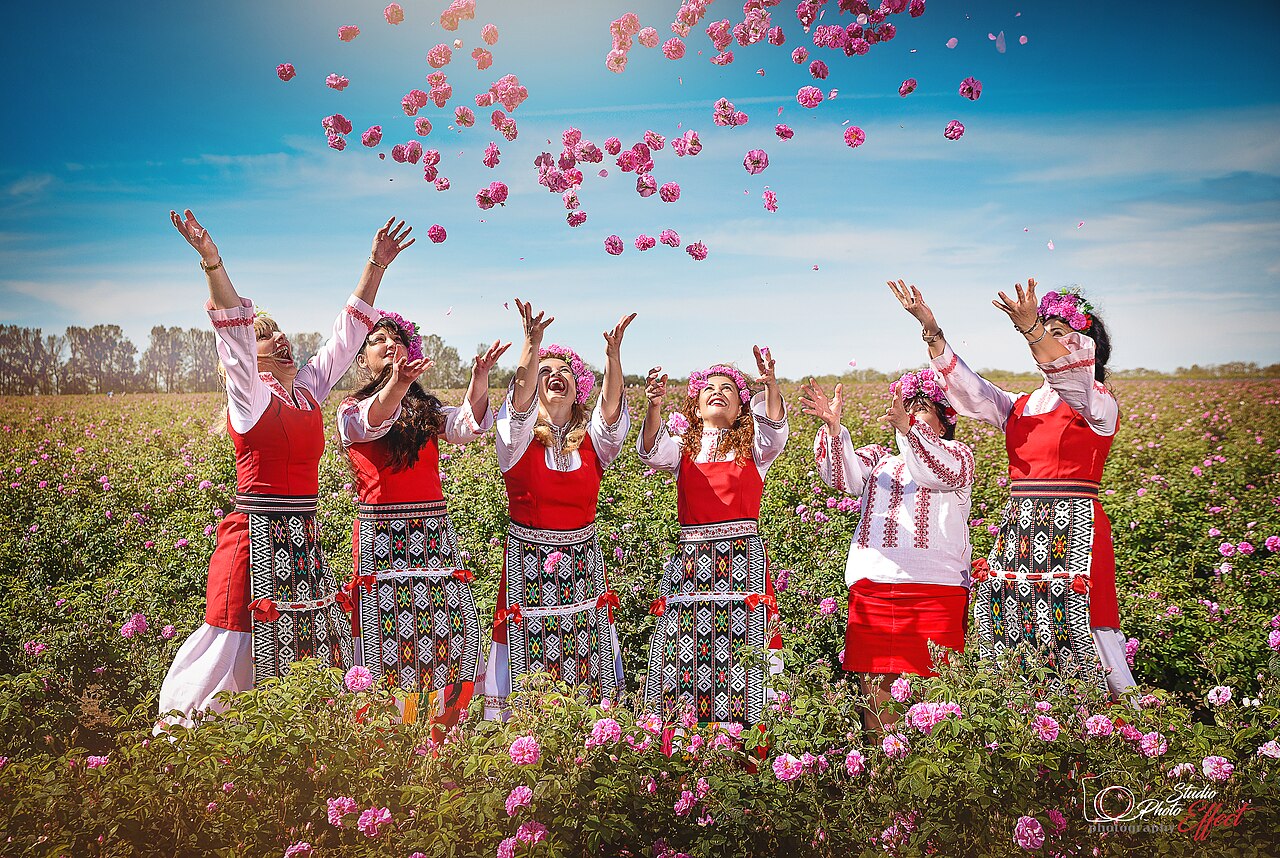
Kazanlak sits in the heart of the Rose Valley (Розова долина), the strip of land between the Balkan Mountains and the Sredna Gora range where Bulgaria grows most of its damask roses. Bulgaria produces roughly 70% of the world's rose oil, the essential oil used in high-end perfumes, and the Kazanlak valley is where it happens. The roses bloom in late May and early June; the festival lands on the first weekend of June every year, which in 2026 is today and tomorrow.

The festival programme includes:

  • The Rose Queen contest, a traditional beauty pageant where contestants wear folk costumes and carry baskets of freshly-picked roses.
  • Folk dancing and music, performed by regional troupes in the town square and the surrounding fields.
  • Distillery tours, where you can watch rose oil being extracted in copper stills using methods that have not changed much since the 19th century. The process is labour-intensive: it takes roughly 3,000 kilograms of rose petals to produce one kilogram of rose oil.
  • A morning rose-picking ritual, open to the public, where you join local workers in the fields at dawn to harvest the day's crop before the sun evaporates the essential oils.

The festival draws tens of thousands of visitors every year, which is a significant logistical challenge for a town of 45,000 people. Hotels book out six months in advance; if you are planning to attend next year, start looking in December.

Why this matters for British expats

The stretch of the A6 motorway running east from Sofia through Karlovo and Kazanlak is significantly busier than usual around the festival.

The Rose Festival is the kind of event British expats living in Bulgaria either attend religiously every year or skip entirely, with very little middle ground. If you are in the first camp, you already booked your Kazanlak hotel in January. If you are in the second, you are probably wondering what the fuss is about.

The fuss is this: Bulgaria's rose oil industry is one of the few globally-dominant niche industries the country has, and Kazanlak is where you see it in action. The festival is heavily touristed, yes, but it is not a theme-park reconstruction; the rose fields are real working farms, the distilleries are operational, and the folk traditions on display are the same ones that have structured the valley's agricultural calendar for two centuries. If you live here and you want to understand what "Bulgarian rose oil" actually means, the festival is the user manual.

The 1908 election, by contrast, matters mostly as a historical curiosity. The constitutional changes that followed, the shift from principality to kingdom, and the run-up to the Balkan Wars are all significant moments in Bulgarian state-building, but they are not the kind of thing that comes up in conversation unless you are drinking with a history teacher. The Rose Festival comes up every year, and knowing enough to nod knowledgeably when a colleague mentions they are driving to Kazanlak this weekend will earn you a small measure of cultural credibility. Knowing that the 1908 election was the parliamentary foundation for Bulgarian independence might impress your father-in-law, but only if he is the kind of father-in-law who enjoys testing you on constitutional trivia over Sunday lunch.

The immediate takeaway is simple: if you are in Bulgaria this weekend and you have a car, Kazanlak is two hours from Sofia, ninety minutes from Plovdiv, and worth the drive. If you missed the booking window for this year, put next year's festival dates in your calendar now. The roses do not wait.

File alongside this in your expat mental map: the Shumen.UK guides hub.

Sources and further reading

The election details draw on the Bulgarian Wikipedia entry on the 1908 parliamentary election and the English Wikipedia article. The Rose Festival background comes from the official Bulgarian cultural calendar and Kazanlak's tourism listings.

Questions about 7 June

What was significant about the 1908 Bulgarian election?

It returned the Democratic Party with a large majority, giving Prime Minister Aleksandar Malinov the parliamentary backing to oversee Bulgaria's declaration of independence from the Ottoman Empire in September 1908. The election also saw the Agrarian party (BZNS) establish itself as the second-largest group in parliament for the first time.

When is the Kazanlak Rose Festival?

First weekend of June every year. In 2026 that is 6-7 June. The festival includes rose-picking at dawn, folk dancing, the Rose Queen contest, and distillery tours showing how Bulgaria produces 70% of the world's rose oil.

Can I visit the Rose Festival without booking ahead?

You can attend the festival itself without tickets, but accommodation in Kazanlak books out six months in advance. Day-trippers from Sofia or Plovdiv do fine, but if you want to stay overnight and see the dawn rose-picking ritual, book early or consider staying in Karlovo or Stara Zagora and driving in.

Sources for 7 June

Back to the June dates

8 June

The Day Luxembourg Arrived in Sofia and Left with Eight Goals Against

On 8 June 1997, Bulgaria played Luxembourg in a World Cup qualifier at the Vasil Levski Stadium. The final score was 4-0, which sounds respectable until you remember Luxembourg's population is smaller than Plovdiv's and they'd conceded seven to the Czech Republic three days earlier.

First published 8 June 2026 · Adrian Dane · 4 min read

The Day Luxembourg Arrived in Sofia and Left with Eight Goals Against

What happened on this day

On 8 June 1997, Bulgaria's national football team hosted Luxembourg at the Vasil Levski Stadium in Sofia for a World Cup qualifying match. The Bulgarians won 4-0, which at first glance looks like a comfortable victory over a minnow. But here's the thing about beating Luxembourg in 1997: it was roughly as impressive as beating a particularly motivated Sunday league side who'd been given the wrong directions and arrived late.

Luxembourg's entire population at the time was around 420,000 people, smaller than the city of Plovdiv. They'd lost 7-2 to the Czech Republic just three days earlier. The Bulgarian squad, by contrast, still carried several players from the legendary team that had reached the World Cup semi-finals in USA 1994, knocking out holders Germany along the way. Hristo Stoichkov, arguably Bulgaria's greatest ever player, was still in the side. The talent gap wasn't a gap so much as a continental shelf.

The match was part of Group 5 of the European qualifying campaign for the 1998 World Cup in France. Bulgaria won the group, finishing ahead of Russia, and qualified directly for France 1998. At the finals the following summer they went out in the group stage, the closing chapter of Bulgaria's most successful international period.

The 4-0 scoreline, then, sits in a peculiar historical position. It was a win that meant nothing on its own, came against opposition so weak the victory was essentially pre-ordained, and formed part of a campaign that ultimately ended in failure. Most Bulgarian football fans who remember 1997 remember the playoff loss to Germany, not the routine dismantling of Luxembourg on a warm June evening in Sofia.

The Bulgaria squad that reached the World Cup semi-finals in 1994, three years before the Luxembourg match
The Bulgaria squad that reached the World Cup semi-finals in 1994, three years before the Luxembourg match. Photograph via Wikimedia Commons.

Why this matters for British expats

It matters, in a small way, because it's a useful calibration point for how Bulgarian football is discussed here versus how British football is discussed back home. In Britain, a 4-0 win over Luxembourg would be filed under "job done, move on". In Bulgaria, where international football success is rarer and the 1994 semi-final remains the high-water mark of the national sport, even a workmanlike qualifier gets remembered with a certain wistfulness.

If you're watching the World Cup this summer in a Bulgarian bar or café, and the conversation turns to Bulgaria's absence from major tournaments, 1997 will eventually come up. Not because of Luxembourg, but because it was the last qualifying campaign where Bulgaria genuinely expected to reach a tournament. The next Euros are in 2028; Bulgaria last qualified for a major tournament in 2004. That's a 24-year gap if they miss again, which is a long time to live on the memory of Hristo Stoichkov.

The broader takeaway is about sporting identity. British expats arriving in Bulgaria often underestimate how much the 1994 World Cup matters here, because Britain has never had a single tournament define its footballing self-image in quite the same way. The closest equivalent would be England's 1966 World Cup win, except Bulgaria's 1994 run was a semi-final, not a victory, and happened in living memory of nearly everyone over 35. The fact that a routine 4-0 win over Luxembourg in 1997 can still be looked up on Wikipedia tells you something about how thoroughly that era is archived, catalogued, and remembered.

One last note: if you're planning to attend a football match at the Vasil Levski Stadium in Sofia, the atmosphere is significantly better when the opposition is someone other than Luxembourg. CSKA Sofia and Levski Sofia both use the ground for big matches, and the Sofia derby is worth experiencing once if you can handle the noise and the occasional flare. Just don't turn up in red if you're sitting in the blue section, or vice versa. The rivalry is affectionate in the way a blood feud is affectionate.

Worth a look if you haven't already: the Shumen.UK cost-of-living tracker.

Sources and further reading

Details of the match come from the Wikipedia entry for the fixture, which records the date, venue, and scoreline but offers no further narrative context. The broader context of Bulgaria's 1997 qualifying campaign and the 1994 World Cup semi-final draws on the standard football reference sources and the collective memory of Bulgarian sports commentary, which revisits the 1994 team with the kind of reverence the British reserve for 1966.

Questions about 8 June

Did Bulgaria qualify for the 1998 World Cup?

Yes. Bulgaria won their qualifying group ahead of Russia and qualified directly for France 1998, where they went out in the group stage. It proved the last act of the golden generation that had reached the 1994 semi-finals.

When did Bulgaria last qualify for a major tournament?

Euro 2004 in Portugal. They've missed every World Cup and European Championship since, a run of over twenty years. The 1994 World Cup semi-final remains their greatest achievement and is still the reference point for Bulgarian football.

Can I visit the Vasil Levski Stadium?

Yes, though it's more rewarding when there's a match on. CSKA Sofia and Levski Sofia both use the ground, and the Sofia derby between Levski and CSKA is the biggest domestic fixture in Bulgarian football. Check the fixture list before you go.

Sources for 8 June

Back to the June dates

9 June

The 1923 Coup That Toppled an Elected Government

On 9 June 1923, army officers staged a midnight coup that ended Bulgaria's agrarian government and kicked off a summer of violence. Here's why this date still casts a shadow over the country's modern politics.

First published 9 June 2026 · Adrian Dane · 6 min read

The 1923 Coup That Toppled an Elected Government

On the night of 8 June 1923, army units began moving through Sofia at 3 a.m. By dawn the next morning, the elected government of Aleksandar Stamboliyski was gone, replaced by a coalition led by Aleksandar Tsankov and backed by every opposition party except the Communists. The coup was meticulously planned, bloodless in the capital, and over in hours. The violence came later.

This is one of those days in Bulgarian history that still shapes the country's political reflexes. It's the template for every subsequent fear of military intervention, the reason Bulgarian politicians talk so carefully about the army's relationship with civilian power, and the moment when the agrarian-urban fault line in Bulgarian society cracked wide open.

What happened on this day

The Military League, a shadow organisation of officers formed after Bulgaria's defeat in the First World War, had been planning the overthrow for months. The Treaty of Neuilly limited the Bulgarian army to 20,000 men, a humiliation for an officer corps that had fielded hundreds of thousands just a few years earlier. The League, led by Generals Ivan Valkov and Velizar Lazarov (with younger officers like Damyan Velchev and Kimon Georgiev in the planning cells), effectively controlled what remained of the armed forces by 1923.

Stamboliyski's Bulgarian Agrarian National Union (BANU) had won 52% of the vote in April 1923, taking 212 of 245 seats in parliament. The landslide reflected genuine popularity among Bulgaria's overwhelmingly rural population, farmers who appreciated land reform and debt relief. But Stamboliyski had made powerful enemies. He jailed opposition leaders, banned the Military League officially (though it continued to operate underground), and in March 1923 signed the Treaty of Niš with Yugoslavia, pledging to suppress the Internal Macedonian Revolutionary Organization (IMRO). IMRO, which ran a proto-state in the Pirin region and viewed the treaty as a betrayal, joined the conspiracy.

The coup was scheduled for the night of 8 June. At 3 a.m. on 9 June, units in Sofia cut telephone lines, blocked roads, and seized police stations, post offices, and railway terminals. Lazarov took command of the Sofia garrison and disarmed the Orange Guard, Stamboliyski's paramilitary force. By 5 a.m. a new cabinet had assembled at the home of Ivan Rusev. At 4:30 a.m., Lazarov and Velchev reported to the ministers that the capital was secure. Garrisons across the country confirmed their support by telegraph over the next few hours.

Tsar Boris III, who had condemned the plot when he first heard rumours of it, spent the morning waiting for confirmation that the coup had succeeded and that foreign embassies would not object. By midday on 9 June he signed the decree legitimising Tsankov's government, on condition that it include agrarians and avoid repression. Both conditions were ignored within days.

Stamboliyski was not in Sofia that night. He was in his home village of Slavovitsa, near Pazardzhik. On 10 June, around 3,000 armed peasants gathered under his command and marched on Pazardzhik, where they were scattered by army units. Stamboliyski fled to the village of Goljak and was captured there on 14 June by local authorities. He was handed over to the Pazardzhik commandant, Slaveyko Vasilev, who in turn handed him to an IMRO detachment led by Velichko Velyanov. By order of the new government, they tortured him for hours before cutting off his hand and killing him. His body was found in pieces.

The Communist non-response

The Bulgarian Communist Party (BCP), the second-largest party in parliament, refused to defend Stamboliyski's government. The party's Central Committee took a "position of neutrality", reasoning that the coup was an internal quarrel between the "rural bourgeoisie" (the agrarians) and the "urban bourgeoisie" (everyone else). The Comintern in Moscow had not yet issued instructions, and the Bulgarian leadership actively pressured local party structures not to support peasant resistance.

This decision haunted the BCP for decades. When spontaneous uprisings broke out in Pleven and Shumen provinces (the June Uprising), poorly armed peasants and a few sympathetic Communists fought government troops alone, without central coordination or Communist Party backing. The resistance was crushed within days. Under pressure from the Comintern, the BCP reversed course in September 1923 and launched its own poorly-planned September Uprising, which was also crushed, this time with massive casualties and the effective destruction of the party's rural base.

The neutrality calculus was a textbook case of revolutionary orthodoxy colliding with political reality. The agrarians were not socialists, but they were an elected government with rural working-class support being overthrown by the army and the urban right. The BCP's refusal to act became the defining example, in Bulgarian Communist historiography, of how not to read a moment.

Why this matters for British expats

The 1923 coup is not a public holiday, and most Bulgarians under 50 would place it roughly in the interwar chaos without pinning the exact date. But it sits underneath Bulgarian political culture in ways that still surface.

When you hear Bulgarian politicians talk about "defending democratic institutions" or "the army staying out of politics", they're speaking a language shaped by 9 June 1923. The coup set a template: an elected government with rural support, urban opposition rallying around "law and order", the army stepping in, and violence following once the legitimacy question was settled by force. The pattern repeated in modified form in 1934 (another Military League coup, this time against Tsankov's successors) and arguably in 1944 when the Fatherland Front took power with Soviet backing.

The Stamboliyski story also underpins the way Bulgarians talk about political violence and martyrdom. His death was grotesque, the torture and dismemberment a deliberate message from IMRO that collaboration with Yugoslavia would be punished in the most public, brutal way possible. It's one reason IMRO remains such a contested legacy: revolutionary heroes to Macedonian Bulgarians, terrorists and assassins to those who remember what they did to Stamboliyski and dozens of agrarian activists in June 1923.

If you're the kind of expat who reads Bulgarian political analysis and wonders why coalition governments here are so fragile, why rural-urban divides still map onto party lines, and why everyone talks so carefully about the military's constitutional role, 9 June 1923 is a large part of the answer. The coup didn't just end one government, it ended the brief moment when an agrarian party could govern Bulgaria without the acquiescence of the urban elite and the officer corps.

Knowing this won't change your Tuesday, but it does explain the furniture of the political landscape you're navigating. Bulgaria's 20th century is unusually dense with coups, counter-coups, uprisings, and repressions. The 1923 coup is the first in the sequence, and the one that set the tone.

For more of the practical picture, see the Shumen.UK weather page.

Sources and further reading

The detail on the coup's planning, execution, and Stamboliyski's capture draws on the Bulgarian Wikipedia entry on the 1923 coup and its English counterpart. Both cover the Military League's formation, the Treaty of Niš context, and the subsequent June and September Uprisings in more depth than fits here. The framing around the Communist Party's neutrality calculus and its long-term political consequences reflects standard historiography on the BCP in the interwar period.

Questions about 9 June

Who was Aleksandar Stamboliyski?

Stamboliyski led the Bulgarian Agrarian National Union and served as Prime Minister from 1919 to 1923. His government implemented land reform and debt relief popular with Bulgaria's rural majority, but alienated the urban middle class, the military, and IMRO by signing the Treaty of Niš with Yugoslavia. He was overthrown on 9 June 1923 and killed five days later.

Why didn't the Communists defend the elected government?

The Bulgarian Communist Party's Central Committee declared neutrality, viewing the coup as an internal dispute between different factions of the bourgeoisie. This decision was later condemned by the Comintern and by the BCP itself. The party launched its own uprising in September 1923, which was also crushed.

What was the Military League?

A shadow organisation of Bulgarian army officers formed after the First World War. Officially banned by Stamboliyski's government, it continued to operate underground and effectively controlled the post-war army. Generals Ivan Valkov and Velizar Lazarov led the coup planning, with younger officers like Damyan Velchev and Kimon Georgiev in key roles.

Is 9 June a public holiday in Bulgaria?

No. The date is not commemorated officially and most Bulgarians would not recognise it without prompting. You will see no ceremonies or closures.

Sources for 9 June

Back to the June dates

10 June

The First Multi-Party Election in 59 Years

Bulgaria held its first free election since 1931 on this date in 1990, ending the one-party era. Here's what the day meant then, what the controversy still means now, and why you'll see Antonina name days celebrated quietly.

First published 10 June 2026 · Adrian Dane · 6 min read

The First Multi-Party Election in 59 Years

What happened on this day

British expats who've lived through Brexit votes and their aftermath might recognise the emotional shape of what happened in Bulgaria on 10 June 1990: an election where the result felt close enough to contest, the losing side convinced the count was rigged, and the winning side accused of hanging onto power by any means necessary. The difference is scale. Bulgaria wasn't deciding membership of a trading bloc; it was deciding whether the Communist Party, which had run the country for forty-five years, would stay in charge under a fresh coat of paint.

The 1990 Constitutional Assembly election was the first multi-party vote Bulgaria had held since 1931. The Communist regime fell in late 1989 as part of the wave of revolutions across Eastern Europe, the Berlin Wall came down, and by spring 1990 Bulgaria was attempting something it hadn't tried in nearly six decades: letting voters choose between competing parties. The Bulgarian Socialist Party (BSP), the renamed Communist Party, faced the Union of Democratic Forces (SDS), a coalition of opposition groups ranging from pro-Western liberals to agrarian nationalists. The electoral system was a hybrid: 200 seats elected by single-member constituencies, 200 by proportional representation.

The BSP won 211 of the 400 seats. Turnout was 90.3 percent, which tells you everything about how seriously Bulgarians took the moment. The problem was trust. The SDS immediately alleged mass fraud, pointing to the fact that the BSP had inherited the entire administrative machinery of the old regime: the polling-station officials, the regional governors, the printing presses that produced the ballot papers. Later sociological studies suggested the fraud accusations had substance, but the original documentation from the count was either destroyed or never properly archived, leaving historians with an unresolved puzzle. The Bulgarian Wikipedia article notes bluntly that the election is considered widely falsified in favour of the governing party, and that the primary records don't exist to prove or disprove the claim.

Reactions were immediate. On 11 June, students at Sofia University declared an occupation strike. On 4 July, protesters set up a tent city outside the presidency, calling it the City of Truth (Градът на истината). They demanded the BSP admit to fraud, inventory the party's assets, and set a trial date for Todor Zhivkov, the Communist leader who'd ruled Bulgaria from 1954 to 1989. The protests ran through the summer. On 6 July, President Petar Mladenov resigned. The Grand National Assembly finally convened on 10 July in an atmosphere of raised voices and lowered expectations. It took another thirteen months to draft the constitution, which was promulgated on 12 July 1991. The first elections under that document, held in October 1991, delivered a narrow SDS win and Bulgaria's slow, painful, occasionally absurd lurch toward EU membership.

If you're reading British political history, the closest comparison isn't an election so much as the Rotten Boroughs debate of the 1820s: a system everyone knew was broken, a result everyone expected to be rigged, and a reform process that dragged on for years while the country argued about what "fair" even meant.

Today's name days

Antonina celebrates today. The name derives from the Roman family name Antonius (the same root as Anthony, Anton, Antonio), via the Greek Christian tradition where Saint Antonina of Nicaea was martyred in the 4th century. The name has modest popularity in Bulgaria, mostly among older generations, and you're more likely to meet an Antonina in her sixties than her twenties.

If your colleague or neighbour is called Antonina, the etiquette is simple: say честит имен ден (chesh-TEET ee-MEN den) and never arrive empty-handed if you're invited over. A banitsa from the neighbourhood bakery, a box of chocolates, or flowers in odd numbers (never even) all work. The Bulgarian name-days guide has the full etiquette breakdown plus the Orthodox calendar for the year.

Towns celebrating today

Popovo, a market town of around 13,000 people in Targovishte province, holds its municipal day on 10 June. The town sits in the northeastern plains, an hour's drive south of Ruse, and its economy revolves around grain, sunflowers, and light manufacturing. Popovo doesn't have a single signature product the way Elena has its Elenski but (Bulgaria's legendary salt-cured ham), but it does have a well-preserved town centre from the National Revival period, a functioning market square, and the kind of quiet agricultural prosperity that keeps small Bulgarian towns alive when the cities drain the young.

If you've driven the Ruse-to-Shumen road, you've likely bypassed Popovo without stopping. The town's celebration today involves a small fair in the central square, local-council speeches, and possibly a folk-dance troupe if the budget stretched that far. For British expats planning a visit, today's fine, but any other Wednesday works just as well.

Why this matters for British expats

The historical anniversary lands differently if you've spent any time at all trying to understand why Bulgarian politics operates the way it does.

Every British expat who's attempted to follow a Bulgarian election campaign, or sat through a heated café debate about corruption, or listened to a Bulgarian colleague mutter darkly about "they're all the same", is hearing an echo of June 1990. The suspicion that elections are rigged, that the old elites never really left, that the transition to democracy was half-finished and then abandoned, these aren't paranoid fantasies in Bulgaria. They're conclusions drawn from lived experience, and the 1990 election is the origin story. The BSP won that vote, governed through early 1997, lost badly, came back in 2005, and has oscillated in and out of power ever since. The SDS split into a dozen factions, reformed, renamed itself, and eventually lost coherence entirely. The tent city outside the presidency became a symbol, but the reforms the protesters demanded took years, if they happened at all.

For expats who genuinely want to grasp why Bulgarian friends roll their eyes at politicians, or why turnout for local elections hovers around 40 percent despite the 90 percent turnout in 1990, this is the answer: the first democratic election ended in a disputed count, mass protests, and a constitutional process that dragged on so long people stopped believing the new system would be any better than the old one. That disillusionment is the baseline of Bulgarian political culture now, and it started on this date thirty-six years ago.

If the subject comes up over coffee, mentioning you know what happened on 10 June 1990 will earn you a quiet nod. Most Bulgarians remember the day, even if they weren't old enough to vote. It's the kind of fact that signals you're paying attention to the country's history, not just its property prices.

Sources and further reading

Details for the election draw on the Bulgarian Wikipedia article on the 1990 Constitutional Assembly election, which includes the disputed-results controversy and the protests timeline. The English Wikipedia equivalent has a shorter summary. Popovo's municipal-day listing comes from regional municipal calendars. Name-day detail for Antonina is from the standard Bulgarian Orthodox calendar.
Questions about 10 June

Was the 1990 Bulgarian election actually rigged?

The Bulgarian Wikipedia states that later sociological research suggests mass falsification in favour of the BSP, but the original ballot documentation was destroyed or never archived, so definitive proof doesn't exist. What's certain is that the BSP inherited the entire state apparatus, the opposition had minimal resources, and the result triggered months of protests.

Is Antonina's name day a public holiday?

No. Bulgarian name days are cultural observances, not public holidays. Banks, offices, schools and government services all operate normally today. If your colleague Antonina invites you over, bring banitsa, cake, or flowers in odd numbers.

Is there anything to see in Popovo today?

Popovo's municipal day involves a small fair in the town square, possibly folk dancing, and local-council speeches. If you're passing through Targovishte province, it's a pleasant detour, but the town doesn't have a major signature attraction. Any other Wednesday works fine.

Why do Bulgarians still talk about the 1990 election?

Because it set the baseline for post-communist politics: a disputed count, mass protests, a reform process that dragged on for years, and the sense that the old elites never really left. That disillusionment shapes Bulgarian voter turnout and political cynicism today.

Sources for 10 June

Back to the June dates

11 June

Bulgaria Beat Malta 2-0 in Sofia

On 11 June 1975, Bulgaria defeated Malta 2-0 at Vasil Levski Stadium in a European Championship qualifier that nobody under fifty remembers, but which sits in the official record as one of those quiet victories that built the team's reputation. Here's why it matters if you live here now.

First published 11 June 2026 · Adrian Dane · 4 min read

Bulgaria Beat Malta 2-0 in Sofia

What happened on this day

On 11 June 1975, Bulgaria's national football team beat Malta 2-0 at Vasil Levski National Stadium in Sofia. The match was a European Championship qualifier for Euro 76, part of a campaign that saw Bulgaria win their home fixtures comfortably but ultimately fail to reach the finals in Yugoslavia.

The 1970s were a strong period for Bulgarian football. The national team had reached the 1970 World Cup in Mexico and would go on to qualify for the 1974 tournament in West Germany, where they were knocked out in the group stage. By the time Malta came to Sofia in June 1975, Bulgaria's home record was formidable: Vasil Levski Stadium, with its steep concrete stands and mountain backdrop, was one of the tougher venues in European qualifying. Visiting teams rarely left with points.

Malta, by contrast, were among the continent's weakest sides. They had lost their opening Euro 76 qualifiers heavily and would finish the campaign with a single point from eight matches. The 2-0 scoreline flattered them slightly; Bulgaria could have added more.

The match itself left no archival trace beyond the result. No match report survives in English-language sources, no footage has surfaced on YouTube, and the Bulgarian football federation's records from the era are patchy. What remains is the line in Wikipedia: Bulgaria 2, Malta 0, 11 June 1975, Sofia. One of those quiet victories that built a reputation without ever becoming a story.

Bulgaria didn't qualify for Euro 76. They finished second in their group behind Yugoslavia, who went on to reach the semi-finals. The team's real breakthrough came two decades later: at the 1994 World Cup in the United States, Bulgaria beat Germany 2-1 in the quarter-finals and finished fourth, their best-ever tournament performance. That team, led by Hristo Stoichkov and managed by Dimitar Penev, remains the gold standard for Bulgarian football.

Since then, the national team has declined. Bulgaria last qualified for a World Cup in 1998 and last reached a European Championship in 2004. The current squad sits mid-table in UEFA's coefficient rankings, far from the glory years. Vasil Levski Stadium still hosts home qualifiers, but the atmosphere is quieter now, the expectations lower.

Why this matters for British expats

It doesn't matter in any immediate, practical sense. No match is scheduled, no anniversary is marked.

The value is purely cultural. Football matters in Bulgaria in a way that British expats sometimes underestimate. The 1994 World Cup run is still talked about with the kind of reverent nostalgia the British reserve for 1966, and the current team's failure to qualify for major tournaments is a source of genuine national disappointment. If you live here and work with Bulgarians, knowing that the national team once beat Germany in a World Cup quarter-final, that Hristo Stoichkov won the Ballon d'Or in 1994, and that Bulgaria's home stadium is one of the loudest in the Balkans when it's full, earns you a quiet moment of respect.

The 1975 Malta match is a footnote, but it sits in a larger story: the era when Bulgarian football was genuinely competitive, when qualifying campaigns were taken seriously, and when home fixtures at Vasil Levski were near-certain victories. That era ended around the turn of the century, and Bulgaria hasn't found a way back yet. The World Cup this summer in North America will proceed without them; the next European Championship in 2028 almost certainly will too, barring a dramatic turnaround in the qualifying campaign that starts later this year.

If you're the kind of expat who enjoys impressing colleagues with localized knowledge, mentioning that Bulgaria once finished fourth at a World Cup, ahead of teams like Spain and England, will earn you a brief, appreciative silence. It shows you have done the research on what the country was capable of when everything aligned.

There's more on this kind of thing over at the Shumen.UK Bulgarian name-days guide.

Sources and further reading

Match details for the 1975 Bulgaria v Malta fixture draw on Wikipedia's structured sports record and the official UEFA archives. Bulgaria's broader football history, including the 1994 World Cup campaign and Hristo Stoichkov's career, is well-documented across English and Bulgarian sports media. Vasil Levski National Stadium remains Sofia's primary football venue and hosts most home qualifiers for the national team.

Questions about 11 June

Did Bulgaria qualify for Euro 76 after beating Malta?

No. Bulgaria finished second in their qualifying group behind Yugoslavia and didn't reach the finals, which were held in Yugoslavia in June 1976. The Malta victory was one of several home wins that weren't enough to secure qualification.

When did Bulgaria last qualify for a major tournament?

Bulgaria last reached a European Championship in 2004 and last qualified for a World Cup in 1998. The current team hasn't been to a major tournament in over two decades, and prospects for the 2028 Euros or the 2030 World Cup remain uncertain.

What was Bulgaria's best-ever football performance?

Fourth place at the 1994 World Cup in the United States. Bulgaria beat Germany 2-1 in the quarter-finals before losing to Italy in the semi-final. Hristo Stoichkov won the Golden Boot as the tournament's top scorer and the Ballon d'Or later that year.

Can I visit Vasil Levski Stadium in Sofia?

Yes, though access depends on whether a match is scheduled. The stadium hosts Bulgaria's home qualifiers and occasional club fixtures. When empty, the exterior and surrounding park are accessible, but the interior is locked. Check the Bulgarian Football Union's fixture list if you want to catch a game.

Sources for 11 June

Back to the June dates

12 June

Georgi Bogdanov, Revolutionary and Thessaloniki Bomber, Dies

Bulgaria's calendar today marks the death of a man who hurled a bomb at a Greek café in Ottoman Thessaloniki, survived a death sentence, endured exile in the Sahara, and died penniless in Sofia. Here's the story British expats rarely encounter outside specialist histories of the Macedonian struggle.

First published 12 June 2026 · Adrian Dane · 6 min read

Georgi Bogdanov, Revolutionary and Thessaloniki Bomber, Dies

What happened on this day

Georgi Petrov Bogdanov died in Sofia on 12 June 1939, broke, ill, and thirty-six years removed from the act that defined his life. On the night of 28 April 1903, in Ottoman Thessaloniki, he threw a bomb at the entrance of a Greek café called Noja, part of a coordinated anarchist terror campaign that left the city's commercial district smoking and its Ottoman authorities scrambling for arrests. He was twenty-four at the time. The death that followed him decades later was bureaucratic, quiet, and entirely without drama.

Bogdanov was born in 1879 in Veles (today in North Macedonia, then a prosperous Ottoman-ruled market town) into a wealthy Bulgarian family. His father, Petar Bogdanov, was the cashier of the local chitalishte, the civic-cultural hub that doubled as the Bulgarian national consciousness in microcosm. Georgi studied in Veles, then moved to Thessaloniki in 1897 to attend the Bulgarian men's gymnasium on what is now Agiou Dimitriou Street. He didn't finish. Revolutionary politics pulled him out in his final year, a pattern repeated across dozens of Bulgarian students in the city at the turn of the century.

Thessaloniki in 1903 was Ottoman Europe's second city, a polyglot port where Bulgarian, Greek, Jewish, Turkish, and Armenian communities negotiated space under an imperial administration that was visibly fraying. The Gemidziite (from the Turkish gemi, ship, a slang term for "bomber") were a small anarchist cell formed in 1901 by Petar Mandzhukov, a Bulgarian teacher influenced by European anarchist tracts and convinced that spectacular violence would accelerate the collapse of Ottoman rule. Bogdanov joined in 1901, alongside Pavel Shatev, Milan Arsov, and Marko Boshnakov. The group stockpiled dynamite, studied bomb-making, and planned to strike Ottoman and Greek commercial targets simultaneously on St. George's Day (23 April old-style, 6 May new-style) 1903.

The plan went off mostly as intended. Bogdanov's target was the Café Noja, a Greek establishment near the waterfront. He hurled the device, it detonated, and the front of the building collapsed. Several bystanders were injured; no one was killed at his specific target, though the night's cumulative toll across the city was higher. Ottoman police arrested him on 29 April (17 April old-style). He was tried alongside Shatev, Arsov, and Boshnakov by a special military court. The four were sentenced to death. International pressure, particularly from the Bulgarian government and European consulates uneasy about mass executions in a powder-keg city, saw the sentences commuted to life imprisonment.

In 1905, Bogdanov was sent into exile in Fezzan (also rendered Murzuk), a region in what is today southern Libya, then the remotest corner of Ottoman-controlled Sahara. It was effectively a punishment-by-geography: no walls, just distance and desert heat. He spent three years there, living in conditions the Bulgarian Wikipedia extract leaves entirely undetailed. The Young Turk Revolution of 1908 brought a general amnesty for political prisoners. Bogdanov returned to Thessaloniki, carrying with him the skulls of Milan Arsov and Marko Boshnakov, who had died in custody. The gesture was macabre but deliberate; in the revolutionary milieu of the time, the dead were relics, proof of sacrifice.

After his release, Bogdanov worked as a trader in Thessaloniki and Drama. In 1914, he joined the Committee of Deserters, a clandestine group supporting Bulgarian soldiers who refused conscription into the Serbian army during the First World War. In 1918, on the 15th anniversary of the Ilinden-Preobrazhenie Uprising, the Bulgarian government awarded him the Order of Saint Alexander for his contribution to the Macedonian cause. It was a strange honour for an anarchist who had spent most of his youth in Ottoman prisons and Saharan exile, but by then the revolutionary struggle had been nationalised, its anarchist edge filed down into state-approved heroism.

The post-war years were unkind. Bogdanov moved with his family to Bulgaria, where he worked as a low-level clerk. The Bulgarian Wikipedia extract notes he was "ruined and seriously ill" by the time he arrived. He died in Sofia on 12 June 1939, aged sixty. There is no record of a state funeral, no monument in the capital, no street named after him in Veles or Thessaloniki.

Why this matters for British expats

It doesn't land with the immediate, practical weight of a name day or a municipal procession. The value here is purely historical literacy, the kind that lets you hold your own when a Bulgarian colleague mentions the Gemidziite bombings and you can nod knowingly instead of Googling under the table.

The Thessaloniki bombings occupy a strange place in Bulgarian collective memory. They're taught in schools as part of the broader Macedonian struggle, framed as a desperate act of resistance against Ottoman oppression. The anarchist dimension, which was central to the Gemidziite's self-conception, gets smoothed over in favour of nationalist heroism. Petar Mandzhukov, the group's founder and chief theorist, gets far less attention in the national story than the men who threw the bombs, and Bogdanov himself is a second-tier figure compared to Pavel Shatev, who wrote extensively about the bombings in his later years and whose memoir became the canonical account.

For British expats interested in how Bulgaria remembers its pre-independence revolutionaries, Bogdanov's trajectory is instructive. He was an anarchist who became a state-decorated hero, a bomber who ended his life as a clerk, a man whose most dramatic act happened when he was twenty-four and whose next thirty-six years were a slow fade into bureaucratic obscurity. The commemorative culture around the Macedonian struggle tends to freeze its subjects at their moment of peak drama, which means Bogdanov is remembered, when he's remembered at all, for the night he threw the bomb, not the decades he spent afterwards trying to make a living in a country that had no use for ageing anarchists.

If you're the kind of expat who enjoys threading historical context into everyday observation, the next time you pass a monument to the Macedonian revolutionaries or see a street named after a voivode, Bogdanov's story is worth holding in the back of your mind. It's a reminder that the revolutionary struggle Bulgaria teaches in schools was messy, ideologically diverse, and often ended not with martyrdom but with pension-less old age. Knowing that won't change your rent or your tax bracket, but it does change how you read the commemorative plaques.

If you want the practical companion read, the Shumen.UK residency guide sits next to this one.

Sources and further reading

Details for Georgi Bogdanov are drawn from the Bulgarian Wikipedia biography and the shorter English Wikipedia entry, both of which cite archival records from the Macedonian struggle period. The Gemidziite bombings are covered in broader histories of the Internal Macedonian Revolutionary Organisation (IMRO) and the Young Turk Revolution's aftermath.

Questions about 12 June

Who were the Gemidziite?

The Gemidziite were a Bulgarian anarchist group formed in Thessaloniki in 1901. Their name comes from the Turkish word 'gemi' (ship), slang for bomber. They carried out coordinated bomb attacks on Ottoman and Greek targets in Thessaloniki on 28 April 1903, aiming to destabilise Ottoman rule in Macedonia. Most members were arrested, tried, and sentenced to death, though international pressure saw the sentences commuted to life imprisonment.

Why was Bogdanov exiled to the Sahara?

After his death sentence was commuted to life imprisonment, Bogdanov was sent to Fezzan (also called Murzuk) in southern Libya, one of the remotest regions of the Ottoman Empire. It was a punishment-by-geography: the desert heat, isolation, and distance from European consulates made escape or political organising nearly impossible. He spent three years there before the 1908 Young Turk Revolution brought a general amnesty.

Is there anything to see in Bulgaria related to the Gemidziite?

The Gemidziite story is anchored in Thessaloniki, now part of Greece, not Bulgaria. Most of the group's members came from Bulgarian communities in Ottoman Macedonia. There are no major monuments to the Gemidziite in Sofia or Shumen, though the broader Macedonian revolutionary struggle is commemorated in museums and on street names across Bulgaria. Pavel Shatev, the most famous survivor, is better represented in the historical record than Bogdanov.

Why does Bulgaria honour an anarchist bomber?

By the time Bogdanov was awarded the Order of Saint Alexander in 1918, the Macedonian revolutionary struggle had been reframed as a nationalist cause rather than an anarchist one. The Bulgarian state during and after the First World War co-opted the legacy of IMRO and associated groups, smoothing over the anarchist ideology in favour of patriotic heroism. Bogdanov's bomb-throwing was recast as resistance to Ottoman oppression, not as anarchist direct action.

Sources for 12 June

Back to the June dates

13 June

Bulgaria v Israel, 1965

On this date in 1965, Bulgaria played Israel in a World Cup qualifier at Vasil Levski Stadium. The match ended 2-1 to Bulgaria, a footnote in the wider story of how a tiny Balkan nation briefly became a footballing force.

First published 13 June 2026 · Adrian Dane · 4 min read

Bulgaria v Israel, 1965

What happened on this day

On 13 June 1965, at Vasil Levski Stadium in Sofia, Bulgaria played Israel in a World Cup qualifier and won 2-1. The match was part of Bulgaria's qualifying group for the 1966 World Cup in England, alongside Belgium and Israel. Bulgaria finished level with Belgium at the top of the group and qualified for the finals in England the following summer.

It is, on the face of it, an unremarkable fixture: a mid-June home win against a side that was not particularly strong in that era. But the 1965-66 qualifying campaign was the on-ramp to Bulgaria's greatest World Cup performance. The squad that travelled to England in 1966 was drawn in a brutal group with Brazil, Portugal and Hungary, lost all three matches, and went out at the group stage. It remained, even so, one of the most talented sides Bulgaria has ever sent to a World Cup.

The 1966 team was built around Georgi Asparuhov ("Gundi"), the striker who scored 19 goals in 50 internationals before his death in a car crash in 1971, and Dimitar Yakimov, who captained the side. Both played in the Israel match. The team was coached by Rudolf Vytlačil, a Czech who had worked in Bulgarian football since the late 1950s and understood how to build a tactically disciplined side on limited resources. The 1960s were the golden generation of Bulgarian football: a window when the national team was competitive at the highest level, built on the infrastructure of Soviet-style sports academies and the talent pipeline of clubs like CSKA Sofia and Levski Sofia.

Bulgaria last reached a World Cup in 1998. They have not qualified for a European Championship since 2004. The Israel match in 1965 sits in the middle of the only sustained period when Bulgarian football punched above its weight internationally, and the resonance of that era lingers in the national conversation about sport.

The Bulgaria squad that reached the quarter-finals of the 1966 World Cup, the nation's best finish
The Bulgaria squad that reached the quarter-finals of the 1966 World Cup, the nation's best finish. Photograph via Wikimedia Commons.

Why this matters for British expats

There is no procession, no municipal celebration, no name day requiring rakija and banitsa. This is as quiet as the Bulgarian calendar gets.

The value here is purely football-historical and lightly political. If you live in Bulgaria and follow international football, understanding the 1966 World Cup run gives you a cultural shorthand for conversations with older Bulgarian colleagues and neighbours. It is the only World Cup quarter-final the country has ever reached, and it is cited in the same breath as the three Olympic gold medals in weightlifting or the rhythmic gymnastics World Championships: evidence that Bulgaria, despite being small and often overlooked, has moments of outsized competitive success.

It also frames the current state of Bulgarian football, which is significantly weaker. The national team did not qualify for the 2026 World Cup (being played this summer), and the next Euros are two years off in 2028 with no guarantee of Bulgarian participation. The nostalgia for 1966 is strong, and it is the reference point for any conversation about whether Bulgarian football can rebuild.

If you are watching the World Cup this summer and want to make one informed observation to a Bulgarian friend, mention that Bulgaria reached the quarter-finals in 1966. You will get either a long story about Gundi and Yakimov, or a cynical laugh about how far the team has fallen since. Either way, you have demonstrated that you know the history of the place you now live in, which is the kind of thing that earns quiet respect.

Follow-on reading: the Shumen.UK money guide.

Sources and further reading

Details on the 1965 Israel fixture and the 1966 World Cup campaign draw on general football history sources and the Bulgarian Football Union's historical records, which archive match results and squad lists for major tournaments. The 1966 quarter-final run is extensively documented in English-language World Cup retrospectives, and Vasil Levski Stadium remains the national team's home ground today.

Questions about 13 June

Who scored for Bulgaria in the 2-1 win over Israel?

The Wikidata record does not specify the goalscorers, and detailed match reports from 1965 qualifiers are sparse. The broader context is that Georgi Asparuhov and Dimitar Yakimov were Bulgaria's primary attacking threats during this campaign.

Can I visit Vasil Levski Stadium in Sofia?

Yes. Vasil Levski National Stadium is still the home of the Bulgaria national team and hosts domestic cup finals. It sits just south of Sofia city centre near the NDK (National Palace of Culture). You can walk around the exterior freely; match tickets are sold through the Bulgarian Football Union website when fixtures are scheduled.

Did Bulgaria qualify for the 1966 World Cup automatically?

No. Only the group winner qualified. Bulgaria finished level with Belgium at the top of their group and went through to the 1966 finals in England. The 2-1 win over Israel on 13 June 1965 was part of that campaign.

Sources for 13 June

Back to the June dates

14 June

The 1913 Earthquake That Levelled Veliko Tarnovo

On 14 June 1913, a magnitude 6.3 earthquake struck central Bulgaria at 11:28 in the morning, destroying 80% of Veliko Tarnovo and killing at least 36 people. Here's what happened, and why it still matters if you walk the cobbled streets of the old capital today.

First published 14 June 2026 · Adrian Dane · 4 min read

The 1913 Earthquake That Levelled Veliko Tarnovo

On the morning of 14 June 1913, at 11:28 local time, the ground beneath central Bulgaria jolted for 20 seconds. The earthquake measured magnitude 6.3, its epicentre near Gorna Oryahovitsa at a depth of around 10 kilometres. Veliko Tarnovo, Bulgaria's medieval capital and one of its most historically significant cities, was sitting almost directly on top of it.

80% of the buildings in Veliko Tarnovo collapsed or were rendered structurally unsound. In Gorna Oryahovitsa the damage rate hit 85%. Lyaskovets and Dolna Oryahovitsa, the neighbouring towns, lost 55-60% of their structures. The destruction zone covered roughly 1,000 square kilometres, with tremors felt across the entire country.

The casualties and the hospital that wasn't

Exact casualty figures remain uncertain. Civil death registers for 1 June 1913 (the Julian calendar date) list 20 dead in Veliko Tarnovo at 11:30 a.m. and one more at 2 p.m., with a further 16 confirmed in Gorna Oryahovitsa. The total recorded is at least 36, though contemporary reports suggest the true number was higher, particularly among those buried in rubble before rescuers arrived.

The male gymnasium Sveti Kiril in Veliko Tarnovo had been converted into a military field hospital for soldiers wounded in the Balkan Wars. The earthquake destroyed the building entirely. Whether patients were inside at the time, and how many, is one of the unanswered questions of the disaster.

What came down

The Bulgarian Wikipedia extract reads like an inventory of loss. In Veliko Tarnovo: the churches of Saints Peter and Paul, the Forty Martyrs, Saint Dimitar, the Assumption, and the cathedral of the Nativity of the Virgin all collapsed. The churches built by the 19th-century master builder Kolyu Ficheto (Saints Constantine and Elena, Saint Nicholas, Saints Cyril and Methodius, the Transfiguration) suffered varying degrees of structural damage. In Gorna Oryahovitsa: the theatre, the casino, Hotel Boris, the Bulgarian National Bank branch, the chitalishte Napredak, the sugar factory, the Tsentrala ceramics works, the primary school, the girls' gymnasium, and three more churches.

For a country barely a year into independence from the Ottoman Empire, and in the middle of the Second Balkan War, the timing was catastrophic. Bulgaria had no modern seismic building codes, no disaster-relief infrastructure at scale, and its administrative and military resources were stretched across active war zones.

The reconstruction and Leon Filipov's photographs

A commission was formed to assess the damage and classify affected buildings into six categories. The estimated cost of reconstruction was a staggering sum for a young state in wartime. Aid poured in from across the country, and the rebuilding began. The public figure Leon Filipov documented the ruined monuments photographically and participated in the restoration work on Veliko Tarnovo's churches and the nearby village of Arbanasi. His photographs are among the few surviving visual records of the immediate aftermath.

The city that emerged from the rubble was not identical to the one that fell. Some churches were rebuilt along their original lines; others were simplified or never restored at all. The architectural character of Veliko Tarnovo's centre shifted, with more post-1913 construction visible today than pre-earthquake fabric in some quarters.

Why this matters for British expats

Veliko Tarnovo itself is two hours northeast of Shumen by car, so if you've been meaning to visit the old capital and haven't yet, this anniversary gives you a reason to look at it with fresh eyes.

Every church, every sloping cobbled lane, every Revival-era house in Tsarevets and Asenova has a story layered over a gap. Some of what you see is genuinely medieval. Much of it is post-1913 reconstruction, faithful to the original but not the original itself. The seismic risk hasn't gone away: central Bulgaria sits on active fault lines, and modern building codes reflect the 1913 lesson.

For British expats who enjoy impressing colleagues or in-laws with localized knowledge, mentioning that Veliko Tarnovo was rebuilt from near-total collapse within living memory of the current elderly generation earns you a quiet nod of respect. It signals you understand that Bulgaria's historical cities aren't museum pieces frozen in time, they're places that have been knocked down, patched up, and kept going. The story of 14 June 1913 is part of the user manual for the country you now live in.

File alongside this in your expat mental map: the Shumen.UK driving guide.

Sources and further reading

Details for the 1913 earthquake draw on the Bulgarian Wikipedia article on the Gorna Oryahovitsa earthquake, which cites the Regional Historical Museum in Veliko Tarnovo and contemporary civil registers. The photographs taken by Leon Filipov remain the definitive visual record of the damage.

Questions about 14 June

What caused the 1913 earthquake?

The earthquake was caused by tectonic movement along fault lines beneath central Bulgaria, with the epicentre near Gorna Oryahovitsa at a depth of around 10 kilometres. The region sits on seismically active ground, and modern building codes in Veliko Tarnovo reflect the ongoing risk.

How many people died in the earthquake?

Civil death registers list at least 36 confirmed deaths (20 in Veliko Tarnovo, 16 in Gorna Oryahovitsa), though contemporary reports suggest the true figure was higher. Many casualties likely went unregistered amid the chaos of the Second Balkan War.

Can you still see evidence of the earthquake in Veliko Tarnovo today?

Yes and no. Some churches and Revival-era buildings were rebuilt along their original lines, but much of what you see today is post-1913 reconstruction. The architectural character of the city centre shifted after the quake, with modern seismic-resistant construction more visible in some quarters than pre-earthquake fabric.

Is Veliko Tarnovo still at risk of earthquakes?

Yes. Central Bulgaria remains seismically active, and modern building codes reflect the 1913 lesson. The risk is part of the reason you'll see reinforced concrete frames in older stone buildings and why major renovations in the historic centre require seismic assessments.

Sources for 14 June

Back to the June dates

15 June

Bulgaria Beat Poland 4-1, and Three Name Days Quietly Go About Their Business

Today's calendar offers a 1969 World Cup qualifier win, three Bulgarian forenames that barely anyone under forty actually uses, and no municipal festivities at all. Here's what you actually need to know if you live here.

First published 15 June 2026 · Adrian Dane · 5 min read

Bulgaria Beat Poland 4-1, and Three Name Days Quietly Go About Their Business

What happened on this day

On 15 June 1969, Bulgaria's national football team beat Poland 4-1 in a World Cup qualifier at the Vasil Levski National Stadium in Sofia. The match was part of the qualifying campaign for the 1970 tournament in Mexico, and it mattered: Bulgaria went on to top the group and reach the finals. The win over Poland was one of the decisive results in a campaign that, for once, ended the right way.

The 1970 World Cup qualifying group (Group 8) threw Bulgaria in with Poland, the Netherlands, and Luxembourg. Bulgaria topped it, finishing a point clear of Poland with the Netherlands third, and booked their place at the finals in Mexico. They went out in the group stage there, but qualifying ahead of both Poland and the Dutch was no small thing. Bulgaria's golden World Cup moment would come later still, the famous semi-final run in 1994 under Hristo Stoichkov, a tournament most British expats in Bulgaria have heard about at least once over a beer.

The 1969 squad played in an era when Bulgarian football had moments of genuine quality, international respect and not much else. The domestic league was state-run, the players were technically amateurs (though everyone knew better), and foreign travel for matches was a rare perk in a system that otherwise kept most Bulgarians firmly inside the Iron Curtain. Beating Poland 4-1 on home soil meant something, and this time the wider campaign delivered.

The Vasil Levski National Stadium in Sofia, Bulgaria's traditional home ground for major international matches
The Vasil Levski National Stadium in Sofia, Bulgaria's traditional home ground for major international matches. Photograph via Wikimedia Commons.

Today's name days

Three Bulgarian forenames celebrate today: Avgustin, Vitan, and Vitomir. All three are rare enough that most Bulgarians under forty wouldn't know them off the top of their head either. They're the kind of names that come up at a name-day lunch and impress your in-laws, assuming you can pronounce them.

Avgustin (av-goo-STEEN) is the Bulgarian rendering of Augustine, the 4th-century saint and theologian whose feast day falls today in the Orthodox calendar. The name carries a whiff of Latin classicism that never quite caught on in Bulgaria the way Konstantin or Nikolai did. If you meet an Avgustin, they're either elderly or their parents were academics with a fondness for church history.
Vitan and Vitomir are both old Slavic names with roots in the word vit (knight, hero). Vitan is the shorter form; Vitomir adds mir (peace), giving you "hero of peace" or something close. Neither name appears on many birth certificates these days. The Bulgarian name-days guide has the full list of variants plus the etiquette rules if you're invited to a name-day lunch.

The OPEN-HOUSE etiquette rule, which still catches British expats by surprise: on a major Bulgarian name day, the celebrant keeps an open house. Friends, neighbours, colleagues all just turn up unannounced, which is the opposite of UK culture where you wait for an invitation. The one non-negotiable golden rule: never arrive empty-handed. Cake, banitsa, chocolate, wine, or flowers in odd numbers (never even) will cover it. For a quiet name day like Avgustin or Vitan, the open-house tradition is less likely to be observed, but if you do get an invitation, the same rules apply.

Why this matters for British expats

The name days are too niche to affect daily life, and the football match happened fifty-seven years ago, so no one's throwing a street party.

The cultural value here is purely conversational. If you're the kind of expat who enjoys impressing colleagues with localized knowledge, mentioning that Bulgaria beat Poland 4-1 on this date in 1969, on the way to qualifying for Mexico, will earn you a quiet moment of respect from anyone over fifty. Bulgarian football has its share of folklore, the stories fans tell about the great sides and the near-misses, and the 1994 semi-final under Stoichkov sits at the top of the pile. Knowing one or two of those stories, even if you never watched the matches, is the kind of thing that earns a nod from Bulgarian friends.

The other takeaway is the name-day etiquette. If you work with Bulgarians, the open-house rule is the part that genuinely surprises British colleagues on their first Bulgarian name day. In the UK, you wait for an invitation; in Bulgaria, the celebrant expects you to just turn up. The non-negotiable golden rule: never arrive empty-handed. The phrasebook section on Shumen.UK has the standard greeting (честит имен ден, chesh-TEET ee-MEN den) plus the etiquette for flowers, cakes, and what to bring if you're invited to a name-day lunch. Knowing this one rule will prevent at least one awkward moment per year.

Sources and further reading

Details for the 1969 Bulgaria–Poland match draw on Wikipedia's sports records and the broader context of Bulgaria's 1970 World Cup qualifying campaign. The standard Bulgarian name-days calendar provides the saint origins for Avgustin, Vitan and Vitomir. The open-house etiquette rule appears in the Bulgarian name-days guide on Shumen.UK, which also covers the full list of variants and the polite phrases for greeting celebrants.

Questions about 15 June

Who won the Bulgaria vs Poland match on 15 June 1969?

Bulgaria won 4-1, at home in Sofia. It was a World Cup qualifier for the 1970 tournament in Mexico, and Bulgaria topped the group to reach the finals, going out in the group stage once there.

Did Bulgaria ever qualify for a World Cup?

Yes, Bulgaria reached the World Cup seven times, most famously in 1994 when they finished fourth under Hristo Stoichkov. The 1970 campaign, which included the Poland win on this date, ended with Bulgaria qualifying but exiting in the group stage. Bulgaria last qualified in 1998.

Are Avgustin, Vitan or Vitomir public holidays?

No, name days are never public holidays in Bulgaria. Banks, shops, government offices and schools all operate normally. The celebrant may take the day off work by choice, but there's no legal entitlement.

What should I bring if I'm invited to an Avgustin or Vitan name-day lunch?

Never arrive empty-handed. Cake, banitsa, chocolate, wine, or flowers in odd numbers are all acceptable. For women celebrants, flowers are especially appreciated. Even numbers of flowers are reserved for funerals only.

Sources for 15 June

Back to the June dates

16 June

Bancho Banov, the Actor Who Also Graduated as a Doctor

Bancho Banov, born on 16 May 1925, was a Bulgarian actor and screenwriter who trained as a military medic before spending four decades in front of cameras and behind typewriters. Here's the story of a quiet multi-hyphenate who wrote better roles than most people get handed.

First published 16 June 2026 · Adrian Dane · 5 min read

Bancho Banov, the Actor Who Also Graduated as a Doctor

What happened on this day

Bancho Rafailov Banov was born in Sliven on 16 May 1925, in the home of an army officer. His father was a career military man, and that background shaped Banov's early life rather more than anyone at the time probably expected. He finished secondary school in 1944 at a military academy, the kind of institution that was preparing young men for wartime service. Then, instead of heading straight into the arts, he spent seven years training as a doctor, graduating in 1951 with a medical qualification he would never use professionally.

It's the kind of biographical swerve that British expats often find surprising when they read Bulgarian cultural CVs. The post-war generation frequently juggled disciplines that look unrelated, medicine and theatre, engineering and poetry, because the 1940s and 1950s offered few stable career paths and the arts alone rarely paid the rent. Banov kept the medical degree as insurance and pivoted into screenwriting and acting in the 1960s, by which point Bulgarian cinema was entering a productive run of domestic dramas, historical biopics, and romantic comedies.

He co-wrote the screenplay for Случаен концерт (A Random Concert, 1960), then Бъди щастлива, Ани (Be Happy, Ani, 1961), both light romantic pieces aimed squarely at the domestic market. His most substantial screenwriting credit came in 1970 with Князът (The Prince), co-written with Petâr B. Vasilev, a historical drama set during the Ottoman period. These films didn't travel internationally, most British film libraries have no copies, but they held a solid place in the Bulgarian cinema rotation throughout the 1970s and were well-regarded by critics for their tight dialogue and unsentimental pacing.

As an actor, Banov's credits were lighter. He appeared in Почти любовна история (Almost a Love Story, 1980) and Последни желания (Last Wishes, 1983), both ensemble pieces where he played supporting roles rather than leads. The Bulgarian Wikipedia extract offers no detail on his stage work, but membership in the Union of Bulgarian Writers suggests he was also publishing fiction or essays alongside the screenplays, a common pattern for Bulgarian writers who needed multiple income streams.

He died in Sofia on 11 December 1993, two years into the chaotic post-communist transition, when the Bulgarian film industry had nearly collapsed and most of the generation he worked with had either retired or emigrated. The films he wrote are still available in the Bulgarian Film Archive, but they're not the kind of titles that appear on streaming services or get retrospectives abroad. If you're the kind of expat who enjoys tracking down obscure Bulgarian cinema, his name is worth noting.

The Bulgarian National Theatre in Sofia, where many of Banov's screenwriting contemporaries worked during the post-war d
The Bulgarian National Theatre in Sofia, where many of Banov's screenwriting contemporaries worked during the post-war decades. Photograph via Wikimedia Commons.

Why this matters for British expats

It doesn't matter in any immediate, traffic-disrupting sense. Sliven sits about 100 kilometres southeast of Shumen, two hours by car through the Balkan foothills, and the town itself is better known for its textile industry and its proximity to the Sinite Kamani (Blue Rocks) nature reserve than for its film heritage.

The value is cultural literacy. British expats who've been in Bulgaria a few years frequently encounter the country's post-war cinema on late-night BNT broadcasts or in the playlists at regional film clubs. The films are often subtitled only in Bulgarian, the pacing is slower than Hollywood, and the references assume a shared knowledge of the period that most British viewers don't have. Knowing one or two names like Banov, writers and actors who shaped the domestic film canon without ever becoming international exports, gives you a foothold when the conversation turns to Bulgarian cultural memory.

The "doctor who became a screenwriter" arc is also a useful reminder that Bulgarian professional identity in the mid-20th century was often messier and more pragmatic than the neat career paths British culture tends to assume. Banov's generation graduated into a country where institutional structures were rebuilding from scratch, where the arts were state-funded but precarious, and where having a medical degree as a fallback wasn't paranoia, it was common sense. That pattern, multiple qualifications held in reserve, still shapes how Bulgarian families approach career advice today. If your Bulgarian colleague's teenage child is studying engineering but also writes poetry, that's not indecision, it's the Banov model alive and well.

For expats interested in Bulgarian cinema, the phrasebook section on Shumen.UK has a short guide to film-genre vocabulary, useful if you're reading Bulgarian subtitles or trying to follow a film-club discussion. Banov's films sit firmly in the битова драма (everyday drama) and исторически филм (historical film) categories, both staples of the Bulgarian National Film Archive's holdings.

For more of the practical picture, see the Shumen guide on Shumen.UK.

Sources and further reading

Biographical details for Bancho Banov draw on his Bulgarian Wikipedia entry, which lists his filmography and Union of Bulgarian Writers membership. The Bulgarian National Film Archive in Sofia holds prints of his major screenwriting credits, though public access requires advance booking. Sliven's regional museum occasionally runs exhibitions on local cultural figures, worth checking if you're visiting the town.

Questions about 16 June

Who was Bancho Banov?

Bancho Banov (1925-1993) was a Bulgarian actor, screenwriter and writer. He trained as a doctor after military school but spent his career in cinema, co-writing several Bulgarian films in the 1960s and 1970s and acting in supporting roles in the 1980s. He was a member of the Union of Bulgarian Writers.

What films did Bancho Banov write?

His main screenwriting credits include A Random Concert (1960), Be Happy, Ani (1961), and The Prince (1970, co-written with Petâr B. Vasilev). These were domestic Bulgarian productions, mostly romantic dramas and historical films, that didn't circulate widely outside Bulgaria.

Is there anything to see in Sliven related to Bancho Banov?

Sliven's regional museum occasionally features local cultural figures in its exhibitions, but there's no permanent Banov memorial. The town itself is worth visiting for the Blue Rocks nature reserve and its textile-industry history, and it's about two hours' drive southeast of Shumen.

Where can I watch Bancho Banov's films?

The Bulgarian National Film Archive in Sofia holds prints of his major works, but public screenings require advance booking. Late-night BNT broadcasts sometimes feature 1960s and 1970s Bulgarian cinema, though subtitles are usually Bulgarian-only. Streaming availability outside Bulgaria is essentially zero.

Sources for 16 June

Back to the June dates

17 June

An Exiled Tsar Wins a Landslide, Breaking 55 Years of Tradition

On 17 June 2001, Bulgaria did something no other post-communist country had managed: it voted the former royal family back into power, democratically. Here's why it still matters a quarter-century on.

First published 17 June 2026 · Adrian Dane · 5 min read

An Exiled Tsar Wins a Landslide, Breaking 55 Years of Tradition

On 17 June 2001, in polling stations across Bulgaria, something happened that political scientists would spend the next decade trying to explain. A man who had been deposed as Tsar on 15 September 1946, exiled as a child, and spent 55 years in Madrid running a business consultancy, walked into an election and won 120 of the 240 parliamentary seats. By July he was prime minister.

Bulgaria is the only post-communist country where the former royal family returned to power through the ballot box rather than ceremonial reinstatement. Simeon Saxe-Coburg-Gotha did not campaign as a monarch; he formed the National Movement Simeon II (NDSV), promised economic reform within 800 days, and caught a wave of voter exhaustion with the established parties. The result was a landslide built on defectors from every corner of the spectrum.

What happened on 17 June 2001

The elections were held under standard post-communist rules: proportional representation, 4% threshold, 240 seats. Four parties cleared the bar. NDSV won 120 seats outright (42.7% of the vote), the United Democratic Forces (ODS) took 51 seats, the Coalition for Bulgaria (BSP-led) took 51 seats, and the Movement for Rights and Freedoms (DPS, representing the Turkish minority) came fourth.

Turnout was 67%, high by Bulgarian standards for a non-crisis election. The collapse was shared: ODS had governed from 1997 to 2001 and haemorrhaged votes; BSP, the Socialist successor party, lost ground to the new movement; even smaller formations saw their base erode. Simeon's pitch was "neither left nor right, just competent management," which in 2001 Bulgaria sounded revolutionary.

He formed a coalition government with DPS and took office in July 2001. The cabinet included technocrats, a few returning exiles, and several ministers with no prior party affiliation. The royal restoration was entirely symbolic (Bulgaria remains a republic under the 1991 constitution), but the political restoration was real. For four years, until 2005, the country was governed by a man whose family had been thrown out by the communists two generations earlier.

The National Assembly building in Sofia, where Simeon's coalition governed from 2001 to 2005
The National Assembly building in Sofia, where Simeon's coalition governed from 2001 to 2005. Photograph via Wikimedia Commons.

Why the landslide happened

Simeon's campaign barely existed in the traditional sense. The movement that would become NDSV was launched in 2001, though the formal party structure was only established in 2002 after an initial unsuccessful attempt. It initially failed to register because it did not meet the Central Election Committee's party-structure requirements. Simeon solved this by merging with two tiny formations, the Bulgarian Women's Party and the Movement for National Revival, giving the new bloc the legal skeleton it needed. The Sofia City Court cleared the registration in May. By June, NDSV was winning.

The explanation researchers settled on was ethnic-minority stability and majority-voter volatility. A 2001 study found that Turkish-minority voters (who vote DPS with near-tribal consistency) contributed to party-system stability, while ethnic Bulgarian voters switched allegiance at extraordinary rates. Simeon captured the switchers. His pitch was managerial competence in a low-information environment where voters had no reference points for evaluating policy beyond "the last lot failed." The royal pedigree worked as a brand shortcut: exiled, untainted by communism, vaguely European, promising swift reforms.

The 800-day promise became the campaign's anchoring commitment. Simeon pledged measurable economic improvement within 800 days of taking office. It was specific enough to sound credible, vague enough not to be falsifiable, and short enough that voters believed it might actually happen. By 2003, when the 800 days ran out, Bulgaria's economy was growing but the promised transformation had not materialised. NDSV's support collapsed in the 2005 elections, and Simeon left office.

Why this matters for British expats

If you arrived in Bulgaria after 2010, the Simeon era feels like ancient history. But it is not. The 2001 election rewired Bulgarian political expectations in ways that still shape the landscape today. The pattern it set, an outsider movement sweeping in on anti-establishment anger and fading within one term, has repeated with GERB, with ITN, with every "new politics" formation since. Bulgarian voters have internalised the lesson: vote for the newcomer, expect disappointment, vote for the next newcomer.

For British expats navigating Bulgarian bureaucracy, property law, or residency paperwork, the legacy of 2001 is more concrete. Simeon's government accelerated EU accession negotiations, which culminated in 2007 membership. The legal frameworks you interact with today (the residence-permit regime, the property-ownership rules for foreigners, the healthcare reciprocity with the UK) were all negotiated or refined during his term. The EU accession process forced Bulgaria to harmonise its laws with European norms, which is why a British passport holder can now buy property here without the corporate-structure workarounds required in the 1990s.

The day itself, 17 June, is not a public holiday. But if you are the kind of expat who wants to understand why Bulgarian politics feels perpetually unstable, why coalition governments rarely last a full term, and why voters swing so wildly between formations, 17 June 2001 is the origin point. Bulgaria invented the post-communist outsider landslide, and it has been repeating the experiment ever since.

If this is your kind of context, the Shumen.UK cultural calendar is the natural next read.

Sources and further reading

The day's facts draw on the English Wikipedia article on the 2001 Bulgarian parliamentary election and its Bulgarian counterpart, both of which cite the Central Election Committee's official archive. The ethnic-voting study referenced is cited in the English Wikipedia entry and appears in comparative electoral research on post-communist party systems.

Questions about 17 June

Did Simeon become Tsar again after winning the election?

No. Bulgaria remains a republic under its 1991 constitution. Simeon took office as prime minister, not as monarch. The title "Tsar" is a courtesy reference to his pre-1946 status, not a legal position he regained.

Is 17 June a public holiday in Bulgaria?

No. It is an ordinary working day. Banks, government offices, and schools operate on normal schedules. There are no processions, road closures, or municipal events tied to the date.

What happened to Simeon's party after 2005?

NDSV lost most of its seats in the 2005 elections and faded from relevance. Simeon himself retired from active politics and the party effectively dissolved. The 800-day promise was widely seen as unfulfilled, and voters moved on to the next outsider formation.

Can I visit the parliament building in Sofia?

The National Assembly building is not routinely open to tourists, but guided tours are occasionally available during parliamentary recesses. Check the Assembly's official website or inquire at the Sofia tourist office for current access rules.

Sources for 17 June

Back to the June dates

18 June

Rumen Radev Is Born, Flies MiG-29s, Becomes President, Then Prime Minister

Bulgaria's calendar today marks the birth in 1963 of the country's most unusual political trajectory: a MiG-29 pilot who became president, resigned a year early, formed a party from scratch, and swept into office as prime minister with an absolute majority. Here's the arc, and what it means for British expats who've been watching the circus.

First published 18 June 2026 · Adrian Dane · 6 min read

Rumen Radev Is Born, Flies MiG-29s, Becomes President, Then Prime Minister

What happened on this day

Rumen Georgiev Radev was born on 18 June 1963 in Dimitrovgrad, a planned industrial city in the Haskovo region built during the communist period. His parents were from Slavyanovo village, his mother an accountant, his father an electrical engineer. The family moved to Haskovo when Radev was in fourth grade.

He graduated from the Mathematical School in Haskovo with a gold medal in 1982, then entered the Georgi Benkovski Bulgarian Air Force University at Dolna Mitropoliya, graduating top of his cohort in 1987. Radev joined the Bulgarian Communist Party while a student pilot in the mid-1980s. He later acknowledged the membership without apology, stating his primary reason was "to fly in a supersonic jet". He left the party in 1990 when the newly democratic government forbade armed forces members from holding party cards, the end of an institutional arrangement that had defined the officer corps for decades.

The military arc ran smoothly. Squadron Officer School at Maxwell Air Force Base in Alabama in 1992. Rakovski Defence and Staff College in Sofia from 1994 to 1996, again top of his year. Air War College back at Maxwell in 2003, graduating with a Master of Strategic Studies with honours. By 2014, he held the rank of brigadier general and was appointed Commander of the Bulgarian Air Force, promoted to major general the same year.

Radev is a Class I pilot with extensive hours on the Aero L-29 Delfin trainer and the MiG-29 interceptor. In 2014, he organised an aviation display titled "This Is Us", personally flying the MiG-29 through figures from the higher aerobatic repertoire, the Kambana (bell) and the Kobra (cobra). The display was as much public relations as it was aviation, a demonstration that the Bulgarian Air Force still had competent hands in the cockpit.

The pivot into politics came in 2016. The Bulgarian Socialist Party (BSP), then in opposition, nominated Radev as their presidential candidate despite his insistence he'd never been a party member beyond the compulsory communist-era affiliation. He ran as an independent backed by the BSP initiative committee, then defeated GERB's Tsetska Tsacheva in the runoff with 59.37%.

His first presidency, 2017 to 2021, was defined by persistent friction with Prime Minister Boyko Borisov, the GERB leader Radev viewed as permitting endemic corruption. Radev issued 19 legislative vetoes in the first two and a half years alone, earning Borisov's accusation that he was "sabotaging the government's work". Radev's 2019 New Year's address openly stated the Borisov government had failed to address corruption, left the country in economic stagnation, and retreated from law and justice. The gloves were off.

He won re-election in 2021 with 66.72% of the vote in the runoff, a commanding margin that proved his public approval had held firm. His second term presided over five years of acute political crisis, a succession of fractured parliaments and caretaker governments that couldn't assemble stable coalitions.

On 20 January 2026, nearly a year before his term was due to end, Radev resigned. The Constitutional Court accepted the resignation on 23 January 2026. On 19 April 2026, the country held snap parliamentary elections. Radev's newly formed party, Progressive Bulgaria (Прогресивна България), won 44% of the vote and an absolute majority of seats in the National Assembly, the first time any party had achieved that outcome since the post-communist transition.

The shape of the thing is unusual by any standard. Radev is the first Bulgarian to serve as both president and prime minister in the democratic era, a constitutional quirk requiring him to resign the presidency before forming a party, since the president is constitutionally barred from party membership. He threaded that needle cleanly.

Why this matters for British expats

If you've been living in Bulgaria through the last five years of rolling political chaos, six elections, interim cabinets, constitutional brinkmanship, and coalition talks that collapsed every second month, 18 June 2026 lands as a weird kind of anniversary. The man currently running the country was born today, sixty-three years ago, in a communist-era planned city you've probably driven through on the way to the Greek border.

The practical relevance for British expats is this: Radev's absolute-majority government is the first stable administration Bulgaria has had since 2021. That matters if you're renewing a residence permit, waiting on KAT paperwork, navigating NHIF, dealing with municipal registrations, or any other bureaucratic undertaking that requires ministries to actually function rather than operate in caretaker mode. Stability doesn't guarantee efficiency, but it's a precondition for it. The revolving-door cabinets of 2021 to 2026 left backlogs everywhere.

Radev's profile is also unusual in that he's the closest thing Bulgaria has to a technocrat with both military discipline and American postgraduate credentials (two separate stints at Maxwell AFB, the Squadron Officer School and Air War College). His cabinet appointments skew younger and more professionalised than the patronage-heavy GERB line-ups of the Borisov years. Whether that translates into faster permitting, better roads, or less red tape at the border remains to be seen, but the early signals suggest an administration interested in competence rather than managing coalitions.

For British expats specifically, the framing that matters is this: if you moved to Bulgaria during the Borisov era (2009 to 2021 with interruptions), you got used to a certain rhythm of governance where nothing changed very fast and the default bureaucratic posture was inertia. If you've been here through the political crisis (2021 to 2026), you got used to caretaker governments that couldn't pass major legislation. Radev's majority government is a different animal. Legislation will move faster, reforms will land harder, and the bureaucratic apparatus will have political direction again.

One specific relevance for the Shumen-based reader: the Bulgarian residency process stabilised considerably once the April 2026 election produced a functioning government. Applications that stalled in the caretaker period started moving again by May. If you've been waiting on a decision from the Migration Directorate, that timeline shift is real.

The other takeaway is cultural literacy. Radev is the dominant political figure in Bulgaria as of mid-2026, a pivot from the Borisov decade. If you're in a café and someone asks what you think of the current government, knowing that Radev was an Air Force commander who personally flew the MiG-29 at air shows, then became president, resigned, formed a party, and swept the parliamentary election with an absolute majority, gives you the conversational anchor. Most British expats under-index on Bulgarian domestic politics because the cast kept changing; this is the moment the cast stabilised.

Sources and further reading

Details on Radev's early life, military career, and political trajectory draw on the Bulgarian Wikipedia biography, which covers his Dimitrovgrad birth, his schooling in Haskovo, his time at the Georgi Benkovski Air Force University, and the various postings that led to his appointment as Commander of the Air Force in 2014. The English Wikipedia article on Rumen Radev covers his presidential terms and the 2026 parliamentary election outcome. The biographical arc is confirmed across both sources.

Questions about 18 June

Who is Rumen Radev?

Rumen Radev is Bulgaria's current prime minister as of mid-2026, having previously served as president from 2017 to January 2026. He was born on 18 June 1963 in Dimitrovgrad and had a distinguished military career as a MiG-29 pilot and Commander of the Bulgarian Air Force before entering politics.

Why did Radev resign as president?

Radev resigned on 20 January 2026, nearly a year before his second presidential term was due to end, in order to form a political party and contest the April 2026 parliamentary election. The Bulgarian constitution bars the president from party membership, so resigning was the legal route to establishing Progressive Bulgaria. The Constitutional Court accepted his resignation on 23 January 2026.

What does Progressive Bulgaria's majority mean for expats?

The absolute majority won by Progressive Bulgaria in April 2026 ended five years of political instability and caretaker governments. For British expats, this means bureaucratic processes (residence permits, municipal registrations, NHIF dealings) are more likely to move at a predictable pace now that ministries have political direction again.

Sources for 18 June

Back to the June dates

19 June

Gancho Tsenov Is Born, and the Theory That Made Him an Outcast

Bulgaria's calendar today marks the 1870 birth of a historian whose ideas were so far outside academic consensus that his books were banned, his professorship applications rejected twice, and his entire career played out in exile. Here's the story of the scholar Sofia University wouldn't touch.

First published 19 June 2026 · Adrian Dane · 7 min read

Gancho Tsenov Is Born, and the Theory That Made Him an Outcast

Today, 19 June 2026, marks a look back to 6 June 1870, when in the village of Boynitsa near Vidin, then still under Ottoman rule, Gancho Tsenov was born. By the time he died in 1949, he'd earned a doctorate from Humboldt University in Berlin, written a dozen books on Bulgarian history, and made himself so academically radioactive that Sofia University rejected him twice for professorships and the communist regime banned his work entirely.

The reason: Tsenov spent his career arguing that the entire foundation of Bulgarian historiography was wrong.

What happened on this day

Tsenov's early trajectory looked conventional enough. He graduated in history from Sofia University in 1894, taught at the gymnasium in Vidin for two years, then worked in the cultural department of the Military Ministry. In 1899 he won a competitive four-year research fellowship to Humboldt University in Berlin, where he defended a dissertation on Russian history: "Who Set Fire to Moscow in 1812?", a question about Napoleon's invasion of Russia that had nothing to do with Bulgaria and earned him his doctorate without controversy. He became the first Bulgarian to earn a PhD at that particular German institution.

Then he pivoted to the subject that would define and destroy his academic career: the origins of the Bulgarian people.

In 1910 Tsenov published his magnum opus, "The Origins of Bulgarians and the Origin of the Bulgarian State and the Bulgarian Church" (Произходът на българите и начало на българската държава и българската църква). The book laid out what historians today call the "autochthonous theory": the claim that Bulgarians were not, as mainstream scholarship held, a Central Asian Turkic people who migrated into the Balkans in the 7th century, but rather descendants of ancient Thracians and Illyrians who had always lived there. Volga Bulgaria, he argued, was a fiction; the so-called Proto-Bulgars never existed as a distinct Turkic group. The people who founded the First Bulgarian Empire in 681 CE were simply the latest expression of a continuous Balkan population stretching back to antiquity.

He went further. He claimed Alexander the Great was ethnically Bulgarian. He claimed the Byzantine Emperor Justinian I and his general Belisarius were Bulgarians. He argued the medieval Croats took their name from the Bulgarian Khan Kubrat. He maintained that the Slavic speakers who today identify as Bulgarians were indigenous to the Balkans, with unbroken continuity from the ancient world to the modern nation-state.

The academic establishment's response was immediate and unequivocal: this was pseudohistory dressed in scholarly apparatus. Professor Vasil Zlatarski, the towering figure of early 20th-century Bulgarian medieval studies, led the charge. His circle, which included Professor Petar Nikov, Professor Petar Mutafchiev, and Professor Stefan Mladenov, dismantled Tsenov's methods publicly, accusing him of selective use of sources, misinterpretation of linguistic evidence, and in some cases outright plagiarism. Tsenov sued Nikov and Mutafchiev for libel; the cases went nowhere.

In the 1910s, when Tsenov applied to become an associate professor in medieval history at Sofia University, the faculty rejected him. In 1936, after Zlatarski's death, Tsenov tried again for the chair of Bulgarian history. Petar Mutafchiev was appointed the external referee and wrote a scathing review, calling Tsenov's scholarly method "a monstrous approach that is the negation of all science". The Faculty Council rejected the application. Petar Nikov took the chair instead.

Tsenov returned to Germany, where his wealthy German wife funded the publication of his work through prestigious academic presses: Walter de Gruyter, Ebering, Steiwetz, Minerva, Reisland, Dyk, Vaduz. He lectured at Humboldt on ancient history. His books circulated in Central Europe, where the Balkan nationalist movements of the early 20th century occasionally found his theses useful, but Bulgarian academia treated him as a pariah.

The post-war exile

After the communist coup in Bulgaria in September 1944, Tsenov's situation went from professionally untenable to personally dangerous. The new regime labelled him a "fascist and great-Bulgarian chauvinist". His books were confiscated and locked in the secret reserve collection of the National Library in Sofia, inaccessible to the public. He remained in Germany with his German wife, surviving by translating texts from Bulgarian, German, Latin, Greek, Hebrew, Hungarian, Polish, and Russian. The autumn of 1949, he died there, seventy-nine years old, his academic reputation in Bulgaria destroyed, his theory rejected by every credible historian who examined it.

Today, mainstream Bulgarian historiography categorises the autochthonous theory as groundless fringe material. The linguistic, archaeological, and documentary evidence for a 7th-century migration of Turkic-speaking Bulgars from the Pontic steppe is overwhelming. Modern DNA studies confirm Central Asian genetic markers in the medieval Bulgarian population. Tsenov's claims about Alexander the Great and Justinian I have no basis in the historical record. Some contemporary researchers draw parallels between his theses and the "antiquisation" project in North Macedonia, where similar claims about unbroken ancient continuity have been deployed for nationalist purposes. His writings are now read primarily on amateur-history websites and nationalist forums, championed by a small cohort of non-specialist supporters, none of whom work in academic history departments.

Why this matters for British expats

The value is in understanding the contours of Bulgarian historical debate, which British expats almost never encounter unless they dig. Tsenov's story is a case study in how contested national origins become: the idea that Bulgarians "have always been here" appeals to a deep folk intuition about belonging, even when the evidence points elsewhere. If you've spent time in rural Bulgaria and heard an older Bulgarian insist that their ancestors built Thracian tombs or Roman roads, you're hearing an echo of Tsenov's theory, softened and domesticated into local pride. It's the kind of historical claim that travels well at a name-day lunch but collapses under scrutiny.

The parallel with British experience is instructive. Imagine a British historian in the 1930s arguing that the Anglo-Saxons never arrived from the Continent, that the English were actually indigenous Britons who'd been speaking Germanic languages since the Iron Age, and that King Arthur was ethnically continuous with modern Londoners. The claim would be dismissed instantly by the academy, the historian marginalised, and the theory relegated to fringe publishing. That's Tsenov's trajectory, except he had the resources to keep publishing in Germany and the misfortune to live through a regime change that turned professional exile into ideological condemnation.

For the kind of expat who enjoys knowing why certain Bulgarian surnames end in "-ov" or why Cyrillic looks the way it does, Tsenov is a reminder that the story of Bulgarian identity is still being argued over, even when the academic consensus is settled. Most Bulgarians under fifty have never heard of him. Those who have tend to know him as the historian the communists banned, which gives his ideas a countercultural appeal they don't deserve on scholarly merit. Worth knowing one name, one book title, and the rough shape of the controversy. It's the kind of conversational footnote that signals you've done more than skim the tourism board's version of Bulgarian history.

If you want the practical companion read, Shumen.UK homepage sits next to this one.

Sources and further reading

The biographical details and the account of Tsenov's academic disputes are drawn from the Bulgarian Wikipedia entry on Gancho Tsenov, which includes references to his 1910 magnum opus, his 1900 Berlin dissertation, and the critical reception from Zlatarski, Mutafchiev, and Nikov. The English Wikipedia article offers a shorter summary of his revisionist theory and its rejection by modern historiography. Tsenov's books remain in print through specialist reprints (Kraus Reprint reissued his Berlin dissertation in 1965), though they're primarily collectors' items rather than active scholarship.

Questions about 19 June

Who was Gancho Tsenov?

Gancho Tsenov was a Bulgarian historian born in 1870 who spent most of his career in Germany after Bulgarian academia rejected his controversial theory that Bulgarians were indigenous to the Balkans rather than Central Asian migrants. He died in Germany in 1949 after his books were banned by the communist regime.

What was Tsenov's autochthonous theory?

Tsenov argued that Bulgarians were descendants of ancient Thracians and Illyrians who had always lived in the Balkans, not Turkic-speaking migrants from Central Asia. He also claimed figures like Alexander the Great and Justinian I were ethnically Bulgarian. Modern historians categorically reject these claims as unsupported by evidence.

Why was Tsenov rejected by Sofia University?

Sofia University rejected his professorship applications in the 1910s and again in 1936 because leading historians like Vasil Zlatarski and Petar Mutafchiev considered his scholarly methods fundamentally flawed, accusing him of selective use of sources and misinterpretation of evidence. One referee called his approach "a monstrous method that is the negation of all science".

Sources for 19 June

Back to the June dates

20 June

Ivan Grigorov Is Born, and Three Forenames Celebrate

Bulgaria's calendar today gives you a character actor born in a Danubian village in 1944, a Soviet-era theatre career that spanned five companies, and three quietly elegant name days. Here's what you need to know if you live here.

First published 20 June 2026 · Adrian Dane · 4 min read

Ivan Grigorov Is Born, and Three Forenames Celebrate

On 20 June 1944, in the village of Komoshtitsa near the Danube, Ivan Viktorov Grigorov was born. By the time he died in Sofia on 4 July 2013, he'd played Romeo's sidekick Lorenzo, a cannibal named Shishman, and a carpenter in a piece called "The Maximalist". Most British expats will not have heard of him. Most Bulgarians under forty wouldn't recognise the name either, which tells you everything about the shelf life of character actors in a small-language theatre tradition.

The facts on Grigorov are straightforward enough. He worked two years in a forklift factory in Lom, then got into VITIZ (the state theatre academy named after Krastyo Sarafov) and graduated in 1971 with a specialisation in acting. The career that followed was the standard provincial-to-capital trajectory of the Bulgarian theatre world: two years at the Drama Theatre in Vidin (1971-1973), three at the Pazardzhik Drama and Puppet Theatre (1973-1976), eight at Theatre Sofia (1976-1984), and then nearly thirty at the Satirical Theatre Aleko Konstantinov in Sofia from 1984 until shortly before his death in 2013.

He also published a book of humorous short stories in 1992 titled "Stupidity Upon Stupidity", won a best-actor award at the Varna film festival in 1976 for his role as Chiko in the film Silna Voda (Strong Water), and raised two sons, Evgeni and Ivan Grigorovi. Two granddaughters, Izabel and Gergana, were born shortly before he died. The Bulgarian Wikipedia entry names four stage roles (Lorenzo, Suso, Shishman, a carpenter), five television theatre pieces, and a filmography that runs to around a dozen credits across three decades.

What this tells you about Bulgarian theatre

Bulgarian theatre in the communist period operated on a repertory system that shuffled actors across regional companies and kept them working year-round. The pattern was: start in a small northern town (Vidin, Montana, Lovech), prove yourself in a mid-tier regional centre (Pazardzhik, Plovdiv, Burgas), then if you had the stamina and the luck, land in one of Sofia's permanent theatres for the back half of your career. Grigorov followed that script almost to the letter.

The Satirical Theatre Aleko Konstantinov, where he spent his final decades, is still running today on Rakovski Street in Sofia. It's named after the 19th-century humourist Aleko Konstantinov (author of Bay Ganyo, Bulgaria's most famous comic character), and its repertoire leans on sharp political satire dressed up as farce. If you've ever wandered past the theatre and wondered what kind of work gets staged there, Grigorov's 1992 book title gives you a decent clue: "Stupidity Upon Stupidity". Bulgarian humour loves the absurd, the bureaucratic, and the self-deprecating in equal measure.

Today's name days

Biser and Bisera both celebrate today. The names mean "pearl" in Bulgarian (бисер = pearl), and they carry the kind of quiet elegance that parents in the 1960s and 70s reached for when they wanted something poetic but not overly saintly. You'll meet a Bisera in her fifties or sixties far more often than a twenty-something; the name had its peak and has since receded.

Naum also celebrates. The name honours Saint Naum of Ohrid, the medieval Bulgarian scholar and missionary who was among the disciples of Saints Cyril and Methodius and helped spread literacy across the Slavic world. Naum founded a monastery on Lake Ohrid (now in North Macedonia but historically a Bulgarian cultural centre), and the name still appears in Bulgaria today, though it's relatively rare.

If your Bulgarian colleague is called any of these three, today's the day to say "честит имен ден" (chesh-TEET ee-MEN den) and ideally bring banitsa or cake. Empty hands remain a faux pas.

Why this matters for British expats

The value here is purely cultural literacy.

Bulgarian theatre is one of those institutions the British expat community tends to miss entirely unless you're actively seeking it out. The productions are in Bulgarian, the ticket prices are low (often €5-10), and the aesthetic is closer to 1970s British rep theatre than anything you'd see at the National. But the tradition runs deep. VITIZ graduates dominate Bulgarian film and television, and the major theatres (Ivan Vazov National Theatre, Theatre Sofia, the Satirical Theatre) still pull respectable audiences even in the Netflix era.

If you're the kind of expat who enjoys impressing colleagues with localised knowledge, knowing that today marks the birth of a character actor who spent nearly thirty years at the Satirical Theatre earns you a quiet nod of respect. It signals you've noticed the scaffolding beneath the surface, the network of provincial theatres and Sofia stages that shaped Bulgarian screen acting for half a century.

Knowing one mid-tier Bulgarian actor's career arc, even if you never saw him perform, says you're paying attention to the country's cultural machinery.

Follow-on reading: the Bulgarian name-days guide.

Sources and further reading

Details for Ivan Grigorov's theatre postings and film work draw on his Bulgarian Wikipedia biography. The standard Bulgarian name-days calendar provides the saint origins and etiquette for Biser, Bisera and Naum.

Questions about 20 June

Who was Ivan Grigorov?

Ivan Grigorov was a Bulgarian character actor born in 1944 who spent nearly fifty years working in Bulgarian regional and national theatres, primarily at Sofia's Satirical Theatre Aleko Konstantinov from 1984 until his death on 4 July 2013. He also appeared in around a dozen Bulgarian films and published a book of humorous short stories.

What should I bring if I'm invited to a Biser or Bisera's name-day lunch?

Banitsa, cake, chocolate, wine, or flowers in odd numbers (never even). The non-negotiable rule: never arrive empty-handed. On major name days in Bulgaria, the celebrant keeps an open house and friends, neighbours, and colleagues all just turn up. It's the opposite of British etiquette where you wait for a specific invitation.

Where is the Satirical Theatre Aleko Konstantinov?

It's on Rakovski Street in central Sofia, still operating today. The theatre is named after the 19th-century Bulgarian humourist Aleko Konstantinov, author of the comic character Bay Ganyo, and its repertoire focuses on political satire and farce.

Sources for 20 June

Back to the June dates

21 June

The Last Free Election for 59 Years

Today's date carries one of the heavier facts in modern Bulgarian history: the country's last genuinely free, openly partisan election before the dictatorships, held on 21 June 1931. There are also two tree-named name days to mark. Here's what's worth knowing if you live here.

First published 21 June 2026 · Adrian Dane · 4 min read

The Last Free Election for 59 Years

Ask a Bulgarian of a certain age what a free election is actually worth, and you'll often get a longer, more careful answer than you expected. The reason is buried in today's date. On 21 June 1931, Bulgarians went to the polls in a genuinely competitive vote, and then didn't get to do it properly again for another 59 years.

What happened on this day

The 1931 election filled the seats of the XXIII Ordinary National Assembly, and the winners were the Popular Bloc, a coalition stitched together from the Democratic Party, BZNS 'Vrabcha 1', the National Liberal Party, the Radical Party and BZNS 'Stara Zagora'. Turnout was a striking 85%, the kind of number most modern democracies can only dream about.

Coalitions built from five squabbling partners rarely age well, and this one was no exception. Aleksandar Malinov of the Democratic Party took the prime minister's chair, even though the agrarian wing had actually won the larger share of the coalition's seats. That awkwardness set the tone. Within months Malinov had stepped sideways to chair parliament and handed the premiership to Nikola Mushanov, who spent the next three years refereeing the power struggle between the two big blocs while the global economic crisis bit hard.

Here is where the story stops being a parliamentary soap opera and turns genuinely grim. In May 1934 a circle of army officers and the political group known as Zveno staged a coup, dissolved the National Assembly, banned the political parties outright and began governing by royal decree under Tsar Boris III. The 1931 vote, it turned out, had been the last fully free, openly partisan election the country would hold. The next election Bulgarians would recognise as genuinely free did not arrive until 1990, with a world war and decades of communist rule in between.

It is a sobering thing to sit with on a quiet Sunday. The democratic habit that Britain has practised more or less without a break for centuries was switched off here, and only switched back on within living memory.

Aleksandar Malinov, the Democratic Party leader who became prime minister after the 1931 vote
Aleksandar Malinov, the Democratic Party leader who became prime minister after the 1931 vote. Photograph via Wikimedia Commons.

Today's name days

Two names mark their day today: Yavor (явор, the sycamore or plane tree) and Yasen (ясен, the ash tree). Both belong to the cheerful modern crop of Bulgarian nature-names rather than the long roster of saints' days, so they don't carry a centuries-old church feast behind them, just a pair of solid, woody, very Bulgarian forenames.

The etiquette still applies, though. If you know a Yavor or a Yasen, today is when they expect to be remembered, and the golden rule of any Bulgarian name day holds firm: never turn up empty-handed. A cake, a banitsa or a bottle of something covers it, and a cheerful "честит имен ден" (chess-TEET ee-MEN den, "happy name day") seals the deal. Our phrasebook has the rest of the greetings if you want to go a step further.

Why this matters for British expats

None of this changes your Sunday in any practical sense, but it does explain something you will feel if you live here long enough. Bulgarians who remember 1990 know exactly what it meant to queue for a ballot that finally counted, and that memory still shapes how they talk about politics, with a mixture of cynicism and stubborn investment that can seem contradictory until you know the history behind it. If you live in Shumen, you'll have seen the modern version of that re-start: the polling stations that appear in school halls and community centres on election weekends, and the party posters going up on the lampposts.

There is a quieter wrinkle for us, too. As a British expat you can follow every Bulgarian election, argue about it in the café, despair at the coalition arithmetic, and still not have a vote in it, unless you take Bulgarian citizenship. Permanent residence does not come with a national ballot paper. It is one of the less-discussed realities of building a life here: you put down real roots in a democracy you don't formally get a say in. Knowing that 1931 was the hinge, and 1990 the reopening, at least lets you follow the conversation with the right weight.

File alongside this in your expat mental map: the Bulgarian name-days guide.

Sources and further reading

The account of the vote and the slide that followed it draws on the Bulgarian Wikipedia entry on the 1931 parliamentary election, with the fuller political aftermath set out on the English Wikipedia article for the same vote. The two tree-names celebrating today come from the standard Bulgarian name-days calendar.
Questions about 21 June

What was the 1931 Bulgarian parliamentary election?

It was the vote held on 21 June 1931 for the XXIII Ordinary National Assembly. The Popular Bloc, a five-party coalition, won on an 85% turnout, and the Democratic Party leader Aleksandar Malinov became prime minister. It is remembered as the last fully free and openly partisan election in Bulgaria before the country slid into dictatorship.

Why is it called Bulgaria's last free election until 1990?

A military and political coup in May 1934 dissolved parliament, banned the parties and brought in rule by royal decree. Communist rule followed after the Second World War. Bulgarians did not take part in another election they would recognise as genuinely free until 1990, when multi-party democracy returned.

Can British expats vote in Bulgarian elections?

Not in national elections, unless you hold Bulgarian citizenship. Permanent or long-term residence does not give you a vote in parliamentary or presidential elections. British nationals also lost the limited local and European voting rights that EU citizens have after Brexit. For most British expats, following Bulgarian politics is a spectator sport.

Sources for 21 June

Back to the June dates

22 June

Ivan Shishmanov, the Scholar Who Helped Build a Nation

Ivan Shishmanov, born on 22 June 1862, was the rare scholar who helped invent a country's idea of itself: folklorist, education minister, and the man Bulgaria sent as its envoy to Ukraine in 1918. Here's why his name is still on a Sofia street.

First published 22 June 2026 · Adrian Dane · 4 min read

Ivan Shishmanov, the Scholar Who Helped Build a Nation

Some people get a statue. Ivan Shishmanov got something rarer and more useful: he helped assemble the very idea of Bulgarian culture as a thing you could study, teach and take pride in. Born in Svishtov on 22 June 1862, he spent his life writing down the folk songs, customs and Revival-era literature that a young nation was still in the middle of deciding mattered.

What happened on this day

Shishmanov was a serious academic long before he was anything else. He trained at the Pedagogical School in Vienna, studied philosophy and literature at Jena and Geneva, and in 1888 took his doctorate in Leipzig under Wilhelm Wundt, the man usually credited with founding experimental psychology. That is roughly the academic equivalent of doing your apprenticeship under the person who invented the trade.

Back home, that same year, he became one of the founders of the Higher Pedagogical Course (Висш педагогически курс), the institution created on 1 October 1888 that grew into Sofia University, and a professor of comparative literary and cultural history. From 1889 he founded and edited the Folklore and Ethnography Collection (СБНУНК), which did the unglamorous, essential work of recording the oral culture of Bulgarian villages before it slipped away. He sat in the Bulgarian Academy of Sciences and helped found the State Drawing School that later became the National Academy of Art.

Then he went into government. As Minister of Public Education from 1903, he resigned in early 1907 over the so-called University crisis, a clash with the government whose actions he would not put his name to. During his time in the ministry, Bulgaria's first specialist school for the blind opened in Sofia in 1905, and it still carries his name today (the school was later moved to Varna in 1952).

The most unexpected chapter came near the end. In 1918, Tsar Ferdinand I sent him to Kyiv as Bulgaria's plenipotentiary minister to the short-lived Ukrainian People's Republic. It was not a random posting. Shishmanov had married Lidia, daughter of the Ukrainian writer and revolutionary Mykhailo Drahomanov, and he was a genuine scholar of Ukrainian literature, above all Taras Shevchenko, whose influence on the Bulgarian Revival he traced in a 1916 study. A century on, a Bulgarian intellectual acting as a bridge between Sofia and Kyiv reads with a resonance he could never have predicted.

There is a darker coda to the family story. His son Dimitar Shishmanov, also a writer, rose to become Bulgaria's foreign minister and was executed by the communist People's Court after 1944. The father spent his life building the nation's cultural institutions; a generation later the son was killed by the regime that set about tearing many of them down.

Sofia University, which grew from the Higher Pedagogical Course that Shishmanov helped found in 1888
Sofia University, which grew from the Higher Pedagogical Course that Shishmanov helped found in 1888. Photograph via Wikimedia Commons.

Why this matters for British expats

You will almost certainly never need to know who Ivan Shishmanov was to get through a day in Bulgaria. He is woven into the furniture all the same. There is a street named after him in Sofia, his name is on that school (now in Varna), and the whole apparatus of Bulgarian cultural self-confidence, the folklore collections, the academies, the conviction that village songs deserve a professor's attention, owes him a real debt.

If you live in Shumen, that scaffolding is all around you: the chitalishte (the community cultural house that every Bulgarian town keeps alive), the Revival-era schools, the folk customs that still surface at weddings and name-day lunches. Shishmanov was born on the Danube and made his career in Sofia, so there is no Shumen statue to point at. But the city's deep Revival heritage is exactly the kind of material he spent a lifetime taking seriously.

Worth a look if you haven't already: the Shumen.UK weather page.

Sources and further reading

This piece draws on the Bulgarian Wikipedia entry on Ivan Shishmanov, which is fuller than the English one on his Bulgarian career, while the English Wikipedia article is useful for the Ukrainian chapter. His own diaries, published long after his death, remain the closest thing to hearing him in his own voice.

Questions about 22 June

Who was Ivan Shishmanov?

He was a Bulgarian folklorist, scholar, writer and politician, born in Svishtov on 22 June 1862. He helped found what became Sofia University, edited a major collection of Bulgarian folklore, served as Minister of Public Education, and later acted as Bulgaria's envoy to Ukraine. He died in Oslo in 1928.

What is Ivan Shishmanov best known for?

For helping to build the institutions of modern Bulgarian culture and scholarship. He earned his doctorate under Wilhelm Wundt in Leipzig, co-founded the Higher Pedagogical Course that became Sofia University and the school that became the National Academy of Art, and edited the Folklore and Ethnography Collection that preserved the oral culture of Bulgarian villages.

Why was a Bulgarian scholar sent to Ukraine?

Shishmanov had married Lidia, the daughter of the Ukrainian writer and revolutionary Mykhailo Drahomanov, and he was a serious scholar of Ukrainian literature, particularly Taras Shevchenko. So when Tsar Ferdinand I needed an envoy to the Ukrainian People's Republic in 1918, Shishmanov was a natural choice, and he was sent to Kyiv.

Is anything named after Ivan Shishmanov today?

Yes. There is a street named after him in Sofia, and the specialist school for the blind that opened in Sofia in 1905 during his time as education minister still carries his name (it was moved to Varna in 1952). His published diaries are also widely cited by historians of the period.

Sources for 22 June

Back to the June dates

23 June

Maria Grozdeva, the Pistol Champion Who Kept Coming Back

Ask a Brit in Bulgaria to name a famous Bulgarian Olympian and you usually get a long pause. Here is the answer worth keeping in your back pocket: Maria Grozdeva, born in Sofia on this day in 1972, and one of the most decorated athletes the country has ever produced.

First published 23 June 2026 · Adrian Dane · 3 min read

Maria Grozdeva, the Pistol Champion Who Kept Coming Back

Ask a British expat to name a famous Bulgarian Olympian and you tend to get a thoughtful silence, then maybe a guess about a weightlifter. Here is the name to keep in your back pocket for the next name-day lunch: Maria Grozdeva, born in Sofia on this day in 1972, and by almost any measure one of the most successful athletes Bulgaria has ever sent to the Games.

What happened on this day

Maria Zdravkova Grozdeva-Grigorova came into the world on 23 June 1972 in Sofia. She picked up a pistol at the age of eleven, was coached by Valentin Andreev, met the standard for "Master of Sport" at fourteen, and went on to study at the National Sports Academy. Her events were the 25 metre pistol and the 10 metre air pistol, the precise, nerveless, hold-your-breath end of Olympic sport where the difference between a medal and fourth place is a tremor you cannot see.

What she built from there is remarkable. Five Olympic medals, two of them gold, and a distinction no one else holds: she is the only woman ever to have successfully defended the Olympic 25 metre pistol title, winning it at the 2000 Sydney Olympics and then winning it again at the 2004 Athens Olympics. Add to that success at ISSF World Cups and the CISM military world championships, the 2004 award for Bulgarian Sportsperson of the Year, and the fact that she still holds the final world record set in the 25 metre pistol, and you have a career most countries would build a museum wing around.

The part that quietly impresses me most is the longevity. Grozdeva was still competing at the 2020 Olympics, in both the 25 metre pistol and the 10 metre air pistol. Do the arithmetic: born in 1972, on the line at an Olympic final pushing fifty, in a sport that punishes the smallest loss of composure. Most athletes in any discipline are long retired by then. She was still turning up and still making the cut.

Olympic pistol shooting, the discipline in which Maria Grozdeva built one of Bulgaria's great sporting careers
Olympic pistol shooting, the discipline in which Maria Grozdeva built one of Bulgaria's great sporting careers.

Why a pistol shooter is worth knowing here

Bulgaria's Olympic strength has always sat in the disciplines British sport tends to overlook: shooting, weightlifting, wrestling, rhythmic gymnastics. It is not the football-and-tennis diet a lot of us grew up on, which is exactly why a name like Grozdeva is useful to carry around. If you live here and want to say one informed thing about Bulgarian sport that is not about the national football team, this is the one. Mention that the country's greatest markswoman defended an Olympic title no other woman has, and you will have earned a nod from anyone over forty in the room.

There is no statue to visit and no parade today; this is a birthday, not a public holiday. But it is a good day to know whose it is. Most British expats could not name a single Bulgarian Olympian. Grozdeva is the one to learn: five medals, a defended title that still stands alone, and a career that outlasted nearly everyone she first stepped onto the range against.

Questions about 23 June

Who is Maria Grozdeva?

Maria Grozdeva, born in Sofia on 23 June 1972, is a retired Bulgarian sport shooter who competed in the 25 metre pistol and 10 metre air pistol. She won five Olympic medals, including two golds, and is regarded as one of Bulgaria's most successful Olympians.

What is Maria Grozdeva famous for?

She is the only woman to have successfully defended the Olympic 25 metre pistol title, winning it at the 2000 Sydney Olympics and retaining it at the 2004 Athens Olympics. She also holds the final world record in the event, won at ISSF World Cups and the CISM world championships, and was named Bulgarian Sportsperson of the Year in 2004.

Was she still competing recently?

Yes. Grozdeva was still competing at the 2020 Olympics, in both the 25 metre pistol and the 10 metre air pistol, an unusually long career at the top of a demanding precision sport given she was born in 1972.

Sources for 23 June

Back to the June dates

24 June

Enyovden, Midsummer and a Crowd of Name Days

Forget the database footnote that wants to make today about a warship. The 24th of June is one of the warmest days in the Bulgarian folk calendar: Enyovden, the midsummer herb-gatherer's holiday, and the name day for what feels like half your address book.

First published 24 June 2026 · Adrian Dane · 2 min read

Enyovden, Midsummer and a Crowd of Name Days

Forget the database footnote that wants to make today about a warship in the Black Sea. The 24th of June has a much older and warmer claim on the Bulgarian calendar. It is Enyovden, the midsummer holiday, and it is the name day for so many people that you almost certainly know at least one of them.
Enyovden, the herb-gatherer's day

Enyovden (Еньовден) falls on 24 June, the Orthodox feast of the birth of St John the Baptist. It is Bulgaria's midsummer: the sun is at its highest, the days are about to start their slow shortening, and by old belief this is the turning point of the year. The folklore is lovely and very specific. Tradition holds that herbs reach their peak power on this single morning, so they should be picked at dawn, before the sun is fully up, to carry the year's healing in them. The old saying even gives a count, seventy-seven and a half herbs, one for every ailment and a half-herb for the unknown disease. Add the customs of watching the sunrise and walking through the morning dew for health, and you have a thoroughly pre-Christian midsummer wearing a saint's-day coat, which is true of a great deal of the Bulgarian folk calendar.
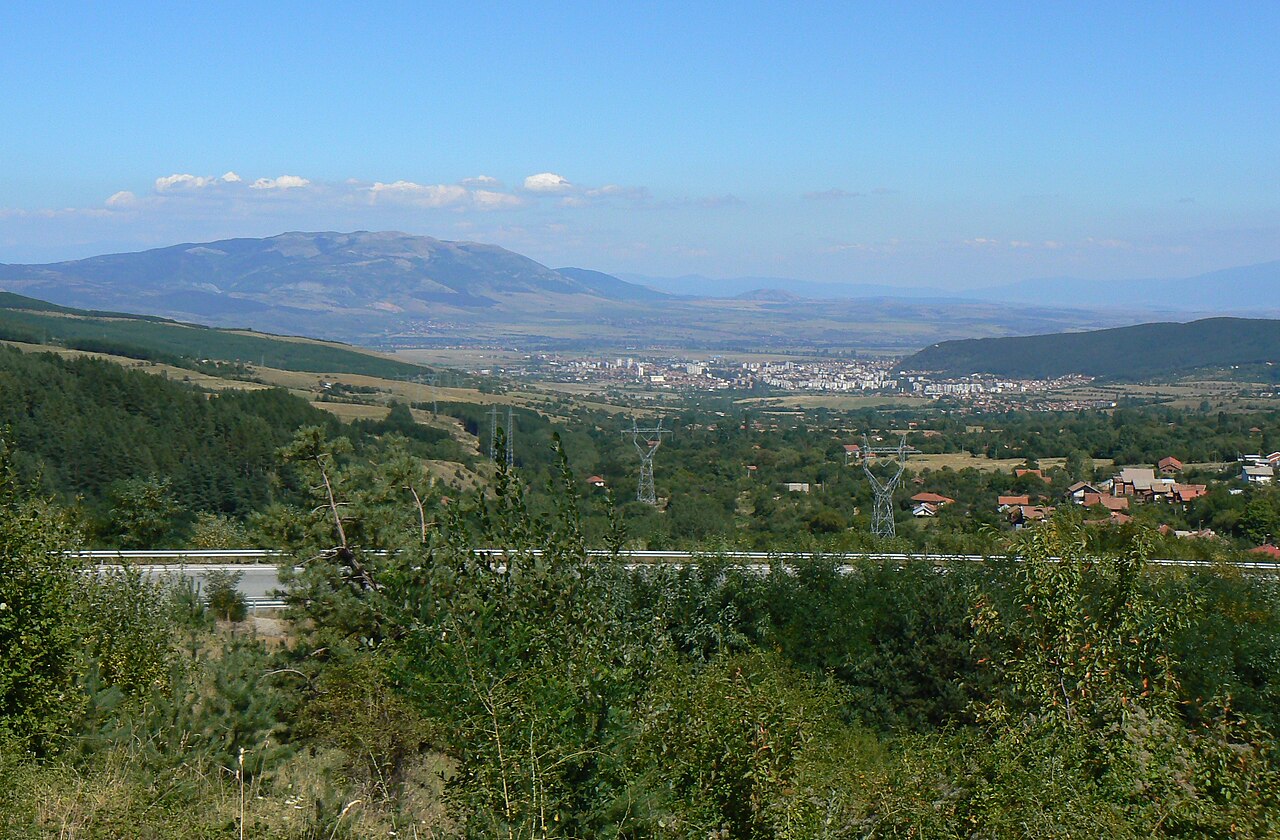
You do not need to believe a word of it to enjoy it. But if you see someone at the village pazar this week with bunches of wild herbs drying, this is the season behind it.

A name day for half your address book

This is where Enyovden really earns its place. Today is the name day for an unusually large cluster of names, all spun off the holiday and the saint: Enyo, Encho, Yani, Yanaki, Yanislav, the whole Yana family (Yanka, Yanina, Yanitsa, Yana herself), and the Deyan and Diyan group (Deyan, Deyana, Diyan, Diyana, and the anglicised Dean).

If any of that is your name, or your partner's, today is yours. And if it belongs to a Bulgarian friend, here is the etiquette worth knowing as a British expat: on a name day you do not wait for an invitation. The celebrant is the host, so you can drop round, you bring something small, flowers or something sweet, and you say "Chestit imen den" (happy name day). Turning up is the compliment.

Obzor's town day

It is also a town day. Obzor (Обзор), a small Black Sea resort up the coast in Nesebar municipality, holds its municipal celebration on Enyovden, tying the town's day to the midsummer feast. If you happen to be on that stretch of coast, it is worth knowing why the town is in a good mood.

It is, in the end, the kind of day that rewards knowing one Yana and turning up with flowers.

Questions about 24 June

What is Enyovden?

Enyovden, on 24 June, is the Bulgarian midsummer folk holiday, marked on the Orthodox feast of the birth of St John the Baptist. By tradition it is the day herbs are gathered at dawn, believed to be at their most potent, and it carries midsummer customs around the sun, dew and health.

Whose name day is 24 June?

It is the name day for a large group of names linked to the holiday and to St John: Enyo, Encho, Yani, Yanaki, Yanislav, the Yana family (Yanka, Yanina, Yanitsa, Yana), and Deyan, Deyana, Diyan and Diyana. If you know anyone with one of these names, you can wish them 'Chestit imen den'.

Is there anything on for Enyovden near the coast?

Yes. The Black Sea resort town of Obzor, in Nesebar municipality, holds its town day on Enyovden, so the celebration is tied to the midsummer feast there. Elsewhere it is mainly marked through name-day visits and the herb-gathering tradition rather than public events.

Sources for 24 June

Back to the June dates

25 June

Dimitar Peshev, the Man Who Halted a Deportation

Dimitar Peshev was born on this day in 1894. In March 1943 he led the parliamentary revolt that stopped the deportation of Bulgaria's 48,000 Jews to the death camps. It is one of the most important, and most complicated, stories the country has to tell.

First published 25 June 2026 · Adrian Dane · 4 min read

Dimitar Peshev, the Man Who Halted a Deportation

If you learn one piece of Bulgarian twentieth-century history while you live here, it could reasonably be this one. Dimitar Peshev, born in Kyustendil on this day in 1894, is the man most associated with the moment Bulgaria did not send its Jews to the death camps. It is a story the country is rightly proud of, and it is more complicated and more honest than a simple tale of heroism, which is exactly why it is worth telling properly.

What happened on this day

Dimitar Yosifov Peshev was born on 25 June 1894 into an affluent family in Kyustendil, in Bulgaria's far west. He studied languages in Saloniki and law in Sofia, fought in the First World War on the southern front, and came home to become a judge. In politics he had a reputation for being honest and honourable, served as Minister of Justice in the mid-1930s, and in 1938 became Deputy Speaker of the National Assembly. He cared, by all accounts, about the constitution and the rule of law. The wartime prime minister, Bogdan Filov, strongly disliked him.

Honesty requires the uncomfortable part first. When Tsar Boris III tied Bulgaria to Hitler's Axis in March 1941, Peshev did not object, and when parliament passed the Law for the Protection of the Nation, an anti-Jewish statute modelled on the Nuremberg Laws, he voted for it. That law stripped Jews of citizenship, forced name changes, capped Jewish university places below one percent and barred Jews from most jobs. Peshev was not a lifelong resister. He was a man of the system who, when the system reached its logical conclusion, could not follow it there.

Kyustendil, Dimitar Peshev's home town and the place where the rescue of Bulgaria's Jews began in March 1943
Kyustendil, Dimitar Peshev's home town and the place where the rescue of Bulgaria's Jews began in March 1943.

March 1943

The conclusion came in 1943. The government had agreed that on 10 March 1943 all of Bulgaria's 48,000 Jews would be deported from Kyustendil railway station to the death camps in German-occupied Poland, an operation run by the SS officer Theodor Dannecker. At the start of March, the Jews of Kyustendil were ordered from their homes. The town's citizens sent a delegation to Sofia, and on 8 March they walked into Peshev's office. One of them, his Jewish friend Jakob Baruch, told him what was planned. Peshev did not believe it at first, then telephoned senior officials who confirmed it.

By the morning of 9 March he had decided to stop it. The prime minister refused to see him, so Peshev and his colleague Petar Mihalev went instead to the interior minister, Petar Gabrovski, and pressed him until he gave way. Gabrovski telephoned the governor of Kyustendil and ordered the preparations halted. By half past five that afternoon, the deportation order for Bulgaria proper was cancelled.

The part that is not a clean triumph

This is where the story stops being comfortable. The cancellation did not reach everywhere in time, and it did not cover the lands Bulgaria then occupied. On 10 March the roundups went ahead in Thrace and Macedonia. Around 11,343 Jews from Bulgarian-held territories were deported to extermination camps in Nazi-occupied Poland and murdered. The 48,000 within Bulgaria's pre-war borders survived. Many thousands beyond them did not.

Both halves of that sentence are the history. Peshev's intervention was real and it saved a great many lives, and it sits alongside a deportation it did not prevent. He was later honoured as one of the Righteous Among the Nations, the recognition Israel gives to those who risked themselves to save Jews, and the honour is deserved. It is simply not the whole of the ledger.

Why a Brit here should know this

The rescue of the Bulgarian Jews is one of the things this country holds onto most tightly, and you will hear it referenced with real feeling. Knowing the fuller version, the early complicity, the frantic two days in March, the lives saved and the lives that were not, is part of understanding the place you have chosen to live, and of taking it seriously rather than as a postcard.

Peshev died on 20 February 1973, out of public life and largely unthanked at home for decades. Kyustendil, a couple of hours west of Sofia, keeps his memory now. If you ever pass through, it is worth knowing whose town it is.

Questions about 25 June

Who was Dimitar Peshev?

Dimitar Peshev (1894 to 1973) was Deputy Speaker of Bulgaria's National Assembly and a former Minister of Justice. In March 1943 he led the parliamentary intervention that forced the cancellation of a plan to deport Bulgaria's 48,000 Jews to Nazi death camps, and he was later named one of the Righteous Among the Nations.

Did Peshev save all of Bulgaria's Jews?

He helped save the roughly 48,000 Jews living within Bulgaria's pre-war borders, whose deportation was cancelled on 9 March 1943. But the reprieve did not extend to the territories Bulgaria then occupied: around 11,343 Jews from Thrace and Macedonia were deported on and after 10 March and murdered in extermination camps in Nazi-occupied Poland. The fuller story includes both.

What does 'Righteous Among the Nations' mean?

It is the honour given by Israel, through Yad Vashem, to non-Jews who took risks to save Jews during the Holocaust. Dimitar Peshev received it for his role in halting the 1943 deportation, despite having earlier voted for Bulgaria's anti-Jewish Law for the Protection of the Nation.

Sources for 25 June

Back to the June dates

26 June

Cherven Bryag's Town Day and the Battle of Elena

The 26th of June is a quiet date with two small doors into Bulgaria: a northern town marking its own day, and a battle that the records file under 1877, from the war that brought the modern country into being.

First published 26 June 2026 · Adrian Dane · 3 min read

Cherven Bryag's Town Day and the Battle of Elena

There is no thundering anniversary stamped on the 26th of June, which makes it a good day to see how the Bulgarian calendar actually works: a town quietly celebrating itself, and a footnote that opens onto the war that made the country.

Cherven Bryag's day

The genuine 26 June entry is a town day. Cherven Bryag (Червен бряг), a town in Pleven oblast in northern Bulgaria, holds its municipal celebration today. These town days are one of the easiest and most rewarding bits of local life for a British expat to notice: most Bulgarian towns have one, they usually bring a programme of music, sport and a bit of civic pride, and they are a good excuse to visit somewhere you would otherwise drive past. If you are anywhere near the Pleven region this is the town in a good mood today.

A battle from the war that made Bulgaria

The other thing the records hang on today is the Battle of Elena, fought during the Russo-Turkish War of 1877 to 1878. A note on honesty first, because this series cares about getting dates right: the sources file the battle under 1877 but describe it as one of the last offensive operations of that year's campaign, so it belongs to the closing months of 1877 rather than to midsummer. Treat today as the prompt to look at it, not the anniversary of the fighting.

The battle itself was a hard Ottoman counter-push at the town of Elena, in the hills south of Veliko Tarnovo, after Russian forward forces under General Gurko had taken Tarnovo. By the English record the Ottoman troops were led by Deli Fuad Pasha, part of the wider army of Suleyman Pasha. Elena changed hands in the fighting, and the town remembers its "first liberation" from that campaign.

The war around it is the part worth carrying. The 1877 to 1878 conflict ended roughly five centuries of Ottoman rule and brought the modern Bulgarian state into being, established by the Treaty of Berlin in 1878, which superseded the preliminary Treaty of San Stefano. Bulgaria still marks the moment every 3 March, which is the national day, and you will find monuments and ossuaries to that war in towns all over the country.

Why this matters for British expats

If you want one frame for understanding how Bulgarians see their own history, it is this war. The Liberation is the hinge the national story turns on, far more than any later political date, and it is why 3 March means more here than almost any other day in the calendar. Knowing the shape of it, the Russian alliance, the battles in the Balkan passes, the towns that changed hands, makes the monuments you pass and the public holidays you get suddenly legible.
No statue to it in Shumen marks the 26th specifically, and Cherven Bryag is a fair drive from here. But between a town toasting itself and a battle from the war of liberation, the quiet end of June still has more in it than the calendar lets on.

If you want the practical companion read, the Shumen.UK money guide sits next to this one.

Questions about 26 June

What is celebrated in Bulgaria on 26 June?

The clearest 26 June marker is the town day of Cherven Bryag, a town in Pleven oblast in northern Bulgaria, which holds its municipal celebration on this date. Most Bulgarian towns have their own such day during the year.
When was the Battle of Elena?

It was fought during the Russo-Turkish War of 1877 to 1878. The records associate it with 1877, and the sources describe it as one of the last offensive operations of that year's campaign, which places the fighting in the closing months of 1877 rather than in June.

Why does the 1877 to 1878 war matter so much in Bulgaria?

It ended centuries of Ottoman rule and created the modern Bulgarian state, established by the Treaty of Berlin in 1878, which superseded the preliminary Treaty of San Stefano. Bulgaria marks its liberation every 3 March, which is the national day, and monuments to the war stand in towns across the country.

Sources for 26 June

Back to the June dates

27 June

Emanuil Vidinski, Writer, Poet and Ethno-Rock Musician

Born in June 1978, Emanuil A. Vidinski is one of contemporary Bulgaria's busier literary figures: short-story writer, novelist, editor, and a former member of an ethno-rock poetry band. Better still for a British reader, some of his work exists in English.

First published 27 June 2026 · Adrian Dane · 3 min read

Emanuil Vidinski, Writer, Poet and Ethno-Rock Musician

Today belongs to a living writer rather than a long-dead one, which makes a nice change. Emanuil A. Vidinski was born in June 1978, and the date records place his birthday today. His surname comes from Vidin, the Danube town in Bulgaria's far northwest where he was born.

Who Emanuil Vidinski is

Vidinski is one of those genuinely multi-disciplinary Bulgarian cultural figures who do not map neatly onto a single British job title. He is a writer, poet and musician, and he has spent his career moving between all three.

The books came first to most readers. His collection of short stories, Cartographies of Escape (2005), was one of six titles shortlisted for the Elias Canetti Award that year, and he followed it with the novel Places to Breathe (2008). He had already won the Rashko Sugarev Award in 2004 for a short story called "4th of October", and picked up a second prize in 2009 for another, "Egon and the silence", at a short fiction competition organized by Balkani publishing house and OBB. Along the way he has written for the serious end of the Bulgarian press, the newspapers Kultura and the Literary Newspaper and the magazine Capital Light among them, and co-founded a humanities seminar devoted to Thomas Mann, Dostoevsky and the Bulgarian modernist Tchavdar Mutafov.

Then there is the music. In 2004, the poets Ivan Hristov and Petar Tchouhov founded an ethno-rock poetry band called Gologan, which is exactly the sort of thing that does not have a tidy British equivalent and is all the better for it. Vidinski joined later and left in 2006. He also wrote a music column, fittingly titled "Musaic", for the Literary Newspaper.
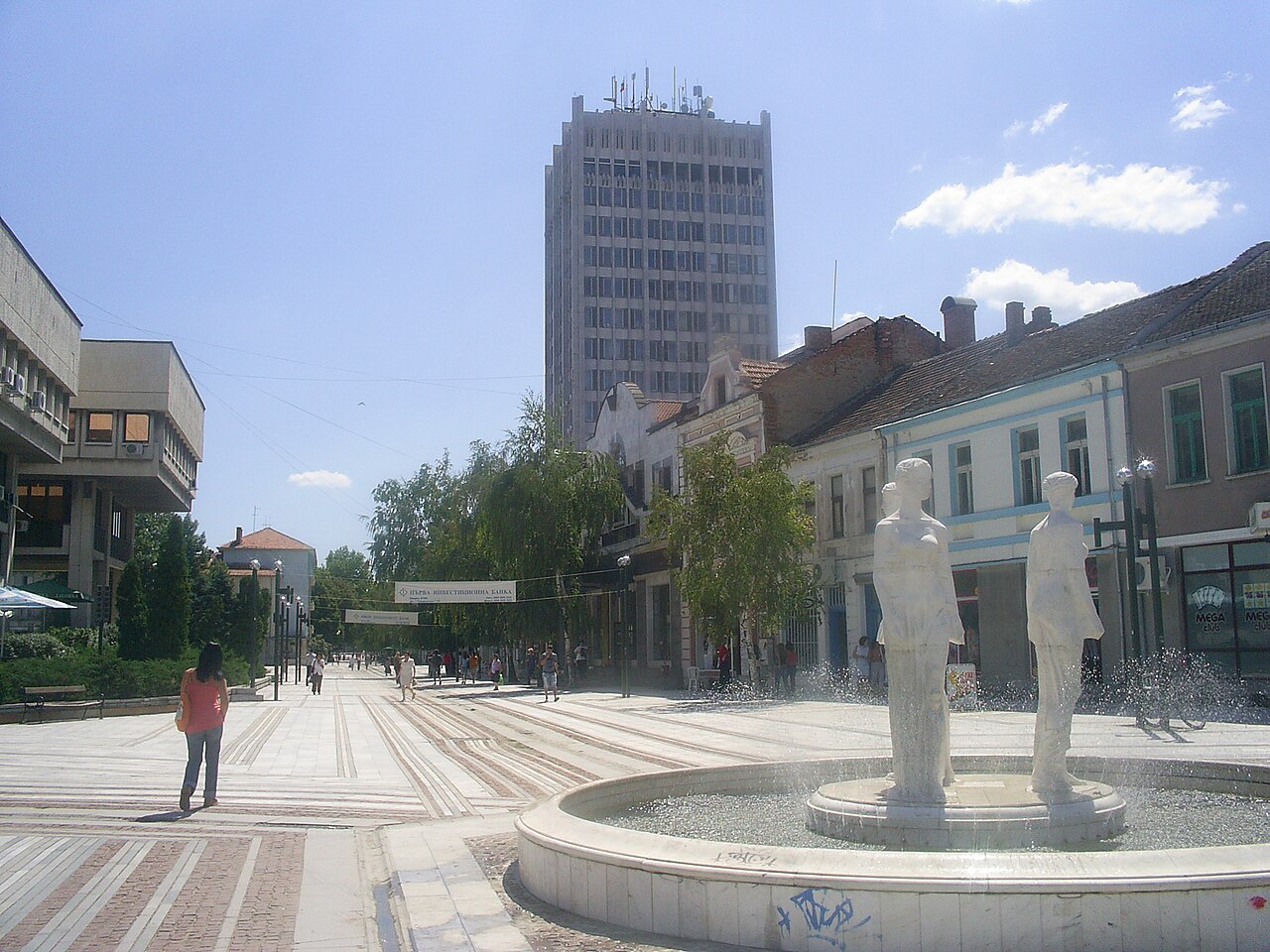
The editing is the third strand. He ran a "World Novels" book series at the Altera publishing house, worked as host and editor in the Bulgarian section of radio Deutsche Welle (1990–2012), and became editor-in-chief of Panorama Magazine. His own work has been translated into English, German, Hungarian, Croatian and Spanish.
Vidin, the Danube town that gave Emanuil Vidinski both his start and, fittingly, his surname
Vidin, the Danube town that gave Emanuil Vidinski both his start and, fittingly, his surname.

Why this is useful to a British expat

Here is the practical bit. Most of us arrive in Bulgaria knowing precisely nothing about its contemporary literature, partly because so little of it reaches English. Vidinski is one of the exceptions: his work has been translated, which means a curious British reader can actually go and read a living Bulgarian author rather than just nodding politely when the subject comes up. Start with the short fiction if you want a way in.

And if you would rather hear the culture than read it, the ethno-rock-and-poetry corner he helped build is a small, rewarding rabbit hole. Either route is a more interesting evening than another box set, and it is the kind of thing that slowly turns living in a country into actually knowing it.

Questions about 27 June

Who is Emanuil Vidinski?

Emanuil A. Vidinski is a Bulgarian writer, poet and musician, born in June 1978. He has published short stories and a novel, written for major Bulgarian newspapers, worked as host and editor in the Bulgarian section of radio Deutsche Welle (1990–2012) and as editor-in-chief of Panorama Magazine, and was a member of the ethno-rock poetry band Gologan from 2004 to 2006.

Can I read his work in English?

Yes, at least in part. Vidinski's work has been translated into English, as well as German, Hungarian, Croatian and Spanish, which makes him one of the more accessible contemporary Bulgarian authors for a British reader. His short fiction, including the collection Cartographies of Escape, is a sensible starting point.

What is Gologan?

Gologan is an ethno-rock poetry band founded in 2004 by the poets Ivan Hristov and Petar Tchouhov. Vidinski joined later and was a member until 2006. It is a good example of the way Bulgarian writers often work across literature and music rather than sticking to one form.

Sources for 27 June

Back to the June dates

28 June

Nikola Kirov, the Ilinden Writer Two Nations Claim

Born on this day in 1880 in Kruševo, Nikola Kirov Traykov was a teacher, a revolutionary, and a writer who fought in the Ilinden uprising. He is also the kind of figure Bulgaria and North Macedonia have spent a century arguing over, which is part of why he is worth knowing.

First published 28 June 2026 · Adrian Dane · 3 min read

Nikola Kirov, the Ilinden Writer Two Nations Claim

Today's birthday belongs to a man whose life is a small map of one of the Balkans' most tangled questions. Nikola Kirov Traykov, known by the nickname Mayski, was born on this day in 1880 in Kruševo, a mountain town then inside the Ottoman Empire and today in North Macedonia. He was a teacher, a revolutionary and a writer, and which nation he belongs to is something Bulgaria and its neighbour have argued about for a very long time.

Who Nikola Kirov was

Kirov got his schooling at the Bulgarian Men's High School in Bitola, from which he was expelled in 1898, and then at its counterpart in Thessaloniki, graduating in 1902. It was there that he joined the IMRO, the Internal Macedonian Revolutionary Organisation, the secret network that fought Ottoman rule in the region.

That path led him to the defining episode of his generation. During the Ilinden uprising of 1903 he was in his home town of Kruševo, where the rebels declared the short-lived Kruševo Republic, one of the most romantic and tragic episodes in the region's history, and Kirov took part in both its declaration and its doomed defence. Afterwards he headed the Kruševo revolutionary committee. He went on teaching in the schools of the Bulgarian Exarchate, in Embore, then Debar, and as director of the Bulgarian school in Resen in 1911-1912.

When the Second Balkan War redrew the map, Kirov moved with his family to Bulgaria, graduated from Sofia University, and kept up his work in the Macedonian emigre organisations. In 1923 he published a novel, Ilinden, dramatising the uprising and attributing authorship of the Kruševo Manifesto to his literary hero, the revolutionary Nikola Karev. The book is also a small landmark for another reason: it was among the first literary works written in his native Prilep-Bitola dialect, years before there was a standardised Macedonian language at all.

Kruševo, the mountain town where Nikola Kirov was born and where the 1903 Ilinden uprising declared a short-lived republ
Kruševo, the mountain town where Nikola Kirov was born and where the 1903 Ilinden uprising declared a short-lived republic.

The man two countries claim

That last detail is where the story stops being a simple biography. Was Kirov a Bulgarian writer or a Macedonian one? Bulgarian sources describe him plainly as a Bulgarian teacher and revolutionary; the wider record calls him a Macedonian Bulgarian; North Macedonia honours figures of the Ilinden generation as its own national founders. The same man, the same uprising, the same manifesto, claimed by two national stories that do not agree on the basic vocabulary.

This is not a dusty quarrel. The argument over who owns the IMRO, Ilinden and the writers and fighters of that era is the living core of the Macedonian Question, the dispute over history and identity that has repeatedly soured relations between Sofia and Skopje and tangled North Macedonia's path towards the European Union. Kirov, writing in a dialect before anyone had agreed what to call it, sits exactly on the fault line.

Why this matters for British expats

If you follow Bulgarian news for any length of time, the row with North Macedonia will surface, and it can look baffling from the outside: two friendly, closely related neighbours falling out bitterly over events from the 1900s. A figure like Kirov is the key to it. The disagreement is not really about him as a person; it is about whether a shared past can belong to two separate presents. Knowing that turns an opaque diplomatic spat into something you can actually follow.

It is also a quiet lesson in reading the country generously. The history here is genuinely shared, genuinely contested, and held with real feeling on both sides of the border. Kirov spent his life on the awkward seam of it, and a hundred years on, the seam has not closed.

File alongside this in your expat mental map: the Shumen.UK health guide.

Questions about 28 June

Who was Nikola Kirov Traykov?

Born in Kruševo on 28 June 1880, he was a teacher, a member of the revolutionary IMRO, and a writer. He took part in the 1903 Ilinden uprising and the short-lived Kruševo Republic, later settled in Bulgaria and graduated from Sofia University, and in 1923 published the novel Ilinden.

Was he Bulgarian or Macedonian?

It depends who is telling the story, and that is the point. Bulgarian sources describe him as a Bulgarian revolutionary, while North Macedonia honours the Ilinden generation as its national founders. Figures like Kirov are claimed by both national narratives, which is the heart of the long-running dispute between the two countries.

Why does this matter for understanding Bulgaria?

The argument over the IMRO, Ilinden and writers of that era is the living core of the Macedonian Question, a history-and-identity dispute that still affects relations between Bulgaria and North Macedonia and the latter's path to the EU. Knowing a figure like Kirov makes that recurring news story far easier to follow.

Sources for 28 June

Back to the June dates

29 June

Petrovden Name Days and the Death of Angel Wagenstein

The 29th of June is a big one. It is Petrovden, the feast of Saints Peter and Paul and one of the country's largest name days, and it is also the date in 2023 that Bulgaria lost Angel Wagenstein, a screenwriter and novelist who lived a hundred remarkable years.

First published 29 June 2026 · Adrian Dane · 3 min read

Petrovden Name Days and the Death of Angel Wagenstein

Some dates in the Bulgarian calendar are quiet. This is not one of them. The 29th of June is Petrovden, the feast of Saints Peter and Paul and one of the biggest name days of the year, and it is also the day, in 2023, that the country lost one of its most remarkable cultural figures. Two very different reasons to mark it.

Petrovden, and the start of the harvest

Petrovden is a top-six name day, which in Bulgaria means a serious number of people are celebrating. The roll-call today includes Petar, Pavel, Petya, Pepa, Polina, Penka, Pencho, Petrana, Pavlina, Kremena and Kamen, among others. If your address book here is any size at all, at least one of those names is in it.

It is also a marker in the farming year. By old tradition Petrovden signals the start of the harvest, and in some regions there is a lovely specific custom that you do not eat the season's first watermelon until after this day. You can see why it became a town day too: at least five towns hold their municipal celebration today, among them Belogradchik, famous for its rock formations, Etropole, Lyaskovets, Pavlikeni and Svoge.

The etiquette, if a Bulgarian friend is celebrating, is the same as any name day: you do not wait to be asked, you drop by, you bring something small, and you wish them "Chestit praznik" or "Chestit imen den".

Petrovden traditionally marks the start of the harvest season in the Bulgarian folk calendar
Petrovden traditionally marks the start of the harvest season in the Bulgarian folk calendar.

Angel Wagenstein, 1922 to 2023

The other reason to remember today is Angel Wagenstein, who died on 29 June 2023 at the age of 100. Even a short version of his life is extraordinary. Born in Plovdiv in 1922 into a Jewish family whose leftist politics sent them into exile in France, he came back to Bulgaria under an amnesty, joined an anti-fascist group as a student, and was interned in a labour camp for Jews in Macedonia, from which he escaped. Arrested again, he was condemned to death in 1944. The sentence was first delayed when Anglo-American bombing of Sofia wrecked part of the prison, and then never carried out, overtaken by the anti-fascist takeover and the arrival of the Red Army. He was 21.

What he did with the rest of that improbably spared life is the point. Wagenstein wrote more than fifty screenplays, and his 1959 film Stars won the Special Jury Prize at Cannes. Late in life he turned novelist, and a fine one: Far from Toledo took a Sorbonne prize in 2002, and Farewell Shanghai won the Jean Monnet Prize for European literature in 2004. He was made a chevalier of the French Order of Merit and given Bulgaria's highest honour, the Stara Planina Order, and in 2017 an American documentary about him took the apt title Art Is a Weapon.

Why this matters for British expats

Petrovden is the practical, sociable half: if you know a Petar or a Petya, today is the day to send the message, and the watermelon custom is the sort of small thing that makes the season here feel properly local.

Wagenstein is the half worth a quieter look. He is one of those Bulgarian figures whose work actually crossed borders, and his novels exist in English, so Farewell Shanghai or Far from Toledo is a genuine way for a British reader to meet twentieth-century Bulgaria on its own terms rather than through a guidebook. A man who was sentenced to death at 21 and was still writing prize-winning novels in his eighties is good company for an evening.

Worth a look if you haven't already: the Bulgarian name-days guide.

Questions about 29 June

What is Petrovden?

Petrovden, on 29 June, is the Bulgarian feast of Saints Peter and Paul and one of the largest name days of the year, celebrated by everyone called Petar, Pavel, Petya and the many related names. In folk tradition it marks the start of the harvest, and several towns, including Belogradchik and Etropole, hold their town day on it.

Whose name day is 29 June?

It is the name day for a large group of names including Petar, Pavel, Petya, Pepa, Polina, Penka, Pencho, Petrana, Pavlina, Kremena and Kamen. If you know anyone with one of these names you can wish them 'Chestit imen den'.

Who was Angel Wagenstein?

Angel Wagenstein (1922 to 2023) was a Bulgarian screenwriter and novelist. He survived a 1944 death sentence as a young anti-fascist, wrote more than fifty screenplays including the Cannes-honoured Stars (1959), and late in life won European prizes for novels such as Farewell Shanghai. He held Bulgaria's Stara Planina Order and died on 29 June 2023, aged 100.

Sources for 29 June

Back to the June dates

30 June

The Composer Who Helped Build Bulgaria's Music Schools

Bulgaria's deep musical tradition did not appear by accident. Someone had to build the schools, the unions and the orchestras. Dimitar Hadzhigeorgiev, born on this day in 1873, was one of the people who did.

First published 30 June 2026 · Adrian Dane · 2 min read

The Composer Who Helped Build Bulgaria's Music Schools

If you have been to a Bulgarian concert, heard one of the country's astonishing choirs, or just noticed how seriously music is taken here, it is worth remembering that someone had to lay the foundations. Institutions do not build themselves. Dimitar Hadzhigeorgiev, born on this day in 1873, was one of the people who built them.

Who Dimitar Hadzhigeorgiev was

He was born in Stara Zagora on 30 June 1873, was schooled at the Bulgarian Catholic gymnasium in Edirne, and then trained properly, studying the instrumental and composition departments of the Prague Conservatory, graduating in 1897. Prague at that time was one of the great musical cities of Europe, so this was a serious education, brought home to a country that was itself only a couple of decades into its modern existence.

Back in Bulgaria he taught in Stara Zagora from 1897 to 1902 and threw himself into building things. He was among the founders of the Kaval music society and conducted its orchestra, set up a school choir and orchestra, and organised what the record calls the first student brass band in the country. Then, in 1904, came the bigger work: he was one of the founders of the music school in Sofia and of the Bulgarian Music Union, the institutions that would professionalise music in the young state.

The rest of his career was the patient business of running and sustaining all of it. He edited the journal Musical Review across two long stretches, directed the school from 1912, and served as director of the Music Academy from 1921 to 1931. This is not the biography of a flamboyant star; it is the biography of the person who makes sure there is somewhere for the stars to be trained.

Why this matters for British expats

Bulgaria's reputation in music, the choral tradition that genuinely stops people in their tracks, the conservatory-trained musicians, the strong opera houses in cities the size of an English market town, did not come from nowhere. It was built deliberately, institution by institution, in the decades after independence, by people like Hadzhigeorgiev. Knowing that adds a layer to a concert ticket here: you are hearing the far end of a system somebody sat down and designed.

It is also, in a quiet way, a small name day. Anyone called Apostol or Tsolo is celebrating today, so that is one more person to wish well. But the real takeaway is the bigger one: the music you can hear cheaply and brilliantly all over this country has a back story, and today is one of its birthdays.

For more of the practical picture, see the Bulgarian name-days guide.

Questions about 30 June

Who was Dimitar Hadzhigeorgiev?

He was a Bulgarian composer and music educator, born in Stara Zagora on 30 June 1873. Trained at the Prague Conservatory, he helped found the Sofia music school and the Bulgarian Music Union in 1904, organised early school orchestras and a student brass band, edited the journal Musical Review, and directed the Music Academy from 1921 to 1931.

Why does he matter?

He was one of the institution-builders behind Bulgaria's modern music education. The schools, unions and ensembles he helped establish are part of why the country has such a strong classical and choral tradition today, so his work sits behind a great deal of the music you can hear here.

Is 30 June a name day in Bulgaria?

It is a small one. The names celebrating on 30 June include Apostol and Tsolo, so if you know anyone with those names you can wish them a happy name day.

Sources for 30 June

Back to the June dates

Keep exploring

Guides that go with June

Browse every published date, or read about corrections. Spotted a mistake? Email hello@shumen.uk.