On This Day in Bulgaria

May in Bulgarian history

May is the fullest month in the civic calendar: Labour Day on 1 May, Gergyovden on 6 May, St George's Day and the Day of the Bulgarian Army, Sts Konstantin and Elena on 21 May, and 24 May, the celebration of Bulgarian education, culture and the Cyrillic alphabet, when schools and towns parade.

16 May dates, each printed in full below.

May at a glance

The May dates

1 May, 6 May and 24 May are public holidays, and when Easter lands early in the month May can bring several long weekends. Gergyovden is the name day of every Georgi and Gergana, so expect roast lamb on many tables.

  1. 16 May: Georgi Markov the Literary Critic Dies
  2. 17 May: Lilia Ignatova Is Born, and Two Towns Hold Their Municipal Days
  3. 18 May: Yane Sandanski Is Born, Revolutionary Who Made Kidnapping for Freedom a Strategic Art
  4. 19 May: The 1934 Coup That Banned All Political Parties
  5. 20 May: Dimitar Kirov Is Born, the Painter Who Covered Half the Country in Frescoes
  6. 21 May: A Revolutionary Drowns Mid-Bridge, and 19 Forenames Throw a Party
  7. 22 May: Ludogorets Win the Cup (Again), and What That Means for European Football
  8. 23 May: Military Historian Petar Darvingov Is Born
  9. 24 May: Bulgaria's National Day: Cyril, Methodius, the Alphabet That Changed a Continent, and Eleven Towns
  10. 25 May: The Battle of Lomtsi and Tanyu Voivoda's First Victory
  11. 26 May: Revolutionary Panayot Volov Drowns Fleeing Ottoman Forces
  12. 27 May: The 1884 Election That Set the Liberals Against Each Other
  13. 28 May: The Yambol Bus Crash, and a Town Holds Its Municipal Day
  14. 29 May: A Messy 1927 Election, and Gorna Oryahovitsa Celebrates
  15. 30 May: Actor Boris Lukanov Dies, and a Nuclear City Throws a Party
  16. 31 May: Lyubomir Georgiev Dies in Florida, and a Sunday Passes Quietly

16 May

Georgi Markov the Literary Critic Dies

Most British expats know the umbrella-assassination Markov. Today marks the death of a different one: the literary critic who spent sixteen years running the theory department at Sofia University and built the intellectual scaffolding for how Bulgaria reads its own National Revival.

First published 16 May 2026 · Adrian Dane · 4 min read

Georgi Markov the Literary Critic Dies

Bulgaria runs on two calendars at once. There's the practical one (work, banks, taxes) and there's the cultural one (saints, ancestors, the slow turn of the agricultural year), and the cultural calendar is the one your Bulgarian neighbours actually pay attention to. 16 May is not a public holiday, and there are no processions or municipal fairs.

The value is purely cultural. If you're the kind of expat who enjoys impressing colleagues with localized knowledge, mentioning that today marks the death of Georgi Markov the literary critic will earn you a quiet moment of respect from anyone over forty who studied Bulgarian literature at school.

What happened on this day

Asking which Georgi Markov someone means is the Bulgarian equivalent of asking a British person which John Smith they're talking about, except one John Smith was assassinated by the KGB and the other wrote the definitive history of the Romantic poets. I've been here 13 years and I still have to double-check which Markov someone means when the name pops up.

Georgi Mitrev Markov died on 16 May 1987. He was a literary critic, a professor, and for sixteen years the head of the Department of Literary Theory at Sofia University. He graduated from the same university in 1951, became an assistant that year, and worked his way up: associate professor in 1967, full professor in 1975. From 1970 to 1972 he lectured on Bulgarian language and literature at the University of Göttingen, one of those Cold War cultural-exchange postings where quiet diplomacy happened in seminar rooms rather than embassies.

His real work, the thing that kept him at his desk until he died, was reconstructing the intellectual life of Bulgaria between the two World Wars. He wrote monographs on Dimcho Debelyanov (the poet killed in WWI whose work became the standard for Bulgarian lyric verse), on the modernist Geo Milev (executed by the police in 1925), and on the history of Bulgarian literary criticism itself. He edited Geo Milev's collected works, often in collaboration with Leda Mileva (the poet's daughter), and in 1986 he produced the foreword to a facsimile edition of the radical journal _Plamŭk_ (_Flame_), which Geo Milev had edited in the 1920s before the authorities shut it down.

Revival-period writers like Ivan Vazov and Hristo Botev are taught in schools today with the kind of reverence the British reserve for Shakespeare. Markov spent his career writing the user manual for how to read them, and for how to read the generation that came after them. His daughter, Milena Kirova, is herself a literary critic and historian, which suggests the family business involves long hours in archives rather than anything resembling normal working hours.

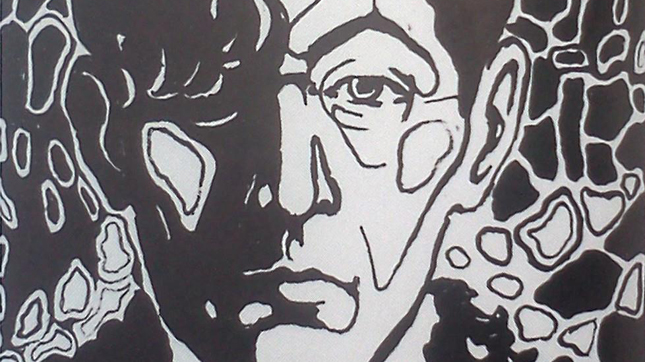
Geo Milev, the modernist poet whose work Georgi Markov spent decades studying and editing
Geo Milev, the modernist poet whose work Georgi Markov spent decades studying and editing. Photograph via Wikimedia Commons.

Why this matters for British expats

Shumen's old gymnasium (the secondary school that predates the university) still teaches the National Revival canon Markov spent his life analysing. If you've walked past the Dobri Voynikov museum in the National Revival quarter, or stood at the base of the Founders of the Bulgarian State monument on the plateau, you've been in the middle of the cultural terrain Markov mapped. Voynikov was a playwright and educator; the Founders monument commemorates the First Bulgarian Empire's intellectual and military elite. Both are part of the same cultural scaffolding that produced the poets and critics Markov studied.

If you're planning a trip to Sofia, the Bulgarian Academy of Sciences (where Markov spent stretches of his career) and Sofia University's main building are both worth seeing.

Knowing one or two of the names Markov wrote about, even if you never read their books, is the kind of thing that earns you a nod of respect over coffee. English-language material on this particular Markov is thin, meaning tracking down translations of his work requires some persistence. The umbrella-Markov, by contrast, has entire true-crime books written about him in English, which tells you everything you need to know about whose story travels better internationally.

Sources and further reading

Details for the literary critic draw on his Bulgarian Wikipedia biography, which lists his major monographs and his work on Geo Milev. The Bulgarian Academy of Sciences holds some of his archive, though access requires a researcher pass and a working command of Bulgarian.

Questions about 16 May

Who was Georgi Markov the literary critic?

Bulgarian professor who headed the Department of Literary Theory at Sofia University for sixteen years, specialising in National Revival literature and the interwar modernist poets. He died on 16 May 1987. Not the same Georgi Markov who was killed by the ricin umbrella in London.

Why are there two famous Georgi Markovs in Bulgaria?

Markov is a common Bulgarian surname, like Smith in Britain. One Georgi Markov was a dissident writer assassinated in London in 1978, which made international headlines. The other was an academic who spent his career at Sofia University and died of natural causes in 1987.

Can I visit Sofia University to see where Markov worked?

The main university building is a landmark and visible from the street, but the academic departments aren't open to casual visitors. The Bulgarian Academy of Sciences, where Markov also worked, similarly requires researcher credentials for archive access.

Sources for 16 May

Back to the May dates

17 May

Lilia Ignatova Is Born, and Two Towns Hold Their Municipal Days

On 17 May 1965, in a maternity ward in Sofia, Lilia Ignatova was born. By the time she was fifteen she was already winning European Championships. Today is also the day Batak remembers its darkest hour and Gabrovo celebrates being the longest town in Bulgaria.

First published 17 May 2026 · Adrian Dane · 6 min read

Lilia Ignatova Is Born, and Two Towns Hold Their Municipal Days

On 17 May 1965, in a maternity ward in Sofia, Lilia Ignatova was born. By the time she was fifteen she was already winning European Championships. By the time she retired in 1986 she had accumulated 19 gold, 12 silver, and 2 bronze medals across World and European Championships, plus the only double World Cup victory in rhythmic gymnastics history. British expats who follow Olympic sports will recognize the pattern: this is the kind of dominance the UK reserves for rowing or middle-distance running, sports where a relatively small nation punches well above its weight.

What happened on this day

Lilia Ignatova was born in Sofia in 1965, the daughter of Pavel Ignatov, a flight engineer on Bulgaria's first transatlantic civil aviation route. She trained under Zlatka Boncheva and Neshka Robeva at Levski Spartak, graduating from the National Sports Academy. Her twin sister Kamelia was a pole specialist in the Bulgarian group exercise and became World Champion with the team in 1981, which tells you something about the gene pool and the coaching structure that produced them.

The medal tally reads like an atlas of Cold War sports diplomacy: Amsterdam 1980 (European Championships silver all-around, gold clubs and ribbon), Munich 1981 (World Championships silver all-around, gold rope and hoop), Stavanger 1982, Strasbourg 1983 (World Championships silver all-around, gold ball and clubs), Vienna 1984, Valladolid 1985 (World Championships silver all-around, gold ball and clubs), Florence 1986 (European Championships gold all-around, shared with the emerging star Bianka Panova).

The signature achievement, though, was the World Cup double: Belgrade in 1983 and Tokyo in 1986. Ignatova remains the only rhythmic gymnast to win the World Cup Final twice, a record that still stands. She also won the Julieta Shishmanova Cup six consecutive years (1981-1986), the Bulgarian national championship named after the country's first rhythmic gymnastics coach.

Her routines combined technical difficulty (a backward shoulder roll with a circling ribbon, which sounds simple until you try to picture it) with choreography set to modern and classical music. The closing years of her career saw her performing pieces like "Ave Maria" with the ball, accompanied live by the violinist Mintcho Mintchev. Rhythmic gymnastics as art rather than sport, which is where Bulgaria has always separated itself from the merely technically proficient.

The post-retirement soap opera

Her post-retirement life took a turn that reads less like a sports biography and more like a chaotic 1990s post-communist thriller. In 1988 she appeared in the film musical AkaTaMus, playing the role of Agnesa. In 1990 she met Marquis Piero Giraldi, an Italian businessman who was leasing the Sunny Beach resort complex at the time. They married on 6 January 1993 and moved into a Bankya residence shared with Masako Oya, Giraldi's business partner.

Several months after the wedding, Giraldi was arrested. The Bulgarian Wikipedia extract offers no further detail on the charges or the business arrangements, leaving it as one of those classic unanswered mysteries of early post-communist Bulgaria. In 1994 Giraldi suffered two consecutive heart attacks and died on 4 March. The details are thin, but the timeline is striking: marriage, arrest, death, all within fourteen months.

By 1999 Ignatova was back in the gymnastics world, elected to the management board of the Bulgarian Rhythmic Gymnastics Federation. In 2000 she founded her own club, LILI SPORT, and began choreographing performances including Orpheus and Eurydice (scenario by Georgi Petrov, choreography by Ignatova and Asen Pavlov) and The Legend (music by Georgi Andreev, choreography by Ignatova and Ivo Ivanov). She later remarried, to a man named Rosen, and had two children, Yoana and Pavel. In 1999 she was inducted into the FIG Hall of Fame, one of four rhythmic gymnasts honoured that year.

Towns celebrating today

Batak

Batak, a town of around 3,500 in the Rhodope foothills, holds its municipal day on 17 May to mark the memory of the 1876 Batak massacre. During the April Uprising against Ottoman rule, several thousand civilians were killed in the town. The historic stone church, the Church of Sveta Nedelya (Църква "Св. Неделя"), is preserved as an ossuary museum. British parliamentary opinion turned sharply against Ottoman rule after William Gladstone cited Batak in his pamphlet Bulgarian Horrors and the Question of the East.

The town is also known for Batak sausage (lukanka), a dry-cured pork product with Protected Geographical Indication status, sold across Bulgaria. The municipal day itself is marked with a commemoration at the church, wreath-laying, and a quieter atmosphere than the celebratory tone most Bulgarian town days carry. It's a day of remembrance rather than a street fair.

Gabrovo

Gabrovo, a city of around 60,000 stretched along the Yantra River valley, claims to be the longest town in Bulgaria (roughly 25 kilometres end to end). The municipal day on 17 May celebrates the town's National Revival heritage, particularly Aprilov High School, founded in 1835 as one of Bulgaria's first secular schools using the Bell-Lancaster mutual teaching method.

The town's signature institution is the House of Humour and Satire (Дом на хумора и сатирата), founded in 1972. It hosts a biennial international cartoon festival and is the only museum of its kind in the Balkans. Gabrovo thrift is a well-known cultural trope, comparable in register to British jokes about Yorkshiremen or Scottish thrift. The local joke is that residents cut the tails off their cats to save on heating, which is funny precisely because it's untrue but close enough to the stereotype to stick.

Why this matters for British expats

The roads into Batak will have slightly heavier traffic if there's a memorial service at the church, but nothing that disrupts a Sunday drive through the Rhodopes.

The cultural value is in recognizing that rhythmic gymnastics occupies a place in Bulgarian national pride vastly larger than its profile in British sport. The UK sees rhythmic gymnastics as a niche Olympic event; Bulgaria sees it as a signature export, the sport where a small country has dominated globally for four decades. Lilia Ignatova's generation, the so-called Golden Girls (Ignatova, Diliana Gueorguieva, Anelia Ralenkova, Bianka Panova), shaped that reputation.

If you live near Gabrovo or Batak and your Bulgarian neighbours mention the municipal day, knowing the Batak massacre context (for Batak) or the humour-museum angle (for Gabrovo) gives you an immediate conversational anchor. The Batak commemoration is solemn; the Gabrovo one is lighter, often featuring comedy performances. Getting the tone right matters.

For British expats who run sports clubs, summer camps, or after-school programmes, rhythmic gymnastics is the one sport where Bulgaria's coaching infrastructure is genuinely world-class and accessible. Ignatova herself coached beginners at Levski Spartak after retiring. The pipeline that produced her is still operating, and if you have a daughter interested in the sport, the training available in Bulgaria is significantly better (and cheaper) than what you'd find in the UK.

File alongside this in your expat mental map: the Shumen.UK residency guide.

Sources and further reading

The biographical detail on Ignatova draws on her Bulgarian Wikipedia entry and the English Wikipedia article. Town profiles for Batak and Gabrovo rely on local municipal records and the official municipal calendars.

Questions about 17 May

Who was Lilia Ignatova?

Lilia Ignatova is a retired Bulgarian rhythmic gymnast, born in Sofia on 17 May 1965. She won 19 gold, 12 silver, and 2 bronze medals across World and European Championships in the 1980s, and remains the only rhythmic gymnast to win the World Cup Final twice (Belgrade 1983, Tokyo 1986). She was inducted into the FIG Hall of Fame in 1999.

What is Batak's municipal day commemorating?

Batak holds its municipal day on 17 May to mark the memory of the 1876 Batak massacre during the April Uprising. Several thousand civilians were killed; the event was cited by William Gladstone in his pamphlet 'Bulgarian Horrors and the Question of the East', which shifted British parliamentary opinion against Ottoman rule. The day is solemn, with wreath-laying at the Church of Sveta Nedelya ossuary museum.

Why is Gabrovo called the longest town in Bulgaria?

Gabrovo stretches roughly 25 kilometres along the Yantra River valley, making it one of Bulgaria's most elongated urban settlements. The town's National Revival architecture and the House of Humour and Satire museum are its main cultural draws. The municipal day on 17 May often features comedy performances, leaning into Gabrovo's reputation for thrift-related humour.

Sources for 17 May

Back to the May dates

18 May

Yane Sandanski Is Born, Revolutionary Who Made Kidnapping for Freedom a Strategic Art

Born in 1872 in what would soon become Bulgarian territory, Yane Sandanski became the most contradictory figure in Macedonian Bulgarian revolutionary history: socialist federalist, brilliant tactician, kidnapper of American missionaries, and eventual assassination victim at the hands of his own side.

First published 18 May 2026 · Adrian Dane · 5 min read

Yane Sandanski Is Born, Revolutionary Who Made Kidnapping for Freedom a Strategic Art

What happened on this day

On 18 May 1872, in the hamlet of Vlahi near Kresna in what was still Ottoman territory, a boy was born who would grow up to become one of the most fiercely disputed figures in Bulgarian and Macedonian history. Yane Ivanov Sandanski's life reads like a political thriller: shoemaker's apprentice turned revolutionary tactician, kidnapper of American missionaries, socialist visionary, Ottoman politician, and finally murder victim at the hands of his own movement's right wing.

Sandanski's father Ivan fought in the Kresna-Razlog Uprising of 1878-79 as a standard-bearer, and when that rebellion was crushed the family fled north to Dupnitsa, which had just been incorporated into the new Principality of Bulgaria after the Russian-Turkish Liberation War. The young Yane finished elementary school there, spent two years in a trade gymnasium, then trained as a shoemaker's apprentice when the family's money ran out. From 1892 to 1894 he did compulsory military service with the Bulgarian army's 13th Regiment in Kyustendil, rising to corporal.

In 1895 he joined the Supreme Macedonian-Adrianople Committee (SMAC), the externally-based organisation that ran armed incursions into Ottoman Macedonia from Bulgarian territory. The Committee's strategy was provocation: send in armed bands, attack Ottoman targets, force the Great Powers to intervene and demand autonomy for the region under Article 23 of the Berlin Treaty. Sandanski went with a SMAC detachment into the Rhodopes, attacking and burning the Pomak village of Dospat (40 villagers killed), then retreating under heavy Ottoman pursuit. He was wounded in a later skirmish at Lopovo and his elder brother Todor brought him back to Bulgaria for treatment.

The turning point came in 1899 when Sandanski met Gotse Delchev, the charismatic leader of the rival Internal Macedonian-Adrianople Revolutionary Organisation (IMARO). Delchev's vision was fundamentally different from SMAC's: a mass revolutionary organisation built from within the occupied territories, not raiding parties launched from Bulgaria. Sandanski was so impressed he switched sides entirely, swearing loyalty to Delchev and building IMARO's network of committees across the Serres and Gorna Dzhumaya districts.

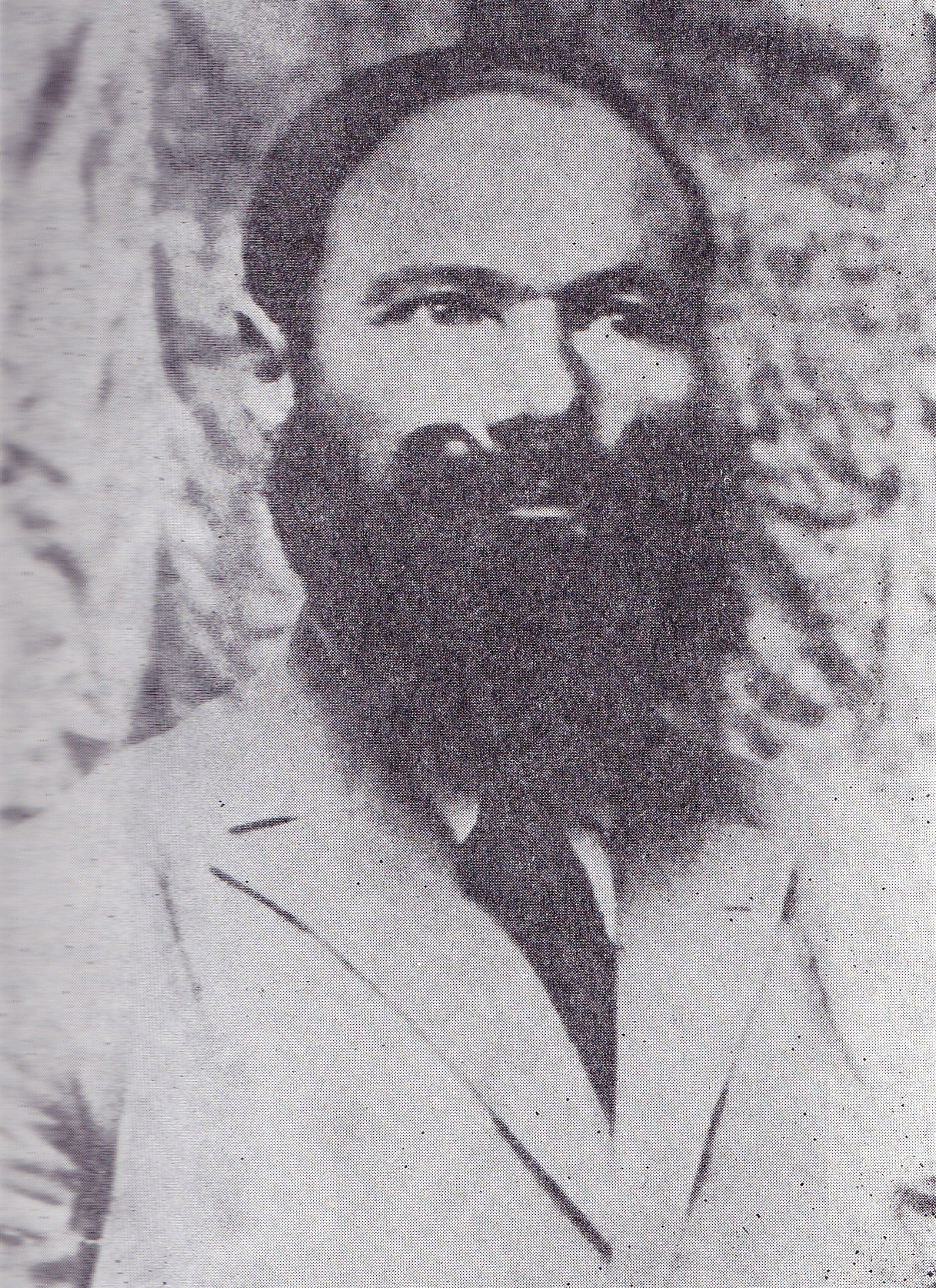
Gotse Delchev, the IMARO leader whose aims so impressed Sandanski that he switched revolutionary organisations entirely
Gotse Delchev, the IMARO leader whose aims so impressed Sandanski that he switched revolutionary organisations entirely. Photograph via Wikimedia Commons.

By 1901 IMARO was desperately short of funds. Sandanski proposed a solution that shocked even his colleagues: kidnap a wealthy foreigner and ransom them. On 3 September 1901, his detachment abducted Ellen Stone, an American Protestant missionary, along with her pregnant colleague Katerina Tsilka, near Bansko. The ransom demand was $110,000 (roughly $4 million in 2026 terms). The American public was outraged, the U.S. government negotiated, and after six months in captivity Stone was released. The money funded IMARO operations for years.

After the failed Ilinden Uprising of 1903, Sandanski emerged as leader of the Serres revolutionary district and head of IMARO's left-wing socialist faction. His political vision diverged sharply from the organisation's original Bulgarian-nationalist core. Where the right wing wanted eventual unification with Bulgaria, Sandanski advocated for an autonomous Macedonia within a federated Balkan socialist republic, with equality for all nationalities. He established what historians describe as a "state within a state" in northeastern Ottoman Macedonia: his own courts, tax system, and administration, all running parallel to Ottoman authority.

During the Young Turk Revolution of 1908, Sandanski collaborated with the new constitutional government, founding the People's Federative Party (Bulgarian Section) and serving as an Ottoman politician. This alliance with the Turks enraged the Bulgarian nationalist wing of IMARO. When the Balkan Wars broke out in 1912, Sandanski fought on Bulgaria's side, but afterwards his plotting to assassinate Tsar Ferdinand I made him a marked man.

On 22 April 1915, near the village of Rozhen in Pirin, Sandanski was ambushed and killed by IMARO right-wing activists on the orders of Todor Aleksandrov. He was 42. The assassination was internal: one revolutionary faction eliminating another for ideological betrayal.

Why this matters for British expats

The practical impact of Yane Sandanski's birthday on your week is precisely zero: his stomping ground was the southwest of the country, a good five hours' drive away from us, where every other street, school and statue carries his name.

The cultural impact is rather more significant. Sandanski is one of those figures whose legacy you cannot escape if you spend any time in Bulgaria or North Macedonia. A major town in southwestern Bulgaria carries his name (Sandanski, the spa town near the Greek border, population 26,000). Streets, schools, monuments, and plaques commemorate him across the region. In Bulgaria he's simultaneously a national hero and a controversial figure, depending on which historian you ask. Post-communist nationalist scholarship sometimes frames him as a traitor who collaborated with Turks and opposed Bulgarian national unity. In North Macedonia, where the Yugoslav-era positive portrayal still dominates, he's celebrated as a fighter against both Ottoman and Bulgarian domination.

For British expats, understanding Sandanski is useful precisely because his story defies the tidy nationalist narratives both countries now prefer. He was a socialist who kidnapped an American missionary to fund his cause, a Bulgarian who fought against Bulgarian annexation, an Ottoman politician who then took up arms against the Ottomans again, and a revolutionary assassinated by his own movement. The contradictions are the point. Balkan revolutionary history in the late 19th and early 20th centuries was ideologically messy, tactically ruthless, and driven by men whose personal loyalties shifted faster than the borders did.

If you're the kind of expat who reads the plaques on statues rather than just walking past them, Sandanski's name will come up. Knowing he masterminded the Ellen Stone kidnapping (which made international headlines at the time) and that his own side killed him for ideological deviation gives you the two-sentence summary that impresses Bulgarian colleagues over coffee. It signals you're paying attention to the country's history, not just its property prices.

The phrasebook section on Shumen.UK covers the etiquette of revolutionary commemoration days if you ever find yourself at one, though 18 May itself is not a public holiday.

Worth a look if you haven't already: the Shumen.UK money guide.

Sources and further reading

Details for Sandanski's early life and revolutionary career draw on the Bulgarian Wikipedia biography, which is significantly more detailed than the English version. The Ellen Stone kidnapping is well-documented in American diplomatic archives from the period, and the internal IMARO factional split that led to Sandanski's assassination is covered in Bulgarian revolutionary historiography, though interpretations of his legacy remain fiercely contested.

Questions about 18 May

Who was Yane Sandanski?

Yane Sandanski was a Macedonian Bulgarian revolutionary leader born in 1872, head of the left-wing socialist faction of IMARO. He advocated for an autonomous Macedonia within a Balkan federation rather than annexation by Bulgaria, and was assassinated in 1915 by the rival nationalist faction of his own organisation.

Why did Sandanski kidnap an American missionary?

In 1901 IMARO was desperately short of funds for revolutionary activity. Sandanski masterminded the kidnapping of Ellen Stone, an American Protestant missionary, and held her for six months until a ransom of $110,000 was paid. The money funded IMARO operations for years.

Is 18 May a public holiday in Bulgaria?

No. Sandanski's birthday is not a public holiday. Banks, shops, government offices and schools operate as normal. He is commemorated in place names and monuments, but the day itself carries no official observance.

Why is Sandanski controversial in Bulgaria?

Sandanski opposed Bulgarian annexation of Macedonia, advocating instead for a socialist Balkan federation. He collaborated with the Young Turks during the 1908 constitutional period. Post-communist Bulgarian nationalist historians sometimes frame him as a traitor, while others honour him as a revolutionary hero.

Where can I see Sandanski commemorated today?

The spa town of Sandanski in southwestern Bulgaria is named after him. Streets, schools and monuments across Bulgaria and North Macedonia carry his name. His legacy remains disputed, with both countries claiming him while interpreting his politics very differently.

Sources for 18 May

Back to the May dates

19 May

The 1934 Coup That Banned All Political Parties

Ninety-two years ago today, a group of military officers and nationalist intellectuals overthrew the Bulgarian government, dissolved parliament, suspended the constitution, and banned every political party in the country. Here's what actually happened, and why one small town in the Rhodopes marks this date as its municipal day.

First published 19 May 2026 · Adrian Dane · 8 min read

The 1934 Coup That Banned All Political Parties

On the night of 18 May 1934, a group of Bulgarian military officers gathered at a private residence on ulitsa Ivan Vazov in Sofia, drafted a royal decree dismissing the sitting government, and by dawn had taken control of the capital without firing a shot. The 19 May coup replaced a fractious coalition parliament with a cabinet of nationalist reformers, suspended the constitution, banned all political parties, and set the stage for a personal monarchy under Tsar Boris III that would last until his death in 1943.

The coup is one of those moments British expats living here rarely encounter in casual conversation, but it shaped the political landscape that led directly to 1944, the communist takeover, and the system that only ended in 1989. If you're the kind of person who wants to understand why Bulgarian politics still carries a streak of suspicion toward party machines and why municipal days sometimes fall on dates with no obvious folk or religious hook, this is part of the answer.

What happened on this day

By May 1934, Bulgaria's parliamentary system was collapsing under the weight of coalition infighting. The ruling People's Bloc, a coalition of the Democratic Party, the Bulgarian Agrarian National Union (BANU "Vrabcha 1"), the National Liberal Party, and the Radical Democratic Party, had held power since 1931 but was riddled with internal disputes. On 5 May, parliament voted no confidence in the transport minister, the only representative of the Radical Democrats in the cabinet. BANU "Vrabcha 1" walked out on 10 May, and on 14 May the prime minister, Nikola Mushanov, formally resigned. Parliament adjourned. Mushanov was handed a mandate to form a new government, but negotiations dragged.

The Military Union, a semi-secret organization of reserve officers led by Colonel Damyan Velchev, had been planning a takeover since late 1933. Zveno ("The Link"), a nationalist political circle founded by intellectuals and journalists who despised the party system, provided the ideological scaffolding. The two groups agreed that Kimon Georgiev, a Zveno member and former engineer with no parliamentary baggage, would head the new government. They drafted a programme that called for suspending the constitution, dissolving parliament, banning all parties, and replacing elected mayors with state-appointed ones.

Tsar Boris III, suspicious of parliament but equally wary of the Military Union's republican leanings, made a series of appointments in early May that inadvertently smoothed the plotters' path. On 9 May, he named Anastas Vatev, president of the Military Union, as Minister of War. On 18 May, Mihail Yovov became Chief of the General Staff, Lyubomir Vasilkov head of the Military Chancellery, and Stefan Tsanev commander of the Sofia garrison. All were Military Union members. Vatev's acceptance of the ministerial post without consulting his own organization created confusion, but Velchev pushed ahead.

On the evening of 18 May, the plotters gathered at the home of Vasil Karakulakov on ulitsa Ivan Vazov №27, finalized the decree dismissing the government, and at midnight moved to the seized police headquarters. Colonel Georgi Tanovski appeared before the tsar around the same time and informed him that the coup was underway, assuring him it was not directed against the monarchy. The tsar, presented with a fait accompli and surrounded by officers whose loyalty was unclear, acquiesced.

By dawn on 19 May, Sofia was under military control. The radio announced the formation of a new government under Kimon Georgiev. Political parties were banned. The National Assembly was dissolved. The Tarnovo Constitution, Bulgaria's foundational democratic charter since 1879, was suspended. Revolutionary organizations, including IMRO (the Internal Macedonian Revolutionary Organization, which had terrorized Bulgarian politics for decades), were outlawed. Trade unions were replaced by state-controlled syndicates. A Public Renewal Directory was created to propagandize the new order.

Prime Minister Mushanov, who had been at the opera the previous evening watching Tosca with the visiting mayor of Paris, found himself out of office without ceremony. The coup had been bloodless, efficient, and over before most of Sofia woke up.

The Georgiev government lasted eight months. It established diplomatic relations with the USSR on 23 July 1934, the first time monarchist Bulgaria had done so, and attempted to improve relations with Yugoslavia (then a French ally) as part of a pivot toward Paris and away from Fascist Italy. King Aleksandar I of Yugoslavia visited Bulgaria on 27 September 1934, a symbolic reconciliation undermined by the fact that Aleksandar would be assassinated by IMRO gunmen in Marseille a week later.

The coup's anti-monarchist undertones, especially among the Military Union's republican wing, made Tsar Boris increasingly uneasy. With the aid of loyalist officers, he forced Georgiev to resign in January 1935 and replaced him with General Pencho Zlatev. From that point, the tsar ruled personally, a state of affairs that lasted until his death in August 1943. The Zveno figures who launched the coup, Georgiev and Velchev among them, would resurface a decade later as leaders of the 1944 Fatherland Front coup that brought the communists to power. Georgiev became prime minister again in September 1944, the second time he'd held the post, this time under Soviet sponsorship.

Towns celebrating today

Dzhebel (population roughly 3,000), a town in Kardzhali Province in the eastern Rhodopes, marks 19 May as its municipal day. The town sits near the Greek border in a region that was Ottoman until 1912, became Bulgarian after the Balkan Wars, and retains a large ethnic Turkish population today. Dzhebel's economy is agricultural (tobacco, sunflowers, livestock), with a small textile industry. The town's name means "mountain" in Turkish, and it sits at the foot of the eastern Rhodope range, surrounded by forested hills and limestone outcrops.

Why Dzhebel chose 19 May is not documented in the standard municipal-day sources, but the date's association with a nationalist coup that imposed a centralizing, anti-party regime has a certain irony in a borderland town where ethnic and political identity have always been contested. The 1934 government renamed hundreds of Ottoman-era Turkish place names to Bulgarian ones as part of its nationalist programme; Dzhebel kept its Turkish name, a detail that likely didn't escape the Zveno ideologues at the time.

If you're in Kardzhali Province today, Dzhebel's municipal-day events are likely low-key: a wreath-laying at the town monument, possibly a concert in the main square, local officials making speeches. It's not a major tourist draw, but if you're driving through the eastern Rhodopes between Kardzhali and the Greek border, the town makes a reasonable lunch stop.

Why this matters for British expats

The coup's legacy is everywhere once you know where to look.

The Tarnovo Constitution, suspended in 1934 and never formally restored, is the constitutional ghost that haunts Bulgarian political discourse. When Bulgarians today complain about weak parliaments, personalized rule, and the endless churn of coalition governments that collapse mid-term, they're describing a pattern that solidified after 1934. The coup didn't invent Bulgaria's political fragility, but it normalized the idea that a cabinet could be installed without elections and that parties were dispensable obstacles to efficient governance. That mindset survived the communist period and resurfaced in various forms after 1989.

For British expats, the practical takeaway is simpler: if you've ever wondered why Bulgarian municipal days sometimes fall on dates with no saint, no harvest festival, and no folk precedent, the answer is often political. Towns mark the day a garrison was liberated, a battle was won, a decree was signed. Dzhebel's choice of 19 May is one of those odd municipal decisions that makes sense only if you know the town's relationship to the centralizing project the coup represented.

The British equivalent would be if a Yorkshire town celebrated the anniversary of a Cromwellian military order as its civic day. It would feel strange until you learned the local backstory, at which point it would make a certain cynical sense. That's the mode you're in with Dzhebel today.

For more of the practical picture, see the Shumen.UK driving guide.

Sources and further reading

The account above draws on the Bulgarian [Wikipedia entry on the 19 May coup](https://bg.wikipedia.org/wiki/%D0%94%D0%B5%D0%B2%D0%B5%D1%82%D0%BD%D0%B0%D0%B4%D0%B5%D1%81%D0%B5%D0%BC%D0%B0%D0%B9%D1%81%D0%BA%D0%B8_%D0%BF%D1%80%D0%B5%D0%B2%D1%80%D0%B0%D1%82), which names participants, timelines, and the specific addresses in Sofia where the coup unfolded, plus the English Wikipedia article for the broader European context. Municipal-day details for Dzhebel come from the standard regional listings. The political-legacy paragraph is informed by standard interwar Bulgarian historiography, available in any decent library in Sofia or via the Bulgarian Academy of Sciences archives, but those sources are dense and not especially useful unless you're writing a dissertation.

Questions about 19 May

Who was Kimon Georgiev?

Kimon Georgiev was an engineer and Zveno political-circle member who became prime minister after the 19 May 1934 coup. He lasted eight months before Tsar Boris III forced him out. Georgiev returned as prime minister in 1944 after the communist-backed Fatherland Front coup, serving until 1946.

Is 19 May a public holiday in Bulgaria?

No. It's an ordinary working day. Banks, government offices, and schools operate on their normal Tuesday schedule. Only Dzhebel marks the date as its municipal day, and even there the commemorations are low-key.

What was Zveno?

Zveno ("The Link") was a nationalist political circle founded by intellectuals and journalists in the early 1930s. They despised party politics, favored technocratic governance, and wanted Bulgaria to modernize and join a Balkan federation. The 1934 coup put them briefly in power, but Tsar Boris III dismantled their influence within a year.

What happened to the political parties after the coup?

All political parties were banned on 19 May 1934. Their property was confiscated, and severe sentences were introduced for anyone attempting to renew a party or found a new one. The ban remained in place under the tsar's personal rule and was only lifted after the 1944 communist coup, which legalized the Fatherland Front coalition parties.

Why does Dzhebel celebrate 19 May?

The official record doesn't explain Dzhebel's choice of 19 May as its municipal day. Given the town's location in the Rhodopes near the Greek border and its large ethnic Turkish population, the date's association with a nationalist, centralizing coup is an ironic fit, but the specific reason the town council chose it is lost to local bureaucracy.

Sources for 19 May

Back to the May dates

20 May

Dimitar Kirov Is Born, the Painter Who Covered Half the Country in Frescoes

Today marks the birth of Dimităr Kirov, known as DiKiro, born 20 May 1935 in Istanbul. Most British expats wouldn't recognise the name, but you've almost certainly walked past his work without realising it.

First published 20 May 2026 · Adrian Dane · 4 min read

Dimitar Kirov Is Born, the Painter Who Covered Half the Country in Frescoes

On 20 May 1935, in a maternity ward in Istanbul, Dimităr Nikolov Kirov was born. By the time he was in his mid-twenties he'd graduated from Sofia's Art Academy and started covering Bulgaria in frescoes, mosaics, and sgraffito that still define the visual landscape of entire towns. If you've spent any time in Plovdiv, Dobrich, or anywhere near the Buzludzha Monument, you've stood under his work.

What happened on this day

Kirov, who signed his work DiKiro, was born into the Turkish-Bulgarian diaspora community and arrived in Bulgaria proper as a young man. He enrolled at the Art Academy in Sofia (now the National Academy of Art) and studied monumental and decorative painting under Professor Georgi Bogdanov, graduating in 1959. The training positioned him squarely in the post-war Bulgarian tradition of public art, where monumental frescoes, mosaics, and architectural decoration were state-funded and ideologically loaded.

His early commissions included the secco fresco and sgraffito facade in Old Town Plovdiv (1968), a sweeping piece that integrated the city's Revival-period architecture with contemporary visual language. In 1969 he completed a monumental secco panel titled "From the Cultural History of Plovdiv" in the foyer of the Plovdiv Party House concert hall, establishing the pattern his career would follow for the next three decades: large-scale, site-specific work that fused Bulgarian historical themes with the aesthetics of socialist monumentalism.

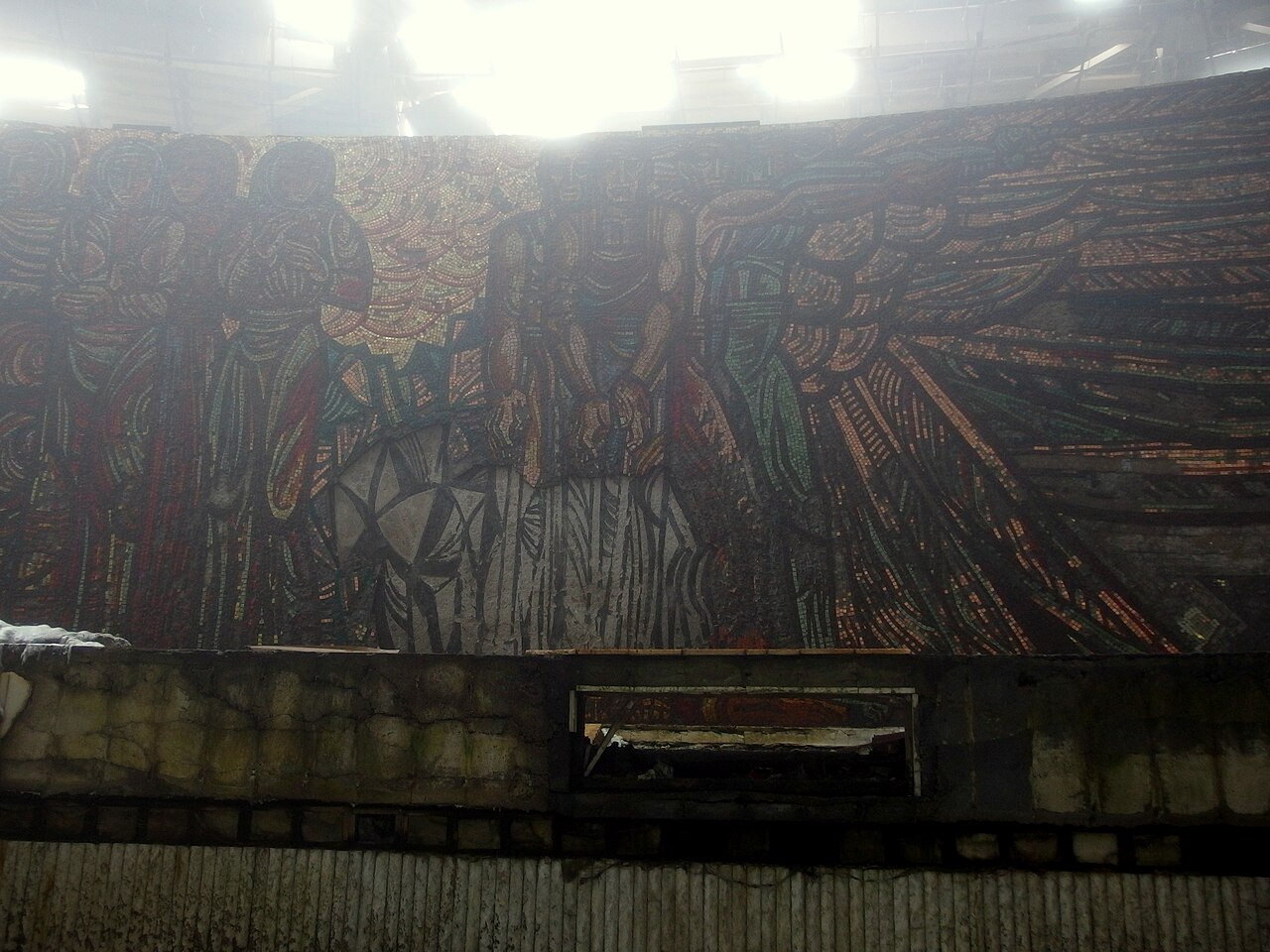
The commission that cemented his reputation came in 1981, when he was tasked with designing the interior mosaic for the Buzludzha Monument, the iconic flying-saucer-shaped structure on Buzludzha Peak commissioned to mark the founding of Bulgarian socialism. Kirov's contribution was an 8-metre-by-3-metre stone-and-smalt mosaic titled "April Uprising", depicting revolutionary imagery in the central hall. The mosaic used traditional Bulgarian iconographic elements but rendered them in the angular, heroic register the Party favoured. Architect Georgi Stoilov designed the building; Kirov designed the visual theology inside.

Other major works include the "Rhodope Song" mosaic in the foyer of NDK Sofia (the National Palace of Culture, 1981), a secco fresco in the Zlatyu Boyadzhiev House Museum in Plovdiv (1983), and the "Dobrudzha" fresco in the central foyer of the Party House in Tolbukhin, now Dobrich (1985). Each piece was embedded in its architecture, designed to be walked past daily by the public, not hung in a gallery.

Kirov held multiple leadership roles in the Union of Bulgarian Artists between 1968 and 1989, served as chairman of the state commission on visual arts in 1987, and was named Honoured Artist in 1974 and People's Artist in 1985. He was made an honorary citizen of Plovdiv in 1984. His work is held in the National Gallery in Sofia, the State Hermitage in St. Petersburg, the Vatican collection, the Museum of Contemporary Art in Fukuyama, Japan, and dozens of state and private collections worldwide. He died in Plovdiv on 23 October 2008.

The interior of the Buzludzha Monument, where Kirov's 8×3-metre stone-and-smalt mosaic 'April Uprising' still dominates
The interior of the Buzludzha Monument, where Kirov's 8×3-metre stone-and-smalt mosaic 'April Uprising' still dominates the central hall. Photograph via Wikimedia Commons.

Why this matters for British expats

Most British expats wouldn't know Kirov's name off the top of their head, but if you've walked through Plovdiv's Old Town, visited the Zlatyu Boyadzhiev museum, or made the pilgrimage to Buzludzha (and most expats do, eventually), you've stood under his work. The frescoes and mosaics he created aren't tucked away in galleries; they're embedded in the architecture of daily life.

This matters because understanding Bulgaria's monumental art tradition is part of understanding why public buildings here look the way they do. The British instinct is to dismiss socialist-era murals as propaganda, which they often were, but they were also craftsmanship at scale. Kirov's generation trained in classical fresco and mosaic techniques, then applied them to buildings designed to last. Buzludzha is crumbling now, but the 8-metre mosaic inside is still intact, which tells you something about the standard of work.

For expats living in Plovdiv specifically, Kirov is the painter whose hand shaped the visual identity of the city's Revival quarter and its cultural institutions. The Zlatyu Boyadzhiev museum's interior fresco is his; the Party House concert-hall panel is his; the Old Town sgraffito you walk past on Saborna Street is his. Knowing that the same artist worked across all three sites gives you a thread to follow through Plovdiv's architectural history.

If you're planning a visit to Buzludzha, the April Uprising mosaic is the centrepiece of the main hall. The site is abandoned and officially off-limits, but it remains one of the most-photographed pieces of socialist architecture in the Balkans, and the mosaic is the reason. Kirov's work survives him; the buildings he decorated outlasted the state that commissioned them.

If this is your kind of context, the Shumen.UK health guide is the natural next read.

Sources and further reading

The biographical details and career timeline draw on the Bulgarian Wikipedia biography of Dimităr Kirov. Additional context on the Buzludzha Monument and Plovdiv's cultural institutions comes from regional municipal listings and the standard Bulgarian monumental-art catalogue.

Questions about 20 May

Who was Dimităr Kirov?

Dimităr Kirov (1935–2008), known professionally as DiKiro, was a Bulgarian painter and muralist who specialised in monumental and decorative work. He trained at Sofia's Art Academy and spent his career creating large-scale frescoes, mosaics and sgraffito for public buildings across Bulgaria, including the Buzludzha Monument, NDK Sofia, and multiple cultural institutions in Plovdiv.

Where can I see Kirov's work in Bulgaria?

His most famous piece is the 8×3-metre mosaic inside the Buzludzha Monument on Buzludzha Peak. In Plovdiv, you can see his frescoes at the Zlatyu Boyadzhiev House Museum, the Party House concert hall, and the Old Town Revival-quarter facades. In Sofia, his "Rhodope Song" mosaic is in the foyer of NDK (the National Palace of Culture).

Is Buzludzha open to the public?

No. The Buzludzha Monument is officially closed and structurally unsafe, though it remains one of the most-visited (and most-photographed) abandoned sites in Bulgaria. Access is technically illegal but rarely enforced. If you visit, go prepared for crumbling concrete and no facilities.

What does 'secco' and 'sgraffito' mean?

Secco (Italian for 'dry') is a fresco technique where pigment is applied to dry plaster rather than wet, allowing finer detail but less durability. Sgraffito (Italian for 'scratched') is a decorative technique where layers of coloured plaster are applied, then scratched away to reveal patterns or images underneath. Both were standard techniques in Bulgarian monumental art.

Sources for 20 May

Back to the May dates

21 May

A Revolutionary Drowns Mid-Bridge, and 19 Forenames Throw a Party

Today's Bulgarian calendar swings the other way: a drowned anarchist turned building contractor, three towns holding municipal days, and one of the most name-heavy days in the entire calendar. Here's what actually matters if you live here.

First published 21 May 2026 · Adrian Dane · 7 min read

A Revolutionary Drowns Mid-Bridge, and 19 Forenames Throw a Party

What happened on this day

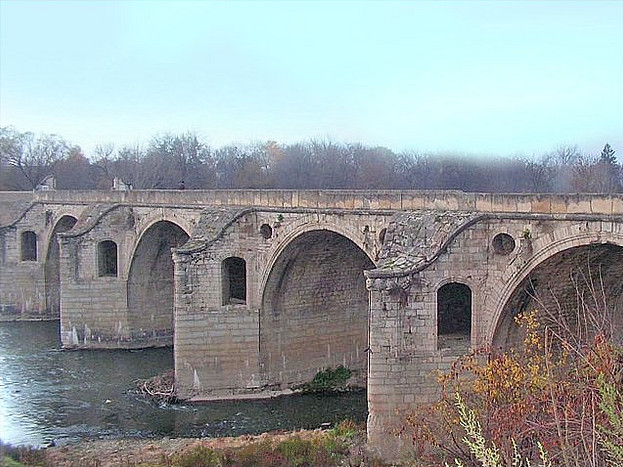
Revolutionaries rarely get the cinematic deaths their biographies seem to promise. Dimitar Koshtanov spent the first half of his adult life digging a tunnel under an Ottoman bank, plotting anarchist bombings, and running guns as a voivode in the Macedonia-Adrianople highlands. He spent the second half as a building contractor in his hometown, chairing the local chitalishte board. On 21 May 1915, aged 36, he drowned in the Struma River while supervising the construction of a bridge near the village of Pokrovnik.

Born in Gorna Dzhumaya (today's Blagoevgrad) on 18 March 1879, Koshtanov studied engineering in Switzerland but never finished. His anarchist convictions pulled him into the orbit of VMORO (the Internal Macedonian-Adrianople Revolutionary Organisation), where he operated as a terrorist attached to the Central Committee. In 1900, he joined the gemidzhii, the bomb-makers and tunnel-diggers. When three comrades (Petar Mandzhukov, Petar Sokolov, and Pavel Shatev) were arrested mid-tunnel, Koshtanov and Aleksandar Kiprov replaced them, continuing to dig under the Ottoman Bank in Constantinople. The Turkish authorities intercepted correspondence between Koshtanov and Hristo Matov in 1901 and sealed the warehouse entrance, ending the plot. Koshtanov escaped, re-surfacing in 1902 as a voivode in the Ahıçelebi region.

After the Young Turk revolution of 1908, Koshtanov pivoted hard. He helped found the People's Federative Party (Bulgarian section) as a delegate from Gorna Dzhumaya, served on the Party Council, and went into the building trade. By 1913, he was the driving force behind the restoration of the local chitalishte, "Saglasie" (Harmony), and served as its chairman. The surviving record offers no detail on what turned a tunnel-digging anarchist into a civic-minded contractor, but the transition was complete. The bridge-building contract that killed him was ordinary municipal infrastructure work, the kind of project a respectable small-town entrepreneur takes on to keep the business running.

The Struma claimed him on an otherwise unremarkable Thursday in May, and the Bulgarian Wikipedia entry preserves no further context around the drowning. His career arc reads less like a revolutionary's tale and more like a post-Ottoman normalisation story: a generation of men who spent their twenties fighting empires and their thirties fixing roads.

The Ottoman Bank in Constantinople, target of the gemidzhii tunnel plot
The Ottoman Bank in Constantinople, target of the gemidzhii tunnel plot. Koshtanov and Kiprov dug for months before Turkish authorities discovered the plan. Photograph via Wikimedia Commons.

Today's name days

Konstantin and Elena are the headline pair, honouring the Roman Emperor Constantine the Great and his mother, Empress Helena, who tradition credits with finding the True Cross in Jerusalem. The day is one of the most name-heavy in the Bulgarian calendar, with 19 variants celebrating. Famous bearers of the name Konstantin include the prime minister Konstantin Stoilov (served 1894–1899, oversaw significant railway expansion) and the conductor Konstantin Iliev (long-time music director of the Sofia Philharmonic). Elena remains one of the most common Bulgarian forenames for women; the coastal resort Sveti Konstantin i Elena (Saints Constantine and Helena), just north of Varna, takes its name from today's feast and becomes a pilgrimage and celebration hub every 21 May.

Around 17 other variants also celebrate today, including Kostadin, Kostadinka, Stanimir, Stanimira, Dinko, Eli, Elin, Elka, Ilona, Koycho, Kosta, Konstanca, Kuncho, Lenko, Stanka, and Trayko. The Bulgarian name-days guide has the full list plus saint origin stories.

The open-house rule

If you're used to British etiquette, where turning up unannounced is a mild social crime, Bulgarian name days operate on a completely different system. On a major name day like Konstantin or Elena, the celebrant keeps an open house. Friends, neighbours, colleagues, extended family, all turn up unannounced throughout the day. No RSVP, no invitation required, the door is simply open.

The golden rule, non-negotiable: never arrive empty-handed. Cake, banitsa, chocolate, wine, or flowers (always an odd number, never even) are the standard offerings. The celebrant provides coffee, rakija, and often a spread of meze. The whole ritual functions as a distributed social audit: who remembered, who brought what, who stayed for two minutes versus two hours. It's the kind of thing that looks chaotic to an outsider and feels intensely meaningful to anyone who grew up with it.

Towns celebrating today

Elena (population around 5,000) sits in the Balkan Mountains, Veliko Tarnovo province, and is one of Bulgaria's best-preserved National Revival towns. The historic centre is a museum of 19th-century Bulgarian architecture: steep cobbled streets, Revival-era stone houses with overhanging upper floors, and the Ilarion Makariopolski House Museum, dedicated to the cleric who campaigned for an independent Bulgarian church. Elena's municipal day coincides with its patron saints, Constantine and Helena, and the town typically holds a procession from the Church of the Assumption to the central square, followed by folk music and a communal meal.

Kostandovo (population around 3,500) is a small town in the Rhodope foothills, Pazardzhik province, named after a local notable called Kostan. It sits on the railway line between Plovdiv and the Greek border, an unremarkable service-town vibe with one claim to modest fame: it's a processing hub for rose oil during the late-May harvest, when petals from nearby fields arrive by the tonne. The municipal day here is quieter than Elena's, often just a mayoral speech and a small fair in the town square.

Pazardzhik (population around 55,000) is the regional capital, a bustling Thracian-plain city an hour southeast of Sofia on the main motorway to Greece. Its central pedestrian zone, Tsar Boris III Boulevard, is lined with cafés and shops, and the Stanislav Dospevski Art Gallery houses one of Bulgaria's better provincial fine-art collections. Pazardzhik's signature is its market: a sprawling open-air affair every day of the week, selling everything from fresh Thracian vegetables to knock-off jeans. On 21 May, expect a bigger-than-usual crowd in the central square, a church service, and stalls selling grilled meats and sweets.

Why this matters for British expats

If your colleague's called Konstantin or Elena, today is the day they expect to be remembered.

The practical takeaway is the name-day etiquette. British culture doesn't have a direct equivalent: birthdays are private, Christmas and Easter are fixed, and the idea of an annual celebration tied to your forename rather than your birth date doesn't register. In Bulgaria, major name days like today function as semi-public events. If you work with a Konstantin, a quick "честит имен ден" (chesh-TEET ee-MEN den, "happy name day") and a box of baklava or a packet of good coffee earns you a disproportionate amount of goodwill. Turning up empty-handed, or worse, forgetting entirely, marks you as culturally inattentive.

The phrasebook section on Shumen.UK covers the standard name-day greetings if you need them. The open-house tradition means you won't necessarily get a formal invitation; if you know a Konstantin well enough, you're expected to know the door's open. The bigger the name day, the more this applies. Konstantin and Elena sit near the top of the frequency list, so a significant chunk of the population is celebrating today.

Dimitar Koshtanov's story doesn't land with immediate practical relevance, but it's the kind of thing that earns you quiet respect over coffee if you mention it. Revolutionary-turned-contractor is a common enough post-Ottoman arc, and most Bulgarians know the broad strokes of VMORO history even if the individual voivodes blur together. Knowing one or two of them exist, and that their biographies rarely ended heroically, signals you're engaging with the country's actual history rather than just the tourist highlights. It's the difference between living here and visiting on a long stay.

Sources and further reading

The details on Dimitar Koshtanov's revolutionary career and civic turn draw on the Bulgarian Wikipedia biography. The town profiles come from the standard regional municipal listings. Name-day frequency and etiquette guidance follows the Bulgarian cultural calendar at Nestful.

Questions about 21 May

Who was Dimitar Koshtanov?

A Bulgarian revolutionary, anarchist, and voivode in the Internal Macedonian-Adrianople Revolutionary Organisation who later became a building contractor in his hometown of Gorna Dzhumaya (Blagoevgrad). He participated in the 1900 gemidzhii tunnel plot to bomb the Ottoman Bank in Constantinople and served as a voivode in the Ahıçelebi region. After 1908, he transitioned to civic life, helped found the People's Federative Party, and chaired the local chitalishte. He drowned in the Struma River on 21 May 1915 while supervising bridge construction.

Is Konstantin and Elena a public holiday in Bulgaria?

No. It's a major name day in the Orthodox calendar, widely celebrated by anyone named Konstantin, Elena, or one of the 17 related variants, but it's not a public holiday. Banks, offices, and schools operate normally. The celebrant keeps an open house for friends and family, but the working day continues as usual.

What should I bring if I'm invited to a Konstantin or Elena name-day lunch?

Never arrive empty-handed. Cake, banitsa, chocolate, wine, or flowers (always an odd number, never even) are the standard offerings. The celebrant provides coffee, rakija, and food. Bringing nothing is a significant social misstep. A box of good baklava or a bottle of decent wine covers it.

What's happening in Elena, Kostandovo, and Pazardzhik today?

All three towns hold their municipal day on 21 May, tied to the feast of Saints Constantine and Helena. Elena typically has a church procession and folk music in the central square. Kostandovo holds a smaller mayoral ceremony and fair. Pazardzhik, the largest of the three, has a church service, a bigger central-square celebration, and expanded market stalls. Each town's celebration is accessible to visitors, though processions may close some central streets for an hour or two.

Why is the Black Sea resort called Sveti Konstantin i Elena?

The resort takes its name from today's Orthodox feast day, Saints Constantine and Helena. It's one of the oldest spa resorts on the Bulgarian Black Sea coast, known for its mineral springs. The name day is a big deal there, with church services, processions, and local celebrations. If you're heading to the coast around this time, expect the resort to be busier than usual.

Sources for 21 May

Back to the May dates

22 May

Ludogorets Win the Cup (Again), and What That Means for European Football

Last year on 22 May, Ludogorets beat CSKA Sofia 1-0 to lift the Bulgarian Cup for the fourth time. If you're wondering why this matters a full year later, the answer is European qualification slots and the fact that Bulgarian football's dominance pattern is now so lopsided it's reshaping the domestic game.

First published 22 May 2026 · Adrian Dane · 4 min read

Ludogorets Win the Cup (Again), and What That Means for European Football

Bulgarian football operates on a loop most British expats only half-follow: Ludogorets win the league, Ludogorets reach the Cup final, Ludogorets qualify for European competition, repeat. Last year's Cup final on 22 May 2025 was the latest iteration of that pattern, a 1-0 victory over CSKA Sofia at the Vasil Levski Stadium in Sofia. For Ludogorets, it was their fourth Cup triumph following 2012, 2014 and 2023. For CSKA, it was their 36th Cup final appearance in the club's long history, and their first since 2022. The result surprised nobody who follows Bulgarian football, but the consequences rippled outward in ways that still shape the 2025/26 season.

What happened on this day

The 2025 Bulgarian Cup final was the 85th edition of the competition, a tournament with roots stretching back to 1938. Ludogorets entered the match as defending champions of the First League, having already secured the title weeks earlier. CSKA, the historic Sofia powerhouse with a record 31 league titles to their name, were chasing their first trophy in three years. The final itself was decided by a single goal, details of which the Bulgarian Wikipedia entry leaves frustratingly sparse (no goalscorer named, no minute recorded, a characteristic Bulgarian archive gap). What mattered was the result: Ludogorets 1, CSKA 0.

For Ludogorets, based in the northeastern town of Razgrad, this was their third consecutive Cup final. They won in 2023, lost in 2024, and reclaimed the trophy in 2025. The club's dominance of Bulgarian football since their promotion to the top flight in 2011 has been staggering: fourteen consecutive league titles (2011/12 to 2024/25), four Cup wins, and regular Champions League group-stage appearances that dwarf the achievements of any other Bulgarian club in the modern era. They have become the Bulgarian equivalent of Celtic in Scotland or Bayern in Germany, a financial and tactical juggernaut in a league where most rivals operate on shoestring budgets.

For CSKA Sofia, the defeat was the latest chapter in a long, painful decline. The club that once ruled Bulgarian football in the communist era, with a trophy cabinet stuffed with domestic and European silverware, has spent the last two decades lurching between financial crises, relegations, and ownership disputes. Their 36 Cup final appearances (a Bulgarian record) speak to historical dominance; their two decades of financial turmoil speak to the present reality. Most of their fans left the stadium that night knowing the result was inevitable before kickoff.

Why this matters for British expats

Bulgarian football doesn't command the same pub-conversation space as the Premier League, but if you live here long enough, the Ludogorets phenomenon becomes unavoidable. The club's success has reshaped how European qualification slots work for Bulgarian teams, and that matters if you're the kind of expat who enjoys a modest flutter on the Europa League or follows lower-tier European competition.

Because Ludogorets had already won the 2024/25 First League title, their Cup victory didn't earn them a new European berth. They were guaranteed Champions League qualifying regardless. Instead, the Europa League first qualifying round slot that would normally go to the Cup winners passed to the league runners-up, Levski Sofia. This cascading qualification pattern is now baked into Bulgarian football: Ludogorets take the Champions League place, everyone else fights for the scraps.

For British expats in Bulgaria, the practical takeaway is simple: if you're planning to watch Bulgarian football live, Ludogorets away days are the only fixtures where you're likely to see Champions League-calibre opposition in the country. Their home ground in Razgrad (capacity just over 10,000) has hosted the likes of Real Madrid, Liverpool, and Inter Milan in recent years. CSKA, Levski, and the rest of the Bulgarian league can barely afford to keep their stadiums maintained, let alone compete at that level. The gap between Ludogorets and the rest is now so wide that watching a domestic league match feels less like competitive sport and more like watching a training exercise.

The value here is purely conversational. If your Bulgarian colleagues bring up Ludogorets' dominance, mentioning that you know about last year's Cup final and the cascading Europa League slot is the kind of localized sporting knowledge that earns a nod of respect.

If you want the practical companion read, the Shumen.UK cultural calendar sits next to this one.

Sources and further reading

Details on the match draw from the Bulgarian Wikipedia entry on the 2025 Bulgarian Cup final, which carries the bare essentials (date, venue, score) but frustratingly omits the goalscorer and minute. Ludogorets' broader dominance and the cascading European qualification mechanics are public knowledge for anyone following Bulgarian football; the English Wikipedia entry offers a slightly fuller account of the match details and European slot allocation.

Questions about 22 May

Who won the 2025 Bulgarian Cup final?

Ludogorets Razgrad beat CSKA Sofia 1-0 on 22 May 2025 at the Vasil Levski National Stadium in Sofia. It was Ludogorets' fourth Cup win and their third consecutive final appearance.

Why does Ludogorets dominate Bulgarian football so completely?

Money, mostly. Ludogorets have been bankrolled by a wealthy owner since their promotion in 2011 and operate on a budget vastly larger than any rival. They've won fourteen consecutive league titles and regularly reach the Champions League group stage, a level of success no other Bulgarian club can match.

What happened to CSKA Sofia?

CSKA were the dominant force in Bulgarian football during the communist era but have spent the last two decades in financial chaos. They've been relegated, reformed, and gone through multiple ownership crises. Their 36 Cup final appearances are a record, but they have spent the last two decades mostly in turmoil.

Can I watch Ludogorets play in Bulgaria?

Yes. Their home ground is Ludogorets Arena in Razgrad, a three-hour drive northeast of Sofia. Tickets are cheap by Premier League standards, and if they're hosting a Champions League qualifier or group match, you'll see genuinely high-calibre opposition. Domestic league matches are less competitive, Ludogorets usually win by two or three goals.

Does this Cup final anniversary affect anything today?

No. There are no processions or municipal events. The anniversary is purely a sporting footnote, worth knowing if football comes up in conversation but not something that disrupts daily life.

Sources for 22 May

Back to the May dates

23 May

Military Historian Petar Darvingov Is Born

Bulgaria's calendar today marks the birth of a military officer who fought as a voivode in the Ilinden uprising, commanded in two Balkan wars, and then traded battlefield command for the archives. Here's what makes 23 May 1875 worth knowing if you live here.

First published 23 May 2026 · Adrian Dane · 6 min read

Military Historian Petar Darvingov Is Born

What happened on this day

On 23 May 1875, in the Ottoman town of Kukush (now Kilkis, Greece), a Bulgarian boy was born into a family of craftsmen who would grow up to fight in three wars, command volunteer brigades, and then spend his later years writing the definitive military histories of the units he once led.

Petar Georgiev Darvingov graduated from the Bulgarian Men's High School in Thessaloniki in 1892, then entered the Military School in Sofia where he finished third in his class in 1896. The army gave him the rank of lieutenant and posted him to the cavalry garrison in Shumen, then transferred him to Dobrich where he commanded a mounted platoon. By 1900 he was a first lieutenant, and by all accounts a competent one.

But military competence in 1902 Bulgaria meant something rather different from peacetime drilling. Darvingov joined the Supreme Macedonian-Adrianople Revolutionary Committee (SMAC, the external faction coordinating armed resistance from Bulgarian soil), took leave from the army, and crossed the Ottoman border as a voivode commanding a cheta during the Gorna Dzhumaya uprising of 1902. A year later, during the Ilinden uprising of 1903, he served as military organiser for IMORO bands in the Seres revolutionary district, fighting around Melnik in the Pirin foothills.

After the uprising collapsed, Darvingov returned to Bulgaria and resumed active military service. The pattern was not uncommon: Bulgarian officers would take "leave", cross into Ottoman territory to lead revolutionary bands, then return and continue their army careers as if nothing had happened, their revolutionary credentials quietly noted in their service files.

He was promoted to captain in 1906, then sent to the Military Academy in Turin where he graduated in 1909. By 1911 he was a major in the Intelligence Department of the Bulgarian Army's General Staff. When the First Balkan War broke out in 1912, Darvingov was appointed chief of staff of the Macedonian-Adrianopolitan Volunteer Corps, the irregular Bulgarian unit formed from refugees and revolutionaries who had fled Ottoman Macedonia. The corps fought on the Thracian front, and Darvingov's organisational work during that campaign became the foundation for his later scholarly reputation.

During the First World War (1915–1918), now a lieutenant colonel, he served as chief of staff of the Eleventh Macedonian Infantry Division, then as a full colonel commanding the 1st Macedonian Regiment. He finished the war as commander of a brigade in the 10th Belomorska Division, but when the armistice came and Bulgaria demobilised, the post-war government of the Agrarian Union (BZNS) put him on trial as one of the officers responsible for Bulgaria's wartime conduct. He was discharged from the army in 1919 and placed in the reserve.

That ended his battlefield career, but it opened his scholarly one. In 1919 Darvingov published "History of the Macedonian-Adrianopolitan Volunteer Corps" (Volume 1), a unit history written by a man who had commanded it, mixing operational detail with first-hand recollection. Volume 2 followed in 1925. The work is still regarded as the definitive account of the corps, and it established Darvingov as one of Bulgaria's serious military historians. He went on to publish widely: studies of the Edirne campaign, the influence of sea power on Bulgarian history, memoirs, and collections on Thessaloniki's Bulgarian community.

In 1932 the Bulgarian Academy of Sciences elected him a corresponding member, a recognition that his scholarship had weight beyond patriotic memoir. Darvingov continued writing through the 1930s and into the war years, publishing his last major work, a study of the traveller Evliya Çelebi and Bulgaria's western lands, in 1943.

He died in Sofia, the archives suggest sometime in the late 1940s, though the exact date remains obscure in the published record.

Why this matters for British expats

The value is purely cultural. If you're the kind of expat who enjoys understanding the country you live in beyond the obvious tourist layer, knowing that revolutionary voivodes and army colonels were often the same people helps decode a lot of Bulgarian 20th-century history. The IMORO bands that British history books (when they mention them at all) tend to frame as "brigands" or "terrorists" were frequently led by serving Bulgarian Army officers on extended leave, conducting what was in effect a shadow war with Ottoman approval tacitly withheld and Bulgarian state backing quietly provided.

Darvingov is a textbook case: he graduated third in his class at the Military School in Sofia, chose the cavalry posting in Shumen (your town, if you live here), then spent the next decade alternating between regimental command and leading armed bands across the Ottoman border. After the wars ended, he sat down and wrote the history of the units he'd fought in, with access to the archives and the discipline of an academy-trained historian. That combination of participant and scholar is what makes his military histories valuable: he knew what confusion looked like on the ground, and he had the institutional access to cross-check it against the official record.

If you're walking around Sofia and you see a street named after an IMORO voivode, or you pass the monument to the Macedonian-Adrianopolitan volunteers near the Alexander Nevsky Cathedral, Darvingov's histories are part of the reason those names are remembered with the specificity they are. Revolutionaries rarely get statues unless someone writes down what they did.

The cultural literacy angle is simple: Bulgaria has a deep, occasionally uncomfortable relationship with its revolutionary past, and the men who led those bands are still treated as national heroes even when their methods were brutal and their politics were tangled. Understanding that they were often professional soldiers moonlighting as guerrillas, not romantic outlaws, gives you a clearer sense of how Bulgaria's national narrative works. Mentioning casually over coffee that you know Darvingov started as a cavalry officer in Shumen won't get you a monument, but it will earn you a quiet nod of respect from anyone who actually knows the history.

Sources and further reading

Details for Petar Darvingov draw on his Bulgarian Wikipedia biography and the English Wikipedia entry. His published works, particularly the two-volume history of the Macedonian-Adrianopolitan Volunteer Corps (1919, 1925), remain the primary source on that unit. His memoirs, "My Time" (Моето време, Sofia 1996), and the biographical study by Dimitar Minchev (Sofia 1990) provide additional context on his revolutionary and military career.

Questions about 23 May

Who was Petar Darvingov?

Petar Darvingov (1875–late 1940s) was a Bulgarian military officer, revolutionary voivode, and military historian. He fought in the Ilinden uprising of 1903, commanded units in both Balkan Wars and the First World War, then became a respected scholar, publishing definitive histories of the Macedonian-Adrianopolitan Volunteer Corps and other Bulgarian military campaigns. He was elected corresponding member of the Bulgarian Academy of Sciences in 1932.

What was the Macedonian-Adrianopolitan Volunteer Corps?

The Macedonian-Adrianopolitan Volunteer Corps was an irregular Bulgarian military unit formed during the First Balkan War from refugees and former revolutionaries who had fled Ottoman Macedonia. Darvingov served as its chief of staff in 1912, and later wrote its definitive two-volume history (1919, 1925), combining operational detail with first-hand experience. The corps fought on the Thracian front and is still commemorated in Bulgarian military history.

Why did Bulgarian army officers join revolutionary bands?

In the late Ottoman period, many Bulgarian army officers took leave to fight as voivodes (cheta commanders) in Macedonia and Thrace, conducting what was effectively a shadow war against Ottoman rule. The Bulgarian state quietly supported this, and officers like Darvingov would return to active military service after the uprisings, their revolutionary credentials noted but not formally punished. It was a way of maintaining pressure on the Ottomans while maintaining plausible deniability.

Is there anything to see in Shumen related to Darvingov?

Darvingov was posted to the Shumen cavalry garrison after graduating from the Military School in 1896, before being transferred to Dobrich. Shumen has no specific memorial to him, but the town's military history is well-represented at the Shumen Fortress and the Founders of the Bulgarian State monument. If you're interested in the broader revolutionary period, the National Revival quarter and the Dobri Voynikov museum cover the cultural and political context in which men like Darvingov operated.

Sources for 23 May

Back to the May dates

24 May

Bulgaria's National Day: Cyril, Methodius, the Alphabet That Changed a Continent, and Eleven Towns

It's the most photographed public holiday on the Bulgarian calendar, the one day every schoolchild knows by heart, and the only national celebration where the crowd carries letters instead of flags. Here's what 24 May means if you live here, and why the banks are shut.

First published 24 May 2026 · Adrian Dane · 9 min read

Bulgaria's National Day: Cyril, Methodius, the Alphabet That Changed a Continent, and Eleven Towns

What 24 May celebrates

24 May is Bulgaria's Day of Bulgarian Education and Culture and of Slavonic Literature (Ден на българската просвета и культура и на славянската писменост), the single most important cultural holiday on the Bulgarian calendar and one of the few that feels universally loved rather than dutifully observed. It's a full public holiday, schools are shut, and parades of schoolchildren carrying giant cardboard Cyrillic letters march through the centre of every town in the country.

The holiday honours Saints Cyril and Methodius, the two 9th-century Byzantine Greek brothers who created the Glagolitic alphabet around 862-863 CE to translate the Bible and liturgical texts into Old Church Slavonic. The Glagolitic script was later adapted by their students into the Cyrillic alphabet, which is what modern Bulgarian, Russian, Serbian, Ukrainian and a dozen other languages use today. Bulgaria considers itself the birthplace and guardian of Cyrillic, and 24 May is the day the country celebrates that legacy with something approaching national reverence.

Cyril (born Constantine) and Methodius were brothers from Thessaloniki who were sent by the Byzantine Emperor Michael III to Great Moravia (modern Czech Republic and Slovakia) to teach Christianity in the local Slavic language. The Latin clergy of the region opposed them bitterly, arguing that only Latin, Greek and Hebrew were fit for sacred texts. Cyril and Methodius pushed back, creating a written language for the Slavs and translating the Gospels. Their students fled to Bulgaria after Methodius's death in 885, where they refined the alphabet under the patronage of Tsar Boris I and later Tsar Simeon the Great. The Preslav Literary School and the Ohrid Literary School became the two great centres of Slavic literacy, and by the 10th century, Bulgaria was producing literature, legal codes and religious texts in a script that made the Slavic-speaking world legible to itself.

The modern holiday was established in 1851 by the Bulgarian National Revival movement, when the country was still under Ottoman rule and written Bulgarian was a quiet act of cultural resistance. After Liberation in 1878, 24 May became an official school holiday. Under communism it was rebranded slightly, adding "Slavonic Literature" to the title to emphasise Soviet-Bulgarian-Russian brotherhood, but the core ritual, schoolchildren parading with the alphabet, stayed intact. Post-1989, the holiday has only grown in popularity. It's one of the few national celebrations that feels genuinely grassroots rather than imposed from above.

What happens today

Every town in Bulgaria holds a parade. Schoolchildren dress in traditional folk costumes or white shirts and march through the town centre carrying giant letters of the Cyrillic alphabet, from А to Я, often painted on cardboard and mounted on poles. Parents, grandparents and the entire local community line the streets to watch. The mayor gives a speech, there's usually a choir performance, and someone reads a poem by Hristo Botev or Ivan Vazov. In Sofia, the parade is enormous and televised. In smaller towns like Shumen, it's more intimate but no less enthusiastic.

The letters themselves have become the visual symbol of the day. Every photograph of 24 May shows children holding up Б, К, М, waving them like flags. It's the only national holiday where the iconography is linguistic rather than political. No military hardware, no heads of state, just the alphabet that made Bulgaria literate.

Banks are shut. Government offices, KAT, NHIF, NRA, municipal desks, all closed. Schools are closed obviously, since they're the ones doing the parading. Supermarkets and most retail stay open, often with reduced Sunday hours. Restaurants and cafés are open and usually busier than normal, since families treat the day as an outing. If you need petrol, ATMs, or groceries, you're fine. If you need to renew your vignette, pay a tax bill, or visit a government desk, you'll have to wait until Monday.

The day is warm and noisy. Every town square has a brass band, children running around with ice cream, grandmothers in headscarves sitting on benches watching the parade for the fiftieth time. It's the kind of public holiday that actually draws the public out rather than leaving them at home.

Today's name days

Two names celebrate today, both drawn directly from the saints the holiday honours:

Кирил (Kiril, or Cyril) celebrates the elder brother, the scholar and linguist who created the alphabet and died in Rome in 869. The name is common across Bulgaria, often shortened to Кирчо (Kircho) or Кико (Kiko) in childhood. Famous bearers include Kiril Petkov, the former prime minister, and Patriarch Kiril, head of the Bulgarian Orthodox Church.

Методи / Методий (Metodi, Metodiy) celebrates the younger brother, the diplomat and bishop who defended the Slavic liturgy against Rome and died in Great Moravia in 885. The name is less common than Kiril but still carried with pride. The feminine variant Кирилка (Kirilka) also celebrates today.

The name-day etiquette on 24 May is slightly unusual because the entire country is already celebrating the saints publicly. If you know a Kiril or a Metodi, you're still expected to say честит имен ден (chesh-TEET ee-MEN den, "happy name day") and bring cake or flowers when you see them, but the national holiday gives the greeting extra weight. It's one of the few name days where the celebrant's patron saint is simultaneously the subject of a public parade.

Towns celebrating today

Eleven Bulgarian towns hold their municipal day on 24 May, tying their local identity directly to the national celebration of education and culture:

Balchik (pop. ~11,000) on the Black Sea coast north of Varna is famous for its white cliffs, the Balchik Palace (summer residence of Romanian Queen Marie), and its botanical garden. The palace and gardens are one of Bulgaria's most-visited coastal landmarks outside the beach resorts.

Blagoevgrad (pop. ~70,000) in the southwest is a university city near the Greek border, home to the American University in Bulgaria and Southwest University. The city has a young, cosmopolitan feel and a reputation for good cafés and nightlife.

Veliki Preslav (pop. ~8,000) in Shumen oblast is one of the most historically loaded towns on the list. It was the capital of the First Bulgarian Empire from 893 to 972 under Tsar Simeon the Great, and the Preslav Literary School was the epicentre of early Cyrillic scholarship. The archaeological complex at Veliki Preslav is a UNESCO tentative site, and locals treat 24 May as their town's founding myth made literal.

Devnya (pop. ~8,000) near Varna is an industrial town famous for its chemical plants and the nearby Roman fortress of Marcianopolis. The town also has natural hot springs and a small museum dedicated to the Roman period.

Dolni Chiflik (pop. ~4,000) in Varna oblast is a quieter agricultural town near the Kamchiya River, known for its orchards and vineyards.

Primorsko (pop. ~3,000) on the southern Black Sea coast is a small beach resort south of Burgas, quieter and less developed than Sunny Beach or Golden Sands. It's popular with Bulgarian families and budget travellers.

Sadovo (a village in Hadzhidimovo municipality, Blagoevgrad oblast) celebrates with a събор (sabor, a traditional fair or gathering). The exact population is small, but the sabor tradition means the celebration draws visitors from neighbouring villages.

Sapareva Banya (pop. ~3,000) in Kyustendil oblast is famous for having the hottest natural geyser in Europe (103°C), which erupts in the town centre. The town is also a winter-sports base near the Rila Mountains.

Slivnitsa (pop. ~7,000) west of Sofia is historically significant as the site of the Battle of Slivnitsa (1885), where Bulgaria defeated Serbia shortly after the Unification. The town has a military museum and battlefield monuments.

Topolovgrad (pop. ~10,000) in Haskovo Province near the Turkish border is a quiet agricultural town known for tobacco and grain farming.

Chepelare (pop. ~5,000) in the Rhodope Mountains is a ski resort town and the birthplace of several Olympic biathlon and cross-country skiing champions. It's one of Bulgaria's premier winter-sports centres.

The fact that these eleven towns chose 24 May as their municipal day signals a specific identity claim: we are towns of education, culture, literacy. It's a softer civic branding than choosing a battle date or a revolutionary anniversary, and it ties each place into the national narrative in a way that doesn't require you to have fought in a war.

Why this matters for British expats

The banks are shut because it's a public holiday. Government offices are closed. If you had plans that involved KAT, NHIF, a municipal desk, or any state bureaucracy, reschedule for Monday. Schools are closed, but supermarkets and most retail are open with Sunday hours. The roads into town centres may be blocked or rerouted for parades between roughly 10am and 2pm, check locally if you're driving through a town square mid-morning.

The practical impact is minimal unless you need counter banking or a government service. The cultural impact is everywhere. If you live in Bulgaria and haven't yet watched a 24 May parade, this is the year to do it. The sight of seventy schoolchildren carrying the Cyrillic alphabet through a town square while their grandmothers weep quietly on benches is one of those moments that reframes what you thought you understood about the place. It's not performative patriotism or hollow state ritual. It's a country genuinely proud of the fact that it made half a continent literate, and teaching its children to carry that pride forward one cardboard letter at a time.

If you're the kind of expat who wants to understand what Bulgarians actually care about beyond property prices and EU membership, 24 May is the day that tells you. The holiday isn't about military victories, territorial claims, or political revenge. It's about the alphabet. It's about the fact that two Byzantine brothers gave the Slavs a written language, and Bulgaria turned that gift into a literary and religious tradition that shaped Eastern Europe for a millennium. Knowing that, and being able to say it over coffee when a colleague mentions the parade, earns you a level of cultural fluency that no residency permit can convey.

For British expats with children in Bulgarian schools, today is also a reminder of how differently education is framed here. British school holidays celebrate the Queen's birthday or bank on random Mondays. Bulgarian school holidays celebrate literacy, saints, revolutionary poets, and the idea that a nation is defined by its ability to read and write its own language. Your child will come home today having marched with a letter, sung a folk song, and heard a speech about Cyril and Methodius. That's the cultural contract of the Bulgarian school system, and 24 May is the day it's most visible.

File alongside this in your expat mental map: the Bulgarian name-days guide.

Sources and further reading

The historical framing of Cyril and Methodius and the Preslav and Ohrid Literary Schools draws on the Bulgarian Wikipedia entry on the Day of Bulgarian Education and Culture, the standard Bulgarian cultural calendar, and regional municipal listings. The Shumen.UK calendar guide has the full context on how 24 May fits into the broader rhythm of Bulgarian public holidays.

Questions about 24 May

Is 24 May a public holiday in Bulgaria?

Yes. Banks, government offices, schools and most state institutions are closed. Supermarkets, cafés and restaurants generally stay open with Sunday hours. ATMs work as normal.

What do Bulgarians actually do on 24 May?

Most towns hold a parade of schoolchildren carrying giant Cyrillic letters through the town centre. Families attend, mayors give speeches, choirs perform. It's the most photographed national holiday in Bulgaria. After the parade, people go to cafés, parks, or family gatherings.

Who were Cyril and Methodius?

Two 9th-century Byzantine Greek brothers from Thessaloniki who created the Glagolitic alphabet to translate the Bible into Old Church Slavonic. Their students later adapted it into the Cyrillic alphabet in Bulgaria. Cyril died in Rome in 869; Methodius died in Great Moravia in 885. Bulgaria considers them the founders of Slavic literacy.

Will roads be blocked for parades?

Town centres often close or reroute traffic between roughly 10am and 2pm for the parades. If you're driving through a town square mid-morning, expect delays. Side streets and main highways are usually unaffected.

Should I greet my Bulgarian colleagues today?

If their name is Kiril, Metodi, or Kirilka, say честит имен ден (happy name day) and bring cake or flowers. For everyone else, a simple acknowledgement of the holiday (честит празник, "happy holiday") is appreciated but not required. Most Bulgarians will be in holiday mode rather than working.

Sources for 24 May

Back to the May dates

25 May

The Battle of Lomtsi and Tanyu Voivoda's First Victory

On 25 May 1876, a Bulgarian revolutionary band fought Ottoman irregular troops in the hills near Cherni Lom. The rebels won. Here's why the date matters, even on a quiet Monday 150 years later.

First published 25 May 2026 · Adrian Dane · 4 min read

The Battle of Lomtsi and Tanyu Voivoda's First Victory

What happened on this day

On 25 May 1876, in the scrubby hills near Cherni Lom in northeastern Bulgaria, a small revolutionary band under Tanyu Voivoda fought its first engagement with Ottoman forces. Around 100 bashibozouks (Ottoman irregular troops) and Circassians ambushed the cheta. The insurgents held their ground, repelled the attack, and killed 10-15 of the enemy before withdrawing toward Osman Pazar (modern Omurtag). It was not a large battle by any stretch. No grand siege, no cavalry charge, no cannon thunder. Just rifle fire in the forest and a handful of dead.

The skirmish is recorded in the Bulgarian historical canon as the Battle of Lomtsi, the first clash in Tanyu Voivoda's attempted relief column during the April Uprising of 1876. That uprising had erupted a month earlier, in April, across several districts of central Bulgaria, then been brutally suppressed by Ottoman forces. Tanyu Voivoda's band was marching from the north, from the Tutrakan and Silistra regions along the Danube, trying to reach the rebel zones around Stara Zagora and Panagyurishte. They never made it. By the time they reached Osman Pazar, the main uprising was already collapsing. But the Lomtsi engagement entered the national memory as an example of resistance in the face of terrible odds, the kind of detail that gets taught in secondary-school history lessons and appears on commemorative plaques in small towns.

Tanyu Voivoda himself is a figure most British expats will not have encountered unless they've spent time reading 19th-century Bulgarian revolutionary history or stumbled across his monument in Omurtag. He was one of dozens of voivodes (rebel captains) who led armed bands during the long struggle for Bulgarian independence. His cheta never numbered more than a few dozen men, never won a decisive victory, and he personally survived the April Uprising only to be killed in a later clash. The Battle of Lomtsi is remembered not because it changed the course of the war, rather because it was the first moment his band proved it could fight back.

Why this matters for British expats

It doesn't, in any immediate practical sense.

The value is purely cultural. Bulgaria's 19th-century revolutionary history is dense with names, dates, and small engagements that most outsiders find hard to track. The April Uprising of 1876 is the single most important pre-Liberation event in the Bulgarian national story, the rebellion that prompted Russian intervention and eventually led to the Russo-Turkish War of 1877-78 and Bulgarian autonomy in 1878. Knowing that today marks one of its minor northern engagements gives you a conversational handhold if the topic comes up over coffee. It signals you've done the reading, you understand the calendar is more than just public holidays and name days, and you're the kind of expat who treats Bulgarian history as something worth learning rather than background noise.

If you're in Omurtag (the modern name for Osman Pazar, about 90 kilometres northeast of Shumen), you'll likely walk past a monument or street name referencing Tanyu Voivoda at some point. Knowing what he did, and when, turns the monument from generic-revolutionary-statue-number-47 into a specific moment in the calendar. Most Bulgarians under 40 would not be able to tell you the date of the Battle of Lomtsi off the top of their head either. It's the kind of fact that comes up at a name-day lunch and impresses your in-laws, assuming your in-laws are the history-reading type. If they're not, the lunch conversation will stick to politics and football, and you're off the hook entirely.

For British readers planning a visit to northeastern Bulgaria, the Shumen guide covers the city and the surrounding region. Omurtag itself is a quiet agricultural town these days, better known for its yoghurt production than its revolutionary past, but the monument is still there if you want to see it.

Worth a look if you haven't already: the Shumen.UK guides hub.

Sources and further reading

The details for the Battle of Lomtsi are drawn from the Bulgarian Wikipedia entry on the engagement, which cites Boris Iliev's two monographs on Tanyu Voivoda's cheta: Четата на Таню войвода. В помощ на Априлското въстание през 1876 г. (Sofia, 2010) and От Пожаренво, Тутраканско до Априлово, Поповско. По пътя на четата на Таню войвода от 1876 г. (Sofia, 1996). Both are specialist academic works and not translated into English, meaning tracking them down requires persistence and a decent command of Bulgarian. The general narrative of the April Uprising is covered in most English-language histories of modern Bulgaria, but the smaller northern engagements like Lomtsi rarely make it into those volumes.

Questions about 25 May

Who was Tanyu Voivoda?

Tanyu Voivoda was a Bulgarian revolutionary leader who commanded a small armed band (cheta) during the April Uprising of 1876. He attempted to march south from the Danube regions to support the main uprising, but arrived too late. The Battle of Lomtsi was his band's first engagement with Ottoman forces.

What was the April Uprising of 1876?

The April Uprising was a major Bulgarian rebellion against Ottoman rule in 1876. It was brutally suppressed, but the international outcry over Ottoman atrocities helped trigger Russian intervention, which eventually led to the Russo-Turkish War of 1877-78 and Bulgarian autonomy in 1878.

Is 25 May a public holiday in Bulgaria?

No. 25 May is an ordinary working day. There are no closures, no processions, and no name days. The Battle of Lomtsi is taught in schools but does not carry public-holiday status.

Where is Lomtsi, and can I visit?

The Battle of Lomtsi took place near the village of Lomtsi in the Cherni Lom river valley, northeastern Bulgaria. The area is rural and not heavily signposted for tourists. The nearest town with a monument to Tanyu Voivoda is Omurtag, about 90 kilometres northeast of Shumen.

Sources for 25 May

Back to the May dates

26 May

Revolutionary Panayot Volov Drowns Fleeing Ottoman Forces

Bulgaria's calendar today marks the death of a revolutionary whose story reads like a National Revival thriller: school inspector by day, uprising organiser by night, drowned trying to cross the Yantra with Ottoman troops on his heels. Here's what you need to know about the man Shumen names its football stadium after.

First published 26 May 2026 · Adrian Dane · 8 min read

Revolutionary Panayot Volov Drowns Fleeing Ottoman Forces

On 26 May 1876, somewhere along the Yantra River near the town of Byala, a 25-year-old school inspector from Shumen drowned trying to reach Romania. His name was Panayot Volov, and by the time he hit the water he had spent two years building the clandestine networks that launched the April Uprising against Ottoman rule. The uprising failed, spectacularly. Volov's death was one of thousands that spring, but his story is worth knowing if you live in Bulgaria today, because it's the kind of National Revival biography that gets carved into monuments and stamped onto football-stadium gates.

What happened on this day

The April Uprising of 1876 collapsed within weeks of its launch. Poorly armed rebel bands with homemade cherry cannons faced modernly equipped Ottoman regulars and irregular bashibozuk militias who burned entire villages in reprisal. Volov had spent the uprising moving between insurgent camps around Panagyurishte, Klisura, Karlovo and Koprivshtitsa, trying to hold the fractured rebellion together. By late May, it was over. The rebels scattered, the surviving organisers fled north toward the Danube and Romania.

Volov's group reached the Yantra near Byala on 26 May. Accounts differ on the specifics, most drawn from survivor testimony and Ottoman records pieced together decades later, but the outline is consistent: betrayed to the authorities during the crossing attempt, Volov drowned in the river with Ottoman troops closing in. He was roughly 25 years old. His body was never recovered.

The date matters because it sits at the tail end of the April Uprising's bloodiest month, the moment when the last of the revolutionary generation either made it across the Danube or didn't. Volov didn't. His name entered the canon anyway, the kind of martyr-revolutionary the National Revival produces in bulk, though he earned it more than most.

The Yantra River near Byala, where Panayot Volov drowned fleeing Ottoman troops on 26 May 1876
The Yantra River near Byala, where Panayot Volov drowned fleeing Ottoman troops on 26 May 1876. Photograph via Wikimedia Commons.

The Shumen school inspector who ran a secret committee

Panayot Volov was born in Shumen around 1850 (the exact year is disputed, 1847, 1850 and 1851 all appear in different sources, though 1850 or 1851 is likeliest). His family were craftspeople. His father, Vicho Simeonov, earned the nickname "Volov" after accidentally killing someone else's ox and having to pay for it, a surname-origin story that feels both mundane and faintly absurd given what his son later did. The boy finished Dobri Voynikov's class school in Shumen, then continued his education in Bucharest, Bolhrad, Odessa and Mykolaiv with financial backing from a wealthy uncle, Marincho Benli. He studied at the South Slavic boarding school in Mykolaiv between 1869 and 1873, interrupted once by illness, and returned to Shumen six months before graduation.

The Shumen locals offered him the position of head teacher and director of the town's class school. He accepted. He also organised a night school, supported the local chitalishte (reading room, the cultural-hub institution that defined National Revival civic life), and staged theatrical productions. For one performance of "The Rise of Krum the Terrible", Volov took fencing lessons to play the medieval Bulgarian khan convincingly. He later used "Khan Krum" as his pseudonym when signing revolutionary committee correspondence, a bit of theatre-prop mythology turned operational security.

By August 1874, Volov was in Bucharest attending the general assembly of the Bulgarian Revolutionary Central Committee (BRCK). He was elected chairman of the Shumen local revolutionary committee. Under cover of his school-inspector duties, he built or revived committees in fourteen Shumen-region villages: Kaspichan, Kyulevcha, Novi Pazar, Preslav, Osmar, Smyadovo, Varbitza, Dragoyevo, Hasu (now the village of Dobri Voynikov), Divdyadovo. The pattern was standard for the period: travel to inspect schools, recruit sympathetic teachers, leave pamphlets and instructions, move on.

In early 1875, Volov was arrested and jailed over his role in a local conflict between Shumen youth and the European engineers building the Kaspichan–Shumen–Yambol railway. The specific flashpoint was a French engineer named Simon Ferry who planned to marry a local girl, Vasilka Konstantinova, considered a beauty and also a member of the Shumen revolutionary committee. Volov led the opposition to the wedding, either because he didn't want to lose her to the revolutionary cause or because the locals simply didn't want the marriage to happen. The Bulgarian bishop Simeon refused to bless the union despite Ferry's willingness to marry in an Orthodox ceremony and raise the children Orthodox. The situation escalated, Volov ended up in prison for several months, and upon release he left for Romania.

He returned for the Stara Zagora Uprising in 1875, which also failed. By early 1876, Volov was one of the co-founders of the Gyurgevo Revolutionary Committee, a cross-Danube coordinating body preparing the April Uprising. He was initially appointed as the main "apostle" (organiser) for the 4th revolutionary district around Plovdiv, but contradictions with his assistant Georgi Benkovski (another famous name in the uprising's mythology) led Volov to step aside. He remained active, helping convene the Oborishte Assembly near Panagyurishte in early April 1876, the meeting that set the uprising's start date.

When the rebellion broke out in late April, Volov was in Panagyurishte inciting locals to join. He organised a rebel band at Klisura armed with a homemade cherry cannon (a wooden tube reinforced with cherry-tree rings, effective range 20–30 metres, wildly outmatched by the Ottoman army's German-made Krupp artillery firing at a kilometre). His 200-strong band fought a three-hour defensive action at Zli Dol (Evil Valley) outside Klisura against an Ottoman force ten times larger. The rebels broke, Klisura burned, and Volov spent the next month trying to rally villages around Karlovo and Koprivshtitsa before fleeing north.

He drowned on 26 May 1876 near Byala, betrayed during the Yantra crossing. The river kept his body.

Why this matters for British expats

There are no processions, no closures, no lamb roasts. The 26th of May is not a public holiday in Bulgaria; Volov's death is commemorated quietly if at all outside specialist circles and the occasional school history lesson.

The practical relevance is narrow. If you're walking through central Shumen, you'll pass Stadion Panayot Volov, home ground of FC Volov Shumen, the local football club. The stadium's named after the man who drowned today in 1876. Most British expats who notice the name assume it's a sponsor or a local businessman. It isn't. It's the school inspector who spent his evenings building the April Uprising's Shumen networks and his final month running from Ottoman troops through the Balkan spring.

Knowing one or two of these revolutionary biographies, even in outline, is useful if you want to follow Bulgarian political rhetoric or understand why certain place names (streets, schools, stadiums) recur. The April Uprising failed militarily but succeeded symbolically: it drew enough international attention (particularly the Batak massacre, where between 3,000 and 5,000 civilians were killed in reprisal) that the subsequent Russo-Turkish War of 1877–78 became politically viable. Bulgaria's independence in 1878 has a direct causal line back to the April Uprising's bloodshed, which is why figures like Volov, Benkovski, and Vasil Levski (the uprising's intellectual architect, hanged in 1873 before it began) occupy the cultural position they do.

The story also clarifies something about Bulgarian civic naming conventions that puzzles British expats early on: the frequency with which schools, stadiums, and streets are named after young men who died violently in their twenties. Volov was 25, maybe 26, when he drowned. That's not unusual for the revolutionary generation. The National Revival was demographically young, operationally desperate, and lethally short on time. The names you see everywhere reflect that.

If you're the kind of expat who likes to know what the monuments mean and why the stadium's called what it's called, this is the user manual. Volov didn't live long enough to see Bulgaria independent, but he's part of the foundational mythology anyway, which in a National Revival context is often more durable than surviving.

For more of the practical picture, see the Shumen.UK cost-of-living tracker.

Sources and further reading

The biographical details draw on the Bulgarian Wikipedia entry on Panayot Volov, which synthesises accounts from Stiliyan Chilingirov (Volov's first biographer, working from his sister Vichka's memoirs) and the National Revival teacher Iliya Blaskov. The English Wikipedia article provides a shorter summary. Both sources note the contested birth year (1847, 1850, or 1851) and the lack of primary documentation for some episodes. The April Uprising itself is extensively documented; the individual biographies of its organisers rely heavily on survivor testimony collected in the decades afterward, which is why certain details (the cherry cannon's range, the exact mechanics of the Yantra crossing) appear in multiple slightly-different versions.

For the wider context of the April Uprising and its place in Bulgarian independence, the standard English-language histories (Richard Crampton's Bulgaria; R.J. Crampton's A Concise History of Bulgaria) cover the 1876 events in detail. The Batak massacre, which shifted European public opinion decisively against the Ottomans, is well-attested in contemporary British and Russian diplomatic correspondence and remains one of the uprising's most-studied episodes.

Questions about 26 May

Who was Panayot Volov?

Panayot Volov was a Bulgarian revolutionary born in Shumen around 1850 who became one of the key organisers of the April Uprising of 1876 against Ottoman rule. By day he worked as a school inspector and teacher; by night he built clandestine revolutionary networks across the Shumen region. He drowned in the Yantra River near Byala on 26 May 1876 while fleeing Ottoman troops after the uprising's collapse. He was roughly 25 years old. Shumen's football stadium and club carry his name today.

What was the April Uprising of 1876?

The April Uprising was a large-scale armed rebellion against Ottoman rule organised by Bulgarian revolutionary committees in the spring of 1876. It failed militarily within weeks, crushed by better-armed Ottoman troops and irregular bashibozuk militias who burned villages in reprisal. The Batak massacre, where thousands of civilians were killed, drew international attention and helped precipitate the Russo-Turkish War of 1877–78, which eventually led to Bulgarian independence in 1878. The uprising is commemorated annually and its leaders occupy a central place in Bulgarian national mythology.

Why is Shumen's football stadium named after Volov?

Stadion Panayot Volov and FC Volov Shumen are named after Panayot Volov because he was born in Shumen, taught at the town's school, and organised the local revolutionary committee networks that fed into the April Uprising. The convention of naming sports clubs and stadiums after National Revival figures is common across Bulgaria. Most British expats assume the name refers to a sponsor or businessman; it doesn't. It's the 25-year-old school inspector who drowned fleeing Ottoman troops in 1876.

Is 26 May a public holiday in Bulgaria?

No. The 26th of May is not a public holiday in Bulgaria. Banks, government offices, schools and businesses operate normal Tuesday hours. Volov's death is commemorated in specialist historical circles and occasionally in school lessons, but it does not trigger closures, processions or municipal events. The practical impact for British expats living in Bulgaria today is minimal.

Sources for 26 May

Back to the May dates

27 May

The 1884 Election That Set the Liberals Against Each Other

Bulgaria's calendar today gives you a parliamentary election from 1884 that triggered internal party warfare, plus one small town west of Sofia celebrating its municipal day. Here's what you actually need to know if you live here, and why this particular Wednesday in late May matters more than you'd think.

First published 27 May 2026 · Adrian Dane · 5 min read

The 1884 Election That Set the Liberals Against Each Other

On 27 May 1884, Bulgarian voters went to the polls in what would become one of the pivotal elections of the young nation's first decade. The result looked straightforward at first glance: the hardline liberals swept to a commanding victory, winning around 100 of 171 seats. But that apparent unity masked a schism that would split Bulgarian liberalism permanently and reshape the country's political landscape for the next decade.

I've been here 13 years, and the pattern still holds: Bulgarian politics is rarely about winning elections cleanly; it's about what happens the morning after when the victors realise they can't stand each other.

What happened on this day

Prince Alexander I called the election by decree on 28 March 1884. Voting took place across two rounds, 27 May and 3 June, under the Tarnovo Constitution's electoral rules. Turnout was 28.9%, staggeringly low even by 19th-century standards, which tells you something about the mood of the electorate eight years after liberation. The principality was still finding its footing, the economy was precarious, and most voters had concluded that whoever sat in the National Assembly would make little difference to the price of bread.

The hardline liberals (the karavelisti, followers of Petko Karavelov) won decisively. But the broader Liberal Party had already fractured into hardliners and moderates, and the election results made the split formal. When the IV Ordinary National Assembly convened, the ruling moderate liberals and conservatives backed Stefan Stambolov for Chairman of Parliament. The hardliners backed Karavelov. Karavelov won, 99 votes to 66, and was elected Prime Minister shortly afterwards. Stambolov, pragmatist to his core, accepted the chairmanship after Karavelov vacated it for the premiership.

Karavelov's government oversaw Bulgaria's unification with Eastern Rumelia in 1885 and the subsequent Serbo-Bulgarian War later that year. In May 1886, after unification had been achieved and the Serbian threat repelled, Eastern Rumelia held its own elections and sent 91 additional members to join the IV Ordinary National Assembly, bringing the total to 286.

Then came the 1886 coup. Karavelov and Prince Alexander were overthrown in August by Russian-backed officers. The coup collapsed within days due to lack of support; Karavelov returned as head of a national unity government three days later, then stepped aside four days after that for Vasil Radoslavov. Prince Alexander abdicated. New elections were called for a Grand National Assembly to elect a new monarch. The Stambolovist liberals, who had formally split from Karavelov's faction in 1886, dominated Bulgarian politics until 1894.

The 1884 election was the last Bulgarian election held under the traditional liberal-versus-conservative divide. After this, Bulgarian politics realigned around personalities and Russia policy rather than ideological camps. The Russophile conservatives and moderate liberals merged into the Tsankovist Party. The Stambolovists became the ruling faction for a decade, known for their pro-Western orientation and their willingness to defy Russian interference.

Stefan Stambolov, hardline liberal leader and future Prime Minister, whose parliamentary faction emerged from the 1884 e
Stefan Stambolov, hardline liberal leader and future Prime Minister, whose parliamentary faction emerged from the 1884 election. Photograph via Wikimedia Commons.

Bozhurishte celebrates today

Bozhurishte (population around 7,000) is a small city in Sofia oblast, roughly 20 kilometres west of the capital along the road to Pernik. Most British expats living in Sofia will have driven through it at least once without realising it has municipal-day status. The town sits near Sofia Airport and has grown rapidly in recent years as warehouse and logistics firms have moved into the area, drawn by cheap land and proximity to the capital's transport links.

Bozhurishte holds its municipal day on 27 May. There's no record of a major historical event tying the town to this date, which suggests the occasion was chosen administratively rather than ceremonially. Expect a small municipal procession, speeches by local councillors, and a modest fair if the weather holds. The town's Culture Home (Дом на културата) typically hosts the formal events.

The signature item here is proximity rather than product. Bozhurishte doesn't have a famous local food or craft; it has the Sofia Ring Road and the airport access route. For British expats working in logistics or considering warehouse space outside Sofia's increasingly expensive centre, Bozhurishte is where you end up looking.

Why this matters for British expats

The value is historical and political rather than practical. The 1884 election marks the moment Bulgarian liberalism split into hardliners and moderates, a fracture that shaped the next decade of the country's development. Karavelov and Stambolov are both household names in Bulgaria today: streets, schools, and monuments carry their names in every major city. Their rivalry began formally on 27 May 1884, when Karavelov's hardliners swept the election and the moderate-liberal coalition fell apart.

For British expats living here, understanding this split helps decode modern Bulgarian politics. The pattern recurs: a party wins decisively, immediately fractures, and the factions spend the next election cycle fighting each other rather than the opposition. GERB's internal schisms in the 2020s follow the same script the Liberal Party wrote in the 1880s. Bulgarian political history doesn't repeat itself exactly, but it rhymes often enough that knowing the 1884 baseline makes the evening news less bewildering.

The broader takeaway: Bulgaria's first post-liberation decade was politically chaotic, with coups, abdications, wars, and party splits following each other in rapid succession. The Tarnovo Constitution held, just barely. The state survived. The 1884 election was a milestone in that survival, not because it resolved tensions but because it surfaced them clearly enough that the country could navigate them. If you're the kind of expat who enjoys knowing why the street names are what they are, today's the day that Ulitsa Karavelov and Ulitsa Stambolov began their long, grudging coexistence.

If this is your kind of context, the Shumen.UK weather page is the natural next read.

Sources and further reading

Details on the 1884 election draw primarily on the Bulgarian Wikipedia entry on the 1884 parliamentary election and the English Wikipedia summary. The regional municipal listings provided the Bozhurishte municipal-day date.

Questions about 27 May

What was the 1884 Bulgarian parliamentary election?

It was the election for Bulgaria's IV Ordinary National Assembly, held on 27 May and 3 June 1884. The hardline liberals won decisively, but the party immediately split into rival factions led by Petko Karavelov and Stefan Stambolov. The election is historically significant because it marked the end of the traditional liberal-versus-conservative divide in Bulgarian politics.

Why was voter turnout so low in 1884?

Just 28.9% of eligible voters participated, the lowest turnout in early Bulgarian electoral history. The principality was only eight years old, the economy was struggling, and many voters had concluded that parliamentary politics made little difference to their daily lives. Low turnout was common across post-liberation Balkan states during this period.

Is 27 May a public holiday in Bulgaria?

No, 27 May is an ordinary working day. Banks, government offices, and schools operate on normal schedules. The date is historically significant but doesn't carry public-holiday status.

What happens in Bozhurishte on its municipal day?

Bozhurishte, a small city west of Sofia, holds its municipal day on 27 May. Expect a modest procession, speeches at the Culture Home, and possibly a small fair. The event is local rather than tourist-facing. If you're driving through the town centre mid-morning, allow a few extra minutes for road closures.

Sources for 27 May

Back to the May dates

28 May

The Yambol Bus Crash, and a Town Holds Its Municipal Day

Today marks the anniversary of the 2009 Yambol bus crash, one of the deadliest road accidents in modern Bulgarian history. Eighteen people died on Ascension Day when a bus with 23% brake force ploughed into pilgrims. Here's what happened, and why the case still haunts Bulgarian road-safety debates.

First published 28 May 2026 · Adrian Dane · 5 min read

The Yambol Bus Crash, and a Town Holds Its Municipal Day

On 28 May 2009, eighteen people set out from Yambol to walk up Bakadzhik peak for the traditional Ascension Day feast. They never made it. At 9:15 that morning, a bus descending from the summit ploughed into the pilgrims, killing eighteen and injuring twenty more. The driver, 60-year-old Gospodin Gospodinov, was sober and legally qualified. The bus had passed its roadworthiness inspection sixteen days earlier. By every bureaucratic standard, the trip should have been safe.

Post-crash inspection told a different story. The brakes provided 23% of the force required by law. The bus had been repaired with nails, wire, and a coin. The workshop that issued the roadworthiness certificate faced no legal consequences. The driver and the bus owner, Slavi Slavov, were each sentenced to ten years in prison. Gospodinov died in prison a few months later. Slavov absconded and was not captured until January 2018, nine years after the crash.

What happened on this day

Ascension Day (Spasovden in Bulgarian) is a major Orthodox feast, celebrated forty days after Easter. The date shifts each year according to the Orthodox calendar, but in 2009 it fell on 28 May. The tradition on Bakadzhik involves a climb to the summit where the Alexander Nevsky Memorial Church stands, followed by a feast and fair. The pilgrimage draws hundreds, mostly older Bulgarians from Yambol and the surrounding villages.

Around 9:15 that morning, the bus, a Chavdar 11M4 operated by MCI Slavi Slavov, was descending from the church when it lost control and struck the pilgrims walking up. Thirteen of the eighteen dead were women, five were men. Most were over 60, though one victim was a 16-year-old boy. Twenty people were injured, four initially in critical condition from head trauma.

The National Assembly observed a minute of silence when the news broke. President Georgi Parvanov and Prime Minister Sergei Stanishev changed their schedules and visited the scene. The next day, 29 May, was declared a national day of mourning. Political parties suspended their European Parliament election campaigns for several days.

The investigation and its aftermath

The technical inspection that followed revealed systemic neglect. The bus's brakes operated at 23% of their required force. Repairs had been carried out using scrap materials: nails, wire, and a coin were found in the braking system. The bus had been declared roadworthy on 12 May, sixteen days before the crash, by a workshop that faced no charges.

In 2012, Gospodinov and Slavov were each sentenced to ten years. Gospodinov died in prison a few months later. Slavov absconced and remained on the run until his capture in January 2018. The case became a landmark in Bulgarian road-safety debates, particularly around enforcement of vehicle-inspection standards and the accountability of workshops that issue roadworthiness certificates.

The crash also exposed the gap between the bureaucratic appearance of safety (a valid inspection certificate, a sober driver, a legal route) and the material reality on the ground (a bus held together with wire and optimism). That gap remains a recurring theme in Bulgarian transport policy, resurfacing with each subsequent high-profile crash.

Letnitsa celebrates today

Letnitsa, a small town in Lovech province, holds its municipal day on 28 May. The town has around 3,000 residents and sits in the central Danubian plain, roughly halfway between Pleven and Lovech. It's known primarily for two things: the Letnitsa Treasure, a remarkable Thracian gold collection discovered nearby in the 1960s (now in the National Historical Museum in Sofia), and its position as a quiet agricultural hub in an area the British rarely visit.

If you're planning a detour, the town's museum has a small exhibition on the Letnitsa Treasure, though the original artefacts live in Sofia. The town itself is pleasant enough for a coffee stop if you're driving the back roads between Pleven and Lovech, but it's not a destination in the way Veliko Tarnovo or Troyan are.

Why this matters for British expats

The value here is entirely about understanding the country you now live in. The Yambol crash remains one of the most-discussed transport disasters in modern Bulgarian history, not because of the death toll alone but because of what the investigation revealed: a vehicle-inspection system so compromised that a bus with 23% brake force and makeshift wire-and-coin repairs could pass muster sixteen days before it killed eighteen people. The workshop faced no consequences. That fact still stings.

If you've ever wondered why Bulgarian friends or colleagues treat roadworthiness certificates with a certain cynicism, or why annual inspections at the local KAT office sometimes feel more ritual than rigor, the Yambol crash is the reference point. It's the kind of event that shapes public trust in institutions for a generation.

The case also sits at the heart of ongoing debates about enforcement. Bulgaria has EU-standard road-safety legislation on paper; enforcement is where the gap opens. Knowing the Yambol crash exists in the national conversation makes you slightly less of an outsider when transport-safety arguments flare up, and it gives you the cultural context for why Bulgarians often assume the worst about roadworthiness inspections rather than the best.

There's more on this kind of thing over at the Shumen.UK phrasebook.

Sources and further reading

Details of the crash and the investigation draw on the English Wikipedia article on the 2009 Yambol bus crash. The municipal day for Letnitsa is recorded in regional municipal listings. The town's signature Thracian treasure is documented in the National Historical Museum's permanent collection catalogue.

Questions about 28 May

What was the 2009 Yambol bus crash?

On 28 May 2009, a bus descending from Bakadzhik peak in southeastern Bulgaria lost control and struck pilgrims walking up for the Ascension Day feast. Eighteen people died and twenty were injured. Post-crash inspection found the bus had been repaired with nails, wire and a coin, and its brakes operated at only 23% of required force.

Were the driver and owner prosecuted?

Yes. In 2012, driver Gospodin Gospodinov and bus owner Slavi Slavov were each sentenced to ten years in prison. Gospodinov died in prison a few months later. Slavov absconded and was not captured until January 2018. The workshop that issued the roadworthiness certificate faced no charges.

Is there anything to see in Letnitsa today?

Letnitsa is a small town in Lovech province, known for the nearby Thracian Letnitsa Treasure (now in the National Historical Museum in Sofia). The town museum has a small exhibition on the treasure. If you're driving through on municipal-day, expect a few local events, but it's not a tourist destination in the way larger Revival-era towns are.

Sources for 28 May

Back to the May dates

29 May

A Messy 1927 Election, and Gorna Oryahovitsa Celebrates

Bulgaria's calendar today gives you an interwar election that ushered in a brief moment of stability before the Great Depression hit, plus one northern town holding its municipal day. Here's what you need to know if you live here.

First published 29 May 2026 · Adrian Dane · 5 min read

A Messy 1927 Election, and Gorna Oryahovitsa Celebrates

Bulgaria held parliamentary elections on 29 May 1927, a Friday much like today. The ruling Democratic Alliance coalition won decisively with 174 seats out of 273, turnout hit 84.3%, and Andrey Lyapchev kept his job as Prime Minister. The Bulgarian Wikipedia entry on the election offers the results in full. What followed was one of those rare moments in interwar Bulgarian history when things seemed stable, the lev held steady, foreign loans came through, and optimism was briefly allowed. Then the Great Depression arrived in October 1929 and wiped out the gains.

What happened on this day

The 1927 parliamentary election was held four years after the military coup of June 1923 and the left-wing uprising that followed it, and well after the first post-coup vote of November 1923. By 1927, the Democratic Alliance (a coalition of Andrey Lyapchev's Democratic Party and the National Liberal Party) had consolidated power and was facing an electorate exhausted by political chaos. The campaign was relatively orderly by Bulgarian standards of the era, no bombings or political assassinations marred polling day itself, and the result was decisive enough to avoid a hung parliament.

The Democratic Alliance's victory margin was comfortable but not overwhelming. The coalition secured 174 seats, giving Lyapchev the mandate to continue the policies he had pursued since becoming Prime Minister in January 1926. These included negotiating the Mollov-Kafandaris agreement with Greece in 1927, which settled property disputes left over from post-First World War population exchanges (Bulgarians expelled from Greece, Greeks from Bulgaria). The agreement was pragmatic rather than popular, most Bulgarians viewed the terms as a concession, but it cleared a diplomatic logjam and allowed Sofia to focus on economic reconstruction.

Lyapchev, a Macedonian Bulgarian by origin, took a harder line on Macedonia than his predecessors. His government's refusal to compromise on the status of Bulgarians in Yugoslav-controlled Macedonia led to the closure of the Bulgarian-Yugoslav border in 1929, a move that pleased nationalist factions but further isolated Bulgaria diplomatically. By that point, Lyapchev was pivoting towards Fascist Italy. The period between 1928 and 1931 saw Tsar Boris III's influence grow, culminating in his marriage to Giovanna of Savoy (daughter of Italy's King Victor Emmanuel III) in 1930. The Italian connection brought loans and diplomatic cover, but it also tied Bulgaria's fortunes to Mussolini's orbit just as Europe was sliding into economic collapse.

The economic optimism of 1927-1928 was real but fragile. The government secured a foreign loan following the devastating 1928 earthquakes (which killed over 100 people and flattened the towns of Chirpan and Parvomay while badly damaging Plovdiv), and this, combined with a Refugee Loan negotiated earlier, stabilised the Bulgarian lev for a brief window. Agricultural exports picked up, light industry expanded, and for a moment it looked like Bulgaria might avoid the worst of the post-war malaise.

Then the Buklovi Brothers enterprise (one of Bulgaria's largest trading houses) went bankrupt in October 1929, and the dominoes fell. The Great Depression hit Bulgaria harder than most European economies because the country was overwhelmingly agricultural and light-industry dependent. Production fell by over 30% in the first three years of the crisis, rural unemployment spiked, and the political consensus that had held since 1927 began to fracture. By the time new elections were called in 1931, Lyapchev's government was finished. The stability of 1927 turned out to be an interlude, not a new equilibrium.

Towns celebrating today

Gorna Oryahovitsa, a city of around 28,000 people in Veliko Tarnovo oblast, holds its municipal day on 29 May. The city sits on the main Sofia-Varna railway line and has been a transport hub since the line opened in the late 19th century. The English Wikipedia article on Gorna Oryahovitsa notes the city's railway station is one of Bulgaria's busiest outside Sofia, handling both passenger and freight traffic.

The town's signature feature is its position as the gateway to Veliko Tarnovo, ten kilometres south. Most British expats pass through Gorna Oryahovitsa on their way to Veliko Tarnovo's medieval fortress and Old Town, but the city has its own light-industrial base (textiles, food processing) and a growing logistics sector tied to the railway. If you live in the Veliko Tarnovo area, today is the day Gorna Oryahovitsa residents expect their town to be acknowledged. No major processions are scheduled this year, but local cafés and restaurants near the station typically run discounts or special menus on the municipal day.

Why this matters for British expats

The 1927 election matters only in the sense that it bookends a brief optimistic chapter in Bulgarian history, one that feels oddly familiar to anyone who lived through a pre-2008 boom.

The pattern is instructive: a decisive election, foreign loans, stabilisation, a few good years, then an external shock (the Depression, in 1929) that exposes how shallow the foundations were. Bulgaria went from cautious optimism in 1927 to mass unemployment and political collapse by 1931. The cycle of boom, stability, external shock, and collapse has repeated itself in Bulgarian history often enough that locals treat optimism with a certain earned scepticism.

For British expats who follow Bulgarian politics, the 1927 election is worth knowing as the last clean democratic result before the authoritarian turn of the 1930s. Lyapchev's government was the final Bulgarian cabinet that governed within recognisably liberal-democratic norms. After 1931, the political system became increasingly authoritarian, culminating in Boris III's personal rule and Bulgaria's alignment with the Axis powers. The 1927 election was, in retrospect, the end of something, not the beginning.

If you're in Gorna Oryahovitsa today, acknowledging the municipal day to a local shopkeeper or colleague earns goodwill. The standard phrase is "честит празник" (CHES-tit PRAZ-nik, "happy holiday"). If you're elsewhere in Bulgaria, the day passes unremarked.

If you want the practical companion read, the Shumen.UK Bulgarian name-days guide sits next to this one.

Sources and further reading

The election results and political context draw on the Bulgarian Wikipedia entry on the 1927 election and its English-language counterpart. Municipal-day information for Gorna Oryahovitsa comes from regional municipal listings. Lyapchev's government and the interwar political arc are covered in standard Bulgarian political histories of the period, most of which frame 1927-1931 as the final act before authoritarian consolidation.

Questions about 29 May

What was the 1927 Bulgarian election about?

It was a parliamentary election held to choose the XXII Ordinary National Assembly. The Democratic Alliance coalition won decisively with 174 of 273 seats, keeping Andrey Lyapchev as Prime Minister. Turnout was high (84.3%) and the result was seen as a mandate for stability after years of political chaos.

Why did the 1927-1931 stability collapse so quickly?

The Great Depression hit Bulgaria hard starting in October 1929 when the Buklovi Brothers enterprise went bankrupt. Production fell by over 30% in three years, rural unemployment spiked, and the political consensus that held since the 1927 election fractured. Bulgaria's economy was heavily agricultural and light-industry dependent, which made it especially vulnerable to global trade collapse.

What's happening in Gorna Oryahovitsa today?

It's the city's municipal day. No large processions are scheduled this year, but local cafés and restaurants near the railway station often run specials. If you're in Gorna Oryahovitsa, saying "честит празник" to locals acknowledges the occasion.

Sources for 29 May

Back to the May dates

30 May

Actor Boris Lukanov Dies, and a Nuclear City Throws a Party

Bulgaria's calendar today marks three years since the death of one of the country's most accomplished character actors, plus four name days and the municipal celebration for the town that powers half the nation's lights. Here's what you need to know if you live here.

First published 30 May 2026 · Adrian Dane · 6 min read

Actor Boris Lukanov Dies, and a Nuclear City Throws a Party

On 30 May 2023, in Sofia, Boris Lukanov died at the age of 86. Most British expats in Bulgaria wouldn't recognise the name, which is a shame, because Lukanov spent six decades playing the kind of historical figures whose names are on street signs, statues, and school textbooks across the country. If you've walked past a monument to Stefan Stambolov or seen a coin with Tsar Boris I on it, Lukanov brought those men to the screen.

What happened on this day

Boris Lukanov Tsonev was born on 15 June 1936 in Lovech, a town in north-central Bulgaria about 150km from Sofia. He started acting in his school's amateur theatre group, performing Boris Lavrenov's play Razlom (The Breakdown) at the local chitalishte (the community cultural centre that still anchors Bulgarian towns today). His teacher, Trifon Hinov, directed. The role was Leopold Shuber, and Lukanov was hooked.

He graduated from the Krastyo Sarafov Theatre Institute in Sofia in 1959, studying under Professor Stefan Sŭrchadzhiev. His professional career began in Tolbukhin (now Dobrich) in 1960, moved to Varna's Municipal Theatre in 1961, and then to the Ivan Vazov National Theatre in Sofia in 1982, where he stayed until 2000. After that, he worked as a freelance actor in Varna and Sofia, still taking roles into his eighties.

Lukanov specialised in playing Bulgaria's political and intellectual heavyweights across different historical eras. He was Yovan Ristich in Legend of Paisius (1963), Professor Aleksandar Tsankov in Following the Tracks of Those Who Disappeared Without Trace (1979), Dr Aleksandar Peev in Alone Among Wolves (1979, a role that won him best male actor awards from both the Union of Bulgarian Artists and the Bulgarian Film Professionals Union), General-Lieutenant Ivan Marinov in The Strike (1981), Kavkhan Etkh in Boris I (1985), and Stefan Stambolov in The Dreamers (1987). He also played Salvador Dalí's father in the 1991 film Dali, partnering with Michael Quinn and Christophe Lambert in a Spanish-French co-production.

The recurring pattern across his 48 Bulgarian films is authority: generals, doctors, professors, statesmen, the kind of men whose decisions shaped the country. He had the build and the voice for it. He also had the discipline, working with Bulgaria's best directors including Stancho Stanchev, Oleg Efremov, Asen Shopov, Vili Tsankov, and Aleksandar Morfov.

He was named Honoured Artist in 1977, awarded the Order of Saints Cyril and Methodius (3rd class), and made an Honorary Citizen of Lovech in 1983. In 2016, he received the Askeer Award for lifetime achievement in theatre. In 2017, aged 81, he appeared in The Omnipresent, his final film credit.

Today's name days

Emilia (em-EE-lee-a) and Emil (eh-MEEL) celebrate today, alongside the shorter variants Ema and Emo. The names derive from the Latin Aemilia, a prominent Roman family name, and entered Bulgarian via Christian saints including Saint Emilian (several martyrs and hermits across early church history). The feminine form Emilia is the more common of the two in Bulgaria, though Emil has held steady since the National Revival period.

Famous Bulgarian bearers include Emil Dimitrov, the pop singer whose ballads defined Bulgarian radio in the 1970s and 80s, and Emilia Maslarova, the folk singer and ethnomusicologist who collected rural songs before they vanished. If your colleague's called Emil or Emilia, today is the day they expect a greeting and a pastry.

The etiquette rule is the same as any name day in Bulgaria: never arrive empty-handed. On a major name day like Konstantin or Georgi, the celebrant keeps an open house (friends, neighbours, colleagues turn up unannounced, which startles British expats used to waiting for an invitation). Emil and Emilia aren't quite in that league, but if you're invited, bring cake, banitsa, chocolate, or flowers in odd numbers. Even numbers are for funerals.

The Bulgarian name-days guide has the full calendar plus saint origins if you want to prep for the bigger days ahead.

Towns celebrating today

Kozloduy (population roughly 13,000) holds its municipal day on 30 May. The town sits on the Danube in Vratsa oblast, northwest Bulgaria, about 200km from Sofia. Most Bulgarians associate Kozloduy with one thing: the Kozloduy Nuclear Power Plant, which generates nearly 35% of the country's electricity and sits just outside the town.

The power station has six reactors, four of which were decommissioned by the end of 2006 as part of Bulgaria's EU accession conditions. The remaining two (units 5 and 6) are both VVER-1000 Soviet-designed pressurised water reactors and are expected to run until at least 2027 and 2037 respectively. A seventh reactor (Kozloduy 7) has been proposed and delayed repeatedly since the 1980s; whether it ever gets built is anyone's guess.

For British expats, Kozloduy is not a tourist destination. It's an industrial town on a working stretch of the Danube, with a port, a few socialist-era apartment blocks, and a power station that lights your flat in Shumen when you turn the kettle on. The municipal day celebration is mostly for locals, though the power station occasionally opens for guided tours if you book ahead.

Why this matters for British expats

The value of knowing about Boris Lukanov is purely cultural literacy. Bulgarian cinema from the 1960s to the 1990s is intensely historical, with films about the National Revival, the wars of liberation, the anti-Ottoman struggle, and the early communist years. Lukanov was in nearly all of them, playing the figures whose names are now on your street signs. If you've ever wondered why Bulgarians reference film characters when discussing historical events, it's because those films, and actors like Lukanov, are how the national story was told to several generations.

The Ivan Vazov National Theatre in Sofia, where Lukanov spent 18 years, sits in the city centre on Dyakon Ignatiy Street, just off the parliament square. If you're ever in Sofia on a Sunday and wondering what to do, the theatre runs matinee performances and the building itself is worth seeing, a grand Revival-style structure with a colonnade and a fountain out front. The productions are in Bulgarian, but the spectacle translates.

Knowing one or two of Bulgaria's character actors exist, even if you never watch their films, signals you're engaging with the country's culture. Lukanov's filmography is a crash course in Bulgarian 20th-century history, and the historical figures he played (Stambolov, Boris I, Tsankov) are the ones whose decisions still shape the political conversations locals have over coffee.

Sources and further reading

The biographical detail for Boris Lukanov draws on the Bulgarian Wikipedia entry on the actor, which lists his full theatre and film credits, his awards, and his career arc from Lovech to the National Theatre. The Kozloduy municipal day date comes the official municipal calendars. Name-day saints and variant spellings are from the standard Bulgarian name-days calendar.

Questions about 30 May

Who was Boris Lukanov?

Boris Lukanov was a Bulgarian actor who spent six decades on stage and screen, specialising in playing historical and political figures. He appeared in 48 Bulgarian films, including roles as Stefan Stambolov, Tsar Boris I, and other national heroes. He was named Honoured Artist in 1977 and received the lifetime achievement Askeer Award in 2016.

Is Emilia or Emil a public holiday in Bulgaria?

No. Name days in Bulgaria are personal celebrations, not public holidays. Banks, shops, and offices operate as normal. If you know someone called Emilia or Emil, the etiquette is to greet them and bring a small gift (cake, banitsa, or flowers) if you're invited to their home.
What should I bring if I'm invited to an Emilia or Emil name-day lunch?

Never arrive empty-handed. Cake, banitsa, chocolate, or flowers (always odd numbers, never even) are the standard gifts. Wine or rakia work too. The celebrant expects guests and prepares food, but the gesture of bringing something is non-negotiable.

Can I visit the Kozloduy Nuclear Power Plant?

The power station occasionally offers guided tours, but you need to book well in advance through the plant's public relations office. Security is tight and access is restricted. The town of Kozloduy itself is not a tourist destination, though the Danube riverside has a small port area if you're passing through.

Sources for 30 May

Back to the May dates

31 May

Lyubomir Georgiev Dies in Florida, and a Sunday Passes Quietly

Bulgaria's calendar today marks the death of a cellist-composer who spent half his career in America, won competitions across three continents, and taught at Florida State until his death in Tallahassee in 2005. Here's why his name matters if you live in a country where classical music still carries real weight.

First published 31 May 2026 · Adrian Dane · 4 min read

Lyubomir Georgiev Dies in Florida, and a Sunday Passes Quietly

Most British expats will not have heard of Lyubomir Georgiev. They should. Bulgaria's classical music tradition punches well above the country's weight internationally, and Georgiev's career arc is the template: born in Varna, trained at the State Conservatory in Sofia, racked up competition prizes across the Iron Curtain and Western Europe, then emigrated to America in the late 1980s where he built a second career as a professor and orchestra principal.

On 31 May 2005, he died in Tallahassee, Florida, aged 53.

What happened on this day

Lyubomir Zdravkov Georgiev was born in Varna on 24 December 1951. He started piano at six, cello at eight. By his teens he was studying at the Dobri Hristov Music School in Varna under Lyuben Kirilov and Dimitar Stambolov, then moved to the Sofia Music School (1968-1970) under Zdravko Yordanov.

He enrolled at the Bulgarian State Conservatory in 1972 and graduated with two specialties: cello (1976, under Yordanov again) and composition (1978, under Marin Goleminov and Alexander Raychev). The composition mentors matter. Goleminov and Raychev were the Bulgarian modernist generation who shaped the post-war academy; studying under them meant access to the state's cultural machinery and its competition pipeline.

Georgiev took the competition route hard. Between 1974 and 1978 he won prizes at:

  • The Svetoslav Obretenov Competition (Provadiya, 1974)
  • The 6th National Bulgarian Competition (Sofia, 1974)
  • Markneukirchen (Germany, 1975)
  • The J.S. Bach Competition (Leipzig, 1976)
  • The Gaspar Cassadó Competition (Spain, 1977)
  • The Tchaikovsky Competition (Moscow, 1978)

The list reads like an atlas of Cold War cultural diplomacy. Eastern Bloc competitions (Leipzig, Moscow) were the proving ground for state-sponsored artists; Western competitions (Spain, Germany) were the visa to international tours. Georgiev cleared both tracks.

He also picked up composition prizes: the Union of Bulgarian Composers award (Sofia, 1980), the Carl Maria von Weber Competition (Dresden, 1981), and the Valentino Bucchi Competition (Rome, 1986). His catalogue runs to solo works (a Cello Sonata, a Classical Suite for cello, Five Preludes for organ), chamber music (a String Trio, a string quartet titled Musica Multiplici Mentes), and orchestral pieces (a Cello Concerto, a Double Bass Concerto). The titles are either neo-Baroque (Partita, Ricercar, Toccata) or modernist-abstract (Musica Multiplici Mentes, Dialogues I and II), which maps cleanly onto the Bulgarian compositional fashion of the 1970s and early 1980s.

From 1978 to 1986 he was principal cellist of the Sofia Philharmonic Orchestra, the state's flagship ensemble. Then in early 1987 he left for the United States. The Bulgarian Wikipedia extract offers no detail on why he emigrated, leaving it as one of those classic unanswered transitions of late-communist Bulgaria where the official record goes silent.

He landed at Indiana University's School of Music in Bloomington, where he earned an Artist Diploma in 1988 after studying with Janos Starker, the Hungarian-American cellist who taught there for four decades. Starker was a towering figure in American cello pedagogy; studying under him gave Georgiev the credential to teach in the US system.

He held principal cello positions with three American orchestras:

  • Richmond Symphony Orchestra (Virginia, 1987-1989)
  • Sacramento Symphony Orchestra (California, 1989-1993)
  • Tallahassee Symphony Orchestra (Florida, 1993-1998)

In 1993 he joined the faculty at Florida State University's College of Music as professor of cello and chamber music. He taught there until his death on 31 May 2005.

He also ran summer masterclasses in the US and in Varna (1995), where he returned as a visiting artist to teach the next generation of Bulgarian cellists.

Why this matters for British expats

If you were planning to head to KAT or the tax office, today is not the day.

The value of knowing Georgiev's name is purely cultural. Bulgaria's classical music tradition is one of the country's quiet international success stories. The State Conservatory in Sofia (now the National Academy of Music) has produced generations of soloists, conductors, and composers who hold positions in orchestras and universities across Europe and North America. Georgiev is representative of that pipeline: Varna-born, Sofia-trained, internationally competitive, then emigrated.

If you've been to a concert at the Varna Opera House or the Festival and Congress Centre in Varna, the programme likely included at least one Bulgarian-trained soloist. If you've walked through Shumen's National Revival quarter, you've passed the Dobri Voynikov house-museum, named for the playwright and cultural figure who founded Bulgarian secular theatre. Classical music and theatre carry the kind of cultural reverence in Bulgaria that the British reserve for Shakespeare.

Knowing one or two names from that tradition, even if you never attend a concert, is the kind of thing that earns you a nod of respect over coffee.

File alongside this in your expat mental map: the Shumen.UK money guide.

Sources and further reading

Details for Georgiev's life and career draw primarily on his Bulgarian Wikipedia biography, which lists his competition wins, teaching posts, and compositions. The Florida State University College of Music and the Tallahassee Symphony Orchestra archives confirm his American career.

Questions about 31 May

Who was Lyubomir Georgiev?

A Bulgarian cellist and composer born in Varna in 1951. He won major competitions across Europe in the 1970s, served as principal cellist of the Sofia Philharmonic, emigrated to the US in 1987, and taught at Florida State University until his death in Tallahassee in 2005.

What did he compose?

His catalogue includes solo works for cello and organ, chamber music (string quartets, trios, duos), a Cello Concerto, a Double Bass Concerto, and vocal settings of poets from Baudelaire to Rabindranath Tagore. His style ranged from neo-Baroque to modernist abstraction.

Why did he leave Bulgaria?

The Bulgarian Wikipedia extract offers no detail on his reasons for emigrating in 1987. It was the tail end of the communist period, and many Bulgarian artists left for career opportunities in Western Europe and the United States.

Is anything open today in Shumen?

It's Sunday, so banks, government offices, and the post office are shut. Supermarkets, cafés, and restaurants are open with Sunday hours. If you need cash, ATMs are fine; counter services are closed.

Sources for 31 May

Back to the May dates

Keep exploring

Guides that go with May

Browse every published date, or read about corrections. Spotted a mistake? Email hello@shumen.uk.