
On 16 May 2026, DARA's Bangaranga won the 70th Eurovision Song Contest in Vienna with 516 points, Bulgaria's first-ever victory in 21 years of trying. The rest of this guide explains how a country with one of the most distinctive musical identities in Europe finally got the trophy that has eluded it since 1961, and what makes the wider Bulgarian sound, from village choirs and the Voyager Golden Record to the chalga clubs and the rock festival circuit, worth your attention either way.
On Saturday 16 May 2026, at the Wiener Stadthalle in Vienna, DARA won the 70th Eurovision Song Contest with Bangaranga, scoring 516 points. It is Bulgaria's first-ever Eurovision victory in 21 years of trying, defying a brutal slot-1 semi-final draw and pre-contest bookmaker prices that put her chance of winning at around 1 per cent.
The previous best, Kristian Kostov's 2nd-place finish in 2017 with Beautiful Mess, has held the record for nearly a decade. Bangaranga rewrote it on a Saturday night in Vienna.
Bulgaria has one of the most recognisable musical identities in Europe and one of the least well-explained in English. Most countries can offer a national pop canon, a few folklore ensembles, an opera singer or two and a state broadcaster archive. Bulgaria can offer all of that, but it also offers something rarer: a sound world that still feels genuinely distinct.

The harmonies can sound ancient and futuristic at the same time. The rhythms can make Western ears trip over themselves. The folk singing can be raw enough to feel pre-microphone, while the club music can be shamelessly synthetic in a way that tells you a great deal about post-communist taste, class, aspiration and rebellion. That is why Bulgarian music is worth treating seriously, not because every Bulgarian genre is noble or refined (quite the opposite), but because it contains nearly the full story of modern Bulgaria: village memory, Ottoman inheritance, socialism, transition, mass-market vulgarity, astonishing virtuosity, Balkan exchange, Romani influence, national pride, provincial embarrassment, global export, and a recurring national desire to prove that Bulgaria is small but never musically minor.
For British readers there is another reason to pay attention. Bulgaria is still widely underestimated in the UK as a serious music culture. People know the Black Sea package-holiday cliches, perhaps a Eurovision act or two, perhaps that one viral choir recording from a documentary soundtrack. They do not usually know that Bulgaria produced one of the most famous female folk choirs in the world, that its odd metres fascinated major composers, that its clarinet and wedding-music scenes helped shape global world-music listening, or that its pop-folk culture became one of the fiercest arguments in the entire post-1989 Balkans about taste, morality and identity.
Before naming artists and songs, it helps to grasp the underlying grammar. Five things, none of which require musical training to hear once you know what to listen for.
Bulgarian music is famous for asymmetric metres, often grouped in patterns that feel lopsided to ears raised on straight 4/4 pop. Britannica notes that the concept of aksak, sometimes called "Bulgarian rhythm" in Western music writing, is built from unequal beat groupings such as 2+3 and larger combinations. That is one reason Bulgarian dances and instrumental pieces often feel as if they are leaning forward, never quite settling into the square pulse a British pub band would instinctively choose. Bulgarian music is not only melodic; it is physical. If you hear a rachenitsa, paidushko or daichovo tune and cannot yet count it, you can still feel that the music is stepping on stones rather than paving slabs.
Bulgarian folk singing is not built around the soft choral blend that English cathedral traditions taught British ears to expect. It often uses open-throated projection, deliberate dissonant seconds, drone textures and a bright forward tone. The result can sound severe at first contact, then addictive. In the best performances the voices do not float. They strike.
A great deal of Bulgarian traditional singing relies on the tension between a sustained drone and a lead line that cuts across it. UNESCO's description of the Bistritsa Babi tradition highlights the use of diaphony, a melodic line over sustained accompanying tones. That same structural instinct, drone against call, runs far beyond one village tradition and helps explain why so much Bulgarian vocal music sounds both communal and confrontational.
Bulgarian folk music is often discussed as if it were one thing. It is not. A song from the Rhodopes does not feel like one from Shopluk. Dobrudja is not Pirin. Thrace is not Strandzha. Different vocal timbres, dance styles, ornamentation patterns and instrument balances shape each region.
Around Sofia and western Bulgaria. Powerful polyphony, hard-edged vocal sonority, the home territory of Bistritsa Babi.
Broad, rich, central to dance, wedding and instrumental traditions. Ivo Papazov's natural territory.
Slower, deeper, more spacious melodies. Strongly associated with the kaba gaida and with Valya Balkanska's voice.
Vigorous dance music and ornamented singing shaped by southwestern and Macedonian influences.
The northeast. Elegant singing and lyrical repertory, with Verka Siderova as one emblematic voice.
The southeast, with distinctive vocal and ritual traditions, including the famous fire-walking nestinari.
This is one of the central lessons. Folk material is not a museum relic in Bulgaria. It has constantly been arranged, stylised, commercialised, televised, electrified, nationalised, mocked, sampled, modernised and reclaimed. Some of the country's most effective modern pop and Eurovision moments work precisely because they know how to tease that deep folk memory without turning the result into a souvenir-shop costume drama.
If Bulgarian music has a sacred basement, it is folk. The English phrase 'folk music' sounds worthy and slightly dusty in British use, like a municipal archive with cardigans. In Bulgaria it means something much more alive: the wedding, the harvest, the village square, the mountain, the dance line, the family voice, the radio archive, the state ensemble, the stage costume, and the village grandmother who knows twelve more verses than the official recording.
Britannica describes the horo as Bulgaria's communal dance, performed in linked circles, chains and lines, with numerous moods and regional varieties. That sounds tidy on paper. In real life, horo is one of the clearest examples of how Bulgarian music turns listening into participation. You do not just hear it. You enter it, or at least you stand near it and admit that everyone else seems to know what they are doing. For a Brit, horo has a little of the village-fete ceilidh problem, except faster, more intricate and with less patience for hesitation. If you join badly, someone will save you. They will also silently judge you.
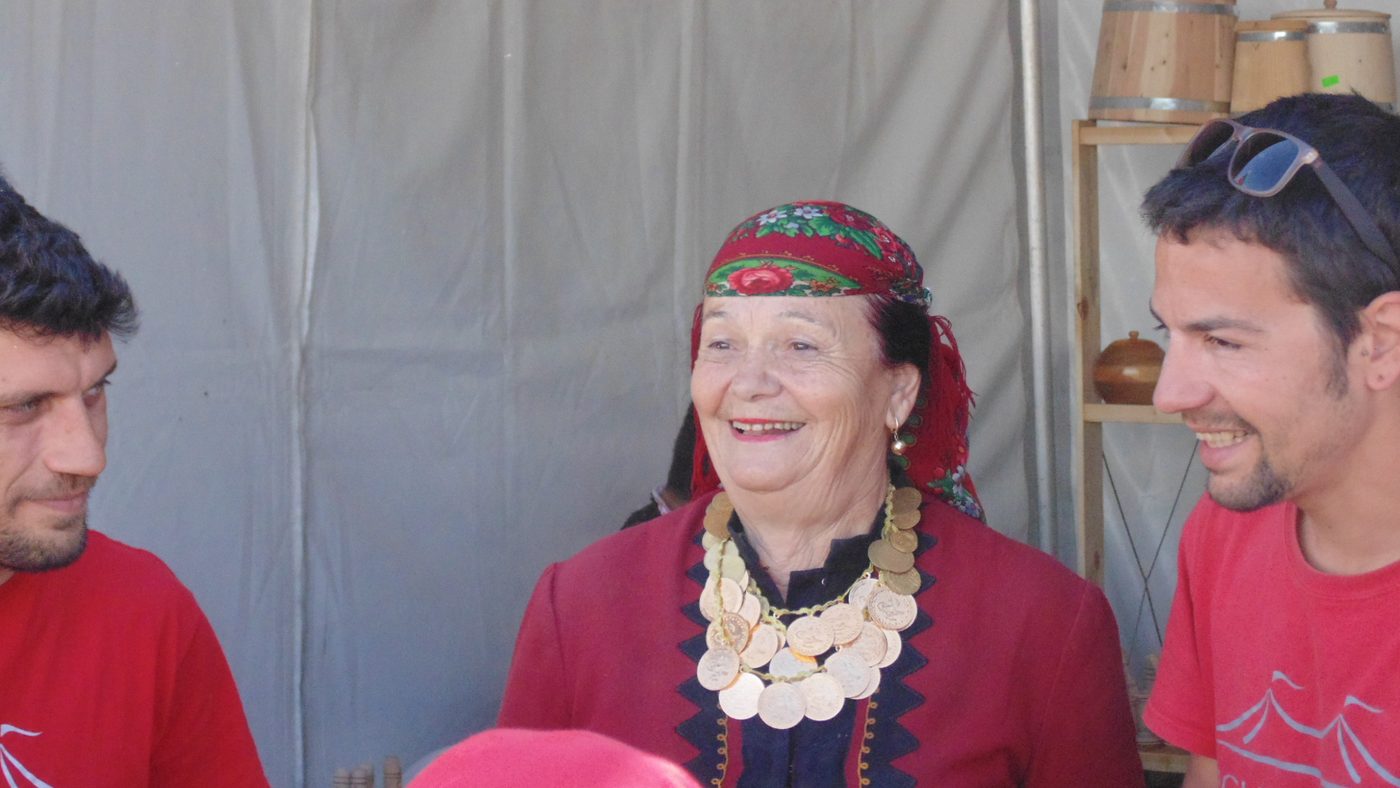
No guide to Bulgarian folk can ignore Valya Balkanska, whose recording of "Izlel e Delyo Haydutin", a Rhodope song about a hajduk rebel against Ottoman rule, became internationally famous after being included on the Voyager Golden Record sent into deep space aboard Voyagers 1 and 2. That singular fact has done more than any embassy brochure ever could to position Bulgarian folk as something planetary rather than provincial. If a country gets one folk song sent into space, it is allowed a certain amount of musical self-confidence afterwards.
Boris Mashalov remains one of the benchmark male folk voices in Bulgarian memory. Verka Siderova became one of Dobrudja's emblematic singers. Nadka Karadzhova helped define the radio age of arranged folk performance. Nikolina Chakardakova brought southwestern and Pirin-rooted repertoire to huge domestic audiences in a more modern media landscape. The continuity matters. Bulgaria did not simply preserve old songs. It repeatedly revoiced them, generation after generation, in the conservatory, the radio studio, the festival stage and the village square.
Bulgarian music is easier to follow once you know the main sonic characters. Six instruments do most of the talking.
The Bulgarian bagpipe. In British shorthand it is tempting to say "like Scottish pipes, but Balkan". That is not wrong, but it is far too vague. Bulgaria has different bagpipe traditions, with the Rhodope kaba gaida especially prized for its deep, resonant, almost earth-coloured sound. One long tone from a good gaida player can make an entire arrangement feel older than the state.
An end-blown flute and one of the most expressive instruments in the Bulgarian and wider Balkan world. It can sound pastoral, piercing, intimate or ecstatic. In arranged and crossover music it is often the fastest route to making a modern production suddenly smell faintly of mountain grass and national memory. Teodosii Spasov is the contemporary virtuoso who took the kaval into jazz-informed contexts without turning it into a gimmick.
A bowed instrument with sympathetic strings, visually modest and sonically distinctive. Its timbre is nasal, textured and emotionally immediate. If you are trying to understand why Bulgarian arranged folklore does not sound like generic "world music", the gadulka is one answer.
A plucked long-necked instrument used especially in southwestern traditions. It brings rhythmic drive and harmonic support and links Bulgarian music to broader Balkan and Ottoman instrumental families.
The big double-headed drum that gives many dances their physical core. It does not merely accompany. It commands. A tapan in the right hands makes everyone else stop discussing theory and start moving.
Bulgarian folk modernity also depends heavily on instruments that arrived or flourished through contact, mobility and urbanisation, especially the clarinet and accordion. These became central to wedding music, virtuoso ensembles and later crossover forms that blurred the line between folk, jazz and spectacle.
If one Bulgarian sound conquered the foreign imagination more than any other, it was the women's choir. The story runs from village ritual through state arrangement to international Grammy-winning export.
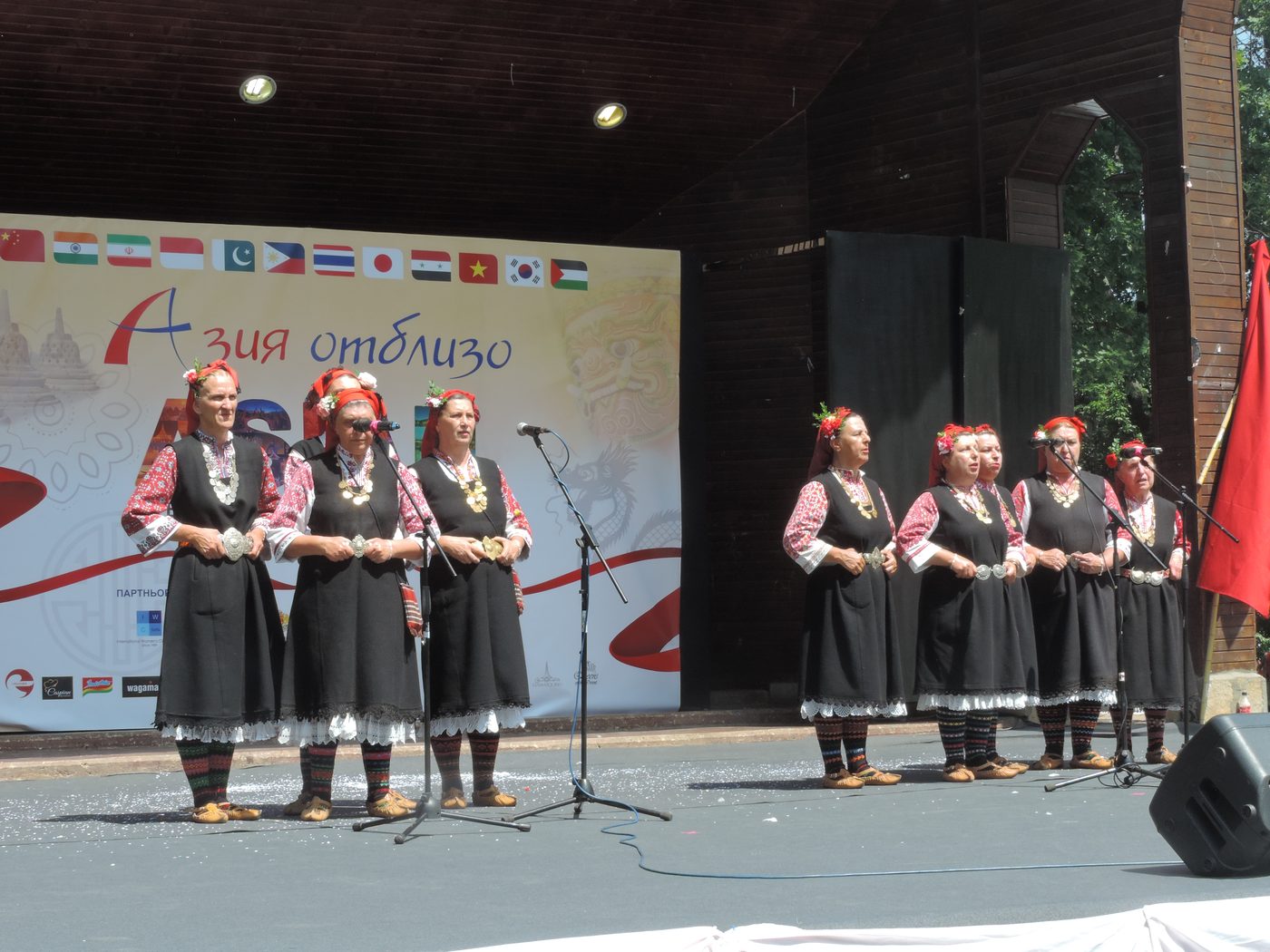
UNESCO inscribed the Bistritsa Babi tradition on its Representative List of the Intangible Cultural Heritage of Humanity in 2008, after first proclaiming it a Masterpiece in 2005. The label confirms what the singing makes obvious in seconds: this is not a modern stylistic trick, it is a living inheritance from the Shopluk region of western Bulgaria. The Bistritsa Babi are sometimes introduced to outsiders as "the grannies from Bistritsa", which is accurate but undersells the point. They represent a style in which the voices do not try to erase difference in the name of blend. The line leader cries out, the other voices hold and roughen the sonic field beneath, and the whole thing feels closer to ritual memory than to salon polish.
Traditional village music did not become globally visible by accident. It was arranged, systematised and staged. Filip Kutev, one of the towering names in Bulgarian arranged folklore, helped create a formal concert language from regional materials. In practical terms, that meant village repertoire entered the national and international concert circuit in a disciplined, theatrical form without entirely losing its specific flavour. Some purists dislike that. Without it, however, much of what the world recognises as "Bulgarian voices" would not have travelled.
The Bulgarian State Radio and Television Female Vocal Choir achieved international fame through the recording series Le Mystère des voix bulgares, produced by Marcel Cellier and reissued through 4AD in the late 1980s. The 1990 Grammy Award sealed the achievement. This was one of the major export moments in Bulgarian musical history. Suddenly an English-speaking audience that barely knew where Bulgaria sat on the map could identify a Bulgarian vocal texture within seconds.
The title helped, of course. Call anything "mystery" and Western listeners lean in at once. But the real force was sonic: strong dissonances, almost no vibrato, precise attack, startling blends of archaic material and arranged sophistication. The choir's international impact is difficult to exaggerate. It shaped film soundtracks, sample culture, crossover arrangements and world-music buying habits across Europe and North America. Many people first discovered Bulgaria not through history books, but through that choir.
One of the great mistakes outsiders make is to think Bulgarian folk means only choirs and village songs. They miss the virtuoso instrumental culture that sits between folklore, celebration, improvisation and organised chaos.
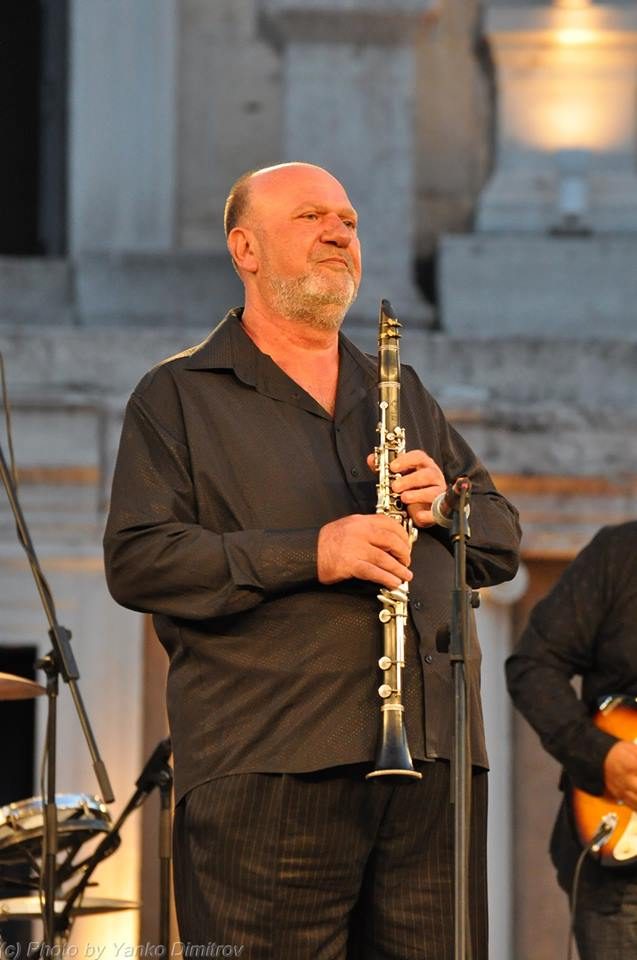
If you want a British comparison for Ivo Papazov, think of the moment when a local dance-band tradition turns out to contain a musician of near-jazz-genius level. Except in Bulgaria that does not feel like an exception. It feels like the natural result of a culture that tested musicians in weddings rather than in grant applications. Papazov is one of the figures through whom the world learned that Bulgarian vernacular music could be rhythmically ferocious, technically dazzling and compositionally loose in the best possible way.
Petar Ralchev's accordion work, Yuri Yunakov's saxophone-led energy and Teodosii Spasov's kaval innovations all show different ways Bulgarian musicians stretched folk language into broader improvisational forms. Spasov in particular became internationally known for proving that the kaval can sit in contemporary and jazz-informed contexts without becoming a gimmick.
Wedding music in Bulgaria is not a side alley. It is one of the most important bridges between rural tradition and modern virtuosity. It absorbed Romani musicianship, urban demand, amplification, improvisation and a competitive culture of skill. That is one reason Bulgarian instrumental music can feel both rooted and unruly. It was forged where people needed the music to work, not where critics needed it to behave.
A comprehensive guide has to resist the lazy trap of treating Bulgarian music as folk plus chalga plus Eurovision. Bulgaria has also produced serious concert and opera figures of international weight.
Pancho Vladigerov remains one of the foundational composers of modern Bulgarian classical music. His work helped shape the country's twentieth-century concert identity by drawing on European classical forms while retaining a recognisable Bulgarian melodic and rhythmic character. Britannica points out that the earliest Bulgarian classical performances date to the late nineteenth century and that Emanuil Manolov's opera appeared in 1900. Later composers such as Lyubomir Pipkov and Petko Stainov expanded the national classical repertoire in orchestral, choral and stage forms.
In opera, Bulgaria punched well above its demographic weight. Boris Christoff and Nicolai Ghiaurov became world-famous basses. Raina Kabaivanska built a major international soprano career. Ghena Dimitrova's dramatic power made her one of the unmistakable operatic forces associated with Bulgaria abroad. This matters because it complicates the caricature. Bulgaria is not musically provincial. It contains parallel traditions: village-rooted, state-curated, nightclub-commercial, and institutionally elite, often within the same week of a single concert hall's listings.
Before streaming, before Planeta TV, before every third Bulgarian pop act used a neon-lit video and a mild identity crisis, there was estrada.
The word broadly refers to stage entertainment and popular song in the socialist period, but in Bulgaria it carries its own emotional furniture: polished orchestration, television appearances, major festivals, memorable choruses, and singers who still occupy a strange space somewhere between pop star, national institution and family member you have never actually met.
You cannot write the history of Bulgarian pop without Golden Orpheus. Founded in 1965 in Sunny Beach and running until 1999, the festival was Bulgaria's biggest pop music platform for decades. It was not just a contest. It was infrastructure. It gave singers legitimacy, songs reach, composers prestige and Bulgaria a glamorous annual stage at the Black Sea. In socialist Eastern Europe, Golden Orpheus became one of the prestige platforms through which Bulgarian music could circulate internationally. That is one reason older Bulgarian pop songs still carry a particular confidence: they were built for radio, orchestra and ceremony, not for algorithmic half-life.
Pasha Hristova swept the 1970 edition, taking the Grand Prix with "Povey, vetre" ("Blow, Wind") and First Prize with "Edna balgarska roza" ("A Bulgarian Rose"). The latter remains one of the country's enduring sentimental standards: anyone over fifty in Bulgaria can sing the chorus, and most of them will, given the slightest provocation.
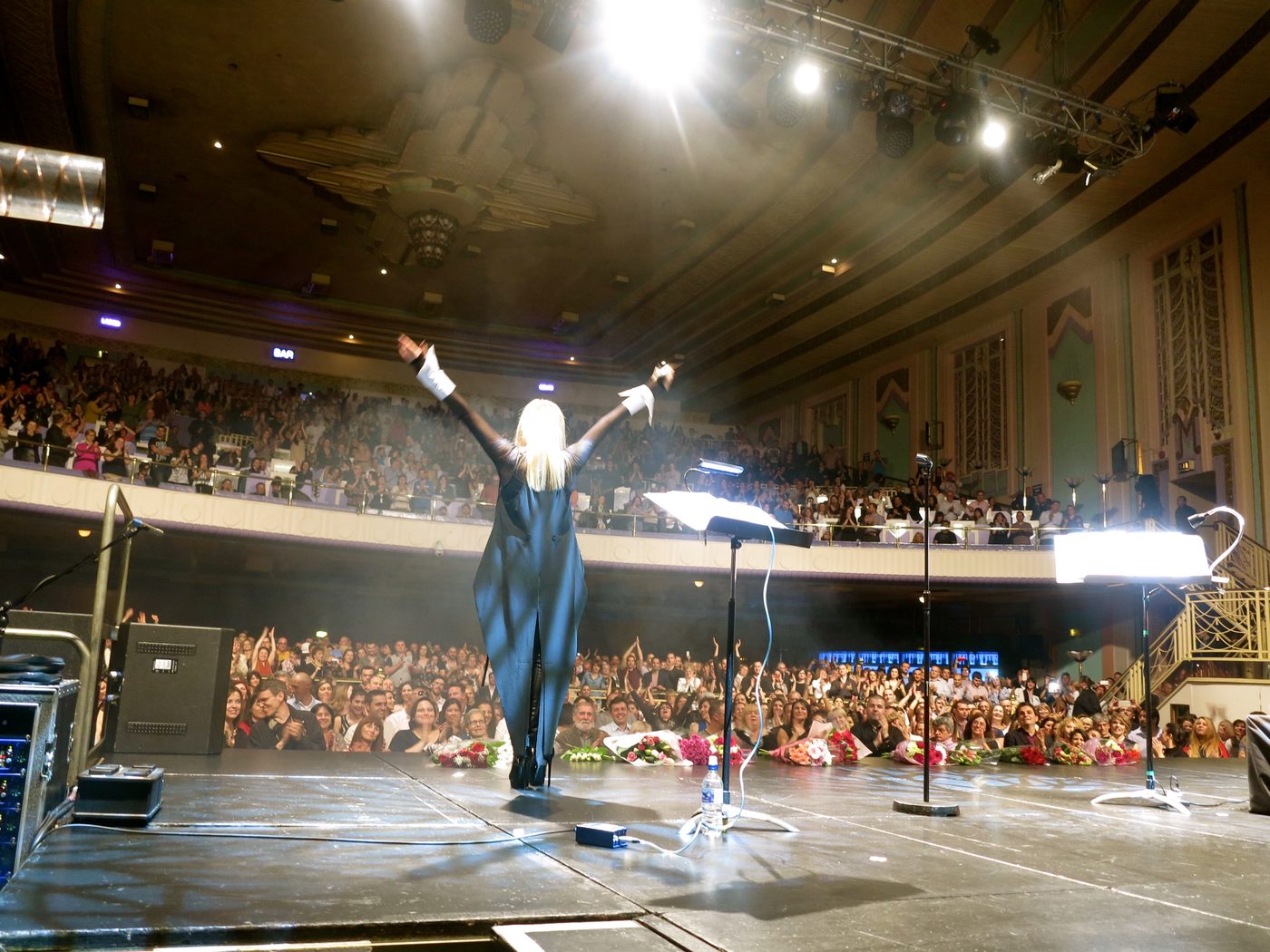
Lili Ivanova is not merely famous. She is structurally famous, embedded in the country the way a major theatre or mountain range is embedded in it. Her career spans generations, political systems, changing technologies and changing ideas of stardom. Many younger Bulgarian stars are successful. Lili Ivanova is part of the weather.
Yosif Tsankov is often called the father of Bulgarian pop. Emil Dimitrov's "My Country, My Bulgaria" remains one of the country's enduring emotional standards. Vasil Naydenov is one of the great male pop voices of the late twentieth century. Yordanka Hristova helped define the era of festival-driven mainstream song. Bogdana Karadocheva combines vocal authority with deep cultural recognition. For British readers the easiest analogy is this: imagine if the country's mainstream pop memory were still genuinely shared across generations, rather than split into algorithmic tribes. That is closer to how older Bulgarian songs still work.
A great deal of Bulgarian music history makes less sense without this context. Bulgaria was the People's Republic of Bulgaria from 1946 to 1990, an independent socialist state and Warsaw Pact ally. It was never part of the USSR. The distinction matters: Bulgarian music was managed through Bulgarian institutions, even when policy logic followed Soviet models.
The communist period did two apparently contradictory things at once. It preserved music, and it narrowed it. Academic work on Bulgarian music under totalitarian rule describes a system in which political power and musical life were tightly entangled. At the same time, research on Bulgarian folklore in the socialist era shows that the state invested heavily in professional ensembles, staged folklore and a polished national repertoire. In plain English, the regime funded music seriously, but it also expected music to behave.
The safest public musical languages were those that could be made to serve the national story cleanly: arranged folklore, choral prestige, respectable estrada, concert music, patriotic repertoire, major festival songs, and performers who fit the image of cultural seriousness. Golden Orpheus belonged to this ecology. So did the rise of carefully arranged folklore as a national export rather than merely a village inheritance. The consequence is obvious once you hear it. A lot of twentieth-century Bulgarian music that survives well in the archive sounds formal, staged and institutionally mediated, because it was. Some of that polish is beautiful. Some of it is evidence.
The same period made it harder for messier musical realities to survive on equal terms. Romani musicians were essential to wedding music and instrumental virtuosity, yet the official national story preferred a tidier cultural self-portrait. Ottoman, Turkish and other mixed inheritances were often underplayed when the state wanted folklore to look pure, ancient and nationally self-sufficient. That does not mean those influences vanished. It means the archive often describes them badly.
When Bulgarian music history before the streaming era looks incomplete, the correct default is not cynicism but method. Ask: was this music institutionally favoured? Was it archived by radio, television or a state festival? Was it politically awkward, regionally mixed, Romani-linked, nightlife-based or commercially transient? Did the post-1989 transition preserve it well enough to leave a clean digital trail? Bulgaria kept many records. It just did not keep them evenly.
Bulgaria's music story is sometimes flattened into folk versus pop-folk. That is lazy. The country has a serious rock tradition and a respectable alternative lineage running from late socialist anthems to contemporary indie.
Any high-level list should include Shturcite, FSB, Signal, Tangra, B.T.R., D2, Ostava, P.I.F., Wickeda and Akaga. These groups do not all belong to one sound or one generation, which is the point. Together they show that Bulgarian rock is not a side curiosity but a parallel mainstream.
These bands helped define late socialist and post-socialist Bulgarian rock memory. Their songs still live in national circulation, radio retrospectives and mass singalongs. To many Bulgarians, these are not "old bands". They are baseline references, the way the Beatles or the Stones are in the UK.
The later wave brought harder rock, polished pop-rock, introspective alternative and enduring live followings. B.T.R. developed one of the country's sturdier rock reputations. D2 became synonymous with sleek Bulgarian rock-pop professionalism. Ostava carried more indie and alternative weight. P.I.F. built a beloved catalogue whose emotional durability only deepened over time.
Bulgarian rock survives because it occupies a useful social position. It is aspirational without being foreign, emotional without being embarrassingly theatrical, and respectable without being dull. In a country that often argues loudly about vulgarity and taste, rock has frequently served as the middle-class defence line.
Now to the part everyone pretends they can discuss rationally. Chalga, often called pop-folk, is one of the most commercially powerful and culturally divisive genres in Bulgaria.
The word comes from Turkish çalgı, meaning "musical instrument", but in modern Bulgarian cultural argument it means much more than a genre. It means class anxiety, post-1989 freedom, kitsch, glamour, vulgarity, honesty, bad taste, excellent hooks, regional hybridity, nightclub economics, moral panic and, depending on who is speaking, either the collapse of civilisation or the only music that actually gets a party moving.
At its core, chalga mixes Bulgarian folk impulses with Greek, Turkish, Serbian, Romani, Arabic and broader Balkan pop influences, usually over modern dance production. The melodies are often direct and melismatic. The beats are built for movement. The videos favour excess. The emotional range runs from heartbreak and revenge to luxury, erotic power, drinking, loyalty and betrayal.
Post-communist Bulgaria did not simply liberalise politically. It liberalised sonically. After 1989, restrictions fell, media markets fragmented, private labels rose and new appetites flooded public life. Chalga fit the age. It was commercially aggressive, visually shameless and emotionally legible. If old estrada belonged to the festival stage and the television orchestra, chalga belonged to the nightclub, the private car, the cable channel and the flashy new economy.
There are several critiques, and they are not all stupid. Some argue that chalga commercialises folk elements while hollowing them out. Some object to its often explicit or hyper-material lyrics. Some see it as tied to the aesthetics of the transition years: easy money, body display, macho theatre and organised-taste chaos. Academic and journalistic writing about chalga repeatedly returns to questions of morality, gender, aspiration and class performance.
That is the boring but necessary truth. A lot of anti-chalga commentary mistakes disapproval for analysis. Chalga is rhythmically effective, socially useful, easy to sing, easy to dance to and deeply integrated into nightlife, weddings, car stereos and private emotional drama.

A representative list of pop-folk stars should include Gloria, Ivana, Preslava, Galena, Azis, Andrea, Tsvetelina Yaneva, Desi Slava, Emanuela, Lidia, Toni Storaro and Fiki. Among them, Azis is impossible to ignore. You do not have to like every Azis song to understand that Azis changed the visual and symbolic scale of Bulgarian pop-folk performance, and pushed questions of gender, sexuality and public provocation into the mainstream of a country that often likes its social conservatism wrapped in loud unofficial hypocrisy.
Brits looking for an analogy should stop trying to map chalga neatly onto one UK genre. It is not simply Europop, not simply regional dance music, not simply reality-TV pop. It has some of the social role of commercial dance-pop, some of the class-coded disdain directed at certain tabloid genres, some of the hyper-visibility of celebrity culture, and some of the regional authenticity arguments that surround country music or grime. The closest answer is still this: chalga is its own thing, and Bulgaria argues about it because it matters. If you find yourself at a wedding in Sunny Beach or a village square at 1am, you will hear it. If you tell a Sofia office worker you enjoy a Galena tune, you will get an opinion in return whether you wanted one or not.
The modern Bulgarian mainstream is no longer one lane. It is a junction. Pop, hip-hop, indie, chalga and global English-language hits all share the same chart and playlist real estate.
Mainstream Bulgarian pop in the 2010s and 2020s has been shaped by artists such as Grafa, Miro, Maria Ilieva, Poli Genova, Mihaela Fileva, Mihaela Marinova, Dara, Dara Ekimova, Victoria, Ruth Koleva and others working across radio pop, dance-pop, R&B inflections and singer-songwriter crossover. Grafa in particular sits in the zone modern Bulgarian music repeatedly needs: credible enough for adults, current enough for younger mainstream audiences, skilled enough to move across formats.
Krisko, SkandaU, V:RGO, Boro Purvi, MBT and related names helped move Bulgarian urban music from side lane to centre lane. Some of this is cleaner pop-rap, some of it internet-generation swagger music, some of it smarter than its surface suggests.
Recent years have seen the rise of artists whose appeal cuts across demographic camps. Molec, for example, became a striking example of how contemporary Bulgarian acts can pull from folk memory, urban melancholy and literary seriousness without sounding museum-bound.
British readers will assume there is a single answer to "what was the Bulgarian number one in March 2008?" There is not. Bulgaria does not have one neat, universally recognised all-era official singles chart in the British sense of the Official Singles Chart. Several chart ecosystems matter: the Bulgarian National Top 40 compiled by APC-stats; Prophon airplay data; BNR Top 20 for Bulgarian pop and rock; BG Radio's all-Bulgarian format and awards ecology; and the streaming platforms, which shape attention even when domestic chart branding lags behind.
A song can be number one on a broad commercial singles chart, on a domestic airplay chart, on BNR Top 20 (specifically for Bulgarian pop and rock), on a BG Radio listener-vote chart, or on YouTube and streaming trends without dominating radio. Those are not the same thing. For the reconstructible modern era we have built a separate appendix, the Bulgarian National Top 40 number-one archive (2007 onward). It is comprehensive for the public APC archive and clearly bounded in scope.
Bulgaria has quietly become a serious stop on the European stadium and festival circuit. The 2010 Big Four show at Vasil Levski Stadium was the first really big signal. The 2026 season cements it: Iron Maiden and Anthrax in May, the inaugural PhillGood Festival in July with The Cure, Gorillaz and Moby headlining the three nights, Hills of Rock the week after, and a steady stream of British 80s and 90s names through Arena 8888 in Sofia. If you grew up on UK festival posters, summer 2026 in Bulgaria is the most familiar reading material the country has ever produced.
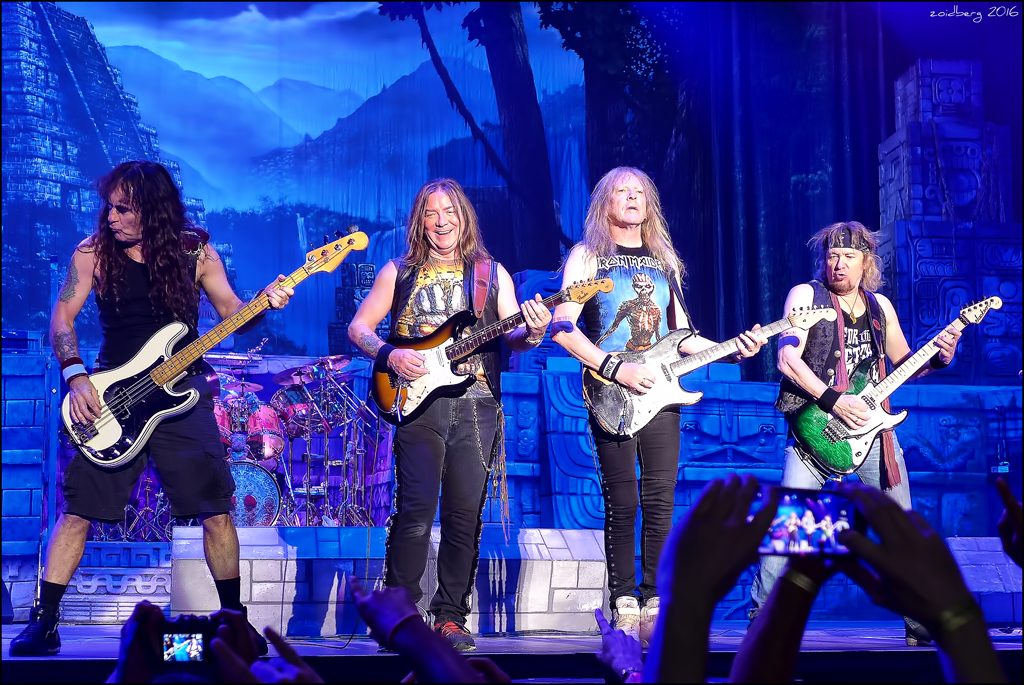
Tuesday 26 May 2026, doors 19:00, at Bulgaria's national football stadium. This is part of Iron Maiden's Run For Your Lives world tour, marking the band's 50th anniversary, with a setlist drawn from their first nine studio albums. Anthrax are confirmed support. Eddie's Official Pop-Up Dive Bar will be at the stadium for the night. Maiden were originally booked for the cancelled 2011 Sonisphere edition; this is their first ever Bulgarian show actually delivered.
For Brits in Bulgaria, this is the headline gig of the year. Vasil Levski Stadium holds 43,230 seated and pushes higher with a standing pitch. Tickets have been moving fast since announcement; if you have not bought yet, the resale market via festteam.bg and bilet.bg is the safe route.
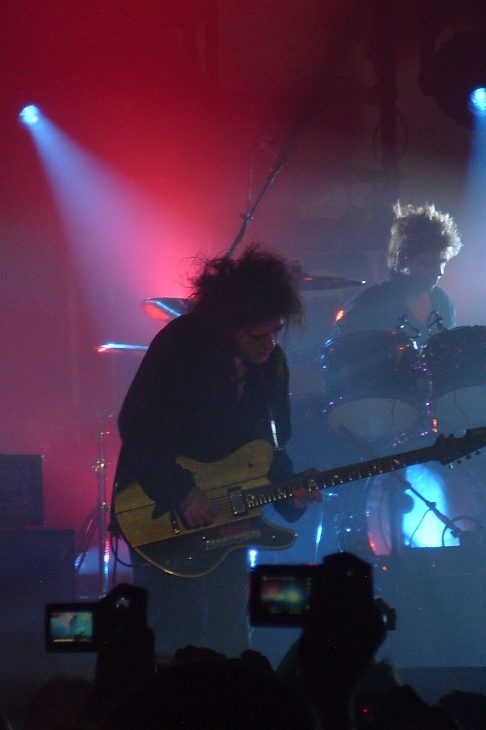
Brand new for 2026 and arguably the most ambitious festival booking Bulgaria has ever made. Three nights at the Plovdiv Rowing Base, three of the most recognisable names in alternative music headlining one each:
The wider lineup is the kind of thing that makes UK festival-goers do a double-take: Suede, Wolf Alice, Sleaford Mods, Kneecap, Einstürzende Neubauten, Thievery Corporation, Perturbator, Just Mustard, Kadebostany. If a British 30-something with a working understanding of late-1980s indie and early-2010s grime walked into PhillGood blindfolded, they would think they had been transported to a UK festival, not a Bulgarian one.
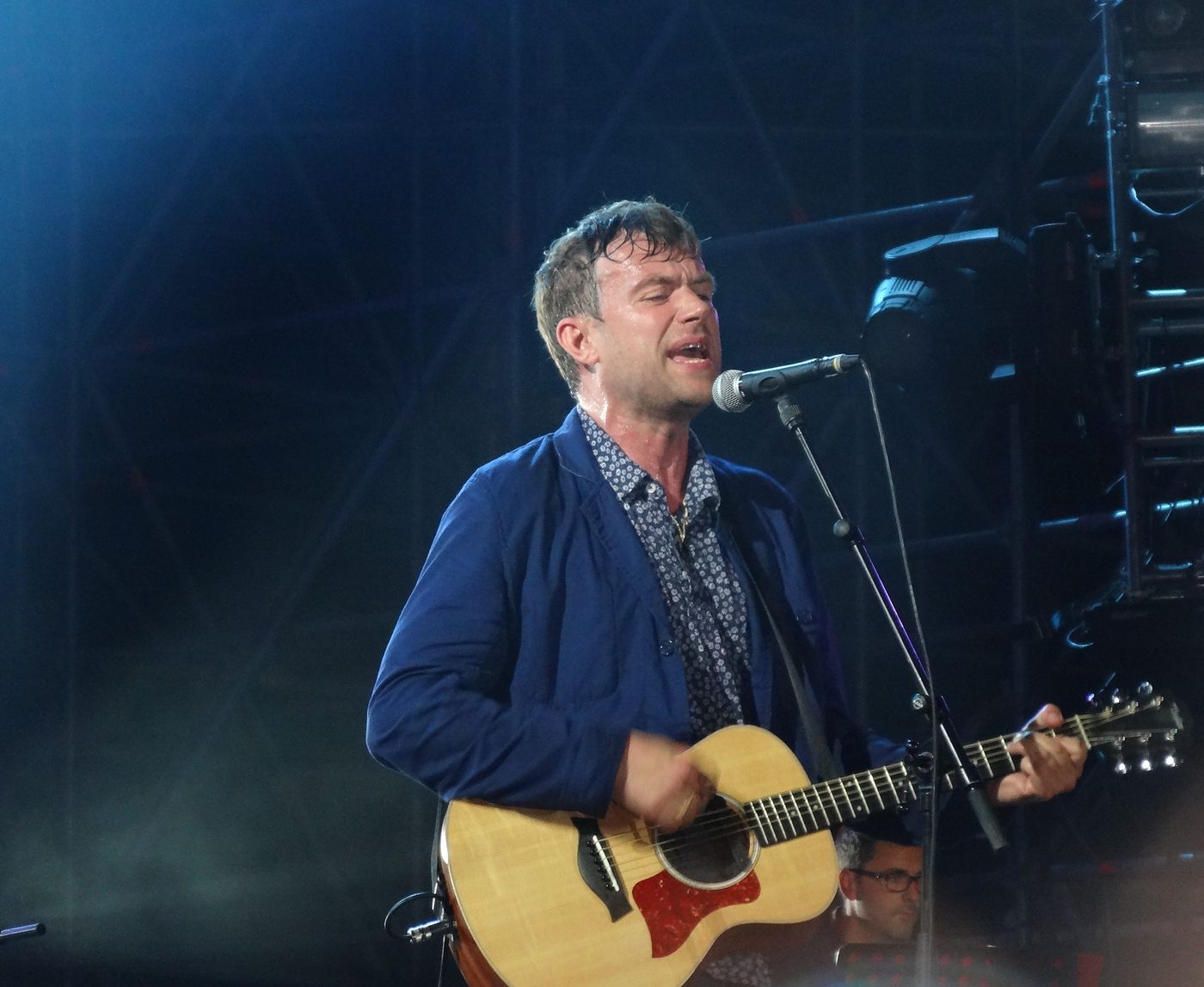
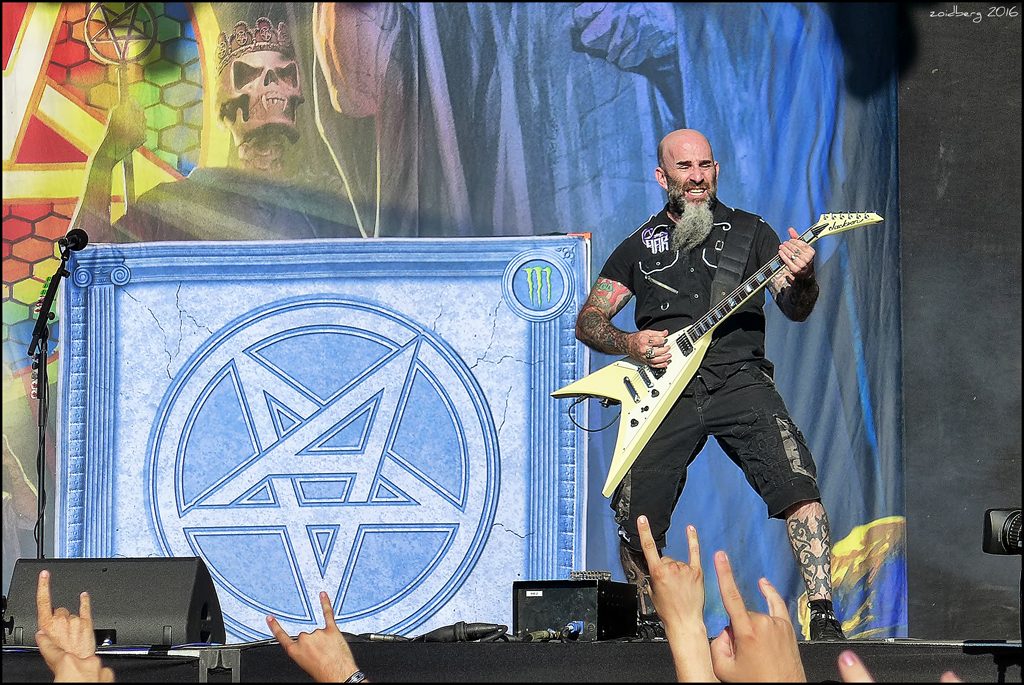
Bulgaria's biggest rock and metal festival, the week immediately after PhillGood, on the same Plovdiv Rowing Canal site (Yasna Polyana street, Plovdiv 4002). Around 46 acts across three stages over three days, organised by Fest Team in partnership with the Plovdiv 2019 Foundation and the Municipality of Plovdiv.
2026 headliners: Marilyn Manson, Godsmack, Electric Callboy. Major support: Sex Pistols (with Frank Carter on vocals), Black Label Society, Lamb of God, P.O.D., Skindred, Paradise Lost, Of Mice & Men, The Toy Dolls, Northlane, Deafheaven, plus a strong domestic Bulgarian rock and metal contingent (P.I.F., Vrani Volosa, Tsar Plah, Kontrol, Hellion Stone). 2025's edition featured Mastodon and Machine Head as previous headline-tier names.
Tickets: three-day passes on a tiered release; final-tier prices around €153. Single-day tickets €71 to €92 depending on day and tier. Camping on site is €50 for three nights with security, showers and electricity. The official site is hillsofrock.com.
Two venues do the heavy lifting for stadium and arena-tier touring acts. Vasil Levski National Stadium in Sofia, the country's national football ground, hosts the genuine stadium gigs (capacity over 43,000). Arena 8888 (formerly Arena Armeec, renamed in September 2024 after a sponsorship deal) opened in 2011 and seats around 12,400, pushing to 17,000 with full standing for concerts. Together they have hosted a steady run of British and globally famous acts British readers will recognise.
| Date | Artist | Venue | Note |
|---|---|---|---|
| 26 May 2026 | Iron Maiden + Anthrax | Vasil Levski Stadium, Sofia | Run For Your Lives 50th-anniversary tour |
| 27 June 2026 | Scorpions | Arena 8888, Sofia | 60th-anniversary tour |
| 17–19 July 2026 | The Cure, Gorillaz, Moby | PhillGood, Plovdiv Rowing Base | The festival's inaugural edition |
| 24–26 July 2026 | Marilyn Manson, Godsmack, Sex Pistols ft. Frank Carter, Black Label Society, Lamb of God | Hills of Rock, Plovdiv Rowing Canal | Bulgaria's biggest rock festival |
| 11 December 2025 | Rod Stewart | Arena 8888, Sofia | His first ever Bulgarian concert |
| 28 September 2025 | Robbie Williams | Vasil Levski Stadium, Sofia | Support: DARA + The Lottery Winners |
| 29 April 2025 | Bryan Adams | Bulgaria Hall, Sofia | Solo, intimate venue |
| 8 December 2023 | Bryan Adams | Arena Sofia | So Happy It Hurts Tour |
| 12 August 2022 | Arctic Monkeys | Port of Burgas | Sold out; band's first ever Bulgarian show |
| 1 June 2019 | Sting | Arena Armeec, Sofia | My Songs Tour |
| 16 September 2017 | Sting | Arena Armeec, Sofia | 56th & 9th tour |
| 11 October 2016 | Bryan Adams | Arena Armeec, Sofia | Get Up tour |
| 17 June 2015 | Roxette | Arena Armeec, Sofia | XXX Anniversary tour |
| 29 May 2011 | Roxette | Georgi Asparuhov Stadium, Sofia | Charm School tour |
Sources: festteam.bg, bilet.bg, setlist.fm, BTA (Bulgarian News Agency). Selection focuses on acts with strong British recognition; Bulgarian and other-European mainstream acts also tour these venues regularly.
The reason Bulgaria can plausibly book Iron Maiden in 2026 is largely because of one weekend sixteen years earlier. On 22 June 2010, Sonisphere Bulgaria put Metallica, Slayer, Megadeth and Anthrax on the same stage at Vasil Levski Stadium for the first time on a single ticket, an event so notable it was filmed and released as The Big Four: Live from Sofia, Bulgaria. The next night Rammstein headlined. The 2011 Sonisphere edition (with Iron Maiden, Slipknot and Alice Cooper booked) was cancelled by the local promoter, and Sonisphere has not returned to Bulgaria since. But the 2010 weekend put Sofia firmly on the international promoter map.
Between 2008 and 2013, Bulgaria's biggest international festival was Spirit of Burgas, on the Black Sea coast: an MTV Europe partner event named one of The Times's top 20 European festivals. It was cancelled in 2014 after financial trouble, ran a scaled-back 2015 edition, and has been dormant ever since. The 2026 PhillGood and Hills of Rock combination is broadly the country picking up where Spirit of Burgas left off, but inland in Plovdiv rather than seaside in Burgas, and oriented toward British and Western European bookings rather than the Mediterranean dance-festival circuit.
Worth its own note. Arctic Monkeys' The Car tour brought the band to the Port of Burgas waterfront stage in August 2022. Sold out. Their first ever Bulgarian show. The choice of Burgas rather than Sofia surprised some critics but matched the band's preference for unusual coastal venues during that tour. For British holidaymakers in Sunny Beach who happened to be at the right end of the season, it was a very strange and very good night.
Below the stadium and festival tier, Bulgaria has a substantial tribute-band economy that British readers should know about. ABBA, Queen, Pink Floyd, Dire Straits and Arctic Monkeys tribute acts tour the smaller halls and Black Sea resort programmes through the summer; festteam.bg and bilet.bg ticketing pages reliably list several tribute shows per month. Sofia's Maimunarnika venue runs a near-monthly indie tribute calendar. Municipal summer-concert programmes in places such as Sunny Beach, Pomorie, Albena and Sozopol routinely book tribute acts for their seafront stages. The quality is variable; the prices are far lower than the equivalent UK ticket.
Two ticketing platforms cover almost everything: festteam.bg (the major festivals and stadium gigs) and bilet.bg (more general). UK-issued cards usually work; if a booking is rejected, try Wise or Revolut, which carry Bulgarian-card-friendly issuer codes. Prices for headline shows are typically 30 to 60% lower than the UK equivalent. The stadium and arena venues in Sofia all sit on the metro and are easy to reach from the city centre; Plovdiv festivals require a planned drive or a coach from Sofia.
Eurovision deserves its own major section because in Bulgaria it is not just another TV franchise. It is one of the few moments when the country debates musical identity in public at full volume. Should the entry sound international or specifically Bulgarian? Polished or folk-tinged? Theatrical or restrained? The answer, as usual, is yes.
Bulgaria debuted in 2005 with Kaffe's "Lorraine". The first big breakthrough came in 2007 when Elitsa Todorova and Stoyan Yankoulov brought "Water" to fifth place in the final. A major modern resurgence followed with Poli Genova in 2016 and Kristian Kostov in 2017, whose "Beautiful Mess" remains Bulgaria's best result at the contest, finishing second with 615 points. After financial withdrawals and intermittent absences, Bulgaria returned for Vienna 2026 under broadcaster BNT with DARA.
| Year | Artist | Song | Result | Notes |
|---|---|---|---|---|
| 2005 | Kaffe | Lorraine | DNQ | Bulgaria's debut |
| 2006 | Mariana Popova | Let Me Cry | DNQ | Early-era ballad |
| 2007 | Elitsa Todorova & Stoyan Yankoulov | Water | 5th in final | First final, first major breakthrough |
| 2008 | Deep Zone & Balthazar | DJ, Take Me Away | DNQ | Club-pop turn |
| 2009 | Krassimir Avramov | Illusion | DNQ | Famously divisive entry |
| 2010 | Miro | Angel si ti | DNQ | Bulgarian and English mix |
| 2011 | Poli Genova | Na inat | DNQ | Strong domestic legacy despite missing the final |
| 2012 | Sofi Marinova | Love Unlimited | DNQ | Narrow non-qualification on tie-break rules |
| 2013 | Elitsa Todorova & Stoyan Yankoulov | Samo shampioni | DNQ | The 2007 duo's return missed the final |
| 2016 | Poli Genova | If Love Was a Crime | 4th in final | Modern reboot, slick and strategic |
| 2017 | Kristian Kostov | Beautiful Mess | 2nd in final, 615 pts | Previous best ever, until 2026 |
| 2018 | Equinox | Bones | 14th in final | Dark, polished supergroup entry |
| 2020 | Victoria | Tears Getting Sober | Cancelled | Selected; contest cancelled due to COVID |
| 2021 | Victoria | Growing Up Is Getting Old | 11th in final | Elegant, intimate follow-up |
| 2022 | Intelligent Music Project | Intention | DNQ | Last entry before the four-year break |
| 2026 | DARA | Bangaranga | 1st, 516 pts, WINNER | Bulgaria's first-ever Eurovision win, from a slot-1 semi-final draw |
Source: Eurovision country page, Eurovisionworld and Wikipedia. Bulgaria did not participate in 2014, 2015, 2019, 2023, 2024 or 2025. Cross-check at eurovisionworld.com.
Restless. Some entries leaned international, others tried stronger local flavour. Water (2007) remains the obvious early triumph because it sounded like it belonged to Bulgaria rather than to a generic European songwriting camp.
The polished era. Poli Genova turned the country's reputation around with modern production and memorable staging. Kristian Kostov's Beautiful Mess delivered the nearest Bulgaria has come to victory. Equinox sustained the run with a darker, more curated package.
Victoria moved Bulgaria into a quieter, more intimate space. Thoughtful, contemporary and aesthetically coherent. Not every viewer wanted introverted indie elegance, but it gave Bulgaria credibility with the Eurovision fan segment that values atmosphere over bombast.
Intelligent Music Project's Intention ended the run badly, missing the final. Financial pressure and broadcaster priorities then pushed Bulgaria out of the contest until the 2026 announcement.
DARA's Bangaranga won the 70th Eurovision Song Contest from a slot-1 semi-final draw, defying pre-contest bookmaker prices of around 1 per cent. Bulgaria's first-ever Eurovision victory, twenty-one years after the country's 2005 debut.
On 16 May 2026, at the Wiener Stadthalle in Vienna, Bulgaria's DARA won the 70th Eurovision Song Contest with Bangaranga, scoring 516 points. It is Bulgaria's first-ever Eurovision victory in 21 years of trying. The previous best, Kristian Kostov's 2nd place in 2017, is now the second-best.
Bulgaria has been at Eurovision since 2005, twenty-one years before Vienna. In the entries between then and now, the country recorded ten non-qualifications, two cancellations, one fifth, one fourteenth, one eleventh, two fourth-place equivalents, and Kristian Kostov's celebrated 2nd in 2017 with Beautiful Mess. That 2017 silver, behind Salvador Sobral, has been the high-water mark for nearly a decade. Bangaranga just rewrote it. The country that never won finally won.
What makes the result genuinely surprising is the slot. BNT confirmed that DARA was drawn to open Semi-Final 2 on 14 May. Opening a semi-final is statistically punishing: opener slots qualify at roughly 40 per cent versus 60 to 70 per cent for the late-running slots. The pre-contest market priced Bulgaria's chance of winning the whole contest at around 1 per cent, well outside the top tier. To win from slot one, against the qualification handicap and against the prediction markets, is the kind of Eurovision narrative that gets written about for years.
BNT ran a public national selection process for 2026 rather than quietly picking an act behind closed doors. DARA (stage name of Darina Yotova) won the artist stage on 31 January 2026, then performed three songs in the final song-selection show on 28 February 2026. Bangaranga won the public vote and became Bulgaria's official Vienna entry. The public-selection route, plus DARA's existing domestic pop profile, gave the campaign a stronger ownership story at home than an internal BNT pick would have.
According to BNT's coverage, DARA described Bangaranga as carrying a message, folk sounds, Balkan style, energy and strong music. That is the equation Bulgaria has been trying to solve at Eurovision for years: modern enough not to feel folkloric in a museum sense, Bulgarian enough to avoid anonymity, energetic enough for televote memory, stylised enough to support a proper staging concept. Vienna confirmed that the equation, finally and improbably, worked.
BNT announced Bulgaria's return to Eurovision on 31 October 2025, after a four-year absence forced by financial pressures. The official framing was cultural as much as competitive: a chance to put Bulgarian talent back before a mass international audience. The less respectable framing was also true: Eurovision gives Bulgaria a rare chance to participate in one of Europe's biggest annual cultural arguments without needing permission from anyone more powerful. The return entry could plausibly have produced another non-qualification and a quiet retreat for another four years. Instead it produced a win.
DARA's Eurovision win is not separate from the wider music story in this guide. It condenses it. The domestic pop machine, the anxiety about whether to sound international or local, the selective use of folk-coded elements, the pressure to look expensive, the constant Bulgarian temptation to ask whether Europe will "get" the song. Europe got it.
Each card opens a YouTube search rather than embedding a single video, partly to keep this page fast, partly because Eurovision videos sometimes get geo-blocked or replaced.
If you have one weekend, this is the route in. Twenty tracks across the major fault lines of Bulgarian music. None of them are obscure. Together they explain the country better than any embassy leaflet.
Then play DARA's Bangaranga and you will have heard, in roughly two hours, more about Bulgarian musical argument than most foreign visitors hear in a year.
Spotify and Apple Music carry most of the modern catalogue including all Eurovision entries. YouTube is the only reliable archive for older estrada and rare folk recordings. Bulgarian National Radio (Hristo Botev and Horizont) streams live and runs deep folk and pop archives. For chalga, Planeta TV's YouTube channel is the unofficial canon.
The questions British readers and new arrivals actually ask, with straight answers.
Three reasons. First, asymmetric metres. Bulgarian dance and instrumental music is built on uneven beat groupings such as 2+3 or 3+2+2, which Western writing calls 'aksak' or 'Bulgarian rhythm'. Second, close hard harmonies with deliberate dissonant seconds and drone textures, instead of the soft choral blend British church traditions teach the ear to expect. Third, regional variation: a song from the Rhodope mountains will not sound like one from Shopluk or Pirin. Bulgarian folk is not one wallpaper, it is a federation of regional habits.
Chalga (also called pop-folk) mixes Bulgarian folk impulses with Greek, Turkish, Serbian, Romani and broader Balkan pop influences over modern dance production. The word comes from Turkish 'chalgi' meaning 'musical instrument'. Critics say it commercialises folk material while stripping it of substance. Fans counter that the songs work, dance well and survive ridicule because they are socially useful at weddings, in cars and in nightlife. The argument is really about class, taste and post-1989 freedoms, not just music. Bulgarian wages and aspirational consumer culture sit underneath every chalga argument whether the speaker realises it or not.
Yes. Valya Balkanska's recording of Izlel e Delyo Haydutin, a Rhodope folk song about a hajduk rebel against Ottoman rule, was included on the Voyager Golden Record sent into deep space aboard Voyagers 1 and 2 in 1977. It is one of only 27 musical selections on the disc.
As of 16 May 2026, the biggest cultural moment in modern Bulgarian pop. DARA won Eurovision 2026 in Vienna with Bangaranga on 516 points, Bulgaria's first-ever Eurovision victory. The previous best was Kristian Kostov's 2nd in 2017 with Beautiful Mess. Eurovision in Bulgaria is one of the few moments when the country debates its musical identity in public at full volume; this year the debate has a winner to point at. British readers used to UK Eurovision indifference will find the temperature noticeably different at any Bulgarian wedding, taxi rank or workplace lunch in the week of the contest.
Three reliable routes. Koprivshtitsa National Folklore Festival, held every five years in the Sredna Gora village of Koprivshtitsa, is the biggest staging of regional folklore in the country. Smaller seasonal festivals run in most regions through summer; check municipal calendars in places such as Bansko, Veliko Tarnovo, Plovdiv, Shumen and Sofia. And weddings, if you ever get invited, give the most honest cross-section, where folk, virtuoso wedding-band players, chalga and pop standards all share one floor. Avoid resort 'folklore evening' tourist menus if you want the real version.
Yes. Kristian Kostov's Beautiful Mess finished 2nd at Eurovision 2017 in Kyiv with 615 points, behind Portugal's Salvador Sobral. It remains Bulgaria's best ever Eurovision result. Combined with Poli Genova's 4th in 2016 and Equinox's 14th in 2018, the late-2010s were a genuine prestige run before financial pressures forced BNT to withdraw, until the 2026 return.
The Bistritsa Babi (the Bistritsa Grannies) are a women's folklore group from the village of Bistritsa near Sofia. UNESCO proclaimed their tradition a Masterpiece of the Oral and Intangible Heritage of Humanity in 2005, and inscribed it on the Representative List in 2008 when the Masterpiece programme was absorbed. They matter because they perform a living example of an old style of Bulgarian singing that does not try to blend voices smoothly: the lead voice cuts across a low drone, dissonant seconds are deliberate, and the result feels closer to ritual memory than to choral polish.
Mostly no, with a known exception. Bulgaria does not have a single, neat, universally recognised all-era official singles chart in the British sense. The Bulgarian National Top 40 archive begins on 29 April 2007. Our APC-era chart appendix lists the songs that reached number one in that public archive period and is properly bounded in scope. Anything claiming to list Bulgarian number ones from before 2007 should be treated with caution.
DARA (stage name of Darina Yotova) is a contemporary Bulgarian pop name, not a random newcomer. She rose through reality and talent television in the late 2010s and built a domestic streaming and radio profile through a string of pop and dance-pop singles. Her selection as Bulgaria's Eurovision 2026 entry came through a public BNT national selection rather than an internal pick, with Bangaranga winning the song-final stage on 28 February 2026. On 16 May 2026 in Vienna she won the Grand Final outright with 516 points, an instant rewrite of Bulgarian pop history.
No. Bulgaria was the People's Republic of Bulgaria from 1946 to 1990, an independent socialist state, a Warsaw Pact member and a close Soviet ally. It was never part of the USSR. The distinction matters for the music story: Bulgarian radio, television, festivals, conservatories and ensembles managed Bulgarian music through Bulgarian institutions, even when the underlying cultural policy followed Soviet models.
The headline shows are Iron Maiden + Anthrax at Vasil Levski Stadium in Sofia on 26 May, Scorpions at Arena 8888 on 27 June, the new PhillGood Festival in Plovdiv on 17 to 19 July headlined by The Cure, Gorillaz and Moby (with Suede, Wolf Alice, Sleaford Mods and Kneecap supporting), and Hills of Rock in Plovdiv on 24 to 26 July headlined by Marilyn Manson, Godsmack and the Sex Pistols with Frank Carter. Tickets via festteam.bg and bilet.bg. See Section 13 for the full picture.
Yes, regularly. The benchmark moment was Sonisphere 2010 at Vasil Levski Stadium, which hosted the Big Four (Metallica, Slayer, Megadeth, Anthrax) on a single ticket on 22 June 2010, filmed and released as The Big Four: Live from Sofia, Bulgaria. Rammstein headlined the next night. Since then Sofia and Plovdiv have hosted Sting, Bryan Adams, Roxette, Robbie Williams, Rod Stewart and Arctic Monkeys among many others.
Yes, two. Izlel e Delyo Haydutin as performed by Valya Balkanska, because anyone over forty in Bulgaria can recognise the opening notes; and Edna balgarska roza by Pasha Hristova, the same generation's wedding and funeral standard. Knowing these two and being able to nod respectfully when they are played will buy you far more cultural credit than knowing the names of ten current Bulgarian rappers.
This guide was checked against live English and Bulgarian sources in May 2026. Time-sensitive Eurovision details were re-verified on 9 May 2026, the day of publication.
Email hello@shumen.uk. We correct in public, with the correction note dated. If you have a Bulgarian music angle we have missed, especially something on regional folk traditions or pre-2007 chart history, we want to hear from you. Or share your story.
The 5,000-year-old administrative capital of Shumen Province, with its own deep music and festival traditions.
Where chalga, beach bars and the original Golden Orpheus festival site all live within a 10-minute drive.
What the average Bulgarian wage actually buys in 2026, with monthly tracker data.
The first-time-visitor guide for British travellers, including the cultural calendar.


.jpg)