From Sunny Beach to Sofia. The euro, the lev question, the head-nod thing, the airport scams, the language head start, and where the families go that the strip-week crowd never see. Written from inside Bulgaria by people who actually live here. Travelling on business? See our Business Bulgaria guide.
Bulgaria is the cheapest sun-and-history holiday in the European Union, and one of the cheapest places in Europe to do business. The Black Sea coast has 354 kilometres of beach. Sofia and Plovdiv have layered Roman, Ottoman and Bulgarian Renaissance architecture you can wander around for two euros. Bansko has 75 kilometres of ski runs and you can fly there from Manchester for less than the train fare to the French Alps.
The country joined the European Union in 2007, opened its land borders to Schengen on 1 January 2025 (air and sea borders had opened on 31 March 2024), and adopted the euro on 1 January 2026. For a British visitor that means a single 90-day window across most of continental Europe, the same currency you use on every other European trip, and faster border queues than the UK manager-class still imagines. The flight from London is three hours. The vibe is friendly, the food is excellent, the wine is older than France, and the people will tell you straight if you have ordered the wrong thing.
This guide is built for the British family or couple who has chosen Bulgaria for a holiday and wants to do it well: where to stay, what to avoid, how the new currency actually works, what to say in a restaurant, and how the head-nod thing works (yes, really). It is written from inside Bulgaria, in Shumen, where we live and work.
If you are flying in for a business meeting rather than a holiday, the dress code, decision-making rhythm, gifting norms and venue list are different enough that we put them on a separate page: see our Business Bulgaria guide.
354 km of coast, water at 26 °C in August, all-inclusive packages from Manchester or Gatwick.
Sofia and Plovdiv layer Roman, Ottoman and Renaissance history into walkable, very cheap city breaks.
Bansko gives you a Bulgarian-priced ski week with British-pub après and 75 km of pistes.
A mid-range mehana dinner is 15 to 25 euros a head. The wine is older than France, the rakia is cheaper than petrol.
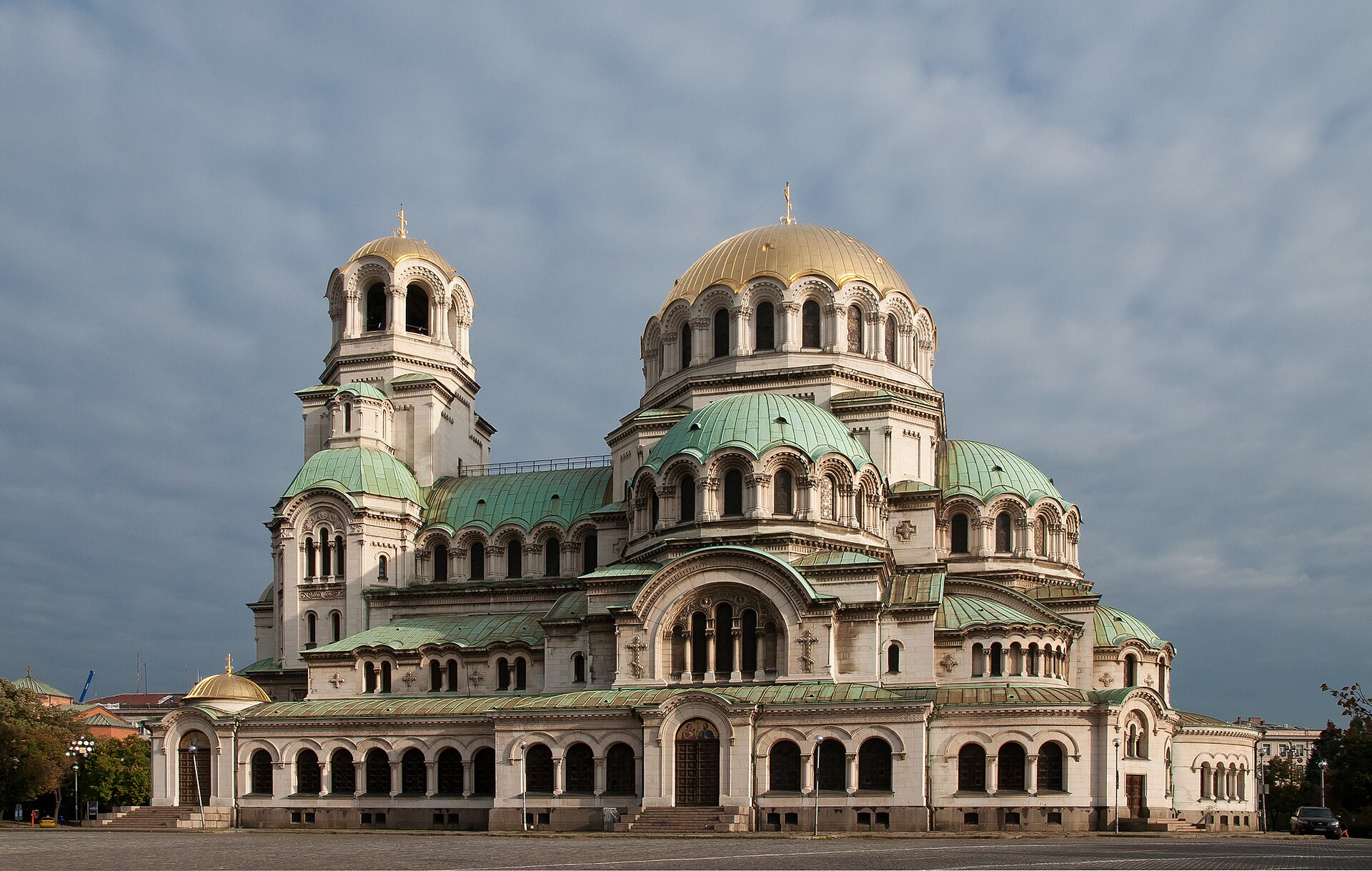
The single biggest change for British visitors since you last looked is Schengen. Bulgaria became a full Schengen member in two stages: air and sea borders on 31 March 2024, land borders on 1 January 2025, so the rules now match France, Spain, Germany and the rest. The 90-in-180-days clock counts across the whole zone, not Bulgaria alone.
UK passport holders enter visa-free for tourism, family visits, business meetings, conferences, short courses and cultural or sporting events. The rules are unforgiving on the documentation. Your passport must be issued less than ten years before the date of entry, and must remain valid for at least three months after the day you intend to leave the Schengen area. A 9-year-and-9-month-old passport that is technically valid for another 18 months will be turned away at Sofia or Burgas immigration. Renew if there is any doubt. The current FCDO advice is at gov.uk/foreign-travel-advice/bulgaria/entry-requirements.
You can spend up to 90 days in any rolling 180-day period inside the Schengen area. The clock starts the day you enter and counts every day you are anywhere in Schengen, not just Bulgaria. The European Commission has a free official calculator at travel-europe.europa.eu/calculator_en. Use it before you book a long trip or a back-to-back of European holidays. If you stay longer than 90 days you need a national long-stay visa or a residence permit. Our Residency guide covers the routes.
The European Travel Information and Authorisation System (ETIAS) is the EU equivalent of the US ESTA, a quick online registration before you fly. It is not live, and the EU has withdrawn its own launch date. The "last quarter of 2026" target was quietly removed from the official ETIAS page in mid-July 2026, and the agency building it, eu-LISA, is expected to set a revised timeline after its board meets in September 2026. You will see April 2027 quoted in plenty of places; that is not an official date. When it does launch there will be a transitional period of at least six months, during which nobody meeting the other entry conditions can be refused boarding or entry for lacking one. It will cost twenty euros (raised from the original seven euros by the European Commission in February 2025, Implementing Regulation 2025/302), will be valid for three years, and will be free for travellers under 18 or over 70. Check travel-europe.europa.eu/etias_en within a fortnight of your departure date so you do not get caught by a quiet go-live, and use only that europa.eu address: fake ETIAS sites charging inflated fees are already trading on the confusion.
The Entry/Exit System (EES) rolled out across Schengen from 12 October 2025 and became fully operational on 10 April 2026. It records biometric data (fingerprints, facial scan) on your first border crossing after launch, then automates subsequent ones. Allow extra time at Sofia and Burgas immigration on your first post-EES arrival. The system replaces passport stamping, so do not be surprised if your passport comes back unmarked.
The Global Health Insurance Card (GHIC) replaced the EHIC for UK travellers post-Brexit. It is free at nhs.uk and gives you access to state-provided medical care in Bulgaria on the same terms as a Bulgarian resident. It is not health insurance. It does not cover private hospitals (where most foreigners get sent because state hospitals route them there), repatriation to the UK, mountain rescue in Bansko or Rila, lost luggage, or trip cancellation. Buy comprehensive travel insurance as well. The FCDO explicitly recommends it on every Bulgaria advisory page.
If you are heading to the Pirin or Rila mountains for hiking or skiing, check that your insurance specifically covers winter sports and helicopter or stretcher mountain rescue. Bulgaria's Mountain Rescue Service (Planinska Spasitelna Sluzhba) is excellent but is not free for the uninsured. Their site is pss-bg.bg.
Cars registered in the UK and driven abroad must display a "UK" identifier sticker (the black-on-white "UK" oval) on the rear of the vehicle, even if your number plate already includes "UK" with the Union Flag. The old "GB" sticker has not been valid since 28 September 2021. Driving a UK-plated car in Bulgaria without a UK sticker is technically a fineable offence under the 1968 Vienna Convention on Road Traffic, and Bulgarian Traffic Police (KAT) do enforce it on visiting plates. Stickers are roughly £3 from any UK motoring shop, fuel forecourt or Halfords, or you can order one from the AA / RAC site. Stick it on before you board the Eurotunnel.
An International Driving Permit is not legally required for short visits because the UK is a party to the 1968 Vienna Convention and Bulgaria recognises 1968-Convention licences. For peace of mind in a remote police stop, a 1968 IDP costs £5.50 from any UK Post Office and removes any ambiguity. Don't bother with the older 1949 IDP variant.
Coming into Bulgaria from the UK as an adult traveller (17 plus), the EU duty-free allowances apply because you are arriving from outside the EU.
Full detail at customs.bg.
Going home to the UK, HMRC's allowances are:
A bottle of Plovdiv-mehana grape rakia counts as a spirit, not a fortified wine, so picks at the 4-litre allowance not the 9-litre. Full rules at gov.uk/duty-free-goods.
Bulgaria does not stamp your passport at Schengen-internal arrivals (most flights from the UK now). That makes the 90-in-180 rule honour-system at the moment of entry. The EES system will start enforcing it automatically, so do not assume "no stamp means no record". Use the European Commission's official calculator to track your days if you visit Europe more than twice a year.
After 146 years of the Bulgarian lev, Bulgaria joined the eurozone on 1 January 2026. For a British visitor this is great news: the same currency you use in Spain, Portugal, France, Germany and Italy. No mental arithmetic at the till, no awkward exchange-rate apps, no leftover coins to give the kids.
Short answer: not as payment, but you can still exchange them. The official conversion rate was set by the EU Council in 2024 and confirmed by the Bulgarian National Bank. If you have lev banknotes left from a previous visit, you have two routes:
By law, commercial banks (UniCredit Bulbank, DSK, Postbank, Eurobank, Fibank, Raiffeisen and the rest) must exchange your lev cash for euros without a fee for the first six months after euro day, until 30 June 2026. Bring your passport. Coins are often refused even within this period.
Many will continue to exchange leva, but typically with a fee and a per-day cap. Some smaller banks may stop accepting leva entirely. Check before queuing.
The BNB has committed to exchanging any amount of lev cash, with no fee, indefinitely. The cashier desk is at 1 Knyaz Alexander I Square in Sofia and at regional BNB offices. Take your passport. There is no expiry date. bnb.bg
Coins are the awkward case. Most retailers stopped accepting lev coins from 1 February 2026. The BNB takes them, but small denominations (1, 2, 5 stotinki) are barely worth the trip. Save them as souvenirs, or pop them in a charity tin where they may still be processed.
Card and contactless acceptance is universal in Sofia, Plovdiv, Varna, Burgas, Sunny Beach, Bansko and the resorts. Smaller towns and outdoor markets remain cash-preferred. Apple Pay and Google Pay work the same as the UK. Revolut, Wise, Monzo and Starling are all excellent for Bulgaria because they give you near-interbank EUR rates with no FX markup, and they let you pay in euros from a euro balance.
Two warnings on ATMs. First, Euronet ATMs (the bright yellow free-standing ones at airports and tourist hotspots) charge fees of 5 to 8 euros per withdrawal and offer truly bad exchange rates. Use a bank-branded ATM (UniCredit Bulbank, DSK, Postbank, Eurobank) instead. They are usually inside or attached to a branch. Second, Dynamic Currency Conversion: when an ATM or terminal asks "Pay in GBP or EUR?", always pick EUR. The "let us do the conversion for you" rate is up to 12% worse than your card issuer's. This is true everywhere in the eurozone, but Bulgarian terminals push it harder than most.
Appreciated, not obligatory. The standard:
Tipping in cash is preferred. If you tip on a card the waiter often does not see it. Overpaying (a 25% tip in a small mehana) is sometimes read as awkward rather than generous. Match the locals.
This one catches almost every Brit at least once. When you hand over cash to pay a bill in Bulgaria, do not say "thank you" or "blagodarya" until after you have your change. In Bulgarian service culture, a thank-you at the moment money changes hands is widely read as "keep the change", a cue rather than a politeness reflex. Hand over the cash, wait silently, take your change, then say blagodarya on the way out. It feels rude as a Brit, and it is genuinely hard to break the habit, but doing it the British way means either an awkward exchange where the waiter returns wondering why you have left an unasked-for tip, or worse, the silent inner rage of believing you have been short-changed when you actually told the staff to keep the difference. Save your thank-yous for when the transaction is fully complete.
For a live, monthly-refreshed picture of typical prices in Bulgaria (groceries, fuel, restaurants, rent), see our Cost of Living guide. We track every figure with a source and a date so you can see how recent each number is.
Bulgaria has four airports that take direct UK flights: Sofia for the capital and the mountains, Burgas for Sunny Beach and the south coast, Varna for the north coast (and a major Wizz Air destination from Luton), and Plovdiv as a seasonal low-cost option. The right one depends entirely on where you are going. Picking the wrong airport is the single biggest avoidable mistake British visitors make.
| Airport | Best for | To centre / resort | Distance | Time | Cost (private transfer) | Cost (bus / metro) |
|---|---|---|---|---|---|---|
| Sofia (SOF) | City breaks, Bansko, Rila | Sofia centre (Serdika) | 10 km | 18 min | €7-12 taxi (OK Supertrans / Yellow! Taxi) | €0.80 metro Line 4 |
| Burgas (BOJ) | Sunny Beach, Nessebar, Sozopol | Sunny Beach | 35 km | 35-45 min | €30-50 per car (SunTransfers, Holiday Taxis) | €8-10 Sunny Beach Express bus |
| Burgas (BOJ) | Burgas city base | Burgas centre | 10 km | 30 min | €10-15 taxi | €0.80 bus 15 |
| Varna (VAR) | Albena, Golden Sands, Sveti Konstantin | Varna centre / coast | 10 km | 30-40 min | €10-15 taxi | €0.80 bus 409 |
| Plovdiv (PDV) | Plovdiv old town, Pamporovo ski (seasonal) | Plovdiv centre | 11 km | 20 min | €15-20 taxi | ~€2 shuttle (timed to flights) |
Schedules verified May 2026 against airport sites: sofia-airport.eu, burgas-airport.bg, varna-airport.bg, plovdivairport.com. Prices in euros following the January 2026 changeover.
The main international gateway, and the only Bulgarian airport with substantial year-round UK service. Two terminals, connected by a free shuttle bus, and they are not interchangeable: Terminal 1 handles Wizz Air and easyJet, Terminal 2 handles Ryanair, British Airways and Bulgaria Air scheduled flights. Check which one your booking says. Schedules and live status at sofia-airport.eu. For who flies where, how each airline's check-in and baggage rules compare, and what the EU Entry/Exit System means at the border, see our guide to flying between the UK and Bulgaria.
From Sofia Airport into the city centre, the cleanest option is the Sofia Metro Line 4. The metro station is integrated into Terminal 2 (a free shuttle from T1), and runs to Serdika in the centre in 18 minutes for around 0.80 euros (one fixed ride). It runs every 6 to 10 minutes from early morning to late evening. metropolitan.bg
If you prefer a taxi, the only safe approach is to use OK Supertrans (yellow-and-orange livery) or Yellow! Taxi from the airport-managed dispatch desks in arrivals. The fare to the city centre is 7 to 12 euros. Anyone approaching you in the terminal offering "taxi" is to be ignored: that is the airport scam, see Section 12.
The Sunny Beach gateway, 35 km south of the resort, and almost exclusively seasonal: expect a busy programme from May to October and very little outside it. Served from a wide spread of UK airports in season, mostly by the holiday carriers. burgas-airport.bg
From BOJ to Sunny Beach, your options:
The northern Black Sea gateway, near Albena, Sveti Konstantin and Golden Sands. Mostly seasonal, May to October, with much reduced winter service. varna-airport.bg Bus 409 runs to Varna centre and the seaside in 30 to 40 minutes for around 0.80 euros. Taxi to centre 10 to 15 euros.
The fourth gateway, 11 km south-east of Plovdiv at Krumovo. Much smaller than the other three, with historically the cheapest landing fees in Bulgaria, which is why budget carriers drop routes here when the schedules suit. UK service is thin and not guaranteed year to year. The airport is also the closest international entry point to Pamporovo ski resort (85 km), so winter charter activity picks up from December to March. plovdivairport.com Taxi to Plovdiv centre about 15 to 20 euros, 20 minutes; a shuttle service times itself to flights.
You can hire a car at any of the three airports. Bulgaria drives on the right. UK photocard driving licences are valid without an International Driving Permit. Older paper-only UK licences should still get a 1968 IDP from the Post Office for 5.50 pounds. gov.uk/driving-abroad
Speed limits: 50 km/h in towns, 90 km/h on country roads, 120 km/h on expressways, 140 km/h on motorways. Headlights must be on day and night, all year. The blood-alcohol limit is 0.05% (lower than the English 0.08%, much lower than Scotland's 0.05% which equals the Bulgarian limit). Zero tolerance for drivers within two years of getting their licence.
An e-vignette is required for any road outside the city limits, including motorways, first-class, second-class and third-class roads (so effectively any road you use to get between towns). Approximate 2026 rates: weekend (two days) 5 euros, one week 8 euros, one month 18 euros, annual 52 euros. Buy at bgtoll.bg, at any petrol station (OMV, Lukoil, Shell, Eko), at borders, or from many post offices. Hire-car companies usually include the vignette but check; you are responsible for fines if it is missing.
Hire car prices in 2026: budget compact 25 to 40 euros per day in summer, automatic surcharge 10 to 15 euros, premium SUV 60 to 90 euros. Collision damage waiver excess is often 1,000 euros plus, so consider third-party excess cover from RentalCover or iCarHireInsurance. Mountain driving in winter requires winter tyres (legally) from 15 November to 1 March; chains are sensible for Bansko or Borovets approaches in deep winter. Our full Driving in Bulgaria guide goes deeper.
Trains are run by Bulgarian State Railways, BDZ, at bdz.bg. The Sofia to Plovdiv service is decent and worth taking (about two-and-a-half hours, 8 to 12 euros). For Veliko Tarnovo, Varna or the coast, buses are usually faster. The main long-distance bus terminus in Sofia is Tsentralna Avtogara (Central Bus Station, next to the Central Train Station, line 1 metro). Books at centralnaavtogara.bg. Major routes have multiple operators per day, modern coaches with Wi-Fi.
Most UK mobile networks (EE, O2, Three, Vodafone, Sky Mobile) include Bulgaria in their EU roaming with a fair-use cap, typically 12 to 25 GB a month. Three reintroduced charges for some plans from May 2025, so check yours. gov.uk/guidance/using-your-mobile-in-eu-and-eea-countries
If you are staying more than a fortnight or want unlimited data, a Bulgarian SIM is straightforward: Vivacom, Yettel or A1. Prepaid tourist SIMs from around 10 euros with 10 GB plus. ID required. eSIM options: Airalo Bulgaria from around 4.50 euros for 1 GB; Holafly unlimited from around 6 euros a day. Wi-Fi is free in nearly all hotels, cafes, bars and Sofia metro stations.
Bulgaria uses Type C and Type F (Schuko) sockets, 230V at 50Hz. UK travellers need a Type G to C/F adapter; phone chargers and laptop power supplies are dual-voltage. Cheap-looking adapters from a UK newsagent are fine. Tap water is safe to drink throughout Bulgaria, including Sofia, Plovdiv, Varna, Burgas, Sunny Beach and Shumen. Sofia water comes from the Iskar reservoir and Rila springs and routinely passes EU drinking-water standards.
Bulgaria's flagship Black Sea resort, eight kilometres of golden sand at the mouth of a bay, anchored at the south end by the UNESCO old town of Nessebar. The single biggest holiday brand for Brits in Bulgaria, and the resort that does the most to confirm or contradict your prior assumptions depending where you stay.
The deeper guide: this section is the visitor-overview snapshot. For the British holidaymaker's full operating manual on the resort, mobility scooter hire, the airport bus, taxi safety, the Flower Street nightclub strip, the knock-off market, the drink-spiking warnings, and the long-term Brit reality of Sveti Vlas, Ravda and Aheloy, see our dedicated Sunny Beach guide.
Bulgaria's largest beach resort, eight kilometres of fine golden sand on the southern Black Sea coast.
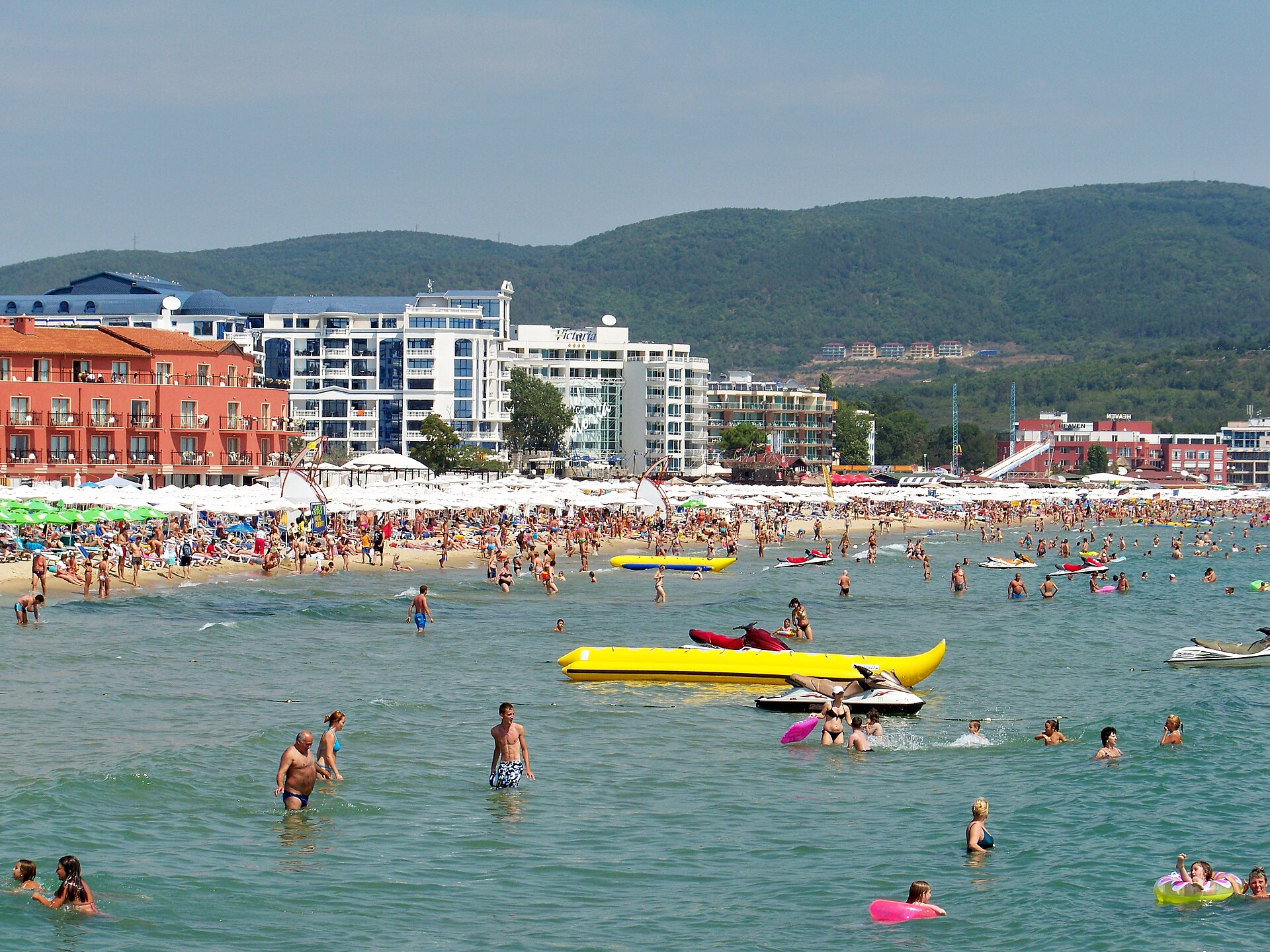
Sunny Beach (Bulgarian: Слънчев бряг, romanised Slanchev bryag) sits on the Black Sea coast in Burgas Province, 35 kilometres north of Burgas Airport (BOJ) and about 90 kilometres south of Varna. The beach is roughly eight kilometres long, with a sand width of 30 to 60 metres in most places. The resort opened in 1959 as a planned socialist-era flagship, was privatised after 1989, and expanded dramatically through the 2000s as the UK package-tour boom took off. It now has more than 800 hotels and over 200,000 bed spaces. The permanent population of the registered settlement is small (around 1,300 to 2,000); peak summer occupancy can hit 250,000 people.
The resort holds Blue Flag certification on multiple beach segments. Awards are renewed each May or June by Blue Flag Bulgaria; the live list is at blueflag.bg.
Sunny Beach is one continuous resort but it has three distinct moods. Where you stay matters more than which hotel.
Calmer, older Soviet-era hotels (many renovated), more Bulgarian and German families, walking distance to Nessebar UNESCO old town along the promenade. The right base for families, couples and anyone over 35 who likes a quiet beach.
Mid-resort, anchored by Cacao Beach Club. Mixed demographic, busy promenade, the main commercial heart. Good for visitors who want a balance of beach by day, busy bars in the evening but not the full party-strip experience.
Roughly one kilometre of bars, clubs, neon, British and Irish themed pubs along Flower Street and Bourgas Street. The famous party zone. Brilliant if that is what you came for. To be avoided if you are travelling with under-15s or want a quiet sleep.
Fine, soft, golden sand for most of the eight kilometres. There are pebbled rock sections at the extreme north and extreme south ends. Lifeguards are on duty across the official season, typically 1 June to 30 September, with a red and yellow flag system. Watersports concessions run jet ski, parasailing, banana boat, ringo and windsurfing rentals. Approximate 2026 prices: jet ski 30 to 50 euros for 15 minutes, parasailing 40 to 60 euros, banana boat 10 to 15 euros, sunbed and umbrella 8 to 15 euros for two beds. Free strips of beach exist between paid concessions but are narrow at peak season.
Sea temperature, monthly averages:
Indicative July 2026 all-inclusive packages from the UK for two adults, seven nights:
Independent room-only rates run roughly 40 to 70 euros a night for 3-star, 70 to 130 for 4-star and 130 to 300 for 5-star peak season. Self-catering one-bed apartments are 40 to 90 euros a night peak; two-bed 70 to 150. Hostels are limited inside Sunny Beach itself; the closest backpacker-style options are in Burgas (Hostel Mostel Burgas).
Sunday roasts, fish and chips, full English breakfasts and Premier League fixtures are all available, particularly along the strip. Notable British-leaning venues include The Lazy Lizard, Old Bridge Inn, The Queens Pub and Linekers Bar. A Sunday roast typically costs 10 to 15 euros. For Bulgarian food, find a mehana: Hanska Shatra (the famous "Khan's Tent" amphitheatre restaurant on the hill above the resort, traditional folk show plus dinner, around 30 to 40 euros a head), Mehana Chiflika and Mehana Strandja are reliable. A Bulgarian grill plate, salad and a rakia is typically 15 to 20 euros.
Beer prices in an average resort bar in 2026 are 2 to 3.50 euros for a 500ml local lager, 3.50 to 5 euros for imports, and 4 to 7 euros for cocktails on Flower Street. Notably cheaper than UK pub prices.
Nightlife centres on Cacao Beach Club (day-to-night beach club, mainstream EDM, Bulgaria's most famous beach venue), Bedroom Beach Club (cocktail-focused, more upscale, house and deep house), and the Flower Street strip (Linekers, Bonkers, The Den and a rotating cast of British and Irish themed pubs). Bars typically serve until 4 or 6 am in peak season; beach clubs close around 6 am.
Despite the strip's reputation, Sunny Beach has a real family offer. Action Aquapark is the largest water park in Bulgaria, located at the resort's north end. Adult day ticket around 25 to 30 euros, child 15 to 20. on the resort's north end (search "Action Aquapark Sunny Beach" for the latest opening dates) Boat trips along the coast (pirate-themed cruises 15 to 25 euros, fishing trips 30 to 40 euros, glass-bottom tours) operate daily in season. The south end of the resort is genuinely calm and family-oriented, with hotels like Helena Resort and DIT Evrika Beach Club skewing British and German family.
Sunny Beach is well placed for day-tripping the southern Black Sea coast and beyond.
Wikidata Q193241 · UNESCO World Heritage
Two kilometres south, an ancient peninsula town with 19 surviving medieval churches, Bulgarian Revival wooden houses with overhanging upper floors and 3,000 years of layered Thracian, Greek, Roman, Byzantine and Ottoman history. Walking, water-taxi or shuttle bus from Sunny Beach. Old town entry is free; some churches and museums charge 2 to 4 euros. Half a day to a full day.
Wikidata Q407372 · Salt-lake spa town
Twenty-five kilometres south. Famous for its salt-lake mud therapy, the St George Monastery and the Pomorie wine cellar (Black Sea Gold). Half-day. Bus around 3 euros.
Wikidata Q6509 · Provincial capital
Thirty-five kilometres south. Sea Garden park, Burgas Beach, Archaeological Museum, the lakes (flamingos in summer at Atanasovsko), and the Sand Sculptures Festival in summer. Half to full day. Bus 4 to 5 euros.
Wikidata Q271925 · Old Greek colony
Seventy kilometres south. A working old town on a peninsula, restored 19th-century wooden houses, two beaches and a much quieter pace than Sunny Beach. Apollonia Festival in early September. Full day. Bus 7 to 10 euros each way.
The party reputation is real, and concentrated on a roughly one-kilometre strip at the north end of the resort. Outside that strip, particularly the south end and the resorts adjacent to Nessebar, the demographic is family, older couple, German and Bulgarian. The British tabloid coverage (the Daily Mail summer features, the Sky News occasional dispatches) tends to focus on the worst-case Flower Street scenes for clicks; the reality across the wider eight-kilometre resort is much tamer than the headlines suggest.
FCDO advice for British nationals visiting Sunny Beach is summer-resort standard: pickpocketing in nightlife zones, drink-spiking in the strip clubs (cover your drink and watch the bartender pour), avoid unmetered taxis, take care with balcony safety. The two most-reported British incident categories are drink-spiking and balcony falls; the FCDO runs an annual awareness campaign before each summer season. gov.uk/foreign-travel-advice/bulgaria/safety-and-security
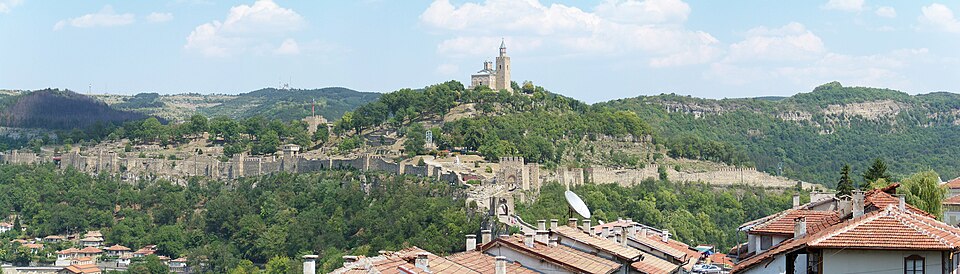
If you only know Bulgaria as a beach country you are missing the point. The cities are where the layered history lives: 6,000-year-old Plovdiv was old when Athens was new, Sofia stacks Roman, Ottoman, Communist and modern in walking distance, and Veliko Tarnovo's medieval fortress still hosts a sound-and-light show on its battlements every summer.
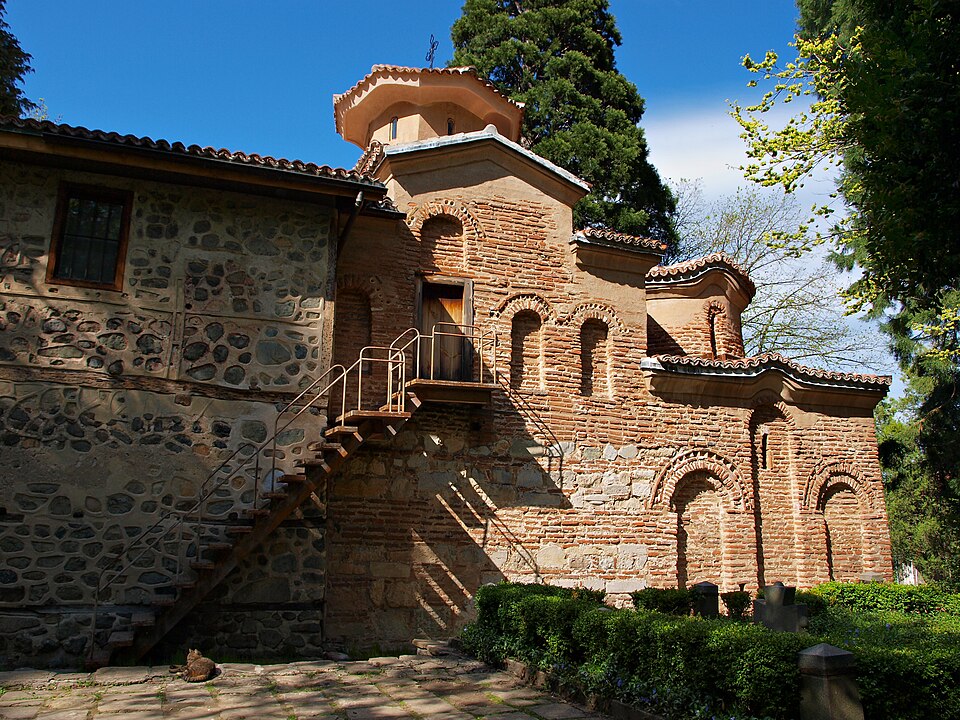
Wikidata Q472 · Population ~1.2 million · Year-round
The seat of Roman Serdica, Ottoman Sofia, Communist People's Republic of Bulgaria and modern EU capital, all stacked in walking distance. Headline sights:
Stay 2 to 3 days for a first visit. Hostel beds from 25 euros, mid-range 3-star 60 to 90 euros, luxury (Sofia Hotel Balkan, Sense Hotel) 150 to 250 euros. Best base: city centre between NDK and Sofia University. Eating: Made in Home, Manastirska Magernitsa, Hadjidraganov's Cellars, Niko'las.
Wikidata Q459 · Population ~340,000 · April-June, Sept-Oct
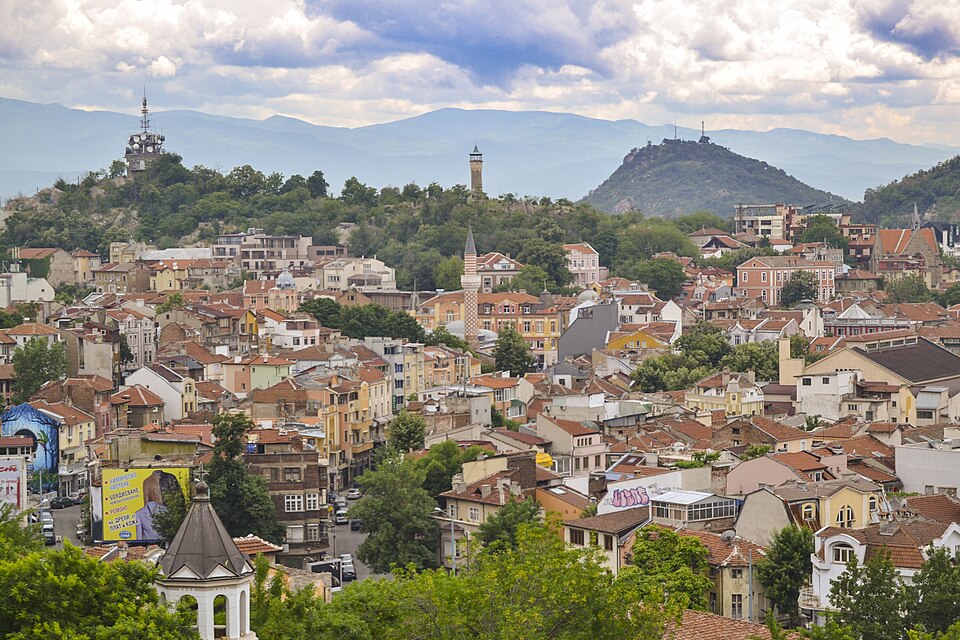
One of the oldest continuously inhabited cities in Europe, settled around 6,000 years. Built on seven hills (six remain after one was quarried), Plovdiv was the 2019 European Capital of Culture jointly with Matera. Headline sights:
Stay 2 days. Hostel 15 to 25 euros, mid-range 50 to 75 euros, luxury (Hotel Imperial, Landmark Creek) 120 to 180 euros. Train from Sofia: 2.5 hours, 8 to 12 euros. Bus: 2 hours, 10 euros. Avoid July and August: the Thracian plain heat regularly exceeds 35 degrees.
Wikidata Q173474 · Population ~70,000 · April-October
The medieval capital of the Second Bulgarian Empire (1185 to 1396), set on the bend of the Yantra River with the Tsarevets fortress on the rock above. Headline sights:
Stay 1.5 to 2 days. Hostel 15 to 25 euros, mid-range 40 to 65 euros (Hotel Yantra, Studio Hotel). 120 km from Shumen, 220 km from Sofia. Direct buses from Sofia in around 3 hours.
Wikidata Q319296 · The Madara Rider · UNESCO since 1979
Where we are based. Shumen is a city of 60,000 with a 5,000-year history, the Founders of the Bulgarian State Monument (the largest single concrete monument in Europe), the Tombul Mosque (the largest in Bulgaria, built 1744), and a working brewery (Shumensko, since 1882). Eighteen kilometres east, the Madara Rider is an early-medieval rock relief carved 23 metres up a vertical cliff, listed by UNESCO since 1979. Our full Shumen city guide covers it.
Bulgaria's interior is mountains. The Pirin range rises to 2,914 metres at Vihren peak; the Rila range holds the country's most important monastery and the highest peak in the Balkans (Musala, 2,925m). Two stops are essential for a serious visit: Bansko for skiing and summer hiking, and Rila Monastery as the spiritual heart of the country.
Bulgaria's headline ski resort, in the Pirin Mountains in the south-west, with around 75 km of marked pistes, the longest run at 16 km, and a maximum vertical drop of 1,570 metres. The gondola from the town centre runs to the Bunderishka Polyana ski area in about 25 minutes. The ski season runs December to mid-April. The signature Tomba run is named after Alberto Tomba, who skied it. Bansko has hosted Alpine Ski World Cup races (Lindsey Vonn, Anja Pärson and Tina Maze among the names on the leaderboard) and built the first snowboard fun park in Eastern Europe. banskoski.com
British skiers are heavily over-represented here, mostly via Crystal Ski, Inghams, Neilson and Balkan Holidays. English is the second language on the mountain. A typical UK ski week (seven nights half-board, January) is 450 to 700 euros per person; the lift pass week is 220 to 280 euros, ski school 180 euros. Top-tier hotels: Kempinski Grand Arena, Lucky Bansko, Premier Luxury Mountain Resort.
In summer, Bansko is a hiking and mountain-biking base for Pirin National Park (UNESCO since 1983, 403 km²), with day trails to Vihren peak (2,914m, the second-highest summit in the Pirin range) and the Banderitsa lakes. Heliskiing is offered out of Bansko in winter. The Bansko Jazz Festival runs in August. The old town has Bulgarian Revival stone architecture and mehanas serving the regional dishes you will not find on a Sunny Beach menu: kapama, chomlek, banski starets, katino meze and banska kavarma. From Sofia, bus is around 3.5 hours, drive around 4 hours via the E79.
Three other Bulgarian winter resorts are worth knowing if Bansko is full or you want a different feel:
The headline geographic fact: Mount Musala in the Rila range is the highest peak in the entire Balkan peninsula at 2,925 metres, higher than anything in Greece, North Macedonia or any of Bulgaria's neighbours. Reachable from Borovets by chairlift plus a hike. Bulgaria has more than 210 km of marked ski slopes in total.
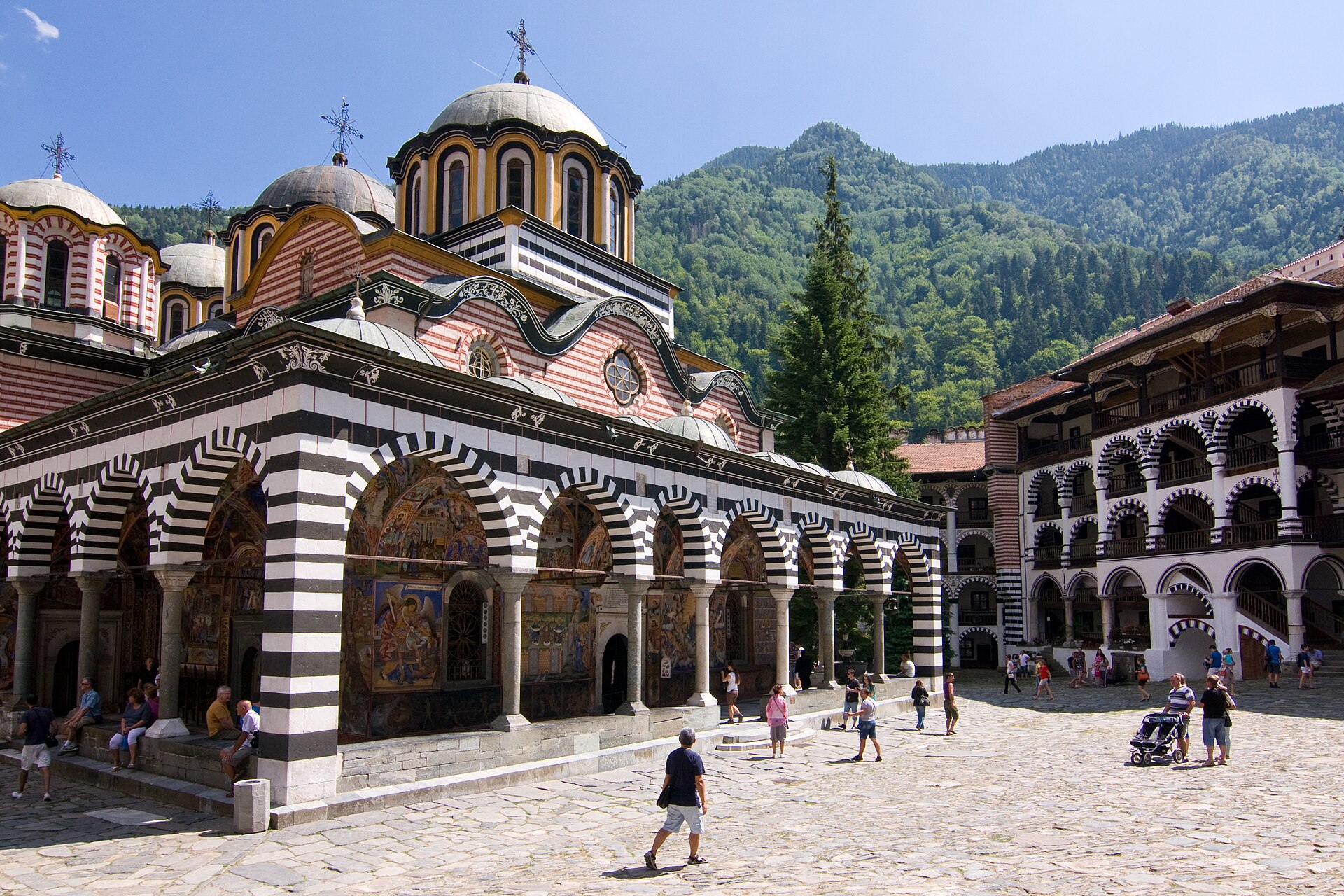
The most famous monastery in Bulgaria, founded in the 10th century by the hermit John of Rila (Bulgaria's patron saint), inscribed by UNESCO in 1983. It sits in a deep valley at 1,147 metres in the Rila Mountains, about 120 kilometres south of Sofia. The exterior is striking, red-and-white-and-black-striped arcades, and the interior holds more than 1,200 frescoes painted in the 1840s, many by Zahari Zograf and contemporaries. The 1335 Hrelyo Tower is the only building to survive the 1833 fire.
Day trip from Sofia: organised bus tours from Sofia run for 25 to 35 euros; public buses go from Ovcha Kupel station to Rila town with onward connections. Allow a full day. Modest dress required (covered shoulders and knees). Courtyard entry is free; the museum (with Rafail's Cross, an extraordinary tiny wood carving of biblical scenes containing more than 600 figures) is around 4 euros.
You do not have to leave Sofia to get above the treeline. Vitosha rises directly south of the city, with Cherni Vrah peak at 2,290 metres. The Simeonovo gondola and Dragalevtsi chairlift give access from the southern suburbs (operating status varies seasonally; verify before you set off). It is a winter ski option for Sofia residents who do not want to drive to Bansko, and a summer hiking option that you can do as a half-day from a city-centre hotel.
Bulgaria has more than 600 mineral springs, with water temperatures from 20 to 101 degrees, and the second-largest reserve of thermal water in Europe. The Bulgarian spa tradition runs back to the Romans (Diocletian collected the world's first bath entrance fee at Hisarya). Spa weeks are excellent value compared to Italian or Czech equivalents and almost no British tourists know about them. The named towns to look for:
Western Rhodopes · 120 km from Sofia · 200,000+ visitors/year
Bulgaria's biggest balneotherapy resort, with around 80 mineral springs ranging 28 to 86 degrees. Kleptuza, the karst spring in the town centre, discharges 570 litres of ice-cold water per second. Most spa hotels offer multi-night packages with mineral pools, mud baths, hydrotherapy and massage from around 70 to 120 euros per night.
South-west · Claimed birthplace of Spartacus · 80 springs up to 83°C
Rated by international medical conferences as the best natural climate in Europe for treating bronchial asthma. Eighty mineral springs, very low pollen and humidity. The base for visits to Melnik (the smallest town in Bulgaria, with the famous sand-pyramid landscape and Shiroka Melnishka wine cellars) and the Rozhen Monastery.
Central Bulgaria · 22 springs in 1 sq km · 41-52°C
The Roman Diocletianopolis, named after the emperor. Site of the largest Roman bath complex ever found in Bulgaria (4th century), with substantial walls still standing. Twenty-two warm-mineral springs in an area you can walk across in fifteen minutes. The town museum holds Roman finds plus a slightly self-deprecating note that Diocletian invented the bath entrance fee here.
Western Bulgaria · The only geyser in Europe
The single most surprising Bulgarian spa fact: Sapareva Banya has the only geyser in continental Europe. Water at 103 degrees jets a column 18 metres high every twenty seconds. The town also has 20-plus mineral pools and is the closest spa centre to the Rila Monastery (an hour's drive). Worth a half-day from Sofia even if you are not booking a spa hotel.
South-west · Hottest spring in Bulgaria at 74°C
Forty hot springs and the country's highest natural water temperature. Roman bath remains, a Bulgarian Revival old town, and a healing peat from the nearby village of Baykal that the Bulgarian medical literature treats seriously. Two hours from Sofia by bus.
Rhodope spa towns · Combine with Trigrad Gorge or the Rose Valley
Devin is the bottled-water-famous Rhodope town at 710 metres altitude, near the dramatic Trigrad Gorge and the Yagodinska and "Devil's Throat" caves. Pavel Banya, in the Rose Valley, runs the Rose and Mineral Water Festival in early June and is 20 km from the UNESCO Kazanlak Thracian Tomb.
Sunny Beach is the headline, but the Bulgarian Black Sea has 354 kilometres of coast, and the rest of it is often a better fit. Couples, older travellers, families with sensitive sleepers and anyone allergic to club music will all find a quieter base within 70 kilometres of BOJ airport.
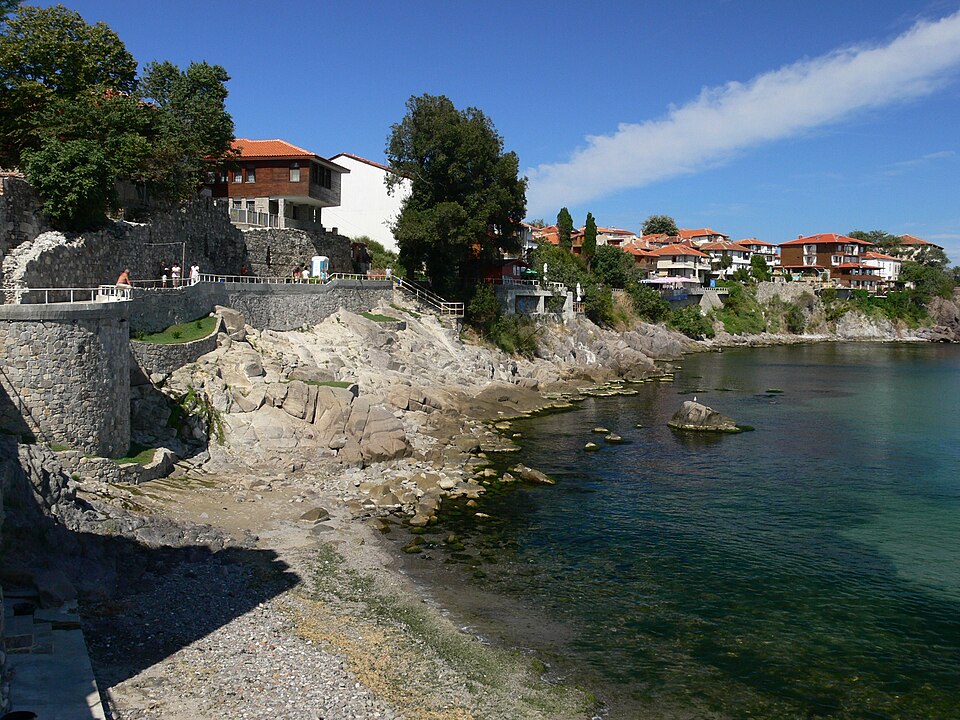
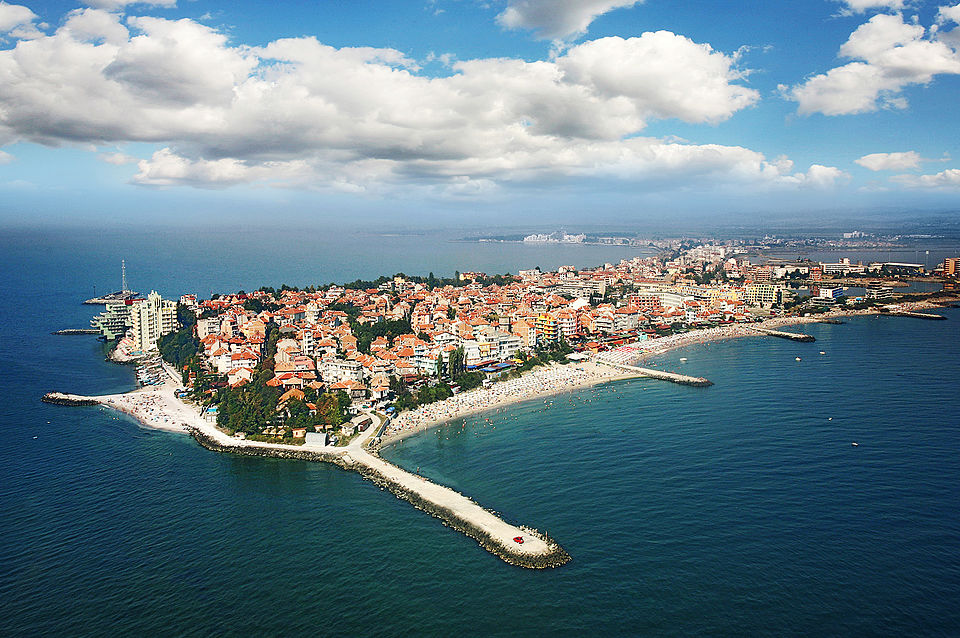
Wikidata Q193241 · UNESCO since 1983
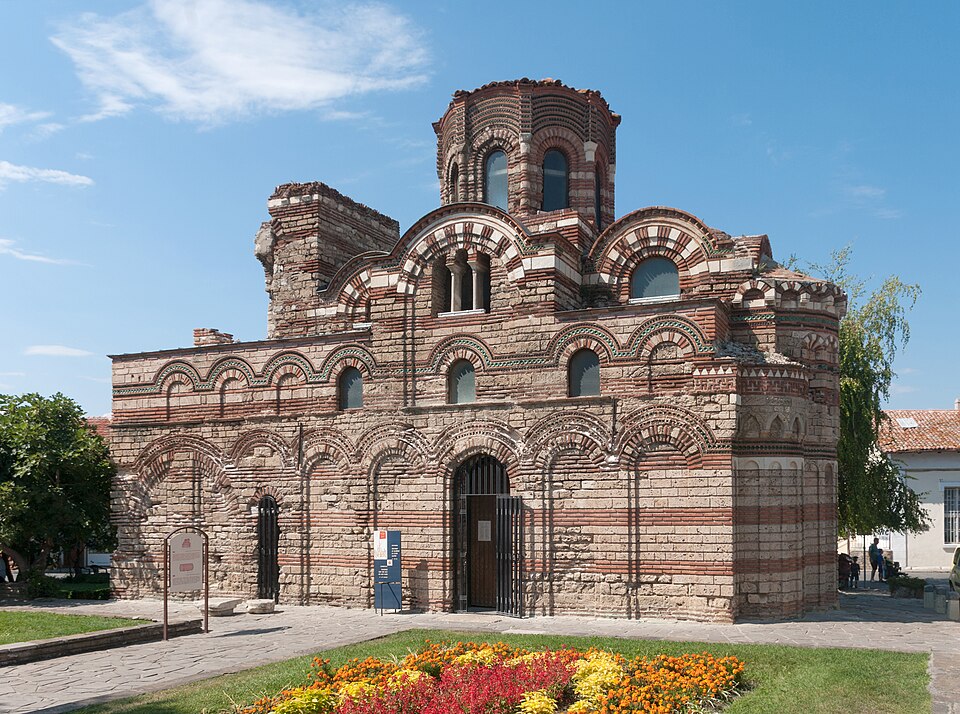
Three thousand years of layered Thracian, Greek (Mesembria), Roman, Byzantine, medieval Bulgarian and Ottoman history on a 350-metre rocky peninsula. Nineteen surviving medieval churches, including the Pantocrator and St Stephen with its frescoed interior. Two kilometres from Sunny Beach. Free to enter; church and museum tickets 2 to 4 euros.
Wikidata Q406657 · Marina town
Five kilometres north of Sunny Beach, host to Marina Dinevi, Bulgaria's largest yacht harbour. Upscale aparthotels, calmer family atmosphere, with a Stara Planina foothills backdrop that gives a slightly cooler microclimate than wetland-adjacent Sunny Beach. Walking distance or a short taxi to the strip if you want it.
Wikidata Q271925 · Old Apollonia Pontica
Founded as a Greek colony in the 7th century BC, Sozopol's old town sits on a small peninsula with restored 19th-century wooden Bulgarian Revival houses. Two beaches (Harmanite, large and family-friendly; Central, smaller and in the old town). Apollonia Festival in early September. Saint Ivan island offshore, where claimed relics of John the Baptist were found in 2010 (a story journalism still treats with some scepticism). Marketed as the cultured, calmer alternative to Sunny Beach.
Wikidata Q670939 · All-inclusive resort
Thirty kilometres north of Varna in Dobrich Province. Purpose-built family resort, predominantly all-inclusive, with four kilometres of fine sandy beach and a gentle gradient that suits young children. Around 43 hotels, mostly all-inclusive. Less British-known than Sunny Beach, more popular with German, Czech and Romanian visitors. Backed by the wooded Baltata nature reserve.
Wikidata Q407372 · Roman Aqua Calide / Thermopolis
Twenty-five kilometres south of Sunny Beach on a narrow peninsula between sea and salt lake. Two things make Pomorie quietly remarkable. First, black-sand beaches, not gold like Sunny Beach: the dark mineral content gives them a striking colour. Second, the Pomorie Heroon (Tomb), a 2nd to 4th century Roman dome tomb that is the largest of its type ever found in Bulgaria, with a 22-metre corridor leading to an 11.6-metre chamber. Add the black liman mud therapy from the salt lake (used for musculoskeletal, dermatological and respiratory conditions), the Pomorie Wine Cellar (Black Sea Gold) and St George Monastery, and you have a serious rival to Sunny Beach for visitors over forty.
Northern coast day trips from Varna
Two day-trip stops most British visitors miss. Pobiti Kamani ("the Standing Stones") is a natural rock-pillar phenomenon 18 to 20 km west of Varna on the Sofia road: limestone columns up to five metres tall, of disputed geological origin, almost no tourists. Forty kilometres up the coast, Balchik Botanical Garden sits on the grounds of Romanian Queen Maria's "Quiet Nest" palace and holds the second-largest collection of giant cacti in Europe.
Outside Varna · Bulgaria's oldest seaside resort (1908)
Founded 1908, with seven mineral springs at 40 to 60 degrees, three-and-a-half kilometres of beach, and a historic monastery within the resort. Quieter and more dignified than Sunny Beach. Walking distance to Varna by tram in summer. A useful base for visitors who want a beach holiday without the strip or all-inclusive pile-em-high model.
Wikidata Q6506 · Bulgaria's "marine capital"
Third-largest city, population 330,000. The Sea Garden is a 3-km landscaped park along the seafront, the largest and oldest in Bulgaria. The Varna Archaeological Museum holds the Varna Gold Treasure, the oldest worked gold artefacts in the world (around 4,600 to 4,200 BC). The Roman Thermae of Odessos are the largest Roman baths in the Balkans. Day trips: Pobiti Kamani (the natural Stone Forest, 18 km west) and Aladzha Monastery, the medieval rock-hewn cave church 14 km north. varna.bg
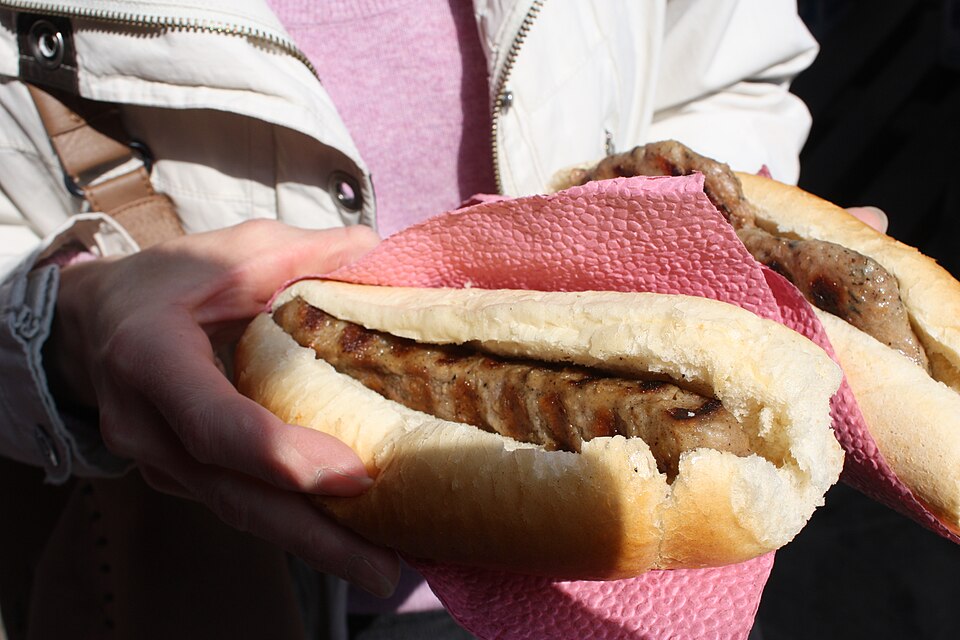
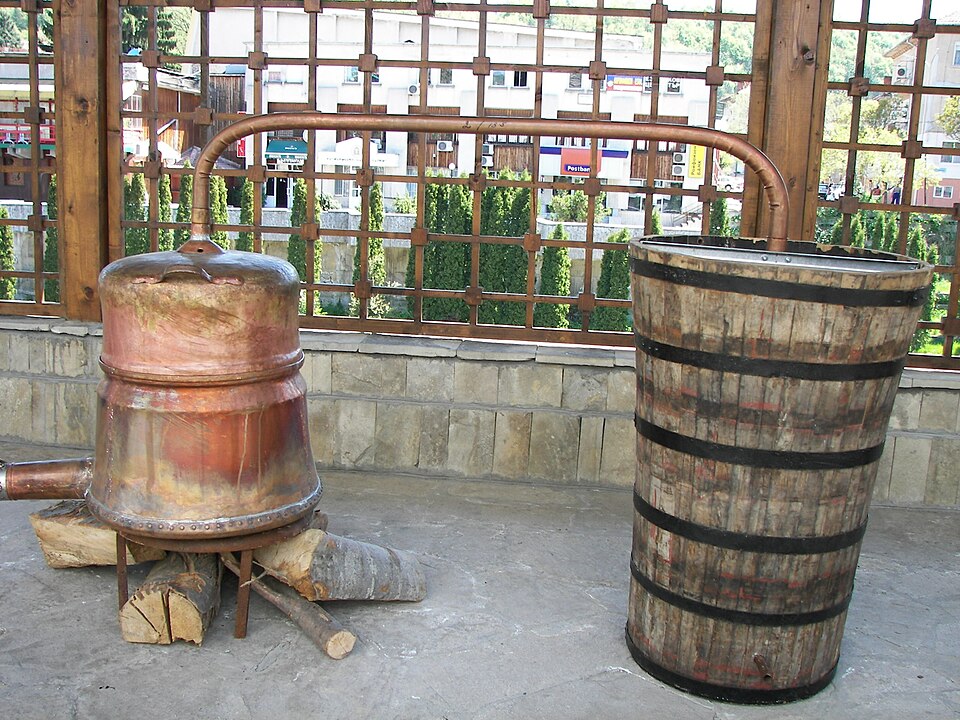
The food in Bulgaria is excellent, varied and underrated. The wine industry is among the oldest in Europe; Mavrud and Melnik are the indigenous reds you should try. Rakia, the national fruit brandy, is taken before or with starters, never as a digestif. Refusing a host's rakia toast is a small but real social offence.
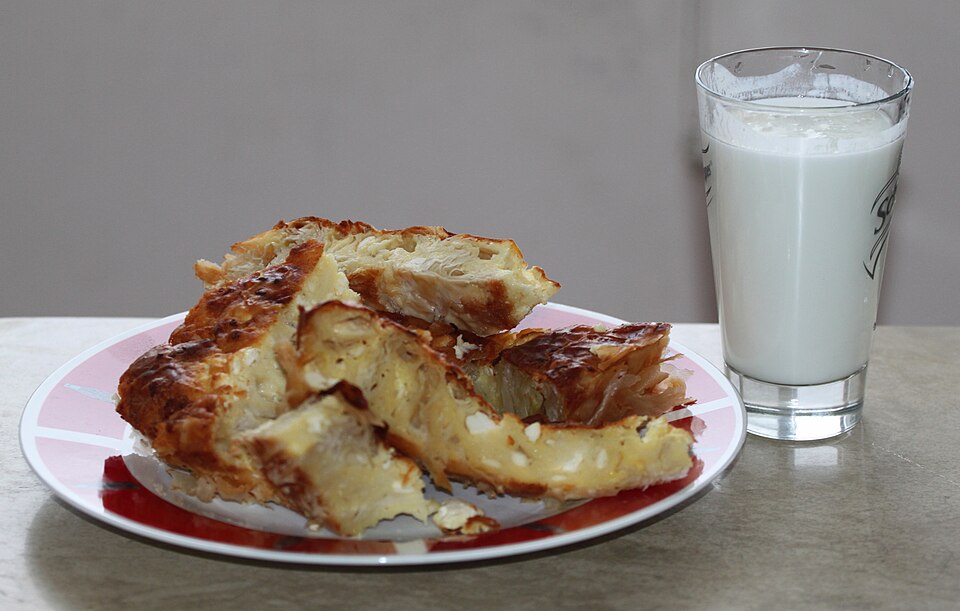
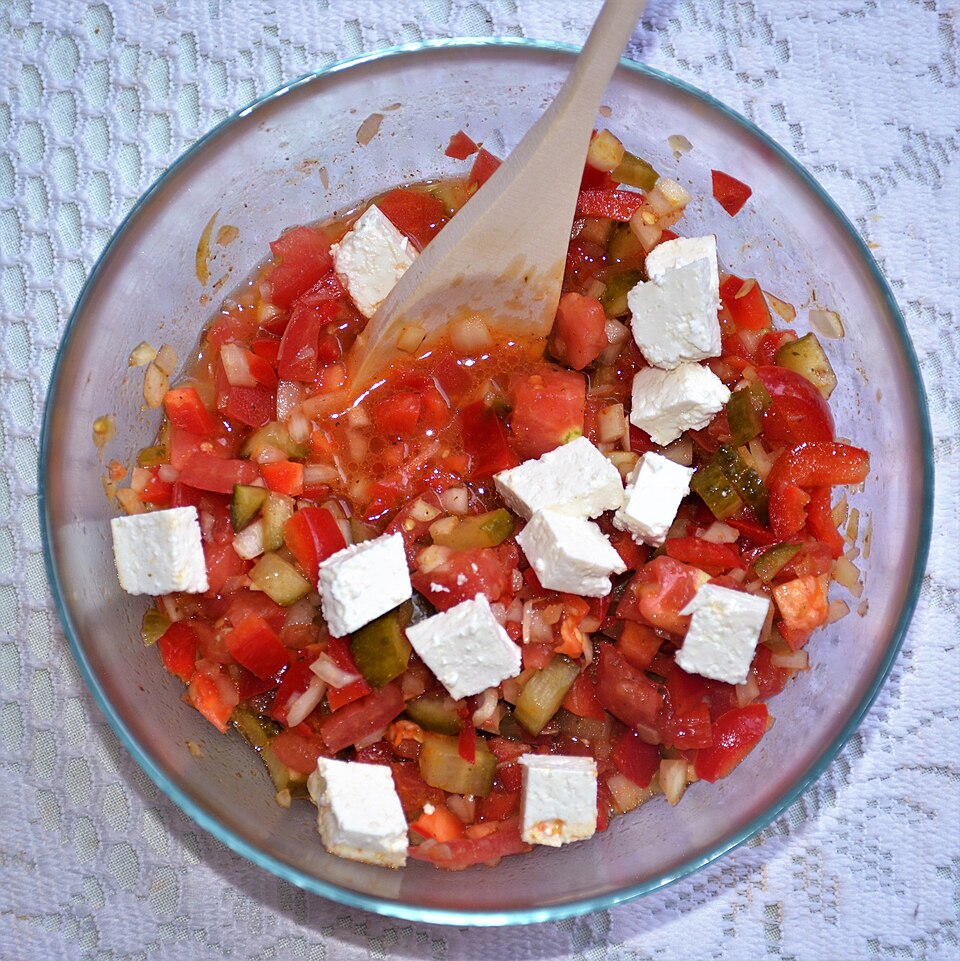
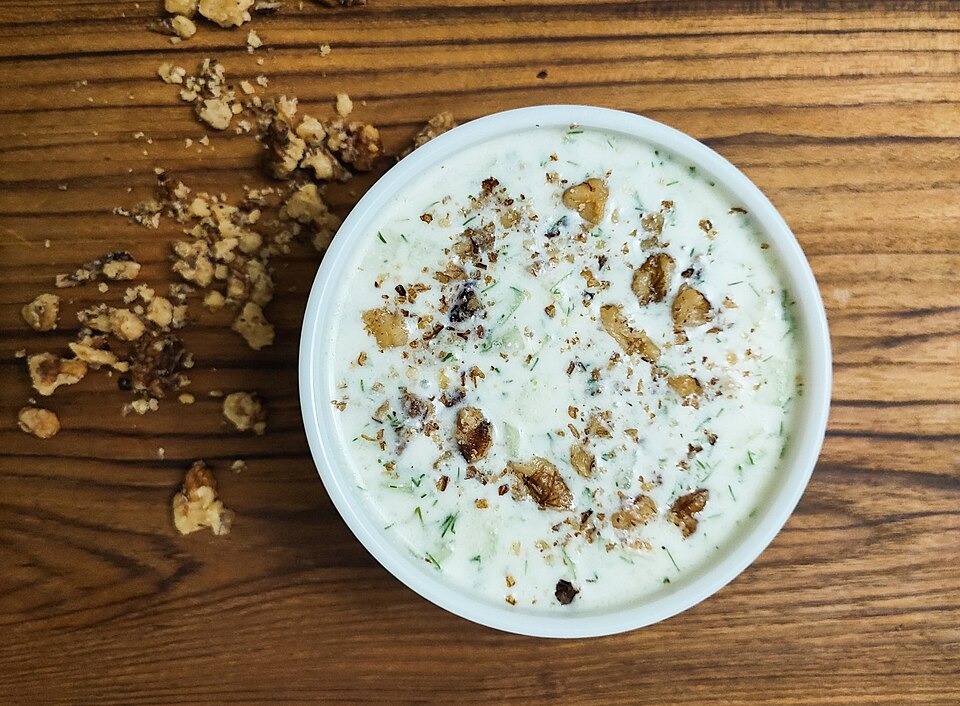
If yoghurt-and-bacteria trivia is your thing: the defining microbe is officially named Lactobacillus bulgaricus, and Bulgaria has its own Yoghurt Museum, in the village of Studen Izvor near Tran (about seven kilometres from the town).
Bulgaria has an unusually rich calendar of single-ingredient food festivals, mostly held in the home village or town of the dish. Useful for travellers who like a regional weekend trip:
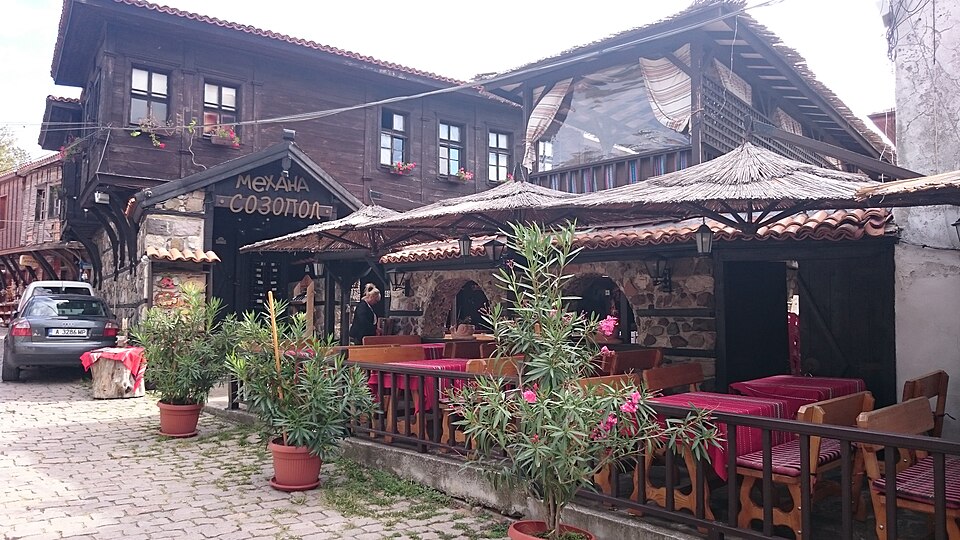
The classic Bulgarian dining venue is the mehana, a folk-decorated tavern with grilled meats, salads, rakia and often live music at weekends. Lunch is typically 13:00 to 15:00; dinner from 19:00 with locals often arriving at 20:00 or later. Food comes slowly: bread first, then small cold starters (salads, lyutenitsa, dips, sirene), then mains. Do not rush. Approximate 2026 prices in a mid-range Sofia mehana: cheap eat 6 to 8 euros (kebapcheta and salad), mid-course main 10 to 15 euros, upscale main 25 to 35 euros, half-litre of local beer 2.50 to 4 euros, coffee 1.50 to 3 euros.
For dishes, regional differences, menu vocabulary, mehana etiquette and dietary needs, use our Bulgarian food guide. For live, monthly-refreshed prices on a wider basket of groceries, restaurants and rent across Bulgaria, see our Cost of Living guide.
English is widely spoken in Sofia, Plovdiv, the Black Sea resorts and the ski resorts, particularly among under-40s in tourism, tech and finance. It is patchier in rural areas and among older generations, where Russian is often the second language. A handful of phrases and an hour with the Cyrillic alphabet make navigation dramatically easier and earn warmer service.
Bulgarians traditionally nod up and down to mean NO and shake side to side to mean YES. Younger urban Bulgarians sometimes use Western gestures with foreigners, which makes things worse. Always confirm the answer with the words Da (yes) and Ne (no), spoken aloud, especially when ordering food, asking directions, or signing anything.
| Cyrillic | Romanised | English |
|---|---|---|
| Здравейте | Zdraveyte | Hello (formal) |
| Здрасти | Zdrasti | Hi (informal) |
| Благодаря | Blagodarya | Thank you |
| Моля | Molya | Please / You're welcome |
| Да | Da | Yes |
| Не | Ne | No |
| Извинете | Izvinete | Excuse me |
| Съжалявам | Sazhalyavam | Sorry |
| Говорите ли английски? | Govorite li angliyski? | Do you speak English? |
| Една бира, моля | Edna bira, molya | One beer, please |
| Сметката, моля | Smetkata, molya | The bill, please |
| Къде е тоалетната? | Kade e toaletnata? | Where is the toilet? |
| Колко струва? | Kolko struva? | How much does it cost? |
| Добре | Dobre | Good / OK |
| Наздраве | Nazdrave | Cheers / Bless you |
The Cyrillic alphabet (30 letters, the script the Bulgarians invented and exported to most of the Slavic world) is a one-hour learn that pays back the rest of your life. Many city signs are bilingual; rural signage is rarely Latin-only. After Cyrillic, a structured course will get you from "I can read a menu" to "I can have a basic conversation" surprisingly fast. The grammar is easier than Russian or Czech for English speakers.
If you have a few weeks or longer before your trip, BG60Day offers a structured sequence from Cyrillic through practical situations, grammar and checkpoint practice. It is built by Adrian Dane, who also writes this guide. Every lesson is free, with no account or adverts. Our guide explains the full curriculum, shows real lesson screens and sets realistic expectations for what 60 focused hours can achieve.
See the free course guide →If you are flying in for a meeting, conference or trade event rather than a holiday, the dress code, decision-making rhythm, gifting norms and the venue list are different enough to need their own page. We split it out so neither audience reads material they do not need.
Bulgaria has a low violent-crime rate and is generally safe for British visitors, including solo female travellers and older couples. The risks are the ones every European destination has: pickpocketing in tourist hotspots, taxi scams at airports, currency-exchange traps, and a small set of more elaborate set-pieces in central Sofia. Knowing the patterns is the whole defence.
Save our emergency services in Bulgaria guide for Mountain Rescue contacts, hospital steps, road incidents, lost passports, consular help and essential Bulgarian phrases.
Pharmacies, marked with a green cross and called Apteka (Аптека), are common, but medicine availability and English support vary. A valid GHIC can support medically necessary state care during an eligible temporary stay; it does not cover private facilities or replace travel insurance. Ask whether a provider is public or private and agree private prices in advance. The GHIC is free at nhs.uk. Our healthcare guide covers the wider system, while the dental care in Bulgaria guide explains urgent dentists, NHIF contracts and when GHIC may apply.
Five recurring patterns to know and ignore.
For Sunny Beach specifically, the two FCDO-flagged risks beyond the above are drink-spiking in nightclubs (cover your drink and watch the bartender pour) and balcony falls, which happen every summer and which the FCDO runs an annual awareness campaign about. Our Money guide covers a wider list of expat-side scams (banking phishing, property deposit traps).
The Bulgarian Consumer Protection Commission (KZP) takes complaints in English at kzp.bg or on the national hotline 0700 111 22 (free from Bulgarian landlines and mobiles). They are the right route for a price-gouging complaint, a refund dispute or a misrepresented service. For criminal incidents, call 112 first. Use the current British Embassy Sofia contact route for the consular side.
Bulgaria has a continental climate inland and a milder Black Sea coastal climate. Sofia and Plovdiv get hot summers (regularly 35 degrees plus) and cold snowy winters. The coast is cooler in summer than the interior because of sea breezes. Pick the season around what you actually want to do.
Use the Bulgaria weather by month and region guide for live forecasts, Black Sea temperatures and the differences between the coast, inland cities and mountains. This visiting guide keeps its focus on trip planning and what is open.
Beach: late June to mid-September is peak (sea at 25 to 27 degrees, fullest hotels, fullest nightlife). May, early June and mid-September to early October are shoulder months with cheaper hotels and quieter beaches. Cities: April to June and September to October are ideal for Sofia, Plovdiv and Veliko Tarnovo. Avoid July and August in Plovdiv unless you tolerate 35-plus heat. Skiing: mid-December to early April for Bansko, Borovets and Pamporovo. Off-season coastal (November to March) is dead; most hotels close completely.
State offices, banks and many private businesses close on the days below. Public transport runs reduced timetables. Museums often close on the day after a major holiday and on Mondays year-round.
Most British visitors visit Nessebar and the Rila Monastery and assume they have done Bulgarian UNESCO. Bulgaria has nine inscribed sites in total. The lesser-known ones make for some of the best off-the-beaten-track day trips:
Sofia 3 nights (with Boyana Church and a Rila Monastery day trip) plus Plovdiv 2 nights. The classic short city break, no domestic flights needed.
Sofia 2 nights, Plovdiv 1 night, Veliko Tarnovo 1 night, Sunny Beach or Nessebar 3 nights. Hire car recommended.
Sofia 2, Bansko 2, Plovdiv 1, Sunny Beach 4 (with day trips to Nessebar and Sozopol), 1 transit. The all-rounder.
Sofia 3 plus Rila day, Plovdiv 2, Veliko Tarnovo 2, Shumen and Madara 1, Varna 2, Sunny Beach plus Nessebar plus Sozopol 3, 1 buffer. The deep dive.
No. UK passport holders enter Bulgaria visa-free for tourism, family visits, business meetings and conferences for up to 90 days in any rolling 180-day period. Bulgaria joined Schengen for air, land and sea borders on 1 January 2025, so the 90-in-180 limit is calculated across the whole Schengen area, not Bulgaria alone. Your passport must be issued less than 10 years before the date of entry and remain valid for at least 3 months after the day you intend to leave Schengen. ETIAS authorisation is expected to apply from late 2026; check the EU's official site before you fly.
Yes. Bulgaria adopted the euro on 1 January 2026 at a fixed conversion rate of 1 EUR equals €1.00. The Bulgarian lev is no longer legal tender. Cards, cash and contactless all work in euros, and ATMs dispense euro notes. The Bulgarian National Bank exchanges leftover lev cash for euros indefinitely with no fee. Commercial banks are required to do the same without a fee until 30 June 2026, after which fees may apply.
Burgas Airport (BOJ), 35 kilometres south of the resort. Do not fly to Sofia, which is over 400 kilometres inland and requires a six-hour transfer. Burgas takes most direct UK seasonal flights from May to October on TUI, easyJet, Jet2, Wizz Air and Ryanair from Gatwick, Stansted, Manchester, Birmingham, Bristol, Edinburgh and other regional airports. A pre-booked transfer to Sunny Beach costs around 30 to 50 euros and takes 35 to 45 minutes.
Generally yes, with the same precautions any package resort needs. Pickpocketing happens on Flower Street and in busy bars, drink-spiking incidents are reported every summer, and balcony falls are a recurring British tragedy that the Foreign Office runs annual awareness campaigns about. Watch your drink, avoid balcony horseplay after a few rakias, and use only metered or pre-booked taxis. The south end of the resort, near Nessebar, is largely family-oriented and very calm.
No, the lev is no longer accepted as payment anywhere. If you have leftover lev cash from a previous trip, the Bulgarian National Bank exchanges any amount, with no fee, indefinitely. Commercial banks are required to do the same without a fee until 30 June 2026; after that, fees and acceptance cutoffs vary by bank. Most retailers stopped accepting lev coins from February 2026. The conversion rate is fixed at 1 EUR equals €1.00, so €51.1 equals roughly 51.13 euros.
Bulgarians traditionally nod their head up and down to mean NO and shake side to side to mean YES. It is the most-cited culture-shock point for British visitors. Younger urban Bulgarians sometimes use Western gestures with foreigners, which adds confusion. Always confirm with the words Da (yes) and Ne (no), spoken aloud, especially when ordering food, asking directions or signing anything.
Yes, throughout Bulgaria. Sofia tap water comes from the Iskar reservoir and Rila springs and is consistently rated EU drinking-water-directive compliant. Plovdiv, Varna, Burgas, Sunny Beach and Shumen all have safe tap water. Bottled water remains popular socially but is not necessary for safety.
Five recurring patterns. First, unofficial taxis at Sofia airport quoting 50 euros for a 10-euro fare; use only OK Supertrans or Yellow! Taxi from the airport-managed kiosks. Second, currency exchange booths advertising 0% commission with rates 10 to 15% below interbank; use ATMs at branded banks. Third, pickpocketing on Sofia tram 5, in Halite market, on Vitosha Boulevard and in Sunny Beach nightlife. Fourth, the Sofia bar trick where an attractive stranger leads tourists into a bar with 200-euro bills. Fifth, fake police demanding to inspect wallets on the street. The Consumer Protection Commission takes complaints at kzp.bg or 0700 111 22.
Yes for tourist visits with a UK photocard licence. No International Driving Permit is required. Drivers with older paper-only UK licences should get a 1968-type IDP from the Post Office for 5.50 pounds. Bulgaria drives on the right, headlights must be on day and night year-round, and an e-vignette is required for any road outside city limits. Buy the e-vignette at bgtoll.bg, at petrol stations, or at border crossings.
English is widely spoken in Sofia, Plovdiv, the Black Sea resorts and the ski resorts, particularly among under-40s in tourism, tech and finance. It is patchy in rural areas and among older generations who often speak Russian as a second language. Learning a handful of phrases (zdraveyte, blagodarya, da, ne, izvinete) plus the 30-letter Cyrillic alphabet, which takes about an hour, makes navigation dramatically easier. If you have weeks before a trip and want a structured course, bg60day.com is a free online programme, built by Shumen.UK editor Adrian Dane, that takes learners from zero to basic conversation in 60 days.
The Global Health Insurance Card (GHIC) replaced the old EHIC for UK travellers post-Brexit. It is free, available from gov.uk, and gives access to state-provided medical care in Bulgaria on the same terms as Bulgarian residents. It does not cover private hospitals (where most foreigners are sent), repatriation to the UK, mountain rescue in Bansko or the Rila mountains, or anything not strictly state-funded medical. Comprehensive travel insurance is still essential and the FCDO explicitly recommends it.
A 500ml bottle of Zagorka, Kamenitza or Shumensko in an average Sunny Beach bar costs around 2 to 3.50 euros. A pint in a Sofia mehana is typically 2.50 to 4 euros, and 4 to 5 euros for imports or in trendy Sofia districts. Eating out in a mid-range tavern costs 15 to 25 euros per person. Sofia coffee is 1.50 to 3 euros. Bulgaria is materially cheaper than the UK on food, drink, transport and accommodation, even after the post-euro rounding-up effect on small unregulated purchases. See our cost-of-living guide for a full live breakdown.
For the Black Sea coast, late June to mid-September is peak with the warmest sea (25 to 27 degrees in August) and the busiest nightlife. May to June and September to early October are shoulder months with cheaper hotels and quieter beaches. For Sofia, Plovdiv and Veliko Tarnovo, April to June and September to October are ideal, avoiding 35-plus degree summer heat in the inland cities. For Bansko skiing, mid-December to early April. The Rose Festival in Kazanlak runs the first weekend of June.
It is appreciated, not obligatory. The standard is 10% in restaurants if service is not already included. Rounding up is acceptable for cheap meals or coffee. Taxis: round up to the nearest euro. Hotel porter: 1 to 2 euros per bag. Housekeeping: 1 to 2 euros per night left at the end of the stay. Overpaying is sometimes seen as rude rather than generous in smaller venues.
This guide draws on our own reporting from Bulgaria, plus a substantial set of primary sources for facts, prices and named places. The strongest single resource for trip-planning depth is the Ministry of Tourism's set of 10 official English-language brochures, all free PDFs.
Each brochure is 30 to 70 pages of authoritative content, with named towns, monasteries, festivals and resorts. Worth saving for trip planning:


