July is high summer, with heat on the plains, crowds on the coast and the quietest stretch of the civic calendar. The dates here lean on lives rather than holidays, alongside saints' days such as Ilinden on 20 July, the feast of the Prophet Elijah.
31 July dates, each printed in full below.
July at a glance
The July dates
July has no public holiday. Inland afternoons can be fiercely hot, so run errands early in the day.
1 July: Popfolk Star Anelia Is Born in Stara Zagora
2 July: The Short Life of Revolutionary Asen Cholakov
30 July: The Battle of Pliska and the Skull-Cup Story
31 July: The Battle of Stara Zagora and the Samara Flag
1 July
Popfolk Star Anelia Is Born in Stara Zagora
The popfolk star Anelia, a gadulka prodigy from Stara Zagora with 23 number-one singles to her name, was born on the first of July, 1982. It is also the name day for Damyan, Kuzman and Krasimir.
First published 1 July 2026 · Adrian Dane · 4 min read
Right, this one is for anyone who has ever climbed into a Bulgarian taxi and been met with a wall of accordion, a thumping beat and a singer hitting notes you did not know the human throat could reach. Anelia, one of the reigning queens of Bulgarian popfolk, was born on the first of July, 1982, in Stara Zagora.
What happened on this day
Anelia, born Aneliya Georgieva Atanasova, came up the hard way and the proper way at once. Her mother's side of the family were professional musicians, and a primary-school teacher, Slavka Ivanova, spotted her in the second grade. By twelve she was singing Thracian folk songs in a children's trio, Glasoviti Trakiycheta, who cut a compilation for the old state label Balkanton in 1994.
Here is the detail that complicates the lazy view of popfolk: Anelia is a trained musician. She entered the prestigious Philip Kutev music school as the top student in her year, with a perfect 100% score on the gadulka, the pear-shaped bowed instrument you will have heard sawing away under half the folk music in the country. A chalga star who can actually play a gadulka properly is not the cliche.
The fame came in 2002 with her second single, "Pogledni me v ochite" (Look Me in the Eyes). After that the hits did not really stop. By the reckoning of her own discography, twenty-three of her singles have gone to number one on the Bulgarian charts, which puts her among the most successful female recording artists the country has produced. In 2012 she took Artist of the Year at the Planeta TV music awards, the closest thing Bulgarian popfolk has to a coronation.
If the word popfolk (or chalga, the rougher nickname) means nothing to you yet, it will. It is Bulgaria's own pop music, folk and Balkan melodies welded to dance beats, run largely out of the Payner label and its Planeta television channel. The cultural establishment has spent decades wrinkling its nose at it. Everyone else has spent those same decades playing it at full volume at every wedding, seaside bar and petrol station between here and the coast.
Today's name days
The first of July is also a name day, and a busy one. Damyan (Дамян) leads it, from Saint Damian the healer; the most famous Bulgarian bearer, Dame Gruev, a founder of the Internal Macedonian-Adrianople Revolutionary Organisation, celebrates today under the short form. Kuzman and Kozma (Кузман, Козма) come from Damian's brother Saint Cosmas, the pair remembered as physicians who treated the sick for free.
Krasimir and Krasimira (Красимир, Красимира) sit apart from the saints: a purely Slavic name from krasen, beautiful, and mir, peace. A handful of other variants mark the day too, including Damyana, Damyanka and Krasina. Our Bulgarian name-days guide has the full list.
The etiquette is the part newcomers trip over. A name-day celebrant in Bulgaria keeps open house: you do not wait for an invitation, you simply turn up. The single rule is that you never arrive empty-handed. Cake, banitsa, a bottle or chocolates all work, and if you bring flowers, make the bunch an odd number. Even numbers are for funerals.
Why this matters for British expats
You do not have to like popfolk to need to know it. It is the genre playing in the marshrutka, the taxi, the corner shop and the beach bar, and Anelia is one of the handful of names that have defined it this century. Recognising one of her songs, or just knowing who she is when it comes up, is a small piece of cultural fluency that puts you on the right side of a conversation. If you want to understand how the genre actually works, and why it is both adored and sneered at, our guide to Bulgarian music lays out the landscape.
Sources and further reading
The account of Anelia's early years, her gadulka training and her run of number ones draws on her Bulgarian Wikipedia biography, which goes well beyond what an English search turns up. There is a shorter English Wikipedia article for the headline facts. The name-day list and the open-house etiquette come from common Bulgarian custom, gathered in our own name-days guide.
Questions about 1 July
Who is Anelia?
Anelia (Aneliya Georgieva Atanasova) is one of Bulgaria's most successful popfolk singers, born in Stara Zagora on 1 July 1982. She trained as a gadulka player before her singing career, and 23 of her singles have topped the Bulgarian charts.
What is popfolk or chalga?
Popfolk, often called chalga, is Bulgaria's home-grown pop music, blending Balkan and folk melodies with pop and dance beats. It is commercially dominant, driven by labels like Payner and the Planeta TV channel, and is as widely played as it is sniffed at by the cultural establishment.
Whose name day is 1 July?
Damyan, Kuzman, Kozma and Krasimir, among others, along with variants such as Damyana, Damyanka and Krasimira. The day honours Saints Cosmas and Damian, the brother physicians of Orthodox tradition.
Asen Cholakov was one of thousands of young men who fought and died for the Internal Macedonian Revolutionary Organisation. He was killed near Smolari in 1924, on a date the records still cannot quite agree on. His near-anonymity is rather the point.
First published 2 July 2026 · Adrian Dane · 2 min read
A quiet one today, and an honest admission to open with: most Brits here, and plenty of Bulgarians, will never have heard of Asen Cholakov. He was one of thousands of young men swept into the Macedonian struggle of the early twentieth century, and he died for it on this day in 1924, at about twenty-six.
Who Asen Cholakov was
Cholakov was born in 1898. Even that comes with a shrug: the records give either Pavlovo or Dupnitsa, the kind of small uncertainty that tells you how thin the paper trail is for the foot soldiers of this period. He joined the Internal Macedonian Revolutionary Organisation, the VMRO, and on the second of July 1924, though some sources say the second of August, he was killed in a clash with a Serbian patrol near the village of Smolari. That is very nearly the whole of what survives of him: a name, a cause, and a date the historians cannot quite agree on.
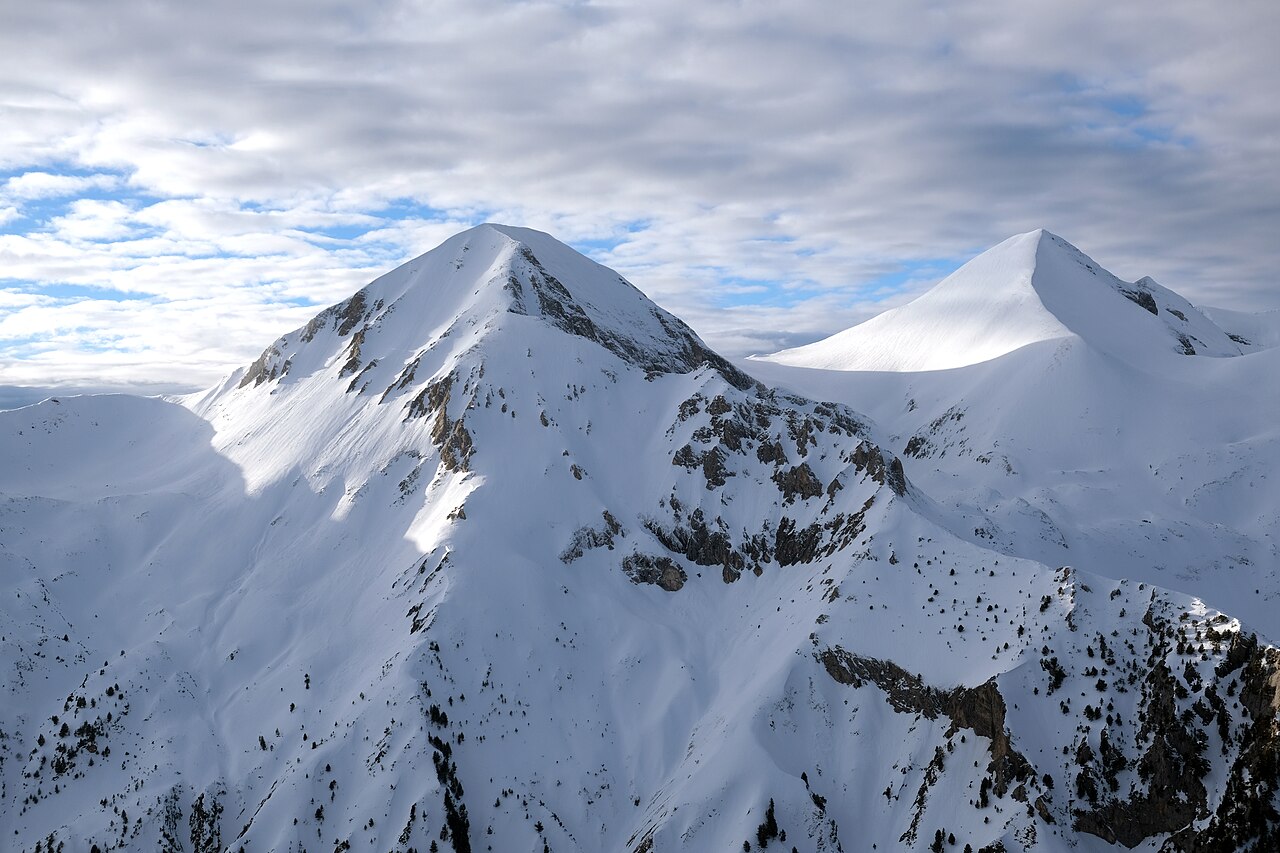
The mountainous Macedonian borderlands where VMRO bands crossed and clashed.
The bigger picture
What makes a near-anonymous death worth a line is the machine he died inside. The VMRO was the revolutionary organisation that had fought, since the 1890s, over Macedonia: first against Ottoman rule, then, after the Balkan Wars of 1912 and 1913 carved the region up, against the Serbian and Greek states that ended up governing much of it. By the 1920s it was running armed bands, cheti, back and forth across the new borders, and the Yugoslav authorities hunted them through exactly the kind of frontier skirmish that killed Cholakov.
Why this matters for British expats
You do not need to take a side in a century-old quarrel to find this useful. The Macedonian question still runs through Bulgarian street names, war memorials and politics, and the letters VMRO even survive as the name of a modern Bulgarian political party. Realising that a plaque you walk past, or an acronym in a news headline, points back to men like Cholakov is a small piece of the country's wiring, the sort of thing that turns a place you live in into a place you actually understand.
The little that is known about Asen Cholakov here is drawn from his Bulgarian Wikipedia entry, which runs to just a few lines. It is a fair reminder that history keeps fuller records of generals than of the men who did the actual fighting.
Questions about 2 July
Who was Asen Cholakov?
A Bulgarian revolutionary and member of the VMRO, the Internal Macedonian Revolutionary Organisation. He was born in 1898 and killed in a clash with a Serbian patrol near Smolari in 1924.
What was the VMRO?
The Internal Macedonian Revolutionary Organisation, a revolutionary movement founded in the 1890s that fought over Macedonia, first against Ottoman rule and later against the Serbian and Greek states that governed parts of the region after the Balkan Wars.
Why does this still matter in Bulgaria today?
The Macedonian question remains part of Bulgarian national memory and politics. You will see it in street names and war memorials, and VMRO survives as the name of a modern Bulgarian political party.
Dejan Bojkov, the Bulgarian chess grandmaster who coached a women's world champion and now trains players as far away as New Zealand, was born on the third of July, 1977. It is also the city day for Kuklen, near Plovdiv.
First published 3 July 2026 · Adrian Dane · 2 min read
A cerebral one today, for the chess players among you. Dejan Bojkov, a Bulgarian grandmaster who has spent his career both winning games and teaching other people to win them, was born on the third of July, 1977.
What happened on this day
Bojkov earned the international master title in 2001 and the grandmaster title, the top rank in the game, in 2008. The year after that he was Bulgarian champion, and in 2011 he travelled rather further afield to win the 48th Canadian Open. He is also a chess writer: his 2010 book A Course in Chess Tactics, published by Gambit, is the kind of thing that sits on a serious club player's shelf.
The detail that gives him real standing, though, is who he has coached. Bojkov worked as trainer to Antoaneta Stefanova, the tenth women's world chess champion, which is about as strong a line as a Bulgarian coaching CV can carry. These days his pupils are scattered across the world. He has been a regular trainer to, of all teams, New Zealand's.
Bulgaria has long produced chess talent well out of proportion to its size.
A town celebrating today
Away from the chessboard, the small city of Kuklen marks its city day today, tucked into the Rhodope foothills south of Plovdiv. If you find yourself near Plovdiv on the third, it is a name worth knowing.
Why this matters for British expats
Bulgaria punches a long way above its weight at chess, and Bojkov's career is a tidy illustration of why: a strong domestic scene, a steady production line of grandmasters, and a coaching culture that exports both players and trainers around the world. If the game caught your interest after a certain Netflix series, you are living in one of the better countries in Europe to take it up properly. The clubs are real, the standard is high, and the tactics manual you are working through might well have been written just down the road.
Bojkov's titles, his championships and his coaching record here are drawn from his Bulgarian Wikipedia entry, the fuller of the two, with the English Wikipedia article covering the headline achievements and his bibliography.
Questions about 3 July
Who is Dejan Bojkov?
A Bulgarian chess grandmaster and author, born 3 July 1977. He earned the grandmaster title in 2008, was Bulgarian champion in 2009, and won the 48th Canadian Open in 2011.
Who did Dejan Bojkov coach?
Among others, Antoaneta Stefanova, the tenth women's world chess champion. He has also trained internationally, including with the New Zealand chess team.
Where is Kuklen?
A small city in the Plovdiv region of southern Bulgaria, set in the Rhodope foothills, which marks its city day on 3 July.
The Battle of Anchialus and a Bad Day for Khan Telets
On 30 June 763, the Byzantine emperor Constantine V beat the Bulgar Khan Telets in a daylong battle near Pomorie, on the coast British expats now know for its beaches. It was a costly Byzantine win, and not the end of the story.
First published 4 July 2026 · Adrian Dane · 2 min read
A grislier anniversary than yesterday's chess. On 30 June 763, one of the bloodier battles of the early medieval Balkans was fought near Pomorie, the Black Sea town a lot of British expats now know as the quieter neighbour to Sunny Beach. It did not go Bulgaria's way.
What happened on this day
The background, briefly. After the Bulgarians were defeated at Marcellae in 756, Khan Vinekh surprised everyone by suing for peace, a decision that cost him both his throne and his life. His successor, Telets, had no such hesitation. He sent his heavy cavalry to loot the Byzantine border, and the emperor Constantine V answered in force: on 16 May 763 he sailed out of Constantinople with a large army and a fleet of 800 ships.
Telets did the sensible thing first, barring the mountain passes and taking the high ground near Anchialus. Then he did the rash thing. Impatient and over-confident, he came down to the lowlands to charge. The battle began at 10 in the morning and ground on until sunset, long and bloody, and when it was over the Byzantines had won, though at a terrible cost in soldiers and commanders. The Bulgarians lost heavily too. Many were taken prisoner, and Telets escaped the field only to be murdered in 765, blamed for the defeat.
Constantine V marched home in triumph and had his prisoners killed. Yet the victory led nowhere. The Byzantines never converted their advantage, and the long wars of the eighth century eventually ended in 792, at Marcelae, with a Bulgarian victory and the old treaty restored.
Why this matters for British expats
It is a useful thing to carry in your head on a beach holiday. The stretch of coast around Pomorie and Sunny Beach that fills with sunloungers every July was, twelve and a half centuries ago, a battlefield that helped decide who ruled the region. Bulgaria's history is not tucked away in museums. It is under the car parks and the promenades, and knowing the sand you are lying on once mattered this much makes the coastline feel older and stranger than the brochures ever let on.
The course of the battle, the fleet of 800 ships and the fate of Khan Telets here are drawn from the Bulgarian Wikipedia entry on the battle, with the English Wikipedia article covering the same ground for anyone who would rather read it in English. Both lean on the medieval chronicler Nikephoros.
Questions about 4 July
What was the Battle of Anchialus?
A battle fought on 30 June 763 near Pomorie on the Bulgarian Black Sea coast, in which the Byzantine emperor Constantine V defeated the Bulgar Khan Telets. It was a Byzantine victory, though a costly one for both sides.
Where is Anchialus today?
Anchialus is the historic name for Pomorie, a town on the Black Sea coast near Sunny Beach and Burgas.
Did the Byzantines win the wars of this period?
Not decisively. Despite the win at Anchialus, the eighth-century Bulgar-Byzantine wars ended in 792 at Marcelae with a Bulgarian victory and the restoration of an earlier treaty.
Seventeen years ago today, a party barely three years old took 40% of the vote, a former tsar's movement was wiped out, and Boyko Borissov began the first of three premierships. That one Sunday still explains half the political talk you overhear in Bulgaria.
First published 5 July 2026 · Adrian Dane · 3 min read
Bulgaria decides its parliaments on Sundays, and few of those Sundays have echoed longer than this one. On 5 July 2009, a Sunday much like today, Bulgarians elected the 41st National Assembly and, without quite realising it at the time, opened a political era that would run for more than a decade. If you have ever wondered why one particular name surfaces in every political conversation you half-follow in the café, this is the day it started.
What happened on this day
The decisive winner was GERB, a party barely three years old. Founded in 2006 as the personal political vehicle of Boyko Borissov, it took 40% of the vote. The governing Bulgarian Socialist Party managed around 18% and was duly shown the door. The heaviest fall, though, belonged to the National Movement Simeon II, the party of Bulgaria's former tsar turned prime minister: it slipped under the 4% threshold and won nothing at all. From running the country to zero seats inside a decade, which rather sets the tone for how Bulgarian politics treats its former favourites.
Turnout was 60.6%, one of the lowest the country had recorded to that point. And the deeper pattern held: just as at every parliamentary election since the fall of communism, the sitting government was not returned. Bulgarian voters had, quite literally, never yet given a government a second consecutive term.
The 2009 vote was also an experiment in electoral engineering. For the first time, Bulgaria ran a parallel voting system: 209 of the 240 seats were distributed proportionally, while the remaining 31, one for each constituency in the country, Shumen's included, went to whoever came first past the post locally.
The run-up supplied its own drama. On 3 April 2009, Yane Yanev, leader of the small Order, Law and Justice party, and a group of independent MPs pushed through a change raising the electoral threshold for coalitions from 4% to 8%, a move aimed squarely at rival alliances. Parliament passed it; the Constitutional Court struck it down on 12 May 2009, barely six weeks later. The institutions, in theory and on this occasion in practice, did their job.
Why this matters for British expats
Because the man who won that Sunday is the skeleton key to fifteen years of Bulgarian political talk. Borissov went on to serve as prime minister three times: 2009 to 2013, 2014 to 2017, and 2017 to 2021. Knowing that his era began on 5 July 2009, and that Bulgarian governments simply did not get re-elected, is most of what you need to decode the shrugging fatalism your Bulgarian neighbours bring to election season. It is not apathy so much as pattern recognition.
There is a certain symmetry on offer this year, too. This April, Bulgaria voted again, its eighth parliamentary election in five years, and GERB and its allies took just 39 seats against the 131 won by Progressive Bulgaria. The party that announced itself with 40% on a July Sunday in 2009 now sits a long way from the wheel. Bulgarian politics gives nothing away for long.
You cannot vote in these contests, parliamentary elections are for Bulgarian citizens only, but you certainly live with the results: whoever holds power in Sofia writes the rules on everything from residency permits to how the euro changeover was administered. Worth watching, even from the sidelines.
Who won the Bulgarian parliamentary election on 5 July 2009?
GERB, led by Boyko Borissov, won decisively with 40% of the vote, while the governing Socialist Party took around 18%. Borissov became prime minister as a result. It was the first of his three separate premierships between 2009 and 2021.
Can British expats vote in Bulgarian parliamentary elections?
No. Voting for the National Assembly is restricted to Bulgarian citizens. British expats live with the results all the same, since parliament sets the rules on residency, tax and much else.
What was unusual about the 2009 election?
Bulgaria debuted a parallel voting system that year. 209 of the 240 seats were distributed proportionally, while 31, one per constituency, went to the local first-past-the-post winner. Turnout of 60.6% was also one of the lowest the country had recorded to that point.
Is Boyko Borissov still a force in Bulgarian politics?
He led GERB into the April 2026 election, where the party and its allies won 39 seats, well behind Progressive Bulgaria's 131. That is a long way from the 40% of 2009, but his is still one of the names every expat ends up learning.
In July 1868 the rebel band of Hadzhi Dimitar and Stefan Karadzha crossed the Danube to raise a rebellion, and spent a whole day encircled in the vineyards above Karaisen, beating back every attack before slipping the cordon at dusk. The story ends on a peak most British expats already know from photographs.
First published 6 July 2026 · Adrian Dane · 4 min read
Most British expats have seen Buzludzha, the derelict flying saucer on its Stara Planina ridge, on somebody's Instagram if not from the road to Kazanlak. Rather fewer could say why that particular peak earned a monument in the first place. Today's anniversary is where that story starts.
What happened on this day
In the spring of 1868, across the river in Romania, two of Bulgaria's most experienced hajduk commanders merged their bands into one. Hadzhi Dimitar, born Dimitar Nikolov Asenov in Sliven, was a merchant's son who had carried the title hadji since a childhood pilgrimage to Jerusalem. Stefan Karadzha, born Stefan Todorov Dimov in a village near Elhovo that today bears his name, had grown up in the Bulgarian communities of the Dobruja. Their plan was not a raid; it was the spark for a national uprising.
It started going sideways at the water's edge. The band crossed the Danube by boat near the village of Vardim, close to the mouth of the Yantra, and was spotted by an Ottoman patrol almost as it landed. A hasty war council scaled the mission back: no uprising would be declared. Instead they would cut the telegraph line between Ruse and Svishtov and make for the Balkan range as fast as their legs allowed. Revolutions rarely survive first contact with a sentry.
The pursuit came quickly, roughly a thousand bashi-bozouk irregulars, and in the raid's opening days it caught them. The rebels took up positions in the vineyards above the village of Karaisen, on a height flanked on both sides by deep ravines and commanding the country around it, which is to say they chose their ground rather well. The Ottoman force encircled the hill and opened fire, and the fighting ran the whole day. Every attack was beaten back. When darkness fell the attackers regrouped towards the mountains, leaving pickets on the Danube side, and the band did the one thing nobody expected: slipped north straight through the picket line, then doubled back south and carried on towards the Balkan. As a piece of night-work it was as neat as anything the whole doomed expedition would manage.
The chronicle of the following days reads as a run of dated engagements: Karapanova Koriya on 7 July, Vishovgrad on the 8th, and on the 9th Kanladere, a name that means "bloody river" in Turkish, where the band was finally broken and a wounded Stefan Karadzha was taken prisoner. Hadzhi Dimitar led the remaining 58 men on towards the mountains and, on 18 July 1868, made a last stand at Buzludzha peak in the Shipka mountains. A note of honesty on all these dates: nineteenth-century Bulgaria ran on the Julian calendar, and the surviving accounts wobble by days depending on who was counting and by which reckoning; the villages around Vishovgrad still time their commemorations by the old calendar.
Some historians hold that Hadzhi Dimitar fell at Buzludzha that day. An eyewitness described him fighting revolver in hand until the end, and a French-language newspaper of the time reported his sabre, revolver, telescope and letters being delivered to Midhat Pasha in Ruse. He was 28. Hristo Botev's ballad "Hadzhi Dimitar" did the rest, giving Bulgaria one of the most recited lines in its poetry: Тоз, който падне в бой за свобода, той не умира. He who falls in the fight for freedom does not die.
Why this matters for British expats
Because these two names are part of the furniture of your Bulgarian life whether you have noticed or not. Nearly every town of any size has a street named for each of them, Shumen included, where the Hadji Dimitar house keeps the name on the map, and once you know the July 1868 story the blue street signs stop being wallpaper and start being a map of the national memory. Bulgaria hands its street grids to the liberation movement's dead with the seriousness Britain reserves for its wartime heroes.
And then there is the payoff at altitude. Buzludzha peak, where the band made its stand, has been officially renamed Hadzhi Dimitar peak, and it is the same summit the famous abandoned monument sits on. The next time someone shows you a photograph of the saucer, you can supply the older and considerably better story underneath it. Both voyvodas, incidentally, also have peaks named after them on the Antarctic Peninsula, which is a form of posthumous esteem few British heroes can match.
It was an all-day engagement in July 1868 between the rebel band of Hadzhi Dimitar and Stefan Karadzha and Ottoman forces, fought in the vineyards above the village of Karaisen in north-central Bulgaria. The rebels held a hilltop position flanked by ravines, repelled every attack, and escaped through the Ottoman picket line after dark.
Who were Hadzhi Dimitar and Stefan Karadzha?
Two of the most celebrated commanders of Bulgaria's anti-Ottoman liberation movement. They merged their bands in Romania in 1868 and crossed the Danube hoping to trigger a national uprising. Karadzha was wounded and captured at Kanladere days after Karaisen, and Hadzhi Dimitar's band made its final stand at Buzludzha peak on 18 July 1868.
Is Buzludzha the same place as the famous abandoned monument?
Yes. The derelict saucer-shaped monument stands on the same peak where the band fought its last battle in 1868, and the summit has been officially renamed Hadzhi Dimitar peak in the voyvoda's honour.
Why are so many Bulgarian streets named after them?
Bulgaria names its streets heavily for the heroes of the liberation movement, and these two rank near the top of that canon. Hristo Botev's ballad about Hadzhi Dimitar, one of the most recited poems in the language, fixed them permanently in the national memory.
A usurper tsar tried to rerun his murdered cousin's greatest victory and got soundly beaten outside Philippopolis. Also today: sixteen name-day variants that all mean Sunday, and a Rhodope town in feast mode. A full calendar, this one.
First published 7 July 2026 · Adrian Dane · 5 min read
Today's calendar piles it on: a medieval tsar getting a hard lesson outside Plovdiv, sixteen name-day variants that all trace back to the word for Sunday, and a Rhodope town throwing its annual feast. Pour the coffee; this one has range.
What happened on this day
First, the setting. After the Fourth Crusade seized Constantinople in 1204 and set up the Latin Empire on Byzantine soil, Bulgaria's Tsar Kaloyan handed the newcomers one of the great shocks of the age: his army annihilated the Crusaders at Adrianople in 1205, and Emperor Baldwin himself died a prisoner in Tarnovo. Then in 1207 Kaloyan was murdered while besieging Thessalonica, in a conspiracy organised by his own cousin Boril, who took the crown while the legitimate heir, the boy Ivan Asen II, still had supporters but no throne. Medieval Bulgarian succession was not a gentle business.
On 30 June 1208 by the Julian calendar then in use, which lands on 7 July in the modern reckoning, Boril met the main Latin army outside Philippopolis, today's Plovdiv. On paper he was well set: between 27,000 and 30,000 men, including some 7,000 Cuman horse-archers of the kind that had shredded the knights at Adrianople. Boril ran the same playbook, harassing cavalry stretching the Crusader line towards a waiting trap. The knights, however, remembered Adrianople perfectly well, declined the bait, and sprang a trap of their own on the detachment the tsar was personally commanding, a mere 1,600 men. Boril fled, and the whole Bulgarian army pulled back. Copying a genius's exam answers, it turns out, works less well when the examiner has read them too.
The retreat was the redeeming feature. The Bulgarians withdrew towards the Turia pass, knowing the Crusaders would not follow them deep into the mountains, and near the village of Zelenikovo the rear guard turned and mauled its pursuers until the main army had passed through safely. The Crusaders fell back to Philippopolis. The defeat stung but it was not a catastrophe: the war resumed the following year, the Latin Emperor Henry talked Alexius Slav, lord of the Rhodopes, into switching sides and marrying his daughter, and peace eventually arrived the way medieval peace usually did, with a wedding, when Kaloyan's daughter Maria of Bulgaria married Henry himself.
Today's name days
7 July is St Nedelya's day, and it comes with one of the loveliest quirks in the Bulgarian calendar: неделя is the word for Sunday, from the old Slavic for a day of no work, so Bulgaria spends today congratulating people who are, quite literally, named Sunday. The saint behind it is the early Christian martyr known in Greek as Kyriaki, "of the Lord's day", whom Bulgarian tradition renders as Sveta Nedelya; Sofia's landmark St Nedelya Church carries her name. Language collectors may also enjoy that the same word means "week" in Russian, which has confused generations of learners in both directions.
Nedelya itself, and the paired forms Nedyalko and Nedyalka, lead the day; the poet Nedyalko Yordanov is one of the best-known modern bearers of the male form.
Then there is the Delyo family of names, Delyan, Delyo, Delcho, which carries my favourite fact of the whole day: the most famous Delyo of all, the Rhodope rebel of folk legend, is currently in interstellar space. The song about him, sung by Valya Balkanska, went out on the Voyager Golden Record in 1977, so a name-day boy called Delyo shares his celebration with a voice drifting somewhere beyond the solar system.
The full list runs to sixteen variants, taking in Neda and Nedyo, Nedka and Nedko, Nenka, Nenko and Nencho, and Neli and Nelina; the whole family is covered in our Bulgarian name-days guide. Readers check for their own names, so do have a look.
And the etiquette, because this is the bit that genuinely surprises Brits: on a name day the celebrant keeps open house. You do not wait for an invitation the way you would at home; friends, neighbours and colleagues simply turn up. The golden rule is never to arrive empty-handed: a cake, a banitsa, chocolates or wine all work, and if you bring flowers, an odd number only, since even numbers are for funerals.
Towns celebrating today
Rakitovo, a Rhodope town that counted just under 9,000 people at the mid-2000s census, holds its feast on St Nedelya's day. It sits 12 km east of Velingrad, the spa town, and about 7 km from the Batak Reservoir, in country that lives off timber and grows lavender, potatoes and barley; there is a small Aromanian community too. There is a neat historical echo here as well: these are the same Rhodopes that Alexius Slav ruled when he changed sides after the 1208 battle. If you fancy a look, the sensible day trip pairs the town's feast with Velingrad's mineral pools or an hour by the reservoir.
Why this matters for British expats
Philippopolis is not trivia; it is the name you meet all over Plovdiv, on the Roman theatre signage and half the hotels, and knowing that Crusaders and Bulgarian tsars once contested the plain below adds a satisfying layer to what is already the best weekend city break in the country. The name days are the practical end: with sixteen variants celebrating, the odds that a colleague or neighbour, in Shumen or anywhere else, is receiving guests today are better than usual. The greeting is честит имен ден (ches-TEET ee-MEN den), and a few more survival phrases live in our Bulgarian phrasebook. If you get the open-house invitation, remember the rules: turn up, bring something, count the flowers.
It was a defeat for Bulgaria's Tsar Boril at the hands of the Latin Empire outside Philippopolis, modern Plovdiv. Boril tried to repeat the horse-archer tactics his cousin Kaloyan had used to destroy the Crusaders at Adrianople in 1205, but the knights avoided the trap and routed the tsar's own detachment. A disciplined rear-guard action during the retreat spared the Bulgarian army a catastrophe.
Why do the dates 30 June and 7 July both appear for this battle?
Medieval Bulgaria used the Julian calendar, and in the thirteenth century it ran seven days behind the modern Gregorian one. The battle fought on 30 June 1208 by the reckoning of the day therefore falls on 7 July when converted, which is why the anniversary is marked today.
Whose name day is 7 July in Bulgaria?
It is St Nedelya's day, celebrated by around sixteen name variants including Nedelya, Nedyalko, Nedyalka, Neda, Nedko, Neli, Nelina, Delyan, Delyo and Delcho. The name literally means Sunday. It is not a public holiday.
What should I do if a Bulgarian friend celebrates today?
Greet them with chestit imen den, meaning happy name day, and feel free to drop by, since name-day celebrants traditionally keep open house. Never arrive empty-handed: cake, banitsa, chocolates or wine are all safe, and flowers must be in odd numbers, as even numbers are reserved for funerals.
Is there anything to see in Rakitovo?
Rakitovo is a quiet timber-and-lavender town in the northern Rhodopes, and its main draw today is the town feast for St Nedelya's day. It sits 12 km from Velingrad's mineral spas and about 7 km from the Batak Reservoir, so it pairs naturally with either for a day trip.
On 8 July 1868 the rebel band of Hadzhi Dimitar and Stefan Karadzha was caught resting near a Veliko Tarnovo village by an Ottoman force that grew past four thousand regulars. They fought until dark, then walked out of the encirclement in good order. The fields there still carry the battle's names.
First published 8 July 2026 · Adrian Dane · 3 min read
One hundred and twenty-two men held off an Ottoman army of more than four thousand for a full day, then slipped out of the encirclement after dark and kept marching. It happened on this date in 1868, outside a village in the Veliko Tarnovo hills that most British expats will never have heard of, and the fields there still carry the battle's names.
What happened on this day
That summer, the rebel band of Hadzhi Dimitar and Stefan Karadzha, two veteran hajduk commanders, had crossed the Danube into Ottoman-ruled Bulgaria intending to ignite a national uprising. The rising never caught, and early July 1868 became a running fight southwards towards the Balkan range, one engagement after another, with the band refusing to be pinned down.
On 8 July, the date the record books give it (as with everything in 1868 Bulgaria, the calendar in use adds a few days of wobble, and the villages in these parts still commemorate by the old reckoning), the band was moving south in proper military order, vanguard and rearguard out, with Stefan Karadzha personally leading the vanguard and reading the ground ahead. They had stopped to rest near the village of Vishovgrad when an Ottoman guard detachment found them, and the fight was on.
The odds deserve a moment. 122 men faced a force that grew steadily past 4,000 as the day wore on, and these were regular Ottoman troops, not the irregulars of the campaign's earlier clashes. The professionals had arrived. The battle ran fierce for the entire day, and when night finally stopped the firing, the band's leaders held a council, formed up with vanguard and rearguard exactly as they had marched in, and withdrew straight through the encircling ring to continue their route. The arithmetic says that should have been impossible. Discipline, apparently, disagreed.
It could not hold forever. The following day at Kanladere, a few kilometres to the south, the band was finally broken; a wounded Stefan Karadzha was taken prisoner, and Hadzhi Dimitar led the survivors on towards the mountains, where his own last stand came ten days later at Buzludzha peak. But 8 July belongs to the escape: the day the noose closed and simply failed to hold.
Why this matters for British expats
Because of how this corner of Bulgaria chose to remember it. Vishovgrad is a small place, yet its village lands carry more than 141 named localities, and two of those names, Dalgi dol and Kanla dere (the second means "bloody river" in Turkish), are the battle map of July 1868. A monument stands at Dalgi dol today, and at Kanladere there is a monument and a memorial fountain dedicated to the fallen. That is how rural Bulgaria does memory: not a city museum with opening hours, but a marble slab at the edge of a field and a чешма (chesh-MA), a roadside fountain, built so that anyone who stops for water reads a name. Once you know that, the small monuments and fountains on your back-road drives stop being scenery and start being an archive.
If you want to stand on the spot, Vishovgrad sits 33 km from Veliko Tarnovo and 11 km from Pavlikeni, right on the seam where the Danubian Plain meets the first rises of the Predbalkan, which makes it an easy detour off a Veliko Tarnovo weekend. The commemorations in these villages run by the old calendar, around 21 July, so you have not missed the observance by reading this today. All of it happened a fair way west of Shumen, mind; this was never our corner of the fight, though the same band's story ended up written across half of northern Bulgaria.
An all-day engagement on 8 July 1868 between the 122-strong rebel band of Hadzhi Dimitar and Stefan Karadzha and a force of Ottoman regular troops that grew to more than 4,000 during the fighting. When night stopped the firing, the band withdrew through the encirclement in disciplined order and continued its march south.
How did 122 men survive against 4,000?
The record credits organisation rather than luck. The band moved in proper military order with a vanguard and rearguard, Stefan Karadzha personally scouted the ground at the head of the vanguard, and after nightfall the leaders held a council and withdrew in the same formation they had marched in. It was the band's second escape from an encirclement in a matter of days.
Who were Hadzhi Dimitar and Stefan Karadzha?
Two celebrated commanders of Bulgaria's anti-Ottoman liberation movement who crossed the Danube in July 1868 hoping to trigger a national uprising. The day after Vishovgrad, Karadzha was wounded and captured at Kanladere, and Hadzhi Dimitar's remaining men made their final stand at Buzludzha peak ten days later. Both are commemorated in street names across Bulgaria.
Can I visit the battle sites?
Yes. Vishovgrad is in Pavlikeni municipality, 33 km from Veliko Tarnovo, and the battle localities are in its village lands: a monument stands at Dalgi dol and a monument with a memorial fountain at Kanladere. Local commemorations are held by the old calendar, around 21 July.
On this date in 1868, a band of Bulgarian rebels who had crossed the Danube nine days earlier was cornered in a ravine near Vishovgrad. It went badly. It also, indirectly, produced the most quoted line in the language about dying for freedom.
First published 9 July 2026 · Adrian Dane · 3 min read
Most British expats have walked past a street sign reading Хаджи Димитър or Стефан Караджа and never once wondered who those men were. On 9 July 1868, both of them were in the same narrow ravine in north-central Bulgaria, fighting the same losing battle. Only one of them walked away, and even he did not last the month.
What happened on this day
In the spring of 1868, two of Bulgaria's best-known hajduk leaders, Hadzhi Dimitar and Stefan Karadzha, put together an armed band, a чета (CHE-ta), with the aim of crossing into Ottoman-ruled Bulgaria and raising the countryside in revolt. On 5 July they slipped over the Danube near the village of Vardim, some 120 men with rifles and a great deal of optimism.
The optimism did not survive contact with reality. By 9 July the band, thinned and exhausted, was cornered at a ravine the locals called Кандлъдере, later renamed Кървавото дере, the Bloody Creek, near the village of Vishovgrad. Waiting for them were roughly 2,000 Ottoman regulars sent by Midhat Pasha, the reforming governor of the Danube province, who had tracked the band across the hills with hunting dogs. Eighty-odd worn-out men against two thousand fresh troops is not really a battle; it is an arithmetic problem, and everyone in that ravine knew the answer.
They fought anyway. In close combat Stefan Karadzha was severely wounded and taken prisoner, and a fighter named Ivan Popkhristov was among the seventeen killed. Hadzhi Dimitar took command, pulled the survivors onto higher, better ground, held off the final assault as the light went, and got what was left of the band away toward the Balkan range. Karadzha was carried first to Tarnovo and then to Ruse, tried by Midhat Pasha's special court and sentenced to hang, but died of his wounds in the Ruse prison on 30 July, aged twenty-eight. Hadzhi Dimitar himself was killed a few weeks later on the peak of Buzludzha.
Why this matters for British expats
Here is the strange part, and the bit that actually decodes modern Bulgaria for you. Hadzhi Dimitar lost, and died, and became immortal anyway. Two years on, the poet Hristo Botev wrote a ballad called Хаджи Димитър, and its line „Тоз, който падне в бой за свобода, той не умира" (he who falls in battle for freedom does not die) is now drilled into every Bulgarian schoolchild with roughly the reverence the British reserve for Shakespeare. Ask a Bulgarian of almost any age and they can finish the line for you.
So when you notice those street names, or a stern bronze bust in a town square, you are looking at the physical residue of a poem as much as a battle. Walk through almost any Bulgarian town and you will find a ulitsa Hadzhi Dimitar and a Stefan Karadzha somewhere on the map. The fighting itself happened a good couple of hours west of us, out past Veliko Tarnovo, so there was never a chapter of this particular story in Shumen; but Shumen was one of the National Revival's strongholds in its own right, and it honours the same generation in its own street names and monuments. I have been here thirteen years and I still find it quietly remarkable that the most quoted line in the language about dying for freedom came out of a campaign that failed inside a fortnight.
Sources and further reading
The account here draws on the Bulgarian Wikipedia entries for the Битка при Кандлъдере, for Стефан Караджа and for Хаджи Димитър, which is the fuller of the two biographies. Botev's poem is short, and worth reading in a decent translation if you want to understand why a defeated rebel became a national touchstone.
Questions about 9 July
Who were Hadzhi Dimitar and Stefan Karadzha?
They were two of the most famous voyvodi, or rebel-band leaders, of the Bulgarian national liberation movement. In 1868 they jointly led an armed band across the Danube to fight Ottoman rule. Both died in the aftermath of that campaign, in their late twenties, and both are now commemorated across Bulgaria.
What was the Battle of Kandaldere?
It was the clash on 9 July 1868 in which their band, worn down to roughly eighty men, was cornered by around 2,000 Ottoman troops in a ravine near the village of Vishovgrad. The rebels lost seventeen men, Stefan Karadzha was captured, and the survivors escaped toward the Balkan mountains.
Why is Hadzhi Dimitar so famous if his campaign failed?
Because Hristo Botev wrote a poem about him. The ballad Хаджи Димитър, with its line that he who falls in battle for freedom does not die, is taught in every Bulgarian school and is one of the most quoted pieces of writing in the language. The defeat became a legend.
Is there a connection to Shumen?
Not directly. The fighting took place well to the west, out past Veliko Tarnovo, so there was never a Shumen chapter to this story. But Shumen was itself a stronghold of the National Revival, and like almost every Bulgarian town it carries these names on its streets and honours the same generation.
Born in Sofia on this date in 1944, Vanya Petkova wrote 27 books, worked in seven languages, lived in Cuba, Sudan and Syria, and dedicated her last collection to Johnny Depp. Most British expats have never heard of her. Here is why they should.
First published 10 July 2026 · Adrian Dane · 3 min read
Most British expats will never have heard of Vanya Petkova, and plenty of Bulgarians under forty would struggle to name one of her poems. That is a genuine shame, because she led one of the most improbable lives of any writer this country produced, and she was born in Sofia on this date in 1944.
What happened on this day
Vanya Petkova arrived on 10 July 1944, registered as Ivana Petkova Petkova (Vanya is the everyday short form of Ivana). She grew up to read Slavic philology at Sofia University, then went off to Havana for a postgraduate degree in Spanish and Latin American culture at the University José Martí, which already tells you she was never going to settle into being a quiet provincial poet.
Over the following four decades she produced an enormous body of work, some 27 poetry collections and a shelf of prose, and she worked in seven languages. She also did something almost no ordinary Bulgarian could do under communism: she lived abroad, for years at a time, in Sudan, Cuba, Syria and Ukraine. Her debut, Солени ветрове (Salty Winds), appeared in 1965 when she was twenty-one. For a citizen of a state that treated a passport as a privilege to be rationed, that itinerary reads less like a poet's CV and more like a quiet act of defiance.
The authorities noticed. Her 1967 collection Грешница (Sinners) was pulled for being too sensual for official taste, and only reappeared the next year after Lyudmila Zhivkova, the powerful daughter of the communist leader and effectively the country's culture supremo, stepped in. Her marriage to a Nubian scientist earned her official disapproval at home. And her very last collection, Pirate Poems, published in the year she died, was dedicated, with a completely straight face, to Johnny Depp.
Petkova died on 26 April 2009 in Parvomay, near Plovdiv, and is buried in Sofia. In 2025 the Bulgarian Writers' Union set up a national poetry prize in her name, which is the kind of posthumous rehabilitation the awkward, difficult, interesting writers usually have to wait a long time for.
Why this matters for British expats
You will not trip over a Vanya Petkova statue on the way to the market, and there is no name day or festival pinned to today. What she offers instead is a small correction to a lazy assumption a lot of us bring with us: that life behind the Iron Curtain was uniformly grey and closed. Here is a woman who wrote openly about desire, married across a colour line the state disapproved of, counted the Soviet poet Yevtushenko among her acquaintances, and once read her poems aloud on aeroplanes. Knowing she existed makes the country you have moved to feel a little less flat.
There is no Shumen chapter to her story; she was a Sofia woman who spent her life on the move. But her books are exactly the sort of thing that fills the Bulgarian-literature shelves of the regional library and turns up on the reading lists at Shumen's Konstantin Preslavsky University, where the philology students who will teach the next generation actually study her. If you want one concrete thing to do with this, ask a Bulgarian friend who reads whether they rate her. You will get an opinion, and very possibly a story.
Sources and further reading
This piece draws on the Bulgarian Wikipedia biography of Ваня Петкова, which is fuller than the English one, for her dates, the list of collections and the details of her years abroad. If you can find any of her work in English translation it is worth seeking out, because a poet with a biography like this does not tend to write dull poems.
Questions about 10 July
Who was Vanya Petkova?
She was a Bulgarian poet, journalist and translator, born in Sofia on 10 July 1944 and died in 2009. Over her career she published 27 poetry collections, worked in seven languages, and lived for long stretches in Sudan, Cuba, Syria and Ukraine, which was highly unusual for a citizen of communist Bulgaria.
What are her best-known books?
Her 1965 debut Salty Winds (Солени ветрове) announced her at twenty-one, the 1967 collection Sinners (Грешница) became notorious for being censored, and her final collection, Pirate Poems, appeared in 2009, the year she died. In total she left 27 poetry collections and several works of prose.
Why was her poetry censored?
Her 1967 collection Sinners was judged too sensual by the cultural authorities and withdrawn. It only returned the following year after Lyudmila Zhivkova, the daughter of the communist leader and the country's effective culture chief, intervened on its behalf.
Can I read her work in English?
Her poetry has been translated into more than a dozen languages, so some English versions exist, though availability varies and you may have to hunt. If you read Bulgarian, the original collections are the obvious place to start, and a good bookshop or the regional library can help.
The satirist Vasil Tsonev, the man behind Good Night, Adults! and years of copy for the Hornet, died on this date in 2002. It is also the name day for anyone called Olga, Olya or Oleg. A good day to understand both.
First published 11 July 2026 · Adrian Dane · 3 min read
Most British expats meet the Bulgarian sense of humour before they ever meet its comedians: dry, deadpan, quietly subversive. Vasil Tsonev spent half a century supplying it, and he died in Sofia on this date in 2002. Today is also a name day, so there is a second reason to keep reading.
What happened on this day
Vasil Tsonev was born in Sofia in 1925, trained as an architect, and then spent his working life doing something far more useful to the national mood: making Bulgarians laugh at their rulers. He wrote, by one count, more than 2,500 humorous stories and feuilletons, many of them under the pen name Don Bazilio, borrowed from the slander-peddling schemer in The Barber of Seville, which is a fairly pointed name for a satirist to pick for himself.
For nine years, from 1959, he edited Стършел (Starshel, 'The Hornet'), the satirical weekly that has stung Bulgarian politicians of every colour for decades and is about the closest thing the country has to Private Eye. Under communism a feuilleton in the Hornet could say things a newspaper leader column never could, and readers understood the code perfectly. Alongside the journalism he turned out radio plays by the dozen and scripts for animated and feature films, including the 1977 film Adios, muchachos, written with the poet Valeri Petrov.
His best-remembered work is probably Лека нощ, възрастни!.. (Good Night, Adults!), a satirical television series that ran from 1972 into the 1980s, on which he was writer, director and performer at once. If the surname rings a bell, that is because his younger brother was the actor Kosta Tsonev, one of the most recognisable faces in Bulgarian cinema. Vasil Tsonev died on 11 July 2002, aged 77.
Today's name days
Today is also the name day for anyone called Olga, Olya (its everyday short form) or Oleg. The names are not originally Bulgarian at all: they come from the Old Norse Helga and Helgi, meaning 'holy', carried east by the Varangians, and the day belongs to St Olga of Kiev, the tenth-century princess who was the first ruler of the Rus to accept Christianity. If you know an Olga, today is her day.
Here is the bit that catches Brits out. A Bulgarian name day is not a private affair you wait to be invited to. On a significant name day the person celebrating keeps an open house: friends, neighbours and colleagues simply drop in, often unannounced, and the one rule you must not break is that you never arrive empty-handed. A cake, a box of chocolates, a bottle of wine, or flowers in an odd number (never an even number, even numbers are for funerals) will all do the job. Say честит имен ден (chesh-TEET ee-MEN den), 'happy name day', and you have done it right.
Why this matters for British expats
Two different things are happening today, and both are small lessons in how the place works. Tsonev is a way into the Bulgarian relationship with satire, which is older, sharper and more politically load-bearing than the British version, and knowing that the Hornet is not just a magazine but an institution helps you read a lot of the country's public arguments. The Olga name day, meanwhile, is a live piece of etiquette you may actually need this weekend. If a Bulgarian colleague called Olga mentions she is 'at home' today, that is not small talk, it is an invitation, and turning up with a cake will earn you more goodwill than a month of correct paperwork.
There is no direct Shumen angle to Tsonev, who was a thoroughly Sofia figure. But the name day lands everywhere, including in Shumen's churches, where an Olga might light a candle on her saint's day before the open house begins at home.
Sources and further reading
The details of Tsonev's life and work here draw on his Bulgarian Wikipedia biography, which lists the films, the radio plays and the long years at the Hornet. The name-day tradition and the feast of St Olga follow the standard Bulgarian Orthodox calendar.
Questions about 11 July
Who was Vasil Tsonev?
He was one of Bulgaria's best-known satirists, born in Sofia in 1925 and died there on 11 July 2002. He wrote more than 2,500 humorous stories, edited the satirical weekly Starshel for nine years, and created the long-running satirical TV series Good Night, Adults!. He was also the older brother of the actor Kosta Tsonev.
What was Starshel, the Hornet?
Starshel (Стършел) is Bulgaria's famous satirical weekly, roughly the local equivalent of Britain's Private Eye. Under communism it was one of the few places where sharp political mockery could appear in print, and Tsonev edited it from 1959 to 1968.
Why do Olga and Oleg share a name day today?
Both names go back to the Old Norse for holy, and 11 July is the feast of St Olga of Kiev, the tenth-century princess who was the first ruler of the Rus to become Christian. Olya is simply the everyday short form of Olga, so all three celebrate together.
What should I bring to an Olga's name-day gathering?
Never arrive empty-handed. A cake, a box of chocolates, a bottle of wine, or flowers in an odd number are all correct. Keep the flowers to an odd count, because even numbers are reserved for funerals, and say chestit imen den, happy name day, on the doorstep.
Thirty-five years ago today, in July 1991, a specially elected assembly signed off the constitution Bulgaria still runs on. It is younger than a lot of British expats, and it quietly governs almost everything about your life here.
First published 12 July 2026 · Adrian Dane · 3 min read
Bulgaria's democratic constitution turns thirty-five today, which quietly makes it younger than a good number of the British expats now living under it. It was adopted on 12 July 1991, and it is the unglamorous document that decides almost everything about how the country around you actually works.
What happened on this day
In the summer of 1991, less than two years after communism fell, the Seventh Grand National Assembly, a special parliament elected for the sole job of writing a new founding law, sat down and produced one. It was adopted on 12 July and came into force the next day, replacing the 1971 constitution of the Zhivkov era, the one that had named the Communist Party as the leading force in society. The new text did more or less the opposite: separation of powers, a parliamentary republic, an independent Constitutional Court, and the restoration of the private property that four decades of communism had abolished.
It is a document of its moment, and it shows. It names Eastern Orthodoxy as the country's 'traditional religion' while keeping church and state formally separate, makes Bulgarian the sole official language, and, in clauses that still shape politics today, forbids both territorial autonomy and political parties founded on ethnic or religious lines. That last one is the sort of provision a newcomer trips over, because Bulgaria plainly does have a party rooted in the Turkish-speaking minority, which it has managed by never formally constituting itself on ethnic grounds, one of the small legal accommodations the transition quietly produced.
Like any living constitution it has been patched since, amended six times between 2003 and 2023, usually to fit the demands of EU membership or to have another go at reforming the judiciary. But the core is the same text signed off in that hot July three and a half decades ago.
Why this matters for British expats
It is tempting to file a constitution under 'things that do not affect me', but almost everything a British expat deals with here runs downstream of this one document. It restored the private property that lets you own a flat or a village house in the first place. It sets up the courts you would turn to if a deal went wrong, and the local elections that choose the mayor of Shumen. It frames the residency rules the state uses to decide who gets to stay. And it is the constitutional order that carried Bulgaria into the EU and, this year, into the euro.
There is a useful bit of perspective buried in the number. A British reader raised on an unwritten constitution stretching back centuries is now living under one that a room full of people wrote, argued over and signed inside a single year, well within living memory. When Bulgarians say their democracy is young, this is partly what they mean, and it is worth holding onto the next time the politics here looks messier than you were expecting.
Sources and further reading
This piece draws on the Bulgarian and English Wikipedia entries for the Конституция на Република България, which set out the 1991 adoption date, the work of the Seventh Grand National Assembly and the list of later amendments. The full text is a public document if you ever fancy reading the thing that governs you.
Questions about 12 July
When was Bulgaria's current constitution adopted?
It was adopted on 12 July 1991 by the Seventh Grand National Assembly, a parliament elected specifically to write a new founding law, and came into force the following day. That makes 2026 its thirty-fifth anniversary.
What did it replace?
It replaced the 1971 constitution of the communist era, which had named the Bulgarian Communist Party as the leading force in society. The 1991 text set up separation of powers, a parliamentary republic and an independent Constitutional Court instead.
How does the constitution affect British expats?
More than you might think. It restored the private property that lets foreigners own homes here, sets up the courts and the residency framework, and provides the constitutional basis for Bulgaria's EU membership and its 2026 adoption of the euro. Most of the legal machinery an expat deals with runs downstream of it.
Has the constitution been changed since 1991?
Yes. It has been amended six times, in 2003, 2005, 2006, 2007, 2015 and 2023, most often to align with EU membership or to reform the judiciary. The most recent amendment was in December 2023, but the core document is unchanged from 1991.
Born in Moscow on this date in 1889, Kosta Todorov packed a teenage stint as a guerrilla, the French Foreign Legion, an Agrarian diplomatic career, exile and a letter to Churchill into one life. He called his memoir The Confession of a Mad Balkan Head. He was not exaggerating.
First published 13 July 2026 · Adrian Dane · 3 min read
Most British expats will never have heard of Kosta Todorov, and that is a genuine loss, because his life makes most novels look underpowered. He was born in Moscow on this date in 1889, and by the time he died in Paris in 1947 he had been a teenage guerrilla, a decorated legionnaire, a government diplomat, a hunted exile and, briefly, a confectioner in Washington.
What happened on this day
Kosta Todorov was born to a Bulgarian family in Moscow in 1889 and went off to study history at the university in Odessa. He did not stay in the lecture halls for long. At sixteen he was already running with an IMARO band, the Internal Macedonian-Adrianople Revolutionary Organisation that fought for the Bulgarians of Ottoman Macedonia. When the First World War came he volunteered for the French Foreign Legion, was decorated for bravery, and in 1916 was court-martialled over an alleged intelligence mission behind Bulgarian lines. All of this before he turned thirty.
His serious calling turned out to be diplomacy. Under the Agrarian prime minister Aleksandar Stamboliyski, whose Bulgarian Agrarian National Union governed on behalf of the country's peasant majority in the early 1920s, Todorov became Bulgaria's minister in Belgrade and a delegate to the Genoa and Lausanne peace conferences. Then, in June 1923, a military coup toppled Stamboliyski, who was tortured and murdered, and the Agrarian government fell with him. Todorov got out, and spent the rest of his life abroad.
Exile did not mean retirement. He ran the Agrarians' foreign operation out of Prague, lobbied European capitals against the regime back home, crossed the Atlantic more than once, and at one point opened a confectionery in Washington to pay the bills. In 1941, appalled that Bulgaria had signed up to the Axis, he wrote to Winston Churchill offering his services, spent time in Jerusalem, and settled at last in Paris, where he died in 1947. He left one book that tells you exactly how he saw himself: a memoir called The Confession of a Mad Balkan Head.
Why this matters for British expats
Todorov is a doorway into a stretch of Bulgarian history that most newcomers miss entirely, and that Bulgarians themselves still argue about: the brief, radical Agrarian experiment of the early 1920s and the violent coup that ended it. If you have ever wondered why older Bulgarians can be so bleak about their own politics, some of it starts here, with an elected peasant government overthrown and its leader butchered just over a century ago. Todorov's cause, the Agrarian Union, was the party of exactly the sort of farming country that spreads out around Shumen, the smallholders and villages that were the movement's backbone.
There is a direct British thread too. When Todorov sat down in 1941 to write to Churchill, he was doing what his whole generation of Balkan exiles did, betting that Britain might be the lever to shift their small country's fate. It mostly was not, but the instinct, that London was the place to appeal to, is worth remembering. His life reads like a Balkan answer to a John Buchan thriller, except he actually lived it, and then had the good grace to admit in the title of his own memoir that it had left him a little mad.
Sources and further reading
There is no English Wikipedia page for Todorov, which is part of the problem. The account here draws on his Bulgarian Wikipedia biography, which sets out the Legion service, the Belgrade posting, the years of exile and the memoir. If your Bulgarian is up to it, The Confession of a Mad Balkan Head is the obvious next stop.
Questions about 13 July
Who was Kosta Todorov?
He was a Bulgarian diplomat, journalist and revolutionary, born in Moscow on 13 July 1889 and died in Paris in 1947. Over one lifetime he was a teenage Macedonian guerrilla, a decorated French Foreign Legion volunteer, an Agrarian diplomat, and a long-term political exile who lobbied against the government back home.
What was he best known for?
As a diplomat he served the Agrarian government of Aleksandar Stamboliyski, including as Bulgaria's minister in Belgrade and a delegate to the Genoa and Lausanne conferences. He is also remembered for his colourful memoir, The Confession of a Mad Balkan Head, which captures his extraordinary life.
What was the 1923 coup that forced him into exile?
In June 1923 the Bulgarian military overthrew the elected Agrarian government of Aleksandar Stamboliyski, who was tortured and killed. It was one of the most violent turning points in modern Bulgarian politics, and it sent Agrarians like Todorov, who survived, into decades of exile abroad.
Did he really write to Winston Churchill?
Yes. In 1941, opposed to Bulgaria joining the Axis under the Tripartite Pact, Todorov wrote to Churchill offering his services. Like many Balkan exiles of the period, he saw Britain as the power most likely to influence his country's fate.
Can I read his memoir in English?
The memoir, The Confession of a Mad Balkan Head, is best known in Bulgarian, and English availability is limited, so you may have to hunt for a translation or an out-of-print edition. If you read Bulgarian, the original is the obvious place to start.
In the summer of 1306 the Catalan Company, one of the most feared mercenary armies in Europe, was cutting a bloody path across the Balkans, and Bulgaria's tsar was manoeuvring among the killers. It is a stranger, more cosmopolitan medieval Bulgaria than most of us imagine.
First published 14 July 2026 · Adrian Dane · 3 min read
Here is a sentence you do not expect to write about medieval Bulgaria: in the summer of 1306, a Catalan army was on the loose in the Balkans, and the Bulgarian tsar was trying to hire it. It sounds like a mix-up. It is not, and it is a useful reminder that the medieval Balkans were a far stranger, more cosmopolitan place than the tidy national histories let on.
What happened on this day
The calendar hands us a puzzle today. The record points to a Battle of Mont Hemus in 1306, but the date is slippery: the surviving structured entry places it on 6 July, and there is no English or Bulgarian encyclopaedia article about the battle at all, only a Catalan one. So rather than claim an exact anniversary we do not really have, treat today as a window onto one of the wildest summers the medieval Balkans ever saw.
The Catalan Company was a mercenary army of almogavars, hard professional soldiers left unemployed when a war in Sicily ended. In 1303 the Byzantine emperor Andronikos II hired them to fight the Turks in Anatolia, which they did with brutal success. Then, in April 1305, the Byzantines decided their expensive guests had become too dangerous and had the Company's leader, Roger de Flor, murdered at a banquet in Adrianople, using another band of mercenaries, the Alans, to do the killing.
What followed is remembered as the Catalan Revenge. The Company turned on the empire that had betrayed it and spent two years ravaging Thrace. Along the way, near the mountains the ancients called the Haemus, they caught up with the Alans who had killed their leader and destroyed them: of some nine thousand men, by one account only a few hundred walked away, and the Alan commander was killed. That clash is the Battle of Mont Hemus the calendar is nodding at.
So where is Bulgaria in all this? Right in the middle, playing a careful game. According to the record, in that same year of 1306 the Bulgarian tsar Todor Svetoslav took those rebellious Alan mercenaries into his own service and settled them in Bulgaria, and made overtures, without success, to the Catalans as well. He was no bystander to the chaos on his southern border; he was trying to turn it to his advantage. He had already spent the early 1300s prising the Black Sea fortress towns of Mesembria, Anchialos, Sozopolis and Agathopolis out of Byzantine hands, and would make peace with the empire in 1307, sealed, as these things usually were, with a marriage.
Why this matters for British expats
This is where a dry medieval date suddenly touches your holiday photos. The four fortress towns Todor Svetoslav took from Byzantium have modern names you will recognise: Mesembria is Nesebar, Anchialos is Pomorie, Sozopolis is Sozopol and Agathopolis is Ahtopol, the string of old towns along the southern Black Sea coast that British visitors wander around every summer. When you walk the walls at Nesebar or the cobbled lanes of Sozopol, you are moving through the exact chess pieces a Bulgarian tsar was pushing about seven hundred years ago.
And the fortress whose ruins sit on the plateau above Shumen belongs to the same medieval world: a Bulgaria that was not a quiet backwater but a state elbowing for position between Byzantines, Tatars and freelance armies of Catalans and Alans. That is the real correction a Catalan mercenary war offers a British expat. The country you have moved to has always been a crossroads, fought over precisely because everyone had to pass through it. Today's non-anniversary is a good day to remember that the tidy version of history usually leaves the strangest bits out.
Sources and further reading
There is no English or Bulgarian Wikipedia article on the Battle of Mont Hemus itself, only a Catalan one, which rather tells you whose history bothered to remember it. For the wider story this piece leans on the English Wikipedia entries for the Catalan Company and for the Bulgarian tsar Theodore Svetoslav, which set out the murder of Roger de Flor, the two-year rampage and Svetoslav's dealings with the mercenaries.
Questions about 14 July
What was the Catalan Company?
It was a mercenary army of Catalan and Aragonese soldiers, the almogavars, hired by the Byzantine emperor in 1303 to fight the Turks in Anatolia. After the Byzantines murdered their leader Roger de Flor in 1305, the Company turned on the empire and spent roughly two years ravaging Thrace, in what is remembered as the Catalan Revenge.
Did a Catalan army really fight near Bulgaria?
Yes, though the fighting was mostly in Byzantine Thrace, on Bulgaria's southern doorstep. The Battle of Mont Hemus in 1306 was between the Catalan Company and the Alans, another mercenary group, rather than a Bulgarian army. But the chaos spilled directly into Bulgarian politics.
What did the Bulgarian tsar Todor Svetoslav have to do with it?
A great deal. In 1306 he took the rebellious Alan mercenaries into his own service and settled them in Bulgaria, and he tried, without success, to recruit the Catalans too. He had also captured several Byzantine Black Sea towns in the early 1300s and made peace with the empire in 1307.
Did the battle really happen on 14 July?
The exact day is uncertain. The surviving records place the Battle of Mont Hemus in early July 1306, with the main structured source giving 6 July, and there is very little documentation of it, so 14 July should be read as an approximate calendar marker rather than a firm anniversary.
Which Black Sea towns did Svetoslav capture?
The medieval Mesembria, Anchialos, Sozopolis and Agathopolis, which are today's Nesebar, Pomorie, Sozopol and Ahtopol, the string of old towns on the southern Black Sea coast that British visitors know well.
St Vladimir's Name Day and the Town Behind the Water
It is a busy 15 July: the name day for every Vladimir and Vladislav in the country, the town day of the spa city Bankya (yes, the mineral water), and the birthday of the film director Georgi Balabanov. Three small doors into Bulgaria at once.
First published 15 July 2026 · Adrian Dane · 4 min read
Some days the Bulgarian calendar barely stirs. Today is not one of them: a film director's birthday, a spa town throwing a party, and one of the largest clusters of name days in the summer, all landing at once.
What happened on this day
The birthday belongs to Georgi Balabanov, born in Sofia on 15 July 1951, an actor turned film director who trained at the national theatre and film academy, VITIZ (now NATFIZ), in 1974. If you have not heard of him, you are in good company outside Bulgarian film circles, but his name runs across four decades of pictures, from Pomen in 1979 and Solo for English Horn in 1983 through to Games Without Rules in 2001. NATFIZ, incidentally, is the school nearly every Bulgarian screen actor of the last century passed through, roughly the country's RADA, which makes it a more interesting landmark than any single film on the list.
Today's name days
This is a big one, because today is the feast of St Vladimir, and half the Vladimirs in Bulgaria are celebrating. The name is pure Slavic, vladi (to rule) and mir (peace or world), so 'ruler of the world', and the saint is Vladimir the Great, the prince who pulled Kievan Rus into Christianity in 988. If you want a Bulgarian face to attach to the name, picture Vladimir Dimitrov-Maistora, the painter whose luminous portraits of village women hang in galleries across the country.
The same day covers Vladislav and Vladislava, a related old royal name once carried by the medieval Bulgarian tsar Ivan Vladislav, so anyone called that is in grand historical company too. Between them the day gathers a whole cluster: Vladimir and Vladimira, the short forms Vlado and Vladko, Vladislav and Vladislava, and the unusual Gospodin, which literally means 'sir' or 'lord'. If your name, or your neighbour's, is anywhere in that list, our Bulgarian name-days guide has the full picture.
And the rule Brits always need reminding of: a Bulgarian name day is an open house, not a private party you wait to be asked to. People simply drop in on whoever is celebrating, and you never turn up empty-handed. A cake, a bottle, chocolates, or flowers in an odd number (even numbers are for funerals) are all correct. Say chestit imen den, happy name day, and you have got it right.
Towns celebrating today
One town is properly celebrating: Bankya, a small spa city of around 10,000 people at the foot of Lyulin mountain, seventeen kilometres west of Sofia and, since 1979, technically part of it. Its town day is the feast of the martyrs Cyricus and Julitta, the saints its 1932 church is named for. But the thing you already know about Bankya is probably in your fridge: Bankya is the mineral water, one of the bottled brands you see on every shop shelf and cafe table in the country, drawn from the same springs that made the town a spa resort more than a century ago. Two footnotes for good measure: the national writer Ivan Vazov has an oak named after him here, and the town is the birthplace of Boyko Borisov, the GERB leader who has dominated Bulgarian politics for the best part of two decades.
Why this matters for British expats
Three small windows into the country in a single day. Balabanov and NATFIZ are a reminder that Bulgaria has a serious film tradition most of us never bump into. The Vladimir name day is live etiquette you might well need before the week is out. And Bankya is the story behind a bottle you have almost certainly bought without a second thought, the mineral water that is more or less the national tap. None of this is happening in Shumen today, our own city day falls elsewhere in the calendar, but that is rather the point of following the Bulgarian year: it hands you a small, specific reason to understand the place a little better every single day. If you know a Vladimir, start there.
Sources and further reading
The film details draw on the Bulgarian Wikipedia biography of Георги Балабанов; Bankya's springs, its church and its famous son are set out on the town's English Wikipedia entry. The name-day cluster follows the standard Bulgarian Orthodox calendar and the feast of St Vladimir.
Questions about 15 July
Whose name day is it on 15 July?
It is the feast of St Vladimir, so everyone called Vladimir, Vladimira, Vlado, Vladko, Vladislav, Vladislava or Gospodin celebrates today. The name comes from the Slavic for ruler and peace, and the saint is Vladimir the Great, who Christianised Kievan Rus in 988.
What should I bring to a Vladimir's name-day gathering?
Never arrive empty-handed. A cake, a box of chocolates, a bottle of wine, or flowers in an odd number are all correct, and even-numbered bunches are reserved for funerals so count carefully. Say chestit imen den, happy name day, on the doorstep. A name day is an open house, so you can drop in without a formal invitation.
What is Bankya famous for?
Bankya is a spa city about 17 kilometres west of Sofia, known for its mineral springs and, nationwide, for the bottled Bankya mineral water that carries its name. It became part of Sofia in 1979, and it is also the birthplace of Boyko Borisov, the founder of the GERB party and a long-serving former prime minister.
Who is Georgi Balabanov?
He is a Bulgarian actor turned film director, born in Sofia on 15 July 1951. He trained at the national theatre and film academy, VITIZ (now NATFIZ), and directed films across four decades, including Solo for English Horn (1983) and Games Without Rules (2001).
On this date in 1877, Russian troops took the Ottoman fortress of Nikopol on the Danube, a clean victory in the war that would free Bulgaria. It also, by accident, set up the bloodiest siege of the whole war, at Plevna. Here is how.
First published 16 July 2026 · Adrian Dane · 3 min read
Here is one of history's better ironies. On this date in 1877, a Russian army won a quick, clean victory at Nikopol on the Danube, and in doing so accidentally set up the single bloodiest episode of the entire war to free Bulgaria. Win a battle, create a catastrophe. The place that catastrophe happened was Plevna.
What happened on this day
By the summer of 1877 the Russo-Turkish War, the one Bulgarians simply call the War of Liberation, was rolling south across the Danube. On 16 July the Russian IX Corps under General Nikolai Kridener, some twenty thousand men, closed on the Ottoman fortress town of Nikopol. After a heavy bombardment the garrison, around seven thousand strong under Hasan Pasha, surrendered. The Russians took roughly 7,000 prisoners along with more than a hundred guns, for the loss of a few hundred of their own men. As victories go, it was emphatic.
Here is where it turns. A second Ottoman commander, Osman Pasha, was marching hard from Vidin to relieve Nikopol. He arrived too late; the fortress had already fallen. Rather than throw his army at the victorious Russians, he swung south and dug in at a then-obscure town called Plevna. What followed was the Siege of Plevna, five months of grinding, catastrophic assaults that cost tens of thousands of lives and became one of the most studied battles in modern military history. The neat Russian win at Nikopol is the reason Osman Pasha was at Plevna at all.
Today's name days
Today is also a name day, and a fitting one for the month. Yulia, Yuliyan and the short form Yuli all celebrate. The names come straight from the Latin Julius and Julia, the same root that gave us the month of July itself, so a Yulia celebrating this week is quietly carrying her name's origin around with her. The usual rule applies if you find yourself invited: a Bulgarian name day is an open house, you drop in rather than wait for a formal invitation, and you never arrive empty-handed. A cake or a bottle does the job, and if you bring flowers, keep the number odd. Say chestit imen den, happy name day.
Why this matters for British expats
If you only ever learn one chapter of Bulgarian history, make it this war. The Russo-Turkish War of 1877 to 1878 is the hinge of the whole national story: it ended nearly five centuries of Ottoman rule and created the modern Bulgarian state. It is why almost every town has an Osvobozhdenie (Liberation) street, why 3 March is the national day, and a good part of why Bulgaria's relationship with Russia is so much more emotionally loaded than a Brit tends to expect. Grasping that this happened, and how recent it is, explains a great deal of what you see around you.
The siege it led to, Plevna, was world news at the time; Victorian Britain followed it closely, and it shaped military thinking for a generation. And the war was not fought only at Nikopol and Plevna. Shumen was one of the four great Ottoman fortress cities of exactly this conflict, the famous Quadrilateral of strongholds guarding the northeast, so the Liberation was playing out right on our own doorstep too. The next time you drive past a monument to the fallen of 1877, and you will, this is the day it started to turn.
Sources and further reading
The account here draws on the Bulgarian and English Wikipedia entries for the Battle of Nikopol, which set out Kridener's numbers, the size of the garrison, the seven thousand prisoners and the fateful diversion of Osman Pasha to Plevna.
Questions about 16 July
What was the Battle of Nikopol in 1877?
It was the Russian capture of the Ottoman fortress town of Nikopol on the Danube on 16 July 1877, during the Russo-Turkish War. General Kridener's IX Corps of about 20,000 men forced the surrender of the roughly 7,000-strong garrison under Hasan Pasha, taking some 7,000 prisoners and over a hundred guns.
Why did the battle matter strategically?
Its consequences were huge. With Nikopol taken, a second Ottoman commander, Osman Pasha, arrived too late to relieve it and instead fell back on the town of Plevna. The five-month Siege of Plevna that followed was one of the costliest and most famous episodes of the entire war.
How is this connected to Bulgaria's liberation?
Directly. The Russo-Turkish War of 1877 to 1878 ended nearly five centuries of Ottoman rule and created the modern Bulgarian state. Nikopol was one of the early Russian victories in that campaign, which is why Bulgarians remember the war as the Liberation and mark it on the national day, 3 March.
Whose name day is 16 July?
It is the name day for Yulia, Yuliyan and Yuli. The names come from the Latin Julius and Julia, the same root as the month of July. As with any Bulgarian name day, it is an open house, so you can drop in on the person celebrating, but never empty-handed.
17 July is Marinovden, the day of St Marina, patron of seafarers, when the coast blesses its fishing boats and every Marina, Marin and Margarita celebrates. The old port of Sozopol marks its town day too. Forget the football; this is the real 17 July.
First published 17 July 2026 · Adrian Dane · 4 min read
The calendar offers two versions of 17 July, and I know which one I am choosing. One is a football match, the 2021 Bulgarian Supercup, Ludogorets against CSKA Sofia in the capital. The other is Marinovden, the day of St Marina, patron of the sea, when fishing boats along the coast get blessed and half the Marinas in the country throw open their doors. We are going with Marina.
What happened on this day
Marinovden falls on 17 July, the feast of St Marina, and on the Bulgarian coast it is one of the loveliest days in the calendar. Marina comes from the Latin marinus, quite literally 'of the sea', and St Marina is taken here as the protector of seafarers and fishermen. In the old coastal towns the day is marked with blessings of the boats: a priest, a censer, a great deal of holy water, and a working fishing fleet lined up to be sent out safe for another season. (Inland, the same saint is invoked against fire, which tells you how versatile a good patron saint has to be.)
There is a small puzzle built into the day, too. One of the names celebrating today is Margarita, which looks nothing like Marina, until you learn that St Marina of Antioch is the very same third-century martyr the Western church calls St Margaret. So a Bulgarian Marina and an English Margaret are, in the oldest sense, named for the same person.
Today's name days
It is a big name day. Marina, and its male form Marin, lead a whole cluster celebrating today. If you want a Bulgarian face to attach to the name, reach for Marin Drinov, the nineteenth-century historian who helped found the Bulgarian Academy of Sciences and, in a nice footnote, is the man credited with proposing Sofia as the national capital.
The rest of the cluster gathers up Marinka, Marinela, Mariyana and, as we have seen, Margarita. If your name, or a neighbour's, is anywhere in that list, our Bulgarian name-days guide has the full spread. And the standing rule for any Bulgarian name day holds: it is an open house, people drop in without waiting for an invitation, and nobody arrives empty-handed. A cake, a bottle, or flowers in an odd number all work. Say chestit imen den, happy name day, and if the Marina in question lives on the coast, wish her a good Marinovden.
Towns celebrating today
One town wears the day especially well: Sozopol, the ancient little port on the southern Black Sea coast, 35 kilometres south of Burgas, whose town day this is. It is one of the oldest settlements on the whole coast, founded by Greek colonists in the seventh century BC as Apollonia, and for a British visitor it is the postcard version of old Bulgaria: a maze of wooden National Revival houses on a stone peninsula, fishing boats bobbing below, and every September the Apollonia arts festival, running since 1984. For a fishing town to take St Marina, protector of seafarers, as its patron could hardly be more fitting. If you have ever wandered Sozopol's old town on a summer evening, the coast has been quietly marking this exact day for centuries.
Why this matters for British expats
Most of us arrive on this coast for the beaches and stay for something harder to name, and Marinovden is a small key to it. It is a working day, not a public holiday, but on the coast it is genuinely observed: if you are near a harbour in Sozopol, Nesebar or the fishing quarters of Burgas today, you may catch a boat blessing, which is worth stopping for. It is also live etiquette. If you know a Marina, a Marin or a Margarita, today is the day to mark it, and turning up with a cake beats a text message. There is no Marinovden procession in landlocked Shumen, whose own calendar peaks on other saints' days, but that is the quiet pleasure of following the Bulgarian year: it keeps handing you a reason to understand the country a little better, one saint at a time. Today, that reason smells of sea salt and church incense.
Sources and further reading
Sozopol's story, from ancient Apollonia to its wooden old town and the Apollonia festival, is set out on its English and Bulgarian Wikipedia entries. The Marinovden tradition and the name-day cluster follow the standard Bulgarian Orthodox calendar and the feast of St Marina.
Questions about 17 July
What is Marinovden?
Marinovden is the feast of St Marina on 17 July. On the Bulgarian coast she is honoured as the patron of seafarers and fishermen, and the day is often marked with blessings of the fishing boats. It is also the name day for everyone called Marina, Marin and their variants.
Whose name day is 17 July?
It is the name day for Marina, Marin, Marinka, Marinela, Mariyana and Margarita. The name Marina comes from the Latin for of the sea, which is why St Marina is linked to seafarers. Margarita shares the day because St Marina of Antioch is the same saint the Western church calls St Margaret.
Why does Sozopol celebrate today?
St Marina is the patron saint of Sozopol, so 17 July is the town day of this ancient Black Sea port. It is a fitting match: Sozopol was founded as the Greek colony of Apollonia in the seventh century BC and has been a fishing and seafaring town ever since.
What should I bring to a Marina's name-day gathering?
Never arrive empty-handed. A cake, a box of chocolates, a bottle of wine, or flowers in an odd number are all correct, since even-numbered bunches are for funerals. Say chestit imen den, happy name day, on the doorstep, and a coastal Marina will appreciate a good Marinovden too.
On this date in 1837, in the rose-growing town of Karlovo, a boy was born who would become the man Bulgarians still vote the greatest of them all: Vasil Levski, the Apostle of Freedom, who built a revolution and was hanged before it arrived.
First published 18 July 2026 · Adrian Dane · 4 min read
If you learn one Bulgarian name, learn this one. Vasil Levski is not merely a national hero here; in 2007 the country voted him, by some distance, the greatest Bulgarian who ever lived, ahead of every tsar, saint and poet. He was born on this date in 1837, in the rose-growing town of Karlovo, and the way Bulgarians talk about him is closer to reverence than to admiration.
What happened on this day
He was born Vasil Ivanov Kunchev; the name Levski, from lev, the lion, came later. He trained for the church and briefly became a monk, then walked away from all of it to give himself to a single idea: that Bulgaria, after nearly five centuries under Ottoman rule, should free itself. Where others wanted to march in an army from outside, Levski built something harder and more lasting from within, a clandestine Internal Revolutionary Organisation, a web of secret committees threaded through towns and villages the length of the country, all quietly preparing for one coordinated rising.
What lifts him above an ordinary freedom-fighter is what he wanted to build. Levski's Bulgaria was to be a democratic republic, and a strikingly generous one for its day. 'People of whatever ethnicity live in this heaven of ours,' he wrote, 'they will be equal in rights to the Bulgarian in everything.' Turk, Jew, Bulgarian, all equal. He was describing a country that did not exist, and would not for a long time.
He never saw any of it. Betrayed and captured at the Kakrina inn in December 1872, he was tried in Sofia and hanged there on 18 February 1873, aged just thirty-five, five years before the liberation his committees helped make possible. A monument now stands on the spot in Sofia where the gallows once did. Bulgarians still leave flowers at it.
Today's name days
Today is also a quieter name day, for Emil, Emilia and Emilian. The name traces back to the Roman Aemilius, and the day honours St Emilian, an early martyr of the Bulgarian lands. If you know an Emil, the usual courtesies apply: a Bulgarian name day is an open house, you drop in without an invitation and never empty-handed, a cake or a bottle in hand. Say chestit imen den, happy name day.
Towns celebrating today
Two places mark the day for Levski's sake. The first is Karlovo itself, his birthplace, a handsome town of around 19,000 in the Valley of the Roses at the southern foot of the Balkan mountains, as famous for the rose oil that ends up in the world's perfumes as for its most celebrated son. His childhood home is now the Vasil Levski National Museum, taking in his house, an exhibition hall and a memorial chapel, and every year on the evening of 18 July the town sends up a fireworks display in his honour. The second is the village of Levski, in the Panagyurishte hills, one of a number of places across Bulgaria that carry his adopted name and celebrate today.
Why this matters for British expats
You cannot spend long here without meeting Levski, even before you realise it. His name is on the national football stadium in Sofia, on one of the country's two great football clubs, on a military university, and on a street in very nearly every town in Bulgaria, Shumen included. Once you know the face, the stern young man with the neat beard, you start noticing his bust in school yards and town squares wherever you go.
But the deeper reason to know him is what he stood for. In a corner of the world too often defined by which group was doing what to which other, Levski, back in the 1860s, was quietly insisting that a free Bulgaria must belong equally to everyone who lived in it. He was executed for a country he never got to see. When your Bulgarian neighbours speak about him with that particular softness in the voice, this is what they are remembering: not only a man who died for freedom, but one who had an unusually decent idea of what freedom was for.
Sources and further reading
The account of Levski's life and death draws on his English and Bulgarian Wikipedia biographies. Karlovo's rose valley, its Levski museum and the 18 July fireworks are set out on the town's English Wikipedia entry.
Questions about 18 July
Who was Vasil Levski?
He was Bulgaria's foremost national hero, known as the Apostle of Freedom. Born in Karlovo in 1837, he founded the Internal Revolutionary Organisation, a network of secret committees preparing an uprising against Ottoman rule, and envisioned a democratic republic of equal rights. He was captured and hanged in Sofia in 1873.
Why is he considered the greatest Bulgarian?
In 2007 he topped a nationwide television poll as the greatest Bulgarian of all time, ahead of tsars, saints and writers. Bulgarians revere him not only for dying for the cause of liberation but for the unusually inclusive republic he wanted to build, one where every ethnicity and religion would be equal.
Where was Vasil Levski born?
In Karlovo, a town in the Valley of the Roses at the foot of the Balkan mountains, on 18 July 1837. His childhood home is now the Vasil Levski National Museum, and every year on the evening of 18 July the town holds a fireworks display in his honour.
Whose name day is 18 July?
It is the name day for Emil, Emilia and Emilian, from the Roman name Aemilius. As with any Bulgarian name day, it is an open house, so you can drop in on whoever is celebrating, but never empty-handed. A cake, a bottle or odd-numbered flowers are all correct.
On this date in 1877, in the fields near Stara Zagora, a Russian advance guard with Bulgarian volunteers marching alongside beat back an Ottoman force at Dzhuranli. A small battle with a big meaning: Bulgarians were now fighting for their own freedom, not just waiting to be handed it.
First published 19 July 2026 · Adrian Dane · 3 min read
Most stories of Bulgaria's liberation are stories of the Russian army arriving to do the freeing. This one is a little different, and the better for it. On this date in 1877, in the fields near Stara Zagora, Bulgarians were doing the fighting themselves.
What happened on this day
The Battle of Dzhuranli was fought on 19 July 1877 near the village of the same name, today called Kalitinovo, in the plain between Stara Zagora and Nova Zagora. It was part of the summer campaign of General Iosif Gurko, whose fast-moving advance guard had punched over the Balkan mountains ahead of the main Russian army. Crucially, that advance guard included units of the newly raised Bulgarian Volunteer Corps, the опълчение (opalchenie), Bulgarian men who had taken up arms for their own country's freedom rather than waiting for someone else to win it for them.
Facing them at Dzhuranli was the Ottoman garrison of Nova Zagora under Rauf Pasha, a solid force of a dozen infantry battalions with cavalry, artillery and Circassian irregulars. Gurko's aim was blunt: stop Rauf Pasha marching west to join the far larger Ottoman army gathering under Suleiman Pasha. He managed it. The result was a Russian victory, with the Ottomans losing around twelve hundred men to Gurko's four hundred, and Rauf Pasha's battered garrison knocked out of the bigger battle brewing at Stara Zagora.
That bigger battle came days later, and it is the one every Bulgarian schoolchild knows. At Stara Zagora the same Volunteer Corps made a desperate stand around the Samara Flag, a banner sewn by nuns in the Russian city of Samara and given to the Bulgarian volunteers as their colours. Their defence of it, at terrible cost, became one of the founding legends of modern Bulgaria. Dzhuranli was the sharp, successful prelude to it.
Why this matters for British expats
Here is the thing worth carrying away. It is easy to absorb a lazy version of 1878 in which Russia simply hands Bulgaria its freedom. Dzhuranli, and the Volunteer Corps that fought there, are the correction. Thousands of Bulgarians took up arms in their own liberation, and the Samara Flag they carried is today one of the most revered objects in the country, kept as a national relic in Sofia. When a Bulgarian tells you their ancestors fought for this country, this is partly what they mean.
You will meet the winners of this story around you, too. General Gurko, whose dash across the Balkans made Dzhuranli possible, has streets named after him in towns all over Bulgaria. The fighting itself was far to the south of us, down on the Thracian plain, so there is no Dzhuranli monument in Shumen. But the Volunteer Corps belonged to the whole nation, and the story it began, of Bulgarians as authors of their own freedom rather than its grateful recipients, is one you will feel everywhere here, once you know to listen for it.
Sources and further reading
There is no English Wikipedia article on the Battle of Dzhuranli, only a Bulgarian and a Russian one, which is its own small comment on whose war this is remembered as. The Bulgarian entry sets out Gurko's advance guard, Rauf Pasha's garrison, the Bulgarian volunteers and the roughly three-to-one casualty gap.
Questions about 19 July
What was the Battle of Dzhuranli?
It was a battle on 19 July 1877 near the village of Dzhuranli, now Kalitinovo, between Stara Zagora and Nova Zagora. General Gurko's Russian advance guard, including Bulgarian volunteers, defeated the Ottoman garrison of Nova Zagora under Rauf Pasha, a Russian victory that inflicted about 1,200 casualties for the loss of around 400.
Who were the Bulgarian Volunteer Corps?
The opalchenie were Bulgarian volunteers who took up arms alongside the Russian army during the 1877 to 1878 war to fight for their own country's liberation. Their presence is why the Liberation is remembered not only as something Russia did for Bulgaria, but as something Bulgarians fought for themselves.
What is the Samara Flag?
It is the banner of the Bulgarian Volunteer Corps, sewn by nuns in the Russian city of Samara and presented to the volunteers as their colours. Its desperate defence at the Battle of Stara Zagora, days after Dzhuranli, became one of the founding legends of modern Bulgaria, and the flag is a revered national relic today.
Why did the Battle of Dzhuranli matter?
Its job was to stop Rauf Pasha's garrison reinforcing the main Ottoman army under Suleiman Pasha. By defeating and diverting that force, Gurko weakened the Ottoman side at the larger Battle of Stara Zagora that followed. It was a small but important part of Gurko's summer campaign across the Balkans.
20 July is Iliyovden, St Elijah's Day, one of Bulgaria's biggest name days. It honours Iliya the Thunderer, the storm saint who inherited the old thunder-god's job, and it gave the 1903 Ilinden Uprising its name.
First published 20 July 2026 · Adrian Dane · 4 min read
If a summer storm rolls over your bit of Bulgaria today, the old folk explanation is not a low-pressure front off the Black Sea. It is Iliya, up in his golden chariot, chasing a dragon across the sky. Welcome to Iliyovden (ee-lee-YOV-den), St Elijah's Day, one of the busiest name days in the Bulgarian calendar and the day the country's storm saint takes charge of the weather.
What happened on this day
20 July is the feast of the prophet Elijah, known here as Iliya, and in Bulgarian folklore he is far more than an Old Testament figure. He is Iliya the Thunderer, master of the summer sky: the clouds, the rain, the hail and, above all, the thunder. When the Slavs were Christianised, the thunder-god Perun did not so much disappear as change his name badge. Elijah, who in scripture calls down fire and rain from heaven, inherited Perun's job description almost intact, which is why a Christian saint ended up in charge of hailstorms.
The folklore is wonderfully specific. Iliya rides the heavens in a fiery chariot, chasing a dragon that would otherwise eat the ripening wheat, and the rumble you hear is the wheels. Villages once marked the day by sacrificing the old "father rooster" and baking ritual loaves, the bogovitsa, dedicated to the saint. The day is also called "high summer", the hinge of the season when, tradition says, the weather turns. Bulgarians will tell you, only half joking, that it usually does.
The name carries real historical weight too. The Ilinden Uprising of 1903, the great revolt against Ottoman rule organised by the Internal Macedonian-Adrianople Revolutionary Organisation, was deliberately launched on St Elijah's Day, 2 August by the new calendar, which was 20 July on the old Julian one. "Ilinden" simply means Elijah's Day. That is why, if you have ever wondered why so many Bulgarian squares, streets and North Macedonian institutions are called Ilinden, today is your answer.
Today's name days
This is a big one, so get the greeting ready: честит имен ден (chess-TEET ee-MEN den), happy name day.
Iliya leads the male names. The obvious cultural anchor is Iliya Beshkov (1901 to 1958), the caricaturist they called the "Bulgarian Daumier", a professor at the National Academy of Fine Art in Sofia whose political cartoons were sharp enough to survive several changes of regime and still sting. If you know one Iliya, know him.
Iliana carries the female side, and here the anchor is Iliana Raeva, one of the "Golden Girls" who made Bulgaria a rhythmic-gymnastics superpower in the 1980s. At the 1980 European Championships in Amsterdam she swept gold in the all-around, rope, hoop and clubs. Rhythmic gymnastics holds a place in Bulgarian affection close to what the British reserve for Olympic rowing: a sport the nation is quietly, seriously good at.
Spare a thought too for anyone named Iskra, which simply means "spark". On the thunder saint's own day, that is a nice bit of accidental poetry.
Plenty of other forms celebrate today: Ilian, Ilin, Ilina, Ilinda, Ilinka, Ilko, Ilcho, Ilka, Licho, Lina and Yulia among them. The full list and its variants live in our Bulgarian name-days guide.
Here is the bit that catches Brits out. A name day is not a private birthday. On a big one like this the celebrant keeps open house: friends, neighbours and colleagues simply turn up, no invitation required. The single rule you must not break is never arrive empty-handed. Cake, banitsa, a bottle of wine or chocolates all work; flowers are fine for the women, but buy them in odd numbers, because even-numbered bouquets are for funerals.
Why this matters for British expats
Two things. First, cultural literacy: once you know Iliya is the storm saint, the muttered "Iliya's cross about something" you hear when the sky darkens stops being a mystery, and every Ilinden street sign clicks into place. Second, it is genuinely useful. If a Bulgarian friend or colleague is called Iliya or Iliana, a two-word greeting and a small gift today will land far better than it has any right to.
There is a nice Shumen angle to the storm saint. His chapels traditionally sit on high ground, because he took over the hilltops the old thunder-god once ruled, and Shumen has plenty of high ground: the plateau above the city, crowned by the Founders of the Bulgarian State monument, is exactly the sort of place the tradition favours. Down in the city, any Iliya marking the day will likely light a candle at the Holy Ascension or the Holy Three Saints church.
As for the weather itself, "high summer" is not just folklore. Late July really is peak storm season here, so if you are planning a hike or a coast trip, our weather guide is worth a glance before you set off. Iliya, apparently, is watching.
Sources and further reading
The folklore and the saint's-day detail here draw on the Bulgarian Wikipedia entry on Ilinden and the standard Bulgarian name-days calendar, with the historical thread resting on the well-documented record of the 1903 uprising. For the greeting itself, our phrasebook has the pronunciation.
Questions about 20 July
What is Iliyovden or Ilinden?
It is St Elijah's Day, 20 July, the feast of the prophet Elijah, known in Bulgaria as Iliya. In folklore he is the storm saint, responsible for summer thunder, rain and hail, a role inherited from the pre-Christian Slavic thunder-god Perun. It is one of the busiest name days in the Bulgarian calendar.
What should I bring if I am invited to an Iliyovden lunch?
Never arrive empty-handed. Cake, banitsa, chocolates or a bottle of wine are all safe choices. Flowers are welcome for the women, but always buy them in odd numbers, since even-numbered bouquets are associated with funerals. A name day often means open house, so you may not even need a formal invitation.
Why is the 1903 uprising called Ilinden?
Because it was launched on St Elijah's Day. The revolt against Ottoman rule began on 2 August 1903 by the new calendar, which was 20 July on the old Julian one, the feast of Elijah, or Ilinden. The name is why you see Ilinden streets and squares across Bulgaria and North Macedonia.
On 21 July 1774, Russia and the Ottomans signed the Treaty of Küçük Kaynarca in what is now the Bulgarian village of Kaynardzha. One quiet clause in it helped set up Bulgaria's Liberation a century later.
First published 21 July 2026 · Adrian Dane · 3 min read
One of the most consequential treaties in European history was signed in a Bulgarian village that most Bulgarians could not point to on a map. On 21 July 1774, in a place then called Küçük Kaynarca and known today as Kaynardzha, a dusty village in the northeast near Silistra, Russia and the Ottoman Empire ended a six-year war and quietly rearranged the balance of power in the Black Sea for the next century.
What happened on this day
The Treaty of Küçük Kaynarca closed the Russo-Turkish War of 1768 to 1774, and it was a humiliation for the Ottomans dressed up as a peace. Russia walked away with the port of Azov, the Crimean fortresses of Kerch and Yenikale, a slice of the Kuban and the mouth of the Dnieper, pushing its frontier down to the Black Sea. Russian merchant ships won the right to pass the Dardanelles. It was, in trade terms alone, a landslide.
The cleverest clause was about Crimea. On paper the Crimean Khanate became independent, answerable to the Ottoman sultan only in religious matters. In practice it was now in Russia's pocket, and the fiction lasted barely nine years before Catherine the Great annexed Crimea outright in 1783. Anyone following the peninsula's more recent history will recognise the template: independence on paper, control in fact.
But the clause that mattered most to this part of the world was the quietest one. The treaty let Russia build an Orthodox church in Constantinople and gave it a vague right to speak for the Ottoman Empire's Orthodox Christians. Vague was the point. Over the next hundred years Russia stretched that single sentence into a claim to protect every Orthodox Christian under Ottoman rule, and that self-appointed role became the standing excuse for interfering in the Balkans. It is not a straight line, but it is a real one, from this village to the Russian armies that crossed the Danube in 1877 and left Bulgaria a free country.
Why this matters for British expats
If you want to understand why Russia looms so large in the Bulgarian imagination, and why the word "liberator" still carries a charge here that puzzles a lot of Brits, this treaty is one of the places the story starts. The protector-of-the-Orthodox idea signed at Kaynardzha in 1774 is part of the long fuse that ends with the Liberation of 1878, the event that defines modern Bulgaria more than any other. Knowing that turns a lot of statues, street names and national-day speeches from background noise into something you can actually read.
There is a sharp Shumen angle here too. From the eighteenth century the Ottomans held this frontier with a ring of four great fortresses, the "quadrilateral" of Ruse, Silistra, Varna and Shumen, built to stop a Russian army breaking through toward Istanbul. Shumen was the strongpoint of the set, and its fortress had already stood for centuries: the Ottomans took the town in 1388. In the Liberation War of 1877 to 1878 the Russian advance simply went around the quadrilateral, and Shumen held out, surrendering only after the war was already lost. You can walk the ruins of the Shumen Fortress on the plateau above the city; it is, in a real sense, a monument to the wars this treaty helped set in motion.
And Kaynardzha itself is still there, a working village in Silistra province, a couple of hours' drive north of Shumen. There is not a great deal to see, which is rather the point: world history was decided in a place that went straight back to being ordinary.
Sources and further reading
The terms and the location here draw on the Bulgarian Wikipedia entry on the Treaty of Küçük Kaynarca and the standard English-language histories of the Russo-Turkish wars. The detail on Shumen's fortress and its place in the Ottoman quadrilateral comes from the well-documented record of the city's military past.
Questions about 21 July
Where was the Treaty of Küçük Kaynarca signed?
In the village of Küçük Kaynarca, which today is Kaynardzha, in Silistra province in northeastern Bulgaria, a couple of hours north of Shumen. At the time it was Ottoman territory. The treaty was signed there on 21 July 1774, ending the Russo-Turkish War of 1768 to 1774.
Why does a 1774 treaty matter to Bulgaria?
Two reasons. It was signed on what is now Bulgarian soil, and one of its clauses let Russia claim to protect Orthodox Christians in the Ottoman Empire. Over the next century Russia stretched that clause into a rationale for intervening in the Balkans, part of the long chain of events that led to Bulgaria's Liberation in 1878.
What did Russia gain from the treaty?
A great deal. Russia took the port of Azov, the Crimean fortresses of Kerch and Yenikale, part of the Kuban and the mouth of the Dnieper, and won passage for its merchant ships through the Dardanelles. Crimea was made nominally independent before Catherine the Great annexed it outright in 1783.
Was Shumen involved in these wars?
Shumen was one of the four fortresses of the Ottoman 'quadrilateral', with Ruse, Silistra and Varna, built to hold this frontier against Russia. It played a part in several Russo-Turkish wars. In the Liberation War of 1877 to 1878 the Russian advance bypassed the quadrilateral, and Shumen surrendered only after the war ended.
22 July is Magdalenovden, the feast of Mary Magdalene and the name day for every Magdalena, Magda and Meglena in Bulgaria. It also quietly corrects the reformed-sinner myth most Brits grew up with.
First published 22 July 2026 · Adrian Dane · 4 min read
Most Brits, if they know one thing about Mary Magdalene, know the wrong thing. The reformed-prostitute image, the one the Da Vinci Code ran with, is a Western medieval invention that the Catholic Church itself eventually walked back. The Orthodox Church that shaped Bulgaria never bought it in the first place. Here she is honoured as a myrrh-bearer and Equal-to-the-Apostles, the first person to find the empty tomb. And today, 22 July, is her feast, which makes it the name day for every Magdalena, Magda and Meglena you know.
What happened on this day
22 July is Magdalenovden, the feast of Mary Magdalene. In the Gospels she is the follower who stayed at the cross when most of the men had fled, and the first witness to the Resurrection, which is why the Orthodox tradition gives her the title Equal-to-the-Apostles rather than the penitent-sinner role Western art saddled her with. Her name simply means "of Magdala", a fishing town on the Sea of Galilee.
It is a well-loved name in Bulgaria, and it comes in more forms than you might expect. Magdalena and Magda are the obvious ones, but Meglena belongs to the same family: it is the Bulgarian variant that grew out of the same biblical root, softened over centuries into something that sounds entirely home-grown. If you have a Meglena in your life, today is quietly her day too.
Today's name days
Get the greeting ready: честит имен ден (chess-TEET ee-MEN den), happy name day.
Magdalena (mag-da-LEH-na) is the headline name, and the cultural anchor almost picks itself: Magdalena Maleeva, the youngest of the three Maleeva sisters who turned a single Sofia household into a tennis dynasty. She reached world number four, won ten singles titles, and together she, Katerina and Manuela racked up forty WTA titles between them, each of them a genuine top-six player. For a country the size of Bulgaria, that is not a fluke; it is a phenomenon.
Meglena (meg-LEH-na) has its own heavyweight. Meglena Kuneva became Bulgaria's very first European Commissioner when the country joined the EU in 2007, and, fittingly for a name day that lands on a saint, she took the consumer-protection portfolio, spending her Brussels years making sure the rest of us could read the small print. If you have ever felt mildly protected buying something online in the EU, tip your hat.
The other forms celebrating today are Magdalina, and the male name Miglen. The full list and its variants live in our Bulgarian name-days guide.
Here is the part that catches British newcomers out. A Bulgarian name day is not a private birthday you wait to be told about. On a well-loved name like this, the celebrant keeps open house: friends, colleagues and neighbours simply drop in. The one unbreakable rule is never turn up empty-handed. Cake, banitsa, chocolates or a bottle of wine all do the job; flowers are welcome for the women, but buy them in odd numbers, because even bunches are for funerals.
Why this matters for British expats
The practical use is simple: if a colleague or neighbour is a Magdalena or a Meglena, a two-word greeting and a small gift today will earn you more goodwill than a month of polite nods. But the deeper value is the correction the day quietly offers. Bulgaria's Orthodox calendar carries a version of Mary Magdalene that is older and more dignified than the one Western pop culture handed you, and noticing that is a small lesson in reading the country on its own terms rather than through a British lens.
The Shumen tie-in is honest rather than forced: this is a day about a name, not a local landmark, and there is no Magdalene shrine on the plateau. But any Magdalena in the city marking the day will likely light a candle at the Holy Ascension or the Holy Three Saints church, the two working Orthodox churches at the heart of Shumen, and if you want the greeting to land right, our phrasebook has the pronunciation.
Sources and further reading
The saint's-day detail and the Orthodox framing here draw on the Bulgarian Wikipedia entry on Mary Magdalene and the standard Bulgarian name-days calendar, with the biographical notes on Magdalena Maleeva and Meglena Kuneva resting on their well-documented public records.
Questions about 22 July
Was Mary Magdalene really a prostitute?
There is no basis for it in the Gospels. The idea came from a Western medieval conflation of several different women, which the Catholic Church itself later corrected. The Orthodox Church that shaped Bulgaria never adopted it, honouring Mary Magdalene instead as a myrrh-bearer and Equal-to-the-Apostles, the first witness to the Resurrection.
What should I bring to a Magdalena or Meglena name-day lunch?
Never arrive empty-handed. Cake, banitsa, chocolates or a bottle of wine are all safe. Flowers are welcome for the women, but always in odd numbers, since even-numbered bouquets are associated with funerals. A name day often means open house, so a formal invitation is not always needed.
What is the link between the names Magdalena and Meglena?
They share a root. Meglena is a Bulgarian variant that grew out of the same biblical name, Magdalene, which is why both celebrate on 22 July. Magda and Magdalina are the other common forms, and Miglen is the male version.
On 23 July 1942 the poet Nikola Vaptsarov, a ship's machinist from Bansko with a single published book, was executed by Bulgaria's wartime government. Hours before, he wrote a farewell poem to his wife on his cell wall.
First published 23 July 2026 · Adrian Dane · 3 min read
In the hours before a firing squad shot him, a 32-year-old ship's machinist sat in a Sofia cell and wrote a poem to his sleeping wife. That man is Nikola Vaptsarov, and the reason every Bulgarian child can quote him is that he was also one of the finest poets the country has produced. He was executed on 23 July 1942.
What happened on this day
Vaptsarov was not, whatever the record sometimes says, a military officer. He was a machinist and stoker, a man who kept engines running on ships and in a municipal furnace and wrote verse in whatever hours were left. He was born in Bansko, under the Pirin peaks, in 1909, trained at the Marine Engineering School in Varna, and spent his working life closer to a boiler than a writing desk. That is the whole point of his poetry: it is the first major Bulgarian verse that smells of machine oil rather than rose water.
He published exactly one book in his lifetime, Motor Songs, in 1940. It is proletarian, industrial, hard-edged and unmistakably his, and it found an underground readership precisely because wartime Bulgaria, allied with Nazi Germany, was not supposed to be reading it. After the German invasion of the Soviet Union in 1941, Vaptsarov joined the Communist Party's underground military committee, helping move weapons and papers for the resistance. In 1942 he was caught.
On 23 July 1942, a panel of the Sofia Military Court sentenced him to death, and the sentence was carried out that same evening at a shooting range on the edge of the city. He was 32. Knowing what was coming, he wrote a last poem on his cell wall for his wife Boyka, and its quietness is what undoes people. "Sometimes I'll come when you're asleep," it begins, "an unexpected visitor." It is not a martyr's speech. It is a husband asking not to be shut out.
The state that killed him lost the war two years later, and the one that followed made him a hero, renaming the Naval Academy in Varna after him in 1949 and handing him a posthumous International Peace Prize in 1953. It is worth being honest that the communist regime polished his legend for its own ends. But the poems were written before any of that, and the wall of that cell does not lie. The talent and the courage were real whoever later claimed them.
Why this matters for British expats
If you want one British comparison, reach for Wilfred Owen: a young poet with a tiny output whose reputation is inseparable from an early, violent death, and who is now taught with a reverence out of all proportion to how much he actually managed to publish. Owen died in the trenches and Vaptsarov before a firing squad, but the shape of the legend is the same, and it explains something a newcomer notices quickly. His name is everywhere. Streets, schools and reading rooms across the country carry it, and once you know who he was, those signs stop being noise.
Being straight about geography: Vaptsarov belongs to the southwest and the coast, to Bansko and the naval school at Varna, a long way from us here. There was never going to be a Vaptsarov procession through Shumen today. But like almost every Bulgarian town, Shumen has its corner of his name, and now, when you walk past it, you will know that the man on the sign wrote his best-known lines on a wall, waiting to be shot.
Sources and further reading
The biography and the execution detail here draw on the Bulgarian Wikipedia entry on Nikola Vaptsarov and the English-language accounts of his life and death, with the translated lines from his farewell poem as they are commonly rendered in English.
Questions about 23 July
Who was Nikola Vaptsarov?
A Bulgarian poet and marine machinist, born in Bansko in 1909. He published one collection, Motor Songs, in 1940, and worked as an engine stoker while writing. He joined the communist anti-fascist resistance during the Second World War and was executed by firing squad in Sofia on 23 July 1942, aged 32. He is now regarded as one of Bulgaria's most important modern poets.
Why is he so revered in Bulgaria?
Partly the poems, which brought an industrial, working-class voice into Bulgarian verse, and partly the death: he wrote a celebrated farewell poem in his cell hours before he was shot. The post-1944 communist state also elevated him as a hero and named institutions after him, but his reputation as a poet stands on its own.
Can I visit anything connected to him?
Yes. There are museums dedicated to Vaptsarov in his hometown of Bansko, in the southwest under the Pirin mountains, and in Sofia. The Naval Academy in Varna, where he trained as a marine engineer, was renamed the Nikola Vaptsarov Naval Academy in 1949 and still carries his name.
St Christina, and Why Hristina Celebrates at Christmas
24 July is the feast of St Christina the Great Martyr, the saint behind every Hristina and Kristina. But there is a twist: in Bulgaria the big celebration for those names is not today, it is at Christmas.
First published 24 July 2026 · Adrian Dane · 3 min read
They put her in a furnace and left her there for five days, and she walked out unharmed. That, at least, is how the tradition tells it. Today, 24 July, is the feast of St Christina of Tyre, one of the early Church's more stubbornly unkillable martyrs, and the saint behind every Hristina and Kristina you will meet in Bulgaria. Though, as we will get to, when they actually celebrate is a small puzzle worth knowing.
What happened on this day
St Christina the Great Martyr was, by tradition, a third-century girl from Tyre, the daughter of the Roman governor, groomed to become a pagan priestess and shut away with a room full of gold and silver idols to worship. Instead, the story goes, she looked at the stars, decided that lifeless statues could not have made any of it, and smashed the idols to pieces. Given that her own father was the governor, this was not a quiet act of teenage rebellion.
What follows is the standard, grim shape of a martyr's tale, escalating tortures met with escalating survival, including the famous five days in a red-hot furnace, until her executioners fell back on a sword. The Orthodox Church remembers her as a Great Martyr, and her feast is fixed on 24 July. Whatever one makes of the furnace, the historical kernel, a young woman killed for refusing the state religion, is real enough and old enough to have travelled all the way into the modern Bulgarian phone book.
The names, and the small puzzle
Here is the part that trips up even long-term expats. The names in her family, Hristina, Kristina, and the male Hristiyan and Kristiyan, all share a root with Hristos, Christ. And in Bulgaria the big celebration for that whole family of names is not today at all. It falls at Christmas, on 25 December, tied to the Nativity, alongside Hristo and the other Christ-derived names.
So 24 July is genuinely St Christina's own feast, and some calendars do mark it as a name day, but if you wish a Bulgarian Hristina a happy name day today, do not be surprised if she tells you her real one is in December. The polite move is simply to ask which day she keeps. The full spread of variants, Hristina, Hristin, Kristina, Kristin and Kristiyan, lives in our Bulgarian name-days guide.
When the day does come, whichever one it is, the etiquette is the one that always catches Brits out. A Bulgarian name day means open house: people drop in without an invitation, and you never arrive empty-handed. Cake, banitsa, chocolates or wine all work, and flowers for the women in odd numbers, never even.
The obvious Bulgarian bearer to hang the name on is Hristina Morfova (1887 to 1936), the soprano from Stara Zagora who trained in Prague, sang across Europe and became a fixture of the Sofia National Opera before teaching at the Academy of Music. She died far too young, at 47, in a car accident. If you want a face for the name, hers is a good one.
Why this matters for British expats
The real takeaway is not the martyrdom, it is the naming logic. Once you notice that Hristo, Hristina, Hristiyan and Kristina all orbit the same word, Christ, and mostly celebrate together at Christmas, a whole cluster of Bulgarian names suddenly makes sense as a set rather than a random list. It is a small key, but it unlocks a lot of introductions.
There is no St Christina shrine to send you to in Shumen, so this is a day of names rather than places. But the greeting is the same wherever you are, and if you want to get it right when the day comes, our phrasebook has the pronunciation of честит имен ден (chess-TEET ee-MEN den).
Sources and further reading
The saint's life here follows the Orthodox tradition as recorded in the standard church calendars, and the biographical detail on the singer draws on the Bulgarian Wikipedia entry on Hristina Morfova. The name-day dates come from the standard Bulgarian name-days calendar.
Questions about 24 July
Is today the name day for Hristina and Kristina?
It is complicated. 24 July is the feast of St Christina of Tyre, and some calendars mark it as a name day. But in Bulgaria the main celebration for Hristina, Kristina and Hristiyan falls at Christmas, on 25 December, because the names share a root with Hristos, meaning Christ. If in doubt, ask the person which day they keep.
Who was St Christina of Tyre?
An early Christian martyr, by tradition a third-century girl from Tyre and the daughter of the Roman governor. She was meant to become a pagan priestess but destroyed the idols she was given to worship and was tortured and killed for refusing the state religion. The Orthodox Church honours her as a Great Martyr, with her feast on 24 July.
What is the etiquette if I am invited to a name-day celebration?
Never arrive empty-handed. Cake, banitsa, chocolates or a bottle of wine are all safe. Flowers are welcome for the women, but always in odd numbers, since even-numbered bouquets are associated with funerals. A Bulgarian name day usually means open house, so a formal invitation is not always needed.
In July 1393, after a three-month siege, the Ottomans took Tarnovo, capital of the Second Bulgarian Empire. It opened almost five centuries of Ottoman rule, and it is one of the load-bearing dates in the whole Bulgarian story.
First published 25 July 2026 · Adrian Dane · 3 min read
For a little over two centuries, Tarnovo was the capital of a Bulgarian empire, a city of churches, chronicles and patriarchs that thought of itself as a second Constantinople. In the summer of 1393 that ended, and what came after it lasted almost five hundred years. If you want the single hinge on which medieval Bulgaria swings shut, this is close to it.
What happened on this day
In the spring of 1393 the Ottoman sultan Bayezid I handed the campaign to his son, Süleyman Çelebi, and pointed him at the Bulgarian capital. What followed was a three-month siege. The city held out, but the odds were never really in doubt, and the decisive blow came from the direction of Tsarevets, the fortified hill at the heart of the town.
The tsar was not there. Ivan Shishman had taken what was left of his army north to the fortress of Nikopol, leaving the defence of the capital in the hands of its churchman, Patriarch Evtimiy. Evtimiy did something quietly remarkable: he walked out to the Ottoman camp himself to plead for the city. The commander, by the accounts that survive, listened politely and then kept almost none of what he promised.
When Tarnovo fell, the reprisals were hard. Around 110 leading citizens and boyars were put to death, the churches were turned into mosques, and Tsarevets itself was resettled and renamed. Evtimiy was spared the sword but sent into exile, where he died a decade or so later, and was in time canonised as a saint. With the capital gone, the Bulgarian empire shrank to a handful of fortresses along the Danube, and the independent Bulgarian church was folded into the Patriarchate of Constantinople, where it stayed until 1870.
Why the date seems to wander
If you go looking, you will find the fall of Tarnovo dated to 17 July 1393, not the 25th, and both are right. Medieval Bulgaria kept time by the older Julian calendar, and 17 July in that reckoning slides forward about eight days onto the calendar we use now, landing here, at the end of July. So the anniversary quietly splits in two: the 17th if you count as the defenders did, a week later if you convert to modern dates.
Why this matters for British expats
This is the event that opens the long chapter Bulgarians call турско робство, the Turkish yoke, the roughly five centuries of Ottoman rule that ended only with the Liberation of 1878. If a single date underpins the whole national story of loss and eventual return, it is this one. It is, very loosely, a Bulgarian 1066: the year every schoolchild knows as the moment the old order ended, except that here the occupation ran on for close to five hundred years rather than being absorbed within a generation.
There is a northeastern footnote worth knowing. By the time the capital fell in 1393, our corner of the country had already gone: Shumen was taken by the Ottomans in 1388, five years earlier, so the fortress town up on the plateau above the city had been under new management for half a decade before Tarnovo's walls were breached.
And there is a strange consolation in the wreckage. Patriarch Evtimiy had run a celebrated school of scribes and scholars at Tarnovo, and when it scattered, his pupils carried their books and their reformed Bulgarian spelling north into Russia, Serbia and Wallachia. The state was destroyed; the manuscripts got out. If you visit Veliko Tarnovo today, the restored fortress of Tsarevets above the Yantra is the direct descendant of the citadel that fell, and it is one of the more moving couple-of-hours drives you can make from here.
Sources and further reading
The account of the siege and its aftermath draws on the Bulgarian Wikipedia entry on the siege of Tarnovo) and the standard English-language histories, with the detail on Patriarch Evtimiy resting on his well-documented life and canonisation.
Questions about 25 July
What was the fall of Tarnovo in 1393?
It was the Ottoman capture of Tarnovo, the capital of the Second Bulgarian Empire, after a three-month siege. With the capital gone, the empire collapsed to a few Danube fortresses and Bulgaria passed under Ottoman rule for nearly five centuries. It is regarded as one of the defining catastrophes of Bulgarian medieval history.
Who defended the city?
Not the tsar. Ivan Shishman had withdrawn with his remaining troops to the fortress of Nikopol, so the defence fell to Patriarch Evtimiy, the head of the Bulgarian church. He even went to the Ottoman camp in person to plead for the city. After it fell he was exiled, and he was later canonised as a saint.
Why is the date given as both 17 and 25 July?
Because of the calendar change. The fall is recorded as 17 July 1393 in the Julian calendar that medieval Bulgaria used. Converting that to the modern Gregorian calendar shifts it forward by about eight days, to around 25 July, which is why you will see both dates depending on which calendar the source is counting in.
Can I visit anything connected to it?
Yes. The restored Tsarevets fortress in Veliko Tarnovo stands on the same hill as the citadel that fell in 1393, and there is a well-known sound-and-light show over the ruins. Veliko Tarnovo is a couple of hours from Shumen and is one of the most rewarding historical day trips in the country.
On this date in 1332, Tsar Ivan Alexander beat the Byzantine emperor at Rusokastro and dictated the peace. It was the confident high point of a golden age whose greatest artwork now sits in the British Library.
First published 26 July 2026 · Adrian Dane · 3 min read
Bulgarian medieval history specialises in the glorious defeat, the heroic last stand, the empire going down with the flag up. So it is worth pausing on a day when Bulgaria simply won. On this date in 1332, near a village called Rusokastro in the hills behind what is now Burgas, the young Tsar Ivan Alexander beat a Byzantine emperor in the field and walked away with everything he wanted.
What happened on this day
The quarrel was the usual medieval Balkan tangle. Bulgaria and Byzantium had signed a secret pact against Serbia in 1328, but when Bulgaria was busy fighting the Serbs, the Byzantine emperor Andronikos III took the chance to march into Thrace and grab a string of Bulgarian towns. Ivan Alexander, barely a year into his reign, went to get them back.
He also cheated cleverly, which is half the charm of the story. His army of around 8,000 already outnumbered the Byzantine 3,000, but he opened negotiations anyway and then spun them out, stalling for time, because he was waiting on reinforcements. Three thousand cavalry slipped into his camp overnight, and the next morning, the talking suddenly over, he attacked. The battle started at six and was done in about three hours: the Bulgarian horse worked around the Byzantine line and smashed into its rear, and the emperor's men broke and fled into the fortress of Rusokastro.
Then Ivan Alexander did the genuinely shrewd thing. He surrounded the fortress with the beaten emperor inside it, and instead of storming the walls, he reopened negotiations from a position of total strength. The result was a peace on his terms: the lost Thracian towns came back to Bulgaria, and the two rulers sealed the new friendship by betrothing Ivan Alexander's son to Andronikos's daughter. A win, and then a wedding.
The date, incidentally, is why you will sometimes see this given as 18 July. Bulgaria was on the old Julian calendar in 1332, and converting that to our modern one nudges the battle forward about a week, to the 26th.
Why this matters for British expats
Here is the part that should make any Brit sit up. Ivan Alexander's reign was the golden autumn of medieval Bulgaria, a burst of art and manuscripts before the whole thing fell to the Ottomans in 1393. Its single most dazzling survival is his personal Gospel book, the Tetraevangelia of Ivan Alexander, made in 1355 and filled with 366 miniatures. And it is not in Sofia. It is in London, in the British Library, catalogued as Add MS 39627, where it has been called the finest work of art Bulgaria produced before the conquest.
So the crown jewel of the era this battle belongs to is a bus ride away for anyone visiting the UK, and fully digitised for anyone who is not. That is a rare thing: a piece of Bulgarian national heritage you can actually go and stand in front of on a wet afternoon in Euston.
Being honest about geography, Rusokastro is a long way from us, down near the Burgas coast rather than up here in the northeast, so there is no local connection to claim beyond the shared empire that Shumen also belonged to. The fortress ruins are still there, though, and make an easy detour if you are already headed to the sea.
Sources and further reading
The account of the battle draws on the Bulgarian Wikipedia entry on the battle of Rusokastro and the standard English-language histories of Ivan Alexander's reign, with the detail on his Gospel book resting on the British Library's own catalogue record for the manuscript.
Questions about 26 July
What was the Battle of Rusokastro?
A battle fought in 1332 near the village of Rusokastro, in the hills behind Burgas, between the Second Bulgarian Empire under Tsar Ivan Alexander and the Byzantine Empire under Andronikos III. It was a clear Bulgarian victory. Ivan Alexander recovered towns in Thrace that the Byzantines had seized and dictated a favourable peace.
Why is the date sometimes given as 18 July?
Because of the calendar. The battle is recorded as 18 July 1332 in the Julian calendar that medieval Bulgaria used. Converting that to the modern Gregorian calendar shifts it forward about eight days, to around 26 July, so you will see both dates depending on which calendar the source counts in.
Where can I see Ivan Alexander's famous Gospel book?
In London. The Tetraevangelia of Ivan Alexander, made in 1355 with 366 miniatures, is held in the British Library as Add MS 39627. It is regarded as the finest surviving work of medieval Bulgarian art, and it has been digitised, so you can view it online as well as in person.
Can I visit the battlefield?
Yes, in a fashion. The ruins of the Rusokastro fortress still stand on their hill near Burgas in southeastern Bulgaria. It is a long way from Shumen, but an easy detour if you are already travelling to the Black Sea coast.
The Burgas poet who made the sea his lifelong subject died in Sofia on this date in 2002, aged 68. It's also the feast of Saint Panteleimon, name day for twenty variants, and town day for a small spa city built on radioactive mineral water.
First published 27 July 2026 · Adrian Dane · 5 min read
It's a genuinely full calendar for a quiet Monday: a Burgas poet who spent his whole career writing about the sea, twenty name-day variants sharing one Orthodox feast, and a spa town whose water is, by one measure, the third most radioactive in Europe. Coffee first, then let's get into it.
What happened on this day
Hristo Fotev Konstantinov died in Sofia on 27 July 2002, aged 68, and is buried in the capital's Central Cemetery. He was born on 25 March 1934 in Istanbul to Bulgarian parents, but the family settled in Burgas soon after, and Burgas is where his whole identity as a poet took root.
His early life had nothing bookish about it: primary school at "Dr Petar Beron" in Burgas, a textile-factory school in Sliven, a stint as a sailor on a fishing vessel, then work as an artist in a mural studio in Yambol from 1957. The poetry followed in 1961, with his debut collection Baladichno patuvane (Ballad Journey). He joined the Union of Bulgarian Writers the year after, and by the late 1960s he had picked up the Burgas Literary Prize three times over, in 1965, 1967 and 1969. I will admit I had never heard of Hristo Fotev before researching this piece, and I have been here 13 years; that says more about how little Bulgarian poetry travels into English than it does about him.
The sea runs through everything he wrote. Collections like Lyrics (1965), Sentimental Dedications (1967), Harbor (1969) and Venetian Night (1989) kept circling back to it, and his best-known poem, "How Beautiful You Are!...", is the one still quoted at Bulgarian school desks. He worked for decades as a dramaturg at Burgas's Adriana Budevska Theatre and edited the literary almanac More (Sea) in the early 1990s. Burgas made him an honorary citizen in 1995. His Bulgaria was the Black Sea coast, the best part of three hours' drive from us here, not the inland Shumen plain, so don't expect a statue on the way to the shops.
Today's name days
Twenty variants share the feast today, which is a lot even by Bulgarian standards, and three are worth knowing properly.
Пантелей (Panteley), along with Панчо (Pancho) and Панто (Panto), comes from the Greek Pantoleon, "all-compassionate", the name of the physician-martyr Saint Panteleimon, venerated as the patron of the sick and of healers. It is his feast that anchors the whole day.
Милен and Милена (Milen and Milena) come from the Slavic root mil, meaning dear or beloved, one of the warmest name roots in the Bulgarian calendar.
Добри and Добра (Dobri and Dobra) are older still, built on dobar, "good", and among the most enduring native Bulgarian name roots going.
The rest of the list deserves naming properly rather than a wave: Милчо and Милчена, Миленко, Милетин, Милица, Мирена and Милина on the mil side; Добрин and Добрина, Добриян and Добрияна, and Добринка on the dobar side; plus Панка, the female form tucked in alongside Panteley. If your own name, or your neighbour's, is anywhere on that list, the full picture is on our Bulgarian name-days guide.
The bit that catches most Brits out is the etiquette. In the UK you wait to be asked round; on a Bulgarian name day, the celebrant keeps open house, and friends, neighbours and colleagues just turn up, no invitation required. The one rule that matters: never arrive empty-handed. A cake, banitsa, chocolates or wine all work, and flowers are fine too, as long as it is an odd number, since even numbers are reserved for funerals.
Towns celebrating today
One town is properly celebrating: Момин проход (Momin Prohod), a small spa city in Kostenets municipality, Sofia oblast, about 70 kilometres southwest of the capital in the Kostenets-Dolna Banya valley. It only gained town status in 2006, and the 2009 census put the population at 1,788, so this is a genuinely small place with a genuinely specific claim to fame.
That claim is the water. Momin Prohod's mineral springs, running at 65-68°C, are described as third in radioactivity across Europe and 25th in the world, a real curiosity behind the marketing line, and the therapeutic reputation is old enough that the town still runs working historical bathhouses alongside a modern rehabilitation hospital offering mud treatment and electrotherapy. The Geo Milev Culture Club is the town's cultural hub.
There is a neat overlap here too: the town's own feast day is Saint Panteleimon, the same healer-saint whose name day the whole country marks today, which is a rather tidy coincidence for a place that has built its entire identity around therapeutic water.
Why this matters for British expats
There is no Shumen thread to pull here; Fotev's Bulgaria was the Black Sea coast and Momin Prohod sits down near Sofia, so I will not force one. What is genuinely useful is the cultural literacy: knowing that Bulgarian name days work on an open-house basis will save you from ever standing awkwardly on someone's doorstep waiting to be invited in, and knowing that a name as common as Panteley traces back to a healer-saint gives you one properly informed thing to say if a Bulgarian colleague mentions their name day. If you know a Milen, Milena, Dobri, Dobra or Panteley, today is the day to say chestit imen den (честит имен ден, chesh-TEET ee-MEN den) and mean it.
Sources and further reading
Fotev's life and bibliography draw on his Bulgarian Wikipedia biography; Momin Prohod's population, springs and history come from its English Wikipedia entry. The name-day cluster follows the standard Bulgarian Orthodox calendar.
Questions about 27 July
Who was Hristo Fotev?
He was a Bulgarian poet closely associated with Burgas and the Black Sea coast, known for collections including Lyrics, Harbor and Venetian Night and for the poem "How Beautiful You Are!...". He died in Sofia on 27 July 2002, aged 68.
What should I bring if I'm invited to a name-day gathering?
Never turn up empty-handed. A cake, banitsa, chocolates or a bottle of wine are safe choices, and flowers work too as long as you bring an odd number, since even numbers are reserved for funerals.
Is there anything to see in Momin Prohod today?
Momin Prohod is a small spa town near Sofia marking its own town day on the feast of Saint Panteleimon. It is known for its mineral springs and working historical bathhouses rather than for a specific procession today.
Bulgarian and Serbian armies clashed near Velbazhd on this date in 1330, Tsar Mikhail Shishman died in captivity days later, and the defeat reshaped the medieval Balkans for a century.
First published 28 July 2026 · Adrian Dane · 3 min read
One afternoon near a town most people have never heard of ended the last real stretch of Bulgarian dominance in the medieval Balkans, and left a tsar dead in enemy hands three days later. That's 28 July, 1330, for you.
What happened on this day
On 28 July 1330, Bulgarian forces under Tsar Mikhail Shishman met a Serbian army near Velbazhd, the medieval name for what is now Kyustendil, in Bulgaria's far southwest. Mikhail brought roughly 12,000 troops plus another 3,000 auxiliaries, Tatars, Alans and Vlachs among them, backed by his ally Basarab of Wallachia. Facing him was King Stefan Uros III Decanski of Serbia, with around 14,000 men and several hundred Catalan mercenaries, his son Stefan Dusan fighting at his side. It was a decisive Serbian victory: Bulgarian losses ran to 6,000-8,000 dead against roughly 500-800 on the Serbian side.
Mikhail himself did not survive it. He was badly wounded, had his horse killed under him, and was taken prisoner. He died in the Serbian camp three days later, on 31 July, and was buried at the Church of St George in Staro Nagoricane, on the far side of what is now the North Macedonian border. It is a properly grim way for a reign to end, and Bulgarian medieval history does not soften it for the reader any more than I am about to.
The battle had a wider cast than the two armies suggest. Byzantium managed to back both sides at once, Emperor Andronikos III supporting Bulgaria and his grandfather and rival Andronikos II backing Serbia, which tells you rather a lot about the state of Byzantine politics by 1330. The aftermath mattered more than the battle itself: within a year, a coup in the capital Tarnovo drove out Mikhail's young son and installed Ivan Alexander, who had fought at Velbazhd alongside his own father and his father-in-law, that same Basarab of Wallachia. Ivan Alexander then ruled for 40 years, from 1331 to 1371, and is remembered less for winning back Bulgarian territory than for commissioning the illuminated Gospels of Tsar Ivan Alexander and the Tomic Psalter, a genuine cultural high point riding on the back of a serious military low.
Why this matters for British expats
There's no Shumen thread here to force: Velbazhd, modern Kyustendil, sits in the far southwest, the best part of five hours' drive from Shumen, about as far from us as Bulgaria gets. What's worth carrying instead is the bigger picture: this is the battle historians point to when they explain why Serbia, not Bulgaria, came to dominate the medieval Balkans for the next century, useful context if you ever find yourself in a conversation about why Balkan neighbours eye each other the way they do. It's also a decent reminder that the Bulgarian state you live in today survived a lot worse than a difficult winter of EU paperwork.
Sources and further reading
Details on the battle, the casualty figures and Mikhail Shishman's death in captivity draw on its Bulgarian Wikipedia entry; Ivan Alexander's coup and forty-year reign come from his English Wikipedia biography.
Questions about 28 July
What was the Battle of Velbazhd?
It was a battle fought on 28 July 1330 near Velbazhd, modern Kyustendil, between Bulgarian forces under Tsar Mikhail Shishman and a Serbian army under King Stefan Uros III Decanski. Serbia won decisively, and the defeat marked a turning point in medieval Balkan power.
What happened to Tsar Mikhail Shishman?
He was badly wounded and captured during the battle, and died in Serbian custody three days later, on 31 July 1330. He was buried at the Church of St George in Staro Nagoricane, now in North Macedonia.
Who ruled Bulgaria after the battle?
Mikhail's young son Ivan Stefan briefly held the throne before a coup in 1331 replaced him with Ivan Alexander, who had also fought at Velbazhd. Ivan Alexander then ruled for 40 years, until 1371.
Is there anything in Shumen connected to this event?
No. Velbazhd is near Kyustendil in Bulgaria's far southwest, hundreds of kilometres from Shumen, and there is no direct Shumen connection to the battle.
On 29 July 1014, Emperor Basil II broke Tsar Samuil's army in a mountain pass in the far southwest, a defeat so brutal it is said to have killed the tsar within the year. Today's name days: Kalin, Goran, Kalina and Kalinka.
First published 29 July 2026 · Adrian Dane · 5 min read
On 29 July 1014, a Bulgarian army walked into a trap in a mountain pass in the far southwest, and by nightfall the fight for Bulgaria's independence had, for practical purposes, been decided a thousand years ago. That's a heavy way to start a Wednesday, so let's balance it: today's calendar also hands us a much gentler subject, a name rooted in a shrub full of red berries.
What happened on this day
For weeks, Emperor Basil II had been throwing his Byzantine army at a fortified pass in the Struma valley, the natural chokepoint between the Belasitsa and Ograzhden mountains near the village of Klyuch, and getting nowhere against Tsar Samuil's wooden palisades. What broke the deadlock wasn't a bigger push, it was a scout. The general Nikephoros Xiphias found a route up and over the mountains, brought his men down behind the Bulgarian lines, and on 29 July the position collapsed from the rear. Samuil's son, Gabriel Radomir, fought a desperate rearguard action near Mokrievo just to get his father out alive, and the tsar escaped north to Prilep.
What happened to the men who didn't escape is the part that earned Basil his enduring nickname, the Bulgar-Slayer. Byzantine sources say the captured soldiers were split into groups of a hundred, ninety-nine of each group blinded, one man in every hundred left with a single working eye so he could lead the rest of them home. The headline number depends on which chronicler you read: the historian Skylitzes says 15,000 men, the soldier-writer Kekaumenos says 14,000, and a later Bulgarian chronicle puts it lower still, at 8,000. Nobody was carefully counting at the time, and it hardly matters which figure is exact, the point the sources agree on is the scale of it. Samuil, watching the column of blinded veterans arrive, reportedly collapsed on the spot. He died two months later, on 6 October 1014, at Prespa, in what reads like a stroke or a heart attack brought on by the shock.
It's tempting to call Kleidion the battle that ended Bulgaria, and plenty of textbooks do, but that overstates it slightly: the state staggered on under Samuil's successors for another four years before Basil finally finished the conquest in 1018. Kleidion broke the army and, by most accounts, broke the tsar. It didn't, quite, break the country in a single afternoon.
Today's name days
Kalin and Kalina are the male and female forms of the same name, and neither one is tied to a Christian saint, they're straightforwardly secular, drawn from kalina, the Bulgarian word for the guelder rose, a shrub that produces clusters of bright red berries in autumn. It's a genuinely common image in Bulgarian folk song, kalina turns up again and again as a symbol of youth, beauty and sometimes grief, the sort of plant a grandmother would have a proverb about.
Kalinka is simply the affectionate diminutive of Kalina, the version you'd actually use for a child or a close friend. Goran is a different root entirely, from gora, the Slavic word for forest or wooded mountain, so the name lands somewhere close to "man of the woods". It's common right across the old Yugoslav space as well as Bulgaria. If any of these four are your name, or you want the fuller spread of variants that share these roots, the Bulgarian name-days guide has the complete list.
Here's the bit that still catches British expats out after years here: a Bulgarian name day doesn't work on the British invitation system. If it's a proper celebration, the person's home is effectively open house, colleagues, neighbours and friends turn up unannounced through the afternoon and evening. The one rule that actually matters is that you never arrive empty-handed, a cake, a banitsa, a box of chocolates or a bottle of wine all do the job, and if you're bringing flowers for a woman, make it an odd number, even numbers are for funerals.
Why this matters for British expats
Geographically, today's history lesson has nothing to do with Shumen, Kleidion's mountain pass is down in the far southwest, the better part of a day's drive from here near the modern Blagoevgrad-Greece border, closer to Thessaloniki than to us. If you want the local angle, it's cultural rather than geographic: the kalina bush behind two of today's names is the same plant you'll hear referenced in Bulgarian folk songs at weddings and festivals, so recognising the word gives you a small head start on a tradition that predates the Ottoman period by centuries.
The more immediately useful takeaway is the etiquette one. Get invited, formally or not, to a Kalin's or Goran's name day this year, and turning up with nothing in your hands is the one move that actually reads as rude here.
Sources and further reading
The battle's date, tactics and casualty figures here follow the Bulgarian Wikipedia entry on the Battle of Belasitsa, cross-checked against the English-language account, and the name etymologies draw on standard Slavic-name reference sources and the Bulgarian name-days calendar.
Questions about 29 July
What was the Battle of Kleidion?
It was a decisive battle on 29 July 1014 in which the Byzantine emperor Basil II trapped and defeated the army of the Bulgarian tsar Samuil in a mountain pass in the Struma valley, in Bulgaria's modern southwest.
Why do the sources disagree on how many soldiers were blinded?
Medieval chroniclers rarely had access to reliable headcounts. Skylitzes gives 15,000, Kekaumenos gives 14,000, and a later Bulgarian chronicle gives 8,000. All agree the number was large and the act was deliberate.
What should I bring if I'm invited to a name-day gathering for a Kalin, Goran, Kalina or Kalinka?
Never go empty-handed. Cake, banitsa, chocolates or wine are all safe choices, and flowers are welcome for the women, provided the bunch is an odd number.
Is there anywhere to visit connected to the Battle of Kleidion?
The pass lies near the village of Klyuch in Blagoevgrad Province, in Bulgaria's far southwest, well outside the Shumen area.
The most reliable date on record for the Battle of Pliska is actually 26 July 811, four days before this piece runs, but Khan Krum's destruction of a Byzantine army, and his skull-cup revenge, unfolded right on Shumen's doorstep and is worth telling regardless.
First published 30 July 2026 · Adrian Dane · 4 min read
Quick correction before we get into this one: the most reliable date on record for the Battle of Pliska is 26 July 811, four days before this piece runs, not today. I'm covering it anyway, because unlike almost everything else in this series, this one happened close enough to Shumen that you could visit the neighbourhood before lunch.
What happened on this day
In 811, the Byzantine emperor Nikephoros I marched north and sacked Pliska, then the capital of the Bulgarian state, burning Khan Krum's palace to the ground. Krum didn't chase him down on open ground. He let the Byzantine army start its retreat through the Balkan Mountains, then sprang the trap on 26 July in the Varbitsa Pass. Bulgarian forces, somewhere between 15,000 and 18,000 of them against a Byzantine army nominally around 22,000, built wooden palisades across the exits, put archers on the slopes above, and hit the trapped column with ambushes and night attacks until, in the sources' own words, most of the army was destroyed.
Nikephoros himself died in the fighting, one chronicler recording bluntly that he ended up "on a dunghill." What happened next is the detail every Bulgarian schoolchild knows and most Brits don't: Krum had the emperor's head mounted on a spike, then had the skull cleaned and lined with silver to use as a drinking cup, a grim souvenir that comes down to us through Byzantine chronicle tradition rather than independent confirmation. Nikephoros's son and co-emperor, Stauracius, survived the battle with a severed spine, was carried home and proclaimed emperor regardless, and died of the wound about six months later. The sources even name several of the Byzantine dead, including the patricians Theodosios Salibaras and Sisinnios Triphyllios and the general Romanos of the Anatolics, a level of detail unusually good for an early medieval battle.
The skull-cup story is the part that travels, but the quieter consequence mattered more: the scale of the defeat kept Byzantine armies from marching north of the Balkan range for something like 150 years, giving Krum's successors room to push the Bulgarian state west and south across the peninsula.
Why this matters for British expats
Every other subject in this series comes with an apology for how far it happened from Shumen. This one doesn't need one. Pliska, the city Nikephoros burned and Krum was avenging, was Bulgaria's first capital from 681 to 893, and its ruins sit about 20 kilometres from Shumen itself: the Great and Small Palace foundations, the old stone fortifications, and the Great Basilica, built around 875, all preserved as a national archaeological reserve you could walk around in under an hour without leaving the province. Most "On This Day" pieces ask you to imagine somewhere hours away. This one is a Saturday-morning trip.
If you want the one line worth repeating over coffee, it's this: the empire that eventually gave medieval Bulgaria its calendar, its laws and its saints lost an emperor and had his skull turned into tableware defending the town next door to yours.
Sources and further reading
The battle's date, tactics and casualty detail here follow the Bulgarian Wikipedia entry on the Battle at Varbitsa Pass, cross-checked against the English-language account and against Wikidata's own dating of the battle, and the detail on Pliska's ruins draws on the standard historical record for the site.
Questions about 30 July
What actually happened on 26 July 811?
Emperor Nikephoros I's Byzantine army, retreating after sacking the Bulgarian capital Pliska, was ambushed and largely destroyed by Khan Krum's forces in the Varbitsa Pass in the Balkan Mountains. Nikephoros was killed, and Krum reportedly had his skull turned into a silver-lined drinking cup.
Why is this article running on 30 July and not 26 July?
The most reliable dating for the battle, including Wikidata's own record, points to 26 July 811, a few days before this piece was published. We would rather run the correct date late than an uncertain one on time.
Can I actually visit the site of this battle?
The exact pass isn't developed as a tourist site, but the city the battle was fought over, Pliska, is a preserved national archaeological reserve about 20 kilometres from Shumen, with visible palace and basilica ruins.
Did Emperor Nikephoros's family survive?
His son and co-emperor Stauracius survived the battle with a severe spinal wound, was proclaimed emperor, and died of the injury roughly six months later.
On 31 July 1877, Ottoman forces overran Stara Zagora during the war that eventually freed Bulgaria, burning the city and killing thousands of civilians, but not before a handful of Bulgarian volunteers died protecting a flag stitched by nuns in Russia that Bulgaria still keeps as a national relic.
First published 31 July 2026 · Adrian Dane · 4 min read
Not every entry in this series gets to open with something light, and this is one of the heavy ones. On 31 July 1877, the city of Stara Zagora was overrun and burned during the war that eventually freed Bulgaria from five centuries of Ottoman rule, and one of the country's most treasured national relics was nearly lost on the same afternoon.
What happened on this day
The Russo-Turkish War of 1877 to 1878, the conflict Bulgarians still call the War of Liberation, had reached the Thracian town of Stara Zagora by late July. An Ottoman force of around 48,000 under Suleiman Hüsnü Pasha advanced on a much smaller Russian and Bulgarian defence, roughly 12,000 troops of General Joseph Gurko's advance detachment, fighting alongside the newly formed Bulgarian Opalchenie, the volunteer militia that was, for most of its members, the first time they had ever carried a rifle for their own country. Old-style Russian calendars of the period record the date as 19 July; convert that to the calendar Bulgaria uses today and it lands squarely on 31 July, so the date holds up cleanly.
In the middle of that fighting sat the Samara flag, a banner embroidered by nuns in Samara, Russia, and formally presented to the Opalchenie only ten weeks earlier, on 18 May 1877. At Stara Zagora its standard-bearers died one after another trying to keep it flying: the non-commissioned officers Anton Marchin and Avksentiy Tsimbalyuk, and the militiaman S. Minkov. When it looked likely to fall into Ottoman hands, Lieutenant Colonel Pavel Kalitin personally seized it and was killed getting it clear of the line, and a small group that included Toma Timofeev and Nikola Korchev fought hand to hand to bring it out of the collapsing city. Even measured against a war that produced plenty of grim afternoons, this was one of the worst.
The defence did not hold. Stara Zagora fell, and Ottoman troops together with Circassian irregulars killed an estimated 14,000 Bulgarians, many of them refugees who had fled into the city for safety, and burned it to the ground. The Bulgarian militia alone lost 572 men; Kalitin's own Russian battalion lost 210, more than a third of everyone in it. This was not a Bulgarian victory. It was a defeat inside a war Bulgaria would still go on to win, which is a harder story to tell than a straightforward triumph, and closer to what actually happened in most of 1877.
Why this matters for British expats
Stara Zagora is a good couple of hours south of Shumen, down on the Thracian plain, so there was never a battle on our own streets to point to. But Shumen has its own, quieter place in the same war: it was one of the Ottoman Empire's key northern fortress towns, and it held out for nearly a year after Stara Zagora burned, only capitulating to Russian forces on 22 June 1878. If you live here, you're living in a town that was still, technically, a war zone almost a full year after this particular disaster.
The cultural-literacy payoff is the flag itself. The Samara flag isn't a museum curiosity to Bulgarians, it's the physical object behind a story every schoolchild learns, and it sits behind glass in Sofia's National Museum of Military History to this day. Knowing the Kalitin story is a decent shortcut to understanding why Bulgaria takes its 3 March Liberation Day, and the monuments to the Opalchenie scattered around the country, as seriously as it does.
What actually happened at Stara Zagora on 31 July 1877?
Ottoman forces under Suleiman Hüsnü Pasha overwhelmed a much smaller Russian and Bulgarian volunteer defence, burned the city and killed an estimated 14,000 civilians, most of them refugees sheltering there.
What is the Samara flag and why does it matter?
It was a banner embroidered by nuns in Samara, Russia, and given to the Bulgarian volunteer militia in May 1877. Several standard-bearers, including Lieutenant Colonel Pavel Kalitin, died at Stara Zagora protecting it from capture, and it is now a treasured national relic kept in Sofia.
Was this a Bulgarian victory?
No. Stara Zagora fell to Ottoman forces that day and the city was destroyed. Bulgaria's eventual liberation came from the wider war, not this particular battle.
What was Shumen's role in this war?
Shumen was one of the Ottoman Empire's key fortress towns in the region and did not fall to Russian forces until 22 June 1878, nearly a year after the events at Stara Zagora.