On This Day in Bulgaria

August in Bulgarian history

August marks the Ilinden Uprising, which began on 2 August 1903, and Golyama Bogoroditsa on 15 August, the Dormition of the Virgin and one of the most widely kept name days in the country, for every Maria and many more.

31 August dates, each printed in full below.

August at a glance

The August dates

August has no public holiday, but 15 August is a major church feast and a name day in a great many households. Traffic on the roads to the coast is heaviest at weekends.

  1. 1 August: The Battle of Dristra
  2. 2 August: Three City Days and an Ilinden Echo
  3. 3 August: Konstantin Konstantinov, the Judge Who Wrote
  4. 4 August: The Treaty of Sistova, With a British Hand in It
  5. 5 August: Georgi Mamalev, the Face Bulgarians Know
  6. 6 August: Georgi Kondolov, the Voivode Who Asked to Die
  7. 7 August: Playwright Stefan Tsanev Turns 90
  8. 8 August: Bulgarian Name Days for 8 August: Emil, Emilia, Miron and the Open-House Rule
  9. 9 August: The Night Bulgaria's Prince Was Kidnapped
  10. 10 August: Valentin Spasov and the Song That Became Folklore
  11. 11 August: The Sea Battle off Kaliakra That Nelson Later Copied
  12. 12 August: Stoyan Zaimov, Levski's Schoolmate, Is Born
  13. 13 August: Kamen Kalchev, the Writer with Two Birthdays
  14. 14 August: Boris Hristov, the Poet Who Refused a Medal
  15. 15 August: Golyama Bogoroditsa, Varna's Day and a Fallen Voivode
  16. 16 August: Dora Gabe, the Poet Shumen Published First
  17. 17 August: Sprint Great Nikolay Antonov Turns 58
  18. 18 August: Elena Rusalieva, the Voice of ER, Turns 64
  19. 19 August: The Secret Ottoman Alliance of 1914
  20. 20 August: Samuil's Name Day and the Tsar Behind It
  21. 21 August: The Coach Who Knocked Liverpool Out of Europe
  22. 22 August: Yordan Piperkata and the Fog Around 1903
  23. 23 August: Dora Smedovska, the Lawyer Who Wrote Cartoons
  24. 24 August: The Smolyan Teenager Who Won Two Olympic Medals
  25. 25 August: Kiril Rakarov, Ten-Time Champion
  26. 26 August: Todor Kolev of Shumen
  27. 27 August: Shumen's Olympic Champion Ivan Ivanov
  28. 28 August: The Death of Tsar Boris III
  29. 29 August: Danail Nikolaev, the Army's Patriarch
  30. 30 August: Svetoslav Todorov of Portsmouth
  31. 31 August: Lyuboslav Penev, the Missing Striker

1 August

The Battle of Dristra

The precise day of the 1087 Battle of Dristra was never recorded, only the month, so treat this as a look back at August 1087 rather than an exact anniversary: a Byzantine campaign against the Pechenegs collapsed at a fortress an hour or two from where you're probably reading this.

First published 1 August 2026 · Adrian Dane · 4 min read

The Battle of Dristra

Fair warning on this one: nobody, not even Wikidata, can tell you the exact day the Battle of Dristra was fought in August 1087, only the month. So treat this as a look back at the right month rather than a precise today-exactly anniversary, and let's get into why a Byzantine defeat fought an hour or two from here still matters.

What happened on this day

Worth clearing up first: in 1087, Bulgaria itself was not a state. The First Bulgarian Empire had fallen to Byzantium back in 1018, and the Second wouldn't rise again until 1185, so for roughly 167 years the Danube lands we now call Bulgaria were run directly from Constantinople, in this case as the Byzantine frontier province of Paradounavon. By the 1080s that province had been overrun by the Pechenegs, a nomadic Turkic people who had crossed the Danube and settled the region. In August 1087, Emperor Alexios I Komnenos marched on Dristra, the fortress town we know today as Silistra, to push them back out.

What happened next depends slightly on which account you read, which is itself worth being honest about rather than picking the tidier version. One tradition has Alexios capturing Dristra, then getting caught and routed by the main Pecheneg army as he tried to withdraw, with a third steppe people, the Cumans, piling onto the Pechenegs from the rear in the chaos. A separate account, from the Bulgarian Wikipedia's own entry on Alexios, frames it more bluntly: the siege simply failed, and the emperor had to pay a ransom just to get his army home safely. Either version ends the same way. Alexios left Dristra with nothing to show for the campaign.

It is not a flattering story for an emperor who is otherwise remembered as one of Byzantium's more capable rulers, and that is rather the point: even the reigns historians rate highly have an August like this one buried in them. The defeat did not break Byzantine control of the region for good. Four years later, in 1091, Alexios crushed the Pechenegs decisively at the Battle of Levounion, ending them as a serious threat. But for one month in the 1080s, a fortress on the Danube humbled an emperor.

Why this matters for British expats

Dristra is Silistra today, still sitting on the Danube in the same northeastern corner of Bulgaria as Shumen, under two hours away and one of the closer subjects this series gets to cover. If you have ever driven up that way, you have been within an hour or two of where an emperor's campaign fell apart.

The more useful thing this story gives you is a corrective to a common assumption: that "Bulgarian history" means an unbroken line of Bulgarian rulers. It doesn't. This battle happened on land that is unmistakably Bulgaria today, fought between two other empires entirely, in the long gap between the First and Second Bulgarian Empires. Understanding that gap is a genuinely useful key to the region: a lot of what you'll see on local museum plaques and church inscriptions from this era reflects Byzantine, not Bulgarian, administration, and knowing why saves you from assuming every old stone here is a Bulgarian one.

Sources and further reading

The fullest account of the battle and its two slightly different traditions comes from the Bulgarian Wikipedia entry on Alexios I Komnenos, cross-checked against the English-language account of the battle itself, with background on the modern town from the standard historical record for Silistra.

Questions about 1 August

What actually happened at Dristra in August 1087?

Byzantine Emperor Alexios I Komnenos led a campaign against the Pechenegs, who had settled the former Bulgarian Danube lands, at the fortress of Dristra (modern Silistra). The campaign failed: accounts differ on whether it ended in a battlefield rout during withdrawal or a ransom paid to bring the army home safely.

Why don't we know the exact day this happened?

The surviving record, including Wikidata's own entry, only pins the battle down to August 1087 rather than a specific date, which is common for events this old. We would rather be honest about that than invent a precise day.

Is the bank shut today?

Most Bulgarian bank branches are closed on Saturdays, aside from a handful of shopping-centre branches with limited hours, so don't expect counter service at a typical branch.

Where is Dristra today, and can I visit?

Dristra is the modern town of Silistra, on the Danube in northeastern Bulgaria, under two hours from Shumen.

Sources for 1 August

Back to the August dates

2 August

Three City Days and an Ilinden Echo

Three Bulgarian towns mark their city day today, one of them tied directly to the 1903 Ilinden Uprising, and back in 2020 Lokomotiv Plovdiv snatched the Bulgarian Supercup with a goal in the 89th minute. A genuinely crowded calendar, so let's take it in order.

First published 2 August 2026 · Adrian Dane · 5 min read

Three City Days and an Ilinden Echo

Today's calendar is a crowded one: three Bulgarian towns celebrating their city day, one of those tied to a genuinely major national uprising, and, tucked into recent memory, a football final settled with eleven minutes to spare. Let's take them in order.

What happened on this day

In 2020, Lokomotiv Plovdiv beat Ludogorets Razgrad 1-0 at the Huvepharma Arena in Razgrad to win the Bulgarian Supercup, their second time lifting the trophy. The only goal came from Dimitar Iliev in the 89th minute, which is about as late as a domestic cup final gets before penalties become a real possibility. It's a small footnote next to everything else on today's calendar, but a real one, and it happens to have been played in the same corner of the country as one of today's three city days.

Towns celebrating today

Zavet, a town of under 4,000 people in the Ludogorie plateau of Razgrad province, only became a municipal centre in 1974, taking that status from the neighbouring village of Ostrovo. It's a quiet administrative town rather than a tourist stop, though it has one genuinely fun claim to fame: Zavet Saddle, a geographic feature on Smith Island in Antarctica's South Shetland Islands, is named after it, part of Bulgaria's long-running habit of naming Antarctic landmarks after home towns. It sits in the same province where that 2020 Supercup final was played, and it's one of the closer city days on today's list, well under two hours from Shumen.

Mizia, a small Danube-plain town of around 3,300 people in Vratsa province, spent almost all of its history under a completely different name: it was the village of Bukyovtsi. In February 1970 a state decree merged Bukyovtsi with the neighbouring village of Glozhene, declared the result a town, and gave it the ancient name Mizia, after the Roman province of Moesia that once covered this stretch of the Danube plain. Glozhene split away again in 1978, but the name stuck. Its 2 August celebration is the Mizia fair days, held on Ilinden by the old-style calendar, and like Zavet it has an Antarctic namesake, Miziya Peak on Livingston Island, which is a nice little pattern once you notice it. It's a fair distance northwest of Shumen.

Plachkovtsi, a mountain town of under 1,500 people near Tryavna in Gabrovo province, is the gateway to the Bulgarka Nature Park, sitting where three rivers converge to form the start of the Dryanovo River. It has its own medieval footnote, in 1190 Ivan Asen I, one of the Second Bulgarian Empire's founding rulers, defeated Byzantine forces nearby at the Battle of the Tryavna Pass. But its city day today carries a heavier weight than any of that: it falls on Ilinden, by the old-style calendar, the anniversary of the 1903 Ilinden-Preobrazhenie Uprising.

That uprising, launched on St Elijah's day (Ilinden) precisely because of the religious symbolism, was organised jointly by two rival Bulgarian revolutionary factions working toward the same goal from different sides of the border.

The revolt spread from the Manastir region across parts of Macedonia into Kosovo, Thessaloniki and the Adrianople area, and briefly produced a rebel government, the Kruševo Republic, which lasted barely ten days before Ottoman forces crushed it. It never achieved its aim of autonomy for Macedonia and the Adrianople region, but it left a mark on Bulgarian national memory that a small mountain town near Tryavna still marks on its own city day, over a century later.

Why this matters for British expats

You don't need to have heard of Plachkovtsi to have run into Ilinden's legacy here. The name shows up as a street name in towns right across Bulgaria, precisely because the uprising sits so close to the national self-image, an attempt at self-determination that failed on its own terms but is remembered as a defining moment anyway. Recognising the word gives you a small key to a lot of otherwise unexplained street signs and school names.

On the lighter side, the Zavet and Mizia connections are a genuinely charming bit of trivia if you ever get talking to a Bulgarian about Antarctica: this country has been naming polar landmarks after its own small towns for decades, which is the kind of detail that makes a good conversation starter at exactly the kind of gathering a British expat tends to find themselves at.

Sources and further reading

Background on the uprising draws on the English Wikipedia entry on the Ilinden-Preobrazhenie Uprising, the Supercup result on the English Wikipedia entry for the 2020 Bulgarian Supercup, and the town profiles on their respective English Wikipedia entries, alongside the standard Bulgarian municipal city-holidays calendar.

Questions about 2 August

What happened at the 2020 Bulgarian Supercup?

Lokomotiv Plovdiv beat Ludogorets Razgrad 1-0 at the Huvepharma Arena in Razgrad, with Dimitar Iliev scoring the only goal in the 89th minute, giving Lokomotiv their second Supercup title.

Why do three different towns share a city day today?

Bulgarian municipalities set their own city day, often tied to a local historical event, patron saint's day, or liberation date, and 2 August, Ilinden by the old-style calendar, happens to be shared by Zavet, Mizia and Plachkovtsi.

What is the Ilinden Uprising and why does Plachkovtsi's city day connect to it?

It was a 1903 revolt against Ottoman rule in Macedonia and the Adrianople region, organised by Bulgarian revolutionary groups and launched on St Elijah's day. Plachkovtsi marks its city day on the same date by the old-style calendar.

Is the bank shut today?

Yes. Bulgarian banks are closed on Sundays without exception, so don't expect any counter service today.

Sources for 2 August

Back to the August dates

3 August

Konstantin Konstantinov, the Judge Who Wrote

Most British expats will never have heard of Konstantin Konstantinov, born on this day in 1890, and that says more about which stories cross language borders than about him: he spent decades as a working judge while quietly becoming one of Bulgaria's most translated literary voices, then fell foul of the new communist government over a novel he'd written under the old one.

First published 3 August 2026 · Adrian Dane · 3 min read

Konstantin Konstantinov, the Judge Who Wrote

Most British expats have never heard of Konstantin Konstantinov, and that's less a knock on him than on how few of Bulgaria's twentieth-century writers made it into English at all. Born on this day in 1890, in the town of Sliven, he spent his career doing something genuinely unusual for a serious novelist: judging by profession and writing on the side, for decades, until the two halves of his life eventually collided.

What happened on this day

Konstantin Konstantinov finished his law degree at Sofia University's Faculty of Law in 1911, then went to Paris for further legal specialisation between November 1911 and April 1912, where he struck up a friendship with the symbolist poet Nikolay Liliev, a connection that says something about how small and interconnected Bulgaria's literary and legal establishment actually was at the time. He spent the following decades working as a judge, lawyer and legal consultant while building a genuinely serious parallel career as a writer: short story collections including Toward the Near (1920), Love (1925) and By the Earth (1930), plus children's literature. He was also one of Bulgaria's more prolific literary translators, bringing Zola, Flaubert, Romain Rolland, Pushkin, Tolstoy, Gogol and Chekhov into Bulgarian, and publishing some of the country's earliest translations of Anna Akhmatova in 1922.

By the mid-1940s he had moved fully into public literary life: a spell directing Radio Sofia in 1944, running the literature section of the Chamber for Science, Art and Culture from 1945 to 1947, a year chairing the Union of Bulgarian Writers, and from 1946 the directorship of the Institute for Translated Literature. On paper, that reads like a man arriving at the establishment position his whole career had been building toward.

The 1946 fall from grace

It didn't stay that way. Konstantinov's 1933 novel Blood dealt with communist terrorism, reportedly drawing on the 1925 bombing of Sofia's St Nedelya Church, an assassination attempt on the government and King Boris III that killed around 150 people and remains the deadliest terrorist attack in Bulgarian history. That was a respectable, even daring, subject for a novelist to tackle in 1933. It became a serious liability in 1946, when the book was reprinted under a new communist government that read its own history rather differently: the official Tsola Dragoycheva publicly attacked Konstantinov as a defamer, and he was stripped of his official positions not long after. The same book, the same author, and thirteen years apart it went from literature to a career-ending accusation. That is roughly the story of what happened to a lot of interwar Bulgarian writers after 1944, just told through one specific man and one specific book.

Why this matters for British expats

His life played out down in Sliven and Sofia, several hours south of Shumen, so there's no local landmark to point at here. What there is, instead, is a genuinely useful data point about whose stories survive translation. Konstantinov spent a career putting French and Russian literature into Bulgarian for Bulgarian readers, and yet there is currently no English Wikipedia page for him at all, only the Bulgarian one. For a writer this productive and this institutionally central to his own country's literary life, that gap is worth noticing: it tells you something about which stories travel outward and which stay entirely inside their own language, and it is a decent argument for asking a Bulgarian friend or colleague which of their own classic writers you have never heard of.

Sources and further reading

The biographical detail here, his education, career, works and the 1946 controversy, comes from the Bulgarian Wikipedia entry on Konstantin Konstantinov, which remains, as far as we could find, the only encyclopaedia entry on him in any language.

Questions about 3 August

Who was Konstantin Konstantinov?

A Bulgarian writer, translator and judge, born in Sliven on 3 August 1890 and died in Sofia on 3 January 1970. He worked in law throughout his career while writing short stories, children's literature and translating major French and Russian authors into Bulgarian.

What happened to him after 1946?

His 1933 novel Blood, about communist terrorism, was reprinted in 1946 under the new communist government and reinterpreted as an attack on communists themselves. The official Tsola Dragoycheva denounced him publicly, and he lost his official cultural and institutional positions soon after.

What is he still remembered for?

His short story collections and his translations of writers like Tolstoy, Chekhov and Zola into Bulgarian, along with his 1959 to 1966 memoir Path Through the Years. A national literary award was established in his name in Sliven in 2004.

Is there anywhere to read more about him in English?

Not really. There is no English Wikipedia page for him, so the fullest available account is in Bulgarian.

Sources for 3 August

Back to the August dates

4 August

The Treaty of Sistova, With a British Hand in It

Most entries in this series have to work to find the British angle. This one doesn't: Great Britain helped broker the treaty signed on this day in 1791 in a house that still stands in the Bulgarian town of Svishtov, ending a war Austria was, on paper, actually winning.

First published 4 August 2026 · Adrian Dane · 3 min read

The Treaty of Sistova, With a British Hand in It

Most entries in this series have to work to find the British angle. This one doesn't. On 4 August 1791, in a house that is still standing in the Bulgarian town of Svishtov, a treaty was signed with Britain's own diplomats in the room, and it settled a war that the side losing it had actually been winning.

What happened on this day

The Austro-Turkish War of 1787 to 1791 pitted the Habsburg Monarchy against the Ottoman Empire, fought alongside a separate but overlapping Russo-Turkish war. By 1791, Austrian forces had done rather well on the battlefield, capturing Belgrade and Kalafat among other gains. None of that mattered much at the negotiating table. Prussia was mobilising against Austria, the French Revolution was two years old and demanding Vienna's full attention, and the great powers of the day, Britain, Prussia and the Netherlands, wanted the Austro-Ottoman war closed down fast rather than left to run.

So it was closed down, in the town then known as Sistova, now Svishtov, on the Bulgarian bank of the Danube. The treaty was drawn up in French and Turkish, and for a power that had just taken Belgrade, Austria's return on the war was almost comically small: the town of Orsova and a couple of minor Croatian border settlements. That is roughly the diplomatic equivalent of winning a fight and getting handed the other man's bus fare home. Prussia had specifically leaned on the Ottomans' side of the table, and Britain and the Netherlands wanted the whole business wrapped up, so Vienna took the deal it was offered rather than the one its army had actually earned.

The consequences ran further than the map suggests. The treaty effectively ended Habsburg-Ottoman warfare for good, Austria never fought the Ottomans again, sitting out the Russian-led campaigns against Constantinople that filled the following century. It also nudged Austrian policy toward quietly backing Balkan independence movements instead, including an amnesty for Serbian rebels that fed into the reforms behind the First Serbian Uprising a decade later. And just three weeks after signing in Svishtov, on 27 August 1791, Austria joined Prussia in the Declaration of Pillnitz over the unfolding crisis in France, which tells you rather bluntly where Vienna's actual priorities had already moved.

Why this matters for British expats

The house where the Treaty of Sistova was signed still stands in Svishtov, on the Danube and well under two hours from Shumen, which makes this one of the more geographically convenient entries in this series if you fancy an afternoon out. But the real hook here is that Britain wasn't a bystander to this bit of Bulgarian history, it was one of the powers actively shaping the outcome, centuries before there was such a thing as a British expat living here to read about it. It's a useful corrective to the instinct to treat Balkan history as something that happened entirely elsewhere: British diplomacy was in the room, on Bulgarian soil, in 1791.

Sources and further reading

The treaty's terms, negotiators and aftermath here follow the Bulgarian Wikipedia entry on the Treaty of Svishtov, cross-checked against the English-language account of the Treaty of Sistova.

Questions about 4 August

What was the Treaty of Sistova?

It was the treaty signed on 4 August 1791 in Svishtov, Bulgaria, ending the Austro-Turkish War of 1787 to 1791 between the Habsburg Monarchy and the Ottoman Empire.

Why did Austria get so little out of a war it was winning?

Austria faced a mobilising Prussia and a distracting French Revolution at home, and Britain, Prussia and the Netherlands wanted the war concluded quickly. Despite capturing Belgrade and Kalafat, Austria accepted only Orsova and two small Croatian border towns.

What was Britain's role in the treaty?

Britain, alongside Prussia and the Netherlands, helped broker the settlement, pressing Austria to accept peace terms rather than continue pressing its military advantage.

Can I still see where the treaty was signed?

Yes. The house in Svishtov where the Treaty of Sistova was signed still stands today.

Sources for 4 August

Back to the August dates

5 August

Georgi Mamalev, the Face Bulgarians Know

Born on this day in 1952, Georgi Mamalev has been at the Ivan Vazov National Theatre since 1977 and on Bulgarian screens for just as long. Most British expats have seen him without ever learning his name.

First published 5 August 2026 · Adrian Dane · 4 min read

Georgi Mamalev, the Face Bulgarians Know

You have seen this man's face. I can almost guarantee it. If you have spent any time at all with Bulgarian television on in the background, in a cafe, at the neighbours', during one of those long afternoons where somebody's aunt has the set on and nobody is really watching, then Georgi Mamalev has been in the room with you. Most British expats could not put a name to him. Almost every Bulgarian over forty can.

What happened on this day

Georgi Anastasov Mamalev was born on 5 August 1952 in the village of Mamarchevo, in the Bolyarovo area down in the far southeast, which is about as far from a national stage as a Bulgarian childhood gets. He trained in acting for dramatic theatre at the VITIZ "Krastyo Sarafov" academy in Sofia, graduating in 1977 from the class of Professor Encho Halachev, and went straight into the "Ivan Vazov" National Theatre, where he has been ever since. Nearly fifty years in one company. In an industry where people drift, that is quite a thing.

The stage roles are the ones the profession respects: Avram "Sovalkata" in Yordan Radichkov's An Attempt at Flying, Fratyu in Ivan Vazov's Chichovtsi, Zagoretski in Griboyedov's Woe from Wit, Dromio of Syracuse in The Comedy of Errors and Puck in A Midsummer Night's Dream, Volpone in Ben Jonson's Volpone, the Guard in Stefan Tsanev's The Last Night of Socrates, and Richard III. The screen roles are the ones the country actually remembers: Gosho in Orchestra Without a Name, Prince Alfonso in The Prince's 13th Bride, and Stefan Stambolov in Notes on the Bulgarian Uprisings. It is a rather Bulgarian career shape, the serious classical CV running quietly underneath the popular one.

The NLO years

The thing that made him a household name, though, was comedy, and he did not do it alone. Mamalev, Pavel Popandov and Velko Kanev created the NLO project, which grew into the television programme Klub NLO. Three actors, all with proper theatre credentials, deciding to be funny on purpose and in public. He also recorded on his own, some of it for "The Golden Blackbird", the humorous song festival set up in 1975 as a parody of the Golden Orpheus and which, in one of those small national jokes that never stops being funny, outlived the thing it was mocking.

He joined the Union of Bulgarian Film Makers in 1989. In 2002 he marked his jubilee with a one-man show, Do You Understand Me Correctly?. In 2005 he briefly fronted his own BNT programme, Freely with Mamalev. In 2008 he turned up on Dancing Stars, which is either a career low or exactly the point, depending on how seriously you think a comic actor is supposed to take himself.

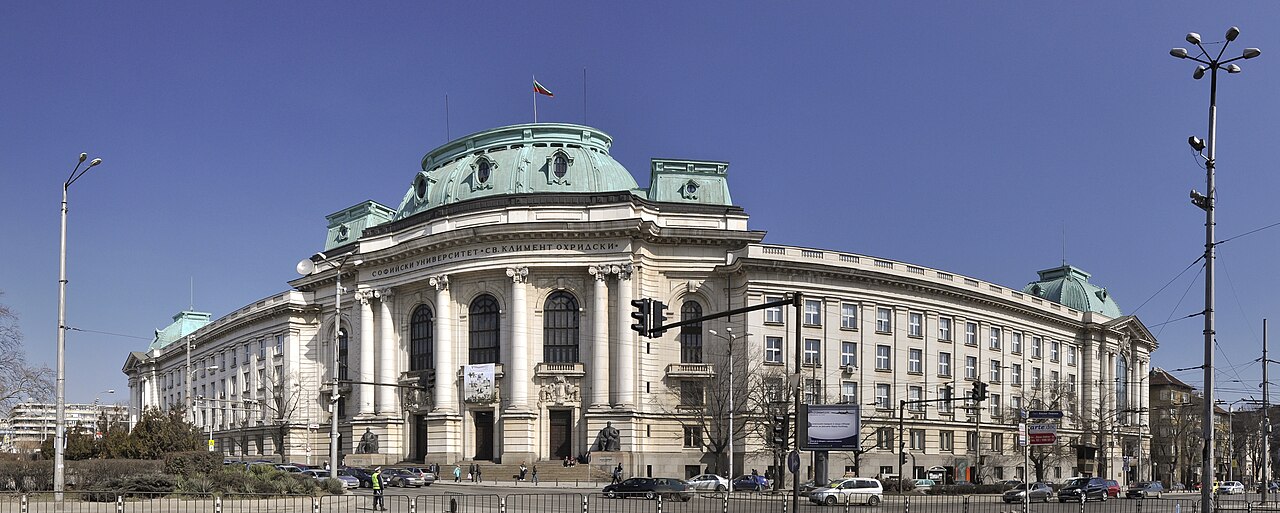
The Sofia theatre academy where Mamalev trained before joining the Ivan Vazov National Theatre
The Sofia theatre academy where Mamalev trained before joining the Ivan Vazov National Theatre. Photograph via Wikimedia Commons.

Why this matters for British expats

Here is the practical value, and it is bigger than it sounds. Bulgarian small talk runs on shared cultural reference in a way British small talk mostly does not. We ask about the weather and the traffic; Bulgarians quote a film line and wait to see whether your face moves. Knowing who Mamalev is, and that Orchestra Without a Name is one of the films everybody has seen, gives you a way into a conversation that no amount of grammar drill will buy you.

It also explains something you have probably already noticed if you watch anything locally. Bulgarian television leans hard on a small, familiar repertory company of faces, the same actors turning up across decades in comedy, drama and light entertainment alike. That is not laziness, it is the shape of a small country's cultural industry, and it is why the Bulgarian channels feel so different from the endless-new-faces churn of British TV. If you are still working out what is worth watching and what your provider actually gives you, the Shumen.UK guide to TV and entertainment in Bulgaria covers the channels, the packages and the English-language gaps.

And there is a Shumen thread worth pulling, because this city has a genuine claim on the tradition Mamalev works in. Dobri Voynikov, born here, is the man usually credited with founding Bulgarian secular theatre, staging plays in the National Revival years when the idea of a Bulgarian stage was still an argument rather than an institution. Every actor in the "Ivan Vazov" company is standing on the far end of a line that runs back through Shumen. Not a bad thing to know if you live here.

Worth a look if you haven't already: the Shumen.UK money guide.

Sources and further reading

The biographical detail here, the birth date and village, the VITIZ class, the theatre and screen roles, the NLO project and the dates of his later television work, comes from Mamalev's Bulgarian Wikipedia biography, which is considerably fuller than the short English entry. Where the record is quiet, this piece stays quiet too: the Bulgarian page lists his roles without attaching years to most of the films, so neither have we.

Questions about 5 August

Who is Georgi Mamalev?

He is a Bulgarian actor, born on 5 August 1952 in the village of Mamarchevo. He graduated in acting for dramatic theatre from the VITIZ “Krastyo Sarafov” academy in 1977 and has been with the “Ivan Vazov” National Theatre since that year, alongside a long career in film, television and comedy.

What was NLO?

NLO was a comedy project created by Mamalev together with Pavel Popandov and Velko Kanev, which later became the television programme Klub NLO. All three were working stage actors, which is part of why it landed the way it did.

Which Mamalev roles are British expats most likely to have seen?

Gosho in Orchestra Without a Name, Prince Alfonso in The Prince’s 13th Bride, and Stefan Stambolov in Notes on the Bulgarian Uprisings. On stage he has played everything from Puck to Richard III at the Ivan Vazov National Theatre.

Sources for 5 August

Back to the August dates

6 August

Georgi Kondolov, the Voivode Who Asked to Die

He was a carpenter from a poor Strandzha family who ended up leading an uprising. Wounded storming an Ottoman barracks, he asked his own men to shoot him. They drew lots for who would do it.

First published 6 August 2026 · Adrian Dane · 5 min read

Georgi Kondolov, the Voivode Who Asked to Die

There is a particular kind of Bulgarian story that the country tells quietly, without the statues and the anthems, and this is one of them. A carpenter from a poor family in the Strandzha hills leads an uprising, is shot in the opening hours of it, and spends his last minutes asking his own men to finish him off. They did. They drew lots first.

What happened on this day

Georgi Kondolov was born Zhelyazko Dimitrov Kondolov in 1858, in the village of Velika near Malko Tarnovo, in the far southeastern corner of what is now Bulgaria. His family was large and poor, and he left home as a boy to earn a living as a carpenter's apprentice in Constantinople. After the Liberation he came back, settled in Haskovo, met Hristo Arnaudov, a cousin of his future wife Donka Hubenova, and the two of them opened a joinery workshop together. He fought as a volunteer in the Rhodopes and was given a bronze medal by Prince Alexander Battenberg. It is not, on the face of it, the CV of a revolutionary.

The politics came later and came hard. In 1898, a few years after marrying Donka, he moved the family to Burgas and opened another workshop, and it was there that he fell in with the organised Macedonian and Thracian societies. He had already helped found a branch of the Thracian society "Strandzha" in December 1896; he was at the first constituent congress of the Adrianople societies in February 1897, and a delegate at the Macedonian congresses of 1900 and 1901. In 1899 he took over a committee, and in early 1901 he put together a ten-man band in the village of Alankayryak, now Yasna Polyana, to work the Strandzha. He met Gotse Delchev, who trusted him with a good deal.

The night it ended

Three bands followed, each better organised than the last. The second went in during May 1902 and got as far as agreeing arms-smuggling routes with Lazar Madzharov. The third formed in May 1903 and stayed in place until the Preobrazhenie Uprising was declared, and Kondolov went with it to the congress at Petrova niva. He was made not just a band leader but chief of the insurgent forces for his sector, commanding a detachment of ninety-seven men whose job was the Ottoman garrison at Paspalovo.

They moved on the village on 5 August. Around midnight the attack went in, with Diko Dzhelebov advancing on Stoilovo at the same time. Kondolov led his men towards the barracks and was wounded trying to work around the Ottoman position from the side of a house where soldiers had been waiting in the dark. A chetnik called Serafim Stoyanov dragged him into cover. In too much pain to go on, he asked to be killed with his own rifle, named Yosif Makedoncheto as his successor, and the men drew lots. Dimitar Zhelyazkov shot him. He was forty-five. They buried him the next day, in the open, with people from the surrounding villages there.

That is not quite the end of it. In September 1925 five of his old comrades carried his bones into Malko Tarnovo in a small chest, and wrote on it the last thing he had said to them: the cause is holy, and you will be cursed if you do not continue the struggle. The remains were later moved to Petrova niva. In 1950 the village of Marzova was renamed Kondolovo. There is an ossuary and a museum collection in Malko Tarnovo, his cape and rifle are in the National Museum of Military History, and there is a peak in Antarctica with his name on it. He also got a folk song, which in this country is arguably the higher honour.

Malko Tarnovo, the small Strandzha town where Kondolov's remains were brought in secret
Malko Tarnovo, the small Strandzha town where Kondolov's remains were brought in secret. Photograph via Wikimedia Commons.

Why this matters for British expats

Kondolov's ground is the Strandzha and the Burgas coast, several hours southeast of us, so nobody in Shumen is putting on a parade today. What travels is the reading skill. Bulgaria names things after people at a rate Britain simply does not, and the names are rarely decorative: a village called Kondolovo, a street, a school, a chitalishte. When you learn that the village on the road sign was renamed for a man who was shot at his own request in 1903, the map stops being a list of places and starts being a memorial you happen to be driving through.

It is also worth knowing what the uprising was, because it comes up. The Preobrazhenie rising of 1903 sits in the same national memory as Ilinden, and it is the sort of thing your neighbour will assume you have at least heard of. You do not need the detail. Knowing there was a rising in the Strandzha that summer, and that it did not end well, is enough to follow the conversation rather than nod through it.

Worth a look if you haven't already: the Shumen.UK residency guide.

Sources and further reading

The account here, the birth year and village, the carpentry years in Constantinople, the societies and congresses, the three bands, and the night at Paspalovo, comes from Kondolov's Bulgarian Wikipedia biography, which in turn leans on Hristo Silyanov's history of the liberation struggles and on Ivan Pandaleev Ormandzhiev's 1927 study of Kondolov published in Burgas. There is no English Wikipedia entry for him, which is its own small comment on how these stories travel.

Questions about 6 August

Who was Georgi Kondolov?

A Bulgarian revolutionary, born Zhelyazko Dimitrov Kondolov in 1858 in the village of Velika. He was a voivode of the Internal Macedonian-Adrianople Revolutionary Organisation and a leader of the Preobrazhenie Uprising, and died on 6 August 1903.

How did he die?

He was wounded leading the attack on the Ottoman barracks at Paspalovo. Unable to continue and in severe pain, he asked his own men to shoot him with his rifle. They drew lots, and Dimitar Zhelyazkov carried it out.

Is there anything to visit?

Yes. There is an ossuary monument and a museum collection in Malko Tarnovo, and his remains were later moved to Petrova niva in the Strandzha. His cape and rifle are held by the National Museum of Military History.

Sources for 6 August

Back to the August dates

7 August

Playwright Stefan Tsanev Turns 90

Born near Ruse on 7 August 1936, playwright Stefan Tsanev turns 90 today. The censors banned his first play; the world staged his later ones in more than 200 theatres.

First published 7 August 2026 · Adrian Dane · 4 min read

Playwright Stefan Tsanev Turns 90

Most British expats will not have heard of Stefan Tsanev. Most Bulgarians over forty have, rather a lot, and today is the day to close that gap: one of the most widely staged Bulgarian playwrights of the modern era was born on this date in 1936, in a village near Ruse, which makes this his 90th birthday.

What happened on this day

Stefan Nedelchev Tsanev was born on 7 August 1936 in Chervena Voda (Червена вода, cher-VEH-na VO-da), a village in the Ruse district of northeastern Bulgaria, when the country was still a kingdom. He finished the Baba Tonka secondary school in Ruse in 1954, took a journalism degree at Sofia University in 1959, and spent a year filing dispatches for the Narodna Mladezh newspaper from the Rhodope mountains and Pernik before heading to Moscow, where he studied dramaturgy at the state film institute from 1960 to 1965. I have lived here 13 years and I only recently grasped how many names on Bulgarian theatre posters trace back to this one man from a Danubian village.

His first play did what first plays in a one-party state were not supposed to do. "The True Ivaylo" (1962), about the peasant rebel who briefly seized the Bulgarian throne in the 1270s, was banned for alleged parallels between the feudal hierarchy on stage and the socialist regime off it. The censors looked at a thirteenth-century peasant king and recognised, entirely correctly, themselves. A lesser career might have ended there. Tsanev instead became house dramaturg at the State Satirical Theatre in Sofia from 1967 to 1970, then worked at Theatre Sofia, the Plovdiv Drama Theatre and the Army Theatre, before returning to Theatre Sofia from 1996 to 2008, writing around 30 plays along the way.

Two of those plays travelled far beyond Bulgaria. "The Last Night of Socrates" (1986) and "The Other Death of Joan of Arc" (1990) have been staged in more than 200 theatres at home and around the world: Paris, Athens, Prague, Montreal, Moscow, Pittsburgh, The Hague, Istanbul. His poetry has been translated into most European languages plus Chinese, Mongolian, Arabic and Hebrew. He co-wrote early cabaret miniatures with Konstantin Pavlov, a defining poet of their "April generation" of 1960s Bulgarian literature, and later put Vasil Levski on stage in "The Secret Supper of Deacon Levski" (1987). In Bulgaria he occupies roughly the place a Tom Stoppard or David Hare holds in British theatre: the serious playwright whose name on the poster tells you the evening will have some heft.

Then, after 1989, he changed gear entirely. Between 2006 and 2009 he published the four volumes of the "Bulgarian Chronicles", a door-stopping saga retelling the entire national story from 2137 BC to 2007, billed unapologetically as a novelist's retelling rather than a historian's, which is precisely why ordinary Bulgarians actually read it. Add the novel "Ants and Gods" (2000), a shelf of essays including "The Killers Are Among Us", and a twelve-volume collected works issued in 2013 and 2014. The honours followed: the Ivan Vazov national literature prize in 2004, the Order of Stara Planina first class in 2006, the Hristo G. Danov award for the Chronicles in 2011, and the Ikar and Askeer theatre awards in 2019 and 2021.

Why this matters for British expats

Partly this is cultural literacy. If you ever take Bulgarian-language theatre seriously, Tsanev is the name you will keep meeting, and The Last Night of Socrates is the modern classic to start with. If your Bulgarian is not there yet, the Chronicles are his other gift to you: the closest thing the country has to a standard popular history of itself, four fat volumes, the last of them covering 1943 to 2007, the stretch that explains the Bulgaria you actually live in rather than the one on the postcards.

And he is, almost, a local boy. Chervena Voda lies barely ninety minutes up the road from Shumen, through Razgrad, on the way to the Danube, so today's birthday belongs to our corner of the country as much as to Sofia. Worth a quiet line in your mental Bulgarian cultural calendar: ninety years old today, translated from Hebrew to Mongolian, and still the writer Bulgaria's censors once read far too carefully.

Sources and further reading

Biographical details, the theatre chronology and the bibliography in this piece draw on Tsanev's entry in the English Wikipedia, which also records the banning of his first play. The richer source, with the complete list of plays, poetry collections and awards, is his Bulgarian Wikipedia biography.

Questions about 7 August

Who is Stefan Tsanev?

A Bulgarian playwright, poet and essayist born on 7 August 1936 in the village of Chervena Voda near Ruse. He wrote around 30 plays, including The Last Night of Socrates, plus a four-volume popular history, the Bulgarian Chronicles. He turns 90 on 7 August 2026.

What are the Bulgarian Chronicles?

Tsanev's four-volume retelling of the whole of Bulgarian history, published between 2006 and 2009 and running from 2137 BC to 2007. It is written as literature rather than academic history, which is a large part of why Bulgarians actually read it.

Was Stefan Tsanev really banned under communism?

Yes. His first play, The True Ivaylo (1962), was banned because the authorities saw uncomfortable parallels between its medieval feudal court and the socialist regime. He went on to become one of the most performed Bulgarian playwrights abroad, with productions in more than 200 theatres.

Sources for 7 August

Back to the August dates

8 August

Bulgarian Name Days for 8 August: Emil, Emilia, Miron and the Open-House Rule

Six name-day variants celebrate today, so expect houses to be open and tables to be laid. Here is the etiquette Brits get wrong, and a quiet anniversary alongside it.

First published 8 August 2026 · Adrian Dane · 4 min read

Bulgarian Name Days for 8 August: Emil, Emilia, Miron and the Open-House Rule

If your neighbour is called Emil, today is the day you find out whether you have understood how this country works. Because he is not going to invite you. He is going to be at home, with food out, assuming that anyone who thinks well of him will simply turn up. That is the whole system, and it catches Brits out every single time.

Today's name days

Emil is the common one, and the one you are most likely to meet. Emilia is its feminine pair and just as widely used. Miron is the third, less common but properly established, and worth recognising when it comes up.

Four other variants celebrate alongside them: Emilian, Emiliyan, Emiliyana and Emiliana. The Bulgarian name-days guide has the full list, the saint origins and the etiquette in more detail if you want to keep it to hand.

Now the part that actually matters, and the part no Bulgarian will think to explain because it is too obvious to them. In Britain, you wait to be invited. On a Bulgarian name day, the person celebrating keeps an open house: friends, neighbours, colleagues and the odd person they barely know all just arrive, without warning and without an invitation, and are fed. Turning up is the compliment. Not turning up is the thing that gets noticed.

The one rule you must not break: never arrive empty-handed. A cake, a banitsa, a box of chocolates, a bottle of wine, or flowers. If you bring flowers, bring an odd number. Even numbers are for funerals, and handing a Bulgarian household an even bunch on a name day is the sort of mistake that gets retold affectionately for years. These things run considerably longer than a British drop-in would.

Sofia, where Bogdan Kesyakov was born and where he died
Sofia, where Bogdan Kesyakov was born and where he died. Photograph via Wikimedia Commons.

What happened on this day

The historical entry for today is a quiet one, and it is more interesting than it first looks. Bogdan Dushkov Kesyakov, a Bulgarian diplomat and jurist, died in Sofia on 8 August 1966.

He was born in Sofia in 1886, read law at the University of Berlin, and spent his working life in the diplomatic service: the Bulgarian legations in Paris and Belgrade, and then the Ministry of Foreign Affairs from 1918 to 1945. That span is worth sitting with for a second. He was at the ministry through the end of one world war, the whole of the interwar period, and the whole of the next war. Whatever the government of the day was doing, Kesyakov was the man handling the paperwork behind it.

And he wrote it all down. His four-volume contribution to the diplomatic history of Bulgaria, published between 1925 and 1936, collects the treaties, conventions, protocols and diplomatic acts of the period. The first volume alone runs to well over five hundred pages. It is not a book anyone reads for pleasure, but it is the sort of book that historians of the Balkans still have to go through, which is a decent definition of a career that mattered. He also, and this is the detail I cannot quite let go of, published a short book about the Sahara in 1963.

The surviving public record on him is thin. That is most of what has reached the open web, and pretending otherwise would mean making things up.

Why this matters for British expats

The name-day etiquette is the genuinely useful part, and it is worth getting right this weekend if you know an Emil or an Emilia. British social instinct says do not intrude on someone's celebration uninvited. Bulgarian social instinct says the absence of an invitation is the invitation. Acting on the British instinct reads, from the other side, as not bothering.

The Kesyakov half is a different sort of use. If you have ever tried to work out why a Bulgarian border sits where it does, or why a particular treaty gets mentioned with such feeling, somebody had to compile the documents that argument rests on, and often it was a career civil servant nobody has heard of. It is a reminder that the loud history has a quiet paper trail underneath it, kept by people who never got a statue.

Sources and further reading

The name-day list comes from the Bulgarian name-day calendar we maintain across the site, drawing on Nestful and Imen-den.net. The biographical detail on Kesyakov, the birth year, the Berlin law degree, the postings in Paris and Belgrade, the ministry years and the four volumes, comes from his Bulgarian Wikipedia entry, which is short enough to read in a minute and is, as far as the open web goes, most of what there is.

Questions about 8 August

Which names celebrate on 8 August in Bulgaria?

Emil and Emilia are the common ones, along with Miron. Emilian, Emiliyan, Emiliyana and Emiliana celebrate on the same day.

Do I need an invitation to a Bulgarian name day?

No, and that is the point that catches British expats out. The celebrant keeps an open house and people simply turn up. Just never arrive empty-handed: cake, banitsa, chocolates, wine or flowers, and if flowers, an odd number.

Who was Bogdan Kesyakov?

A Bulgarian diplomat and jurist, born in Sofia in 1886, who served in the legations in Paris and Belgrade and at the Ministry of Foreign Affairs from 1918 to 1945. He compiled a four-volume diplomatic history of Bulgaria and died in Sofia on 8 August 1966.

Sources for 8 August

Back to the August dates

9 August

The Night Bulgaria's Prince Was Kidnapped

In the small hours of 9 August 1886, pro-Russian officers seized Prince Alexander of Battenberg in his Sofia palace and shipped him down the Danube on his own yacht. The deposed prince was, awkwardly for the plotters, Prince Philip's great-uncle.

First published 9 August 2026 · Adrian Dane · 5 min read

The Night Bulgaria's Prince Was Kidnapped

Here is one for the next time someone claims Bulgaria and Britain have nothing in common: the first prince of modern Bulgaria was Prince Philip's great-uncle. 140 years ago tonight, give or take a calendar quirk, his own officers broke into his palace in the small hours, made him sign away his throne and posted him down the Danube on his own yacht. Bulgarians call it the Devetoavgustovski prevrat (de-veh-to-av-GUS-tov-ski preh-VRAT), the 9 August coup.

What happened on this day

Bulgaria had only been back on the map for a few years, liberated in the Russo-Turkish War of 1877–78, and in 1879 the Grand National Assembly unanimously elected a 22-year-old German officer, Alexander of Battenberg, a nephew of Tsar Alexander II, as its prince. For a while the arrangement suited St Petersburg nicely. Then, in 1885, Alexander said yes to the Unification with Eastern Rumelia, which Russia had pointedly not approved, and when Serbia attacked weeks later the new Tsar, Alexander III, pulled every Russian officer out of Bulgaria's young army. The Bulgarians won anyway, at Slivnitsa that November, academy cadets filling the gaps. Victory made him a national hero at home and a problem for his cousin in St Petersburg.

It all came to a head on the night of 8 to 9 August 1886. Bulgaria still ran on the Julian calendar then (by the modern Gregorian reckoning, the night of 20 to 21 August), but the date Bulgarians keep is the old one. Pro-Russian officers seized the prince in his Sofia palace, forced him to sign a decree of abdication, rushed him north to the Danube at Oryahovo and put him aboard his own yacht, bound for Reni and the Russian authorities. Translate it into British terms and it is the army walking into Buckingham Palace at three in the morning and putting the monarch on the overnight ferry, which even by Balkan standards was a bit much. A provisional government under Kliment of Tarnovo took over in Sofia, but the plotters had misjudged the country. Stefan Stambolov, the chief of the National Assembly, refused to play along, and Sava Mutkurov organised a counter-coup from Plovdiv. Within days the conspirators were isolated, and on 17 August Alexander was back in Sofia.

It did not last. His cousin the Tsar made it unmistakably clear, in writing, that there was no way back, and on 26 August (again, Old Style) Alexander abdicated for good, leaving Bulgaria in early September 1886. The aftermath reads like one of those post-imperial family sagas: he married an actress, Johanna Loisinger, restyled himself Count von Hartenau, served as an Austrian general in Graz and died there in 1893, aged 36, of a ruptured appendix. Bulgaria, meanwhile, shopped around Europe for a replacement and in July 1887 elected Ferdinand of Saxe-Coburg and Gotha, whose dynasty would hold the throne into the 1940s. Alexander's remains were eventually brought home to Sofia, where the Battenberg Mausoleum still stands, a short walk from the palace that lost him.

Towns celebrating today

Down in the southwest, Zemen (ZEH-men) in Pernik Province marks its city day today, tied to the feast of Saint Panteleimon, the healer saint and patron of doctors in the Orthodox calendar. Zemen is not going to trouble the big-city league tables: the 2020 count put it at 1,498 people, and it has only officially been a city since 1974. It sits on both banks of the Struma about 70 km from Sofia, where the valley narrows into the Zemen Gorge. Until 1925 it answered to the name Belovo; the new name revived the memory of Zemlengrad, the medieval fortress in the gorge that the Czech traveller Konstantin Jireček described in his Journey through Bulgaria.

The one thing worth the detour is the Zemen Monastery, a kilometre outside town, an 11th-century church whose 14th-century frescoes include rare surviving donor portraits of the Serbian despot Dejan and his wife Teodora, who paid for the redecoration in 1334. If you like your sightseeing vertical, the Polska Skakavitsa waterfall further up the gorge is counted the third highest in Bulgaria. All of this, mind you, is a good five hours' drive from us in Shumen; nobody in the northeast is closing a street for Zemen today. Worth knowing if you are anywhere near Kyustendil or Radomir with a free Sunday, though.

Why this matters for British expats

The Battenberg connection is the bit that makes this a British story, not just a Bulgarian one. Alexander's elder brother Louis built his career in the Royal Navy and settled in England; Louis's daughter Alice was Prince Philip's mother, which makes the man on the yacht the Duke of Edinburgh's great-uncle. Another brother, Henry, married Queen Victoria's youngest daughter, Princess Beatrice. When anti-German feeling peaked in 1917, the family swapped Battenberg for its literal English translation, Mountbatten. So when a Bulgarian says Battenberg, they mean the kidnapped prince, and a Sofia square still carries his name; when we hear it, we think of a cake. Same family, rather different afterlives.

Beyond the family trivia, the 9 August coup is the user manual for half the arguments you will overhear in Bulgaria about Russia. It was the moment the country, barely eight years old, chose its own course over its liberator's wishes, and the fallout, Stambolov's iron-fisted years, the long freeze with St Petersburg, the arrival of the Coburgs, shaped Bulgarian politics for generations. The drama played out in Sofia and Plovdiv, both far from us, so there is no Shumen procession to report. But days like this are what the Bulgarian cultural calendar is for: know the story, and the statues start making sense.

Sources and further reading

The coup narrative draws on the Bulgarian Wikipedia entry on the 9 August coup and the English Wikipedia biography of Alexander of Battenberg, while the Zemen details come from the town's English Wikipedia entry and regional municipal listings.

Questions about 9 August

Who was Alexander of Battenberg?

The first prince of modern Bulgaria, elected by the Grand National Assembly in 1879 when he was 22. A German prince and a nephew of Tsar Alexander II, he presided over the Unification with Eastern Rumelia and the victory at Slivnitsa before pro-Russian officers forced him out in 1886. His family later became the British Mountbattens: he was Prince Philip's great-uncle.

What exactly happened in the 9 August 1886 coup?

On the night of 8 to 9 August 1886, Old Style, as Bulgaria still used the Julian calendar, pro-Russian officers seized Alexander in his Sofia palace, forced him to sign an abdication decree and shipped him down the Danube on his own yacht. A counter-coup led by Stefan Stambolov and Sava Mutkurov briefly restored him, but with the Tsar against him he abdicated for good within weeks.

What is the British royal family's connection to Bulgaria?

Alexander of Battenberg's brother Louis was the father of Princess Alice, Prince Philip's mother, so Bulgaria's first prince was the Duke of Edinburgh's great-uncle. Another brother, Henry, married Queen Victoria's youngest daughter, Princess Beatrice. The family Anglicised Battenberg to Mountbatten in 1917.

What is there to see in Zemen?

The headline sight is the Zemen Monastery, an 11th-century church a kilometre outside town with 14th-century frescoes and rare donor portraits. The Zemen Gorge and the Polska Skakavitsa waterfall, counted the third highest in Bulgaria, are nearby, and the Pchelina Reservoir is on the doorstep. Zemen sits about 70 km from Sofia, between Radomir and Kyustendil.

Sources for 9 August

Back to the August dates

10 August

Valentin Spasov and the Song That Became Folklore

Born on this day in 1964, he wrote a song about a mother and her son that a University of Chicago study found had stopped belonging to him. Bulgarians had simply absorbed it as their own.

First published 10 August 2026 · Adrian Dane · 5 min read

Valentin Spasov and the Song That Became Folklore

There is a decent argument that the highest thing that can happen to a songwriter is for people to forget they wrote it. Not to forget the song. To forget that it was written at all, and start treating it as something the country simply always had. That has happened to Valentin Spasov, who was born on this day in 1964, and it happened while he was still around to watch.

What happened on this day

Spasov was born in Sapareva Banya, and the story starts about as locally as a musical career can. He was interested in music from early on, first performed at the town's "Prosveten Lach" chitalishte, played the accordion, became repetiteur for the children's folk ensemble and put together a vocal-instrumental group called "Shans" that actually went out and did concerts. He took gold medals at the sixth and seventh republican festivals of amateur art, finished school in Sapareva Banya, and went on to the Academy of Music and Dance Arts in Plovdiv.

That is where he met Sevdalina, who became his wife and has been the other half of everything since. The two of them started working together in 1988, while they were both still students. After graduating he won a teaching post at the South-West University in Blagoevgrad and a seat in the Blagoevgrad radio orchestra, and conducted the "Razlog" ensemble alongside it. As a staff musician at the radio he wrote instrumental folk music for the orchestra and produced hundreds of arrangements of folk songs for established singers, Kostadin Gugov, Atanaska Dimitrova, Dimitar Kolarov, Tatyana Sarbinska and others. He has written around a hundred and twenty songs, for the duo and for other performers.

The song that got away from him

Then there is "Sine, Sine". It is a song about a mother's love for her son, and in a Market Test survey in 2000 it came second for popularity across the previous decade, behind only "Moya strana, moya Bulgaria". Second in the country. That alone would be a career.

What happened next is stranger and better. The song was translated into several languages and included in an academic edition from the University of Chicago, accompanied by a disc of hit songs from the Balkans and Eastern Europe written during the transition years. The author of that volume, a professor of music and a folklorist of the Balkans, wrote that the song had become so popular it had turned genuinely folk, part of the Bulgarian's own folklore, and described the melody as carrying a kind of enchantment that reaches anyone regardless of nationality. Which is to say: a named living composer wrote a song, and a scholar catalogued it as folklore. Bulgarians had adopted it faster than the paperwork could keep up.

The rest of the output is substantial and unglamorous in the way real careers are. Studio albums from "Ne moga bez teb" in 1993 through to "Mome makedonko" in 2008, their own recording studio, the television programme "Muzikalno kolelo" hunting for young talent in the genre, a school called "Lina" teaching children from seven to fifteen, membership of the Union of Scientists in Bulgaria since 1996, and stage shows including "Za lyubov rodeni" in 2005 and "Dva zhivota, edna sadba", which filled Hall 1 of the National Palace of Culture in April 2006.

Blagoevgrad, where Spasov has taught and played with the radio orchestra
Blagoevgrad, where Spasov has taught and played with the radio orchestra. Photograph via Wikimedia Commons.

Today's name days

Ivaylo and Ivayla celebrate today. It is a distinctly Bulgarian name with a hard-edged history behind it: Ivaylo was the swineherd who led a peasant rising and ended up on the throne, which is not a sentence you get to write about many given names. If you know one, the usual applies. Turn up, bring something, do not wait to be asked.

Why this matters for British expats

If you have been to a Bulgarian wedding, a village fair, a name day that went on too long, or simply had a taxi radio on, you have heard this music. Not this song necessarily, but this world: authored folk, written by trained musicians with conservatoire degrees, performed as though it came down through families. British ears tend to file it as generic folk or dismiss it as popfolk, and both readings miss what is going on. There is a whole professional layer here, academies, radio orchestras, arrangers and composers, and it is one of the more active parts of Bulgarian cultural life.

The useful thing to carry away is the "Sine, Sine" story itself, because it explains something about how this country holds onto music. A song can go from a named composer to something people sing as if it were ancestral within a generation. That does not really happen in Britain any more. Noticing it is a decent shortcut to understanding why the folk material here feels alive rather than preserved.

Worth a look if you haven't already: the Bulgarian name-days guide.

Sources and further reading

The biography here, the birth date and Sapareva Banya beginnings, the Plovdiv academy years, the work with the Blagoevgrad radio orchestra, the discography and the reception of "Sine, Sine", comes from Spasov's Bulgarian Wikipedia entry, which cites the duo's own site and their label biographies. There is no English entry, which for a composer with a song this widely sung is a fair illustration of how little of this crosses over.

Questions about 10 August

Who is Valentin Spasov?

A Bulgarian composer and singer of authored songs on a folk basis, born in Sapareva Banya on 10 August 1964. He works with his wife Sevdalina, has written around 120 songs, and has taught at the South-West University in Blagoevgrad.

What is Sine, Sine?

His best-known song, about a mother's love for her son. A Market Test survey in 2000 placed it second for popularity over the previous decade, and it was included in a University of Chicago academic edition where it was described as having passed into genuine Bulgarian folklore.

Whose name day is 10 August?

Ivaylo and Ivayla. The name carries the memory of the swineherd who led a peasant rising and became tsar, which makes it one of the more distinctive Bulgarian given names.

Sources for 10 August

Back to the August dates

11 August

The Sea Battle off Kaliakra That Nelson Later Copied

In 1791 a Russian admiral sailed straight between an anchored Ottoman fleet and the Bulgarian shore, under the guns on the cape. Seven years later Nelson used the same idea at the Nile.

First published 11 August 2026 · Adrian Dane · 4 min read

The Sea Battle off Kaliakra That Nelson Later Copied

Most British expats have been to Cape Kaliakra, or at least been driven past the turning for it. Long red headland, big drop into the sea, birds everywhere, a café at the end. What almost nobody mentions is that the water you are looking down at is where somebody worked out a piece of naval tactics that Horatio Nelson would use to win two of the most famous battles in British history.

What happened on this day

The Battle of Cape Kaliakra was fought on 11 August 1791, just off this coast, and it was the last naval action of the Russo-Turkish war of 1787 to 1792.

The Russian fleet was under Fyodor Ushakov: fifteen ships of the line, two frigates and assorted smaller craft, 990 guns between them. They had sailed from Sevastopol on 8 August. Around midday on the eleventh they came upon the combined Ottoman and Algerian fleet under Hussein Pasha, anchored just south of the cape: eighteen ships of the line, seventeen frigates, somewhere between fifteen hundred and sixteen hundred guns. On any reasonable arithmetic Ushakov was outgunned by a factor of well over half again.

What he did about it is the interesting part. Rather than form up at a respectful distance, he took his fleet in three columns straight through the gap between the anchored Ottoman ships and the cape itself, despite there being guns mounted on the cape that could fire down on him as he passed. It is the kind of move that either works completely or ends your career.

How it played out

Said Ali, commanding the Algerian squadron, cut his cables and ran east, with Hussein Pasha and the eighteen ships of the line following. The Russians turned south onto a roughly parallel course and formed a line. Said Ali, at the head of his line, turned north to try to get round the Russian van, and Ushakov pulled out of his own line and went straight at him while the rest of the fleet came up. That was at a quarter to five in the afternoon. The Turks were gradually pushed south, and when darkness ended the fighting at half past eight they were in full retreat towards Istanbul.

Neither side lost a single ship. Russian casualties were seventeen dead and twenty-eight wounded, and the Alexander Nevsky was knocked about. Ottoman losses were never properly recorded, but their rigging took a beating. The war ended shortly afterwards with the Treaty of Jassy, and Ushakov was given the Order of Saint Alexander Nevsky for the action.

And then the part that should interest anyone who grew up on Trafalgar Day. The manoeuvres Ushakov used off Kaliakra, breaking his own line to attack, going for the enemy's lead ships rather than trading broadsides at range, were later used to considerable effect by Horatio Nelson at the Nile in 1798 and at Trafalgar in 1805. The tactical vocabulary that Britain tends to file under Nelson's genius had been demonstrated seven years earlier, in sight of a Bulgarian headland most people here have had a beer on top of.

The Dobrudzha coastline near Kavarna, a short drive from the cape
The Dobrudzha coastline near Kavarna, a short drive from the cape. Photograph via Wikimedia Commons.

Why this matters for British expats

This is the rare one where the Bulgarian anniversary and the British schoolbook actually meet. If you have friends or family visiting and you are looking for something to say at Kaliakra beyond the scenery and the sad legend about the forty maidens, this is it: point at the water south of the cape and tell them Nelson borrowed his best move from what happened out there.

Practically, the cape is an easy day out from the northern coast, up past Kavarna, and it is at its best out of season when the coach parties have gone. Take a jacket even in August. It is a headland sticking a long way into the Black Sea and it does its own weather.

There is also a decent lesson about how history gets distributed. This battle is well documented in Russian and Bulgarian sources and gets a couple of paragraphs in English. Nelson gets libraries. Which is not a complaint about Nelson so much as a reminder, one you keep running into out here, that the version of European history most of us arrived with has some very large gaps in the east.

For more of the practical picture, see the Shumen.UK guides hub.

Sources and further reading

The account of the battle, the fleet strengths, the timings, the casualty figures and the later influence on Nelson's tactics, comes from the Bulgarian Wikipedia entry for the Battle of Kaliakra and its English counterpart, which draw on R. C. Anderson's naval history of the Levant and on Tredrea and Sozaev's reference work on Russian sailing warships.

Questions about 11 August

What was the Battle of Cape Kaliakra?

The last naval battle of the Russo-Turkish war of 1787 to 1792, fought off the Bulgarian Black Sea coast on 11 August 1791 between a Russian fleet under Fyodor Ushakov and a combined Ottoman and Algerian fleet under Hussein Pasha.

Who won?

Neither side lost a ship, but the Ottoman fleet withdrew to Istanbul once darkness ended the fighting, and the action is counted as a Russian victory. Ushakov received the Order of Saint Alexander Nevsky for it.

What is the connection to Nelson?

The manoeuvres Ushakov used at Kaliakra were later employed by Horatio Nelson at the Battle of the Nile in 1798 and at Trafalgar in 1805.

Sources for 11 August

Back to the August dates

12 August

Stoyan Zaimov, Levski's Schoolmate, Is Born

Born on this day in 1853, Stoyan Zaimov knew Levski at school, gave Benkovski his name, and survived a death sentence, before becoming a librarian whose first teaching post in free Bulgaria was in Shumen.

First published 12 August 2026 · Adrian Dane · 5 min read

Stoyan Zaimov, Levski's Schoolmate, Is Born

Here is a birthday worth raising a coffee to: Stoyan Zaimov, born on this day in 1853. He went to school with Vasil Levski, quite literally handed Georgi Benkovski his famous name, survived a death sentence in a Crusader fortress on the coast of what is now Israel, and then spent his later decades as a mild-mannered librarian and textbook man. His first teaching job in liberated Bulgaria was right here in Shumen, which is why he earns his place on this site.

What happened on this day

Stoyan Zaimov was born on 12 August 1853 in the village of Rupkite, near Chirpan in the Stara Zagora region, a village then called Tyurkmeshlii. His start in life was hard: his father was robbed and killed by bandits on the road back from Constantinople, and the boy was born three months later. He was educated at the class school in Stara Zagora between 1867 and 1869, and it was there, as a teenager, that he met Vasil Levski, the man Bulgaria reveres with the kind of devotion the British reserve for Shakespeare, except that Levski was a hanged revolutionary rather than a playwright. The meeting stuck. Zaimov joined the Secret Central Bulgarian Committee, trained as a teacher in Plovdiv, and took a post at the boys' school in Haskovo, where he promptly helped found the local revolutionary committee. Teaching, for that generation, was rather less about marking homework and rather more about sedition.

In 1873 he assisted Atanas Uzunov in an attempted assassination of Hadji Stavri Primo, a local grandee who was about to inform on them, was caught, and was sentenced to exile in Diyarbakır in Asia Minor. He escaped within about a year and made for Romania, where the Bulgarian revolutionary emigration was thick on the ground: Lyuben Karavelov, Hristo Botev, and from 1875 a young exile then calling himself Gavril Hlatev. Zaimov talked Botev out of having the newcomer shoot Karavelov in a factional quarrel, then supplied the same newcomer with the passport of a Polish emigrant named Anton Benkovski. That, according to the Bulgarian biographical record, is how Georgi Benkovski, the future standard-bearer of the April Uprising, quite literally got his name. On his twenty-second birthday, 12 August 1875, Zaimov was elected to the renewed Bulgarian Revolutionary Central Committee, and was handed the faintly alarming assignment of setting fires across Constantinople to cover a planned rising in Stara Zagora. The plan never came off.

He went on to co-found the Giurgiu Revolutionary Committee with Nikola Obretenov, Hristo Karaminkov and Panayot Volov, the body that organised the April Uprising of 1876, serving as its secretary while Stefan Stambolov chaired the meetings. Zaimov was made chief apostle of the Third, Vratsa, revolutionary district, and here the record gets unusually honest: his contemporaries rated him a gifted agitator but doubted him as a battle leader, and his fellow revolutionary Filip Simidov put it almost exactly like that in a surviving letter. When the uprising erupted prematurely and Zaimov saw with his own eyes what Ottoman troops did to Klisura and Panagyurishte, he refused to raise the Vratsa district. Caught after the suppression, he was sentenced to death, the sentence commuted on appeal to life imprisonment, and he was shipped to the Hospitaller fortress of Saint-Jean-d'Acre, the Acre Prison on the coast of modern Israel. The Treaty of San Stefano in 1878 carried a general amnesty, and he came home.

The second act is quieter and, I would argue, just as impressive. He finished a teaching degree in Moscow in 1882, and his first post back in liberated Bulgaria was in Shumen, where he taught from 1882 to 1884, followed by Varna, then Kyustendil from 1888 to 1895, and finally Sofia. From 1892 he chaired the committee that raised the money for a veterans' home and for what became the Monument to the Tsar Liberator, the great equestrian statue outside the National Assembly in Sofia, built between 1903 and 1907. He founded the journal Училищен преглед (u-chi-LISH-ten PRE-gled, "School Review") in 1896, which ran until 1949, and served as Director of the National Library from 1903 to 1908. He spent his last years in Pleven, where his home is now a museum named for him and his son Vladimir, a prominent general, and he died there on 9 September 1932, aged 79.

Why this matters for British expats

First, the local tie, because this one genuinely is local. When you walk through central Shumen today, you are walking streets that were barely four years past Ottoman rule when Zaimov arrived to teach here in 1882. The city's National Revival tradition of teachers, reading rooms and gymnasiums is exactly the world he helped build: educator first, revolutionary second, or arguably the other way round. Of all the names from the April Uprising generation, his is one of the few with a real Shumen chapter, and it is worth knowing that the man had been sentenced to death before he ever stood at a blackboard here.

Second, the cultural literacy. If you have ever photographed the equestrian statue of Tsar Alexander II outside the National Assembly in Sofia, and most Brits in Bulgaria have, you have photographed Zaimov's committee work. And the whole Levski, Botev and Benkovski circle he moved in is the cast list behind half the street names and school names in the country. Knowing that Zaimov is the connective tissue between them, the man who knew Levski at school and named Benkovski, turns a confusing roll-call of moustachioed portraits into one coherent story.

Sources and further reading

The outline of Zaimov's revolutionary career and his later public roles draw on his English Wikipedia entry, while the richer detail on his Romanian exile years, the Benkovski passport story and the Giurgiu committee comes from his Bulgarian Wikipedia biography. The April Uprising of 1876 entry gives the wider context for the rising that nearly cost him his life.

Questions about 12 August

Who was Stoyan Zaimov?

A Bulgarian educator, writer and revolutionary born on 12 August 1853 near Chirpan. He was a schoolmate of Vasil Levski, a leading organiser of the April Uprising of 1876, and after the Liberation he became Director of the National Library in Sofia. He died in Pleven on 9 September 1932.

What was Stoyan Zaimov's connection to Shumen?

His first teaching post in liberated Bulgaria was in Shumen, where he taught from 1882 to 1884 after completing his studies in Moscow. He went on to teach in Varna, Kyustendil and Sofia before moving into public life.

What did Zaimov have to do with the Monument to the Tsar Liberator in Sofia?

From 1892 he chaired the committee that raised the funds for the monument and for a home for war veterans. The equestrian statue of Tsar Alexander II, which stands outside the National Assembly in Sofia, was built between 1903 and 1907.

Is it true that Georgi Benkovski got his name from Zaimov?

According to the Bulgarian biographical record, yes. While both men were exiles in Romania, Zaimov supplied the young revolutionary, then called Gavril Hlatev, with the passport of a Polish emigrant named Anton Benkovski, and the alias stuck.

Sources for 12 August

Back to the August dates

13 August

Kamen Kalchev, the Writer with Two Birthdays

Born on 31 July 1914 by the old Julian calendar, which is 13 August by ours, writer Kamen Kalchev went from a Gabrovo village and a prison dock to running Bulgaria's biggest publishing house. Today is, in every sense, his second birthday.

First published 13 August 2026 · Adrian Dane · 4 min read

Kamen Kalchev, the Writer with Two Birthdays

Here is a calendar curiosity to go with the morning coffee.... On 13 August 1914, at least by the calendar we use today, Bulgaria gained one of the most decorated state writers of the post-war era, born down in the Gabrovo hills under the distinctly unglamorous name of Petar Mitev Kalchev. You know him, if you know him at all, as Kamen Kalchev.

What happened on this day

The date needs a small footnote, and it is the most interesting thing about today. Kalchev was born in the village of Kereka, in the Dryanovo municipality of the Gabrovo district, on 31 July 1914 by the Julian calendar Bulgaria still used at the time. Bulgaria only switched to the Gregorian calendar in 1916, and by then the two systems ran thirteen days apart, which converts his birthday to 13 August on the modern reckoning. Bulgarian sources print 31 July; several international reference files print 13 August. Both are right, which rather handily gives the man two birthdays. I've been here 13 years and the old-calendar wrinkle still catches me out, usually when a church feast or an "Old New Year" gathering lands a fortnight later than my British brain expects.

His own life was anything but quiet. He finished secondary school in Sofia in 1934, joined VMRO (united), and was arrested in the summer of 1935, spending time in Sofia's central prison before being tried under the Law for the Protection of the State. At the July 1936 trial of the organisation's leading figures he was acquitted for lack of evidence, a genuinely rare outcome for the era. That same restless stretch produced his first published short story, "Кучешки живот" (A Dog's Life), printed in the 1935 collection "Сигнали". He went on to study administration and finance at Sofia's Free University of Political and Economic Sciences, the forerunner of today's University of National and World Economy, and worked as an accountant for the Petrol company. An accountant writing fiction after hours is quite literally a British kind of literary biography: Trollope ran Post Office surveys by day and wrote the Barsetshire novels by night, and Kalchev was cut from similar cloth.

After the communist takeover of 9 September 1944 he became one of the regime's most trusted men of letters, and the state did not stint on the honours. He edited the newspaper "Септемврийче" and the magazines "Пламъче" and "Септември", ran the "Български писател" publishing house, and chaired the Union of Bulgarian Writers from 1962 to 1964. Along the way he published more than 30 books: the early novella "Пътник от планината" (Traveller from the Mountain, 1938), the novel "В края на лятото" (At the End of Summer, 1945), a youth novella about Vasil Levski (1949), "Син на работническата класа" (Son of the Working Class, 1949), a fictionalised biography of Georgi Dimitrov, and "Въстанието" (The Uprising, 1975), his novel of the June 1923 events. The awards run to the Dimitrov Prize in 1950 and the title Hero of Socialist Labour, awarded twice. He died in Sofia on 14 January 1988 and is buried in the Central Sofia Cemetery.

Why this matters for British expats

Two reasons, the first very practical. The two-birthdays puzzle is the single most useful piece of date literacy a Brit in Bulgaria can have. When a Bulgarian source gives you a historical date that disagrees with an English one by roughly a fortnight, neither is wrong: the country ran on the Julian calendar until 1916, and pre-1916 dates often exist in both versions. It explains the "Old New Year" gatherings in mid-January, and it will save you from confidently "correcting" a Bulgarian neighbour who is, in fact, right. The Bulgarian cultural calendar is full of these little conversion traps, and it is worth learning the pattern once rather than being surprised by it every year.

Second, Kalchev is a window into how Bulgaria made its national heroes. His Levski novella for young readers came out in 1949, when the state was busy turning the Apostle of Freedom into the secular saint of every classroom, and it worked: to this day Levski is taught with the kind of reverence the British reserve for Shakespeare, and almost every Bulgarian town has a street or a school carrying his name. Nothing in Shumen is named for Kalchev himself, I should be honest: his ground was Gabrovo and then Sofia, a good two and a half hours west of us here in Shumen. But the next time a Bulgarian friend mentions a writer with two birthdays, you will know exactly why, and you can raise a glass to Kamen Kalchev on either date. He earned both.

Sources and further reading

Today's details draw on the Bulgarian Wikipedia biography of Kamen Kalchev, which carries the full bibliography and the honours list, and on the shorter German Wikipedia entry for a Western-language summary. The Dictionary of Bulgarian Literature's catalogue of his books lists the plays, stories and novels in order of publication.

Questions about 13 August

Who was Kamen Kalchev?

Kamen Kalchev was the pen name of Petar Mitev Kalchev (1914-1988), a Bulgarian novelist, playwright and editor born in the village of Kereka in the Gabrovo district. After the communist takeover of 1944 he became one of the country's most decorated literary figures, directing the Balgarski pisatel publishing house and chairing the Union of Bulgarian Writers.

Was Kamen Kalchev really born on 13 August 1914?

Yes and no. He was born on 31 July 1914 by the Julian calendar Bulgaria used at the time, and that date converts to 13 August on the Gregorian calendar Bulgaria adopted in 1916. Bulgarian sources record 31 July while several international reference files record 13 August, so both birthdays are, strictly speaking, correct.

What did Kamen Kalchev write?

More than 30 books of prose, drama and children's literature. The best known include the novella Traveller from the Mountain (1938), the novel At the End of Summer (1945), a youth novella about Vasil Levski (1949), a fictionalised biography of Georgi Dimitrov (1949) and The Uprising (1975), about the events of June 1923.

Sources for 13 August

Back to the August dates

14 August

Boris Hristov, the Poet Who Refused a Medal

Bulgaria has two famous Boris Hristovs. Today's birthday belongs to the one who did not sing: a Pernik village poet who edited films at Boyana, reached the school textbooks, and once wrote to the government to refuse a state honour.

First published 14 August 2026 · Adrian Dane · 4 min read

Boris Hristov, the Poet Who Refused a Medal

Ask a classical-music lover who Boris Hristov was and they will start humming Boris Godunov. Fair enough: the opera bass of that name filled the world's great stages. But Bulgaria has a second Boris Hristov, born 14 August 1945, who turns 81 today, and he is the one your Bulgarian neighbours actually studied at school. It is the local equivalent of spending your whole career sharing a name with a Beatle.

What happened on this day

Boris Kirilov Hristov was born on 14 August 1945 in Krapets, a village in the Pernik region of Bulgaria's southwest, in what was still formally the Kingdom of Bulgaria. He finished high school in Pernik, read Bulgarian philology at the University of Veliko Tarnovo, graduating in 1970, and spent a couple of years as a schoolteacher back home. A thoroughly ordinary start, which is rather the point: the people who end up on the syllabus rarely begin anywhere grand.

From 1973 to 1981 he earned his living as a journalist and editor at Boyana, the state feature-film studios in Sofia, a film-industry salary quietly underwriting the poetry, which feels like a very Bulgarian arrangement. His first appearance in print was a shared volume, Three Young Poets (1975), alongside Parush Parushev and Ekaterina Tomova. The breakthrough came two years later with Вечерен тромпет (ve-CHER-en trom-PET, 'Evening Trumpet', 1977), then Честен кръст ('Honest Cross', 1982), and the review pages of the late seventies took real notice of both.

Prose and film ran alongside the verse. His novel Бащата на яйцето ('The Father of the Egg', 1987) reached the cinema in 1991 from his own screenplay, and his screen credits run from the feature Death of the Hare (1982) through the animated The Gorgon (1994) to a long tail of documentaries. In 1984 he was a fellow of the International Writing Program at the University of Iowa, and he read his work everywhere from Toronto and New York to Hamburg, Athens and Delhi.

Two later episodes tell you most about the man. He has spent years as an anthologist, and in 1997 he republished Веда Словена, the nineteenth-century collection published by Stefan Verković that Bulgarians have argued over ever since: lost national epic or brilliant hoax, roughly their Ossian. He liked the riddle enough to make a documentary about it in 2012. And in May 2010, learning from the media that the government had awarded him the Order of Cyril and Methodius, first degree, for services to culture, he sat down and wrote to refuse it. In a country where honours are usually collected with a smile, declining a state medal by letter is quite literally a poet's gesture.

Since the mid-1990s he has lived in Leshten, a mountain village in the southwest, making almost no public appearances. The books, though, never stopped: Книга на мълчанието ('Book of Silence', 2008), the Vazov Prize for Literature in 2020, and a new collection, Пилигрим от края на света ('Pilgrim from the End of the World'), in 2025.

Why this matters for British expats

Here is the cultural-literacy payoff: Hristov's poems sit in the current 12th-grade literature textbook, so Bulgarians who finished school in the last decade have genuinely read him, the way a British generation met Seamus Heaney on the syllabus. I've been here 13 years and I had no idea about the refused medal until this week, and it is exactly the sort of detail worth keeping in your pocket. If a Bulgarian friend mentions the writer Boris Hristov, you can now skip the opera joke entirely and go straight to the man who said no to the government.

Do not expect any fuss in Shumen today: his stomping ground was always the southwest, Pernik, Sofia and his mountain retreat at Leshten, a good five hours' drive from us, so no street here carries his name. What he offers instead is an entry in the user manual for the Bulgarian cultural calendar: proof that a poet can still matter enough in this country to be set for exams, filmed, argued over and quietly honoured in a village with more slate roofs than people.

Sources and further reading

This piece draws on the Bulgarian Wikipedia biography of Boris Hristov, which carries his full bibliography and filmography, and on his author page at the LiterNet publishing house. Several of his later books appeared in bilingual Bulgarian-English editions, so he is more accessible than most modern Bulgarian poets if your Bulgarian is still a work in progress.

Questions about 14 August

Who is Boris Hristov?

A Bulgarian poet, novelist and screenwriter, born on 14 August 1945 in the village of Krapets in the Pernik region. He spent years as an editor at the Boyana film studios in Sofia, won the Vazov Prize for Literature in 2020, and his poems are taught in Bulgarian schools.

Can I read Boris Hristov in English?

Yes, more easily than most modern Bulgarian poets. Several of his later books were published in bilingual Bulgarian-English editions, including Stone Book and Book of Silence, and The Wings of the Messenger appeared in English back in 1991.

What is Veda Slovena?

A nineteenth-century collection of folk epic from the western Rhodopes, published by Stefan Verković, which Bulgarians have argued over for generations as either a lost national treasure or a clever mystification. Hristov republished it in 1997 and made a documentary about the riddle in 2012.

Did he really refuse a state medal?

Yes. In May 2010 he learned from the media that he had been awarded the Order of Cyril and Methodius, first degree, for services to culture, and he wrote to the government declining it. The refusal was widely reported at the time.

Sources for 14 August

Back to the August dates

15 August

Golyama Bogoroditsa, Varna's Day and a Fallen Voivode

The busiest date in the Bulgarian calendar: the country's biggest women's name day, seven town celebrations led by Varna, and the anniversary of a 25-year-old schoolteacher killed in the Ilinden Uprising.

First published 15 August 2026 · Adrian Dane · 5 min read

Golyama Bogoroditsa, Varna's Day and a Fallen Voivode

If a single date could sum up how Bulgarians actually live their calendar, it would be 15 August. The country's biggest women's name day, seven towns holding their official celebrations, Varna's own city day, and underneath it all the anniversary of a schoolteacher turned revolutionary killed at twenty-five.

What happened on this day

On 15 August 1903, in a mountain skirmish a long way from anywhere a British expat is likely to drive, Velyan (Vele) Iliev Chipurov was killed fighting Ottoman troops. He was born in 1878 in Smilevo, a village in the Bitola region of what was then the Ottoman Empire and is today North Macedonia, educated at the Bulgarian classical gymnasium in Bitola, then spent his first working years teaching in Bitola, in German, in the Prespa villages and back home in Smilevo. The schoolmaster-to-guerrilla pipeline of those years was quite literal, and Vele walked it.

In July 1901 he went underground, joining the armed bands of the Internal Macedonian-Adrianople Revolutionary Organisation under voivodes Nikola Rusinski, Deyan Dimitrov and Slaveyko Arsov. At the Smilevo congress he was named a district leader for Prespa alongside Nikola Kokarev and Naum Fotev. When the Ilinden-Preobrazhenie Uprising broke out on 2 August 1903, his detachment fought at Nakolec and Rambi. Thirteen days later, on 15 August, he and Kokarev were killed together in a clash with Ottoman soldiers in the Dupenska mountain, and he was buried in the village of Shturbovo. Most Bulgarians under 40 would not place his name off the top of their head either: he is one of hundreds of young voivodes the uprising consumed. His ground was Prespa, across the modern border, so do not look for his statue in Shumen.

Today's name days

Today is Golyama Bogoroditsa, the Dormition (the 'falling asleep') of the Virgin Mary, and it is the single biggest name day for women in the Bulgarian year. Every Maria, Mara, Mariyka, Mari and Masha celebrates, which in practice means half the country has someone to congratulate. The faithful mark it with pilgrimages to the Troyan, Bachkovo and Rila monasteries, and the traditional gifts are flowers and gold-plated icons. For a modern anchor, Maria Grozdeva, the pistol shooter who took Olympic gold in 2000 and again in 2004, is probably the most decorated Maria the country has produced.

Also celebrating, slightly unexpectedly to foreign ears, are Preslav and Preslava. The name shares its root with Veliki Preslav, the medieval Bulgarian capital a short drive from Shumen, which makes today the closest thing our corner of the country has to a hometown name day.

The full roll-call runs wider still: Marin, Mariyan and Marian on the men's side, with Mariana and Mariyana, Mira, Mika, Marietta, Mariela and Mario joining the women. The complete list, with the date for every name, is in the Bulgarian name-days guide.

The bit that surprises Brits: in the UK you wait for an invitation, but on a major name day in Bulgaria the celebrant keeps an open house. Friends, neighbours and colleagues simply turn up, unannounced, and are fed. The golden rule is never to arrive empty-handed: a cake, a banitsa, chocolates or a bottle of wine all work, and flowers for women should be an odd number, never even. A cheerful "честит имен ден" (chesh-TEET ee-MEN den), happy name day, covers the greeting, and our phrasebook has the rest of the small talk.

Towns celebrating today

Varna takes the honours. The sea capital holds its official city day on 15 August, the Feast of the Assumption, and has done since 1933, so expect the area around the golden-domed cathedral to be busy. For British expats in the northeast it is barely an hour and a half up the motorway from Shumen.

In the Balkan range, Shipka celebrates too: the small town below the famous pass, with its Memorial Church built for the Russian and Bulgarian dead of the 1877-78 war. Nesebar, the UNESCO-listed old town on its peninsula, keeps the feast as its town day, as do Nikopol on the Danube (the name is Greek for 'city of victory') and Ihtiman, the town every Sofia-to-Plovdiv driver knows from the motorway signs.

Brusartsi, a small town in Montana oblast, takes the sensible approach and celebrates on the weekend after the 15th, while the village of Strazhitsa near Balchik rounds out the list.

Why this matters for British expats

Practically, today is the day your Bulgarian social knowledge gets tested. Somewhere in your life here there is a Maria, a Mara or a Mira: a neighbour, a colleague, the woman on the cheese stall. Today she is celebrating. Wish her честит имен ден, and if the invitation comes to come round, go, and do not go empty-handed.

There is a quieter lesson too. Days like this are the user manual for the country: the church calendar explaining the street parties, the name days explaining the queue at the florist, the half-remembered revolutionaries explaining the plaques in every mountain village. Learn a handful of these dates and Bulgaria stops being a place you live in and starts being a place you can read.

Sources and further reading

The story of Velyan Iliev draws on his Bulgarian Wikipedia biography, which records the Prespa fighting, his death alongside Nikola Kokarev and his burial in Shturbovo. The name-day details follow the standard Bulgarian name-days calendar, and the town celebrations follow regional municipal listings of official city days.

Questions about 15 August

Who was Velyan Iliev?

Velyan (Vele) Iliev Chipurov was a Bulgarian revolutionary from Smilevo in the Bitola region, born in 1878. A teacher turned guerrilla, he became a Prespa district leader of the Internal Macedonian-Adrianople Revolutionary Organisation and fought in the Ilinden-Preobrazhenie Uprising. He was killed alongside Nikola Kokarev in the Dupenska mountain on 15 August 1903, aged 25.

What should I bring if I am invited to a name-day lunch?

Never arrive empty-handed. A cake, a banitsa, chocolates or a bottle of wine are all safe choices, and the traditional gifts for Golyama Bogoroditsa are flowers and gold-plated icons. If you take flowers for a woman, buy an odd number, because even numbers are for funerals.

What is Golyama Bogoroditsa?

It is the Bulgarian name for the Dormition of the Virgin Mary on 15 August, the feast of her 'falling asleep'. It is the biggest name day of the year for women, marked by pilgrimages to the Troyan, Bachkovo and Rila monasteries, and everyone called Maria, Mara and a dozen related names celebrates.

Is Varna worth visiting on 15 August?

Yes. Varna has held its official city day on 15 August, the Feast of the Assumption, since 1933, so the cathedral square and the seafront are at their liveliest. For British expats in Shumen and the northeast it is an easy day trip, roughly an hour and a half by motorway.


Sources for 15 August

Back to the August dates

16 August

Dora Gabe, the Poet Shumen Published First

Born on 16 August 1885, Dora Gabe went from a Shumen school bench to co-founding the Bulgarian PEN Club, and even the encyclopaedias cannot agree on her birth year. The state once celebrated the wrong birthday.

First published 16 August 2026 · Adrian Dane · 4 min read

Dora Gabe, the Poet Shumen Published First

Ask a Bulgarian grandmother who Dora Gabe was and there is a decent chance she will recite you a poem from memory. Ask around the British expats of Shumen and you will mostly get blank looks. Which is a pity, because today, 16 August, is her birthday, and one of Bulgaria's best-loved poets spent her school years right here and published her very first poem in this city.

What happened on this day

Dora Gabe was born on 16 August 1885 in the village of Methodievo, in the Dobruja region of north-east Bulgaria. She came into the world as Isidora Peysakh, the daughter of a Jewish family that had emigrated from Ukraine, and her father, Petar Gabe, made a little history of his own: he was the first Jew elected to the Bulgarian National Assembly, and when he was barred from taking his seat he turned to journalism and became a well-known public figure instead.

Worth pausing on that birth year, because it is quietly contested. English Wikipedia manages to offer both 1886 and 1888 on the same page, and the communist state itself marked her 80th birthday in 1968 and her 90th in 1978, arithmetic that only adds up if she arrived in 1888. The Bulgarian record gives 1885, and 1885 is what we are going with. A bureaucracy spending decades celebrating the wrong birthday for its favourite poet is, it seems we are forced to conclude, rather on brand.

The Shumen connection is not a footnote, it is the start of the story. The teenage Dora was a pupil at the city's municipal Nanchova girls' gymnasium, and it was in Shumen, in 1900, that she published her first poem, "Пролет" (Prolet, meaning Spring), in the literary magazine "Младина" (Mladina, meaning Youth). She was about fourteen at the time. From there: the girls' high school in Varna, natural sciences at Sofia University in 1904, French philology in Geneva and Grenoble, then back home to teach French in Dobrich in 1907.

Her first collection, "Теменуги" (Temenugi, Violets), was put together with the literary critic Boyan Penev, whom she married, and the Bulgarian record says it carried the editorial hand of Peyo Yavorov, the great Symbolist poet, to the point of co-authorship. The marriage did not last. They separated for good in 1923, never formally divorced, and she was later blunt about what it had cost her: "I stopped living my own inner life and instead lived his."

On her own, she became considerably more than a poet. She co-founded the Bulgarian-Polish Committee in 1922 and the Bulgarian PEN Club in 1927, serving as its long-time president, edited the Ministry of Education's "Library for the Youngest" series and the children's magazine "Прозорче" (Prozorche, Little Window), and spent 1947 to 1950 as cultural counsellor at the Bulgarian embassy in Warsaw. Her children's books, launched in Alexander Bozhinov's "Golden Book of Our Children" in 1921, became bedside reading for several generations of Bulgarian families, the sort of shared childhood canon Brits would recognise from their own classics. And from 1917 until the end of her life she translated half of Eastern Europe into Bulgarian: Mickiewicz, Sienkiewicz, Karel Čapek, Yiannis Ritsos and dozens more. If a Bulgarian child of the last century read a Polish poem, the odds are decent that Dora Gabe carried it across the language border for them.

Like every Bulgarian writer of her generation she had to reach her accommodation with the regime after 1944, and her 1946 collection "Vela" praised the communist partisans. The state repaid her with honours, whatever year it thought she was born: honorary citizen of Tolbukhin (Dobrich under its communist-era name) in 1968, the Vazov Prize in 1975, Hero of Socialist Labour in 1978. She died in Sofia on 16 November 1983, aged 98, and her poems are still taught with the kind of reverence the British reserve for the classics they grew up on.

Why this matters for British expats

If you live in Shumen, this one is genuinely yours. The city's cultural calendar is full of names that can feel remote, but Dora Gabe sat in a Shumen classroom, and a Shumen magazine gave Bulgarian literature one of its standard-bearers her start. That is the sort of thing worth knowing when a Bulgarian friend mentions her, which, if you have Bulgarian friends of a certain age, they will.

It is also a useful key to the region. Dobrich, the Dobruja city where she had taught French back in 1907, made her an honorary citizen in 1968, and the Dobruja she wrote about so tenderly is the rolling farmland you drive through to reach the north-east coast. Knowing who she was turns a stretch of map into a story, and it explains why her name keeps surfacing on schools, streets and library programmes across this part of Bulgaria. Most Bulgarians under 40 might struggle to place her too, so one informed sentence puts you ahead of the room.

Sources and further reading

The biographical details draw on the Bulgarian Wikipedia entry on Dora Gabe, which carries the full honours list and the Dobrich honorary citizenship, and on her English Wikipedia biography, which tells the marriage in her own words. Bulgarian National Television's documentary "The Other Dora Gabe", linked from the Bulgarian entry, is there for anyone who wants more.

Questions about 16 August

Who was Dora Gabe?

A Bulgarian poet, children's writer and translator, born Isidora Peysakh on 16 August 1885 in the village of Methodievo in the Dobruja region. She co-founded the Bulgarian PEN Club in 1927, translated Polish, Czech, Russian, French and Greek poetry for decades, and died in Sofia on 16 November 1983, aged 98.

What is Dora Gabe's connection to Shumen?

She spent her school years as a pupil at the city's municipal Nanchova girls' gymnasium, and it was in Shumen that she published her first poem, "Prolet" (Spring), in the literary magazine Mladina in 1900. She was about fourteen at the time.

Why is there confusion about Dora Gabe's birth year?

English Wikipedia offers both 1886 and 1888 on the same page, and the communist authorities marked her 80th birthday in 1968 and her 90th in 1978, arithmetic that only works for 1888. The Bulgarian record gives 1885, which is the year her birthday is marked with today.

Sources for 16 August

Back to the August dates

17 August

Sprint Great Nikolay Antonov Turns 58

Born in Razgrad on 17 August 1968, Nikolay Antonov ran the 200m in 20.20 seconds, a Bulgarian record that still stands, and once beat Carl Lewis indoors. He turns 58 today.

First published 17 August 2026 · Adrian Dane · 4 min read

Sprint Great Nikolay Antonov Turns 58

Here's one for the pub quiz, and it lands unusually close to home. The sprinter once billed as the fastest white man on the planet was born on this day in 1968, not in Sofia or Plovdiv, but in Razgrad, roughly 45 minutes up the road from Shumen. I've lived here 13 years and I only properly discovered him while researching this piece, which says something about how quietly Bulgaria files away its sporting heroes.

What happened on this day

Nikolay Antonov (Nikolay Antonov Yakimov in full) was born in Razgrad on 17 August 1968, and he was quick from the start. As a junior he set national age-group records that still read well today: 20.88 seconds for the 200m in Linz in 1986, and 21.46 indoors in Genoa the following year. By his early twenties he was collecting senior medals across the continent.

The indoor circuit is where he made his name. Silver in Budapest in 1988, silver in Glasgow in 1990, then the big double: world indoor champion in Seville in 1991 and European indoor champion in Genoa in 1992, that Genoa mark of 20.41 still the Bulgarian indoor record. Quite the medal haul for a lad from the Ludogorie, and British readers will like that one of those silvers was won in Glasgow, on our patch.

His defining race came outdoors. At the 1991 world championships in Tokyo he ran 20.20 seconds on 26 August, a Bulgarian record that still stands 35 years on, and went on to finish seventh in a final where he was the only white athlete on the start line. That is what earned him the nickname that stuck: the fastest white man on the planet. His time is still third on the all-time Balkan list, behind the Greeks Konstantinos Kenteris and Anastasios Gousis, which puts it into perspective somewhat.

And then there is the result I keep coming back to. In March 1992, at an indoor meeting in San Sebastian, Antonov beat Carl Lewis over 200m, 20.51 to 20.75. Let that sink in: one of the biggest names athletics has ever produced, beaten by a lad from Razgrad. The same year he also got the better of the world record holder Bruno Marie-Rose indoors, and at the Barcelona Olympics he reached the 200m semi-final, clocking 20.55.

In 1993 he switched to the long jump, as you do when you have already beaten Carl Lewis, and within a year he was genuinely good at that too: 8.21 metres in Plovdiv in July 1994, still fifth on the Bulgarian all-time list behind Ivaylo Mladenov, Atanas Atanasov, Nikolay Atanasov and Petar Dachev.

The post-communist letdown

Here the story stops reading like a sports biography. Antonov retired, went home to Razgrad and largely dropped from public view. In 2003 he attempted suicide, and the Bulgarian record notes his severe financial situation as the likely cause. The state sports machine that had built him, housed him and celebrated him had vanished with the old regime, and a whole generation of champions discovered their medals came with no pension attached. The Bulgarian Wikipedia entry offers no further detail, leaving it one of those quietly bleak postscripts of the transition years. He is still with us, still in Razgrad, and today he turns 58.

Why this matters for British expats

Razgrad is the next city along the Ludogorie plateau from us, and if British expats know it at all it is usually as the home of Ludogorets, the football club that won fourteen consecutive Bulgarian league titles and turned up in the Champions League. Today's birthday gives you the better story to tell: world-class sprinting came out of the same plateau as Shumen, and a man from just up the road once outran Carl Lewis. When a Bulgarian friend mentions the fastest white man, this is who they mean.

It is also a small window on how Bulgarians remember the 1990s. Antonov's arc, glory funded by the state followed by abandonment by it, is the transition era in miniature, and it explains some of the ambivalence you will hear when older Bulgarians compare then and now. This is the cultural literacy that turns living in Bulgaria into understanding it.

Sources and further reading

Antonov's times, medals and life story draw on his Bulgarian Wikipedia biography and the English Wikipedia entry, with the town background from Wikipedia's Razgrad page.

Questions about 17 August

Who was Nikolay Antonov?

A Bulgarian 200m sprinter born in Razgrad on 17 August 1968. He won the world indoor title in 1991, set the Bulgarian record of 20.20 seconds at the Tokyo world championships the same year, and later switched to the long jump.

Why was he called the fastest white man on the planet?

At the 1991 world championships in Tokyo he was the only white athlete in the 200m final, finishing seventh after clocking his Bulgarian record of 20.20 seconds earlier at the meeting. It earned him the nickname, and it stuck.

Did Nikolay Antonov really beat Carl Lewis?

Yes. In March 1992, at an indoor meeting in San Sebastian, Spain, Antonov ran 20.51 seconds to Lewis's 20.75 over 200m. The same year he also beat the world record holder Bruno Marie-Rose indoors.

How far is Razgrad from Shumen?

About 50 kilometres, roughly 45 minutes by car. It is the neighbouring regional city on the Ludogorie plateau, best known to British football fans as the home of Ludogorets.

Sources for 17 August

Back to the August dates

18 August

Elena Rusalieva, the Voice of ER, Turns 64

Born in Sofia on 18 August 1962, Elena Rusalieva went from puppet theatre to becoming the Bulgarian voice of ER, Lost and Desperate Housewives. She turns 64 today, and three Bulgarian towns are celebrating too.

First published 18 August 2026 · Adrian Dane · 5 min read

Elena Rusalieva, the Voice of ER, Turns 64

Somewhere in Sofia today, the woman who has spoken more prime-time American telly into Bulgarian living rooms than just about anyone turns 64. Elena Rusalieva was born in Sofia on 18 August 1962, and if you have ever sat through ER, Lost or Desperate Housewives on a Bulgarian channel, you already know her: she was quite literally the voice talking over the original actors.

What happened on this day

Rusalieva was born into what you might call Bulgaria's speaking trade. Her mother, Maria Rusalieva, is an actress; her father, Alexander Alexandrov, was an announcer on Bulgarian National Radio; her grandfather, Vladimir Rusaliev, was a poet. It seems we are looking at a family where using your voice beautifully was rather the dinner-table standard.

Her own training was in puppetry, which in Bulgaria is a serious art form, taught at the national theatre academy with the kind of reverence the British reserve for RADA. In 1985 she graduated in puppet theatre acting from the VITIZ academy (the Krastyo Sarafov institute) in the class of Dimitar Stoyanov, spent 1985 to 1989 at the State Puppet Theatre in Pazardzhik, and from 1992 joined the Sofia Puppet Theatre, in productions from Hansel and Gretel to Peter Pan and Mowgli.

The career that made her a household sound began in 1994, when the director Iskra Marinova invited her into dubbing, approaching her through her mother, who was initially not keen on her daughter doing voice-over work. Rusalieva started at the state broadcaster BNT, then the private studios came calling: Multi Video Center, Diema, Nova Television. Her credits read like the box-set shelf of the last three decades: ER, Ally McBeal, CSI: Miami, Lost, Desperate Housewives, Heroes, Ugly Betty, Modern Family and Empire.

The Bulgarian theatre world's Ikar awards run a dubbing category (once known as the Golden Voice), and her story there is quietly heroic: nominated in 2005, again in 2007 for Lost and Desperate Housewives, and twice more in 2008 and 2009 for Ugly Betty, four times the bridesmaid, losing to the likes of Ivan Tanev and Tanya Dimitrova, before finally winning in 2013 for the legal drama Damages. She also directs dubs at BNT, and does full lip-sync animation work: she was Odette in The Swan Princess and Marina in The Pebble and the Penguin.

And one footnote this audience will enjoy: in 1987 she appeared in a television theatre production called An English Son-in-Law (Зет англичанин), alongside Georgi Belev and Parush Parushev. Given where you are reading this, the casting rather writes its own joke.

Towns celebrating today

Three Bulgarian towns mark their holiday on or around 18 August.

Dolna Mitropoliya, about ten kilometres northwest of Pleven (population roughly 3,300), celebrates today. Its claim to fame is overhead rather than on the ground: the air base next door hosts the aviation faculty of the National Defence University, the school where Bulgaria's military pilots have trained since it moved there in 1948. It also, improbably, has Bulgaria's first and only supermoto track, hosting motorcycle racing since 1992.

Dospat, high in the Rhodope Mountains of Smolyan Province (roughly 2,400 people, a largely Bulgarian Muslim town), celebrates around 18 to 21 August. Its signature is Dospat Dam, the highest dam in Bulgaria by altitude and the second largest by capacity, a magnet for fishing and summer escapes. The town's name most likely comes from Despot Alexius Slav, a medieval ruler of these parts in the 12th or 13th century.

Rudozem, near the Greek border where the Elhovo and Chepino rivers join the Arda (roughly 3,600 people), marks today as the Dormition of Saint Ivan of Rila. The name means "ore land", a nod to the area's mineral wealth, and since 1 January 2025 the town has had a new border crossing linking it directly to Xanthi in Greece.

Saint Ivan of Rila, patron saint of the Bulgarians and the man behind Rila Monastery, died on 18 August 946, and his dormition is commemorated on both 18 August and 19 October. He is also the face on the national side of the Bulgarian 1 euro coin, so there is a fair chance he has been riding around in your pocket since January.

Why this matters for British expats

For British expats, Rusalieva is the answer to a question every newcomer asks within a week: why does Bulgarian television talk over the original actors? Bulgaria dubs by voice-over, meaning a Bulgarian voice reads the translated lines while the original audio murmurs underneath, and a small guild of actors covers most of the shows. Once you know that, the odd sensation of the same woman turning up as a doctor in ER, a lawyer in Ally McBeal and a desperate housewife stops being eerie and starts being impressive. It is also, honestly, a decent language tool: Bulgarian on top, English underneath, subtitles for the brain.

And the saint in your pocket change ties the day together: Ivan of Rila died on this date eleven centuries ago, Rudozem parties in his honour today, and his face sits on the coin you hand over at the market. The Bulgarian cultural calendar is full of these quiet overlaps, and spotting them is rather the difference between living in Bulgaria and living next to it.

Sources and further reading

Today's piece draws on Elena Rusalieva's Bulgarian Wikipedia biography, with the town details from the English Wikipedia entries on Dolna Mitropoliya, Dospat and Rudozem, and the feast-day details from the English Wikipedia entry on John of Rila.

Questions about 18 August

Who is Elena Rusalieva?

Elena Rusalieva is a Bulgarian actress born in Sofia on 18 August 1962. She trained in puppet theatre, performed at the State Puppet Theatre in Pazardzhik and later the Sofia Puppet Theatre, and from 1994 became one of Bulgaria's busiest dubbing voices, lending her voice to Bulgarian versions of ER, Lost, Desperate Housewives and Modern Family. She won the Ikar dubbing award in 2013 for Damages.

Why does Bulgarian TV talk over the original actors?

Bulgaria traditionally dubs foreign shows by voice-over: a Bulgarian actor reads the translated lines while the original soundtrack runs quietly underneath, rather than replacing it with full lip-sync dubbing. A relatively small guild of voice actors covers most imported series, which is why the same voices appear across very different shows. For learners it is surprisingly useful, since you hear Bulgarian and English at once.

Who is the saint on the Bulgarian 1 euro coin?

The national side of the Bulgarian 1 euro coin shows Saint Ivan of Rila (John of Rila), the patron saint of the Bulgarians and the founder of Rila Monastery. He died on 18 August 946, and his dormition is commemorated each year on 18 August and 19 October, which is why Rudozem marks its town holiday today.

Sources for 18 August

Back to the August dates

19 August

The Secret Ottoman Alliance of 1914

Two officially neutral countries, one secret treaty, signed in Sofia on this day in 1914. The Ottoman-Bulgarian alliance was the quiet first step towards Bulgaria joining the First World War, and Kula celebrates its town day too.

First published 19 August 2026 · Adrian Dane · 4 min read

The Secret Ottoman Alliance of 1914

Two neutral countries walk into a war and sign a secret alliance with each other. It sounds like the set-up for a joke, but it is exactly what happened in Sofia on 19 August 1914, and I have been here 13 years without ever clocking that this date existed. The treaty in question is one of those documents that quietly paved the way for everything that followed while officially changing nothing at all.

What happened on this day

On 19 August 1914 (6 August by the old-style calendar Bulgaria still kept at the time), the Ottoman Empire and the Kingdom of Bulgaria signed a treaty of alliance in Sofia. Putting pen to paper for Constantinople were Talaat Pasha, the Minister of the Interior, and Halil Bey, President of the Chamber of Deputies; for Bulgaria, Prime Minister Vasil Radoslavov. The oddity, and it is a genuine one, is that neither country was actually in the war yet. Both were neutral. This was a war pact signed in peacetime, which is rather like two neighbours solemnly agreeing not to join the street fight outside while quietly oiling the gate between their gardens.

The treaty ran to seven articles and was, on paper, purely defensive: each side had to fight only if the other was attacked by another Balkan country, and neither could attack a Balkan neighbour without consulting the other first. In theory, anyway. Article IV left the door open for Ottoman troops to cross Bulgarian soil on their way to attack somebody else, which is a fairly roomy definition of defensive, and under Article V the Ottomans promised to negotiate an affirmation of Romania's neutrality. The whole thing was secret and was to last for the duration of the general European war, and, unlike the equally secret Ottoman-German treaty that Minister of War Enver Pasha had concluded on 2 August, it was apparently the more coherent and purposeful document of the two. Make of that what you will.
What followed was a year of diplomatic hedging. Constantinople pressed Sofia to upgrade the pact into an offensive alliance aimed at Russia and got nowhere; Grand Vizier Sait Halim spent late August 1914 pursuing negotiations in every direction at once, with Romania, Russia, Greece and France. On 30 August the Ottomans suggested to the Germans that a Bulgarian alliance directed at Serbia and Greece looked more feasible; Berlin objected, and the Ottomans sent a colonel to Sofia to open talks with the Bulgarian general staff anyway. Berlin was not told the Bulgarian treaty even existed until 17 December 1914, which tells you something about how allies behaved in that war. Bulgaria finally committed itself by the Convention of Sofia on 6 September 1915, and the secret 1914 document is generally regarded as the first paving stone on that road.
Towns celebrating today

Today is also the town day of Kula (Кула), up in the far northwest of Bulgaria, because 19 August is the feast of the Transfiguration (Преображение, pre-ob-rah-ZHE-ni-e) by the old calendar. Kula is a small place, about 2,400 people as of 2021, the third largest town in Vidin Province after Vidin and Belogradchik, sitting 30 kilometres west of Vidin and a short hop from the Serbian border crossing at Vrashka Chuka. The name literally means tower, and the tower in question is the ruined Roman fortress of Castra Martis, whose remains still stand above the town, with a little museum of finds from the site and a miniature model of the Roman settlement. Under Ottoman rule the town went by the name Adliye. It is a proper day-trip corner of the country, though be warned it is a serious cross-country drive from us: Kula's tower and Shumen's own fortress brood over opposite ends of Bulgaria.

Why this matters for British expats

Days like this are the user manual for the country you live in. Britain's First World War story starts in August 1914 and ends in the poppy appeal; Bulgaria's starts a year later, on the other side, and ends in a settlement Bulgarians still argue about, which is why the war barely registers in the memorial culture here the way it does at home. Knowing that a secret Sofia handshake in 1914 was the first step towards that difference is the kind of context that makes the country legible rather than merely picturesque.

The old-style calendar is the other quiet lesson today. Bulgaria only dropped the Julian calendar in the early twentieth century, so feast days like Kula's Transfiguration sit 13 days behind the western date, and older documents, church inscriptions and family records around Shumen still carry dates that look two weeks out. When a neighbour insists a feast falls on the nineteenth and your phone says the sixth, both of you are right. The Bulgarian cultural calendar is full of these doubles, and once you can read them, the place stops contradicting itself.

Sources and further reading

The treaty account draws on Wikipedia's entry on the Ottoman-Bulgarian alliance, which carries the substance of the seven articles and the year's worth of three-way hedging that followed; oddly, there is no Bulgarian-language version of the page. Details for Kula, the fortress and the population figure come from the town's Wikipedia entry and the standard city-holidays listings.

Questions about 19 August

What was the Ottoman-Bulgarian alliance of 1914?

A secret defensive treaty signed in Sofia on 19 August 1914 between two officially neutral countries, the Ottoman Empire and the Kingdom of Bulgaria. Its seven articles bound each side to fight only if the other was attacked by another Balkan country, and it was kept hidden even from Germany for months.

When did Bulgaria actually enter the First World War?

Not until more than a year after this treaty. Bulgaria committed itself to the Central Powers by the Convention of Sofia on 6 September 1915. The Ottoman Empire had entered the war in November 1914, while Bulgaria was still officially neutral when the 1914 alliance was signed.

What is there to see in Kula?

The ruins of the Roman fortress of Castra Martis stand above the town, and a small museum shows finds from the site plus a miniature model of the Roman settlement. Kula, whose name means tower, lies 30 kilometres west of Vidin, close to the Serbian border, and pairs naturally with a trip to Belogradchik's rocks nearby.

Why do some Bulgarian feast days seem to fall 13 days late?

Bulgaria used the Julian calendar until the early twentieth century, and old-style dates still shadow the modern Gregorian ones in church and folk life. The Transfiguration falls on 6 August by the new calendar and 19 August by the old, so towns keeping the old reckoning, like Kula, celebrate today.

Sources for 19 August

Back to the August dates

20 August

Samuil's Name Day and the Tsar Behind It

Only one name celebrates today, but it carries the last great tsar of the First Bulgarian Empire, a father with ties to the court at Preslav, and a village out towards Razgrad that took his name in 1934.

First published 20 August 2026 · Adrian Dane · 4 min read

Samuil's Name Day and the Tsar Behind It

Most British expats have walked past the name Samuil without it registering: a village signpost on the road west, a street name, a bloke at the builders' merchant. Today the name belongs to all of them. 20 August is the name day for everyone in Bulgaria called Самуил, and the man standing behind it held what was left of this country together for seventeen years while the most effective soldier in Europe tried to take it off him.

What happened on this day

The open record for 20 August in Bulgaria is thinner than most days. There is a 1997 World Cup qualifier, Bulgaria against Israel in Sofia, sitting in the football databases without even a Wikipedia page to its name, and I am not going to pretend I know how it finished: the surviving entry gives the fixture and the date and stops there. So the day goes to the name it actually belongs to.

Tsar Samuil ruled the First Bulgarian Empire from 997 until his death on 6 October 1014, having run its armies for two decades before that. He was the first ruler of the Cometopuli, a nickname the Byzantine chroniclers hung on the family that translates, rather bluntly, as the sons of the count. The count was his father, a provincial governor the Byzantine sources call Nicholas, and here is the part that ought to interest anyone living in this province: Nicholas had close ties to the royal court at Preslav, twenty kilometres down the road from Shumen. The family story starts in our back garden, and only moves southwest after the Byzantines took Preslav in 971.

What Samuil did with the wreckage is why the name still carries weight. He moved his capital to Ohrid and made it the seat of the Bulgarian Patriarchate, which is not the housekeeping of a man who expects to lose. On 17 August 986 he caught the emperor Basil II in the mountains at the Trajan's Gates pass and routed him.

The ending is the part every Bulgarian schoolchild can recite. After the battle of Kleidion in 1014, Basil II had the captured Bulgarian soldiers blinded, leaving one man in every hundred with a single eye to lead the rest home, then sent them back to their tsar. Samuil is said to have had a heart attack at the sight of them and died on 6 October 1014, two months after the battle. Most Bulgarians under 40 could not date the Trajan's Gates ambush for you. Every one of them knows about the blinded army.

Today's name days

Only one name is out today, and it is not a small one. Самуил (sah-moo-EEL) celebrates. The saint behind it is the prophet Samuel, the last of the Judges of Israel and the man who anointed both Saul and David; the Catholic, Orthodox and Lutheran calendars all keep his feast on 20 August, which is why the Bulgarian name lands here and not somewhere else in the year.

If you know one, the line is честит имен ден (chesh-TEET ee-MEN den), and the rest of the celebration vocabulary is in our Bulgarian phrasebook.

Here is the bit that catches Brits out, every single time. In the UK you wait to be invited. On a Bulgarian name day the celebrant keeps an open house, and friends, neighbours and colleagues simply turn up unannounced through the day. That is the correct behaviour, not an imposition. The one rule that genuinely matters is that you never arrive empty-handed: cake, banitsa, chocolate or a bottle of wine all work perfectly well. Flowers are welcome too, in odd numbers only. Even numbers are for funerals.

Why this matters for British expats

The payoff is that the map starts to read. Cross the provincial line west of Shumen into Razgrad province and you reach Samuil, a village up on the Ludogorie plateau that is the administrative centre of its own municipality and a genuine railway junction, with lines running towards Ruse, Varna and Silistra. It was called Ashiklar until a ministerial order published on 14 August 1934 renamed it after the tsar, and there is a statue of him in the middle of the village, near the station. Its municipality runs straight up against the Shumen provincial boundary.

If you do go, the village fair falls in the first week of September and market day is Saturday, worth knowing before you drive out expecting either of them today.

The wider point is that Bulgarian place names, street names and name days are one connected system, and once you can read one you can read the rest. Preslav, just down the road, was the capital Samuil's family served. The village out west carries the name of the man who inherited what was left of the country after Preslav fell. Learn one Bulgarian name day and you have not picked up a piece of trivia, you have picked up a working key to the map you drive across every week.

Sources and further reading

The account of the reign, the ambush at the Trajan's Gates and the aftermath of Kleidion draw on the Bulgarian Wikipedia biography of the tsar and the fuller English Wikipedia entry. The village, its 1934 renaming and its statue come from the Bulgarian Wikipedia entry for Samuil, and the feast date from the standard Orthodox calendar for 20 August.

Questions about 20 August

Who was Tsar Samuil?

He ruled the First Bulgarian Empire from 997 until his death on 6 October 1014, and was the first ruler of the Cometopuli line. Almost his entire reign was spent at war with the Byzantine emperor Basil II. He is remembered above all for what followed the battle of Kleidion, when his captured army was blinded and sent home to him.

What should I take if I am invited to a name-day celebration?

Never turn up empty-handed. Cake, banitsa, chocolate or a bottle of wine are all completely standard. Flowers are welcome as well, but always in odd numbers, because even numbers are for funerals.

Do I need an invitation to visit someone on their name day?

No, and this is the part British expats find strangest. The celebrant keeps an open house, so friends, neighbours and colleagues call in unannounced across the day. Turning up is the polite thing to do, not an intrusion.

Is there anything to see in the village of Samuil today?

Nothing specific to today. There is a statue of the tsar in the centre of the village near the station, but the annual fair falls in the first week of September and the market runs on Saturdays.

Sources for 20 August

Back to the August dates

21 August

The Coach Who Knocked Liverpool Out of Europe

Asparuh Nikodimov was born on this day in 1945. He scored against West Germany at the 1970 World Cup, then managed CSKA Sofia past the reigning European champions in two consecutive seasons: Nottingham Forest, then Liverpool.

First published 21 August 2026 · Adrian Dane · 4 min read

The Coach Who Knocked Liverpool Out of Europe

Here is a line that will buy you an hour of conversation with almost any Bulgarian man over sixty. In the early 1980s, CSKA Sofia knocked the reigning European champions out of the European Cup in two consecutive seasons. First Nottingham Forest, then Liverpool. The manager who did it was born on this date in 1945.

What happened on this day

Asparuh Nikodimov, known to everyone as Paro, was born on 21 August 1945 in the village of Bogyovtsi, west of Sofia. He started out at a neighbourhood side in the Gevgeliyski quarter of the capital, moved on to Septemvri Sofia as a teenager, and in 1964 signed for CSKA, where he stayed for eleven seasons.

As a player he was a defensive midfielder, and his numbers are the unglamorous sort that tell you a man was picked every single week: 296 league matches and 58 goals between 1964 and 1975, six Bulgarian titles, five cups. He won 25 caps, went to two World Cups, and took a silver medal at the 1968 Olympics in Mexico.

One goal is worth singling out, and British readers will enjoy it for slightly the wrong reasons. At the 1970 World Cup, also in Mexico, Nikodimov scored the opening goal against West Germany. Bulgaria then lost the match by five goals to two, which is the sort of afternoon that gets remembered fondly anyway.

The management is where this turns into a British story. Nikodimov took over at CSKA in 1979 and won four league titles in a row. In the 1980-81 European Cup, CSKA drew Nottingham Forest in the first round. Forest were the holders, and had won the competition twice. CSKA put them out. The next season CSKA drew Liverpool in the quarter-finals. Liverpool were the holders too, and three-time winners of the thing. CSKA put them out as well, and went on to the semi-final.

Knocking out the reigning champions once is a giant-killing that a club dines on for a decade. Doing it twice in a row, against two different English sides, each of them the defending champion at the moment CSKA eliminated them, is a different order of achievement altogether. The Bulgarian record is blunt about it: this was the most remarkable run of results in the club's European history. Most British expats have never heard of Paro Nikodimov. Most Bulgarians over fifty would be astonished that anyone needed telling.

He was pushed out at CSKA in the spring of 1983, worked at Dunav in Ruse and in Tunisia, came back in 1990 and won the title again in 1992, and returned for a third spell in 2001 before being replaced by Luigi Simoni. In 2003 he took Beroe up into the top flight.

Towns celebrating today

Samokov keeps its town day today for Saint Simeon of Samokov, its patron, who was hanged in Sofia on this very date in 1737 for leading a conspiracy against Ottoman rule. He had been metropolitan since 1734, running the diocese from Dupnitsa because Samokov had nothing larger than the small medieval Belyova church to serve in.

What the town is really known for came later: it produced its own school of icon painters, and Zahari Zograf is buried there. It sits at 950 metres between Rila, Plana and Sredna Gora, 60 km from Sofia and 10 km from Borovets, which is how most Brits meet it, as the last town before the ski lifts. The name is industrial rather than devotional: a самоков was the primitive works where mined iron was beaten out into bars. Population 23,741, and its town day is a fair excuse to stop rather than drive through.

Why this matters for British expats

Football is the shortest route into a conversation here, and this is the one that pays a dividend. Mention that CSKA knocked out Forest and then Liverpool, both of them holders, and you have handed a Bulgarian man in his sixties something he has waited years for a foreigner to raise. His answer will also tell you where his family stood, because the cup Nikodimov lifted five times as a player was then called the Cup of the Soviet Army, which tells you most of what you need to know about the era, and because CSKA against Levski is still the line that runs through Bulgarian sport.

There is no Shumen chapter in this one. Nikodimov's life ran between Sofia and the CSKA bench, and the nearest he came to us was a spell coaching Dunav up on the Danube at Ruse. The argument in the cafes of Shumen, though, is exactly the same argument.

Sources and further reading

The career, the caps and the goal against West Germany come from Nikodimov's Bulgarian Wikipedia entry, with the shorter English biography covering the honours. The two European ties are set out on the English pages for the 1980-81 and 1981-82 European Cups, both of which record the English club as the defending champion when CSKA eliminated it.

Questions about 21 August

Who was Asparuh Nikodimov?

A Bulgarian defensive midfielder born on 21 August 1945, who played eleven seasons for CSKA Sofia, won 25 caps and took Olympic silver in 1968. He later managed CSKA in three separate spells and won five league titles as a coach.

Did CSKA Sofia really knock Liverpool out of the European Cup?

Yes. Liverpool were the defending champions when CSKA eliminated them in the quarter-finals of the 1981-82 European Cup. CSKA had beaten the previous holders, Nottingham Forest, in the first round the season before.

What did Nikodimov do at the 1970 World Cup?

He played twice and scored the opening goal against West Germany. Bulgaria lost that match by five goals to two. He also went to the 1974 World Cup in Germany.

Why does Samokov celebrate today?

It is the day of Saint Simeon of Samokov, the town's patron, who was hanged in Sofia on 21 August 1737 after leading a conspiracy against Ottoman rule. He had been metropolitan of Samokov since 1734.

Sources for 21 August

Back to the August dates

22 August

Yordan Piperkata and the Fog Around 1903

Three reference works give three different dates for his death, and three different nationalities for the man himself. What they agree on is a burned village, an ambush in the ruins, and the summer that Macedonia rose.

First published 22 August 2026 · Adrian Dane · 4 min read

Yordan Piperkata and the Fog Around 1903

Three encyclopaedias give three different dates for the death of the same man. The Bulgarian entry says 28 August 1903. The Macedonian says 10 August. The English says 22 August, which is the one that has put Yordan Piperkata in front of you today. All three agree on the year, and on how it ended: an ambush in the ruins of a burned village.

What happened on this day

So treat today as a look back at 1903 rather than a firm anniversary, because the surviving record does not support a firm one.

Yordan Silyanov, known everywhere as Piperkata, was born in 1870 in Kozica, then Ottoman territory and today in North Macedonia. The family was extremely poor. He never finished the Bulgarian school at Bitola, went north to Bulgaria as a young man and worked in a bakery, and it was in Sofia, among veterans of the Kresna-Razlog Uprising, that he picked up the cause that eventually killed him.

He took part in the Supreme Macedonian-Adrianople Committee's armed action of 1895, then joined the rival Internal Macedonian-Adrianople Revolutionary Organization in 1897. Those two names matter, because they were not the same project.

By 1901 he had trained under Nikola Rusinski and was leading his own band in the Demir Hisar district. He was not an easy subordinate. In 1902 the organisation sent Georgi Pophristov and Hristo Uzunov to look into complaints about his high-handedness, and then forgave him the lot, which tells you roughly what a competent voivode was worth that year.

At the Smilevo Congress that planned the rising, he and Dimitar Matliev represented the Demir Hisar district. When it came, he led 900 insurgents against the Albanian village of Pribilci, and fought again near Kichevo. Then the Ottomans burned the village of Cer, and Piperkata went with three of his men to see what was left of it. The Turks had left an ambush in the ruins.

He was buried with his men at Velmevci. His deputy Dimitar Dechev, an officer in the Bulgarian army, took over the band and took revenge. Forty years later, in 1943, his widow Ruzha Silyanova applied for a Bulgarian national pension, and the Council of Ministers granted it. The songs had arrived long before the paperwork, and the Bulgarian record still lists three of them.

Here is the part worth sitting with. The Bulgarian entry calls him a Bulgarian revolutionary. The Macedonian entry calls him a Macedonian revolutionary. The English one splits the difference and calls him a Macedonian Bulgarian. Three reference works cannot agree on the day he died or on what to call him, which tells you the argument over who the Ilinden generation belonged to has not been settled.

Why this matters for British expats

You will meet the word Ilinden here. It is what the 1903 rising is named after, the feast of St Elijah on 2 August, and it turns up in place names and in the names of organisations. Knowing that it points to an uprising in Ottoman Macedonia, and not to anything inside modern Bulgaria's borders, is the difference between following a conversation and nodding politely through one. It also explains why a Bulgarian and a North Macedonian can describe the same dead man in different nationalities without either of them thinking they are saying anything controversial.

There is no Shumen angle here, and manufacturing one would be dishonest. Piperkata never came near Shumen; his ground was the far southwest, in country that is now North Macedonia, and the nearest this story gets to us is the Sofia bakery he worked in before he went back over the border. What travels is the calendar, not the geography.

Sources and further reading

The life, the district command and the ambush at Cer come from the Bulgarian Wikipedia entry on Yordan Silyanov, Piperkata, which is also where the 28 August date and the three surviving songs are recorded. The English entry supplies the SMAC and IMARO membership and gives 22 August, while the Macedonian entry gives 10 August and notes the yearly visit to his monument on Ilinden.

The three dates are the honest ending to this one. A man killed in a burned village in 1903 left behind a grave, a widow's pension file, three folk songs, and no agreement whatsoever about the day it happened.

Questions about 22 August

Did Yordan Piperkata really die on 22 August 1903?

The sources disagree. English Wikipedia gives 22 August, the Bulgarian entry gives 28 August and the Macedonian gives 10 August. All of them agree on the year and on the circumstances, an Ottoman ambush at the burned village of Cer, so the year is solid and the day is not.

What was the Ilinden uprising?

A rising against Ottoman rule in Macedonia in 1903, named after Ilinden, the feast of St Elijah on 2 August. Piperkata represented the Demir Hisar district at the Smilevo Congress that planned it, and fought in it until he was killed.

Was he Bulgarian or Macedonian?

It depends which reference work you open, which is the honest answer rather than an evasive one. The Bulgarian entry calls him a Bulgarian revolutionary, the Macedonian entry calls him a Macedonian revolutionary, and the English entry calls him a Macedonian Bulgarian. He was born in a village that is now in North Macedonia and was buried there.

What were SMAC and IMARO?

Two rival revolutionary organisations. The Supreme Macedonian-Adrianople Committee was run from Sofia and sent armed bands over the border. The Internal Macedonian-Adrianople Revolutionary Organization was built inside Ottoman territory. Piperkata joined the first one's action in 1895 and the second in 1897.

Sources for 22 August

Back to the August dates

23 August

Dora Smedovska, the Lawyer Who Wrote Cartoons

Born in Sofia on this day in 1934, Dora Smedovska took a law degree into a career writing animated films. Almost nobody remembers her name, which is exactly why she is worth five minutes of your Sunday. Plus: what to do if you know a Valko.

First published 23 August 2026 · Adrian Dane · 3 min read

Dora Smedovska, the Lawyer Who Wrote Cartoons

A quiet Sunday in the Bulgarian calendar, and a birthday most of the country would walk straight past. On this day in 1934, in Sofia, a girl was born whose name you will not know, and whose work a generation could quote without ever knowing who wrote it. Today is for the people in the small print.

What happened on this day

Dora Smedovska, born Todorka Petrova Smedovska in Sofia on 23 August 1934, took the least likely route into cinema her era offered: she completed a law degree at Sofia University in 1958, then spent her whole working life nowhere near a courtroom. The Bulgarian record lists her as a screenwriter and director, a first assistant director in the industry's own precise phrasing, and from 1975 to 1986 she worked at the Boyana feature-film studio, the state studio in Sofia. She closed her career at the Sofia Press agency, working as a director there between 1987 and 1990.

It is as an animation screenwriter that her name survives at all. Her credits include Umno selo (Clever Village, 1972), Vreme za obyad (Lunchtime, 1975) and Intsident (Incident, 1979), and the record then adds "and many others" and simply stops. That shrug is doing a lot of work. The surviving public record on Smedovska is thin: a few lines of Bulgarian Wikipedia and an IMDB entry are most of what reached the open web, and pretending otherwise would mean making things up. Most Bulgarians under 40 couldn't put a face to the name either. What survives is the work, which is the quiet fate of nearly everyone who writes animation: the films outlive the credits.

Today's name days

Today belongs to Вълко (VUHL-ko), one of the old Bulgarian protective names built on вълк, the wolf: folk naming logic held that a child carrying a strong animal's name would carry some of its strength too. If you know a Valko, today he keeps open house. In Bulgaria the name-day celebrant hosts rather than being taken out, friends and neighbours are welcome to simply appear at the door, and the one unbreakable rule is that nobody appears with empty hands. Wine, chocolates or a banitsa all pass muster; add честит имен ден (chesh-TEET ee-MEN den) as you hand it over and you have done the day properly. There is a fuller set of greetings in the Shumen.UK phrasebook.

Why this matters for British expats

Cultural literacy, mostly. Every country's childhood has credits nobody reads, and Bulgaria's animated shorts of that era are exactly that: the British can hum their way through Camberwick Green without naming a soul who made it, and Bulgarians of a certain age can do the same with the cartoons Smedovska and her colleagues wrote at Boyana. Knowing the trade existed, and that it ran on people like a law graduate who swapped courtrooms for storyboards, makes Bulgarian television retrospectives and museum programmes suddenly legible. And if there is a Valko anywhere in your Bulgarian life, you now know precisely what to do about him.

Sources and further reading

The biographical details here draw on the Bulgarian Wikipedia entry on Dora Smedovska, which also carries her fuller filmography. The name-day listing comes from the standard Bulgarian name-days calendar.

Questions about 23 August

Who was Dora Smedovska?

A Bulgarian screenwriter and assistant director, born in Sofia on 23 August 1934. She trained as a lawyer at Sofia University, then spent her career in film, writing animated shorts and working at the Boyana studio from 1975 to 1986.

What should I do if a Bulgarian friend called Valko has his name day today?

Greet him with chestit imen den and never arrive empty-handed: wine, chocolates or a banitsa are all safe choices. He hosts and you turn up; that is the custom.

Sources for 23 August

Back to the August dates

24 August

The Smolyan Teenager Who Won Two Olympic Medals

Antoaneta Frenkeva turns 55 today. At seventeen, the swimmer from Smolyan came home from Seoul with two Olympic medals, a first for a Bulgarian woman in the pool. Here is why her name is worth knowing.

First published 24 August 2026 · Adrian Dane · 3 min read

The Smolyan Teenager Who Won Two Olympic Medals

Somewhere in the Rhodopes today, a woman who once held her nerve better than almost anyone else in Bulgarian sport turns 55. Smolyan, a mountain town a long way from any Olympic pool, is not where you would site a swimming powerhouse, which is rather the point of the story: Bulgaria's greatest week in the water started there, with an eight-year-old learning her strokes.

What happened on this day

Antoaneta Frenkeva was born in Smolyan on 24 August 1971, and started swimming in her home town in 1979 under coach Evelina Lazarova, coming up through the sports stream of the town's Sv. sv. Kiril i Metodiy school. By 1986 she was in the national team, aged fifteen. Two years later, at seventeen, an age when most of us were revising for exams and worrying about haircuts, she swam the meet of her life at the Seoul Olympics: silver in the 100 metres breaststroke, touching the wall just behind her own team-mate Tanya Dangalakova, then bronze in the 200 metres at the same Games. Two Bulgarians on one Olympic podium, and the record states the rest plainly: she was the first Bulgarian female swimmer with two Olympic medals.

The rest of the ledger is quietly formidable. A bronze in the 100 metres at the Europa Cup in 1987. A Balkan title. A career built under coach Botko Trendafilov. And a national 50-metre breaststroke record, 32.64 seconds, set in Blagoevgrad in 1988, that the Bulgarian swimming listing still credits to her. The numbers can stand on their own; no adjectives required. Breaststroke is the most technical and least forgiving of the strokes, a discipline of timing rather than raw power, which makes a teenager medalling in it twice all the more remarkable. The Bulgarian entry pairs Frenkeva and her Seoul team-mate as the most distinguished female swimmers the country has produced, and for Bulgarians of a certain age, Seoul 1988 needs no footnote.

Why this matters for British expats

Sport is one of the quickest doors into Bulgarian conversation, and the pantheon here is not built on football. Bulgaria's Olympic names come from precise, unforgiving disciplines, weightlifting, wrestling, gymnastics, and, for one golden week in 1988, the breaststroke, and they are held in the sort of reverence the British reserve for Olympic rowers and middle-distance runners. Knowing who Frenkeva is does the same job here that knowing your Olympic rowing greats does at home: it signals you take the country's quiet glories seriously. Drop the word бруст (BROOST), breaststroke, and her name at the right moment and you will be bought a coffee; there is more everyday vocabulary in the Shumen.UK phrasebook. One honest disclosure: her story belongs to Smolyan, deep in the southern mountains and about as far from Shumen as Bulgarian geography allows, so there is no local plaque to point you at. This one is the south's to celebrate, and worth knowing anyway.

Sources and further reading

The career details draw on the Bulgarian Wikipedia entry on Antoaneta Frenkeva, with the Seoul podium order confirmed by her English Wikipedia page.

Questions about 24 August

Who is Antoaneta Frenkeva?

A Bulgarian breaststroke swimmer born in Smolyan on 24 August 1971. At the Seoul Olympics in 1988, aged seventeen, she won silver in the 100 m breaststroke and bronze in the 200 m, making her the first Bulgarian female swimmer with two Olympic medals.

Did two Bulgarians really share the 100 m breaststroke podium in Seoul?

Yes. Frenkeva took the silver just behind her own team-mate Tanya Dangalakova, one of the great moments of Bulgarian swimming.

Sources for 24 August

Back to the August dates

25 August

Kiril Rakarov, Ten-Time Champion

Ten league titles, an Olympic bronze and 58 caps, yet most Brits here have never heard the name. On this day in 2006 Bulgaria lost Kiril Rakarov, the CSKA right back whose career maps an entire era of the game.

First published 25 August 2026 · Adrian Dane · 3 min read

Kiril Rakarov, Ten-Time Champion

Ten league titles. An Olympic medal. Fifty-eight caps for the national side. Say the name Kiril Rakarov to most British expats here, though, and you will get a polite blank. Today is the day to fix that: on 25 August 2006 Bulgarian football lost one of its steadiest servants, and his career reads like a short history of an entire era.

What happened on this day

Rakarov died in Sofia on this day in 2006. He was born in Gotse Delchev in 1932, down in Bulgaria's far southwest, about as far from Shumen as you can get without crossing a border, and he began at a small-town side in Pavlikeni gloriously named Cherveno Zname, Red Banner, which tells you the decade before any date does. CSKA Sofia signed him in 1951 and kept him until 1964: 190 league appearances, 17 goals from right back, and a trophy haul that reads like a misprint. Ten national championships between 1952 and 1962. Three cups, won in the years when the trophy carried the name of the Soviet Army. A run to the last eight of the European Cup in 1957, part of 18 appearances and two goals in that competition all told. The Bulgarian record describes a defender with a ferocious, accurate strike and an unflappable game, and the state agreed, naming him a Merited Master of Sport in 1961.

The international ledger is just as full. Fifty-eight caps and a single goal between 1953 and 1962, two appearances at the World Cup in Chile in 1962, and, the entry older fans reach for first, a bronze medal from the Melbourne Olympics of 1956. When the boots came off he moved to the dugout, assisting Manol Manolov at CSKA in the mid-seventies and taking charge of Cherno More in Varna during the 1976/77 season. Sofia and Pavlikeni both made him an honorary citizen, and he spent his later years chairing CSKA's veterans' club: the elder statesman of the армейците (ar-MEY-tsi-te), the army men, as the club's faithful are known.

Why this matters for British expats

Football remains one of the quickest ways into a real conversation in Bulgaria, and the CSKA of Rakarov's years is the reference point older men reach for. The useful thing to know is that CSKA was the army's team, in a system where the big institutions ran the big clubs; that single fact decodes a remarkable share of the football arguments you will overhear. In 13 years here I have learned that recognising one name from the old sides gets you further than encyclopaedic knowledge of the English game, and if your Bulgarian needs work before you wade into the argument itself, our Bulgarian phrasebook will at least get you to the final whistle. Next time you pass a table of pensioners dissecting the weekend's results over coffee, you now know the name to drop.

Sources and further reading

The career above is drawn from Rakarov's entry on Bulgarian Wikipedia, which records the matches, the medals and the years with the loving precision Bulgarian football history tends to attract. The shorter English Wikipedia entry confirms the honours, and both are worth a few minutes if today has put you in the mood for the black-and-white era of the Bulgarian game.

Questions about 25 August

Who was Kiril Rakarov?

A Bulgarian footballer, a right back who spent his club career mainly at CSKA Sofia, winning ten national championships between 1952 and 1962. He earned 58 caps for Bulgaria, won Olympic bronze at Melbourne in 1956 and played at the 1962 World Cup in Chile. He died in Sofia on 25 August 2006.

Did Bulgaria win an Olympic medal in football?

Yes. Bulgaria took bronze at the Melbourne Olympics in 1956, and Kiril Rakarov was part of that side. It is a result older fans still bring up.

Sources for 25 August

Back to the August dates

26 August

Todor Kolev of Shumen

Shumen's own Todor Kolev, the funniest man in Bulgaria for half a century, was born on this day in 1939. It is also the name day of every Adrian and Natalia in the country, so there is quite a lot going on.

First published 26 August 2026 · Adrian Dane · 4 min read

Todor Kolev of Shumen

Two things are true about today, and if you live in Shumen both of them belong to you. This city produced Todor Kolev, born here on 26 August 1939, who went on to be the funniest man in Bulgaria for the better part of half a century. It is also the name day of every Adrian and Natalia in the country, which, full disclosure, includes me.

What happened on this day

Kolev talked his way into the acting course at the Krastyo Sarafov academy in Sofia by a trick he was happy to own up to later: the panel had a weakness for imposing men with deep voices, so he turned up in high heels and pitched his voice down. It worked, he graduated in 1965, and the provincial circuit came first, Smolyan, then a season back home at the theatre in Shumen in 1966, then Plovdiv, before Sofia kept him. He gave eighteen years to the Sofia Theatre from 1972, and his handprints are set into the wall outside Teatar 199.

Then more than forty feature films, among them Tsar and General, The Goat Horn, The Double, King for a Day and Dangerous Charm. He had played violin since he was nine, took up saxophone and accordion, fell for jazz, and in 1972 landed a genuine hit with "Song about Coffee". His relationship with the old regime was complicated in both directions. The story everyone repeats: he was banished from Sofia to Sliven over a joke about the three Toshkos who made Bulgarians laugh: Party leader Todor Zhivkov, the clown Toshko Kozarev, and himself. Kolev denied ever saying it, including in his 1999 memoir, whose title translates as "The Varna Sofia-lad from Shumen". In 2007 the parliamentary dossier commission announced it held material indicating he had also been recruited by State Security, in 1987, under the alias Petrov. His home city honoured him regardless: honorary citizen in 2005, honorary doctor of the university here, and the Ikar award for his contribution to Bulgarian theatre in 2011.

Today's name days

The day belongs to Adrian and Natalia, a married couple in Nicomedia at the start of the fourth century. He was a senior imperial guard under Galerius Maximian, head of the praetorium at twenty-eight; she was a Christian in secret. Watching prisoners refuse to break under torture, he asked what reward they were expecting, got a line of scripture for an answer, and demanded his own name be added to the list of the condemned. He was executed in 306, and she died later, quietly, beside his tomb. The Orthodox calendar keeps the pair together on 26 August. For a famous Bulgarian bearer, Adriana Budevska has a theatre named after her in Burgas, which is not a bad way to be remembered.

Ten names are out celebrating: Адриан, Адриана, Ади, Адрианна, Адриян, Адрияна, Адриянна, Наталия, Натали and Наташа. Our Bulgarian name-days guide covers the rest of the calendar.

The etiquette is where Brits come unstuck. The celebrant does the hosting, not the guests, so the door stays open all day and nobody phones ahead: arriving unannounced is the custom, not an imposition. Turn up with something in your hands, and if it is flowers, count them, odd numbers for the living. Честит имен ден (chesh-TEET ee-MEN den) is the thing to say, and our Bulgarian phrasebook has the rest.

Why this matters for British expats

Name days outrank birthdays in plenty of Bulgarian families, and unlike a birthday they are public knowledge, so today a Natalia at your office or an Adriana behind a counter is expecting to be wished well by strangers. Kolev is the other half of the same literacy: his comedies are quoted here the way Only Fools and Horses is quoted at home, which is why a line of his will land in a conversation long before your grammar does. If you live in Shumen, you have the local claim on both, and thirteen years in I still find that the fastest way to make an old man in a cafe decide you are worth talking to.

Sources and further reading

Kolev's career, awards and the audition story come from his entry on Bulgarian Wikipedia, with the shorter English page adding the Sliven exile and his denial of it. The saints' lives are drawn from the Bulgarian Wikipedia article on Adrian and Natalia, and the day's full list of names from the Bulgarian name-day calendar.

Questions about 26 August

Who was Todor Kolev?

A Bulgarian actor, comedian, singer and television presenter, born in Shumen on 26 August 1939. He appeared in more than forty feature films, including King for a Day and Dangerous Charm, and hosted popular television shows in the 1990s. He died in Sofia on 15 February 2013.

What do you say to someone celebrating their name day?

Честит имен ден, roughly chesh-TEET ee-MEN den. If you are visiting, do not arrive empty-handed, and remember the celebrant hosts you rather than the other way round. Flowers should be an odd number.

Sources for 26 August

Back to the August dates

27 August

Shumen's Olympic Champion Ivan Ivanov

Ivan Ivanov was born in Shumen on this day in 1971, learned to lift at the sports school here, and set an Olympic record to win gold in Barcelona. Galabovo and Dalgopol are also celebrating.

First published 27 August 2026 · Adrian Dane · 3 min read

Shumen's Olympic Champion Ivan Ivanov

The man who won Bulgaria an Olympic gold medal in Barcelona learned to lift in a school gym about ten minutes from where I am typing this. Ivan Ivanov was born in Shumen on 27 August 1971, and the city took until 2021 to make him an honorary citizen, which is a very Bulgarian sort of thank you.

What happened on this day

Ivanov started weightlifting in 1984 at the sports school here in Shumen, under a coach named Veliko Velikov, and the results came early: junior world titles, then four senior world championships in 1989, 1990, 1991 and 1993. The International Weightlifting Federation named him the best weightlifter in the world in 1989 and again in 1990, which is the kind of billing that makes an Olympic final feel like a formality.

It nearly was not. He went to Barcelona in 1992 as the heavy favourite, three times reigning world champion and world record holder in the clean and jerk, and after the snatch he was sitting second, beaten into the lead position by nothing more than bodyweight: 0.1 of a kilogram heavier than Lin Qisheng. Then he clean and jerked 150 kg, an Olympic record, and took the gold. What followed is the part Bulgarians will tell you without being asked. Sixth at Atlanta in 1996 in a reshuffled weight class, then a silver at Sydney in 2000 that was taken off him after he tested positive for the banned diuretic furosemide. He went into coaching afterwards, worked in Croatia, was made national selector in 2011, and in 2019 the sports ministry named him the country's best coach, jointly with the rhythmic gymnastics coach Vesela Dimitrova.

Towns celebrating today

Гълъбово (GUH-la-bo-vo) marks its day down in the Upper Thracian Plain, and its name comes from гълъб, the Bulgarian for dove, which is a soft name for a hard-working place: this is lignite country, the coal and electricity belt, with the Maritsa Iztok-1 power station on its doorstep and just over six thousand people living there. A fair slice of the electricity behind your air conditioning this month was made within sight of the town called Dove.

Дългопол (dul-go-POL), seventy kilometres west of Varna in the Varbitsa Balkan and set above the Tsonevo reservoir, has the better party trick. It was plain Novo Selo until it was renamed in 1934, and only became a town in 1969, but there is a glacier on Smith Island in the South Shetlands, deep in the Antarctic, that carries its name. Bulgaria has been quietly putting its village names on the map at the bottom of the world for years, and Dalgopol is on that map.

Why this matters for British expats

Weightlifting is to Bulgaria roughly what Olympic rowing and track cycling are to Britain: a sport a small country got very good at, cares about out of all proportion, and can still name the medallists from. That is worth knowing, because if you mention Barcelona to a Bulgarian man of a certain age you will not be talking about the football. It is also worth knowing that the doping chapter gets told alongside the gold rather than buried, which tells you something about how sport is discussed here. If you live in Shumen, the useful line is that our Olympic champion came out of the sports school, and if you want to try the name of today's other celebrant, our Bulgarian phrasebook will get your mouth round it.

Sources and further reading

Ivanov's career, from that first session in 1984 to the council vote that made him an honorary citizen of Shumen, is set out on his Bulgarian Wikipedia page, with the English entry carrying the lift-by-lift account of the Barcelona final. The two towns celebrating today have their own Wikipedia entries, and Dalgopol's is where you will find the Antarctic footnote.

Questions about 27 August

Who is Ivan Ivanov the weightlifter?

A Bulgarian weightlifter born in Shumen on 27 August 1971. He won four world championships and took Olympic gold in the flyweight division at Barcelona in 1992 with a record clean and jerk of 150 kg. He later coached, and was appointed national selector in 2011.

Why was his Sydney medal taken away?

He finished second in the 56 kg category at the 2000 Olympics in Sydney but failed a doping test, returning a positive result for the banned diuretic furosemide, and was disqualified. The silver was withdrawn.

Sources for 27 August

Back to the August dates

28 August

The Death of Tsar Boris III

Tsar Boris III died in Sofia on this day in 1943, at forty-nine, shortly after a meeting with Hitler. The cause has never been settled, and neither has the argument about what he did in the war.

First published 28 August 2026 · Adrian Dane · 4 min read

The Death of Tsar Boris III

At 16:22 on this day in 1943, in Sofia, a man of forty-nine died of heart failure shortly after coming home from a meeting with Hitler. Bulgaria has been arguing about Tsar Boris III ever since, and it is not a museum argument: it is live, it is personal, and if you stay here long enough you will walk into it.

What happened on this day

Boris took the throne in 1918, when his father Ferdinand I abdicated after Bulgaria's defeat in the First World War, and inherited a country about to be stripped by the Treaty of Neuilly in 1919. He sanctioned the coup of 1923 and the coup of 1934, then removed the movement behind the second one and from 1935 ruled as an effective absolute monarch, through prime ministers who largely did as he wished. His war was a balancing act. Bulgaria joined the Axis, let German troops attack Yugoslavia and Greece from its soil, and took Vardar Macedonia, Pirot and Greek Thrace, which is how he acquired the title Цар Обединител (tsar o-be-di-NEE-tel), Tsar Unifier. On 13 December 1941 his government declared war on Britain and the United States. He would not, however, send Bulgarian troops to the Eastern Front.

The other refusal is the one Bulgarians argue hardest about, and both halves of it are true. Boris signed the Law for the Protection of the Nation, which stripped Bulgarian Jews of most of their civil rights and was in substance a copy of Germany's Nuremberg laws. In 1943 the administration of his prime minister Bogdan Filov deported 11,343 Jews from the territories Bulgaria was then administering, and sent them to Treblinka. The Jews of Bulgaria proper were not deported. The Holy Synod of the Bulgarian Orthodox Church intervened, the deputy chairman of parliament Dimitar Peshev wrote his letter, intellectuals and opposition figures pushed, and the king told Berlin he needed the men for public works. Close to 20,000 were expelled to the countryside and into forced labour instead. Both of those things happened under the same crown, in the same year, and any account that gives you only one of them is selling you something.

Then he died, and nobody has ever settled why. The rumour that ran round the world was poison on Hitler's orders, after a last meeting at which Boris would not hand over the Jews or send troops east, though Filov said the argument had only ever been about troops in the Balkans. His son Simeon thought the Soviet secret police at least as likely. His daughter Marie Louise said she was sure it was neither the Nazis nor the British, but the Russians. Goebbels wrote in his diary that Hitler believed the Italian court had done it with snake venom. The German doctors wanted an autopsy and the royal family refused.

Why this matters for British expats

Some of this is directly yours: Bulgaria declared war on Britain within living memory, and when Boris's own daughter listed the people who might have poisoned her father, the British were on the list she was ruling out. The rest is cultural literacy of the most practical kind. You will meet Bulgarians who tell you Boris saved the Jews, and Bulgarians who tell you he deported them, and the honest answer is that the record contains both, which is exactly why the argument never ends. Knowing both halves is the difference between joining that conversation and stopping it dead. As for the man himself, he was buried at Rila Monastery, dug up by the communists in 1944, moved to Vrana Palace and then moved again to somewhere still unknown. When they excavated Vrana after communism fell, the only part of him they found was his heart, kept in a glass cylinder outside the coffin. His widow took it back to Rila Monastery in 1994 and it was buried there again, which is the only part of this story that is finished, and it is worth the detour if you are planning a trip inland.

Sources and further reading

The reign, the wartime record and the deportation figures above are set out on Boris III's Bulgarian Wikipedia entry, which is fuller than you might expect on the parts Bulgarians still dispute. The English entry carries the competing accounts of his death, quoting Filov, Goebbels and the family, and the story of what happened to his body afterwards.

Questions about 28 August

How did Tsar Boris III die?

He died of heart failure in Sofia on 28 August 1943, shortly after returning from a meeting with Hitler. Because it was so sudden, rumours of poisoning spread immediately, and the competing theories blame Hitler, the Soviets and the Italian court. No version has ever been established, and the royal family refused the autopsy the German doctors wanted.

Did Bulgaria save its Jews during the Second World War?

Partly, and the distinction matters. The Jews of pre-war Bulgaria were not deported, after intervention by the Orthodox Church, the deputy chairman of parliament Dimitar Peshev and others, though close to 20,000 were expelled to the countryside and into forced labour. At the same time 11,343 Jews from the territories Bulgaria administered in Greece and Yugoslavia were deported to Treblinka.

Where is Tsar Boris III buried?

It is complicated. He was buried at Rila Monastery, exhumed by the communist government, reburied at Vrana Palace near Sofia and then moved again to a location that remains unknown. Only his heart was recovered, and it was reinterred at Rila Monastery in 1994.

Sources for 28 August

Back to the August dates

29 August

Danail Nikolaev, the Army's Patriarch

Danail Nikolaev died on this day in 1942. He led the night that united Bulgaria in 1885, became its first general of the infantry, and once resigned over a seating plan.

First published 29 August 2026 · Adrian Dane · 4 min read

Danail Nikolaev, the Army's Patriarch

Bulgaria calls him the patriarch of its army, and he died on this day in 1942, at eighty-nine. If you have ever wondered why this country makes such a fuss of 6 September, the short answer is Danail Nikolaev.

What happened on this day

He was born in 1852 in Bolgrad, then the Russian Empire and now Ukraine, into a Bessarabian Bulgarian family who were refugees from Tarnovo. He finished the Bulgarian school there in 1871 and the infantry cadet school in Odessa in 1875, and when he heard that Serbia was preparing for war he asked to be released from the Russian army to go and fight. His divisional general refused and sent him on leave instead, which he spent fighting anyway. In the war of 1877, the one that ended Ottoman rule here, he commanded a company of the Bulgarian Volunteer Corps and distinguished himself at Shipka and Sheynovo. He became the first colonel the Bulgarian army ever had, and later the first officer to reach General of the Infantry, its highest rank.

The night that made him, though, was 6 September 1885. Military units under his command took control of Plovdiv and removed Gavril Krastevich, the governor-general of Eastern Rumelia, which is how the province tore itself away from the Ottoman Empire and joined the Principality of Bulgaria, flatly against what the Great Powers had decided at Berlin. He then commanded a corps in the war with Serbia that the Unification provoked. He served as war minister, put down the pro-Russian officers' revolts of 1887 and had the mutinous units broken up and their colours burned. My favourite detail is smaller: at the reception for Prince Ferdinand's wedding, someone's vanity meant the order of precedence was not observed, Nikolaev considered his honour slighted, walked out of the palace and resigned.

Today's name days

The day belongs to Anastas and Anastasia, from the Greek anastasis, resurrection, so the name means risen, and to Asen, which is the dynastic name of the medieval Bulgarian tsars and spread widely after Paisiy's history in the eighteenth century. One scholarly reading gives it an Old Bulgarian sense of noble wolf. The famous bearer is Ivan Asen II, who you will meet again two paragraphs down.

Ten names are celebrating: Сийка, Сия, Тана, Анастас, Асен, Сиян, Таско, Анастасия, Ася and Настя. Our Bulgarian name-days guide has the rest of the year. The etiquette runs backwards from ours: the person with the name day feeds you, not the other way round, the door stays open without an invitation, and you never cross it empty-handed.

Towns celebrating today

Криводол (kri-vo-DOL), a town of 2,487 in the north west, has something few places can claim: a whole prehistoric culture named after it, the copper-age Krivodol culture. Nearby at Gradeshnitsa they turned up a clay tablet marked with signs that the Bulgarian record calls a specimen of the first writing in Europe. It sits in the National History Museum.

Кричим (kri-CHEEM) sits where the Rhodope foothills meet the Thracian plain, with the Vacha river running through it. Ivan Asen II took the place in 1230, and a stone survives there inscribed, in translation, "On this stone sat Tsar Asen, when he conquered Krichim". On a day when half the Asens in Bulgaria are celebrating, that is a decent coincidence.

Why this matters for British expats

Today is also Секновение, when the church remembers the beheading of John the Baptist, and the folk calendar treats it as one of the worst days of the year. The rules are specific and people still keep them: no red fruit or vegetables, no red wine, and no new work begun, because the day of the severed head is a day for cuts and wounds. It also marks the end of summer, after which the springs and rivers are held to have turned too cold for swimming, which matches the weather here more closely than you might expect. And in eight days it will be 6 September, the country will be in a good mood about it, and you will know exactly whose night that was.

Sources and further reading

Nikolaev's career comes from his entry on Bulgarian Wikipedia, with the English entry confirming the dates and the rank. The account of the Unification night, the Секновение customs, the two towns and the origins of today's names are drawn from their own Bulgarian Wikipedia articles, and the list of names from the Bulgarian name-day calendar.

Questions about 29 August

Who was Danail Nikolaev?

A Bulgarian general, born in 1852 and died on 29 August 1942, known as the patriarch of the Bulgarian army. He fought at Shipka in the war of 1877, commanded the units that removed the governor of Eastern Rumelia on 6 September 1885 to bring about the Unification, served as minister of war, and was the first Bulgarian officer to reach the rank of general of the infantry.

What is Seknovenie and why avoid red food?

It is the folk name for 29 August, when the Orthodox church remembers the beheading of John the Baptist. Because of the blood in the story, tradition forbids red fruit and vegetables and red wine, and warns against starting new work in case of cuts. It is also treated as the day summer ends and the rivers turn too cold for swimming.

Sources for 29 August

Back to the August dates

30 August

Svetoslav Todorov of Portsmouth

Svetoslav Todorov was born on this day in 1978. He scored 26 goals to take Portsmouth into the Premier League, then wrecked his knee days before they got there.

First published 30 August 2026 · Adrian Dane · 3 min read

Svetoslav Todorov of Portsmouth

If you followed English football in the early 2000s you have almost certainly cheered or sworn at a man born in Dobrich on this day in 1978. Svetoslav Todorov scored the goals that carried Portsmouth into the Premier League, and then hardly got to play in it.

What happened on this day

He came out of Dobrudzha Dobrich, where his father coached, and moved to Litex Lovech in 1997, where the talent was obvious and nearly ended early: a bad injury in a league match and the operation that followed almost finished him at twenty, and he spent close to a year being put back together in a German clinic. He came back as the league's leading scorer. Harry Redknapp brought him to West Ham in January 2001 for £500,000, where he made his debut in a three-nil defeat at Liverpool and scored in his third game, an FA Cup tie Tottenham won 3-2. Then Redknapp left in May, Todorov fell out of favour under Glenn Roeder, and he played eight games all season.

Redknapp signed him again for Portsmouth in March 2002, and this is the part Brits remember. He was sent off in his second appearance, a two-nil defeat at Preston, which is not how you want to start. Then came 2002/03: 45 league appearances, 26 goals, a hat-trick on the final day against Bradford City that won him the division's golden boot outright, and Portsmouth up as champions. Redknapp's verdict was that he had "done marvellously, proving what a great player he is". Days before the club's first Premiership match, Todorov wrecked a cruciate ligament in training. He needed surgery, then more surgery, missed Euro 2004 and the whole of the following season, and played exactly one Premiership game in the year Portsmouth got there. He scraped back enough to score the winner against West Bromwich Albion in December 2005 and important goals against West Ham, Blackburn and Sunderland in a relegation fight. Wigan and Charlton followed, then home to Litex, four Bulgarian titles in total, and a coaching career. He is now on the academy staff at Crystal Palace.

Today's name days

Today belongs to Alexander, from the Greek for defender of men, and to everyone sheltering under it: Александър, Александра, Александрина, Александрия, Алекси, Алеко, Сашо and Сашка. It is not a small club. At the end of 2009 Alexander was the twelfth most common male name in Bulgaria, carried by roughly fifty thousand men, and it was the most popular choice of all for boys born in 2019. Our Bulgarian name-days guide has the rest of the calendar.

The best-known Bulgarian Alexander is Alexander I, the Battenberg prince who ran the country from 1879 to 1886. As for the etiquette, remember it works the opposite way round to a birthday: the celebrant hosts, the door is open without an invitation, and you do not walk through it carrying nothing.

Why this matters for British expats

Most days here the cultural traffic runs one way, with you learning their references. This is one of the rare ones that runs both ways. Mention Fratton Park to a Bulgarian football man of the right age and he will know exactly what you mean, because Todorov's promotion season was watched closely here, and mention Todorov in a British pub and somebody will remember the hat-trick against Bradford. It is a small thing, but shared reference points are what conversations are built from, and you now have one that needs no translating in either direction.

Sources and further reading

Todorov's career is set out on his English Wikipedia page, which is unusually detailed on the Portsmouth years and carries Redknapp's assessment of him, with the Bulgarian entry covering his start at Dobrudzha, the injury that nearly ended it and his return to Litex. The name statistics and the prince come from their own Bulgarian Wikipedia articles, and today's list of names from the Bulgarian name-day calendar.

Questions about 30 August

Who is Svetoslav Todorov?

A Bulgarian former striker, born in Dobrich on 30 August 1978. He played for Litex Lovech, West Ham United, Portsmouth, Wigan Athletic and Charlton Athletic, and was the leading scorer in the English second tier in 2002/03 with 26 goals as Portsmouth won promotion. He later returned to Litex and moved into coaching.

Why did his career at Portsmouth fade?

He severely damaged a cruciate knee ligament in a training accident days before Portsmouth's first Premiership season began. He needed surgery, then further surgery in May 2004, made only one Premiership appearance that season and missed the whole of the following one, along with the Euro 2004 championships.

Sources for 30 August

Back to the August dates

31 August

Lyuboslav Penev, the Missing Striker

Lyuboslav Penev was born on this day in 1966. He won a Spanish double with Atletico Madrid, but cancer kept him out of the 1994 World Cup, the tournament that made his teammates immortal here.

First published 31 August 2026 · Adrian Dane · 4 min read

Lyuboslav Penev, the Missing Striker

Bulgaria finished fourth at the 1994 World Cup, the high point of this country's entire sporting history, and the striker who should have led the line spent it being treated for cancer. Lyuboslav Penev was born in Dobrich on this day in 1966, and the year his friends made history was the year he was diagnosed.

What happened on this day

He came through CSKA Sofia and made his first-team debut in 1984 at eighteen, in a dressing room that turned out to be the making of a generation: Trifon Ivanov, Emil Kostadinov and Hristo Stoichkov were all teammates. He won two league titles and three cups with CSKA, was voted Bulgarian Footballer of the Year in 1988, and at twenty-three moved to Valencia. He stayed in Spain a decade, six seasons at Valencia and then Atletico Madrid, where the 1995/96 season gave him the best year of his career: Atletico won the league and the cup, and Penev was the most effective player in the double-winning squad with 22 goals in 44 games. He finished up at Compostela and Celta Vigo, and the Bulgarian record credits him as the only Bulgarian to have scored a hat-trick against Real Madrid.

The gap in that list is 1994. He was diagnosed with testicular cancer at the beginning of the year and could not play in the World Cup where Bulgaria, with his old CSKA teammates in the side, finished fourth. He came back. He played at the 1996 European Championship in England and the 1998 World Cup in France, and won 62 caps in all. Afterwards he ran CSKA as club president, then took over as its manager in 2009 from his uncle Dimitar Penev, won the Bulgarian title with Litex Lovech in 2011, and managed the national side, beating the Netherlands 2-1 in Amsterdam in 2012 and lifting Bulgaria from 96th in the world rankings to 40th inside a year.

Today's name days

A small one today: Гено, Гена and Генчо. If you know one of them, the rules are the usual ones, which are the opposite of ours: the celebrant does the hosting, nobody waits for an invitation, and you do not walk in carrying nothing.

Towns celebrating today

Мелник (MEL-nik) marks its day, and it is a genuine curiosity: the smallest town in Bulgaria, down in the folds of the Pirin, with 181 residents at the last count and 96 of its buildings listed as cultural monuments. It keeps its town status for historical reasons alone. The sand formations that give it its name loom over it as the Melnik earth pyramids, and the Thracian tribe who lived here first were the Medi, the people Spartacus came from.

It has also been making strong wine since at least 1346. In the eighteenth and nineteenth centuries Melnik shipped it across Europe and above all to England and Austria, and the local Broad Leaved Melnik vine was, so the story goes, a favourite of Winston Churchill's. The vineyards are in revival, so if you want to taste what the fuss is about our guide to Bulgarian wine regions is the place to start.

Why this matters for British expats

Bulgarian men of a certain age will tell you about 1994 the way certain Englishmen tell you about 1966, and Penev is the melancholy footnote to it, the best striker of that generation who was not on the pitch for the tournament that defined them. Knowing that is worth more in a conversation than any number of statistics. And Melnik is the other half of today's practical advice: if you are ever driving to the far south west, it is a very small place with a very long memory, and the wine your countrymen were drinking two centuries ago is still being made there.

Sources and further reading

Penev's playing and managing career comes from his entries on Bulgarian Wikipedia and the English one, which is fuller on the illness and on his years in Spain. Melnik's population, its monuments and its wine trade with England are drawn from the town's own Wikipedia articles in both languages, and today's names from the Bulgarian name-day calendar.

Questions about 31 August

Who is Lyuboslav Penev?

A Bulgarian former striker and manager, born in Dobrich on 31 August 1966. He played for CSKA Sofia, Valencia, Atletico Madrid, Compostela and Celta Vigo, won 62 caps for Bulgaria, and later managed CSKA, Litex Lovech and the national team. He is the nephew of Dimitar Penev.

Why did he miss the 1994 World Cup?

He was diagnosed with testicular cancer at the beginning of 1994 and could not take part. Bulgaria went on to finish fourth in that tournament, its best ever result, with several of his former CSKA teammates in the side. He returned to play at Euro 1996 and the 1998 World Cup.

What is Melnik known for?

It is the smallest town in Bulgaria, with a population of 181, and an architectural reserve where 96 buildings are cultural monuments. It sits beneath the Melnik earth pyramids and has produced strong wine since at least 1346, exported to England and Austria in the eighteenth and nineteenth centuries.

Sources for 31 August

Back to the August dates

Keep exploring

Guides that go with August

Browse every published date, or read about corrections. Spotted a mistake? Email hello@shumen.uk.