
"Where should I live in Bulgaria?" is four questions in a trench coat. What legal life are you building? How much infrastructure do you need (hospitals, airports, schools, English-speaking professionals)? What climate can you tolerate (Sofia basin winters, Danube fog, Black Sea wind, Thracian heat, Rhodope snow)? And how isolated can you handle being, on a January Tuesday with the heating on and the nearest English-speaking specialist 90 minutes away? Cheap rural property is not cheap if you need regular hospital care. A holiday town is not a home town. This guide matches Bulgarian locations to real British-expat lives: Sofia for jobs and flights, Plovdiv for liveable scale, Varna and Burgas for the coast, Shumen and Veliko Tarnovo for value, mountains for the brave, villages for the experienced, and a frank "avoid unless" section for the rest.
If you read nothing else, read this. The honest one-line answer to "where should I live in Bulgaria?" is "it depends", but here is the short matrix that most British expats will recognise themselves in.
| If you are... | Start with | Why |
|---|---|---|
| A working-age professional needing a job | Sofia | The only labour market with depth, the only year-round international airport, and the best English-speaking professional services. |
| A remote worker on UK income | Plovdiv, Varna, Sofia, Bansko | Fast fibre, coworking, culture and (in Sofia) flights. Bansko if you specifically want a mountain digital-nomad scene. |
| A family with school-age children | Sofia, Plovdiv, Varna, Burgas | School choice, international options, healthcare and activities. Smaller cities work only with serious Bulgarian-language commitment. |
| A retiree on a UK pension | Plovdiv, Varna, Burgas, Shumen, Veliko Tarnovo | Real services and reachable hospitals. Avoid isolated villages and resort complexes as a first move. |
| Anyone with significant medical needs | Sofia, Plovdiv, Pleven, Varna | Healthcare access should drive the decision, not beach proximity. Pleven punches well above its weight for its size. |
| A "trying Bulgaria for a year" mover | Plovdiv, Varna, Shumen | Easy rental markets and enough services to test daily life. Sofia works too but costs more; villages and resorts are a poor first base. |
| A buyer of a village house | Shumen / Veliko Tarnovo / Yambol hinterlands | Best when within 15 to 30 minutes of a functioning town. Test winter, internet and access before you buy. |
| A skier or hiker wanting mountains | Bansko / Razlog, Samokov / Borovets | Bansko has the foreigner scene; Samokov has Sofia access. Both come with winter and healthcare-distance trade-offs. |
The rest of this guide explains each line with verified data, in-depth city profiles, costs in euros (the lev is gone: Bulgaria adopted the euro on 1 January 2026), and an honest frame for the trade-offs the brochure never mentions.
"Where to live in Bulgaria" is one of those questions that looks simple and isn't. The answer collapses if you don't break it into four sub-questions and answer them honestly, in this order.
The right place for a working-age tech professional with two young children is different from the right place for a 67-year-old retiree on a UK pension, which is different again from a remote-working couple in their forties wanting a year of mountain living. Pick your category before you pick your city:
The standard British-expat regret is treating Bulgaria as if it were one place with uniform services. It is not. Hospitals, airports, schools, English-speaking professionals, fast fibre, reliable trades and public-office bureaucracy concentrate in big cities and thin out fast in rural areas. The Regional Profiles 2024 dataset puts Sofia at 98.6 percent household internet coverage and 95.9 percent sewage connection; Smolyan, the Rhodope mountain district, sits at 83.6 percent internet and is rated "unsatisfactory" for overall infrastructure.
Bulgaria has four very different climate regions and Britons tend to underestimate the difference:
Our Bulgaria weather guide publishes modelled current conditions and seven-day forecasts for 31 cities, with rounded 1991–2020 climate context for featured locations.
The "three-ring test" is the single most useful thing in this guide. Apply it to any town, village or property:
If one of those rings fails for your real life, the cheap house is not cheap. Most regret-purchase stories are explained by a 60-minute or 180-minute ring failure that the buyer rationalised away on a summer visit.
Most British expats end up in one of four places: Sofia, Plovdiv, Varna or Burgas. Together they account for the lion's share of foreign residents, the bulk of English-speaking professional services, and almost all year-round international flights. Here is the comparison the rest of the guide unpacks.
| Sofia | Plovdiv | Varna | Burgas | |
|---|---|---|---|---|
| Municipality population | 1,303,813 | 333,994 | 331,260 | 195,912 |
| 2023 GDP per capita | €31,615 | €11,356 | €13,777 | €11,335 |
| 2023 avg gross salary | €17,518 | €10,508 | €11,549 | €9,615 |
| Healthcare rating | Very good | Average | Average | Weak |
| Hospital beds / 1,000 | 6.0 | 8.8 | 4.5 | 5.9 |
| Infrastructure rating | Very good | Good | Very good | Good |
| Household internet | 98.6% | 92.8% | 91.8% | 87.4% |
| Airport (year-round international) | Yes | Limited / seasonal | Seasonal-heavy | Strongly seasonal |
| Metro / rapid transit | Yes (only city) | No | No | No |
| Coastal access | No | No | Yes (north) | Yes (south) |
| 1-bed central rent 2026 | €600 to €900 | €400 to €650 | €400 to €700 | €350 to €600 |
Population: NSI 2025 administrative-territorial release. GDP/salary: Regional Profiles 2023, converted at the fixed euro rate of 1 EUR = 1.95583 BGN. Healthcare and infrastructure ratings: Regional Profiles 2024. Rent ranges: imot.bg and address.bg market snapshots, May 2026. Salaries and rents move; treat figures as planning data, not quotes.
The capital. 1.3 million people in the municipality, more than four times the next-biggest city. Best for jobs, flights, healthcare and international schools; worst for people who moved to Bulgaria for quiet, cheap or village life.
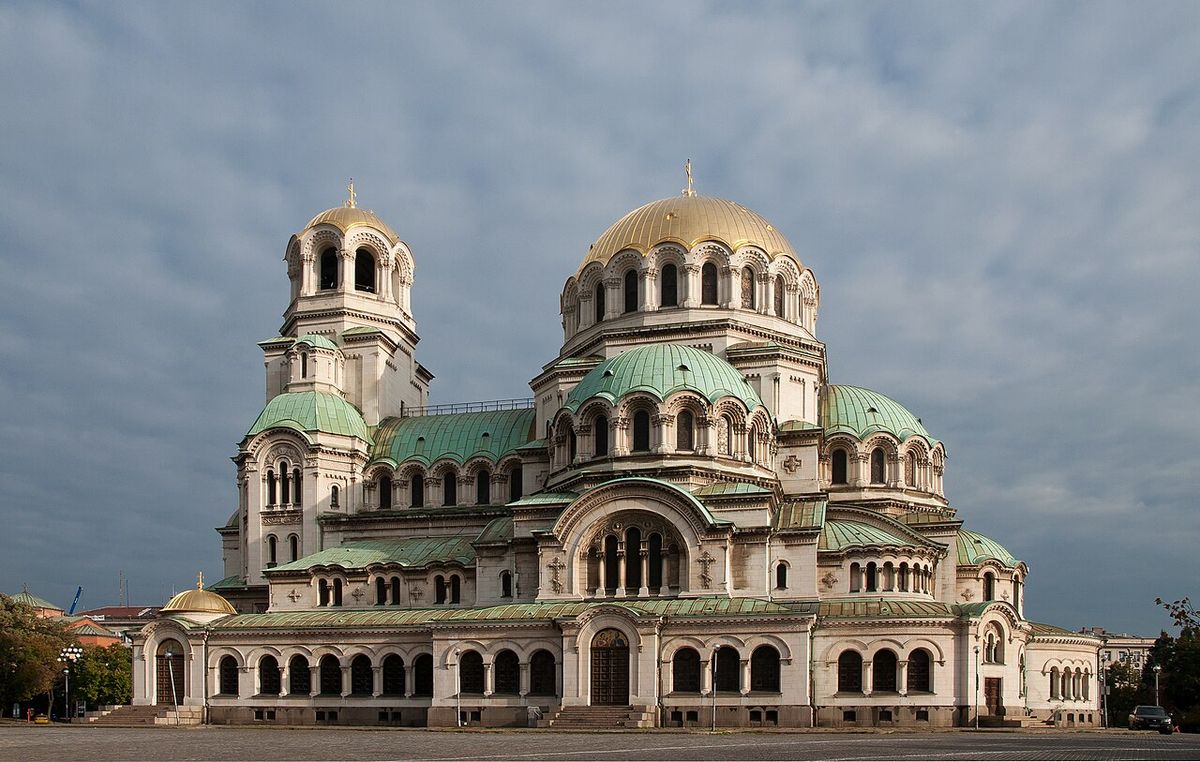
The labour market that draws every other Bulgarian city's job-seekers. The big sectoral clusters in 2026:
If you need it, you really need it; if you do not, you probably belong somewhere else.
Bulgaria's second city and the answer most British expats arrive at after the first year. Population 333,994, a real walkable old town, the strongest culture and cafe scene outside Sofia, and a manageable scale that Sofia cannot offer.
Plovdiv has the deepest non-Sofia tech and outsourcing base in Bulgaria, plus an industrial belt around the Trakia Economic Zone. Headline employers:
The safest recommendation for "I want Bulgaria but not too small, and Sofia is too much".
Bulgaria's third city and the Black Sea's biggest. Population 331,260, a real year-round coastal life with city services, the country's largest Sea Garden, and the most-used coastal airport. The northern gateway, and the answer for anyone who wants both sea and city.
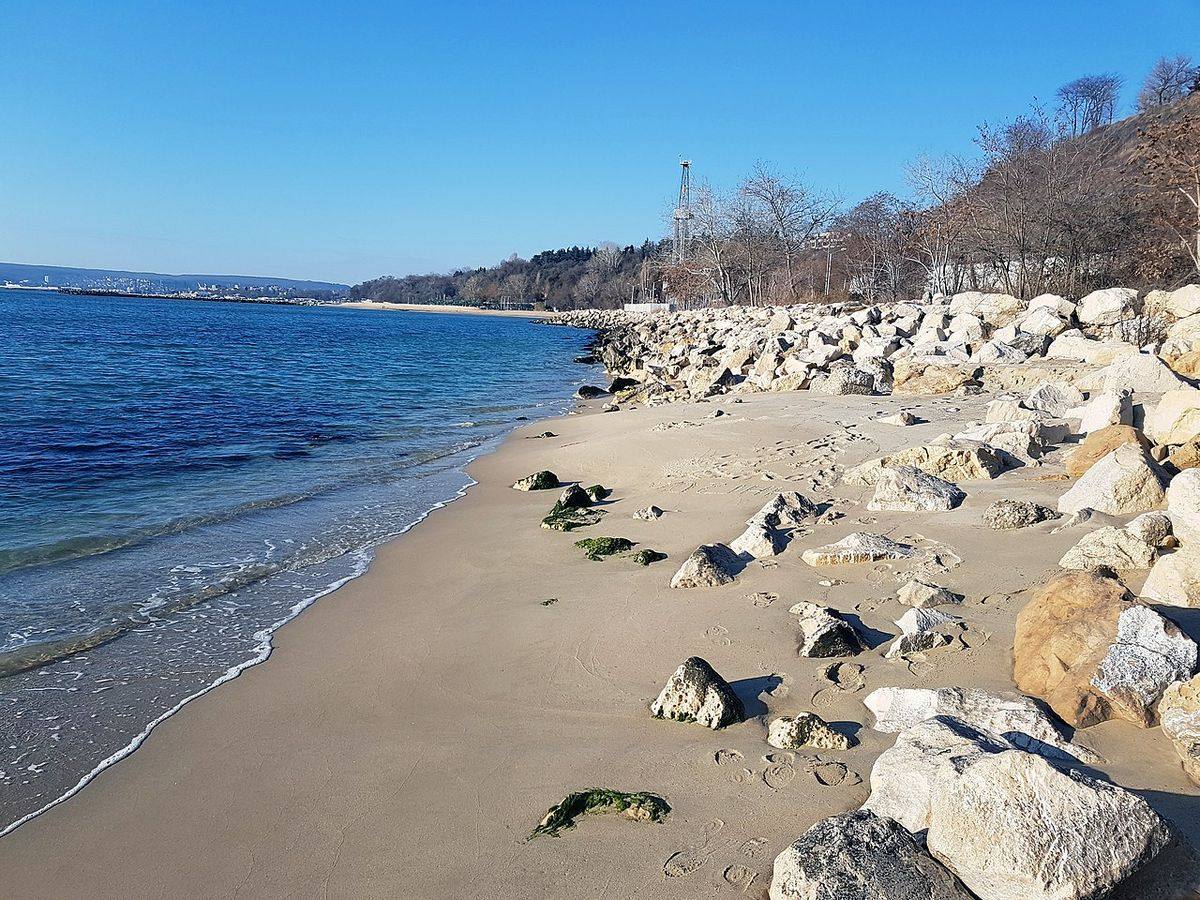
The most sector-balanced of the coastal cities. Headline employers:
The right answer for everyone who wants the coast and is willing to pay city prices to keep services open in winter.
Bulgaria's calmer Black Sea city. Population 195,912, flatter and easier to navigate than Varna, with a beautiful Sea Garden and the southern coastal towns (Pomorie, Nessebar, Sozopol, Sveti Vlas) within easy reach. Smaller, less intense, less expensive, but with weaker healthcare and a strongly seasonal airport.
The sectoral profile is less balanced than Varna's, weighted toward refining, logistics and seasonal tourism:
The calmer southern coast answer for people who want the sea and a city, without Varna's intensity, prices or distance from Sofia.
Shumen.UK's home territory, and the honest pitch is here. Shumen is a 77,000-resident city in the northeast: a real working Bulgarian city with 5,000 years of history, low costs, strong road and rail links to Varna, and the Founders of the Bulgarian State monument on the hill above. It is not glossy and not internationally branded; it is one of the best-value places to live in Bulgaria.
A working industrial city rather than a service one. The local labour market is shallow at British professional salary levels, but real for trades, manufacturing and logistics:
Realistic for a Brit: very few professional roles pay at UK levels. The honest pattern is to live in Shumen on remote / UK income or a pension, not to look for local work at British salary expectations.
The honest answer for retirees and remote workers on UK income who want a real Bulgarian city without Sofia or Varna prices, can manage with less English-speaking infrastructure, and value local life over expat scenes. See our full Shumen city guide.
Four mid-tier cities that fill specific gaps in the British-expat decision matrix. Each is the right answer for a particular kind of life, and the wrong answer for others.
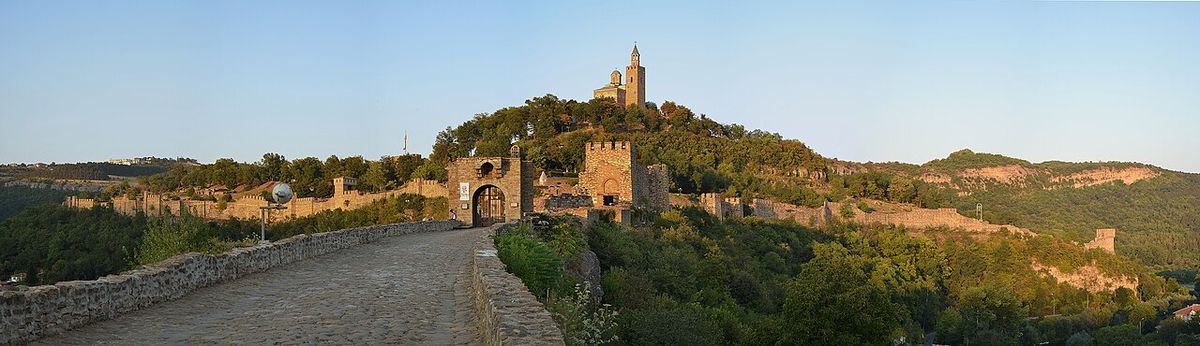
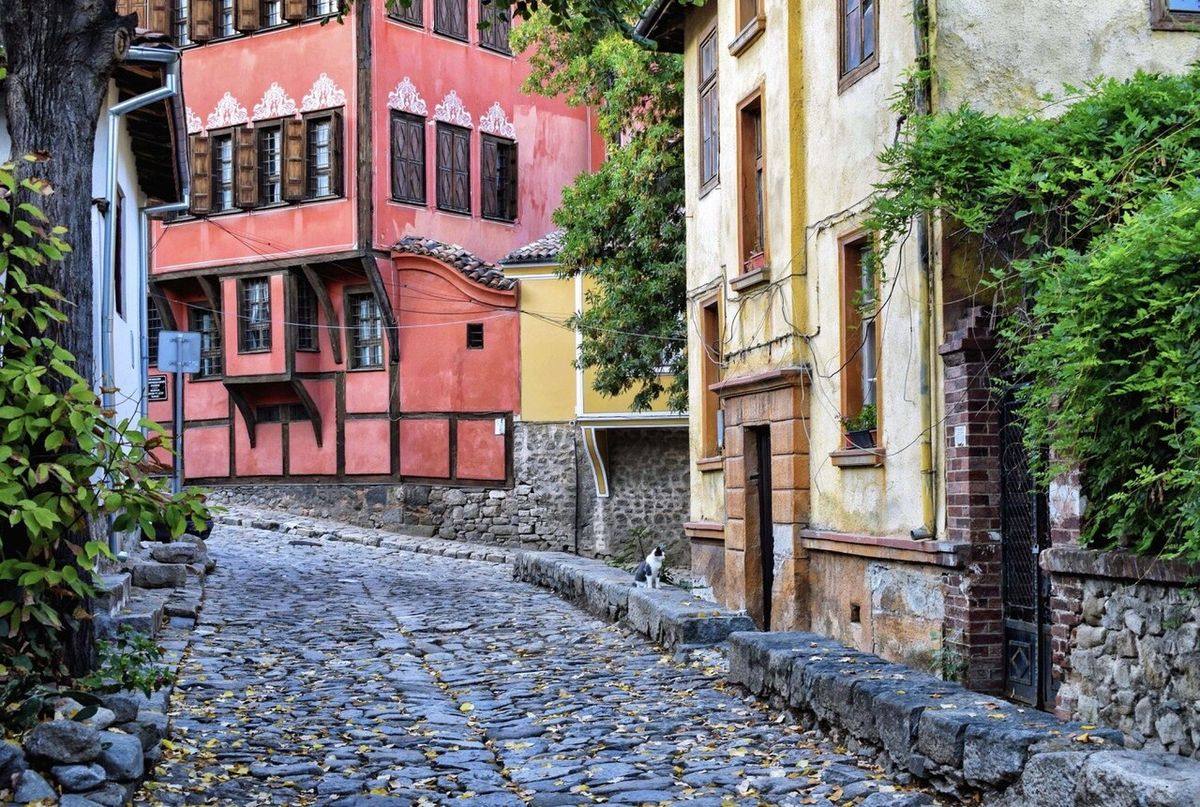
Bulgaria's most photogenic city, the historic medieval capital, with houses cascading down a river-bend gorge below the Tsarevets fortress. The longest-standing British expat community outside the coast is here. Pros: beauty, established foreigner network, cafe and restaurant scene, a real cultural identity. Cons: hills (the city is genuinely steep and not mobility-friendly), tourist pressure in summer, narrow streets and difficult parking, hospital base smaller than the size suggests. Best for retirees and remote workers who specifically want the "romantic Bulgaria" experience and can handle the steps. Avoid if mobility, parking or major-hospital access matters.
The Danube city. Elegant 19th-century architecture earned Ruse the nickname "little Vienna"; the New Bridge across the Danube gives easy access to Bucharest (75 km, 90 minutes), an alternative airport via Henri Coandă Otopeni. Pros: distinctive architecture, lower cost than the big cities, Romania access, working river port. Cons: hot summers and cold foggy winters, periodic air-quality issues from across the Danube and from Romanian industry, smaller airport options without Bucharest. Best for people who like elegant old-city character and want a northern base with a second-country option an hour away.
Central-southern industrial-services city with one of the highest GDPs per capita in Bulgaria outside Sofia (driven by the Maritsa-Iztok energy complex). Pros: jobs, central position on the Trakia motorway, grid-pattern flat city, parks, real services. Cons: industrial-region character with less obvious expat or tourist identity, hot summers, fewer international flights. Best for working-age movers in industry or services who want a practical second-tier city without expat gloss.
The healthcare anomaly. Pleven has Bulgaria's deepest hospital base relative to its size, with 13.3 multi-profile hospital beds per 1,000 people (more than twice Sofia's density), the Medical University Pleven, and a serious specialist concentration. Pros: healthcare access, low cost, northern position. Cons: less glamorous, weaker airport options, smaller English-speaking professional scene. Best for British expats whose primary concern is healthcare access at lower cost than Sofia, especially anyone in their seventies and beyond with ongoing medical needs. An underrated answer.
Bulgaria's mountains are spectacular and demanding. Bansko has the foreigner scene, Samokov has Sofia access, Smolyan has the Rhodope identity, and all of them ask a serious question: are you ready for a real winter, or just a pretty summer photograph?
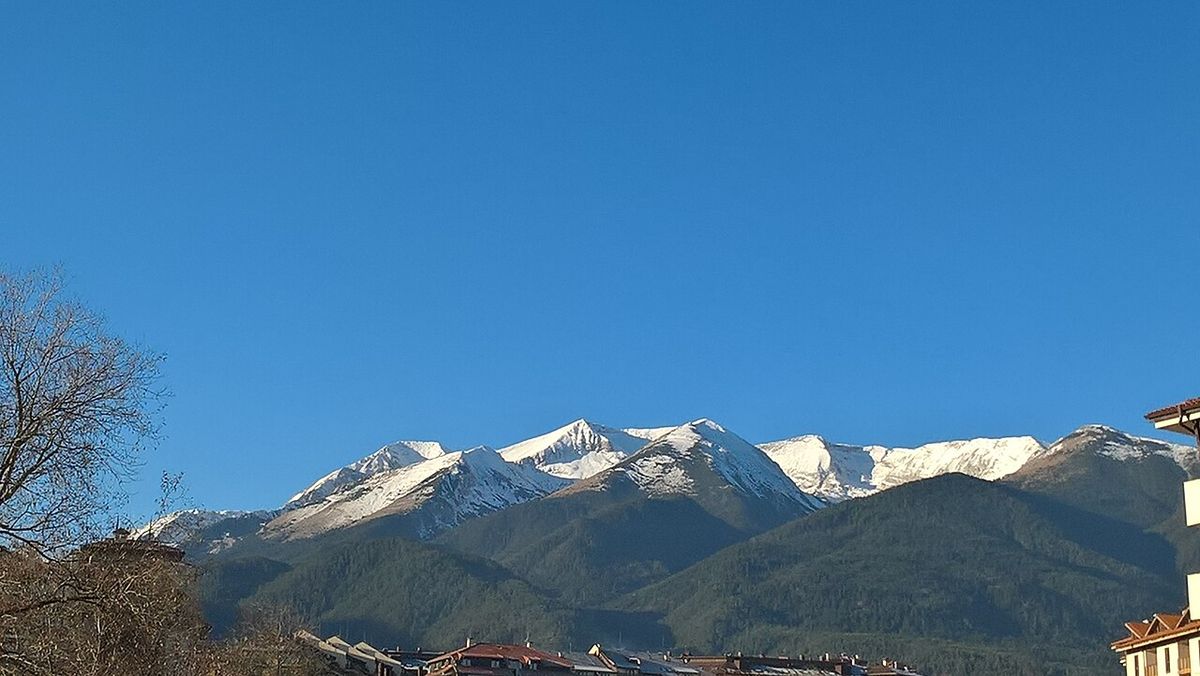
Bansko (population 8,500 plus a doubled seasonal population) is the largest ski resort in the Balkans and has reinvented itself as a year-round digital-nomad town with a serious coworking scene (Coworking Bansko is the recognised hub). Pros: established foreigner community, social scene, fast fibre, lifestyle access to Pirin and Rila, ski season December to April, cooler summers than the plains. Cons: seasonal pricing swings (summer rents 30 to 50 percent below winter peaks), apartment-block oversupply in some developments, winter road access on the E79 from Sofia can be slow, the nearest tertiary hospital is in Blagoevgrad or Sofia. Razlog (12,000), 6 km north, is the quieter year-round neighbour with better infrastructure and lower prices. Best for: remote workers, younger retirees, skiers and hikers, mountain-life lovers in their 30s to 60s. Avoid for: anyone with significant medical needs, anyone over 75, anyone who wants services-rich city life.
Samokov (28,000) sits 60 km south of Sofia at 950m altitude; the Borovets ski resort is 12 km further into the Rila. Pros: Sofia access (a one-hour drive), real mountain altitude, lakes, hiking, much cheaper than Bansko. Cons: smaller foreigner scene, weaker English-speaking services, winter weather is real. Best for Sofia-anchored people who want a mountain weekend or part-week home and can drive in winter.
Smolyan (28,000) is the central Rhodope capital, the highest district town in Bulgaria (1,000m+ altitude), and a different cultural region with a mixed Bulgarian-Pomak population. Pros: stunning Rhodope scenery, clean air, slower life, the Devil's Bridge and the Trigrad gorges within an hour. Cons: Regional Profiles rates Smolyan's infrastructure "unsatisfactory"; no railway in the district; household internet 83.6%; the road to Plovdiv (110 km) is slow; winter is serious. Best for experienced mountain-lifestyle people with proven internet, light healthcare needs and a Bulgarian-speaking circle.
The central Balkan range has smaller foothill towns (Troyan 18,000, Apriltsi 3,000, Teteven 9,000) that combine accessible position (one to two hours from Sofia or Plovdiv) with mountain scenery, lower prices than Bansko, and a more rural character. Best for buyers who want a quieter mountain feel without Bansko's tourist pulse.
Bulgarian villages are full of cheap, beautiful, photographable property. Some British buyers do brilliantly. Many regret it. The line between the two is rarely drawn by budget; it is drawn by experience, language, healthcare distance and an honest assessment of winter.
The single most common British-expat regret-purchase pattern is this: a couple visits Bulgaria in late June for a four-week holiday in a hill village, falls in love with the €25,000 house with the orchard and the view, buys it that autumn, moves in spring, and by the second winter is trying to sell.
The summer they fell in love with was the easiest four weeks of the village's year. November to March is a different place: roads ice over, neighbours stay indoors, the buses are unreliable, the post takes three days, the nearest English-speaking doctor is 90 minutes away, and the orchard is mud.
This is not an argument against village life. It is an argument for renting for one full winter in your target area before any property purchase. If you still want the house in March, buy it. If you do not, you have saved €25,000 and several years of stress.
Village life works for British expats who:
It fails for British expats who:
See our Village House Renovation guide for the renovation-side detail and the Buying Property guide for the legal side.
If you have school-age children and you are not living in central Sofia, the Bulgarian state school is almost certainly your only option. Here is what that actually looks like for a British family, because the guidebooks rarely say.
Realistically, there are two full international schools in Bulgaria: the Anglo-American School of Sofia (AAS) and the American College of Sofia, both in Sofia. The British School of Sofia and a handful of bilingual options round out the capital. Outside Sofia, the field thins quickly: the American College of Plovdiv is a state-grammar style English-language school (not a full international curriculum); Varna and Burgas have private English-language sections but no full international school. Shumen, Veliko Tarnovo, Pleven and all smaller cities have no international option at all.
The honest pattern: a British child arriving at age 6 or 7 in a Bulgarian state primary school will be reading Cyrillic competently within 9 to 12 months and indistinguishable from local peers within two years. A British child arriving at age 13 or 14 into Bulgarian secondary school faces a steeper hill, both academically and socially, and parents often regret moving in those years. If a move is on the cards, choose primary years over secondary years where possible.
Bulgarian schools accept UK school records for placement decisions, but the records must be apostilled by the FCDO Legalisation Office and accompanied by a certified Bulgarian translation. The same chain as for marriage and inheritance documents: apostille first, translate the apostilled version (not the original alone), use a translator registered with the Bulgarian MFA. This catches more British families than it should because they assume "we'll sort it when we arrive" and then find the enrolment window has closed for the school year. Start the paperwork before you move.
See our Education & Schools guide for the full state-vs-international, two-shift mornings, 15 September flowers, the Matura, the apostille trap and the chitalishte route.
A reminder that comes up in every Shumen.UK location consultation. Choosing where to live is one project. Getting the legal right to live there is a separate project that British arrivals consistently underestimate post-Brexit.
Since 1 January 2021, a British citizen who is not protected by Withdrawal Agreement (Article 50) status is a third-country national in Bulgaria. The 90-day-in-180 Schengen visa-free rule applies; spending longer than that, or moving permanently, requires the Bulgarian long-stay route.
The standard path is a Type D long-stay visa, applied for at the Bulgarian Embassy in London (or another consulate) under one of several grounds: retirement, employment, business, family reunification or extended foreign-resident status. The visa is one-time-entry and valid for up to six months; once in Bulgaria, you apply for a residence permit at the Migration Directorate office in your municipality.
The 180-minute ring in the three-ring test (Section 2) includes "Migration Directorate" for a reason: the office that issues and renews your residence card is part of your operational life in Bulgaria. Sofia has the largest office and the longest queues; regional offices in Varna, Burgas, Plovdiv, Shumen and Veliko Tarnovo are quieter but each has its own backlog and quirks.
Cover the residency project in parallel with the location project. See our Residency guide for the Type D route, the residence permit, the registration steps and the 5-year long-term residence path; our Brexit & WA Rights guide for the pre-2021 Article 50 residence card and the late-application route; and our Taxes guide for the 183-day tax-residency interaction.
The same city is the right answer for one British expat and the wrong answer for another. Here are the short matches for the five most common Shumen.UK reader profiles.
Healthcare proximity is the single most important factor. Skip romantic isolation; you do not want to be 90 minutes from an emergency department at 75.
Warning: local Bulgarian salaries are much lower than UK expectations. Plovdiv's average gross is €10,508 a year. A foreign pension or remote income changes the equation completely; arriving without one is harder than expats often admit.
Pick the hospital and specialist first, then the town. Not the other way round.
Five common British-expat starting points that are wrong for most people, with the narrow circumstances in which each one works.
For any candidate location, score it 1 to 5 against the ten factors below. The total tells you whether the place fits your real life or only the holiday version.
| Factor | Question | Score 1 to 5 |
|---|---|---|
| Healthcare | Can you reach emergency and specialist care fast enough for your real medical profile? | |
| Airport | Can you reach regular UK flights without a day of travel? | |
| Daily shops | Can you buy food and medicine without a car every time? | |
| Winter | Can you live there in January, not just May? | |
| Internet | Is fixed-line internet AND mobile backup proven at this specific property? | |
| Language | Can you cope with the level of Bulgarian this location requires? | |
| Community | Are there neighbours, friends or activities you can actually access? | |
| Transport | Can you still live there if your car breaks down for two weeks? | |
| Property risk | Are the boundaries, title, utilities and condition genuinely clean? | |
| Exit plan | Could you sell, rent or leave if the move does not work out? |
Total scoring guide: 40 to 50 strong candidate; 30 to 39 workable with known trade-offs; under 30 rent only, or reconsider. The hardest questions to answer honestly are usually winter, language and exit plan.
Almost every regret-purchase story this guide has heard from a British expat ends with the same line: "we should have rented first". Renting for six to twelve months in your target area before any capital commitment is the single most cost-effective decision in any Bulgaria move. It catches the four-week-summer trap, the winter-road problem, the village-isolation issue, the noisy-neighbour issue, the heating-cost issue, the school-route issue and the "is this still cheap when November comes" issue.
See our Renting in Bulgaria guide for the legal side: typical deposits (one to two months), contract terms (12-month minimum is the norm), and the gotchas around utility bills, registration of the lease and the landlord-keeps-the-deposit pattern.
The questions Shumen.UK readers ask most about choosing where to live in Bulgaria, with sourced answers.
There is no universal best. Sofia wins for jobs, airport access, international schools and specialist healthcare. Plovdiv is the strongest all-round second-city compromise, with culture, walkability and lower pressure than Sofia. Varna is the best big-city coastal life, Burgas the calmer southern alternative. Shumen and Veliko Tarnovo are strong lower-cost choices if you can accept less English-speaking infrastructure. The honest answer is to match the location to your actual life: job, healthcare, family, language, climate tolerance and how isolated you can stand to be.
Only after seeing it in winter, not just summer. Varna and Burgas are real year-round cities. Smaller resorts like Sunny Beach, Sveti Vlas, Nessebar and Sozopol are full in summer and very quiet from October to April, when many restaurants, shops and even pharmacies close. Salt air corrodes everything, the winter wind off the Black Sea is sharper than first-time visitors expect, and resort maintenance fees on apartment complexes keep running whether you are there or not. The coast is a brilliant place to holiday and a more demanding place to live than the brochures suggest.
Compared with the rest of Bulgaria, yes. Sofia rents and groceries run roughly 30 to 50 percent above the regional cities; a one-bedroom flat in a central district costs 600 to 900 euros a month in 2026, against 300 to 500 euros for the same flat in Shumen or Pleven. Compared with the UK, Sofia is still cheap: Greater London rents are typically two to three times higher. The mismatch matters because British expats imagining "cheap Bulgaria" often picture villages or the coast, then arrive in Sofia and find the savings less dramatic than they expected. Sofia is the right answer if you need jobs, flights, international schools or specialist healthcare; the wrong answer if you mostly wanted cheap.
For lifestyle, often yes. Plovdiv is the second city: smaller, cheaper, more walkable, with a stronger cafe and culture scene than Sofia, milder feel, a beautiful Roman and Revival-era old town, and a manageable scale. Sofia wins on jobs (the biggest labour market by far), Sofia Airport (the only year-round international hub), specialist healthcare, embassies and international schools. For a remote worker, retiree or family with a UK income and no need for Sofia-specific services, Plovdiv is usually the more enjoyable place to live; for anyone who needs Sofia's job market or airport, the question answers itself.
For the right person, yes, and disclosure: this is Shumen.UK's home territory. Shumen is a 77,000-resident city in the northeast with the third lowest cost of living among Bulgaria's regional capitals, strong road and rail links to Varna (75 km, 70 minutes by car), a 5,000-year history, a real working-city character that is not tourist-shaped, and the Founders of the Bulgarian State monument on its skyline. It works best for retirees and remote workers on UK incomes who want a real Bulgarian city without Varna prices, can manage with less English-speaking infrastructure, and value local life over expat scenes. It is not the right answer for anyone needing a big foreign professional network or specialist tertiary healthcare.
Match the city to your healthcare needs first. Plovdiv has strong all-round services and a manageable scale. Varna and Burgas offer coastal life with city hospitals. Shumen and Veliko Tarnovo are cheaper inland options with adequate but smaller hospital bases. Pleven punches above its weight on healthcare relative to its size and is a serious option for anyone with significant medical needs. For most British retirees, the shortlist is Plovdiv, Varna, Burgas, Shumen, Veliko Tarnovo or Pleven; isolated villages and resort complexes are usually the wrong starting point regardless of how attractive the property looks.
Rent first, almost always, and ideally for at least one full Bulgarian winter. The most common expensive mistake British buyers make is choosing a place on a summer holiday and discovering after the move that the winter is harder, the village is emptier, the road is worse, the heating is more expensive or the hospital is further than the brochure suggested. Renting for six to twelve months in your target area before committing capital lets you test winter, internet, neighbours, healthcare access and the everyday reality of being there in November. See our renting and buying-property guides for the legal-side detail.
Some Brits do brilliantly and many regret it. Village life works for people who drive confidently, speak at least some Bulgarian, accept winter access on poor roads, have verified internet and water at the property, do not depend on regular specialist healthcare, can cope socially without an English-speaking circle, and have local Bulgarian help (a neighbour, a fixer, a Bulgarian-speaking spouse). It fails for people who picture a romantic countryside that does not match Bulgarian rural reality: empty villages with elderly populations, language barriers, septic-and-well dependencies, and emergency-services delays. The rule is to choose a village within 15 to 30 minutes of a functioning town unless you are genuinely experienced and self-reliant.
Sofia for the deepest professional services, coworking and airport. Plovdiv for culture and lifestyle. Varna for the sea-and-city balance. Burgas for a calmer southern coast. Bansko for the established digital-nomad scene and mountain life. Shumen for the lowest cost base in this list. The non-negotiable: test actual fixed-line speed and mobile-network backup at the specific property, not from the agent description. Bulgaria has world-class fibre in cities but rural and resort areas are mixed; see our internet guide for the operator landscape.
Among regional capitals with functioning services, Shumen, Pleven, Yambol, Dobrich and Targovishte are at the low end of the cost ladder, with one-bedroom city rents in the 250 to 450 euros range in 2026 and groceries roughly 20 to 30 percent below Sofia. The trade-off is fewer English-speaking professionals, weaker job markets, fewer international flights nearby, and a thinner expat support network. For a Brit with a UK pension or remote income who wants a real city without paying Sofia or Varna prices, these are credible options.
Varna is the bigger, more urban, year-round coastal city, with a university base, more private healthcare, more restaurants, more transport options and easier access to the north coast (Balchik, Kavarna, Golden Sands) and inland to Shumen. Burgas is calmer, flatter, smaller, with a beautiful Sea Garden and easier urban layout, and is the gateway to the southern coast (Pomorie, Nessebar, Sozopol, Sveti Vlas) and Strandzha. Both have airports but both are more seasonal than Sofia. Choose Varna for big-city coastal life, Burgas for a less intense south-coast alternative.
A test for any property or town before you commit. Check three concentric rings: the 15-minute ring (supermarket, pharmacy, GP, cashpoint, basic shops, transport, winter road access), the 60-minute ring (hospital, municipality, KAT/migration office, train station, reliable trades), and the 180-minute ring (airport, tertiary hospital, embassy in Sofia, specialist lawyers, international school if needed). If any of those three rings fails for your life, the cheap house is not cheap. Most regret-purchase stories are explained by a 60-minute or 180-minute ring failure that the buyer ignored because the 15-minute ring looked fine on a summer visit.
Sofia is the only Bulgarian city where you can live comfortably without one; it has a metro, dense trams and trolleybuses, and a working bus network. Plovdiv, Varna and Burgas can work with bus and taxi, but neighbourhood choice matters and most expats end up with a car. Smaller cities like Shumen and Veliko Tarnovo are walkable in the centre but car-dependent for everything outside. Villages are unviable without a car except for the most isolated, self-sufficient lifestyles. If you cannot drive or do not want to, that single fact narrows the list to Sofia, the inner cores of Plovdiv, Varna and Burgas, and a handful of well-connected smaller towns.
Three things that will save almost every British expat reading this guide:
If the shortlist still feels too long: Plovdiv is the answer most British expats end up at. Sofia for working professionals and families; Varna or Burgas for the coast; Shumen or Veliko Tarnovo for value; Bansko if mountains, not despite them. The rest is the trade-offs you make once you know yourself well enough to choose.
Related guides: Renting · Buying Property · Cost of Living · Health · Residency · Shumen City Guide · Sunny Beach · Village House Renovation · Weather · All guides.