
A lot of British expats rent in Bulgaria before they buy, and rightly so. Renting lets you try Sofia, Plovdiv, the Black Sea coast and a Rhodope village, all in the time and at the cost of one ill-judged property purchase. This is what you actually need to know: where to look, what you'll really pay, the British-shocking agency-fee rule, and how to get your deposit back at the end.
A lot of British people who relocate to Bulgaria rent first, and the ones who do tend to be much happier with where they end up. Bulgaria is small on a map but enormously varied on the ground, and renting is how you find out which version of the country actually suits you, before you commit a quarter of a million euros and your kitchen sink.
The country contains, within four hours' drive of Sofia: a Mediterranean Black Sea coast, a Balkan-Carpathian mountain spine, the second-highest peak in southeastern Europe, the medieval streets of Veliko Tarnovo, the cosmopolitan Sofia tech bubble, the slow-paced wine villages of the Struma Valley, the Rose Valley, a still-functioning Soviet-era panel-block heartland, and the timeless rural Rhodope. Each of these is a totally different kind of life. A two-week summer holiday in Sunny Beach is not a useful basis for buying a flat in Sofia, and vice-versa.
British citizens can stay in Bulgaria visa-free for 90 days in any rolling 180-day period, calculated across the whole Schengen area (Bulgaria joined Schengen for air, land and sea on 1 January 2025). You cannot legally bounce around three different Bulgarian cities for 18 months on the visa-free regime. To rent for any extended period you need a Type D long-stay visa, applied for at the Bulgarian Embassy in London before you travel, then converted into a residence permit on arrival. Our Residency guide covers the routes (work, freelance, retirement, financially independent). The 90-day rule only works if you genuinely intend a short trial, or if you cycle in and out of Schengen between visits.
Once you have residency, six months in Sofia, six in Plovdiv, six on the coast becomes realistic. Decide with experience, not Pinterest.
Property prices have moved with the euro changeover. Renting buys you 6 to 12 months of price-watching.
Heating, building noise, neighbour relations, school catchment, GP availability. None show up on a viewing.
One month's rent + one month's deposit + agency fee versus 5-7% transaction costs on a purchase.
If you do eventually buy, you will buy more confidently and to a tighter brief: "I want a south-facing flat in Hladilnika near the metro" beats "somewhere in Sofia". And if you decide Bulgaria is not for you, the worst case is you walk away minus a year's rent rather than a year's rent plus the entire transaction stack on a property purchase. Our Property guide covers the buying side once you're ready.
A rough orientation of the regional rental scene. Prices are indicative for a 1-bedroom flat in May 2026 (one bedroom plus a living room, the Bulgarian "двустаен" / dvustaen), unfurnished or semi-furnished. Add €100-200 for a furnished flat in the same area, more for fully kitted-out modern furnished. See our Cost of Living guide for the live monthly tracker.
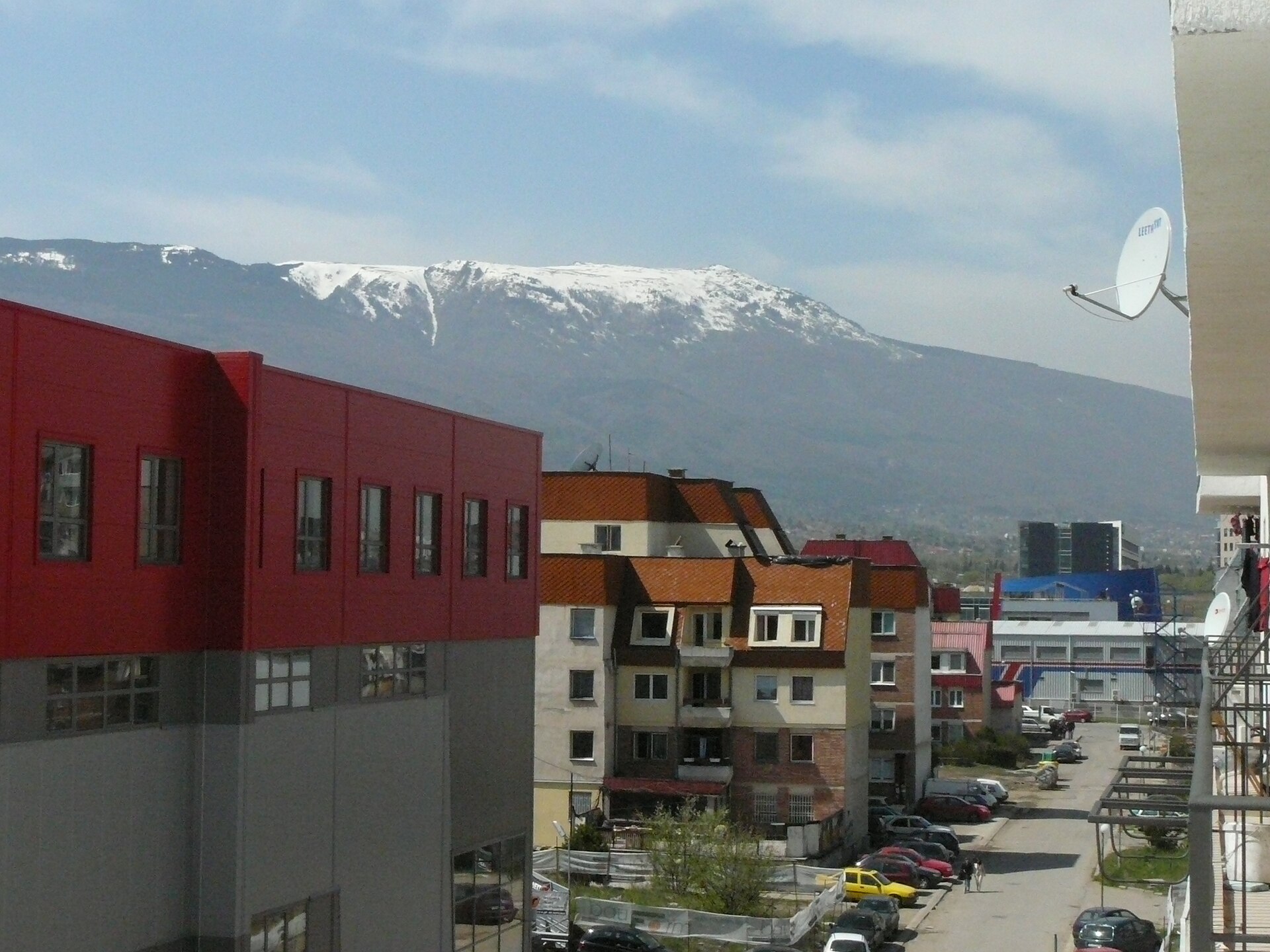
The deepest market and the most jobs. Centre is expensive but walkable to everything. Lozenets and Hladilnika are the prosperous middle-class districts: trees, cafes, nearby hospitals, expensive but pleasant. Iztok and Mladost are panel-block suburbs, much cheaper, well-connected by metro. Lyulin is the largest panel-block district and the cheapest in absolute euros.
Cheaper than Sofia, more cultured, much warmer summers. Old Town is the postcard but limited stock and high prices. Kapana (the creative quarter) gives you bars, galleries and a much younger demographic. Kyuchuk Parizh is the cheaper-but-still-central option. Plovdiv's drawback is the Thracian-plain summer heat (regularly 35°C plus).
Coastal year-round. Sea Garden area for sea views and a premium. Centre for walkability. Vinitsa for cheaper inland-of-the-coast living. Summer puts a premium on coastal flats; off-season (October-April) often beats Sofia for value. Varna airport gives you direct UK flights via Wizz Air from Luton.
The unassuming Black Sea-coast working city. Lazur and Centre for sensible flats. Cheaper than Varna and Sofia, less expat-touristy. The gateway airport for Sunny Beach if you want short flights to the UK.
Sunny Beach, Sveti Vlas, Sozopol all have a steep summer/winter rent gradient. A flat that costs €700 a month in July often goes for €250-300 between October and April, with English-speaking landlords used to British seasonal renters. A genuinely cheap winter base if you don't mind a quieter resort and have your own car.
Premium during ski season (December-March), often cheap May-October. A growing British nomad scene exists here year-round, with co-working spaces and gigabit fibre. Mountain weather is real: budget for serious winter heating.
Smaller markets, cheaper, fewer expats. Veliko Tarnovo is the medieval-fortress capital with a serious cultural offer. Shumen is where we live: a city of 60,000 with a 5,000-year history, the Tombul Mosque (the largest in Bulgaria), and a fraction of Sofia's living costs. Both have small but supportive expat communities.
Often genuinely cheap (€100-200 for a whole house, if you're prepared to handle wood-stove heating and the occasional patchy internet). The right answer for a writer or a retiree on a UK pension. The wrong answer for anyone who needs reliable broadband, a school commute or a hospital nearer than 30 km.
Bulgaria has a few dominant portals plus a healthy unofficial scene on Facebook. The same flat will often appear in three or four places at once via different agencies, identifiable by repeated photographs.
Increasingly the place where direct-from-owner listings appear, especially for foreigner-friendly lets. Search for "Sofia Apartment Rentals", "Plovdiv Expats", "Varna Expats" plus city-specific groups. The advantages: no agency fee, often English-speaking landlords. The disadvantages: less verification, more scams, the burden of due diligence is on you.
For older Soviet-era panel blocks, contact the building manager (домоуправител, domoupravitel) directly. They often know which flats are about to come empty before any portal does, and the introduction is as good as a reference.
This is the single biggest financial surprise British renters get in Bulgaria, and it's worth understanding before you start viewing.
The standard agency fee is one month's rent, paid by the renter on signing. This reverses the UK convention where the landlord pays the agency to find a tenant. So when you see "rent: €700/month" on Imot.bg, you should mentally read that as "first month: €2,100" (rent + deposit + agency fee).
This doesn't apply to private "owner direct" listings (без комисионна, bez komisionna), which is one of the reasons Facebook private adverts exist as a market. But on agency listings (the majority of Imot.bg), the fee is universal.
In Sofia and Varna the rental market is competitive enough that some agencies will negotiate the fee down to half a month's rent if you ask, especially for longer fixed terms. It is worth asking. Reputable agencies that British clients recommend: Address.bg, BG Property Finder, Era Bulgaria, Re/Max BG and Yavlena.
The fee is paid in cash or by Bulgarian bank transfer at the moment of signing, alongside the deposit and first month's rent. It is not refundable if you change your mind two weeks in. Make sure you genuinely want the flat before you sign anything.
The Bulgarian deposit system is much simpler than the UK's, in both good ways and bad. There is one universal convention and zero third-party protection.
Standard deposit: one month's rent, paid alongside the first month's rent on signing. The landlord holds the deposit personally until you move out. There is no Bulgarian equivalent of the UK's Tenancy Deposit Scheme, no DPS, no MyDeposits, no statutory protection and no third-party adjudication. If your landlord wants to keep your deposit at the end, your routes are persuasion, the Consumer Protection Commission for unfair-practice claims, or civil court.
This sounds alarming. In practice, most Bulgarian landlords return deposits without drama. The bad-actor minority concentrates in two places: the cheapest end of the market, and unverified private adverts on Facebook. The protection in either case is documentation.
Common landlord deduction tricks include "the flat needs repainting", "professional cleaning", "fumigation" and a vague "wear and tear". A signed move-in inventory and dated photos make most of these impossible to argue, and a landlord who can see the documentation rarely tries.
Bulgarian rental contracts are typically 1-year fixed-term, drafted in Bulgarian, and renewable. They are governed by the Obligations and Contracts Act (Закон за задълженията и договорите). Most are short and readable, even in Bulgarian, but a few clauses repay close inspection.
The contract is almost always drafted in Bulgarian and the Bulgarian version is the legally binding one. You can request a bilingual contract, or have a Bulgarian-only contract translated for your own reference, but the Bulgarian text is what a court will read. If your Bulgarian is shaky, get a paid translation of the key clauses (a couple of hundred euros) before signing rather than trusting the agent's verbal summary. This is the kind of place where bg60day.com (free, made by us) will help you read the document yourself, but never rely on a half-learnt language for a year-long financial commitment.
Notary registration is not required for terms under one year. For a one-year contract you can have signatures notarised, which costs a small fee (~€20-40) and gives the contract more weight in any subsequent court dispute. For multi-year tenancies it is sensible. A Bulgarian notary office will do this on the spot.
The Bulgarian definitions of furnished, semi-furnished and unfurnished are different from, and broadly more generous than, the British ones. Brits often arrive expecting a UK "furnished" sofa-and-table interpretation and find a flat with a full kitchen kitted out down to the wine glasses.
| Term | Bulgarian | What's included |
|---|---|---|
| Furnished | обзаведен (obzaveden) | Everything: bed, sofa, dining table, wardrobes, fridge, washing machine, often dishwasher, curtains, kitchen utensils, pots, pans, plates, sometimes bedding and towels. Move-in-tonight ready. |
| Semi-furnished | полуобзаведен (poluobzaveden) | White goods (fridge, washing machine), basic furniture (bed, wardrobes), but no kitchenware. Bring your own cutlery, plates, pots, pans. |
| Unfurnished | необзаведен (neobzaveden) | Usually retains built-in kitchen units and white goods. No movable furniture. A bare empty shell is rare and usually marked "shell finish" (груб строеж, grub stroezh). |
When in doubt, ask the agent in writing what's actually included before viewing. "Furnished" can still mean a flat your grandmother decorated in 1987.
One British advantage of furnished Bulgarian rentals: a lot of the white goods are post-2010 European brands (Bosch, Whirlpool, Beko, Indesit) and serviceable. The flip side: the soft furnishings, mattresses and sofas are often older. If you're staying more than six months, allowing yourself a €200 budget for a new mattress topper and pillows is sensible.
A worked example of the all-in monthly cost for a 1-bedroom flat in central Sofia (May 2026 indicative figures, in euros). Adjust by city: Plovdiv and Burgas roughly 25-35% cheaper, Varna similar, Bansko around 20% higher in winter, villages dramatically cheaper.
Bulgaria has three regional electricity distributors, three regional water utilities, and almost no gas connection in apartment blocks (gas is mostly an industrial and house-by-house thing in Bulgaria, not the UK-style domestic norm).
This is the single most common British misconception about Bulgarian apartments. Modern inverter air-conditioning units (климатик, klimatik) are the primary and most cost-effective heating system in any flat that is not connected to central district heating. A good inverter AC delivers 3-4 kW of heat for every 1 kW of electricity it consumes, which makes it dramatically cheaper than a fan heater or oil radiator.
The four heating options in a Bulgarian flat, ranked roughly cheapest to most expensive per kWh of heat delivered:
Always ask the previous tenant or the landlord for the winter electricity bill before signing. A flat without district heating that relies on a tired old AC unit can run €120-180/month in January.
What the landlord pays: building tax (danak sgradi) and the waste collection fee (taksa smet), together usually €100-300 per year for a 1-bed depending on size and area. These are the landlord's responsibility, not yours, and don't appear on your bills.
Plus, on the day you sign: agency fee (one month's rent) + deposit (one month's rent) + first month's rent. So a €700/month flat costs you €2,100 to walk into. For some contracts the agency will accept the agency fee a week or two later if you commit, but don't bank on it.
If you stay more than 90 days at the same address, Bulgarian law requires you to register your address with the local district municipality. This is separate from your residency permit (covered in our Residency guide) and is a quick administrative step.
Done at the local district municipality office (район, rayon). In Sofia each district has its own; in smaller cities the central municipality handles it. Usually issued the same day.
Bulgarian landlords often resist signing the notarised permission letter. Two reasons: they fear that any debt the tenant runs up at the address (utility arrears, parking fines, unpaid loans) will pursue them as the property owner, and a meaningful minority are not declaring the rental income to the tax authority (NRA) and worry that an officially registered address will trigger an audit. Both fears are largely unfounded: tenant debts pursue the tenant, not the address; and NRA already has the tenancy on file via the rental contract if it has been notarised. But the suspicion is widespread.
Mitigation: get written agreement to the address registration BEFORE you sign the rental contract, ideally in the same notary visit. A landlord who refuses outright is signalling either tax irregularity or general inflexibility, and you should treat the listing as a red flag even if everything else looks fine. For foreigners, address registration is a non-negotiable legal requirement for residency permit applications, so a landlord who blocks it has effectively blocked your visa.
Your registered address is referenced in:
The landlord's notarised permission letter is the single most often-forgotten step. Get it agreed in principle BEFORE you sign the rental contract, and notarised within the first week of moving in. A landlord who refuses outright is a red flag, even if the rest of the deal is fine.
Bulgaria's rental market is largely honest. The handful of recurring scams target people new to the country and usually require the victim to pay before viewing or to pay outside the banking system. Knowing the patterns is most of the defence.
The Bulgarian Consumer Protection Commission (KZP) handles unfair-practice complaints in English at kzp.bg or on the national hotline 0700 111 22. Our Money & Scams guide covers the wider expat scam list (banking phishing, currency-exchange fraud, the Sofia bar trick).
Twelve practical things to do on the day you sign the contract and pick up the keys. Each one takes minutes; together they make the difference between getting your full deposit back and arguing about it for six months.
Bulgaria has no Tenancy Deposit Scheme equivalent. Disputes that can't be resolved by conversation are civil-court matters. The good news: most landlords return deposits without drama, and the cases that go to court are a small fraction. The bad news: when they do go wrong, the process is slower and more bureaucratic than the UK equivalent.
The leverage you have is documentation. Photos, inventories, signed meter readings and bank-transfer records add up to a near-impossible case to argue against. Without them, the dispute degenerates into a he-said-she-said and Bulgarian courts (like English ones) tend to default toward equilibrium when the evidence is light. That's why every minute spent on move-in documentation is worth a full day spent in court.
Despite the lack of a third-party deposit scheme, the substantive law is heavily tenant-protective. A landlord cannot simply change the locks, cut off your utilities, or remove your belongings if a dispute arises. Eviction in Bulgaria is a formal court process that typically takes 6-12 months even where the landlord has an open-and-shut case for non-payment. This is, ironically, exactly why landlords are so rigid about deposits up front: if you stop paying, getting you out is genuinely slow and expensive for them, so the deposit is their main practical leverage. Knowing this is the case also tells you something useful: an angry landlord threatening to "throw your stuff on the street tomorrow" is bluffing. The law is clear, and Bulgarian courts enforce it.
The tenant. The Bulgarian convention is that the renter pays the agency one month's rent as commission, not the landlord. This reverses the UK norm and is the single biggest financial surprise for British renters. Some agencies in Sofia and Varna will negotiate the fee down to half a month if the market is competitive.
One month's rent, paid alongside the first month's rent on signing the contract. There is no Bulgarian equivalent of the UK Tenancy Deposit Scheme. The landlord holds the money personally. Photograph and video the flat with the landlord present on move-in day, capture all meter readings on a signed inventory, and pay by Bulgarian bank transfer rather than cash so there is a paper trail.
Yes, if you stay more than 90 days at the same address. Registration is done at the local district municipality office (район, rayon). You'll need your passport, residence permit or long-stay visa, a notarised letter from the landlord giving permission to register, a copy of the landlord's title deed, and the rental contract. The fee is around 5 euros and registration is usually issued the same day.
More than it does in the UK. A Bulgarian "furnished" (обзаведен, obzaveden) flat typically includes the bed, sofa, fridge, washing machine, often a dishwasher, curtains, kitchen utensils and sometimes bedding. "Semi-furnished" (полуобзаведен) is white goods plus basic furniture but no kitchenware. "Unfurnished" (необзаведен) usually still has built-in kitchen units and white goods. A bare empty shell is rare.
Sofia (centre, Lozenets, Hladilnika, Iztok, Mladost) for the deepest market and most jobs. Plovdiv (Old Town, Kapana) for cheaper culture. Varna (Sea Garden, Centre) for the coast year-round. Burgas for cheaper coastal living. Sunny Beach, Sveti Vlas and Sozopol for seasonal coast (off-season bargains). Bansko for ski. Veliko Tarnovo and Shumen for cheap inland-cultural. Villages for €100-200 a month if you're prepared to handle heating and transport.
Almost always, yes. Bulgaria is a country of distinct micro-cultures: the Sofia tech bubble, the Mediterranean coast, the Rhodope mountains, traditional villages. A holiday impression is a poor basis for a property purchase. Renting in two or three areas across six to twelve months is a months-rather-than-years investment that costs a fraction of buying into the wrong micro-market.
Never pay before viewing in person. Verify the landlord's ID matches the title deed (Akt za sobstvenost) and ask to see it. Pay the first month and deposit by Bulgarian bank transfer with a clear reference, never crypto, Western Union or cash. Walk away from any "owner is abroad" story that requires deposit before keys. Stick to listings on Imot.bg, Address.bg or via reputable agencies; treat OLX.bg private adverts and unsolicited Facebook DMs with extra suspicion.
Contracts (договор за наем, dogovor za naem) are typically 1-year fixed-term, drafted in Bulgarian, and renewable. Key clauses to check: rent escalator (some include 3-5% annual increases), pet policy, subletting, who pays the building management fee, and the notice period (usually 1-2 months in writing). For a 1-year contract you can have signatures notarised, which adds legal weight in disputes. You can request a bilingual version, but the Bulgarian-language original is the legally binding one.
Standard split: the tenant pays the building management fee (Етажна собственост, etazhna sobstvenost, 5-25 euros a month), electricity (EVN/CEZ), water (V&K), gas if connected, and internet. The landlord pays the council building tax and waste fee (данък сгради + такса смет). Repairs split: small repairs are the tenant's responsibility, structural repairs are the landlord's, by convention. Always confirm the split in writing before signing.
There is no third-party adjudication scheme like the UK has. Disputes are civil-court matters at the Regional Court (Районен съд, Rayonen sad), which handles claims up to €12,782 equivalent (roughly €12,700) under a simplified procedure with modest fees (4% of the claim). The Consumer Protection Commission (KZP) at kzp.bg or 0700 111 22 also handles unfair-practice complaints and can be used as a first escalation step. In practice, most landlords return deposits without drama. The substantive law is firmly tenant-protective (a landlord cannot change locks or remove belongings unilaterally), so the leverage you actually have is good move-in documentation: photos, meter readings, signed inventory.
Not on the visa-free regime. British citizens are limited to 90 days in any rolling 180-day period across the whole Schengen area (Bulgaria joined Schengen for air, land and sea on 1 January 2025). To rent for any extended period in two or three Bulgarian cities, you need a Type D long-stay visa, applied for at the Bulgarian Embassy in London before you travel, then converted into a residence permit on arrival. See our Residency guide for the routes (work, freelance, retirement, financially independent).
Usually no. Most Bulgarian banks require a registered address and a rental contract for a non-resident account, which creates a chicken-and-egg problem on day one. The way round it: Revolut, Wise and Monzo all issue local euro IBANs that arrive at a Bulgarian landlord's account exactly the same as a domestic transfer, and Bulgarian landlords accept them routinely. Use one of those for your opening payments (first month + deposit + agency fee), then open a Bulgarian account once your address is registered.
Four common options. Central district heating (Топлофикация, Toplofikatsia) where available is the cheapest, supplied to most pre-1990 panel blocks in Sofia and a few other cities. Gas central heating is cheap where the building has a gas connection, but most Bulgarian flats do NOT have one (gas is mostly an industrial and house-by-house thing). Inverter air-conditioning units (климатик, klimatik) are the default heating system in modern flats without district heating: a good A++ unit delivers 3-4 kW of heat per 1 kW of electricity, dramatically cheaper than resistive heaters. Wood-stove or pellet-stove heating is common in villages. Always ask the landlord for the previous tenant's January electricity bill before signing.
Indicative 2026: rent 600-800 euros for a 1-bed in central Sofia, plus building management 10-25 euros, plus electricity 30-60 euros (more in winter with heating), plus water 8-15 euros, plus internet 12-18 euros, plus gas (if connected) 20-40 euros in winter. Total all-in for a 1-bed in central Sofia: around 700-950 euros a month. Add the agency fee (one month's rent) and deposit (one month's rent) on signing.
Sometimes, never assume. Many Bulgarian landlords prohibit pets in the contract by default, and the building management association (Етажна собственост) sometimes adds restrictions on top. Ask explicitly before viewing. Pet-friendly listings are tagged on Imot.bg with a paw icon. A pet deposit on top of the standard one month is common where pets are allowed. Cat-friendly is more common than dog-friendly in apartment blocks.
.jpg)