
There are two distinct populations of British nationals in Bulgaria today, and they are governed by completely different legal regimes. Confusing the two is the most common cause of bad advice in expat groups. This guide is the practical operating manual for both: the Withdrawal Agreement cohort (Brits resident before 31 December 2020) keeping their rights for life, and the post-2020 arrivals navigating ordinary third-country immigration. Plus what changed at the EU border on 10 April 2026, and why you must now carry the Article 50 card with the passport on every trip.
There are two distinct populations of British nationals in Bulgaria today, governed by completely different legal regimes. Confusing the two is the most common cause of bad advice in expat groups, particularly on Facebook where well-meaning people answer with rules from the wrong cohort.
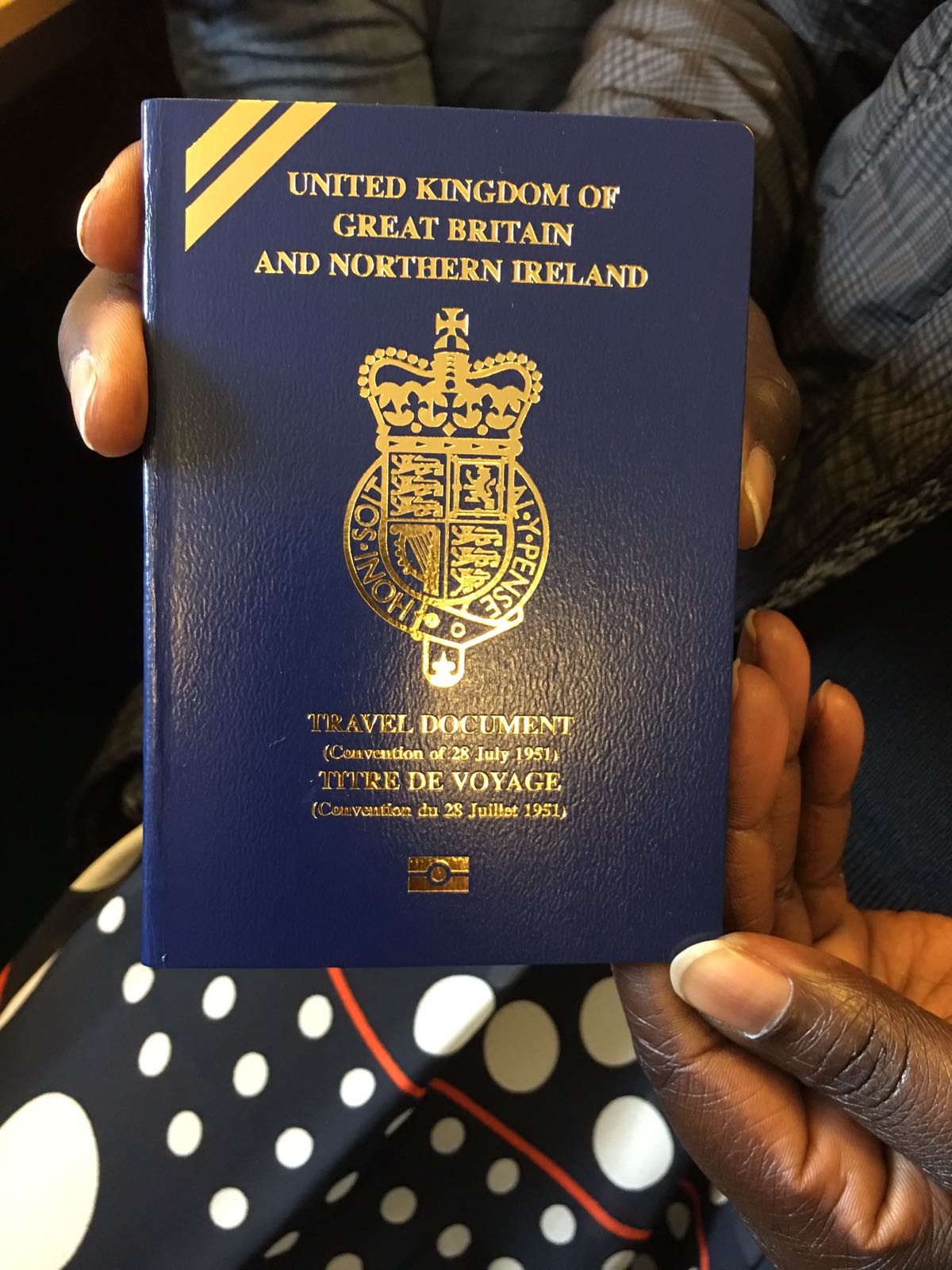
Brits who were lawfully resident in Bulgaria before 23:00 GMT on 31 December 2020 (the end of the transition period), plus their qualifying family members. They keep, for life, almost all the rights they had as EU citizens. The legal anchor is Part Two of the EU-UK Withdrawal Agreement. Bulgaria implements this through a declaratory scheme.
Brits who moved to Bulgaria from 1 January 2021 onwards. These are ordinary third-country nationals. They are governed by the Foreigners in the Republic of Bulgaria Act (Закон за чужденците в Република България, ЗЧРБ). They need a D-visa plus a residence permit to stay beyond 90 days in any 180-day period.
The rest of this guide treats the two groups separately wherever the rules diverge. If you fall in the WAB camp, Sections 2-6 are the heart of the guide for you. If you arrived after 2020, Section 7 is where to start. Sections 8-12 cover topics relevant to both groups.
The card is the document that proves you are a Withdrawal Agreement beneficiary. Bulgaria's scheme is technically declaratory (your rights exist by operation of law), but in practice the card has become the only thing that stops banks, hospitals, the EES border system and airline check-in desks from treating you as a third-country tourist.
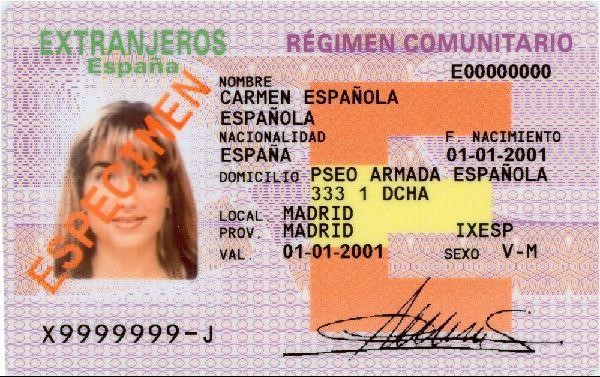
A biometric plastic card in the EU-standard format set by Council Regulation (EC) No 1030/2002 of 13 June 2002. It carries the words "Art. 50 TEU" (Article 50 of the Treaty on European Union), which is what makes it a Withdrawal Agreement document rather than an ordinary EU residence card. The formal field on the card reads "Art. 50 TEU" with a note "Art. 18(4) of the Agreement". "Type X" is colloquial shorthand from the alphabetic prefix in the document number, not a formal status label, but it is widely used in Bulgarian government IT systems and in expat conversation.
Issuing authority: Migration Directorate of the Ministry of Interior (Дирекция "Миграция", migration.mvr.bg).
Bulgaria operates under Article 18(4) of the Withdrawal Agreement, the declaratory option. Your right to reside is automatic by operation of law. The card itself is evidence, not the source, of your status. (The UK's EU Settlement Scheme is the opposite, "constitutive": there, status only exists if granted.)
Why does this matter? Because the European Commission has confirmed that UK nationals "are not obliged to obtain a residence permit to enjoy their rights, though in practice they have to obtain these new residence permits". The legal protection survives without the card. The administrative experience does not. So the practical advice is simple: get the card.
Biometric data (photograph and fingerprints) is captured in person at the Migration Directorate.
Under Article 15 of the Withdrawal Agreement, after five years of continuous lawful residence in Bulgaria a WA-protected Brit acquires the right of permanent residence. The card is then re-issued with a 10-year validity and the words "Permanent residence" / "Право на постоянно пребиваване" in the entitlement field. Permanent residence is lifetime, though it can be lost by absence from Bulgaria for a continuous period of more than five consecutive years (Article 15(3) WA).
Below the five-year mark, absences of up to six months a year are tolerated, plus one absence of up to twelve months for "an important reason" (childbirth, serious illness, study, work posting).
The original Bulgarian deadline to apply for the new card was 31 December 2021. That date has long passed, but the route is not closed. The Withdrawal Agreement legally obliges Bulgaria to keep accepting applications from people with reasonable grounds for missing the deadline, and there is no further outer cut-off date.
Article 18(1), second sub-paragraph of the Withdrawal Agreement requires Bulgaria to accept late applications "where there are reasonable grounds" for missing the deadline. Article 18(3) then requires the applicant to be treated as if they had applied in time, with no penalty for the gap.
The European Commission's Guidance on Late Applications (Brussels, October 2020) gives a non-exhaustive list:
The "any other compelling reason" wording is deliberately broad. The Commission's intent was to keep the door open. Bulgarian Migration Directorate offices were still processing late applications in 2025 and into 2026.
You can appeal to the administrative court. In parallel, consult the AIRE Centre's UK Nationals Support Fund for free legal advice; they have specialist experience with WA late applications across the EU.
What follows applies only to WA-protected Brits with the new card (or a pending late application accepted under Article 18(3)). The Withdrawal Agreement was a substantial settlement, the rights protected go well beyond residence.
Articles 13-15 of the WA. You can live in Bulgaria for life. Permanent residence after 5 years (Section 2).
Articles 24-26 of the WA. On the same basis as Bulgarian nationals. No work permit needed. You can switch employers, become self-employed, register a sole trader (ET), become a director or shareholder of an OOD/EOOD, all without immigration paperwork.
Article 23 of the WA, read with Article 24 of Directive 2004/38/EC (preserved). Equal treatment with Bulgarian nationals on:
Full equal-treatment access to the Национална здравноосигурителна каса (National Health Insurance Fund) on the same basis as Bulgarian nationals. WA-protected UK state pensioners can transfer their healthcare costs back to the UK via an S1 form under the EU social security coordination rules preserved by the WA (Regulation (EC) 883/2004). Apply for the S1 through the NHS Business Services Authority; once issued, register it in person at the regional NHIF office.
WA-protected pensioners receive the annual triple-lock uprating. This is a major protection that roughly half a million UK pensioners worldwide do NOT have, the "frozen pension" countries are Australia, Canada, New Zealand, much of the Caribbean and parts of Africa. Bulgaria-resident WA Brits are not in that group. The legal source is Articles 30-32 of the WA (social security coordination) read with the UK Pensions Act and the annual State Pension uprating order. If your pension stops uprating, query DWP immediately.
The Withdrawal Agreement does not protect WA-status holders from UK Inheritance Tax. From 6 April 2025 the UK switched from a domicile-based to a residence-based test under the new "long-term UK resident" rules (Finance (No. 2) Act 2024). If you were UK tax-resident for 10 of the previous 20 tax years you remain inside UK IHT on your worldwide assets, including your Bulgarian flat, for a tail period of 3 to 10 years after leaving the UK. WA Type X status does not change this. See our Funerals, Wills and Inheritance guide, Section 4 for the full picture.
Article 27 WA covers recognition of UK professional qualifications obtained before 31 December 2020, where the recognition was already finalised or under way at the cut-off date. Doctors, nurses, lawyers, architects, accountants who had Bulgarian or EU recognition in train at exit retain it. Post-Brexit qualifications fall under the EU-UK Trade and Cooperation Agreement and ordinary Bulgarian recognition rules.
Article 10 WA. A WA-protected Brit's spouse, registered partner, dependants and ascendants who were already family members on 31 December 2020 keep their derivative rights for life, regardless of where they were residing on the cut-off date. Children born or adopted after the cut-off to a WA-protected parent are also covered (with conditions about parental responsibility). See the closed-group rule in Section 10 for the limit on new partners.
No residence-tied geographical restrictions. You can live anywhere in the country, change region, work in one province while resident in another, with no permit changes.
Only the rights tied to ongoing EU membership were lost. The residence-related rights survived. Here are the four headline losses and one piece of unexpectedly good news (the Schengen interaction).
The WA card gives you the right to reside in Bulgaria only. To move to Germany, Spain, France or any other EU/EEA state, you now apply as a third-country national in that country. Some Member States have "WA mover" routes (Ireland and the Netherlands have variants); most do not. This is the biggest single loss, and the one that catches retirees who had assumed they could decant from one EU country to another at will.
Replaced by the UK's GHIC (Global Health Insurance Card), which gives equivalent emergency-care cover during visits to other EU/EEA countries. WA-protected Brits resident in Bulgaria can apply for a GHIC through the NHS at gov.uk/global-health-insurance-card. Use NHIF for healthcare in Bulgaria itself, and GHIC for emergency cover when travelling outside Bulgaria.
Bulgaria joined Schengen for air and sea borders on 31 March 2024 and for land borders on 1 January 2025 (Council Decision (EU) 2024/210). This means WA Brits in Bulgaria can move within the Schengen area without internal border checks. Practical consequences:
This is the area with the most movement in 2026 and the area where stale advice is most damaging. Two new EU border systems came online this year. Both have specific exemptions for WA-protected residents, but those exemptions only work if you carry the card.
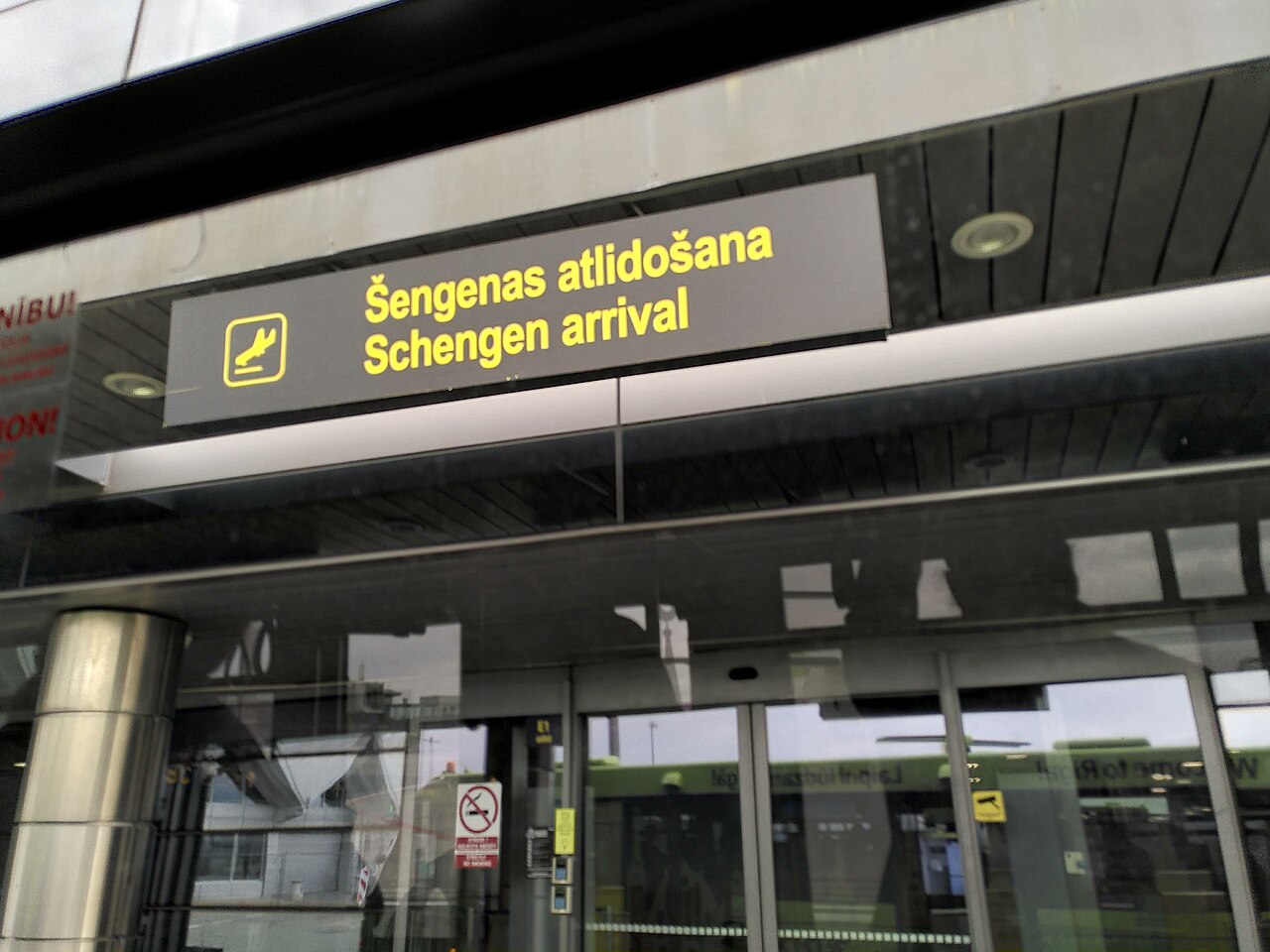
Phased rollout began 12 October 2025. Fully operational since 10 April 2026 (European Commission, 30 March 2026 announcement). All 29 Schengen states now apply EES at all external borders.
EES replaces passport stamping with a digital register of every entry and exit by non-EU nationals, including biometrics (fingerprints + facial image) captured on first entry. Subsequent entries verify the biometrics on file. The 90/180-day clock is calculated automatically.
UK nationals holding the WA Type X card do not have entries and exits recorded in EES because they are not subject to the 90/180 limit. The card must be presented at the border alongside the passport. Without it, an automated gate will treat you as a 90/180 visitor and start the clock.
The UK government's guidance at gov.uk/guidance/eu-entryexit-system (updated April 2026) says exempt travellers must "present documentation" to border guards. The WA card is exactly that documentation.
This is the single most important reason the card has become non-negotiable for WA Brits, even though Bulgaria's scheme is technically declaratory.
ETIAS is not live, and as of August 2026 there is no confirmed launch date. In mid-July 2026 the European Commission removed its own "last quarter of 2026" target from the official ETIAS page, which now states only that the system is not in operation. The EU agency responsible for delivery, eu-LISA, discussed the timeline at its board on 17 June 2026 and is expected to set a revised date after it meets again in September 2026. Widely repeated claims of an April 2027 launch are not official. When it does arrive there will be a transitional period of at least six months, during which travellers meeting every other condition cannot be refused boarding or entry solely for lacking an ETIAS.
ETIAS is an electronic pre-travel authorisation, not a visa. It is required for visa-exempt third-country nationals (which includes UK passport holders post-Brexit) for short visits to the Schengen area.
A British tourist or short-term visitor coming to Bulgaria from 2026 onwards will need: (a) to be EES-registered on entry (biometrics captured at the airport on first entry, then verified on subsequent visits), and (b) once ETIAS is live, an ETIAS authorisation purchased online before travel. The 90/180-day rule applies; the EES will track compliance automatically, so the old "fudge a stamp" workarounds are gone.
Treated as ordinary third-country nationals under the Foreigners in the Republic of Bulgaria Act. The pathway from a holiday-maker to a permanent resident with eventual citizenship is well-trodden, but every step is paperwork. Here are the headline routes.
Stays beyond 90 days require a national long-stay visa, a Type D visa, applied for at a Bulgarian embassy or consulate outside Bulgaria (Bulgaria does not regularise in-country). The D-visa is valid for 6 or 12 months and is the legal gateway to applying for a residence permit on arrival.
After the qualifying immigration period, a post-2020 arrival may become eligible to apply for permanent or long-term residence. Citizenship is a separate nationality proceeding. Under the ordinary Article 12 route, the applicant normally needs to have held permanent or long-term residence permission for at least five years by the application date, then meet the other current conditions:
Use the current, source-dated Bulgarian citizenship guide for route selection, documents, language evidence and British dual-nationality limits.
Both groups need to know the rules; the answer is different for each. Both groups should also know that UK nationals cannot renew a UK licence while resident abroad, so the question is when (not if) you exchange.
There was originally a one-year transition window in which UK licences could be exchanged for Bulgarian without a test. That window has formally closed. In practice the exchange route remains administratively available at regional Traffic Police (КАТ) offices for Brits who hold a WA card and a valid UK licence, on the basis that the UK is a State Party to the 1968 Vienna Convention on Road Traffic and Bulgaria recognises 1968-Convention licences. Expect to surrender the UK licence to the DVLA via Bulgarian Traffic Police.
Some regional КАТ offices have started insisting on a theory test for post-Brexit arrivals; practice is not consistent across provinces in 2026. Confirm with your local КАТ before assuming a no-test exchange. Bring an interpreter for the appointment if your Bulgarian isn't fluent.
Once habitually resident in Bulgaria (i.e. once you hold a Bulgarian residence document), you can drive on a UK licence for up to 12 months from the date of issuance of your residence permit, after which you must hold a Bulgarian licence. UK nationals cannot renew a UK licence while resident abroad. Exchange typically requires:
Short-term visitors driving in Bulgaria do not need an IDP for stays under 90 days; the UK licence alone is accepted under the 1968 Convention. For peace of mind in remote areas and at police stops, an IDP issued under the 1968 Convention (available from UK Post Offices, £5.50) is recommended for any stay over 30 days that does not yet have a residence permit attached.
The single piece of post-Brexit good news for Brits abroad is the abolition of the 15-year overseas-voter limit. Anyone who was previously registered in the UK or previously resident in the UK can now vote in UK general elections without time limit.
The Elections Act 2022 abolished the 15-year overseas-voter limit. The change came into force on 16 January 2024. Any British citizen who was previously registered to vote in the UK, or previously resident in the UK, can now register as an overseas elector without time limit.
Lost on UK departure, no recovery route except naturalising in an EU country.
The Withdrawal Agreement protects a fixed cohort of family members defined as at 31 December 2020. The cohort is closed: new partners married after that date are not WA family members, regardless of how long the WA-protected Brit has been in Bulgaria.
A Brit who marries a non-EU national after 31 December 2020 cannot bring the new spouse to Bulgaria as a WA family member. The new spouse must apply through ordinary Bulgarian family-reunification channels under the Foreigners Act, with a D-visa.
This is the single most painful gap in the WA for couples who met after Brexit. The new spouse is treated as any other third-country national applying to join a Bulgarian resident, with a slower and more documentary-heavy route.
If both parents are WA-protected, the child inherits protection automatically. If only one parent is WA-protected, the child is protected provided that parent has parental responsibility. Children of a single WA-protected parent are covered.
The same Type X card as the WA-protected Brit, applied for at the Migration Directorate. The application needs evidence of the family relationship as at 31 December 2020 (marriage certificate dated before the cut-off, birth certificate, dependency evidence). For pre-existing partners not formally married, registered partnership documentation if available.
The legal entitlements above are settled. The administrative experience of using them often is not. Here are the four most common friction points in 2026.
Some Bulgarian bank branches (and even more so, online onboarding portals) only recognise the older blue/green EU resident certificates. The WA Type X card is legally equivalent for KYC purposes. If a teller refuses, ask politely for an escalation to the branch's compliance officer. Cite the card's reference to "Art. 50 TEU" and Council Regulation 1030/2002. See our Banking guide for which banks have the strongest expat onboarding.
WA cards display a unique ЛНЧ (Личен номер на чужденец), the Personal Foreigner Number. This is what utilities, landlords, the NRA tax authority and the NHIF should be using. It is not an EGN (which is for Bulgarian citizens and permanent residents holding a Bulgarian ID card). Make sure documents recording your details use ЛНЧ throughout, not a hand-written EGN. A wrong number on a tax declaration or NHIF registration can take months to fix.
Rare but documented: a WA Brit travelling on passport alone (card forgotten at home) is processed as an ordinary visitor, told the 90/180 clock has started, or in extreme cases refused entry on a return trip. Solution: card on the body, every trip, every time. After 10 April 2026 this is sharper because EES will flag any passport not paired with a residence document.
Move house and you must notify the Migration Directorate within 30 days; the card is reprinted with the new address. Living at a different address from the one on the card without updating can trigger administrative fines. Same applies to a name change after marriage.
Practical details for British expats in northeastern Bulgaria, plus the consular and free-legal-advice routes available nationally.
The British Embassy in Sofia is at ул. "Московска" 9, Sofia. The Embassy will not lobby Migration Directorate on your behalf but can:
The AIRE Centre's UK Nationals Support Fund offers free, independent legal advice on Withdrawal Agreement rights to UK nationals across the EU. They can advise on late applications, refusals, family reunification, and appeals. The service is funded by the FCDO and confidential.
The questions readers ask most about post-Brexit life in Bulgaria, with short, sourced answers.
Yes, provided you were lawfully resident in Bulgaria on that date as an EU citizen exercising free-movement rights (worker, self-employed, pensioner with comprehensive sickness insurance, student, and so on). Bulgaria operates a declaratory system under Article 18(4) of the Withdrawal Agreement, so your right to reside is automatic. In practice you must hold the new biometric residence card marked "Art. 50 TEU", because banks, hospitals, the EES and the Migration Directorate itself will treat you as a third-country national without it.
No. Article 18(1) second sub-paragraph of the Withdrawal Agreement requires Bulgaria to accept late applications where there are "reasonable grounds" for missing the deadline, with no further outer cut-off date. The European Commission's October 2020 guidance lists serious medical conditions, parental responsibility, low literacy, abusive situations and "any other compelling reason" as reasonable grounds. Bulgarian Migration Directorate offices were still processing late applications in 2025 and 2026. Apply with a written explanation of why you missed the original deadline.
Indefinite right to reside in Bulgaria; right to work and self-employed activity without permits; equal treatment with Bulgarian nationals on social security, healthcare, taxation and education; full NHIF healthcare access; S1 form for UK state pensioners (UK pays Bulgarian healthcare); UK State Pension annual uprating preserved for life; recognition of UK qualifications obtained before 31 December 2020; family reunification rights for spouse and dependants who held that family relationship on the cut-off date. Permanent residence after 5 years.
Free movement to live or work in other EU/EEA countries (the WA card gives you the right to reside in Bulgaria only). Voting in EU Parliament elections (lost on UK departure 31 January 2020). Voting in Bulgarian municipal elections. EHIC (replaced by the UK GHIC for travel). The 90/180-day Schengen visitor rule applies to your visits to other EU states, but Bulgaria's full Schengen membership from 1 January 2025 means no internal border checks within Schengen.
The EU Entry/Exit System (EES) became fully operational at all Schengen external borders on 10 April 2026. It replaces passport stamping with biometric registration of every entry and exit by non-EU nationals. WA-protected Brits in Bulgaria are EXEMPT from EES because the 90/180-day rule does not apply to you, but only if you carry the Type X residence card. Without the card at the border, the automated gate will treat you as a 90/180 visitor and start the clock. Card on the body, every trip, every time.
No, not as a WA-protected resident. ETIAS is not yet live. The EU removed its own launch target in July 2026, so no date is currently confirmed, and there will be a transition period of at least six months once it does start. It will cost 20 euros, last 3 years, and is required for visa-exempt third-country nationals visiting Schengen for tourism. UK passport holders need it for tourist visits to the EU. Holders of an EU residence permit (which the WA Type X card is) are exempt. Carry the card with the passport when travelling and you will not need ETIAS.
Yes if you are WA-protected. Articles 30-32 of the Withdrawal Agreement preserved EU social security coordination (Regulation 883/2004) for the WA cohort. UK pensioners resident in Bulgaria under WA protection receive the annual triple-lock uprating just as they would in the UK, for life. This is a major protection roughly half a million UK pensioners worldwide do NOT have (Australia, Canada, NZ pensioners have frozen pensions). If you arrived after 31 December 2020 you also get uprating under the EU-UK Trade and Cooperation Agreement social security protocol, but always verify with DWP.
You are an ordinary third-country national. Up to 90 days in 180 as a visa-exempt visitor (ETIAS will be required once it launches, but the EU has not confirmed a date). For longer stays you need a national long-stay visa (Type D) applied for at a Bulgarian embassy outside Bulgaria, then a residence permit on arrival. Common D-visa routes include pension, trade representative, employment and family grounds. A later citizenship application is separate: ordinary naturalisation normally requires five years holding permanent or long-term residence, Bulgarian language evidence and the other current route conditions.
Visitors yes; residents up to 12 months from the date of issue of your Bulgarian residence document. Beyond that you need a Bulgarian licence. WA-protected Brits with a valid UK licence can administratively exchange at their regional Traffic Police (КАТ) office on the basis that the UK is a State Party to the 1968 Vienna Convention. Practice varies between provinces in 2026; some now insist on a theory test. UK nationals cannot renew a UK licence while resident abroad. Confirm with your local КАТ before assuming a no-test exchange.
Yes, without time limit. The Elections Act 2022 abolished the 15-year overseas voter limit on 16 January 2024. Any British citizen previously registered to vote in the UK, or previously resident in the UK, can register as an overseas elector. Register at gov.uk/register-to-vote and declare your last UK address. Renew the registration every 3 years. You cannot vote in EU Parliament or Bulgarian elections (those rights were lost with the UK's EU departure).
No, this is the "closed group" rule. The Withdrawal Agreement protects family members who held that family relationship as at 31 December 2020. Spouses or partners who married a WA-protected Brit AFTER the cut-off date are not WA family members. They must apply through ordinary Bulgarian family-reunification channels under the Foreigners in the Republic of Bulgaria Act, with a D-visa. Children born after the cut-off to a WA-protected parent ARE protected; the rule is specifically about new partners.
Visit the Migration Directorate Shumen Sector at Saedinenie 21, Shumen city. Bring: valid British passport, proof of lawful residence in Bulgaria before 31 December 2020 (old EU certificate, rental contracts, employment records, NHIF contributions, school records, anything dated), current employment contract or proof of self-employment / pension / sufficient means, proof of comprehensive sickness insurance (NHIF coverage usually qualifies), two photos taken on-site, the state fee. Biometric data is captured in person. For a late application, prepare a written explanation of reasonable grounds in Bulgarian, supported by documentary evidence.
Apply for an S1 form through the NHS Business Services Authority (gov.uk/guidance/healthcare-in-bulgaria). Once issued, register the S1 in person at your regional NHIF (Национална здравноосигурителна каса) office. The UK then pays Bulgaria for your healthcare and you receive NHIF coverage on the same basis as a Bulgarian pensioner. You also get a UK GHIC for emergency cover when travelling outside Bulgaria. This route is preserved for WA-protected pensioners specifically; post-2020 arrivals must contribute to NHIF themselves.
Two laws, two cohorts, one country. WA-protected Brits in Bulgaria have the closest thing to lifetime EU citizenship that's still on offer to British nationals. Post-2020 arrivals have a workable but document-heavy path through ordinary third-country immigration. Both groups now share two new realities: EES tracking at the Schengen border, and ETIAS authorisation for visitors once the EU finally sets a launch date.
Three things to do this month, regardless of which cohort you're in:
Related guides: Residency · Shipping from the UK · Marriage in Bulgaria · Banking · Taxes · Health · Driving · Cost of living · All guides.