
Three things every British expat in Bulgaria should know but most don't. First, Bulgarian funerals usually happen the day after death, never later than the third day, half a world away from the UK norm of one to three weeks. Second, Bulgarian default succession law contains forced heirship that overrides what your will says, but a single clause under EU Regulation 650/2012 sidesteps it. Third, since April 2025 the UK has scrapped the old domicile rules and replaced them with a residence-based long-term-resident test that catches Brits abroad far more aggressively than most realise. This guide is the practical operating manual for getting your affairs in order, and for getting through the first 72 hours if the worst has already happened.
A British expat with a Bulgarian flat, a UK pension and a savings account in each country has at least two legal systems, two tax authorities and two probate processes interacting on death. Get the planning right and the family pays one set of fees, files one set of papers, and gets through it in months. Get it wrong and the estate is in litigation for years, with reserved heirs in Bulgaria fighting executors in England.
The bridge between these two systems is Regulation (EU) No 650/2012, in force across the EU since 17 August 2015. Bulgaria is bound by it; the United Kingdom is not (the UK opted out). The asymmetry is the trick: a Bulgarian notary or court ruling on a British expat's succession will apply the Regulation, including its choice-of-law mechanism, regardless of whether the testator's nationality is from a participating member state.
This is what lets a British testator habitually resident in Bulgaria use Article 22 of the Regulation to elect English, Scottish or Northern Irish law for their estate, sidestepping Bulgarian forced heirship even on a Bulgarian flat. Sections 2 and 3 explain how.
This is not legal advice. The figures, statutory references and practical tips here are an overview drawn from primary sources current to 6 May 2026. Every estate is specific. Before a will is signed or a tax declaration filed, instruct a qualified practitioner: a Bulgarian notary or lawyer for the BG side, a UK solicitor or STEP-qualified estate planner for the UK side. The guide is designed to make you a better-informed client, not to replace one.
If you only read one section of this guide, read this one. Bulgarian default law guarantees certain heirs a fixed minimum share of your estate, regardless of what your will says. The good news: a single express clause in your will sidesteps it.
Under Articles 28-29 of the Act on Inheritance, certain "reserved heirs" have a guaranteed minimum slice of the estate that the testator cannot give away. The remainder, the "disposable share", is what you can leave by will to whoever you wish.
| Heirs left | Reserved share (locked) | Disposable share |
|---|---|---|
| 1 child (no spouse) | 1/2 | 1/2 |
| 2 children (no spouse) | 2/3 | 1/3 |
| 3+ children (no spouse) | 2/3 (some sources cite 3/4; verify with specialist) | 1/3 (or 1/4) |
| Spouse only (no children, no parents) | 1/2 | 1/2 |
| Spouse + parents (no children) | spouse 1/3, parents 1/3 | 1/3 |
| Parents only (no spouse, no children) | 1/3 | 2/3 |
| Spouse + 1 child | spouse 1/3, child 1/3 | 1/3 |
| Spouse + 2+ children | combined 2/3 to 3/4 | 1/4 to 1/3 |
Reserved share is calculated on the augmented estate (value at death plus substantial lifetime gifts). A disinherited reserved heir can claw back gifts and legacies via court action under Article 30 ZN, with a 5-year limitation. Spouse+children combinations can be disputed in practitioner literature; verify with a Bulgarian succession-law specialist before relying on a specific figure.
The surviving spouse always takes a share alongside whichever order applies (Article 9 ZN), except in the residual case. With descendants, the spouse gets a share equal to a child. With parents or siblings only, the spouse gets one half of the estate (rising to two-thirds if the marriage lasted more than ten years). With no other heirs in any class, the spouse takes the whole estate.
Regulation (EU) No 650/2012 lets a person elect the law of their nationality (or one of their nationalities, if they have more) to govern the entire succession. For a British testator habitually resident in Bulgaria, this means the law of England & Wales, Scotland or Northern Ireland can be elected to displace Bulgarian default law and its reserved-share rules.
"I, [name], a national of the United Kingdom, declare in accordance with Article 22 of Regulation (EU) No 650/2012 of the European Parliament and of the Council of 4 July 2012 that the law of England and Wales [or Scotland / Northern Ireland, as applicable], being the law of the country of my nationality, shall govern the succession to my estate as a whole."
The clause must be express. The Regulation accepts the election if "made in a declaration in the form of a disposition of property upon death or shall be demonstrated by the terms of such a disposition" (Article 22(2)). Best practice is to put it near the front of the will, repeat it in any side document that might be construed as testamentary, and have a Bulgarian notary or lawyer review it for local recognition.
A Brit with a Bulgarian widow and two adult children from a first UK marriage owns a Sofia flat. He wants the flat to go to his Bulgarian widow on death, not split among the four reserved heirs. Without an Article 22 election: Bulgarian default law applies, the children take 1/3 reserved between them, and the widow takes 1/3 reserved as spouse, leaving 1/3 freely disposable. The widow ends up with 1/3 + 1/3 disposable willed to her = 2/3, the children take 1/3. With an Article 22 election to English law: testamentary freedom applies, the will leaves the flat to the widow outright, the children inherit nothing of the Bulgarian flat. The children may bring a 1975 Act claim in England; that is a separate, much narrower test.
This single clause is, in money terms, the highest-value sentence most British expats will ever sign in Bulgaria.
Bulgarian law recognises two types of will. Either type is valid and either can carry the Article 22 clause. The right choice depends on the size of the estate and how easy the will needs to be to find.
Article 25 ZN. Three formal requirements:
No witnesses required. Capacity: testator must be at least 18 years old and not under full interdiction.
Free to make. Risks: it can be lost, hidden by a hostile relative, or successfully challenged on the basis the handwriting is not the deceased's. Mitigation: deposit the sealed holographic will with a Bulgarian notary, who notes its existence in the Central Register of Wills. On death, any notary in Bulgaria can search the register and locate it.
Article 24 ZN. Made before a notary in the presence of two witnesses. The witnesses must not be heirs, beneficiaries, or relatives by blood or marriage of beneficiaries up to a certain degree. The testator dictates their wishes orally to the notary, who writes them down. The will is then read back to the testator in the presence of both witnesses, who all sign together with the notary.
Automatically registered in the Central Register of Wills maintained by the Bulgarian Notarial Chamber (notary.bg). On death, any Bulgarian notary can query the register to find out whether a will exists and where it is held.
Notary fees in 2026 are set under the Tariff for Notarial Fees attached to the Notaries Act and depend on the certified material value of the will. Practitioners typically quote a total of €150 to €400 for a routine will including translation, witness fees, registration and the interpreter who will usually be required if the testator does not speak Bulgarian. Always ask the notary for a fixed quote in writing. The Tariff has been amended several times since the euro changeover and figures move.
For a British expat with assets in both jurisdictions, the cleanest approach is two parallel wills:
Each will must contain a clause that expressly does not revoke the other, naming it. Without that clause, the standard "I revoke all former wills" boilerplate in the later document will silently kill the earlier one. This is the single most common cross-border will-drafting error and almost always traceable to a UK solicitor unfamiliar with Bulgarian assets, or a Bulgarian notary unfamiliar with the UK will.
Both the UK and Bulgaria are parties. A will is formally valid if it complies with the law of the place of execution, the testator's nationality (at execution or death), domicile, habitual residence, or for immovable property the place where it is situated. Practical consequence: a UK Wills-Act-1837 will is formally valid in Bulgaria, and a Bulgarian notarial will is formally valid in the UK. The notary is not an obstacle to the solicitor's will, and vice versa.
A UK will introduced into a Bulgarian process needs:
For most British expats in Bulgaria, UK Inheritance Tax is a far bigger exposure than Bulgarian inheritance tax, because Bulgarian rates are zero for spouses and children but UK IHT charges 40 percent above the threshold. The trap is that since April 2025 the UK rules changed dramatically, and most expats haven't caught up.
The deeper guide: the post-April-2025 long-term resident UK IHT rules sit alongside the wider Brexit residency picture. For the full WA framework on residency, pension uprating and the UK-Bulgaria interaction, see our dedicated Brexit & Withdrawal Agreement Rights guide.
From 6 April 2025, the UK switched from a domicile-based to a residence-based test for whether non-UK assets fall within UK IHT (Finance (No. 2) Act 2024). The "deemed domicile" rule is gone. The replacement is the "long-term UK resident" test.
You are a long-term UK resident if you were UK tax-resident for at least 10 of the previous 20 tax years. A long-term resident is liable for UK IHT on worldwide assets, including the Bulgarian flat, the Bulgarian bank balance, and the Bulgarian shares.
After leaving the UK, you remain inside the long-term-resident category for a tail period of 3 to 10 years depending on length of UK residence. So a Brit who has lived in Bulgaria for 8 years after a long UK life is still inside the UK IHT net on worldwide assets. A Brit who has lived in Bulgaria for 15+ years has likely escaped, but is still inside UK IHT on UK-situated assets.
Source: gov.uk Inheritance Tax if you are a long-term UK resident.
Source: HMRC and gov.uk/inheritance-tax; House of Commons Library Briefing SN00573.
The 2015 UK-Bulgaria Double Taxation Convention, signed 26 March 2015, does not cover inheritance tax. The UK has IHT-specific treaties only with France, India, Italy, Pakistan, the Netherlands, Ireland, South Africa, Sweden, Switzerland and the United States. Not Bulgaria.
Where the same asset is subject to both UK IHT and Bulgarian inheritance tax (rare given Bulgarian spouse / lineal exemption), unilateral relief under section 159 Inheritance Tax Act 1984 is available to credit Bulgarian tax paid against UK IHT on the same asset. References: HMRC DT4100; gov.uk IHT double-taxation relief.
If you have moved from the UK to Bulgaria in the last decade, assume UK IHT applies to your worldwide estate until proved otherwise. Get a UK solicitor or STEP-qualified planner to assess whether you have escaped the long-term-resident category, and if not, when you will. Use of nil-rate-band and residence-nil-rate-band is preserved on death; planning to maximise both is the standard estate-planning lever.
The good news. For most British family bequests, Bulgarian inheritance tax is zero. The headline rates only bite when the heir is more distant than a child, grandchild or sibling.
Under the Local Taxes and Fees Act, the surviving spouse and lineal descendants and ascendants (children, grandchildren, parents, grandparents) are fully exempt from inheritance tax. There is no rate and no threshold for these heirs. They pay zero, regardless of estate size.
For everyone else, tax is charged on the portion of each heir's share that exceeds a per-inheriting-heir threshold (per heir, not per estate) of approximately €127,800 (the €127,823 figure on the books at end-2025):
The threshold applies per heir, not per estate. Two non-exempt heirs each receiving the equivalent of €100,000 each pay nothing. One non-exempt heir receiving €200,000 pays the relevant rate on roughly €72,200.
The €127,823 threshold was the figure in the Local Taxes and Fees Act at end-2025. The euro changeover from 1 January 2026 was at the official conversion rate. Most municipalities have re-stated their tariffs in euros at the converted figure (€127,823) but a small number of council tariff resolutions still reference the old lev figure. Always check the current municipal council tariff of the municipality where the deceased had their permanent address before relying on a specific figure.
The taxable estate includes movable and immovable property, bank balances and securities, business interests and certain rights. Lifetime gifts made within a defined window before death may be aggregated. Debts of the deceased and reasonable funeral expenses are deductible.
If you are reading this section because someone has just died, accept condolences. The decisions are time-pressured because Bulgarian funerals happen quickly, and the paperwork starts immediately. Here is the sequence.
Bulgarian Orthodox tradition places the funeral on the third day after death, and Bulgarian law requires burial no sooner than 24 hours after death and typically within 48 to 72 hours. UK relatives flying in must therefore travel within 24 to 48 hours of being notified, often on hand luggage only.
If a longer interval is needed (UK family cannot get there in time, repatriation paperwork is incomplete), the body must be refrigerated at the funeral director's premises or the hospital morgue. This is possible but unusual and adds cost.
Bulgaria does not have an English-style "grant of probate" administered by a court. The practical equivalent is the certificate of heirs, issued by the municipality where the deceased had their last permanent address. It is the foundational document for everything else.
Bulgarian banks freeze accounts on receipt of notice of death. Release requires the death certificate, the certificate of heirs, the heirs' IDs and (sometimes) a notarised power of attorney to a single representative heir. Smaller banks and branches may take 4 to 8 weeks; cross-border releases longer. See our Banking guide for the closing-account-from-the-UK process.
Title transfer is registered at the Property Register (Имотен регистър) at the regional Registry Agency. Required: certificate of heirs, original death certificate, the deceased's title deed (нотариален акт), an inheritance tax declaration, and where a will exists, the will plus any required notarial declarations. Most expat estates instruct a Bulgarian notary or lawyer to handle this.
An heir does not become an heir automatically at death. They acquire the inheritance by acceptance, which can be express (written declaration to the district court) or tacit (any act demonstrating intent to accept, e.g. selling an inherited asset).
For estates with assets in another EU member state (not the UK), the European Certificate of Succession is issued by the district court at the deceased's last permanent address in Bulgaria, or Sofia District Court if no Bulgarian address. It is invaluable for cross-border estates within the EU. The ECS is not recognised in the UK because the UK is not bound by Regulation 650/2012; for UK assets, an English/Scottish/NI grant of representation is still needed.
The single biggest culture shock for a British family dealing with a death in Bulgaria is the speed. The UK norm is a funeral 1 to 3 weeks after death; the Bulgarian norm is the day after, and almost never later than the third day.
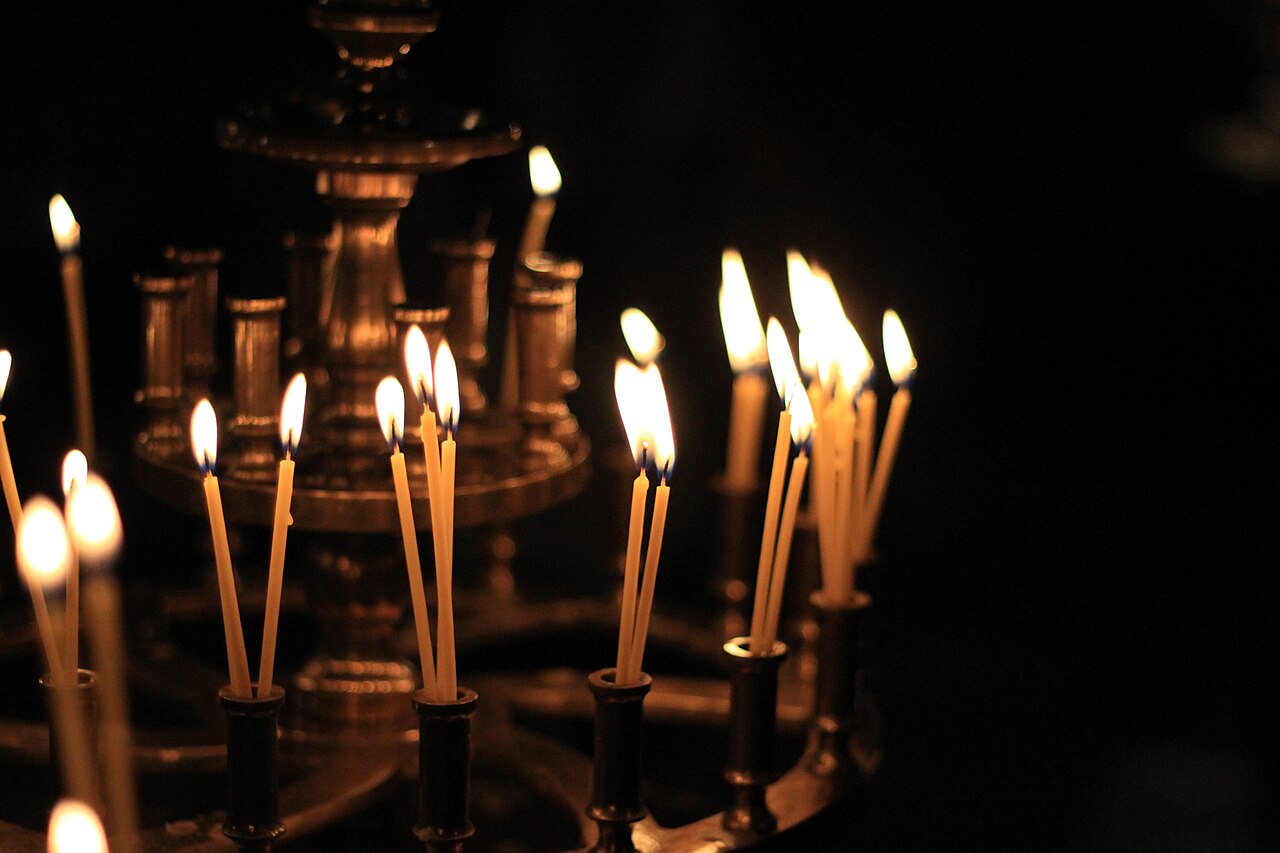
Bulgaria is overwhelmingly Orthodox Christian, with a substantial Muslim minority (about 8 to 10% of the population) and smaller Catholic, Protestant and Jewish communities. Orthodox tradition places the funeral on the third day after death, mirroring the three days between the Crucifixion and the Resurrection in Orthodox theology. Muslim tradition is even faster, ideally within 24 hours.
Bulgarian law requires burial no sooner than 24 hours after death and typically within 48 to 72 hours. A longer interval is possible but requires refrigeration at the funeral director's premises or the hospital morgue, and even then is unusual. British relatives travelling from the UK typically have hours, not weeks, to plan the trip.
Expect to travel within 24 to 48 hours of being notified. Same-day flights from London to Sofia run at about £200 to £500 in cabin economy at last-minute booking. Hand luggage only is the norm. The British Embassy can issue an emergency travel document (about £100, same-day at Sofia) for relatives whose passports are out of date or expired. Bulgarian dress for funerals is dark, formal but not full mourning; a black or dark suit and tie is the standard for men, dark dress and headscarf for women in church.
If the timeline is genuinely impossible, ask the funeral director about a delayed funeral. It is rare and goes against tradition but is permitted. Be prepared to pay for refrigeration and to explain to elderly Bulgarian relatives why the third-day tradition is being broken.
Observed at 9 days, 40 days, 6 months, 1 year, 3 years, 5 years. The 40-day memorial is the most observed, marking the soul's final departure in Orthodox belief. Family and close friends gather, often at the grave, with the same traditional foods and the same words.
British expats marrying into Bulgarian families are usually expected to observe at least the 9-day and 40-day memorials. Not attending will be noted.
A printed death notice posted around the deceased's neighbourhood, on lampposts and shop walls, on the day of death and on each memorial date. Black and white photograph, name, dates of birth and death, a short message from the family. Helpful family members will produce these unprompted; British family unfamiliar with the custom will sometimes find them distressing but they are part of how Bulgarian neighbourhoods grieve in public.
Cremation is legal in Bulgaria and increasingly chosen, though it remains a minority option in a country where Orthodox burial is the cultural default. For British expats it is often the practical answer, especially where repatriation is the alternative.
The Bulgarian Orthodox Church does not formally approve cremation but generally tolerates it; a priest's blessing is usually given. Older Bulgarian relatives may object on religious grounds; younger generations and Sofia residents are largely indifferent. The Catholic Church accepts cremation as does the Bulgarian Protestant community. Muslim tradition prohibits cremation entirely.
Statistical share is hard to pin down precisely, but cremation has grown from a single-figure percentage of Bulgarian funerals in the 2000s to roughly one in five in Sofia by mid-2020s, and lower elsewhere.
Cremation is dramatically cheaper than burial, often roughly a quarter of the cost. Indicative 2026 figures:
| Option | Approximate cost (2026) |
|---|---|
| Basic Bulgarian funeral with burial (plot, coffin, transport, ceremony, wake meal) | €1,500 to €3,500 |
| Cremation (process only) | €400 to €800 |
| Cremation transport from rural town to nearest crematorium | €200 to €500 additional |
| Urn niche in a columbarium (Sofia public cemetery) | €100 to €400 one-off, with an annual maintenance fee |
| Memorial service at the crematorium chapel | €100 to €300 |
Reconfirm with the funeral director and the crematorium directly; tariffs are revised periodically.
A meaningful minority of British deaths in Bulgaria result in repatriation, where the family wants the burial or cremation to happen at home. It is significantly more expensive and slower than a Bulgarian funeral but is well-established and routine.
Practitioner-quoted ranges in 2026, from UK-based international funeral directors and Sofia operators:
The British Embassy Sofia does not pay for repatriation. It can issue or facilitate emergency travel documents for relatives, liaise with hospitals and authorities, and provide the lists of approved international funeral directors at gov.uk international funeral directors list.
Allow 7 to 14 days from death to UK arrival in normal circumstances; longer if a UK-side post-mortem is required, or if the death occurred over a Bulgarian holiday weekend. The UK funeral itself can then be scheduled at the British family's pace, typically 2 to 4 weeks after arrival.
The recurring failures observed by cross-border practitioners. Each one is avoidable with planning. Each one has cost real Bulgarian-British families real money and years of litigation.
Bulgarian default law applies to the worldwide estate. The UK children's reserved share (1/3 to 3/4 of the estate depending on number) bites against the Bulgarian widow. Could have been avoided by a Brussels IV Article 22 election to UK law in a Bulgarian or UK will.
A UK will saying "I revoke all former wills" silently kills a previously-deposited Bulgarian holographic will. Always include a non-revocation clause naming the other will.
The company shares pass under the law applicable to the testator's nationality. But the underlying flat is still on the Bulgarian Property Register, and the company's directorship and ownership change must be registered in the Bulgarian Commercial Register. Two separate processes; allow 6 to 12 months.
British heirs sometimes "decline" a Bulgarian inheritance verbally and assume that's enough. Refusal is only effective when entered in the special book at the relevant Bulgarian district court (Article 52 ZN). A verbal "no" leaves the heir liable for inherited debts.
Travel-insurance repatriation cover lapses after 90 or 180 days outside the UK. Long-stay residents who never bought a Bulgarian or expat policy discover this only after death.
A Brit who spent 18 years in Bulgaria assumed they were "no longer UK-domiciled". Post-April 2025, the relevant test is now residence-based. The deemed-domicile rule is gone. The "long-term resident" rule replaces it (Section 4). Most expats have not updated their planning.
A Brit dies leaving a Bulgarian widow and adult children from a first UK marriage. He never made a Bulgarian will. The widow is a reserved heir for 1/3 (or more if the marriage lasted over 10 years and only siblings are the other heir class). The UK children claim a reserved share. The Bulgarian flat ends up in joint ownership between the widow and three British step-children who have no relationship with her. The flat can be partitioned, sold and the proceeds split, but it is messy and expensive. A two-wills structure with an Article 22 election would have prevented it.
Not legally binding, but enormously useful and the single thing executors most often wish had been left behind. A simple letter of wishes, sometimes called an "in case of death" file, makes the difference between a clean executor's job and a six-month treasure hunt through filing cabinets.
The file should not contradict the will. It is a navigational aid, not a testamentary document. Keep one copy with your Bulgarian notary or lawyer, one copy at home, and tell at least one trusted family member where to find it.
Update it whenever a major asset changes: a new house, a closed bank account, a new pension provider, a divorce, a remarriage. A 10-year-old ICE file with the wrong addresses and the dead first wife is worse than no file at all.
Estate planning across two jurisdictions is one of the few areas where good professional advice almost always pays for itself many times over. Here is the network British expats in Bulgaria typically use.
Instruct one English-speaking Bulgarian notary or lawyer for the Bulgarian side and one UK solicitor with cross-border experience for the UK side. Brief each on the other's involvement so the wills do not contradict.
Combined cost for a clean two-wills package with an Article 22 election in 2026: typically £800 to £2,500. For the typical British retiree with a Bulgarian flat, a UK pension and modest savings, this is the single best estate-planning expenditure available.
The questions readers ask most about death, wills and inheritance for British expats in Bulgaria, with short, sourced answers.
Very quickly compared with the UK. Bulgarian Orthodox tradition places the funeral on the third day after death, and Bulgarian law requires burial no sooner than 24 hours after death and typically within 48 to 72 hours. UK funerals usually happen 1 to 3 weeks after death; Bulgarian funerals usually happen the day after, never later than the third day. British relatives flying out from the UK should expect to travel within 24 to 48 hours of being notified, often on hand luggage only. A longer interval is possible but requires refrigeration and is unusual.
Yes. Cremation is legal and increasingly chosen, especially in Sofia, Plovdiv and Varna where crematoria operate. The Bulgarian Orthodox Church does not formally approve cremation but generally tolerates it; a priest's blessing is usually given. Cost is dramatically lower than burial: roughly 400 to 800 euros versus 1,500 to 3,500 euros for a basic Bulgarian funeral. The catch: most smaller towns and almost all of rural Bulgaria do not have a crematorium, so the body must be transported to the nearest city, adding 200 to 500 euros and a half-day of logistics.
Yes, by making an express choice-of-law election under Article 22 of EU Regulation 650/2012 (Brussels IV). The election names the law of the testator's nationality (England and Wales, Scotland, or Northern Ireland) as the law governing the entire succession, displacing Bulgarian default law and its reserved-share rules. The clause must be express and is best placed in the testator's will. Without the election, a British testator habitually resident in Bulgaria has Bulgarian succession law applied to the entire worldwide estate, including the reserved-share rules that protect children, spouse and parents.
A guaranteed minimum share of the estate that certain heirs (spouse, descendants, parents in some cases) are entitled to regardless of what the will says. The fractions vary by combination: 1 child takes 1/2, 2 children take 2/3, 3 or more take 2/3 of the estate (some sources cite 3/4; the EU e-Justice portal cites 2/3 for 2+ descendants); spouse alone takes 1/2; parents alone take 1/3. Spouse plus 1 child each take 1/3 (so 2/3 of the estate is locked, 1/3 is freely disposable). Calculation is based on the value of the estate at death plus substantial lifetime gifts. A disinherited reserved heir can claw back gifts and legacies via court action under Article 30 of the Act on Inheritance, with a 5-year limitation.
For most British expats with assets in both countries, two wills is the cleanest answer: a UK will dealing with UK assets (property, bank accounts, pensions, life insurance) under Wills Act 1837 formalities, and a Bulgarian will dealing with Bulgarian assets (property, bank accounts) as a holographic or notarial will, with the Brussels IV Article 22 choice-of-law clause. Each will must contain a clause that does not revoke the other, naming it explicitly. Without that clause, "I revoke all former wills" silently kills the earlier document.
For most family bequests, no. Surviving spouses and lineal descendants and ascendants (children, grandchildren, parents, grandparents) are fully exempt with no rate and no threshold. Siblings and their children pay 0.4 to 0.8 percent above a per-inheriting-heir threshold (per heir, not per estate) of approximately 127,800 euros (the €127,823 figure converted at the fixed euro rate). All other heirs (cousins, friends, unmarried partners) pay 3.3 to 6.6 percent above the same threshold. Rates are set by each municipality. Always check the current municipal council tariff before relying on a specific figure.
Probably yes, depending on how long you have lived outside the UK. From 6 April 2025 the UK shifted from a domicile-based to a residence-based test for IHT scope. You are a "long-term UK resident" if you were UK tax-resident for at least 10 of the previous 20 tax years. A long-term resident is liable for UK IHT on worldwide assets. After leaving the UK, you remain inside the long-term-resident category for a tail period of 3 to 10 years depending on length of UK residence. So a Brit who has lived in Bulgaria for 8 years after a long UK life is still inside the UK IHT net for worldwide assets; a Brit who has been in Bulgaria for 15+ years has likely escaped, but is still inside UK IHT on UK-situated assets.
Roughly 3,500 to 8,000 pounds in 2026, all-in for a flight from Sofia to a UK arrival airport, zinc-lined coffin, embalming, paperwork and ground transport at both ends. The lower end assumes standard timing and a non-religious shipping coffin; the upper end reflects bespoke caskets, expedited timing or rural collection. Standard UK travel insurance typically caps repatriation at 5,000 to 10,000 pounds and applies only on short trips. Long-stay expat policies (Bupa Global, Cigna, Allianz Worldwide Care) have higher caps. Without insurance, the next of kin pay out of pocket, recoverable from the estate on probate.
If death is at home, call 112 so a doctor or paramedic can attend; a hospital handles its own certification. Register the death with the municipal civil-registration office where it occurred and obtain Bulgarian death certificates. Contact the FCDO Consular Contact Centre on +44 20 7008 5000 for consular help and appoint a funeral director promptly. Registration of the overseas death with UK authorities is a separate optional process, not a replacement for the Bulgarian certificate. Ask each UK institution what original, Apostille and translation it requires before sending documents.
Удостоверение за наследници, the certificate of heirs, is issued by the municipality where the deceased had their last permanent address. It lists all legal heirs identified from the civil register and is the foundational document for everything else: bank releases, property transfers, vehicle re-registration, share transfers. It is not an English-style grant of probate; Bulgaria does not have one. Application is by an heir or representative, fee is typically 5 to €7.67, issued within a few days. Bulgarian banks freeze accounts on death; release requires the certificate plus death certificate plus the heirs' IDs.
Memorials (помен) are observed at 9 days, 40 days, 6 months, 1 year, 3 years and 5 years after death. The 40-day memorial is the most observed, marking the soul's final departure in Orthodox belief. Family and close friends gather, often at the grave, with boiled wheat (житo), ritual bread, fruit and wine, distributed with the words "God forgive". British expats marrying into Bulgarian families are usually expected to observe at least the 9-day and 40-day memorials. Necrolog death notices (printed obituaries posted around the deceased's neighbourhood) are produced for each memorial date and on the anniversary.
Yes. Refusal must be entered in the special book at the relevant Bulgarian district court under Article 52 of the Act on Inheritance. A verbal "I don't want it" is not effective and leaves the heir liable for inherited debts. The protective alternative is acceptance under inventory (Article 60), which limits liability for the deceased's debts to the value of the inherited assets. The window is 3 months from the heir becoming aware that the inheritance is open, extendable by a further 3 months. Minors and persons under guardianship may only accept under inventory.
The Bulgarian Notarial Chamber maintains the directory of all notaries at notary.bg and the Central Register of Wills. The British Embassy Sofia maintains lists of English-speaking lawyers, funeral directors and translators at gov.uk via the Find a Professional Service Abroad portal. The recommended approach is to instruct one English-speaking Bulgarian notary for the BG side and one UK solicitor with cross-border experience for the UK side, briefing each on the other's involvement. The combined cost for a clean two-wills package with an Article 22 election is typically 800 to 2,500 pounds in 2026 and is the single best estate-planning expenditure for any Brit who lives in Bulgaria for more than two or three years.
Three things to do this year, regardless of how settled or recent your move to Bulgaria is:
And if the worst has already happened: condolences. The first 72 hours are time-pressured. The British Embassy Sofia is contactable 24/7 via the FCDO Consular Contact Centre on +44 (0)20 7008 5000. Funeral directors are listed at gov.uk/bulgaria-list-of-funeral-directors. Take it one decision at a time.
Related guides: Marriage in Bulgaria · Banking · Taxes · Residency · Brexit & WA Rights · Health · All guides.