
Need a medicine in Bulgaria? Start with its active ingredient, strength and your prescription details. This guide explains what to check with a pharmacist, how to arrange local prescribing, and where to find the relevant official information. Use the medicine-name table to prepare for that conversation, not to choose a substitute yourself.
Use the medicine-name table to prepare questions for a pharmacist. It is not a prescribing guide or permission to substitute one product for another. Check the active ingredient, strength, formulation and prescription requirements with the professional dispensing it.
If you only read one section before walking into a Bulgarian pharmacy for the first time, read this one. The rest of the guide is the long-form behind each row.
| The situation | The British instinct | The Bulgarian move |
|---|---|---|
| You need an asthma inhaler and have no Bulgarian script | Walk into Boots, ask for Ventolin | Ask the pharmacist what prescription and documentation are required; arrange local medical review where necessary. |
| You want paracetamol for a hangover | Grab it at the Tesco checkout | Walk to an Apteka (green cross) or a DM Drogery, ask for "Paracetamol", under 2 EUR for 20 |
| You think you need antibiotics | Buy them at the corner pharmacy | Arrange assessment by a qualified clinician; confirm the required electronic prescription and patient identifier. |
| The pharmacist refuses a medicine request | Argue, complain, get frustrated | Ask the reason for refusal and whether a clinician needs to review your prescription. |
| You are bringing 6 months of UK prescription meds | Pack it loose in your suitcase | Check the exact medicine, quantity, paperwork and permits with the Bulgarian authorities before travel; keep labelled packaging. |
| You want UK Co-Codamol for chronic back pain | Buy from any Bulgarian pharmacy | It does not exist over the counter. Ask a pharmacist or clinician which non-codeine pain relief is suitable and do not combine products without professional confirmation |
| You need a brand name pharmacist does not know | Repeat the brand louder | Look up the active ingredient on framar.bg, screenshot, show the screen |
| It is 2 AM in Shumen and your child has a fever | Drive to A&E | Seek medical advice according to symptoms; confirm current pharmacy opening hours before travelling. |
| You want the cheapest paracetamol/ibuprofen for the medicine cabinet | Buy at the first pharmacy you see | Compare current pharmacy quotes for the exact product; the old percentage-saving claim is not a current price check. |
| You are diabetic and worried about insulin | Assume the EU works the same everywhere | Arrange continuity with your treating clinician before travel and check local availability for your exact medicine. |
Different answers at a pharmacy can reflect the exact product, formulation, available stock or prescription documentation. A previous sale without a prescription does not establish that the product is legally available over the counter.
The Bulgarian Drug Agency registers identify authorised products. Registration, prescription status and current stock are separate questions. The Ministry's electronic-prescription announcement covers specified medicine groups, not every product sold in a pharmacy.
Electronic prescriptions record the medicine and dispensing instructions in the National Health Information System. The Ministry introduced mandatory electronic prescribing for specified groups, including systemic antibiotics and diabetes medicines. This does not mean every medicine has identical prescribing rules.
Checked 3 October 2026: NHIS explains prescription references, barcodes and dispensing status. The Ministry announcement describes the original medicine groups. A private consultation, NHIF entitlement and a usable prescription are separate matters.
British expats arrive expecting a Tesco-style pharmacy aisle where everything from shampoo to ibuprofen to prescription pills lives under one roof. Bulgaria has a sharper split, and getting it right saves repeated wasted trips.
The Apteka is a licensed pharmacy staffed by at least one registered pharmacist (магистър-фармацевт). It carries a green cross sign, often illuminated. It is the only place in Bulgaria that can legally dispense any prescription medication (antibiotics, blood pressure drugs, inhalers, insulin, controlled drugs), and it also stocks the entire over-the-counter range (paracetamol, ibuprofen, allergy tablets, cough mixture, vitamins). If you need anything more medically serious than shampoo, head for the green cross. There are thousands of Aptekas across Bulgaria; in Shumen alone you will not walk more than five minutes in the city centre without passing one.
A Drogery is a drugstore, in the German DM sense. The two dominant chains in Bulgaria are DM (Drogerie Markt) and Lilly Drogerie. They sell cosmetics, shampoo, toothpaste, vitamins, food supplements, baby formula, nappies, basic over-the-counter painkillers (plain paracetamol, plain ibuprofen, basic antacids) and a wide range of household and personal-care items. A Drogery cannot legally dispense prescription medication, cannot sell antibiotics, cannot sell stronger painkillers, cannot fill an inhaler. The pharmacist position does not exist in a Drogery.
In the UK, you can buy a packet of paracetamol at any Tesco, Sainsbury's, garage, or corner shop, in 16-tablet packets, alongside the chewing gum. In Bulgaria this is not the case. Supermarkets (Lidl, Kaufland, Billa, Fantastico, T-Market) do not sell paracetamol or ibuprofen. The pharmacy distribution monopoly is enforced. If you are used to grabbing a strip of paracetamol at the supermarket checkout, retrain the habit: keep a small home stock from the Apteka or Drogery so you are not caught short. The exception is some flu-and-cold combination teas (Лекар Чай, Аспирин Шумящ at a few hypermarkets) that fall into a borderline category, but the workhorse OTC drugs are not on supermarket shelves.
| What you need | Where to go | Typical cost (2026) |
|---|---|---|
| Paracetamol or ibuprofen (basic) | Apteka or Drogery (cheaper at Drogery) | 1.50 to 3 EUR per 20 tablets |
| Cold and flu remedy (Coldrex, Strepsils) | Apteka or Drogery | 4 to 8 EUR |
| Vitamins, supplements, omega-3 | Drogery (better range and price) or Apteka | 5 to 25 EUR |
| Asthma inhaler (salbutamol) | Ask a registered pharmacy about the required prescription | Confirm the current price and exact product |
| Antibiotics | Apteka only, e-script mandatory | 5 to 30 EUR depending on the course |
| Diabetes meds (metformin, insulin) | Apteka only, e-script mandatory | State-subsidised; small co-pay typical |
| Baby formula, nappies, wipes | Drogery or supermarket (cheaper) | Supermarket comparison wins |
| Sterile gauze, plasters, bandages | Apteka or Drogery | 2 to 6 EUR |
| Sunscreen, after-sun, insect repellent | Drogery (best range) | 5 to 18 EUR |
| Hair-loss or strong dermatology cream | Apteka, often by prescription | 15 to 40 EUR |
Indicative prices observed in Shumen city centre Apteki and the DM at Kaufland Shumen, May 2026.
Ask a pharmacist which basic supplies suit your household, including children, existing conditions and other medicines. The older list below is a discussion prompt, not a shopping prescription or a verified €30 bundle.
If you change one habit before your first pharmacy visit, change this one. UK brand names are silent in Bulgaria. The active ingredient is the universal language of pharmacy worldwide, and Bulgarian pharmacists speak it fluently.
Brand names vary between countries. Use the active ingredient, strength and dosage form to help a pharmacist identify your medicine. A similar name or ingredient does not establish that products are interchangeable; ask the pharmacist or prescriber to confirm any substitution.
Търся лекарство със съставка ...
Tarsya lekarstvo sus sustavka...
"I'm looking for a medication with the ingredient..." Follow it with the active ingredient name (Salbutamol, Paratsetamol, Sertralin, Levotiroksin). This is the universal opening line at any Bulgarian pharmacy counter; it instantly identifies you as someone who knows what they are doing.
If the pharmacist does not recognise a UK brand, show its packaging and prescription. Ask for professional advice on the exact medicine rather than choosing another product by ingredient name alone.
Checked 3 October 2026: This is a name-comparison aid, not a verified current stock list or a substitution instruction. A pharmacist must check the exact product, strength, form and prescribing status using the official medicines registers. The 60 entries have not received an individual clinical review.
The workhorse table. Find your UK brand, read across to the Bulgarian active ingredient name, take that into the pharmacy. Categories are loosely grouped; pack sizes and brand availability vary.
| UK brand | Active ingredient (INN) | Bulgarian equivalent or notes |
|---|---|---|
| Panadol, Calpol | Paracetamol | Paratsetamol (Парацетамол); widely sold OTC, child syrup as Paratsetamol Sopharma |
| Nurofen, Brufen | Ibuprofen | Ibuprofen, Nurofen (imported); OTC under 600 mg, prescription above |
| Aspirin, Disprin | Acetylsalicylic acid | Aspirin, Aspirin Protect (cardio dose), Aspirin Shumyasht (effervescent) |
| Voltarol, Voltaren | Diclofenac | Voltaren, Diklofenak; oral and gel forms OTC |
| Co-Codamol (8/500 OTC) | Paracetamol + Codeine | Does NOT exist OTC; codeine is prescription-only. See Section 9 |
| Anadin Extra | Paracetamol + Aspirin + Caffeine | Tempalgin, Saridon, Excedrin |
| Lemsip, Beechams | Paracetamol-based cold sachet | Coldrex Hotrem, Theraflu, Rinza Hot Sip |
| Strepsils | Amylmetacresol, dichlorobenzyl alcohol | Strepsils, Septolete, Faringosept (the Romanian alternative, widely loved) |
Three quick notes before the allergy table: branded UK products that look familiar (Strepsils, Voltaren, Sudocrem, Bepanthen) are mostly sold here under the same name, often imported from the same European factories; Bulgarian generics carry Cyrillic transliterations of the active ingredient (Paratsetamol, Ibuprofen, Diklofenak) which read very close to the English; and almost every Bulgarian generic costs less than the imported branded version, sometimes by a factor of three for the same chemical.
| UK brand | Active ingredient | Bulgarian equivalent or notes |
|---|---|---|
| Piriton | Chlorphenamine | Allergosan, Tavegyl (clemastine) |
| Cetirizine, Piriteze, Zirtek | Cetirizine | Cetirizine, Zyrtec (same brand, imported) |
| Clarityn, Loratadine | Loratadine | Claritine, Loratadin Sopharma |
| Beconase, Nasonex | Beclometasone, Mometasone | Ask the pharmacist what prescription and documentation are required; arrange local medical review where necessary. |
| Optrex, Murine eye drops | Various lubricants | Visine, Tears Naturale, Systane |
| Sudocrem | Zinc oxide cream | Sudocrem (imported), or Bulgarian zinc-oxide creams |
| Bepanthen | Dexpanthenol | Bepanthen (widely available) |
| Hydrocortisone 0.5 per cent | Hydrocortisone | Hydrocortison cream; under 1 per cent often OTC, stronger needs prescription |
| Canesten | Clotrimazole | Canesten, Klotrimazol |
| Daktarin | Miconazole | Daktarin, Mikonazol |
| UK brand | Active ingredient | Bulgarian equivalent or notes |
|---|---|---|
| Rennies, Gaviscon | Calcium carbonate, alginates | Rennie, Gaviscon (both available); also Maalox, Talcid |
| Omeprazole, Losec | Omeprazole | Omeprazol, Omez; OTC in 10 mg, prescription for 20 mg+ |
| Zantac, Ranitidine | Ranitidine | Withdrawn in EU since 2020 over NDMA contamination, including Bulgaria. Replaced by Famotidin or Omeprazol |
| Imodium | Loperamide | Imodium, Loperamid |
| Buscopan | Hyoscine butylbromide | Buscolysin, Buscopan |
| Senokot, Dulcolax | Senna, Bisacodyl | Dulcolax, Senade, Guttalax |
| Pepto-Bismol | Bismuth subsalicylate | Hard to find in BG; use Smecta (diosmectite) for the same role |
| UK brand | Active ingredient | Bulgarian equivalent or notes |
|---|---|---|
| Ventolin | Salbutamol | Ventolin, Aerolin, Salbutamol Sopharma; confirm the exact product and prescription requirements with the pharmacist |
| Becotide | Beclometasone | Becotide, Becodisks; prescription-only |
| Symbicort, Seretide | Budesonide+Formoterol, Fluticasone+Salmeterol | Same brands; prescription-only |
| Bisolvon | Bromhexine | Bisolvon, Bromhexin; OTC |
| Mucodyne, Carbocisteine | Carbocysteine | ACC Long, Acetylcysteine; very widely sold |
| Sudafed | Pseudoephedrine | Ask the pharmacist about the exact product, availability and prescription status. A topical nasal spray is a different medicine, not an interchangeable substitute. |
| UK brand | Active ingredient | Bulgarian equivalent or notes |
|---|---|---|
| Lustral, Zoloft | Sertraline | Asentra, Setaloft, Sertraline-Sopharma; prescription-only, e-script standard |
| Cipramil, Citalopram | Citalopram | Cital, Citalopram Actavis; prescription-only |
| Cipralex, Lexapro | Escitalopram | Cipralex (same brand), Esoprex |
| Prozac, Fluoxetine | Fluoxetine | Prozac, Fluoxetine-Sopharma |
| Diazepam, Valium | Diazepam | Diazepam Sopharma; controlled, e-script + ID required |
| Zopiclone | Zopiclone | Imovane, Sonata; controlled, e-script required |
| Mirtazapine | Mirtazapine | Mirtazapin, Remeron; prescription-only |
| Pregabalin, Lyrica | Pregabalin | Lyrica; controlled in 2026, e-script + ID |
| UK brand | Active ingredient | Bulgarian equivalent or notes |
|---|---|---|
| Levothyroxine, Eltroxin | Levothyroxine | Levotiroksin, L-Thyroxin Henning; very common, e-script standard, low cost |
| Atorvastatin, Lipitor | Atorvastatin | Atoris, Sortis, Tulip |
| Simvastatin, Zocor | Simvastatin | Vasilip, Simvor |
| Ramipril, Tritace | Ramipril | Tritace, Ramipril-Teva |
| Lisinopril, Zestril | Lisinopril | Lisinopril Actavis, Diroton |
| Bisoprolol, Cardicor | Bisoprolol | Concor, Bisoprolol Sopharma |
| Amlodipine | Amlodipine | Norvasc, Tenox, Amlodipine-Sopharma |
| Metformin, Glucophage | Metformin | Glucophage, Metfogamma, Siofor; e-script mandatory |
| Ozempic, Wegovy | Semaglutide | Subject to recurring export bans; see Section 10 |
| Insulin (Lantus, Humalog, NovoRapid) | Various insulins | Same brands available; export bans intermittent; register endocrinologist early |
| UK brand | Active ingredient | Bulgarian equivalent or notes |
|---|---|---|
| Microgynon, Yasmin, Cilest | Various combined pills | Same brands and many local equivalents; check local prescribing requirements before arranging continuation |
| Cerazette, Cerelle (POP) | Desogestrel | Cerazette; prescription-only |
| Levonelle (morning after) | Levonorgestrel | Postinor, Escapelle; OTC in most pharmacies, no prescription |
| Femoston, Elleste, Premarin (HRT) | Various oestrogen +/- progestogen | Femoston, Climara, Estrofem; confirm the required prescription for a repeat supply |
| Vagifem, Estring (topical) | Estradiol | Vagifem; prescription-only |
Keep the original packaging or a clear photograph to help a pharmacist identify the exact medicine. Show the active ingredient, strength, formulation and dispensing label, alongside your prescription and any relevant clinician instructions.
Packaging is supporting information, not a prescription. Do not ask a pharmacist to waive a prescribing requirement, and do not treat a matching ingredient name as proof that two formulations are interchangeable. Ask the pharmacist or prescriber to confirm any change.
A UK prescription can explain your treatment, but do not assume a Bulgarian pharmacy can dispense it. Ask about the exact product and prescription requirements before travelling or running low. Arrange local prescribing where needed.
Keep medicines in labelled packaging and carry evidence of the prescription. Confirm quantity limits, permits and supporting documents with the Bulgarian authorities for the particular medicine and journey. Do not use a blanket three-month allowance or a GP letter as proof that every medicine is permitted.
The UK government's Bulgaria health advice directs travellers to check medicine legality. Controlled-drug status can differ between countries. Check both departure and destination requirements, including transit countries, before travel.
Do not infer Bulgarian prescription or import status from a UK product's shelf location. Combination products, pain medicines, sedatives and other controlled medicines require a product-specific check. A UK classification is not automatically the Bulgarian classification.
Ask the prescriber and pharmacist about your exact medicine and check any travel authorisation with the relevant authorities. Do not replace a prescribed pain medicine, sedative or other ongoing treatment on the strength of a brand-name comparison. For imports, use the medicine-document checklist above.
Do not assume a particular insulin, GLP-1 product or formulation will be available when you arrive. Arrange continuity with your treating clinician and a Bulgarian prescriber, and ask the pharmacy about the exact product and supply.
The previous May 2026 export-ban summary is out of date. Temporary restrictions can change and do not guarantee stock at a particular branch. Check current notices from the Ministry of Health and Bulgarian Drug Agency.
Bulgaria's pharmacy market is split between a handful of national chains and a long tail of independent local Apteki, often family-owned. Each chain has a distinct personality, and the British expat workflow benefits from knowing which to use when.
Sopharmacy is one option to check for a nearby branch and the exact medicine you need. Confirm branch details, stock, dispensing requirements and current prices directly. A chain name is not a guarantee of availability or English-language service.
Premium positioning, typically in malls and high-footfall retail parks (in Shumen, the Holiday Park Shumen branch). Strong range of imported skincare (La Roche-Posay, Vichy, Bioderma, Avene), high-end vitamins and supplements, and the kind of cosmetic-pharmacy crossover the French call para-pharmacy. Prescription handling is professional but not the focus. Pricier than Sopharmacy on equivalent items. Best for: imported skincare, supplements, gifts, an unhurried shopping experience.
For Mareshki, compare the price of the exact strength, formulation and pack size with other registered pharmacies. The earlier percentage-saving claim was not a current price comparison. Confirm local opening hours.
Service and stock vary by branch. Choose a registered pharmacy, explain your exact medicine and prescription needs, and ask for the appropriate medical route if it cannot be dispensed.
Independent pharmacies can provide local dispensing advice and ongoing service. The same prescribing requirements apply; choose a pharmacy for reliable care and communication rather than willingness to ignore a prescription requirement.
DM Drogerie Markt is the dominant chain: hundreds of branches nationally, present at Kaufland Shumen and Holiday Park Shumen. Strong cosmetics, vitamins, baby products. Cannot dispense prescription medication. Lilly Drogerie is the Bulgarian-grown alternative, similar range, smaller footprint.
Choose a registered pharmacy that can support your ongoing needs. Confirm repeat-prescription arrangements, exact-product stock and out-of-hours options. The older chain table below is a starting directory, not a verified ranking of prices or service.
| What you need | First stop | Fallback |
|---|---|---|
| Repeat e-prescription medication | Local Sopharmacy (stock + system reliability) | Ask the pharmacist what prescription and documentation are required; arrange local medical review where necessary. |
| Cheap paracetamol + ibuprofen for the cabinet | Mareshki | DM Drogerie |
| Vitamins, omega-3, basic supplements | DM Drogerie | Subra (for premium) |
| Inhaler refill without a Bulgarian script | Ask the pharmacist what prescription and documentation are required; arrange local medical review where necessary. | Telehealth, then Sopharmacy |
| Imported skincare (La Roche-Posay, Bioderma) | Subra or DM Drogerie | Sopharmacy larger branches |
| Out-of-hours emergency | Pharmacy Vita 1, Shumen (Section 12) | Pharmacy Daniela, Popova |
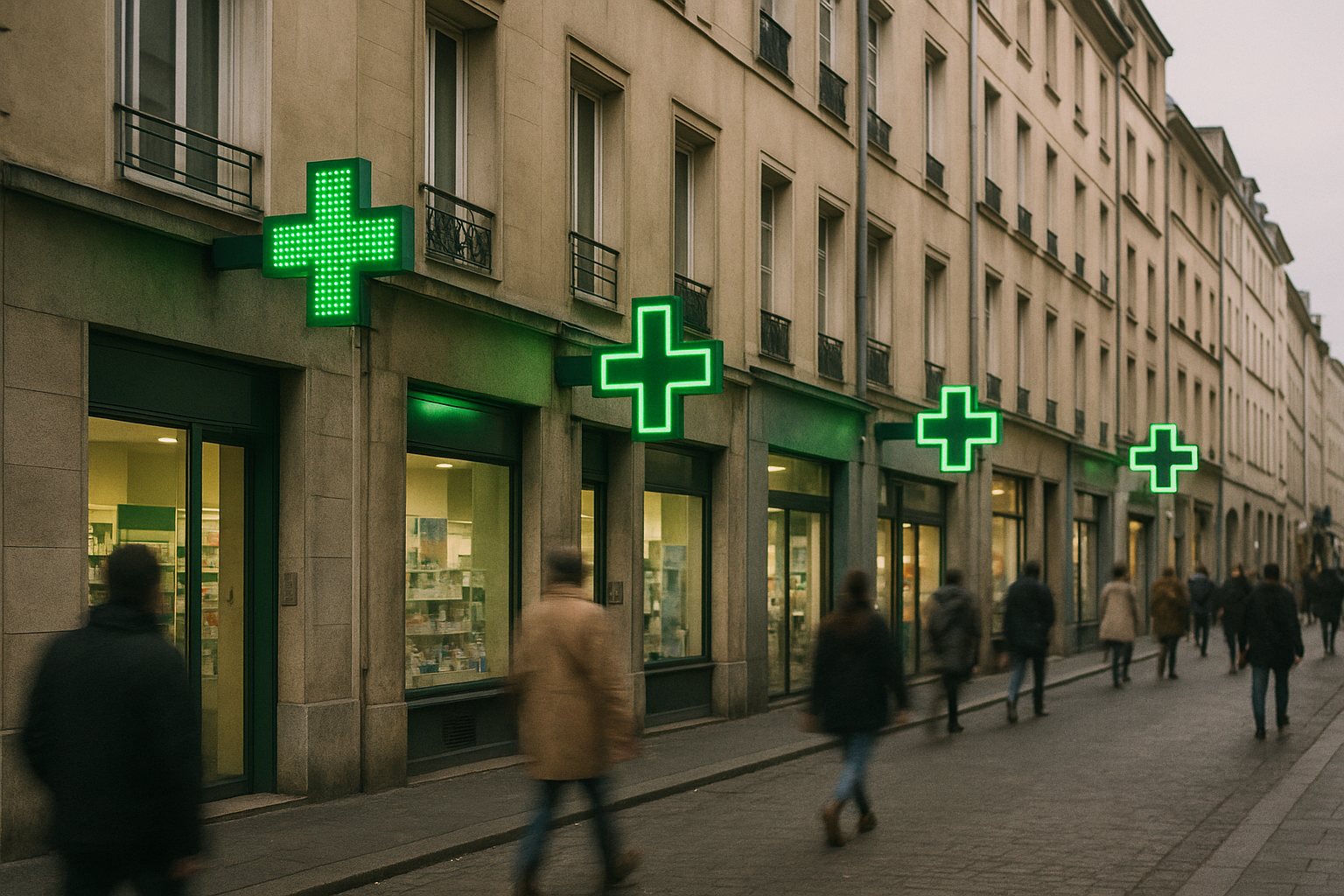
Checked 3 October 2026: The branch details below are older directory entries. Their present opening hours and addresses have not been verified directly with the operators. Confirm the branch and current hours before travelling; do not rely on a 24-hour label for urgent care.
The branch entries below come from the older May directory and have not been confirmed as currently open. Contact an operator directly before travelling. For a medical emergency, call 112; a pharmacy-hours listing is not an emergency-care plan.
Address: ul. General Radetski 50, Shumen
Previously listed hours: 24 hours; current status unverified
Reputation: The most widely recommended out-of-hours pharmacy in Shumen on the local expat groups. Reliable staffing, good general stock, comfortable with foreigners. If you only memorise one out-of-hours address, memorise this one.
Address: pl. Vazrazhdane 1, Shumen (central square)
Previously listed hours: 24 hours; current status unverified
Reputation: Central, easy to find day or night. Smaller footprint than Vita 1, but well-stocked for emergency needs. Good fallback if Vita 1 is unexpectedly closed for staffing.
Address: ul. 27-mi yuli 16, Shumen
Previously listed hours: 24 hours; current status unverified
Reputation: Long-established neighbourhood Apteka, family-owned, less foreigner-orientated than Vita 1 but professional. Worth knowing about if you live in the southern part of the city.
Search for денонощна аптека and your location, then confirm the address and current opening hours directly. Search-engine listings can be outdated.
Even "24-hour" pharmacies occasionally lose staff to illness, family emergencies or other reasons. If you are about to drive across town at 3 AM with a sick child, take 30 seconds to ring the pharmacy first to confirm it is open. The numbers are on framar.bg and Google Maps. A two-minute call saves a twenty-minute fruitless drive.
For the wider picture on out-of-hours medical care, the local hospital A&E (Spesheni Otdelenie at MBAL Shumen, off Vasil Aprilov boulevard) is the appropriate first stop for actual medical emergencies. The pharmacy is the appropriate stop for non-emergency medication. See the Health Guide for full detail.
An online consultation may be available, but its suitability depends on the clinical problem and the provider. Before paying, confirm the clinician's registration, patient identifiers accepted, language, fee and whether a resulting prescription can be dispensed in Bulgaria. A consultation does not guarantee prescribing.
Ask whether an in-person examination is needed. Arrange ongoing care before regular medicines run low, and seek urgent medical help when necessary rather than waiting for an app appointment.
Checked 3 October 2026: The Bulgarian Drug Agency's online-pharmacy information limits internet medicine sales to authorised non-prescription products. A remote consultation is a separate service. NHIS explains the prescribing and dispensing process.
The earlier provider recommendations and appointment-price promises have been withdrawn pending direct verification.
A small block of Bulgarian phrases for the Apteka counter. Said clearly and with eye contact, they instantly shift the tone of the interaction. Pronounce them as best you can; pharmacists hear worse every day and will meet your effort gracefully.
Добър ден
Dobur den
"Good day". Standard polite greeting at any counter.
Търся лекарство със съставка ...
Tarsya lekarstvo sus sustavka...
"I'm looking for a medication with the ingredient..." Follow with active ingredient name.
Това е моето лекарство
Tova e moeto lekarstvo
"This is my medication." Said when handing across the empty UK box.
Може ли едно също?
Mozhe li edno same takova?
"May I have one the same?" Polite refill request.
Трябва ли рецепта?
Tryabva li retsepta?
"Do I need a prescription?" The polite way to confirm the rule.
Имам електронна рецепта
Imam elektronna retsepta
"I have an e-prescription." Then give your EGN or LNCh.
ЕГН е ...
EGN e... / LNCh e...
"My EGN is..." or "My LNCh is..." Followed by the number. The pharmacist needs this to retrieve the script.
От колко е?
Ot kolko e?
"How much is it?" The price question.
До кога е срокът?
Do koga e srokat?
"Until when is the expiry?" For chronic meds you want 12+ months ahead.
Има ли по-евтино?
Ima li po-evtino?
"Is there a cheaper option?" Pharmacists will offer generics if asked.
Благодаря
Blagodarya
"Thank you". The polite close.
Приятен ден
Priyaten den
"Have a nice day". The standard farewell.
Сироп
Sirop
"Syrup". Useful for children's medication form.
Таблетки
Tabletki
"Tablets".
Инжекция
Inzhektsiya
"Injection".
Инхалатор
Inhalator
"Inhaler".
Крем
Krem
"Cream".
Витамини
Vitamini
"Vitamins".
Болка
Bolka
"Pain". Useful in describing symptoms: "imam bolka v glavata" (I have pain in the head).
Температура
Temperatura
"Temperature / fever".
For the full 1,100+ entry Bulgarian phrasebook covering banks, KAT, doctors, restaurants and paperwork, see our Bulgarian Phrasebook.
The questions Shumen.UK readers ask most about Bulgarian pharmacies, answered with anchors back to the main text.
Systemic antibiotics require appropriate prescribing. The Ministry's electronic-prescription rules cover this group. Arrange an assessment with a qualified clinician; an old box does not replace a prescription and a paid consultation does not guarantee one. Prescription checks.
Check the exact medicine, quantity, paperwork and any permit with the Bulgarian authorities before travel. Keep labelled packaging and prescription evidence. Do not assume one blanket allowance applies to all medicines or that a UK GP letter alone satisfies every requirement. Preparing medicine documents.
The active ingredient helps identify a medicine across brand names. Strength, dosage form and release characteristics also matter. Take the packaging and prescription to a pharmacist; do not use a name match to choose a substitute yourself.
Confirm the nearest open branch through its own current contact details. The older Shumen listings below have not been reverified as 24-hour services. Call before travelling, and seek medical help for urgent symptoms rather than relying on a pharmacy-hours listing.
An Apteka (Аптека) is a licensed pharmacy with a green-cross sign and a registered pharmacist. It is the only place that can legally dispense prescription medication, antibiotics, blood-pressure drugs, asthma inhalers and anything regulated. A Drogery (Дрогерия) is a drugstore like DM or Lilly. It sells shampoo, cosmetics, vitamins, basic over-the-counter ibuprofen and paracetamol, but cannot dispense prescription medication. Bulgarian supermarkets do not sell paracetamol the way UK Tesco does. For anything beyond shampoo, head for the green cross. → Section 4 (Apteka vs Drogery)
A past sale does not establish lawful over-the-counter status. Ask whether the refusal concerns stock, the exact formulation or prescribing documentation. Arrange local clinical review if needed; do not seek a branch willing to ignore a required prescription.
Ask a pharmacist about the exact product and Bulgarian prescribing requirements. Do not assume a UK over-the-counter combination has the same status or formulation in Bulgaria. Do not choose a replacement pain medicine without professional advice.
Availability depends on the exact product, formulation and pharmacy stock. Arrange continuity with your treating clinician and a Bulgarian prescriber before travel. Confirm lawful travel quantities and product-specific storage; do not assume a historic export restriction guarantees local supply.
Choose a registered pharmacy that can support your prescription needs, communicate clearly and confirm current stock. Compare prices for the exact product and pack size. The older chain descriptions are not a current service or price ranking.
NHIS records electronic prescriptions and their dispensing status, including partial fulfilment. Ask your prescriber for the reference or barcode and confirm the identity information the pharmacy needs. Agree repeat-treatment arrangements with your clinician; do not assume every medicine uses identical rules.
An online appointment may be available. Before paying, confirm clinician registration, accepted patient identifiers, language, fees and whether any resulting prescription is usable in Bulgaria. The clinician decides whether prescribing is appropriate.
Bring the prescription reference or barcode and the identity information requested by the pharmacist. Original labelled packaging helps identify the medicine but does not replace a prescription. For travel, confirm the exact medicine, quantity and any required documents or permits with the relevant authorities.
Framar is a commercial medicines-information and pharmacy website. It can help identify a product or packaging, but check official authorisation in the Bulgarian Drug Agency registers and confirm stock, price and any substitution with a pharmacist.
Prepare medicine information and arrange continuity of care before you need a refill. If dispensing is refused, ask why and involve your prescriber where necessary. A previous sale without a prescription is not evidence that the same medicine can lawfully be supplied that way again.
Six rules carry a British expat through this transition without major drama:
Keep a current contact for your usual pharmacy and ask how to find an open branch outside its hours. Confirm opening directly before travelling. For a medical emergency, call 112.
Bulgarian human pharmacies cannot dispense veterinary medication; that's a separate licence held by veterinary pharmacies (veterinarna apteka, ветеринарна аптека) attached to vet clinics. The brand names also differ: a dog flea-and-tick treatment marketed in the UK as Bravecto or Frontline is sold here under the same brand at the vet, generally cheaper than the UK equivalent. For pet-specific medication, AHCs (Animal Health Certificates), the post-Brexit pet-import rules and the orange-ear-tag stray system, see the Pets Guide and the Animal Welfare in Bulgaria guide.
Related guides: Health & the NHIF · Bureaucratic Etiquette · Moving to Bulgaria (90-day countdown) · Post-Brexit rules · Insurance & the NHIF · Pensions & chronic conditions · Pet meds & the AHC · Bulgarian Phrasebook · All guides.