
If you have found an animal or are worried about its welfare, choose the situation that fits: an injured animal, a stray, suspected cruelty or adoption. The quick links below take you to the practical steps and contacts. The wider guide explains the local context and the limits of what an individual rescuer can safely take on.
Written tactfully but honestly. Bulgaria is not the cruelty caricature some expat groups paint; Bulgarian vets are excellent, Bulgarian-founded NGOs do extraordinary work, and Bulgarian law since 2008 has been progressive on stray management. But the day-to-day rural reality is different from the UK, and pretending otherwise sets new arrivals up for a hard landing.
Choose your next step: an animal needing immediate help, a stray, veterinary care, a welfare concern or adoption.
If you only read one section, read this one. Then come back for the detail when you need it.
| You are... | The honest starting point | Why |
|---|---|---|
| Just moved to Sofia, Plovdiv or another big city | You will find a familiar UK-style culture. Get a vet, microchip your own pets, donate to a Bulgarian NGO | Urban Bulgaria is comparable to the UK on animal welfare attitudes; the culture shock is rural, not national |
| Just moved to a Bulgarian village | Expect chained yard dogs, expect strays, expect the "village shop" news cycle to learn you care about animals fast. Read Sections 2, 4, 5 first. | The cultural distance is largest at village level, and the dog-related social dynamics will start in week one whether you want them to or not |
| You've just seen a chained or starving dog and you're furious | Photograph, GPS, do not confront the owner today. File with BABH tomorrow. Call a local NGO in parallel. | Confrontation makes the dog's life worse; quiet documented escalation works. See Section 13. |
| You've just found a stray puppy | Isolate it from your own pets, take it to a vet for a chip scan and parasite/Parvo check before you commit. See Section 6. | Many dumped puppies are sick; emotional commitment before medical clearance hurts everyone |
| You want to adopt a Bulgarian rescue | Go through Street Hearts Bulgaria, Animal Hope Bulgaria, Bansko Street Dogs or another established rescue. See Sections 9 and 10. | They handle the medical clearance, the temperament assessment, the chip / passport / rabies timeline, and any UK export legally |
| You want to take a Bulgarian rescue back to the UK | Microchip BEFORE rabies, wait 21 days, AHC within 10 days of travel, DEFRA-listed transporter only. See Section 11. | Cheap unregistered Facebook vans get seized at the UK border, dogs end up in quarantine |
| You want to fund welfare work but don't know where to start | Donate to a Bulgarian or expat-founded NGO for "sponsor a spay" schemes (15-25 GBP per dog). | One sterilised female stops 10-30 puppies a decade. Most cost-effective welfare spending available in Bulgaria. |
| You're already two months in and waking up at 3am thinking about a specific suffering dog | You're hitting rescuer burnout. Read Section 12. Talk to a long-stay expat. Don't quit, but narrow your scope. | This is documented, common, and recoverable, but only if you address it before it scales |
| You're finding 8-10 cats around your village house and they're starting to breed | Trap-neuter-release the colony. Sterilise females first, by 5 months. Read Section 15. | One unspayed female cat and her descendants produce hundreds of cats over a decade; the cat sterilisation maths is even more leveraged than dog |
| You've got a multi-cat household (10+) and want to manage it right | Every cat sterilised + FVRCP-vaccinated + FIV/FeLV-tested + monthly parasite control. Cap the number honestly. Read Section 15. | The "kotinski dom" Bulgarian-village expat reality; works brilliantly when managed properly, becomes a problem when not |
| You've found an injured hedgehog, tortoise, stork, owl or fox | Do NOT take to a normal small-animal vet. Call Green Balkans (greenbalkans-wrbc.org). Read Section 15. | Wildlife is legally protected and needs specialist rehabilitation; pet vets cannot treat it properly |
| You've been bitten by a bat (rare but real) | A&E immediately for rabies post-exposure prophylaxis. Do not wait. Read Section 15. | Bats are the main rabies reservoir in mainland Europe; modern PEP is almost 100% effective if started promptly, fatal if untreated |
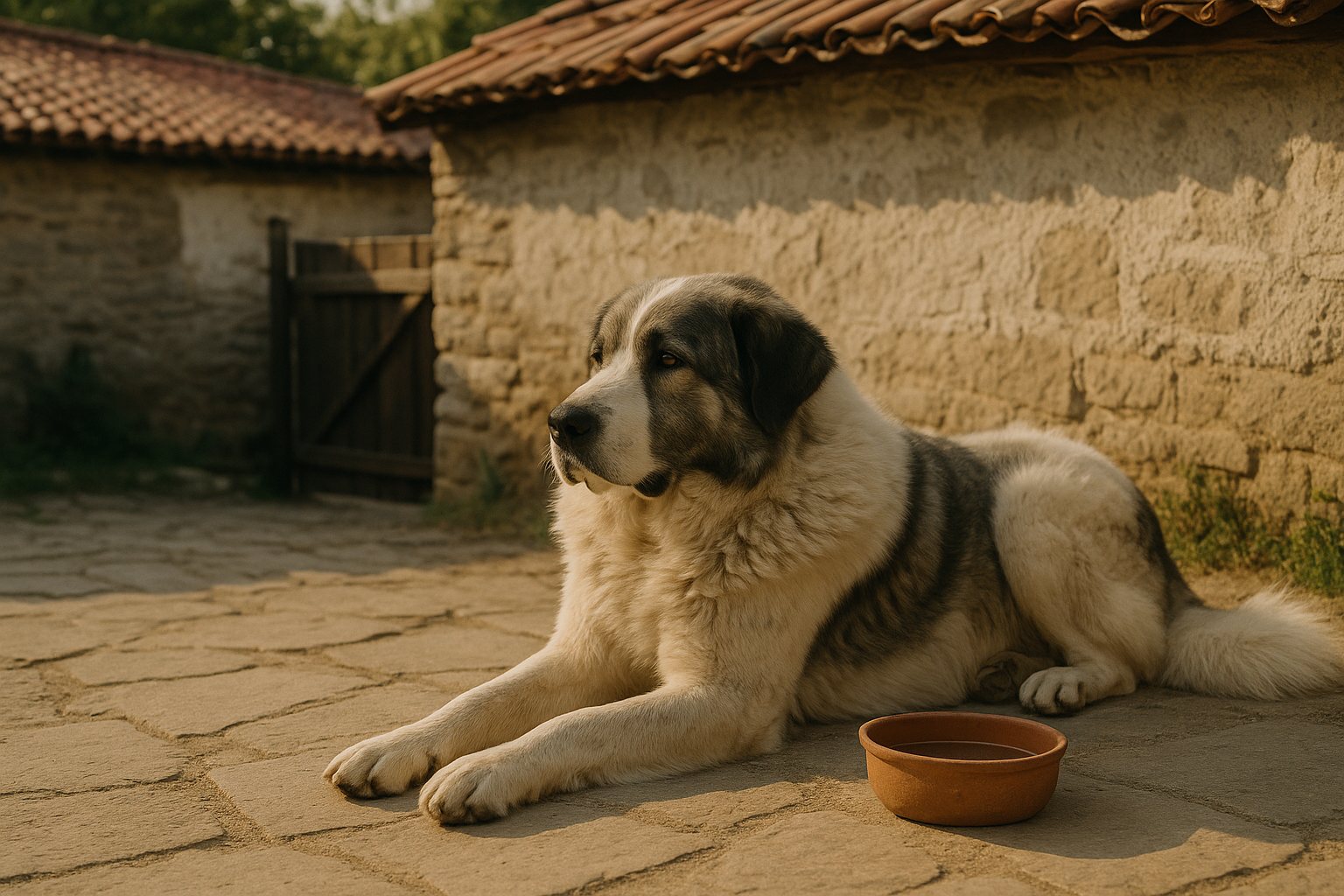
The thing nobody warns British expats about is not the visible cases of suffering. It's the invisible weight of a thousand small choices that the local culture treats as ordinary and the British eye reads as cruelty. Both readings have history behind them. Neither is the whole story.
The UK has the world's oldest organised animal welfare movement. The RSPCA was founded in 1824, predating the equivalent child-protection society by 60 years. The 2006 Animal Welfare Act made the owner of an animal legally responsible for its needs (environment, diet, ability to exhibit normal behaviour, housing, protection from suffering) under threat of criminal prosecution. Dogs and cats are the most-pampered demographic in British retail; the UK pet-care industry was worth around 9 billion GBP in 2025. Sentimentality about animals is mainstream and uncontested across class, region and politics. A British person reading this guide has grown up inside that consensus, often without realising how unusual it is in European context.
Bulgaria's relationship with animals is older but differently shaped. It is a country where, until the late twentieth century, most households were still partly agricultural, where dogs were guards and shepherds and not family companions, where cats earned their keep killing mice in barns, and where surplus puppies and kittens were a practical problem in every village every spring. The urban professional class in Sofia, Plovdiv, Varna, Burgas and the larger regional cities now lives a life that would be familiar to a Londoner or Mancunian, with vets on speed-dial, dogs in cafes, and Instagram accounts for cats. The villages, and the older generations everywhere, often live with the older model.
This is the single most important framing in this guide. The "animal welfare culture shock" British expats describe is almost entirely a rural and older-generation phenomenon. Walk through Sofia's Lozenets, Sredets or Studentski Grad neighbourhoods at 7pm on a Thursday and you will count more dogs on leads than in most British market towns. Bulgarian small-animal vets, kennels, groomers, dog-training schools, agility clubs, breeders and rescue charities are mature businesses serving a mature customer base. The shock is what happens when a British expat buys a village house at 25,000 EUR, drives out to it for the first weekend, and meets the local "yard dog" reality with no prior exposure.
It is tempting for British expats arriving with an urge to "help the strays" to imagine themselves as filling a vacuum. The vacuum does not exist. Four Paws Bulgaria, Animal Rescue Sofia, Dog and Cat Welfare BG, the BG Pet Smile foundation, Animal Hope Bulgaria, and dozens of municipal volunteer groups have been doing this work for decades. The largest single funder of dog sterilisations in Bulgaria over the last fifteen years is a coalition of Bulgarian municipalities, Bulgarian donors and Bulgarian NGOs. Expat-founded rescues like Street Hearts Bulgaria, Santerpaws and Bansko Street Dogs add capacity and bring UK donor money, but they work in partnership with the Bulgarian movement, not above it.
The least effective British arrival is the one who buys a village house in October, finds a chained dog at the neighbour's, knocks on the door with a half-translated speech about cruelty, and creates a lifelong neighbour conflict that ends with the dog being treated worse, not better, out of resentment. The most effective British arrival is the one who learns the local norms first, builds relationships with neighbours, identifies one or two animals whose lives they can materially improve over the course of a year, funds local sterilisation, and turns up to NGO open days. Patience is welfare here. Loud certainty rarely is.
Bulgarian animal welfare law has been overhauled in waves since 2008. It is now broadly EU-compliant, with specific national elements (TNVR policy, mandatory municipal registration, neuter tax exemption) that British expats need to know.
The Animal Protection Act (Zakon za zashtita na zhivotnite, ZZZh) was passed in 2008 and amended multiple times since, most significantly in 2011, 2018 and 2022. It establishes:
Bulgaria criminalised animal cruelty in 2011 through amendments to the Penal Code, with sentences progressively strengthened in subsequent reforms. The 2026 position:
Enforcement is real but uneven. There have been successful prosecutions in Sofia, Plovdiv, Varna and Burgas, with custodial sentences handed down for filmed acts of cruelty that went viral on Bulgarian social media. Prosecution in rural areas is harder, slower, and depends heavily on the local police and prosecutor's office having an interest. Evidence quality (photographs, video, GPS-stamped observations, multiple witnesses) is what tips a complaint from "another welfare grumble" into a prosecutable case.
| Body | What they enforce | How to contact |
|---|---|---|
| Bulgarian Food Safety Agency (BABH) | Day-to-day welfare standards, neglect, conditions of kept animals, premises (kennels, breeders, shelters) | babh.government.bg, regional offices in every oblast |
| Police (MVR), Animal Police | Active cruelty offences, dog-fighting, criminal investigations | 112 for emergencies, regional directorate otherwise. Each oblast now has at least one designated officer. |
| Public Prosecutor's Office | Prosecution of Penal Code Article 325b animal-cruelty offences | Files come via police; private complaints to the prosecutor are possible but rare |
| Municipality (Obshtina) ecology / animal-welfare officer | Municipal stray programme, registration enforcement, tax collection, complaints about kept animals | Your local town hall, ask for the ecology department |
| NGOs (parallel route) | Welfare interventions, sterilisation, rehoming, escalation of cruelty cases via their own legal teams | See Section 9 |
For active cruelty in progress, the call sequence is 112 first, then BABH, then NGO. For ongoing neglect, BABH first and NGO in parallel. See Section 13 for the full reporting workflow.
The chain itself is not banned in Bulgaria, contrary to some expat-group claims. What IS regulated is the conditions a chained dog must have: enough chain length to move freely (the implementing rules generally require at least 5 metres or 2-3x the body length, whichever is longer), permanent access to fresh water and shelter from extreme weather, daily food, and protection from extreme heat or cold. Chains thinner than the dog's strength, with no swivel, that catch on objects and trap the dog, are a clear breach. So is the chained dog with no shelter, no water in summer, no daily check. Where a chained-dog complaint goes nowhere is usually where the owner can show the dog has shelter, water, food and a long enough chain. Where it succeeds is documented neglect.
The single most jarring image for a British expat in rural Bulgaria is the yard dog. The chained, sometimes barking, sometimes silent dog whose entire life happens within a 5-metre radius. Understanding why these dogs exist is the first step to helping them.
Three intertwined practical reasons, none of which are "the owner doesn't care":
None of this is welfare-acceptable on its own. But understanding the practical logic stops you reading a chained dog as a cruel owner; it reads as an historical adaptation that has not yet caught up with welfare science.
A welfare-acceptable yard dog has:
British arrivals who try to advocate for a neighbour's yard dog using the language of suffering ("this is cruel", "you're hurting him") almost never succeed. The frame that works is the dog's job, which is the frame the owner already uses. Try:
This is not manipulation. It's translation. The welfare improvement is the same; the language that makes it land is different. Bulgarian NGOs use this framing constantly with rural owners and it works.
Some of the worst yard-dog cases are not on chains. They are inside outbuildings, behind walls, in dark sheds with one bowl. Walk the same route every morning, listen, talk to neighbours. The visible-chain dog is often actually one of the better-cared-for animals in a village; the invisible-shed dog is the one that needs intervention.
A British expat walking through a Bulgarian town for the first time often sees what looks like a welfare disaster: medium-sized dogs sleeping on warm pavements, accepting food from passers-by, with bright plastic tags clipped to one ear. The tag is not an injury, and the dog is not abandoned. Both signal something specific.

The plastic ear tag identifies a dog that has been through the trap-neuter-vaccinate-return (TNVR) programme. The dog is:
Tag colour (orange, blue, green, yellow) varies by municipality and by the NGO running that contract; the colour does not encode a meaningful public-facing difference. A tagged dog is the system working. Ear-tagging is also a visible signal to other municipalities that picking up this dog and rehoming it elsewhere is unnecessary; it has a home territory.
Until 2008, Bulgarian municipalities relied on periodic culling of stray populations: shooting, poisoning, mass capture and destruction. The 2008 Animal Protection Act made this illegal. The law explicitly directs municipalities to use TNVR as the primary stray-management approach: catch the dog, sterilise it, vaccinate it, return it to its territory, monitor it. The aim is gradual population decline as the existing community-dog cohort ages out without replacement. The policy was a major progressive step at the time and put Bulgaria ahead of several other Eastern European countries.
TNVR is slow on purpose. Returning sterilised dogs to their territory prevents the "vacuum effect" where culling creates space for new unsterilised dogs to migrate in. Population reduction happens over decades, not seasons. In municipalities with consistent TNVR funding (Sofia, Plovdiv, Varna, Burgas, parts of Sofia oblast), populations have measurably fallen since 2010. In rural municipalities with intermittent funding, populations are more stable. In municipalities where dumping (owners abandoning unwanted puppies) outpaces sterilisation, populations can rise. The visible street-dog count is the lagging indicator; the sterilisation rate is the leading one.
| Situation | Right response | Wrong response |
|---|---|---|
| Tagged adult dog, healthy, in its territory | Leave it alone, optionally feed at a safe spot away from roads | "Rescue" it by removing it from its territory |
| Tagged adult dog, visibly injured | Call local NGO or municipality; provide GPS | Try to lift it yourself if it shows pain (bite risk) |
| Tagged adult dog, friendly, follows you home | Ask local NGO whether it has a known territory; report any change | Assume it's homeless and bring it inside immediately |
| Untagged adult dog in city | Report to NGO / municipality for TNVR capture; do not attempt yourself | Attempt to catch with bare hands; risk of bites and disease |
| Untagged puppies, abandoned, no mother visible | Photograph location, contact NGO, isolate from your own pets, vet visit | Take home immediately without medical check |
| Mother dog with puppies in a public space | Report to NGO; do not move them; mother may be tagged community dog | Move the litter; mother may abandon if relocated |
Cats run on a parallel system, with three key differences from dogs. First, cats are managed under TNR (trap-neuter-return) rather than TNVR; rabies vaccination is sometimes included but is not the universal default it is with dogs, partly because cats are seen as a lower rabies-vector risk and partly because cat vaccination is harder to deliver to a feral colony. Second, the visible identifier is not a plastic ear tag but an ear-tip: the tip of the left ear is surgically removed (clean, painless under anaesthetic, healed in days) during the spay or neuter. An ear-tipped cat is the cat equivalent of an ear-tagged dog. The cut is small but unmistakable once you know to look for it. Third, the funding picture is worse: Bulgarian municipalities are required to fund stray dog programmes, but stray cat programmes are largely NGO-driven and chronically under-resourced. Sofia, Plovdiv and Varna have meaningful cat-TNR programmes; most regional cities and almost all villages do not.
The Bulgarian cat lives a different life from the British house cat. Most Bulgarian cats, including most owned ones, are indoor-outdoor or fully outdoor. Cat colonies form around food sources: behind the apartment-block bins, in the courtyard of a chitalishte, on the perimeter of a market, in the alley behind a restaurant. A typical colony is 4 to 20 cats, related to varying degrees, with a handful of stable territory-holders, transient juveniles, and visiting toms. Some colonies have a "feeder" (a Bulgarian neighbour, often an older woman, who provides daily food and basic vet care from her own pocket). The British-expat instinct to "rescue" a colony cat into a single-cat indoor home is almost always wrong: most colony cats are stressed by single-cat indoor confinement and many escape within days, often dying on the road. The welfare-correct response to a colony is to fund the feeder, fund the TNR, and let the cats live as cats.
Bulgaria has two cat-dumping seasons: spring (April-May) and late summer (August-September), aligning with the two annual kitten flushes from unspayed females. Boxes of kittens appear at village gates, at NGO doorsteps, at the back of supermarkets. Unlike puppies, kittens cannot be ear-tagged and returned; they have to be either fostered to weaning, found indoor homes, or (the brutal reality without intervention) die of starvation, disease, or predation. Kitten survival without human help in a Bulgarian village or town is typically below 30% to weaning. This is the layer of the cat problem where British expats with the space, money and emotional bandwidth genuinely change outcomes: fostering kittens 5-9 weeks old through the dangerous patch, getting them vaccinated and spayed at 12-16 weeks, then placing them with vetted indoor adopters. Most established Bulgarian cat NGOs have foster programmes that supply the food, the vet bills and the adopter network; you supply the spare room and the four months of patience.
You will, sooner or later. A dumped puppy in a cardboard box at the village gate. An adult dog limping along the verge. A litter in the long grass behind the shop. The first 72 hours decide most of the outcome.
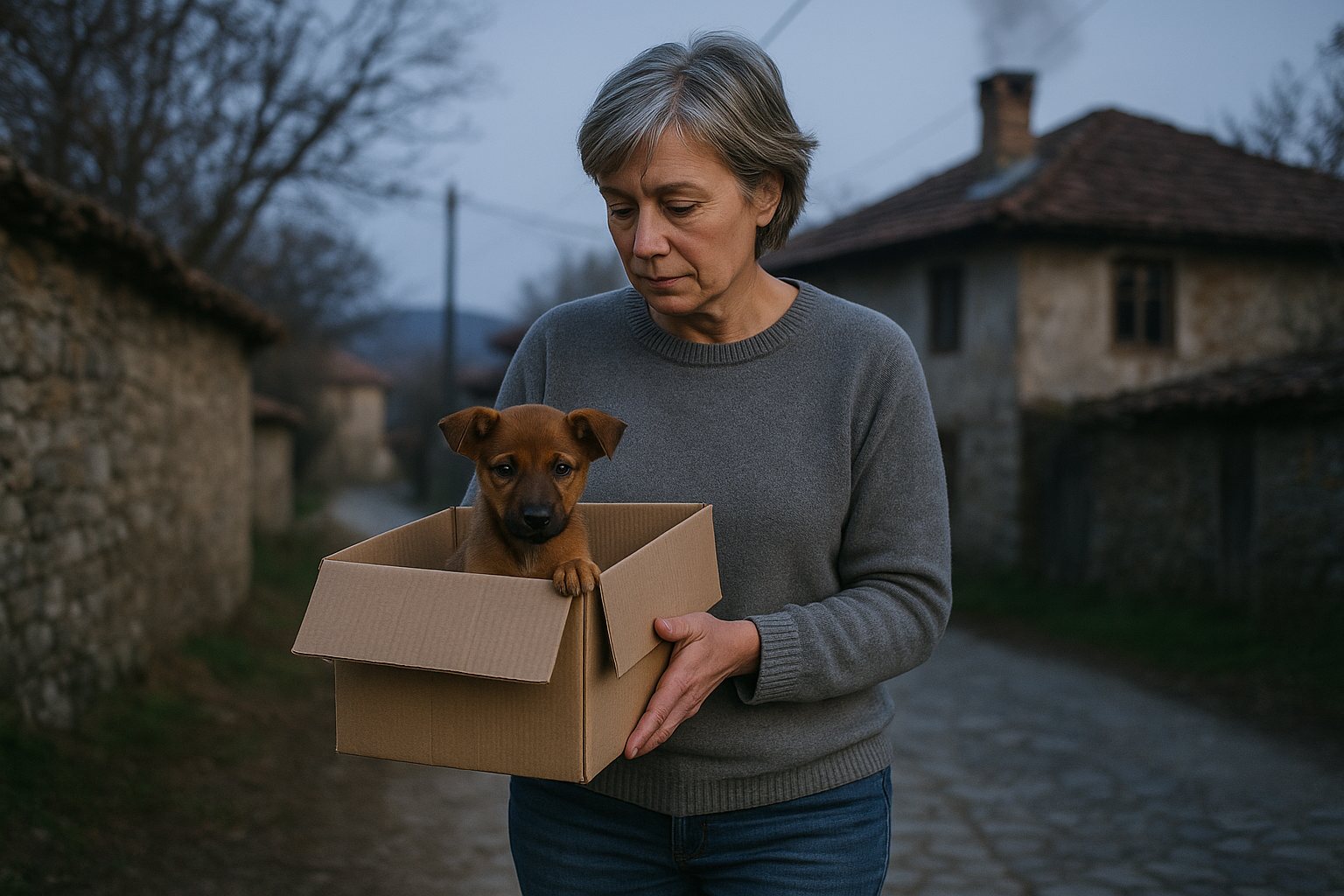
Within weeks of becoming known as "the English person who helps", you will start finding boxes of puppies at your gate. Mothers will be dumped near your house. People will phone you. This will overwhelm you if you let it. The rule the experienced expat rescuers all teach: publicly state on day one that you only help animals you can get neutered, and you only help on a one-at-a-time basis. Say it on Facebook, say it to neighbours, repeat it. Bulgarian villages are word-of-mouth networks; the message lands within a fortnight and the cascade slows.
The single most useful relationship a British animal-rescuing expat will build in Bulgaria is with one English-speaking vet. They are not difficult to find; they are concentrated, well-trained, and often unusually patient with British emotional intensity around animals.

| Bulgarian | Transliteration | English |
|---|---|---|
| ваксина | vaksina | vaccine |
| кастрация | kastratsiya | neutering / spaying |
| обезпаразитяване | obezparazityavane | de-worming / de-fleaing |
| чип | chip | microchip |
| паспорт | pasport | pet passport |
| бяс | byas | rabies |
| пет-годишен | pet-godishen | five-year-old |
| температура | temperatura | temperature / fever |
| повръщане | povrashtane | vomiting |
| диария | diariya | diarrhoea |
| спешен случай | speshen sluchay | emergency |
| котка | kotka | cat |
| котенце | kotentse | kitten |
| таралеж | taralezh | hedgehog |
| костенурка | kostenurka | tortoise |
| щъркел | shtarkel | stork |
| прилеп | prilep | bat |
| Service | Typical Bulgarian price | UK comparison (rough) |
|---|---|---|
| Routine consultation | 15-30 EUR / 30-60 BGN | 40-70 GBP |
| Annual vaccination + check | 30-50 EUR | 70-100 GBP |
| Microchip (insertion + registration) | 15-25 EUR | 25-40 GBP |
| Neutering / spaying (dog, size-dependent) | 50-120 EUR | 150-400 GBP |
| Neutering / spaying (cat) | 30-60 EUR | 70-150 GBP |
| Parvovirus snap test | 15-25 EUR | 50-80 GBP |
| Routine bloods | 25-50 EUR | 80-160 GBP |
| Digital X-ray | 20-40 EUR | 80-200 GBP |
| Soft-tissue surgery (e.g. mass removal) | 100-300 EUR | 400-1200 GBP |
| Animal Health Certificate (for UK export) | 50-120 EUR | n/a (issued in Bulgaria) |
Prices are typical 2026 small-animal clinic rates and vary by city. Premium clinics in central Sofia run higher; village vets run lower. UK comparisons are for independent practice, not corporate chains.
If a British expat in Bulgaria asks one question, it should be this: where can I most effectively spend an extra 20 GBP on animal welfare this week? The answer, almost without exception, is on a sterilisation.
A fertile female stray dog produces around two litters a year, averaging 6 to 8 puppies per litter. Of those puppies, perhaps half survive their first year on the street. Each surviving female reaches breeding age at six months. The unsterilised line, over a decade, produces hundreds of descendants, almost all of them living and dying in conditions that British expats find unbearable.
A single 50 EUR spay (the cost a Bulgarian NGO pays at a contracted vet) stops the entire line. There is no other welfare intervention with a comparable cost-to-impact ratio. The veterinary research, the NGO experience, and the European Commission's own assessment of TNVR programmes converge on the same finding: sterilisation is the structural fix, everything else is downstream.
| Route | How it works | Cost per spay |
|---|---|---|
| Donate to an established Bulgarian or expat-founded NGO | NGO has bulk rates with contracted vets; one donation funds N sterilisations | 15-30 GBP equivalent per spay (NGO bulk rate) |
| "Sponsor a spay" specific campaigns | Street Hearts, Santerpaws, Animal Hope and others run named-dog sponsorship; you see photos before and after | 20-35 GBP per named animal |
| Pay directly at your local vet for a specific known animal | You identify a yard dog or village stray, get the owner's consent if applicable, pay the vet | 50-120 EUR depending on size and clinic |
| Fund municipal TNVR capacity | Some councils accept earmarked donations to expand contracted sterilisation slots | Varies by municipality |
| Personally trap, transport, recover | Time-intensive; only for experienced rescuers with NGO backing | Your time + vet rate |
This is the conversation that, across Bulgaria, has done more for welfare than any other British-expat intervention. The structure that works:
Most rural owners say yes. The combination of "free tax exemption", "I do all the work", "you keep your dog" and "your guard dog is healthier" is genuinely the best deal the owner has been offered in a generation. The dog wins, the owner wins, you have built a village relationship that will pay back over years.
Some owners refuse on principle (the dog is a stud, the owner believes neutering "weakens" the dog, generational pride). Push politely once; if rebuffed, drop it. The same village will have ten other yard dogs whose owners will say yes. Build the consent route into a programme: one neutering a month over a year is twelve fewer suffering lineages. That's a higher-leverage life than any individual British rescuer is going to achieve any other way.
If the dog sterilisation maths is force-multiplied, the cat sterilisation maths is force-multiplied again. A single fertile female cat can have three litters of 4-6 kittens a year. Female kittens reach sexual maturity at 4-5 months and can be pregnant on their first heat. The exponential is brutal: a single unspayed female cat and her descendants, left unchecked over seven years, can theoretically account for thousands of cats. The real-world number is lower (kitten mortality is high) but the principle holds: every spayed female cat prevents an order of magnitude more suffering than every spayed female dog.
Bulgarian cat-spay costs are also lower than dog costs, roughly 30-60 EUR at a normal clinic, or 15-25 EUR at the bulk rate negotiated by a serious NGO. The veterinary recommendation is to spay/neuter cats at 4-5 months, BEFORE the first heat for females; the older "wait until 6 months" advice is outdated and concedes one breeding cycle for no medical benefit. Cat sterilisation should also include the ear-tip mark if the cat will return to a colony, and FIV/FeLV testing if budget allows (around 15-25 EUR additional, often donated by the NGO).
If you have the means to fund both a dog spay AND a cat spay in the same month, the cat is the higher-yield welfare spend.
There is no need for a British expat to start a new rescue. The infrastructure exists, is mature, and needs your time, money and English-speaking support far more than it needs another start-up logo.
Cat NGOs tend to be smaller, more local, and harder to find than dog rescues. The persistent ones are exceptional. Notable national and regional names:
For injured wildlife (hedgehogs, tortoises, storks, raptors, foxes, deer, bats), do NOT take the animal to a normal small-animal vet. The proper route is Green Balkans (Zeleni Balkani), the long-established Bulgarian wildlife conservation NGO. They run the Wildlife Rescue Centre at Stara Zagora (the only fully-equipped facility of its kind in Bulgaria), plus regional first-response networks. They will collect or coordinate transport for injured wildlife, treat at their specialist hospital, rehabilitate, and release. Contact: greenbalkans-wrbc.org. The Wildlife Rescue Centre's helpline (visible on their site) is the single most useful number for any wildlife casualty in Bulgaria.
If you are a settled British expat with a stable home, adoption is the single most satisfying intervention. It is also one of the cheapest. Bulgarian adoption fees are nominal, the medical standards of the established rescues are high, and the gratitude of the animal is, in many people's experience, palpable.
| Item | Typical cost | When |
|---|---|---|
| NGO adoption fee | 30-80 EUR | At adoption |
| Microchip + EU passport (if not already) | 30-50 EUR | Pre-adoption |
| Vaccination course completion | 20-40 EUR | First weeks |
| Sterilisation (if not already) | 50-120 EUR | Within first 6 months |
| Municipal registration | Free; small admin fee in some councils | Within 3 months |
| Annual dog tax | 0 EUR if neutered, otherwise small annual fee | Annually |
| Routine annual care (vaccination, parasite) | 50-80 EUR | Annually |
The post-Brexit UK pet entry rules are stricter and slower than they were pre-2021. Done properly, they are entirely manageable and the dog arrives legally with the right paperwork. Done badly, the dog ends up in quarantine, you face fines, and the dog may be returned to Bulgaria.

| Requirement | Detail | When |
|---|---|---|
| Microchip | ISO 11784/11785 standard; must be present BEFORE rabies vaccination, or the vaccination is invalid for travel | Earliest possible |
| Rabies vaccination | Earliest age 12 weeks; must be after the microchip; primary course or booster current | Day 0 of the 21-day wait |
| 21-day post-rabies wait | Mandatory waiting period before the dog can enter the UK | Days 0-21 |
| Tapeworm treatment (Echinococcus) | Praziquantel-based product, given by a vet, recorded in the passport | 24-120 hours before UK arrival |
| Animal Health Certificate (AHC) | Issued by an Official Veterinarian in Bulgaria, in English; valid for 10 days from issue to UK entry; valid for 4 months for onward EU travel | Within 10 days of UK arrival |
| EU pet passport | Records all of the above; carried with the dog | Throughout |
| Travel route | UK government-approved route only: specific airlines, specific ferry routes (P&O, DFDS), Eurotunnel Le Shuttle | Day of travel |
| Approved transporter (commercial movements, including rescues) | Must be authorised under EU Regulation 1/2005; DEFRA-listed | Day of travel |
The unregistered transporter market exists because it's a fraction of the cost of a legal one. The risk profile is straightforward: at the UK border, an unregistered van carrying dogs without correct paperwork is subject to seizure under the Trade in Animals and Related Products Regulations. Dogs can be held in quarantine at the importer's cost (often more than 1,000 GBP per dog per stay), returned to Bulgaria at the importer's cost, or in severe cases destroyed. There have been documented cases in 2024 and 2025 of Bulgarian-origin rescue dogs seized at Dover and returned, sometimes after a frightening multi-day journey. The reputable rescues (Street Hearts, Santerpaws and the others listed in Section 9) handle the legal export themselves precisely because they have seen the alternative.
The AHC replaced the EU Pet Passport as the UK-entry document for non-UK origin pets in 2021. Key points:
For multiple-trip moves (e.g. moving permanently with a dog and returning to Bulgaria for second-home reasons), the better long-term route is the UK Pet Passport scheme, available once the dog has been resident in the UK for the qualifying period.
The UK entry rules for cats are very close to those for dogs, with three differences that make cat export a bit simpler:
Everything else is the same: ISO microchip BEFORE rabies, rabies at 12 weeks minimum, 21-day wait, AHC within 10 days of travel, EU pet passport. Total realistic cost for one cat: 200-500 GBP including all vet work and transport, compared with 700-1,200 GBP for a dog. If you have multiple cats (and many Shumen.UK readers do; the multi-cat British-expat household is a real demographic in rural Bulgaria), the per-cat cost falls further on a shared transport run.
The reason this guide exists is not the animals. It is the British expats. The mental-health drain of arriving with UK animal-welfare expectations into the rural Bulgarian reality is documented, common, and almost always recoverable. But only if it's acknowledged.
Rescuer burnout is the well-documented mental-health syndrome that affects animal welfare workers worldwide. The British expat version, when it hits in Bulgaria, typically shows up as:
UK life largely insulates British people from the visible scale of stray and yard-dog populations. The mental shift required when that insulation falls away is not gradual; it is binary. You arrive on Thursday, you see your first chained dog on Saturday, you have not slept properly since. The cumulative weight of seeing what was previously hidden is the issue, not any one case.
British expats also often arrive with two further multipliers: time (early retirees with more spare hours than they know what to do with) and disposable income (relative to local incomes). Both create the structural conditions for over-commitment, and Bulgarian villages, sensing this, deliver more cases to your gate.
The honest test: if your animal welfare work is making your life worse, not better, you are in burnout territory. The animals do not need a broken rescuer; they need a sustainable one. Stepping back for three months, redirecting your contribution from hands-on to financial, switching focus from "the village outside my gate" to "monthly direct debit to Street Hearts", is not quitting. It is the long game.
The expat rescuers who are still doing the work after a decade are the ones who built in the breaks. The ones who burned out in year three are the ones who couldn't.
The British instinct on witnessing cruelty is to confront the perpetrator. In Bulgaria, that is almost always counterproductive: it makes the next visit worse for the animal, ends with you in the worse position, and damages the relationship that any successful intervention will eventually need. The effective route is documented, parallel, and patient.
| What you see | First call | Parallel action |
|---|---|---|
| Active violence in progress | 112 (police) | NGO if you have a relationship; photograph if safe |
| Organised dog-fighting | 112 (police, animal-police officer) | NGO + national press if safe |
| Animal in immediate medical distress | Local vet / NGO emergency line | Photograph, GPS, no DIY rescue if dog is aggressive |
| Ongoing neglect (no water, no shelter, emaciated) | BABH written complaint with photos + GPS + dates | Local NGO, municipality ecology officer |
| Chained dog with poor conditions | BABH; municipality | Local NGO; long-game neighbour relationship if possible |
| Dumped puppies / kittens | NGO for capacity; municipality for record | Vet for medical clearance if you intervene |
| Suspected breeder running puppy mill | BABH (licensing breach); animal-police | Document long-term, photograph signage, gather multiple complainants |
The Bulgarian Food Safety Agency (BABH, babh.government.bg) is the primary day-to-day enforcement body. Complaints get more traction when they include:
Checked 3 October 2026: Shumen municipality has published a notice that the Tonka Petrova shelter temporarily suspended new admissions. That notice is not proof of today's capacity: check with the municipality before transport. Use Street Hearts' own contact page for its service area and capacity, and Green Balkans' rescue contacts for wildlife advice.
Use the official contact routes below. The older local clinic names, emergency phone and service endorsements have not been substantiated sufficiently to present them as a verified directory.
Find a clinic through its own current website or the Bulgarian Veterinary Union register, then confirm the address, opening hours, emergency availability and language before travelling. For an injured domestic animal, ask a vet for advice first; do not rely on an unverified directory number.
Cross-references to the rest of the Shumen.UK guide library:
Most British-expat animal welfare attention in Bulgaria goes to dogs. The fuller picture includes cats (the single largest stray demographic), hedgehogs (protected and dying in numbers under garden strimmers), tortoises (both native species are protected by law), storks, bats, and the occasional larger wildlife encounter. Different rules, different routes, different welfare interventions.
Bulgaria's stray cat population almost certainly outnumbers its stray dog population by several multiples, although nobody counts cats reliably so the numbers are guesses. What is clear: cats are everywhere, cat colonies form quickly, kitten dumping is twice-yearly, and the dedicated cat-welfare infrastructure is a fraction of the dog-welfare one. For a British expat with cat experience, the leverage opportunity is unusually high; cats are also lower-cost to care for, cheaper to sterilise, easier to UK-export, and (for the right household) easier to integrate at multi-cat scale.
Most Bulgarian cats are indoor-outdoor or fully outdoor, including most owned cats. The British house-cat model (single cat, indoors only, microchipped, neutered, on a single food brand, vet-visited annually) is a minority practice even in Sofia and almost unknown in villages. Owned village cats typically come and go through a cat-flap or open window, hunt their own food in addition to what they get at home, may be away for days at a time, often produce kittens that the owner does not formally claim, and may live to be very old or be killed young; the survivorship curve is brutal. Welfare attention from the British expat needs to start by accepting this is the local norm, not the British norm transplanted.
An ear tip can indicate that a cat has been through a sterilisation programme, but marking practices vary. Its presence does not prove current vaccination, and its absence does not prove the cat is unsterilised. Ask a vet or the local programme to check records before any intervention.
A noticeable subset of British expats in rural Bulgaria, especially women who arrived alone or as half a couple, end up with what the local Bulgarian neighbours start calling, with affection or amusement, a kotinski dom ("cat house"). The drift from "we have a cat" to "we have twenty cats" is gradual: a kitten arrives at the gate, then her littermates the next spring, then the first kitten's first litter that you couldn't bear to lose, then a colony of older cats that come for food. Welfare-wise, the multi-cat household is fine if it is well-managed: every cat sterilised, every cat vaccinated, plenty of feeding stations, separate water sources, multiple litter trays if any are indoor, a vet on speed-dial, and good ventilation in the room they congregate in. Welfare-wise, the multi-cat household becomes a problem if any of those break: an unsterilised female produces ten more, an undetected upper respiratory infection sweeps the colony, a single litter tray for ten cats stops being used.
Full disclosure: this guide is written from inside the demographic it describes. The Shumen.UK editor's household is itself an accidental cat sanctuary, not by design, never planned, but the result of a simple rule we set early and never walked back on: we don't turn our backs on an animal in need. One cat became two. Two became four. We now look after around twenty. Some came as kittens dumped at the gate, some as adults from the village colonies, some carried in from the roadside, some inherited from neighbours who couldn't keep them.
And it isn't only the cats. A family of three large hedgehogs has worked out where the outside cat biscuits live, and turns up every night to help themselves. They are uninvited, unannounced, and entirely welcome; the biscuit bowl is left a little fuller these days to allow for them.
The home runs under the rules in the checklist above. None of it is glamorous, none of it is cheap, all of it is worth it. Below is a small selection of our guests; this is not all of them, just a few of the faces.
A small selection of the Trady guests. Not all of them, just a few of the faces. Click any portrait to see a bigger version.
The reason we mention it: this guide is not theoretical. Every rule in the checklist above we have either followed and seen it work, or learned about because we didn't follow it and the household paid for the lesson. The honest position on a multi-cat Bulgarian household is that it is sustainable and joyful when the rules are kept, and a slow-motion welfare crisis when they aren't. We've found out which.
The European wildcat is a protected native species in Bulgaria, surviving in the Strandzha, Rhodopes and Stara Planina forests. Visually it resembles a large tabby with a thick blunt tail and dark bands; the only reliable identification is by skull or genetics. Wildcats and domestic cats can interbreed, producing hybrid offspring that complicate conservation. If you live in a remote forested area and notice unusually large tabbies passing through, do not assume "feral domestic" without considering the wildcat possibility. Wildcats are protected; trapping, harming or removing one is illegal. Green Balkans handles wildcat-related queries and conservation work.
The Bulgarian hedgehog is the Northern white-breasted hedgehog (Erinaceus roumanicus), closely related to the British Erinaceus europaeus but distinguishable by the white chest patch. It is widespread across Bulgaria, including in village gardens and the edges of Shumen city. It is a protected species under Bulgarian law; you cannot legally take one as a pet, harm one, or knowingly destroy a nest.
An injured hedgehog: garden strimmer injury is the single largest cause of hedgehog suffering in Bulgaria, exactly as in the UK. A strimmer can take a foot, a face, a back; injured hedgehogs are often found alive but in shock. Pick up gently with thick gardening gloves (their spines are sharp, not poisonous), place in a high-sided cardboard box with a towel for warmth, do NOT offer water if shocked (aspiration risk), do NOT offer milk (causes fatal diarrhoea in hedgehogs, who are lactose-intolerant), and contact Green Balkans or a wildlife-aware vet within 12 hours. If found at night, keep the box in a quiet warm room and call in the morning.
An autumn hedgehog under 600g: hedgehogs hibernate from roughly late October to March. A juvenile that has not reached 600g by the first frost will not survive hibernation. If you find one weighing less than 600g in October or November, it needs to be brought indoors, weighed regularly, fed (cat food, NOT bread or milk), and either over-wintered yourself with vet guidance or handed to Green Balkans. Released too small, it dies in the den; released too late, it has lost the wild instinct. The middle path needs hands-on knowledge.
The traditional "leave out a bowl of bread and milk for the hedgehog" image, repeated across rural Britain and Bulgaria, is actively harmful. Hedgehogs are lactose-intolerant; milk causes severe diarrhoea and often death in juveniles. Bread provides no nutrition and may impact the gut. The correct supplemental food is meat-based wet cat food (chicken or beef, not fish-based), with fresh water in a shallow saucer alongside.
Bulgaria has two native tortoise species, both legally protected: Hermann's tortoise (Testudo hermanni) and the spur-thighed tortoise (Testudo graeca). They live in the Strandzha, Sakar, Rhodopes, the Eastern Balkan foothills, the Shumen plateau and the Black Sea coast. Both species are CITES Appendix II listed and protected under Bulgarian law: it is illegal to remove a tortoise from the wild, illegal to keep one without specific permit, and illegal to sell or export one. This trips up a lot of British expats who find a tortoise in their newly-bought village garden and assume they can either keep it as a pet or take it home to the UK.
The white stork (Ciconia ciconia) is one of the cultural icons of Bulgaria, with nests on electricity poles, chimneys and bell towers in almost every village. They arrive in late March from Africa, breed through summer, and depart south in late August. Storks are protected; the nests are protected; deliberately destroying a nest is a criminal offence. The Bulgarian electricity distribution companies have a (mostly good) record of working with Green Balkans on managing stork nests on infrastructure, providing artificial nest platforms to keep birds away from live wires.
An injured stork (typically a juvenile in autumn that has hit a wire) needs Green Balkans, not a local vet. They are large, strong, can break a finger with their bill; do not handle without thick gloves and a blanket. Photograph location, contact Green Balkans, follow their instructions, do not feed.
Other protected birds you will encounter: raptors (kestrels, buzzards, harriers, owls), the European bee-eater, kingfishers, woodpeckers, songbirds. All are protected; harming, capturing or selling any is illegal. Bulgaria has a significant illegal songbird-trapping problem in some regions; if you find traps or hear of trapping, report to Green Balkans and the BABH.
All Bulgarian bat species are legally protected. They are also, in mainland Europe, the primary remaining reservoir of rabies after the eradication of dog rabies in most of the EU. Practical rules for British expats:
Bulgaria has small but present populations of grey wolf, brown bear, Eurasian lynx, and an expanding population of golden jackals. None are pets, none can be legally captured or kept, and all are protected to varying degrees. Encounters are rare and usually positive for the human (the animal flees). Practical rules:
Bulgaria sits on a trafficking route for wildlife between East and Central Europe and (historically) the Middle East. The categories most likely to cross a British expat's path:
The British-expat instinct trained on RSPCA-style intervention works for dogs and cats once you adapt to the Bulgarian system. For wildlife, it must be retrained completely: the legal default for native wildlife is "do not touch, do not move, call Green Balkans". The exceptions (a strimmed hedgehog that needs to be in your kitchen tonight, a road-crossing tortoise that needs ten metres of help) are tightly bounded. Most successful expat wildlife welfare in Bulgaria is funding Green Balkans, donating cat food to local feeders, and reporting the things that need reporting.
The questions Shumen.UK readers ask most about animal welfare in Bulgaria, with sourced answers and anchor links back to the main text.
Not really. The Animal Protection Act and its implementing rules require all kept animals to have access to clean water, food, shelter from extreme weather, and enough space and exercise for their species. The chain itself is not explicitly outlawed, but a permanently-chained dog with no shelter, no daily exercise and no medical care is in breach of the general welfare provisions, and the animal-cruelty article of the Penal Code (1-5 years imprisonment, fines up to 5,000 BGN / 2,500 EUR) applies if the conditions cross into suffering. Enforcement varies enormously by municipality. The tactful and effective British-expat move is rarely a confrontation. It is a quiet report to BABH, plus, where you can build the relationship, an offer to help the dog framed as 'making your guard dog healthier and more effective', not 'fixing your moral failing'. → Section 4 (Yard dogs)
It means the dog has been through the municipal trap-neuter-vaccinate-return programme (TNVR) and is therefore neutered, vaccinated against rabies, and registered as a community dog with a specific territory. Bulgaria's 2008 Animal Protection Act ended mass culling; TNVR has been the official national policy ever since. Tag colours (orange, blue, green, yellow) vary by municipality and NGO contract. An ear-tagged dog is the system working: not breeding more strays, unlikely to carry rabies, with a documented food territory. Unless it is injured or visibly suffering, the welfare-correct response is to leave it in its territory. → Section 5 (Strays & ear tags)
In Sofia, almost every modern small-animal clinic has at least one English-speaking vet. Outside the capital, expat-recommended clinics include Atanasov Vet in Shumen, Street Hearts Bulgaria's partner clinics around Dryanovo, the Pet Pals network in Sofia, and most clinics in Bansko, Plovdiv, Varna and Burgas. Ask in your local 'Foreigners in Bulgaria' or city-specific Facebook expat group. For villages without nearby English-speakers, learn the five core Bulgarian vet words (vaksina, kastratsiya, obezparazityavane, chip, pasport) and take a translator app; village vets are usually skilled, just monolingual. → Section 7 (English-speaking vets)
Yes, but with three legal and practical conditions. (1) You must register the dog with your municipality within three months, microchip it, obtain an EU pet passport. (2) You become liable for any damage the dog causes. (3) You pay the annual dog tax, unless the dog is neutered, in which case you are 100% exempt. Before all that: keep the puppy isolated from your own pets until your vet has cleared it of Parvovirus, distemper and parasites. Do not commit emotionally for the first fortnight; many village-found puppies are dumped because they are sick. → Section 6 (72-hour plan)
Fundamentally different. The UK relies on a network of well-funded rescue charities running large rehoming centres. Bulgaria's system is a state-mandated TNVR policy delivered by municipalities, often in partnership with NGOs, with the aim of stabilising and gradually reducing the free-living dog population without culling. For a British expat, the mental adjustment is accepting that an ear-tagged community dog living on the street is the system working, not the system failing. The system fails when puppies are dumped, when owners do not sterilise, when chained dogs are forgotten. That is the layer where individual expat effort genuinely changes outcomes. → Section 5 (Strays)
Three escalating routes. (1) For active violence in progress, call 112. (2) For ongoing neglect, contact the Bulgarian Food Safety Agency (BABH, babh.government.bg) with photographs, GPS coordinates, dated observations and your contact details. (3) In parallel, post the report to the nearest active NGO; Animal Hope Bulgaria, Street Hearts Bulgaria, Four Paws Bulgaria all monitor and escalate cruelty reports. Penal Code sanctions for animal cruelty were strengthened from 2011 onwards and include custodial sentences. Prosecutions are real but uneven across the country; evidence quality is what tips a complaint into a prosecutable case. → Section 13 (Reporting)
Three intertwined practical reasons. (1) Security: a barking dog is the cheapest burglar alarm; a roaming dog can be poisoned by thieves. (2) Livestock protection: a dog that kills a neighbour's chickens is shot, so the chain is the dog's safety. (3) Road safety: village roads have no pavements and drivers go fast. None of this justifies the welfare failures (no shelter, no exercise, no medical care, too-short chains, no water in heatwaves), but understanding the practical logic stops a British expat reading 'cruel villager' where the situation is more often historical adaptation. The most successful interventions reframe the conversation around the dog's job, not the welfare deficit. → Section 4 (Yard dogs)
Yes, but the post-Brexit process is more involved than before 2021. The dog needs to be at least 12 weeks old before its rabies vaccination, must wait at least 21 days after vaccination before travel, must be microchipped BEFORE the rabies shot (otherwise the vaccination is invalid), needs a current EU pet passport, and on entry to Great Britain needs an Animal Health Certificate issued by an Official Veterinarian within 10 days of travel, plus a tapeworm treatment between 24 and 120 hours before arrival. Land entry to the UK requires an approved Travellers' Pet Scheme route. Air entry must use an IATA-compliant crate and a DEFRA-listed transporter. The reputable Bulgarian rescues handle this themselves; the cheap Facebook vans get seized at the border. Total realistic cost: 700-1,200 GBP per dog on top of any adoption fee. → Section 11 (UK export)
Rescuer burnout is the documented mental-health condition that affects rescue volunteers worldwide and is particularly acute for British expats in rural Bulgaria. Symptoms include intrusive thoughts about specific suffering animals, sleep disruption, depression, escalating spending, partner conflict, and an inability to enjoy life that does not involve animal welfare. Protective rules: (1) you cannot solve Bulgaria's stray problem alone, define a small focus; (2) sterilisation is force-multiplied welfare; (3) say no to puppies-at-the-gate early and publicly; (4) talk to other long-stay expats; (5) take physical breaks; (6) recognise the wins, not the percentage you couldn't help. → Section 12 (Burnout)
A mix of state, municipality, NGO and private money. Municipalities are legally required to fund TNVR programmes; most large cities run a contracted programme with NGO or veterinary partners. NGOs (Street Hearts Bulgaria, Four Paws Bulgaria, Animal Hope, Everyday Stray, Bansko Street Dogs) fund a large additional volume through donor money including 'sponsor a spay' schemes that British expats can join for 15-25 GBP per dog. If you want to fund sterilisation, the most cost-effective route is donating to an established Bulgarian or expat-founded NGO. Twenty pounds is one spay; one spay stops one female producing 10 to 30 puppies over a lifetime. The maths is the most leveraged welfare spending available in Bulgaria. → Section 8 (Sterilisation)
In a word, yes. The training standard at Bulgarian veterinary schools is recognised across the EU (Trakia University Faculty of Veterinary Medicine in Stara Zagora is EAEVE-accredited), Bulgarian vets work across the EU under mutual recognition rules, and the clinical standard at modern small-animal clinics in Sofia, Plovdiv, Varna, Burgas, Veliko Tarnovo, Shumen, Bansko and Pleven is broadly comparable to a UK independent practice. Cost is far lower: 15-30 EUR consultation, 50-120 EUR neutering, 30-50 EUR vaccination course. Where Bulgarian veterinary care falls short of UK norms is the village-level network (often one elderly vet for many villages), specialist disciplines like oncology and behaviour (concentrated in Sofia), and 24-hour emergency cover outside major cities. For everyday routine care, your local clinic is excellent value and competent. → Section 7 (Vets)
Carefully and sustainably, or not at all. The case for: a consistent food source keeps an ear-tagged community dog off the road in search of food, reduces territorial roaming, allows you to monitor its health, and is the foundation of any longer-term welfare intervention. The case against: ad-hoc feeding creates dependency, attracts unsterilised dogs from neighbouring territories, can create conflict with neighbours, and stops when the visitor leaves. The right answer for a settled village-dwelling expat: yes, with a consistent feeding station in a safe spot, fed at the same time each day, with budget for the sterilisations and vet bills that will follow. The wrong answer for a tourist on a fortnight in Sunny Beach: feeding scraps for two weeks then leaving. → Section 6 (72-hour plan)
Cats are managed under TNR (trap-neuter-return) rather than the TNVR used for dogs, and the visible identifier is different. Instead of a plastic tag (which cats would lose to grooming and snagging), the tip of the left ear is surgically removed during the spay or neuter operation, under anaesthetic, with the cat feeling nothing and healing in days. Ear-tipped cats are the cat equivalent of ear-tagged dogs: the cat has been sterilised, returned to its colony territory, and the small visible cut is the lifelong signal to any volunteer or vet. Left ear is the standard across Bulgaria. → Section 15 (Cats & wildlife)
The drift from "we have a cat" to "we have twenty cats" is a real Shumen.UK demographic. The rules that keep it welfare-acceptable are non-negotiable: every cat sterilised by 5 months (one missed female resets population growth), every cat FVRCP-vaccinated annually, every cat tested for FIV and FeLV at intake (FeLV-positive cats must be kept separate from FeLV-negative), monthly parasite control across the whole colony, one litter tray per cat plus one (scooped daily), multiple feeding stations away from each other, a vet who knows the household and can do home visits, and an honest household cap that you enforce. New kittens beyond the cap go to foster or to an NGO, not into the household. Cat NGOs (Cats Sofia, Felix Cat Rescue, Animal Hope) have foster programmes that supply the food and the vet bills if you supply the spare room. → Section 15 (Cats & wildlife)
Yes, and the cat process is simpler than the dog process. You need ISO microchipping BEFORE the rabies vaccination, rabies at a minimum age of 12 weeks, a 21-day wait, an Animal Health Certificate issued by an Official Veterinarian within 10 days of UK entry, and an EU pet passport. Unlike dogs, cats do NOT require tapeworm treatment for UK entry; the Echinococcus rule is dog-only. Most major European carriers (BA, Wizz, Lufthansa, Air France) accept a single cat as in-cabin baggage in a soft carrier for 50-80 EUR each way, far cheaper than the cargo-only routes most dogs require. Total realistic per-cat cost: 200-500 GBP including vet and transport. For multi-cat households, costs fall per cat on a shared transport run. → Section 11 (UK export)
Depends on the hedgehog. The Bulgarian Northern white-breasted hedgehog (Erinaceus roumanicus) is a protected species; you cannot legally take one as a pet. If it is healthy and active, leave it alone, it lives in your garden and your job is to keep dogs off it and avoid strimmer injury. If it is INJURED (typically a strimmer cut, common in spring and autumn): pick up gently with thick gloves, place in a high-sided cardboard box with a towel, do NOT offer milk (lactose-intolerant, will die of diarrhoea) or bread (no nutrition), do NOT offer water if shocked, and contact Green Balkans within 12 hours. If it is a juvenile UNDER 600g in October or November, it will not survive hibernation and needs intervention (bring indoors, feed cat food, weigh regularly, contact Green Balkans). Garden strimmer injuries are the single biggest cause of hedgehog suffering; the prevention is to walk the area first. → Section 15 (Cats & wildlife)
No. Both native Bulgarian tortoise species (Hermann's tortoise and the spur-thighed tortoise) are protected by Bulgarian law and CITES Appendix II. It is illegal to remove a tortoise from the wild, illegal to keep one without a specific permit, and illegal to take one to the UK as a pet (UK import controls prohibit). What you can and should do: leave it in your garden if uninjured (it lives here, your garden is its range, your job is to keep pets off it). If it is crossing a road, pick up gently, carry across in the direction it was going, and place on the verge (do NOT move it more than a few metres; tortoises have strong site fidelity and will spend months trying to walk back if relocated). If it is injured (strimmer, lawnmower, vehicle, dog attack), contact Green Balkans immediately; shell repair has a surprisingly good prognosis with specialist care. Eggs in your garden border or compost heap: cover loosely and leave. → Section 15 (Cats & wildlife)
This is a medical emergency. Bats are the primary remaining rabies reservoir in mainland Europe after the eradication of dog rabies in most of the EU, and bat bites are tiny and easily missed. Wash the wound thoroughly with soap and running water for at least 15 minutes, apply iodine if you have it, and go IMMEDIATELY to A&E (spedshen tsentar, the hospital A&E department) for rabies post-exposure prophylaxis. Do not wait, do not "see how it goes". Modern rabies PEP, started promptly, is almost 100% effective. Untreated rabies is almost 100% fatal. The same rule applies if your dog or cat is bitten by a bat: vet immediately even if vaccinated, your vet will assess the booster and quarantine position. Never handle a bat with bare hands, even one that seems calm; use thick gloves and a towel. All Bulgarian bat species are legally protected, but the welfare priority for an indoor bat is to let it find its own way out (open windows, dim lights, close interior doors) rather than handle it. → Section 15 (Cats & wildlife)
Four rules hold the whole picture together for a British expat arriving with the full weight of UK animal sentimentality in their heart:
And the meta-rule: Bulgaria's animal welfare picture is not a tragedy. It is a transition. The transition has accelerated since 2008, has further to run, and is shaped at the margin by every British expat who learns the law, learns the culture, learns the right NGOs to back, and gets one neighbour's dog neutered. The frame is not despair. The frame is patience.
Related guides: Pets in Bulgaria · Village House Renovation · Winter Survival · Integration & Mental Health · Legal Deep-Dive · Healthcare · Shumen City Guide · All guides.