
"Can I get a job in Bulgaria?" is two questions in a coat. The first is legal: do you have the right to work here at all, and what permit does that require? Since 1 January 2021 a British citizen is a third-country national in EU terms, and the answer is rarely the same as it was before Brexit. The second is practical: what does the Bulgarian labour market actually pay, where do English-speaking jobs concentrate, what does a Bulgarian gross-to-net payslip really look like, and what happens to your UK contract if you start working from a flat in Plovdiv? This guide is the operating manual for both. It explains the Single Permit and the EU Blue Card, decodes the Bulgarian Labour Code (40-hour week, 20-day leave, 13.78% employee social), runs the gross-net-employer-cost arithmetic with examples in euros, sets out the Five Tests of clean remote work, lists the Eight Red Flags of fake freelancing, and answers the questions Brits actually ask before they sign anything. It complements the Business and Taxes guides without duplicating them.
Working in Bulgaria starts with your legal status, not your CV. Find yourself in the table below; the rest of the guide explains each line.
| If you are... | Your work route | Key constraint |
|---|---|---|
| EU / EEA / Swiss citizen | Full labour-market access, no permit needed | Register residence after 3 months; handle BG tax + social security. |
| British citizen with WA Article 50 residence card | Same labour-market access as before Brexit | Keep the card current; renew on time. |
| Post-Brexit Brit hired by a Bulgarian employer | Single Residence and Work Permit (employer-driven) | Labour-market test; permit tied to the employer. |
| Post-Brexit Brit in a qualified IT / finance / engineering role | EU Blue Card (faster, more portable, no labour test) | Need 6-month+ contract above salary threshold + degree. |
| Post-Brexit Brit remote-working for UK employer | Type D visa + Bulgarian payroll OR EOR OR genuine contractor | Bulgarian tax, payroll and PE risk for the UK employer. |
| Post-Brexit Brit running a real business | Self-employment permit then Type D, or EOOD with substance | Business plan; Employment Agency permit before visa. |
| Family member of a Bulgarian / EU citizen | Family-reunification route, full labour-market access | Marriage / descent evidence; residence-permit application. |
| British retiree on UK pension | Pension route Type D; small paid work needs the right registration | Income proof; freelance registration if invoicing locally. |
For most newly arriving Brits in 2026, the practical answer is one of three: get hired by a Bulgarian employer who handles a Single Permit or Blue Card, set up cleanly as a genuine freelancer / EOOD, or arrange Bulgarian payroll under your UK employer. The middle option (drifting onto local work on a tourist allowance) is not a route. It is a Schengen overstay waiting to be caught.

This guide assumes you have read the Moving to Bulgaria 90-Day Countdown for the broader immigration picture and the Residency guide for the Type D visa mechanics. The Taxes guide covers the 10% flat rate, double-taxation treaty and self-employment tax in depth, and the Business in Bulgaria guide covers OOD / EOOD / branch setup. This guide is the employment-and-payroll side of the same picture.
"Can I work in Bulgaria?" is a question with eight plausible answers, depending on which passport you hold, which residence card you have, and what kind of work you want to do. Get the route right before the job search, not after.
| Position | Labour-market access | Notes |
|---|---|---|
| EU / EEA / Swiss citizen | Full | Free movement applies. Residence registration after 3 months. |
| Brit with valid WA Article 50 residence card | Full | Protected under the Withdrawal Agreement. |
| Brit with Bulgarian permanent residence (5+ years) | Full | Long-term resident status equates to free labour-market access. |
| Brit on Type D for retirement / income | Limited | Pension visa does not authorise general employment; freelance registration possible. |
| Brit on Type D for employment + Single Permit | Full, single employer | Tied to the specific role and employer; permit ends when the job ends. |
| Brit on EU Blue Card | Full, single qualified role | Easier movement after qualifying period; salary threshold applies. |
| Spouse / family member of Bulgarian / EU citizen | Full | Family-reunification residence + automatic labour-market access. |
| Brit on tourist allowance (90 / 180 Schengen) | None | Working illegally; both employer and employee face penalties. |
The single most expensive British-mover mistake on the work side is starting Bulgarian employment while still on the 90-in-180 visitor allowance, on the assumption that the permit will catch up. It will not. Bulgarian employers who take on a worker without the proper permit face fines under the Foreigners Act; the worker risks deportation and a Schengen-wide ban.
The clean sequence is: visa or permit first, employment contract second, work third. For a Single Permit, the employer applies before you arrive. For self-employment, the permit is granted before the Type D visa. For an EU Blue Card, the binding job offer comes first, then the Blue Card application. In every case, the work begins only when the residence card is in hand.
Brits who were legally resident in Bulgaria before 1 January 2021 and hold a valid Article 50 residence card under the Withdrawal Agreement have full labour-market access without any of the new permits. This card is different from the post-Brexit residence permit. If you are a pre-2021 resident and your card is not current, renew it through the Migration Directorate before applying for any job. See the Brexit & WA Rights guide for the renewal process and the late-application route.
Bulgarian employment is governed by the Labour Code (Кодекс на труда), a substantial statute that British arrivals are usually relieved to discover is more pro-employee than UK law in several practical respects. The headline numbers are straightforward.
Bulgaria observes around 12 paid public holidays a year, separate from annual leave:
Holidays falling at a weekend usually shift to the following Monday. Most offices and shops close on public holidays; coastal hospitality stays open in season.
Bulgaria has two large trade-union confederations: KNSB (Confederation of Independent Trade Unions of Bulgaria) and Podkrepa (Support). Membership is voluntary and concentrated in industry, transport, healthcare and education. The General Labour Inspectorate (Glavna inspektsiya po truda, IA GIT) handles complaints about working conditions, unpaid wages, illegal dismissal and undeclared work. Complaints can be filed by employees or anonymously; the Inspectorate has the power to issue fines and order remedies.
A Bulgarian salary number means different things depending on which side of the payroll you stand. The headline gross is not the cash in your account, and what the employer budgets is higher again. Here is the arithmetic, with worked examples in euros.
| Layer | What it is | Who pays |
|---|---|---|
| Employer cost | Gross salary + employer social-security share (18.92% to 19.62%) | Employer |
| Gross salary | The contractual headline. Quoted on offers. | (employer pays it; it lands in the employee's gross column) |
| Net salary | Gross minus 13.78% employee social-security share, then 10% income tax on the remainder | (received in the employee's bank account) |
Source: PwC Worldwide Tax Summaries (Bulgaria, Other taxes, 2026). Employer share varies slightly by industry hazard category.
The take-away: a 2,000 EUR gross headline becomes 1,552 EUR net to the employee and 2,385 EUR cost to the employer. The employee keeps roughly 78% of gross; the employer spends roughly 119% of gross. Always ask which number a job offer is quoting.
| Role / sector | Sofia gross EUR/month | Outside Sofia |
|---|---|---|
| National minimum wage (statutory floor) | ~620 | ~620 |
| Retail / hospitality entry | 700 to 1,200 | 620 to 950 |
| Multilingual BPO / customer support (English + 1 more) | 1,500 to 2,500 | 1,100 to 1,800 |
| Junior accountant / bookkeeper | 1,200 to 2,000 | 900 to 1,400 |
| Mid-level developer (3 to 5 yrs) | 3,000 to 5,500 | 2,000 to 3,500 |
| Senior developer / engineering lead | 5,500 to 9,000 | 3,500 to 6,000 |
| English-language teacher | 1,200 to 2,200 | 900 to 1,600 |
| Senior international role (regional director, country manager) | 8,000 to 15,000+ | rare |
Indicative 2026 market data; verify against current job-board listings before accepting. National minimum wage was 1,213 BGN (~620 EUR) gross monthly as of January 2026.
Bulgarian employers, particularly multinationals, layer benefits on top of gross salary:
The full benefits package can add 15 to 25 percent to an apparently modest gross figure. Ask about benefits before negotiating salary.
For the personal-tax picture beyond payroll (UK pensions, freelance income, crypto, property, the 10% flat rate, double-taxation), see the Taxes guide.
English-speaking work in Bulgaria is real but concentrated. Sofia dominates by a wide margin; Plovdiv, Varna and Burgas matter for specific sectors; the rest of the country has thin foreign-employer infrastructure. Here is the honest map.
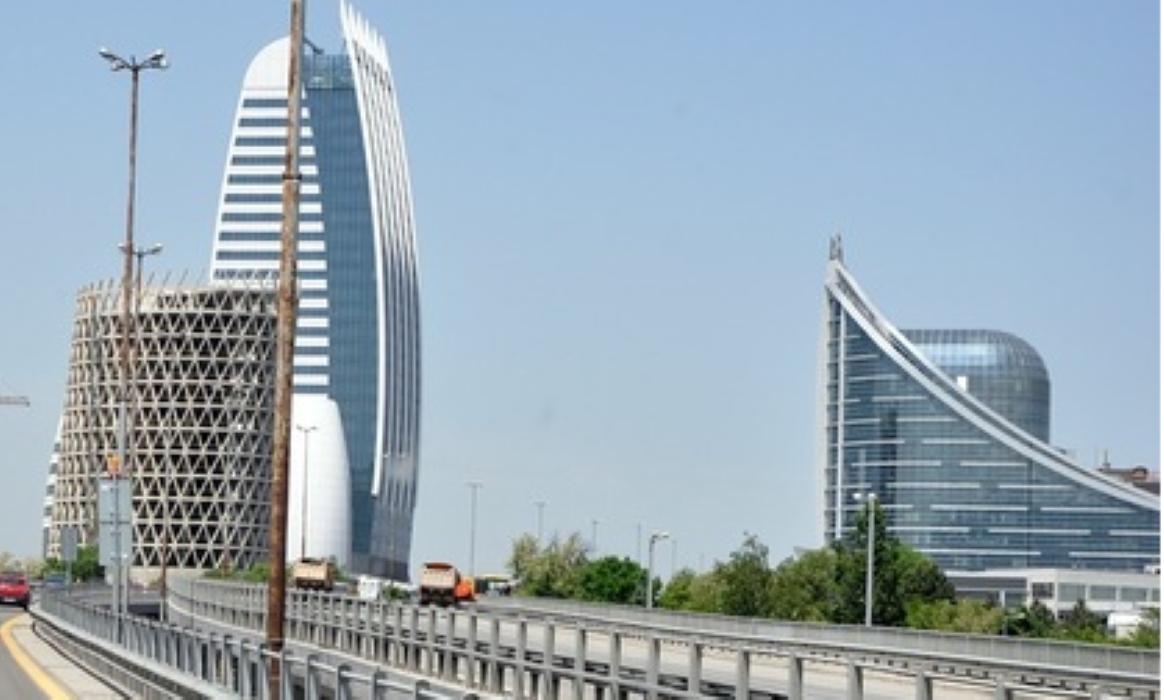
Reading the job boards honestly: English alone gets you BPO and customer-support roles in Sofia at 1,500 to 2,500 EUR gross, or English-teaching at 1,200 to 2,200 EUR. English plus a second European language is materially stronger. English plus a technical skill (development, finance, engineering) is the strongest combination; this is where senior international salaries live.
Outside Sofia, Plovdiv, Varna and Burgas, English-only job hunting is hard. Shumen, Veliko Tarnovo, Pleven and the regional towns have functioning local economies but very few foreign-employer roles. A Brit moving to Shumen on local salary expectations is on the wrong financial planet; a Brit moving to Shumen on UK remote income or a UK pension is on the right one. See the Where to Live in Bulgaria guide for the city-by-city employer picture.
For a post-Brexit Brit hired by a Bulgarian employer, the two main residence-and-work routes are the Single Residence and Work Permit (the standard route) and the EU Blue Card (for qualified roles). Each is employer-driven and the employer carries most of the paperwork.
Source: European Commission EU Immigration Portal, Bulgaria employed-worker page.
Source: EU Immigration Portal, Bulgaria EU Blue Card page.
For a Bulgarian employer hiring a Brit, the cost and time burden of the Single Permit (around 500 to 800 EUR plus 2 to 3 months of HR work) is real but not prohibitive. The Blue Card is materially easier and is the right choice where the role qualifies. The question to ask any Bulgarian employer offering a job: which route are you using, who carries the application cost, and what is the realistic start date? If the answer is vague or the employer expects you to do the work, walk away.
The single most-asked question in Shumen.UK's inbox: "Can I just work remotely from Bulgaria for my UK employer?" The honest answer is yes in principle and frequently no in practice. Here is the operating framework.

The standard mistake is to assume that a UK employment contract + UK PAYE + UK bank account = the work is happening in the UK. It is not. Work is performed where the worker is physically sitting. GOV.UK's distance-working guidance is explicit: where an employee is hired abroad to work for a UK employer and physically works from home in another country, social security is due in the country where the employee is based, and the UK employer typically has to register a contributions account there.
For Bulgaria specifically, long-term remote work creates four overlapping issues:
A remote-from-Bulgaria arrangement is generally clean when it passes all five tests below. Failing any one of them creates compliance work; failing two or more usually means the arrangement is wrong.
"Just become a contractor" is the most common bad-advice answer to the remote-work question. It works in some cases; it creates false-self-employment risk in many others. If three or more of the following are true, the relationship is likely employment masquerading as freelancing, and both worker and employer can be reassessed for back-tax, social security and penalties.
If you have worked in UK contracting in the last decade, the Bulgarian NRA's approach to false self-employment is essentially the local version of IR35 / off-payroll working. The substance-over-form test is the same: pay regardless of label, control of work, integration into the engager's organisation, no real business risk. The remedy is also similar: the relationship can be reclassified as employment, with back-payment of employer and employee social security, income tax, penalties and interest. UK contractors who have spent a decade learning to keep their engagements clean for HMRC should think of the eight red flags below as the Bulgarian version of the same exercise.
1. One client who provides 80%+ of your income.
2. Fixed working hours set by the client (9-to-5 Monday to Friday).
3. Company equipment (laptop, phone, software) supplied by the client.
4. Manager controls daily work: line manager, weekly stand-ups, performance reviews.
5. Paid leave and sick policy that mirrors an employee benefits package.
6. No business risk: paid hourly or monthly regardless of output; no exposure to losses.
7. Cannot subcontract or delegate any of the work.
8. Integrated into staff: in the internal company directory, team meetings, internal communications, on the staff Christmas card list.
For a Brit moving to Bulgaria with an existing UK employment contract, the realistic options are: (1) negotiate a switch to an EOR or Bulgarian payroll arrangement with the UK employer; (2) leave the UK job and look for a Bulgarian-employer role; (3) leave the UK job and set up as a genuine contractor or EOOD with multiple clients. The fourth option (continue working remotely on the UK contract while pretending nothing has changed) is the one that creates the biggest mess down the line, usually when HMRC, the Bulgarian NRA or both notice the residence pattern.
The named rule that holds this whole section together: remote work is not illegal; unplanned remote work is the problem. The work may be online; the tax, labour law and social security still attach to a physical country.
For Brits with multiple clients, freelance skills or a real business, self-employment in Bulgaria is competitive: 10% flat tax, low social-security base, light VAT below the threshold, and minimal bureaucracy compared with the UK. Here is the practical setup.
| Freelance / free profession | ET (sole trader) | EOOD (one-person Ltd) | |
|---|---|---|---|
| Legal personality | Personal | Personal (trading name) | Separate legal entity |
| Liability | Personal, unlimited | Personal, unlimited | Limited to share capital |
| Minimum capital | None | None | approx 1 EUR (historical 2 BGN) |
| Registration | BULSTAT + NRA self-insured | Commercial Register + NRA | Commercial Register + NRA |
| Income tax | 10% on profit (or 25% standard deduction for free professions) | 10% on profit (same scale as personal) | 10% corporate tax |
| Dividend tax | n/a | n/a | 5% on profits taken as dividend |
| Social security | Self-insured (~250 to 400 EUR/month on the typical contribution base) | Self-insured (same as freelance) | If you employ yourself, normal payroll; if dividend-only, lower |
| Accounting | Light | Light | Mandatory annual financial statements; annual filing |
| Best for | One-person consulting, design, writing, translation, IT contracting with a few clients | One-person trading or retail with personal liability acceptance | Higher revenue, multiple clients, B2B invoicing, limited-liability protection |
Source: Bulgarian Ministry of Economy and Industry, "Starting up a business as a self-employed person".
Bulgarian VAT (DDS) registration is mandatory above approximately 51,130 EUR annual turnover (the historical 100,000 BGN threshold, redenominated at the 1.95583 fixed rate). Below that, you can register voluntarily. There is a separate Article 97a registration that applies to cross-border services to EU business clients: it is mandatory for any Bulgarian freelancer providing taxable services to a VAT-registered client in another EU country, regardless of turnover. Article 97a registration is light (no Bulgarian VAT charged, no VAT returns due in Bulgaria) but it must be done before the first cross-border invoice. Failure to register is penalised.
The crossover usually happens at one of three triggers:
See the Business in Bulgaria guide for the full EOOD setup (Commercial Register, minimum capital, articles of association, opening a business bank account, accounting requirements, dividend-vs-salary optimisation). This guide deliberately does not duplicate that.
A Bulgarian employment contract is a written document, in Bulgarian, that must be signed before you start work. Get it translated before you sign. Check every line on the list below.
Do not sign a Bulgarian-language contract you cannot read, even if the recruiter or HR insists "it is standard". A certified Bulgarian-to-English translation from a sworn translator runs around 30 to 60 EUR for a typical 4-to-6-page contract. The cost is trivial against the salary you are agreeing to. The same translator can verify the work-permit basis is correctly recorded.
British workplace habits do not all translate. Some Bulgarian workplace conventions feel familiar; others surprise. The bigger the employer, the closer to international norms; the smaller the employer, the more Bulgarian the culture.
You can have a successful career in Sofia in IT, finance or BPO without speaking Bulgarian. You will have a more enjoyable life, and a fuller career, with it. International companies operate in English internally, but the moment you leave the office, the bureaucracy, the GP, the bank counter staff, the building manager and the neighbour all operate in Bulgarian. Investing in Bulgarian (italki, the Sofia University extension course, the Bulgarian Free Course, the Babbel app) pays off both at work and beyond it. See our Integration & Mental Health guide for the 6-month dip and the 70/30 bubble rule.
The patterns that catch British workers in Bulgaria most often, distilled from a decade of Shumen.UK reader stories and the recurring themes on the expat forums.
The questions Shumen.UK readers ask most about working in Bulgaria, with sourced answers.
Yes, but not automatically. Since 1 January 2021, newly arriving British citizens are third-country nationals in EU terms and need a work-permit-based route unless they hold Withdrawal Agreement status, EU citizenship, Bulgarian permanent residence, or family-reunification rights. The main routes are the Single Residence and Work Permit (employer-driven, requires a labour-market test), the EU Blue Card (highly qualified roles with at least a six-month contract), seasonal work permits, intra-corporate transfer, or self-employment permit. British nationals already living in Bulgaria before 2021 who hold a valid Article 50 residence card under the Withdrawal Agreement keep labour-market access without these new permits. → Section 2 (Legal status)
No. EU, EEA and Swiss citizens have full labour-market access in Bulgaria without any work permit. They can take Bulgarian employment, work self-employed, or set up a Bulgarian company on the same terms as Bulgarian citizens. They still have to handle the practical side: residence registration if staying longer than three months, Bulgarian tax registration with the NRA, social-security contributions (13.78% employee share plus 19% to 20% employer share), and Bulgarian health-insurance enrolment with NHIF. Irish citizens are EU citizens; British citizens are not, unless they hold a second EU passport. → Section 2 (Legal status)
Possibly, but it must be set up correctly. The UK employment contract on its own does not make the Bulgarian work invisible. GOV.UK's distance-working guidance says where an employee is hired abroad and physically works from home in another country, social-security contributions are due in the country where the employee is based, and the UK employer normally has to register a contributions account there. Long-term remote work from Bulgaria can also create Bulgarian tax residency for the worker (after 183 days), Bulgarian labour-law application, and Bulgarian permanent-establishment risk for the UK employer. The clean structures are usually: Bulgarian payroll under the UK employer, an Employer of Record arrangement, a genuine contractor relationship with multiple clients, or a Bulgarian EOOD invoicing the UK client B2B. → Section 7 (Remote work)
The National Statistical Institute's preliminary 2025 figure puts the average gross annual wage under labour contract at 31,239 BGN, which is approximately 15,970 euros a year or 1,330 euros a month gross, at the fixed conversion rate of 1 EUR = 1.95583 BGN. The 2026 figure is expected to be marginally higher. The mean hides large variation: Sofia salaries are significantly higher than regional cities (especially in IT, finance and multinational BPO), while many local jobs outside the big cities sit at the national minimum wage or just above. Multilingual customer-service roles in Sofia typically pay 1,500 to 3,000 euros a month gross. Mid-level Bulgarian developer roles pay 3,000 to 6,000 euros. Senior international tech roles in Sofia can clear 8,000 euros a month. → Section 4 (Gross / net / employer cost)
Under the Bulgarian Labour Code, the normal working week is 5 days and 40 hours, based on 8 hours per day. Basic paid annual leave is a minimum of 20 working days, rising to at least 26 working days for workers with a permanent reduced workability of 50% or more. Public holidays are separate from annual leave: Bulgaria observes around 12 paid public holidays a year, including New Year, 3 March (Liberation Day), Orthodox Good Friday and Easter Monday, 1 May, 6 May (St George / Army Day), 24 May (Bulgarian Education Day), 6 September (Unification Day), 22 September (Independence Day) and Christmas. Public holidays falling at weekends usually shift to the following Monday. → Section 3 (Labour Code)
Gross is the headline number on a job offer. From gross, the employee pays 13.78% in mandatory social-security and health-insurance contributions, then 10% personal income tax on the remainder. A 2,000 euro gross monthly salary leaves roughly 1,550 euros net in the bank. The employer separately pays 18.92% to 19.62% on top of gross as the employer social-security share, so total employer cost on a 2,000 euro gross is around 2,390 euros. Bulgarian payslips often itemise each component (sotsialno osiguryavane, zdravno osiguryavane, danak), and the numbers should reconcile. Always ask whether a quoted salary is gross or net before accepting an offer. → Section 4 (Gross / net / employer cost)
Sometimes in Sofia, occasionally in Plovdiv, Varna or Burgas, rarely anywhere else. English-only roles are concentrated in multinational BPO and customer support (TELUS, TaskUs, Concentrix, Coca-Cola Hellenic shared services), international IT companies (VMware, SAP Labs, HP, Bosch Engineering), embassies and consulates, English-teaching schools, and the tourism/hospitality sector along the coast. English plus a second European language (German, French, Italian, Spanish, Nordic) is significantly more valuable than English alone. English plus a technical skill (development, finance, engineering) is the strongest combination. Outside Sofia, Plovdiv and the coast, English-only job hunting is hard. → Section 5 (Job market)
The Single Permit is the standard route for a Bulgarian employer to hire a non-EU citizen for ordinary employment. The employer applies to the local Directorate Employment Office, which routes the application to the central Employment Agency for a labour-market test (essentially a check that the role could not be filled by an EU or Bulgarian candidate). If approved, the application passes to the Migration Directorate of the Ministry of Interior, which issues the combined residence-and-work card. The Single Permit is normally tied to one employer and one job title, and is valid for up to 12 months at a time, renewable. Changing employer mid-permit requires a fresh application; losing the job can end the residence right. → Section 6 (Single Permit + Blue Card)
The EU Blue Card is the EU's residence-and-work route for highly qualified third-country nationals. In Bulgaria it requires a binding job offer or contract for highly qualified employment of at least six months, evidence of higher-education qualifications or equivalent experience, and a salary above the threshold set in Bulgarian law. Maximum processing time under Bulgarian law is three months. The Blue Card is more portable than the Single Permit (it can be used for intra-EU mobility after a qualifying period), has fewer labour-market-test hurdles for genuinely high-skilled roles, and is the realistic route for British developers, engineers, finance professionals and senior managers being hired by Bulgarian or international employers in Bulgaria. It is not a 'digital nomad visa' and is tied to a specific qualified-employment role. → Section 6 (Single Permit + Blue Card)
Yes, if you have the right to reside and work, and you register properly. The Bulgarian process for freelance practitioners is to register with the BULSTAT Register within 7 days of the activity starting, then register as self-insured (samoosiguryavash se) with the NRA for social-security and health-insurance contributions. Activity income is taxed at the 10% flat rate after deductible expenses (or a 25% standard deduction for free professions). VAT registration is mandatory above the approximately 51,000 EUR annual turnover threshold (the historical 100,000 BGN figure now redenominated), with a separate Article 97a registration required for cross-border services to EU clients above 0 euros. Non-EU citizens using self-employment as their immigration route need a self-employment permit issued by the Employment Agency before applying for a Type D visa. → Section 8 (Self-employment)
Three different ways to invoice in Bulgaria. Freelance / free profession (svobodna profesiya) is for regulated activities (lawyers, accountants, doctors, architects, translators) and creative work (writers, designers, consultants); the freelancer pays personal income tax and self-insured social contributions, with simple invoicing. ET (ednolichen targovets, sole trader) is an unlimited-liability registered business under a personal trading name, taxed at the same 10% personal rate but with full personal liability for business debts. EOOD (ednolichno druzhestvo s ogranichena otgovornost) is a limited liability company with a roughly 1 EUR minimum share capital (the historical 2 BGN figure), separate legal personality, 10% corporate tax plus 5% dividend tax on profits taken out, mandatory accounting and Commercial Register filings. For most British remote workers the choice is between freelance simplicity and EOOD limited liability, with the right answer depending on annual turnover, number of clients, and VAT exposure. → Section 8 (Self-employment)
Get the contract translated into English before signing it. Then check: the employer's full legal name and EIK company number, the job title and description, the place of work (city / remote / hybrid), the start date, whether the contract is indefinite or fixed-term, the probation period and which side it favours, the gross monthly salary and the payment date, the bonus or benefits structure (food vouchers, transport card, private health insurance, sports card, 13th salary), the working hours and any overtime rules, the annual leave entitlement, the notice period for both sides, confidentiality, IP and non-compete clauses, any training-cost repayment clauses, and whether the contract is registered with the NRA. Refuse to start work before the residence permit / work permit is valid; refuse partial cash payments. A contract you cannot read is a contract you have not agreed to. → Section 9 (Contract checklist)
Three rules that hold this whole guide together:
And the honest meta-rule: Bulgaria is easier when income comes from a pension, remote work properly arranged, a real business, or a high-skill international role. Arriving in 2026 needing local Bulgarian wages without Bulgarian language and without a scarce technical skill is the hardest version of the move. Plan accordingly.
Related guides: Business in Bulgaria · Taxes · Residency · Moving to Bulgaria · Banking · Where to Live in Bulgaria · Cost of Living · Brexit & WA Rights · Legal Deep-Dive · Integration & Mental Health · All guides.