Bulgarian Food Guide: What to Order and How to Read the Menu
Bulgarian food is more than a checklist of banitsa, Shopska salad and grilled meat. It is a seasonal table built around vegetables, yoghurt and white-brined cheese, breads and pastries, beans, preserved foods, grills and slow-cooked regional dishes. This practical guide helps British expats and visitors build a meal, decode a Bulgarian menu, order politely, explore food from the Rhodopes to the Black Sea, and ask safer questions about allergies, gluten, vegetarian and vegan food. Dish names travel across the Balkans, recipes change by household, and that variety is part of the point.
By Adrian Dane · Published 12 August 2026 · Sources and food-information rules checked 12 August 2026
Build a Bulgarian meal without ordering the whole menu
Choose one item from each stage, then stop when you have enough. Bulgarian menus can be long and serving weights matter. Sharing a salad or starter leaves room for the regional dish you actually came to try.
StartSalad or cold starterShopska, roasted peppers, lyutenitsa or a dairy-based spread
ChooseOne cooking styleGrill, clay pot, stew, fish or a vegetable and bean dish
AddBread or side if wantedBread and garnitura may be separate menu items
FinishDessert or coffeeGarash cake, yoghurt, seasonal preserve or simply coffee
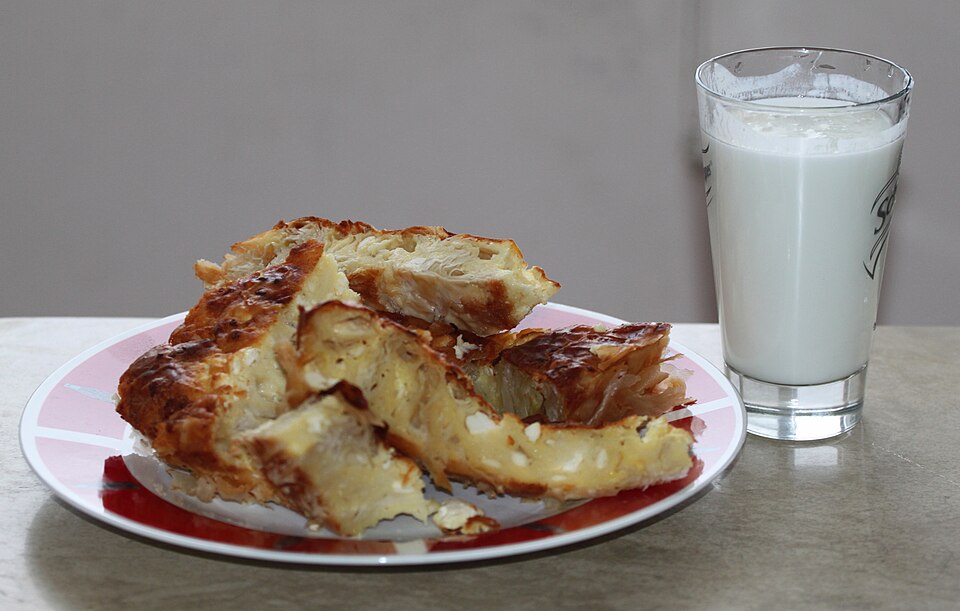
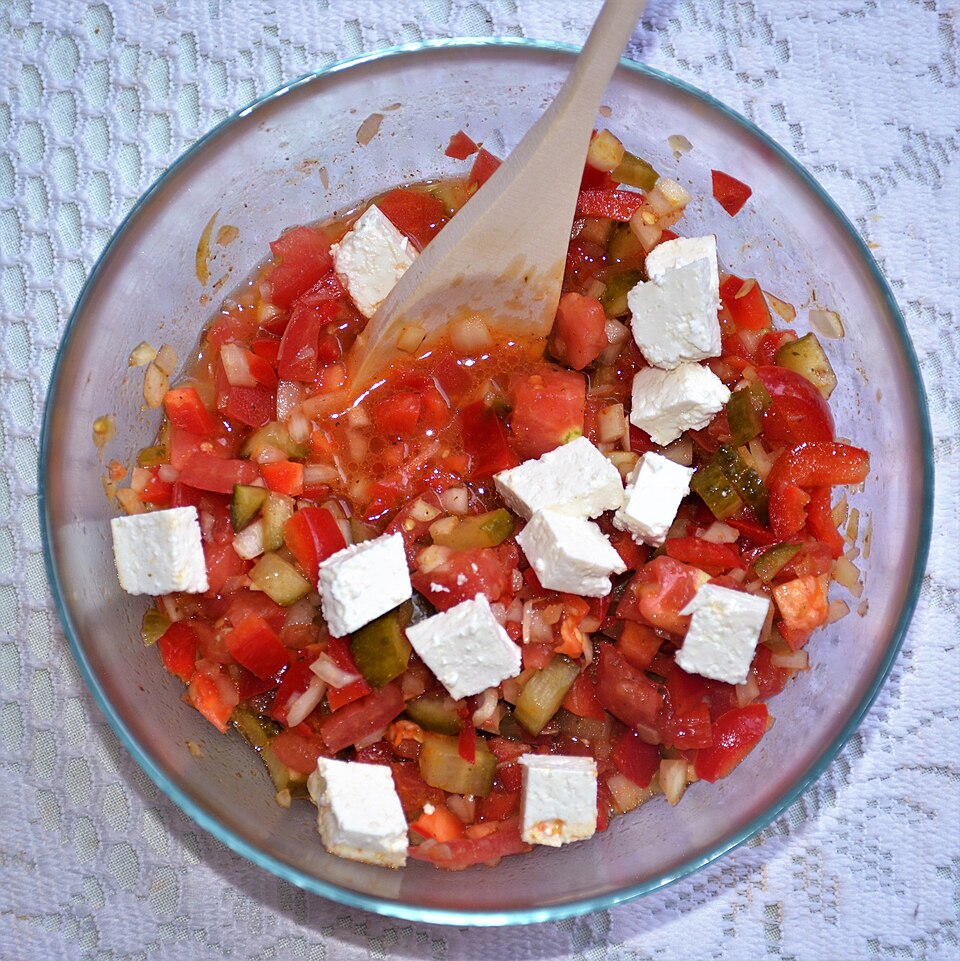
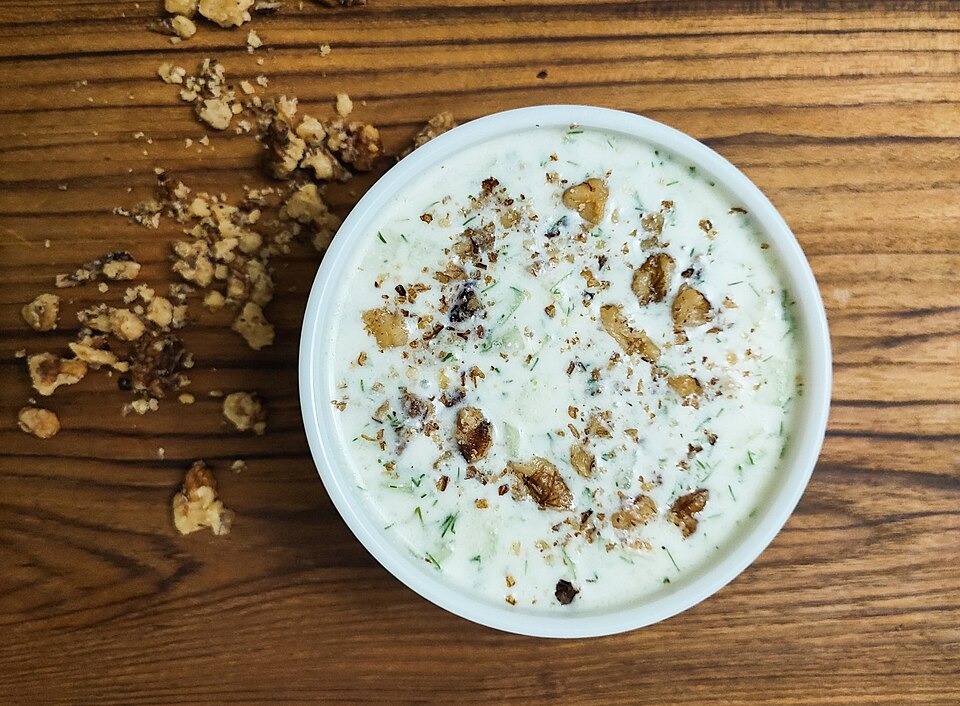
Banitsa and yoghurtA bakery breakfast, not just a tourism symbol. Photo: Biso / Biser Todorov, CC BY 3.0; cropped for display.Shopska saladSummer vegetables under sirene, with variations by kitchen. Photo: Silar, CC BY-SA 4.0; cropped for display.TaratorCold yoghurt and cucumber soup. Ask whether walnuts are included. Photo: Sumit Surai, CC BY-SA 4.0; cropped for display.
Bulgarian cuisine is seasonal, produce-led and distinctly Balkan. Expect salads served as a proper first course, yoghurt and white-brined cheese in both cold and cooked dishes, breads and filled pastries, soups, beans, grilled pork and minced meat, clay-pot cooking, freshwater and Black Sea fish, and a strong tradition of pickling and preserving.
The easiest mistake is to look for a single national plate. Bulgaria sits at a crossroads of southeastern Europe, and its food has developed through long exchange with Turkish, Greek, Serbian, Romanian and wider Mediterranean cooking. Moussaka, baklava, sarmi and gyuvech cross modern borders. Their Bulgarian versions still have recognisable ingredients, textures and meal contexts, but arguments about who “owns” them tell you less than tasting how a family or region makes them.
A Bulgarian table often begins with a salad and stays there longer than a British diner expects. Shopska salad, roasted peppers, cured meat, sirene, a yoghurt-based spread or another meze may be shared while people talk and drink slowly. A cooked main follows, but dishes do not always arrive in the rigid starter-main-dessert sequence assumed in Britain. At a busy or traditional restaurant, food may come when each item is ready. If eating together matters more than speed, say so when ordering and ask whether dishes can arrive together.
The core flavour vocabulary
Bulgarian food is generally seasoned rather than chilli-hot. Savoury (chubritsa), paprika, black pepper, garlic, dill and parsley appear frequently. Vinegar and sunflower oil shape salads; yoghurt supplies acidity; sirene supplies salt; walnuts appear in tarator, sauces and desserts. Hot peppers, chilli flakes or a fierce relish may arrive separately, so “not spicy” on the main dish does not make every bowl on the table mild.
Clay-pot stews, beans, stuffed vegetables, potatoes, rice, sauerkraut and meat become more prominent in cooler months.
Grilled
Kebapche, kyufte, sausages, pork and chicken appear under skara. Mixed grills can be far larger than one person needs.
Preserved
Lyutenitsa, turshiya, sour cabbage, dried meats, jams and compotes carry summer and autumn produce into winter.
Is Bulgarian food healthy? That question is too broad to answer honestly. A tomato salad, bean soup and grilled fish are very different meals from a cheese pastry, mixed grill and syrup-soaked dessert. The cuisine offers vegetables, pulses and fermented dairy alongside salt-heavy cheese, cured meat, fried dough and generous portions. Choose the meal in front of you rather than giving a national cuisine a health label.
Research basis: Bulgarian Ministry of Tourism cuisine material, the Bulgarian Academy of Sciences Interactive Culinary Map and University of Plovdiv cultural orientation, checked 12 August 2026.
Section 2
Which Bulgarian dishes should you try first?
A useful first list covers different kinds of eating, not ten heavy dishes at one sitting. Try a bakery breakfast, a fresh starter, one grill item, one slow-cooked dish, one meat-free dish and one regional speciality during your first few days.
Dish
What it is
Best moment
Check if needed
Banitsa баница
Layered or coiled filo pastry, commonly filled with sirene and egg; pumpkin, spinach and other versions exist
Warm from a bakery at breakfast
Gluten, milk, egg; sweet/savoury filling
Shopska salad шопска салата
Tomatoes, cucumber, pepper and onion topped with grated or crumbled sirene
Shared at the start of a summer meal
Milk; olives or pepper preparation varies
Tarator таратор
Cold soup of yoghurt, cucumber, dill, garlic and water, often with walnuts
Lunch on a hot day
Milk and possible walnuts
Kebapche кебапче
Elongated grilled seasoned minced meat, usually served with a side chosen separately
A simple grill order
Meat mix and possible gluten/binders
Kyufte кюфте
Round seasoned minced-meat patty, often with onion; recipes differ
Beside a salad, beans or potatoes
Meat mix and possible gluten/binders
Kavarma кавърма
A family of slow-cooked meat, onion, pepper and spice dishes, sometimes served in pottery
When you want a regional, cooked main
Recipe, meat, fat and portion size
Gyuvech гювеч
A clay vessel and the casserole cooked in it, with vegetables and often meat; rice may be added
A slower lunch or dinner
Meat, stock and dairy additions
Bob chorba боб чорба
Bean soup with vegetables and herbs, from meat-free monastery style to versions with sausage
A filling lunch, especially in cool weather
Stock, sausage, lard and flour
Patatnik пататник
Rhodopes potato dish with onion and herbs, cooked as a thick cake; ingredients vary
In the central Rhodopes
Egg, dairy and cooking fat
Garash cake торта Гараш
Rich chocolate and walnut cake associated with Bulgaria
One slice with coffee
Nuts, egg and dairy
What should a first Bulgarian meal look like?
For two people, share one Shopska salad, then choose either two small grill portions or one cooked dish each. Add bread only if you want it, because it is often ordered separately. If the menu gives weights, use them: a 400 g clay-pot dish after a large salad is a full meal, while two kebapche without a side may be deliberately simple.
If you dislike yoghurt, do not force tarator into your first order. Choose roasted peppers, kyopolou (a roasted vegetable spread), lyutenitsa or a bean salad. If you do not eat pork, ask what meat is in minced dishes rather than assuming “meatball” means beef. If you dislike garlic, ask about cold soups, roasted pepper dishes and dairy spreads, where garlic may be present without appearing in the English title.
Look beyond the translation column. An English menu may flatten kavarma, gyuvech and sach into “meat with vegetables”. The Bulgarian name, cooking vessel and region often tell you more. Ask what the kitchen recommends today.
Section 3
What do Bulgarians eat for breakfast and as street food?
The most characteristically Bulgarian breakfast is bought from a neighbourhood bakery, not assembled from a hotel buffet. Banitsa with ayran, yoghurt or boza is the obvious starting point, but bakeries also sell filled breads, cheese rolls and sweet pastries that change through the morning.
Banitsa is a family, not one shape
Classic banitsa uses thin pastry sheets with sirene and egg, but the pastry may be layered, rolled or coiled. Fillings can include spinach or other greens; sweet forms include pumpkin and walnut tikvenik and apple variations. New Year banitsa may contain paper fortunes or symbolic dogwood buds. A bakery label or quick question matters if you expect cheese and receive pumpkin, or if egg, dairy, nuts or sugar affect your diet.
Mekitsi
Pieces of fried dough, usually eaten with sirene, jam, honey or icing sugar. They are closer to a breakfast treat than an everyday nutritional promise.
Milinki
Soft clustered rolls, often topped or filled with cheese and butter. Ask what is inside because local and bakery recipes differ.
Princesses
Open-faced toasted bread, commonly topped with seasoned mince or kashkaval. The playful name does not identify the topping.
Kifla and kozunak
Kifla is a crescent-shaped sweet or filled roll. Kozunak is enriched sweet bread strongly associated with Easter but sold more widely too.
Boza and ayran are opposites
Boza is a thick, sweet-tart fermented cereal drink. Its beige colour has misled more than one Brit expecting chocolate milk. Fermentation and alcohol content vary by product, so anyone avoiding alcohol entirely should read the label rather than relying on a general description. Ayran is a cold drink of yoghurt, water and salt. It is sharp and refreshing beside rich pastry, and plainly unsuitable for a milk allergy.
Street food is not always “traditional Bulgarian”
Döner, pizza slices, grilled sandwiches, pancakes and fried snacks are part of everyday urban eating even when their origins are elsewhere. A skara kiosk may sell kebapche or kyufte in bread with salad and relish. Bakeries are busiest in the morning and may sell out of particular pastries by lunch. At a market, corn, roasted nuts and seasonal fruit can be a better snack than buying another pastry merely because it looks Bulgarian.
For current bakery, cafe and takeaway costs, use the live cost-of-living tracker. This guide deliberately avoids freezing a 2026 price into an evergreen food page.
Section 4
Which Bulgarian salads, soups and starters are worth ordering?
This is where Bulgarian food is most accessible and most easily misunderstood. Salads are substantial first courses, soups can be a complete lunch, and a “vegetable” starter may still contain cheese, egg, yoghurt, nuts or cured meat.
Name
What usually arrives
Useful distinction
Common checks
Shopska
Tomato, cucumber, pepper, onion and sirene
The simplest famous salad; recipe and cheese quantity vary
Milk
Ovcharska
A larger “shepherd's” salad with additions such as egg, mushrooms, ham, olives and cheese
Not just a bigger Shopska and rarely vegetarian by default
Milk, egg, meat
Snezhanka
Thick yoghurt and cucumber salad with dill and garlic, often walnuts
Think thick tarator rather than a green salad
Milk, nuts
Kyopolou
Roasted aubergine and pepper spread with tomato, garlic and herbs
Often plant-based, but ask about recipe and shared preparation
Recipe and cross-contact
Lyutenitsa
Cooked red pepper and tomato relish, from smooth and sweet to coarse and hot
A pantry staple served with bread, cheese or grills
Recipe, chilli, label ingredients
Chushki burek
Roasted pepper stuffed with sirene and egg, then breaded and fried
Vegetarian but not vegan or gluten-free
Milk, egg, gluten, fryer
Bob chorba
Bean soup with vegetables and herbs
May be meat-free or enriched with sausage, stock or lard
Meat, stock, fat, flour
Shkembe chorba
Tripe soup, commonly finished with milk and served with garlic-vinegar and chilli
A strong-flavoured late-night or restorative favourite
Milk and exact preparation
Supa topcheta
Small meatball soup, often thickened or finished with yoghurt and egg
Looks light but contains several animal ingredients
Meat, milk, egg, possible gluten
Sirene is the salty white-brined cheese grated over Shopska and folded into banitsa. Kashkaval is the firmer yellow cheese used for grilling, baking and toppings. Neither behaves exactly like Cheddar, and both declare milk as an allergen. The supermarket guide explains how to recognise them on shelves and distinguish cheese from imitation products.
Cold plates often stay on the table while the main course arrives. That is normal, not evidence that the waiter forgot to clear. If you want a quick lunch, soup plus bread may be enough. If you want a long social meal, salad, small starters and a shared bottle can occupy the first hour before anyone thinks about dessert.
“Salad” is not a dietary category. Ovcharska may contain ham and egg, Snezhanka contains yoghurt and often walnuts, and Shopska contains sirene. Ask about the named dish rather than requesting “a safe salad”.
Section 5
Which Bulgarian main dishes should meat and fish eaters know?
Bulgarian mains divide usefully into grill, clay-pot or slow-cooked dishes, stuffed vegetables and regional fish. The menu name may describe the vessel or method rather than a fixed recipe, so ask what meat and accompaniments this kitchen uses.
From the grill: skara
Skara means grill. Kebapche is elongated seasoned mince; kyufte is round and usually has a different seasoning and texture; karnache is a coiled or linked fresh sausage. Pork steaks, chicken, sausages and mixed grills sit in the same section. A meshena skara can combine several meats and is often designed for a very hungry diner or for sharing.
Do not infer the meat from shape. Minced dishes may use pork, beef or a mixture, and recipes may include bread, other binders or seasoning blends. Ask if pork, gluten or another ingredient matters. Sides such as chips, beans, rice, cabbage salad or lyutenitsa may be separate rather than automatically included.
Slow cooking and clay pots
Kavarma
Usually meat slowly cooked with onion, pepper, tomato and spices, with marked regional and household variation. An egg may be added in some pottery servings.
Gyuvech
Both the earthenware vessel and a broad casserole family. Official tourism material shows meat with potatoes and mixed vegetables, with rice in some regional versions.
Bulgarian moussaka
Typically built around diced potatoes and minced meat under an egg-and-yoghurt topping, unlike the aubergine-led version many Brits know from Greek restaurants.
Sach
A heated clay or iron serving plate carrying sizzling meat, vegetables or a mixture. “Sach” tells you the presentation, not the exact ingredients or portion.
Kapama
A Bansko-area slow-cooked layering of sauerkraut, rice and several meats. It is a winter feast dish, not a light cabbage casserole.
Chomlek
A long-cooked Bansko and southwest dish commonly using beef, potatoes, onion, wine and spices. Recipes and vessels vary.
Stuffed, wrapped and baked
Palneni chushki are stuffed peppers. The filling may be rice and vegetables, rice with mince, or sirene and egg. Sarmi wrap a rice-based filling in vine or cabbage leaves, again with meat-free and meat versions. Drob sarma is different: a baked rice and offal dish associated especially with lamb and spring celebrations. Never shorten a dietary question to “Are the sarmi vegetarian?” without asking about stock and meat.
Black Sea and freshwater fish
On the coast, look for tsatsa (small fried sprats), safrid (horse mackerel), mackerel, turbot, mussels, fish soup and fish baked plakia-style with vegetables. Inland menus often feature trout and carp. Nikulden, St Nicholas Day, is strongly associated with carp, but fish supply and menus remain seasonal and local.
A menu may price a whole fish by 100 grams rather than by the finished plate. Ask for the approximate weight before agreeing, especially with larger fish. “Fresh” and “local” are claims to confirm with the venue, not assumptions created by a sea view. The Sunny Beach guide owns resort-specific dining choices and the route to Nessebar or Sveti Vlas.
Section 6
What can vegetarians and vegans eat in Bulgaria?
Vegetarians can eat well in Bulgaria, especially when seasonal vegetables, beans, lentils, peppers, potatoes, rice and salads are at their best. Vegans need more precise questions because cheese, yoghurt, egg, butter, meat stock and shared cooking surfaces can hide behind an apparently vegetable-led name.
Good starting points, with confirmation
Bean and lentil dishes
Bob chorba, lentil soup, bean salad and monastery-style beans can be plant-based. Ask about sausage, bacon, lard and meat stock.
Roasted vegetables
Peppers, aubergine, mushrooms and potatoes are widely available. Ask whether butter, cheese or a shared meat grill is used.
Rice and stuffed vegetables
Meat-free peppers and sarmi can work well. Confirm the filling and stock because the same name also covers minced-meat versions.
Salads and pastries
Easy for vegetarians, harder for vegans. Sirene, yoghurt, egg and butter are central to Shopska, Snezhanka, banitsa and chushki burek.
What does postno mean?
Postno (постно) describes food for an Orthodox fasting context. It usually signals no meat, dairy or eggs and can be a useful route into vegan choices. It is not a regulated vegan logo or an allergy promise. Religious fasts have day-specific traditions, including occasions when fish is permitted, and a restaurant may use the label culturally rather than as a technical specification. Ask about fish, honey if relevant to your vegan practice, stock and shared cooking equipment.
Bez meso means “without meat”. It does not exclude cheese, egg, meat stock, lard or fish. A clearer restaurant question for a vegan is whether the dish contains meat, fish, milk, cheese, egg or butter. In small towns, a concrete ingredient list is often understood better than a debate about the English category “vegan”.
Без месо и месен бульон.
bez ME-so ee ME-sen bool-YON
Without meat or meat stock.
Има ли мляко, сирене, яйца или масло?
EE-ma lee MLYA-ko, see-RE-ne, YAI-tsa EE-lee MAS-lo
Does it contain milk, cheese, eggs or butter?
Това ястие постно ли е?
to-VA YAS-tee-eh POST-no lee eh
Is this a fasting-style dish?
Не ям свинско.
neh yam SVIN-sko
I do not eat pork.
Sofia, Plovdiv, Varna and other larger cities have dedicated vegan and vegetarian venues and clearer labelling. The current Visit Sofia Event Planners' Guide describes wide availability in the capital, but that should not be projected onto every village mehana. In a small town, a bean soup, salad without cheese, roasted vegetables and bread may be the realistic solution, provided the kitchen confirms stock and preparation.
For a much larger restaurant and dietary vocabulary, use the Bulgarian phrasebook. This section supplies the food logic; the phrasebook owns the full language reference.
Section 7
Which Bulgarian desserts and sweet pastries should you try?
Bulgarian sweet food ranges from rich celebration cakes and syrup-soaked Ottoman-influenced pastries to yoghurt, fruit preserves and seasonal bakery items. Dessert is not compulsory after a long mehana meal, and coffee is often the more realistic finish.
Garash cake
Dense chocolate and walnut layers with a glossy chocolate finish. Order one slice, check nuts, egg and dairy, and expect richness rather than sponge-cake lightness.
Tikvenik
Filo pastry filled with pumpkin, usually sugar and often walnuts and cinnamon. It belongs to the banitsa family but eats as a sweet pastry.
Baklava and kadaif
Syrup-soaked pastries shared across the region. Nuts, gluten and butter or other fats need checking. Styles range from crisp and restrained to intensely sweet.
Tolumbichki
Small ridged pieces of fried dough soaked in syrup. They are unapologetically sweet and usually ordered by portion or weight.
Mlyako s oriz
Rice pudding, literally milk with rice, often dusted with cinnamon. Familiar in form, Bulgarian in its place on everyday menus.
Yoghurt, honey and walnuts
A simple finish that lets the yoghurt do the work. It contains milk and nuts, and honey origin claims should be checked on the jar or menu.
Kozunak is the enriched braided sweet bread of Easter, often scented with citrus or vanilla and sometimes filled with nuts, raisins or chocolate. Kurabii are home-style biscuits with many recipes. Sladko is fruit preserve, traditionally offered in a small quantity with water in some homes and guesthouses. Green-fig jam is strongly associated with parts of the southern Black Sea and Strandzha area, while rose jam connects naturally with central Bulgaria's Rose Valley.
Ice cream, cheesecake, pancakes and creme caramel are common but not uniquely Bulgarian. Not every familiar dessert needs to be declared a national treasure. Choose the item that tells you something about the place or season, or simply stop when the meal has already done its job.
Section 8
How does Bulgarian food change from region to region?
There is no clean culinary border at each oblast sign. Mountain climate, coast, grain country, livestock, religious communities, trade routes and household memory overlap. Use regional labels as clues about what to seek, not proof that a dish exists nowhere else.
The Institute for Bulgarian Language at the Bulgarian Academy of Sciences built an Interactive Culinary Map from linguistic and ethnographic fieldwork. It maps dishes and the words used for them across the Bulgarian language territory, including communities beyond the present state border. That is a richer model than a tourism map that assigns one plate to one administrative region.
Area
Food signals
Examples to look for
Planning note
Rhodopes
Potatoes, beans, dairy, mountain herbs, lamb and slow cooking
Patatnik, klin, Smilyan beans, cheverme, kachamak and trout
Recipes change sharply between valleys and villages
Bansko and Mesta Valley
Winter preservation, sauerkraut, layered meat dishes and long clay-pot cooking
Bansko kapama, chomlek, nafpavok and Banski starets
Some names are local products, not generic dishes in every restaurant
Dobrudja and northeast
Wheat country, breads, poultry, vegetables and access to northern Black Sea fish
Dobruja-style breads, fish soup, safrid, stuffed carp and mussels
For Shumen readers, explore Dobrich, Varna hinterland and village markets
Southern Black Sea and Strandzha
Small fish, mussels, seasonal coastal cooking, figs and forest products inland
Tsatsa, mussels with rice, fish plakia, turbot, green-fig jam and Strandzha honey
Availability and catch are seasonal; a sea view proves nothing about origin
Thrace and Plovdiv area
Vegetables, rice, peppers, vineyards and broad lowland agriculture
Trahana, rice banitsa, vegetable and meat casseroles, foods paired with Mavrud
Modern Plovdiv also has a strong contemporary restaurant scene
Rose Valley and central Balkan
Dairy, eggs, mountain fish, beans, fruit preserves and cured meats
Panagyurski eggs, katak, rose jam, Balkan trout, File Elena and Troyan-area plum rakia
Protected product names have specifications; similar-looking meat is not automatically the protected item
Danube and north-central Bulgaria
River fish, grains, vegetables, orchard fruit and cured meats
Fish soups and baked fish, Gornooryahovski sudzhuk, local breads and fruit preserves
Check whether river fish is fresh, frozen or seasonal rather than assuming
Sofia and the west
A national crossroads where regional cooking meets modern dining
Traditional mehana dishes, bakeries, grills and food from every Bulgarian region
Sofia's variety is not evidence that every dish originated there
What should you seek around Shumen?
Shumen sits between the Danube plain, Dobrudja and the Black Sea rather than inside a single neat food box. That makes it a useful base for a route, not a reason to invent a signature dish. Start with Shumen's market and a neighbourhood bakery, noting what is in season and the Bulgarian name of one pastry or cooked dish. Combine Veliki Preslav with a short daily lunch menu rather than expecting a medieval-themed speciality. Continue 12 km from Shumen to Osmar for the local pelin wine context, booking any tasting and using a non-drinking driver. For coastal fish and mussel dishes, make the separate journey east towards Varna and Balchik and ask what the kitchen has that day.
This route gives a Shumen-based reader four different food lenses: city market, ordinary lunch, a documented local wine tradition and the northern Black Sea. The Shumen city guide provides the historical and travel orientation, while this page explains what the menu words mean.
Regional wine deserves its own journey. The Bulgarian wine regions guide covers grapes, appellations, winery visits and driving logistics. Here, the useful rule is simpler: ask for a local bottle or glass that suits the dish, and let the server explain why it belongs.
Regional evidence: Bulgarian Ministry of Tourism wine-and-culinary destination pages and the BAS Interactive Culinary Map, checked 12 August 2026. Examples are discovery prompts, not exclusive-origin claims.
Section 9
What food is seasonal or tied to Bulgarian holidays?
Bulgaria's four real seasons change the table. Summer brings salads, tarator and fruit; autumn is preserving season; winter leans into beans, pickles, sour cabbage and slow-cooked meat; spring celebrations bring eggs, enriched bread and lamb.
The food year
Spring
Leafy greens, nettles and early herbs enter soups and pastries. Easter brings dyed eggs and kozunak. Lamb is strongly associated with Easter and St George's Day.
Summer
Tomatoes, cucumber, peppers, watermelon, cherries and peaches make simple food exceptional. Shopska, tarator and grilled food suit long outdoor meals.
Autumn
Households roast peppers, cook lyutenitsa, dry herbs, make jams and prepare turshiya. Grapes and wine harvests shape many regions.
Winter
Beans, lentils, potatoes, pickles, sour cabbage, pork, cured meats and clay-pot dishes come forward. The food is practical before it is picturesque.
Holiday tables worth recognising
Christmas Eve (Badni vecher): a meat-free table, often with an odd number of dishes, may include beans, stuffed peppers, sarmi, pumpkin pastry, nuts and dried fruit. Counts and dishes vary by household.
Christmas and New Year: pork and sauerkraut dishes are common; New Year banitsa with fortunes is a much-loved ritual.
Easter (Velikden): dyed eggs and kozunak are the visual centre, with lamb in many family meals.
St George's Day (Gergyovden): lamb is strongly associated with the feast.
St Nicholas Day (Nikulden): fish, especially carp in many homes, anchors the meal.
Sirni Zagovezni: dairy, eggs, banitsa and halva appear in customs before the Orthodox fast.
Name days, village fairs and family visits can matter as much as national holidays. The social rule is contribution, not performance: ask the host what would help, bring an appropriate cake, fruit, chocolates, wine or flowers, and do not arrive determined to educate the table about its own traditions. The Bulgarian name-days guide covers invitations, gifts and the important odd-number flower rule.
Food festivals can be rewarding, but their dates and programmes are not evergreen. Search municipal and tourism calendars for the current year rather than travelling on the strength of an undated list. Use a festival to meet producers and taste variations, not as proof that the loudest stall owns the definitive recipe.
Section 10
How do Bulgarian restaurants and mehanas work?
A mehana is a traditional-style Bulgarian tavern, usually built around salads, shared starters, grills, slow-cooked dishes, local drinks and folk decor. It can deliver a memorable regional meal, but the word is a venue style, not a guarantee that every dish is homemade or that a hundred-item menu is cooked fresh.
Choose the right kind of place
Sign or name
What to expect
Best use
Question to ask
Механа mehana
Traditional menu and decor, often large selection and local alcohol
A long dinner and regional dishes
What is cooked here today?
Гостилница gostilnitsa
Unpretentious cooked food, soups, daily dishes and familiar classics
A practical local lunch
What is on the daily menu?
Обедно меню obedno menyu
Lunch menu with a smaller rotating selection
A focused lunch and good-value lead
Which dishes are still available?
Скара skara
Grilled mince, sausages, steaks and simple sides
Quick, direct meat order
What meat and binders are used?
Баничарница banicharnitsa
Bakery focused on banitsa and savoury pastries
Breakfast or a snack
What is the filling?
Сладкарница sladkarnitsa
Cakes, pastries, coffee and soft drinks
Dessert away from a heavy dinner
Which items contain nuts?
A normal meal rhythm
Menus are brought, drinks and a salad are ordered, and the table may continue choosing mains while the first items arrive. Bread is commonly ordered rather than placed free on the table. Shared plates are normal, but tell the server if each person wants a separate course. The bill comes when requested; lingering is not automatically poor service.
Serving weights are one of the most useful parts of a Bulgarian menu. A salad may be 350 to 500 grams, a cooked pottery dish substantial, and fish priced by weight. Read the grammage before ordering three starters per person. If a whole fish or market-price item lacks an obvious final total, ask the approximate weight and price before it goes to the kitchen.
Daily menus are often better indicators of what the kitchen has actually made than a laminated book of permanent dishes. A short lunch list can offer soup, beans, stuffed peppers, moussaka, chicken or a meat-free special. Arrive after the rush and the best item may be finished. “Nяма” (NYA-ma, there isn't any) is useful Bulgarian, not a personal rejection.
Food customs that surprise Brits
Salad can accompany rakia for a long time before the main.
Different dishes may arrive at different moments unless timing is discussed.
Bread and side dishes may be separate chargeable items.
A server who does not interrupt constantly may be leaving the table in peace.
At a home, refusing every offer can be read differently from taking a small portion and showing appreciation.
“Homemade” (domashno) is a description or marketing claim, not a food-safety or protected-origin certificate.
If the restaurant experience goes beyond custom into misleading pricing or an undeclared charge, keep the menu photo and receipt. The money guide covers practical payment and scam awareness. Do not rely on a future complaint to resolve a price or weight that could have been clarified before ordering.
Section 11
How do you read a Bulgarian menu and order politely?
You do not need conversational Bulgarian to eat well. Learn the menu structure, cooking methods, quantity and four polite questions. Cyrillic then becomes a tool rather than a wall.
Bulgarian
Say it
Meaning
Why it matters
Салати
sa-LA-tee
Salads
Often the first and largest shared course
Предястия
pred-YAS-tee-ya
Starters
Cold and hot small plates, not always small
Супи
soo-PEE
Soups
A practical lunch category
Основни ястия
os-NOV-nee YAS-tee-ya
Main dishes
Cooked plates, casseroles and house specialities
Скара
ska-RA
Grill
Minced meat, sausages, steaks and skewers
Гарнитури
gar-nee-TOO-ree
Side dishes
May need ordering separately
Постни ястия
POST-nee YAS-tee-ya
Fasting-style dishes
Useful vegan lead, but confirm ingredients
Десерти
de-SER-tee
Desserts
Cakes, pastries, yoghurt and sweets
Напитки
na-PEET-kee
Drinks
Soft drinks, water and alcohol
Грамаж
gra-MAZH
Serving weight
The quickest defence against accidental over-ordering
Cooking words reveal the plate
Na skara means grilled; pecheno baked or roasted; parzheno fried; vareno boiled; zadusheno stewed or braised; lyuto hot or spicy. Domashno means homemade or home-style. Presno can mean fresh, but a descriptive word is not proof of origin or handling.
Може ли меню?
MO-zhe lee me-NYU
Could I have a menu?
Какво препоръчвате?
KAK-vo pre-po-RA-chva-te
What do you recommend?
Какво има в това ястие?
KAK-vo EE-ma v to-VA YAS-tee-eh
What is in this dish?
Не люто, моля.
neh LYU-to, MO-lya
Not spicy, please.
Може ли с карта?
MO-zhe lee s KAR-ta
Can I pay by card?
Сметката, моля.
SMET-ka-ta, MO-lya
The bill, please.
Pointing at a written phrase is fine. For dietary needs, show the Bulgarian text and ask the server to confirm, rather than delivering a memorised sentence too quickly to understand the reply. The full restaurant and dietary phrasebook contains a much larger searchable list.
One high-leverage skill: learn Cyrillic food letters and the words for salad, soup, grill, side, fasting-style and weight. Even before you speak Bulgarian, you can compare the Bulgarian and English columns and spot when a translation has omitted the useful detail.
Section 12
How much should you tip and how do you pay in Bulgarian restaurants?
Tipping is customary for satisfactory table service but discretionary. A public visitor guide from Bulgaria's National Statistical Institute suggests around 10% when service has been up to scratch. Treat that as practical guidance, not a compulsory national charge.
Check the bill before adding a tip. If a service amount is shown, ask what it is rather than automatically paying twice. At a cafe, bakery counter, takeaway or self-service venue, rounding or leaving change may be enough and no tip is owed by rule. At a long table-service dinner, a clear percentage or rounded amount is easier for everyone.
Cash, card and the “thank you” ambiguity
Card acceptance is widespread in cities and tourist areas, but a small village venue, market stall or temporary kiosk may still require cash. Ask „Може ли с карта?“ before ordering if payment method will determine what you buy. Do not assume the card terminal can add a tip. Ask, or leave a separate cash tip.
When paying cash, state what you want. „Задръжте рестото“ (za-DRASH-te RES-to-to) means “keep the change”. „Ресто, моля“ (RES-to, MO-lya) means “change, please”. Relying on a cheerful “thank you” while handing over a note can create uncertainty about whether change is expected.
Bulgaria uses the euro. This evergreen food page does not reproduce changing price-display deadlines or menu prices. Check the current display on the menu before ordering. The money guide explains the euro changeover and payment traps, while the cost tracker owns current eating-out figures.
Do not tip around a disputed bill. First ask about an unfamiliar line, weight-based item or service amount. Photograph the menu and retain the fiscal receipt if the explanation does not match what was displayed.
Section 13
How do you eat safely with allergies, coeliac disease or intolerances in Bulgaria?
EU food-information rules apply in Bulgaria. Fourteen regulated allergens must be declared when used as ingredients, including in restaurant, cafe, deli and other non-prepacked food. Allergen information may be given verbally, but the customer must be told how to obtain it and written information must be available on request.
The 14 groups are cereals containing gluten, crustaceans, eggs, fish, peanuts, soybeans, milk, nuts, celery, mustard, sesame, sulphur dioxide and sulphites above the legal threshold, lupin and molluscs. This legal disclosure is valuable, but it does not promise that a kitchen can prevent cross-contact or that a hurried English translation contains every preparation detail.
Use a three-question safety check
Ingredients: Does the dish contain the allergen, including stock, sauce, garnish, coating or filling?
Preparation: Is it cooked on a shared grill, in a shared fryer, with shared utensils or on a flour-covered surface?
Confidence: Can the server or kitchen verify the answer from written information, rather than guessing from the dish name?
Prepare a professionally translated allergy card
Do not depend on an improvised phrase or phonetic spelling for a severe allergy. Before travelling, ask a qualified Bulgarian medical translator to make a card for your exact diagnosis and risk threshold. It should name the allergen precisely, state whether traces and shared equipment are unsafe, and ask the kitchen to check ingredients, stock, sauces, garnish, fryer, grill and utensils.
Show the card before ordering, not after the plate arrives.
Ask the server to take it to the kitchen and return with a confirmed answer.
If the answer is vague, choose sealed labelled food or another venue.
Carry prescribed medication and the emergency plan given by your clinician.
Common Bulgarian menu traps
Dish or setting
Obvious issue
Less obvious question
Banitsa and bakery pastry
Gluten, milk, egg
Nuts, sesame, shared flour surfaces and filling
Tarator and Snezhanka
Milk
Walnuts and shared garnish utensils
Kebapche and kyufte
Meat
Bread/binders, seasoning mix and shared grill
Soups and stews
Named meat or dairy
Flour, egg-yoghurt liaison, celery and stock
Chushki burek
Milk and egg
Gluten coating and shared fryer
Fish and seafood
Fish, molluscs or crustaceans
Shared fryer, flour coating and mixed grill
Desserts
Egg, milk, nuts, gluten
Unlabelled garnish, shared display tools and sesame
Wine and preserved foods
Product-specific
Sulphites and label information
Coeliac and gluten-free needs
EU rules govern use of “gluten-free” information and extend to restaurant food, but cross-contact remains a separate question. A naturally gluten-free potato, rice, bean or grilled-meat dish can meet flour on a preparation surface, breadcrumb in mince, coating in a fryer or bread on the same plate. Ask about the grill, fryer, utensils and sauce, not only whether wheat appears in the title.
If the venue cannot answer confidently, choose sealed labelled food or another kitchen. No meal is worth negotiating someone into a promise they do not understand. Carry prescribed medication, keep your normal emergency plan and know that 112 is Bulgaria's emergency number for anaphylaxis, breathing difficulty or collapse.
Safety source: European Commission 2026 allergen campaign, mandatory food-information guidance, Regulation (EU) 1169/2011 and gluten-free food guidance, checked 12 August 2026. This guide does not replace medical advice or a restaurant's current written allergen information.
Section 14
Which Bulgarian drinks go with food?
Bulgarian drinking culture makes most sense at the table. Rakia usually accompanies salad and starters, wine belongs with the meal, beer suits grills and summer food, and ayran or boza belong to breakfast rather than an alcohol hierarchy.
Rakia is a beginning, not a shot race
Rakia is fruit spirit, most commonly grape or plum but also made from apricot, quince, pear and other fruit. It is often sipped with Shopska salad, cured meat, pickles or another starter while the meal gathers pace. Alcohol strength varies, especially with homemade spirit. Do not infer safety, legality or strength from a reused bottle or a host's confidence.
If you do not drink, say so directly and raise water, ayran or another drink for the toast. Hospitality is not a medical instruction. Anyone driving should follow Bulgaria's drink-drive rules and avoid constructing a “safe” personal allowance from the legal limit. The driving guide covers the current law.
Wine, beer and non-alcoholic drinks
Bulgarian wine
Ask for an indigenous grape or nearby region. Mavrud suits richer meat; lighter whites such as Dimyat can suit salads and fish. The wine guide owns the detail.
Beer
Widely paired with grills, fried sprats and casual food. Draught is nalivna bira; bottled is butilka bira.
Ayran
Salted yoghurt drink with pastry, grills or hot weather. It contains milk and should arrive cold.
Boza
Sweet-tart fermented cereal drink associated with banitsa. Read the product label for grain and alcohol information.
Mineral water
Bulgaria has a strong mineral-water culture. Ask for still (negazirana) or sparkling (gazirana) rather than saying only “water”.
Coffee
Espresso-style coffee is the usual restaurant finish. “Coffee” does not guarantee a British mug or milk unless specified.
The wine regions guide explains Mavrud, Melnik, Gamza, Misket, Dimyat, PDO/PGI labels, winery visits and designated-driver planning. This food page keeps wine in its proper role: one part of the meal, not a competing guide hidden inside it.
Section 15
What should you buy at a Bulgarian market or cook at home?
Start with ingredients that explain the cuisine: seasonal tomatoes and peppers, sirene, kiselo mlyako, beans, savoury, paprika, lyutenitsa, good bread, fruit and a jar of preserve. You can build Bulgarian-flavoured meals before attempting a ceremonial recipe.
A practical starter pantry
Sirene: crumble over tomato, cucumber and pepper; bake with eggs or vegetables; remember the salt before adding more.
Kiselo mlyako: Bulgarian yoghurt for breakfast, sauces and cold soup. “Sour milk” is the literal name, not evidence that the pot has spoiled.
Lyutenitsa: compare smooth, coarse, mild and hot jars. Use on bread, beside beans or grills, or as a quick pepper-tomato base.
Chubritsa: savoury used with beans, meat and breads. A mixed sharena sol includes salt and spices, so season accordingly.
Beans and lentils: the foundation of inexpensive home cooking. Ask a market seller which bean suits soup or baking.
Peppers: fresh in summer, roasted and frozen or preserved for winter. Red pepper is central to lyutenitsa, salads and stuffed dishes.
Walnuts and honey: common with yoghurt and sweets. They remain serious allergens even when bought directly from a producer.
Turshiya and kiselo zele: mixed pickles and sauerkraut for winter tables, with salt content worth noting.
How to shop at a pazar
Walk the market once before buying. Compare ripeness, origin claims, unit and price. Ask before handling produce at a stall where the seller chooses it. Bring small cash and a bag. “Village”, “grandmother's” or “homemade” may describe style and relationship, but none is an organic, safety or geographical certification.
Season matters more than branding. A late-summer tomato or pepper can justify a simple meal; an imported winter tomato cannot be rescued by patriotic copy. Market sellers may have excellent honey, cheese, cured meat or preserves, but cold chain, labelling and traceability still matter. Use the supermarket and market guide for chain comparisons, British imports, labels and practical shopping.
Protected names are specific, not decoration
EU PDO, PGI and TSG schemes protect different things. PDO ties all relevant production stages and qualities to a place; PGI requires at least one production stage and a geographical link; TSG protects a traditional composition or method without requiring one place. Bulgaria's live registers include protected yoghurt, white-brined cheese, Gornooryahovski sudzhuk, Strandzha manna honey and traditional meat specialities.
A familiar regional word does not automatically mean the item is protected, and a similar product is not necessarily inferior. The label tells you whether that specific producer and product use the registered name under its specification. Check the Ministry of Agriculture protected-names page or the EU register rather than trusting a souvenir-shop story.
Food souvenirs that travel sensibly
Sealed spice mixes, labelled lyutenitsa, honey, rose or fig preserve, herbal tea and commercially packed sweets are easier than unlabelled dairy or meat. Wine and rakia add alcohol allowances, airline weight and breakage. Animal products and plants can trigger destination import rules, particularly when travelling beyond the EU. Check the current GOV.UK rules for bringing food into Great Britain before buying, keep products in original packaging and do not assume “for personal use” removes every restriction. Northern Ireland has different rules.
Section 16
What is a sensible first-day Bulgarian food plan?
The best introduction is a sequence of ordinary places, not one oversized folklore dinner. Use a bakery, a lunch menu, a market and a focused mehana order to learn how Bulgaria actually eats.
Breakfast: neighbourhood bakeryOrder a warm piece of banitsa and ayran or yoghurt. Ask what the filling is. If dairy, egg or gluten is unsuitable, choose packaged labelled food rather than guessing at a tray.
Late morning: market lapLook at what is genuinely in season. Buy fruit you can identify and wash. Notice peppers, tomatoes, herbs, beans, honey and preserves without treating every jar as a mandatory souvenir.
Lunch: obedno menyuChoose one soup or daily cooked dish. Bean or lentil soup gives vegetarians a lead, but confirm stock and sausage. Read the weight and watch how local customers combine courses.
Afternoon: coffee or sladkarnitsaShare Garash cake, tikvenik or a preserve-and-yoghurt dessert. Ask about walnuts and other allergens. You do not need three sweets for research.
Dinner: a mehana with a short planShare Shopska or roasted peppers, choose one grill or slow-cooked regional main each, add bread only if wanted, then ask for the bill. Try rakia only if you drink and are not driving.
Write down what you learnedRecord the Bulgarian dish name, not only “meat stew”. The next restaurant can then show you how the same word changes by kitchen or region.
Adapt the plan to the reader
Vegetarian: use banitsa, Shopska, chushki burek, beans, lentils and stuffed vegetables while checking stock, egg and dairy. Vegan: start with labelled food, market produce and a venue that can explain postno ingredients. Coeliac or severe allergy: prioritise communication and kitchen confidence over covering famous dishes. Children or cautious eaters: grilled chicken, potatoes, rice, bread, cucumber and yoghurt can create a low-drama entry point while adults explore.
For a first trip around the country, combine this guide with Visit Bulgaria. For the social confidence to accept a neighbour's meal or join a village table without retreating into an English-speaking bubble, use the integration guide. Food works best as a way into Bulgaria, not a performance of how adventurous you are.
Pay attention rather than ordering for volume. Learn six menu words, ask what is cooked today, notice the season, and remember the dish's Bulgarian name. That will take you further than ordering every famous plate once.
Section 17
Which sources support this Bulgarian food guide?
Cultural and food-information sources were checked on 12 August 2026. Dish descriptions are deliberately presented as common forms rather than fixed “authentic” recipes. Follow live official sources for allergen law, protected names and current consumer information.
Review schedule: EU allergen and food-information pages every six months; protected-name register every six months; payment and tipping advice annually; cultural and regional coverage annually; any festival, restaurant, product or price claim immediately before use. Current prices remain with the live cost-of-living tracker.
Section 18
Frequently asked questions
What should I order for my first Bulgarian meal?
Start with a Shopska salad, then choose one cooking style rather than ordering every famous dish: grilled kebapche or kyufte, a slow-cooked kavarma or gyuvech, or a bean and vegetable dish. Add bread only if you want it, and try banitsa at breakfast rather than forcing it into dinner. If you drink alcohol, rakia normally accompanies the salad or starters.
Is Bulgarian food spicy?
Most everyday Bulgarian food is well seasoned rather than chilli-hot. Savoury, paprika, garlic, dill and parsley are common, while hot peppers and chilli relish are often served separately. The menu word lyuto means hot or spicy. Ask for ne lyuto if you want a mild dish, but check sauces and table relishes too.
What is a mehana in Bulgaria?
A mehana is a Bulgarian tavern associated with traditional food, shared salads and starters, grilled or clay-pot dishes, local wine and rakia, and often folk-style decor. It describes a style of venue, not a quality guarantee. Read the menu, check displayed weights and choose regional dishes rather than assuming every long menu is made from scratch.
What does postno mean on a Bulgarian menu?
Postno describes food suitable for an Orthodox fasting context, usually made without meat, dairy and eggs. It is useful to vegans but is not a vegan or allergen certification. Fish rules vary during religious fasts, recipes vary, and the same kitchen may use shared grills, fryers and utensils. Confirm the exact ingredients and preparation.
Do you tip in Bulgarian restaurants?
Tipping is customary for satisfactory table service but is discretionary. A Bulgarian National Statistical Institute visitor guide suggests around 10% when service is up to scratch. Check the bill for any service line, ask whether a card tip is possible, and state the amount clearly rather than relying on an ambiguous thank-you while handing over cash.
How do I explain a food allergy in Bulgaria?
Prepare a professionally translated allergy card that names the exact allergen and states whether trace exposure or shared equipment is unsafe. Show it before ordering and ask staff to check written allergen information, ingredients and preparation with the kitchen. EU disclosure rules do not guarantee protection from cross-contact. Carry your prescribed medication and emergency plan.
Is Bulgarian food good for vegetarians and vegans?
Vegetarians can usually find salads, bean and lentil soups, roasted peppers, rice, potatoes and vegetable casseroles, but cheese, egg, meat stock and lard need checking. Vegans should look for postno dishes and still confirm ingredients and shared cooking surfaces. Larger cities offer more dedicated choices than small towns and villages.
What is the difference between sirene and kashkaval?
Sirene is a salty white-brined cheese, crumbled over Shopska salad and used in banitsa and many starters. Kashkaval is a firmer yellow cheese used for grilling, baking and toppings. Neither is a direct substitute for British Cheddar, and both are dairy allergens. Bulgarian product labels identify milk in the ingredients.
Related reading
Use the specialist guide for prices, language, wine travel or a particular destination. See all Shumen.UK guides.