
Before Brexit, moving a household from England to Bulgaria was a long drive, not a customs event. Now it is both. UK-to-Bulgaria is a third-country-to-EU movement, which means customs declarations, transfer-of-residence relief paperwork, inventories with serial numbers, restricted-goods awareness and the kind of admin that turns a sofa into a tax decision. The good news: Council Regulation 1186/2009 lets you bring your existing personal property duty-free if you meet the conditions. The hard part is the four-pile question every British mover faces in the weeks before departure: which of your stuff is worth bringing, which is worth selling, which goes into storage, and which you simply replace from JYSK and IKEA Sofia when you land. This guide is the operating manual for the lot: the relief, the paperwork, the mover types, the customs traps, what not to ship under any circumstances, and the costs in euros for what is genuinely worth crossing 2,000 miles of motorway.
For most British movers, the honest answer is "ship less than you think and replace the bulky stuff locally". Here is the short matrix that explains why.
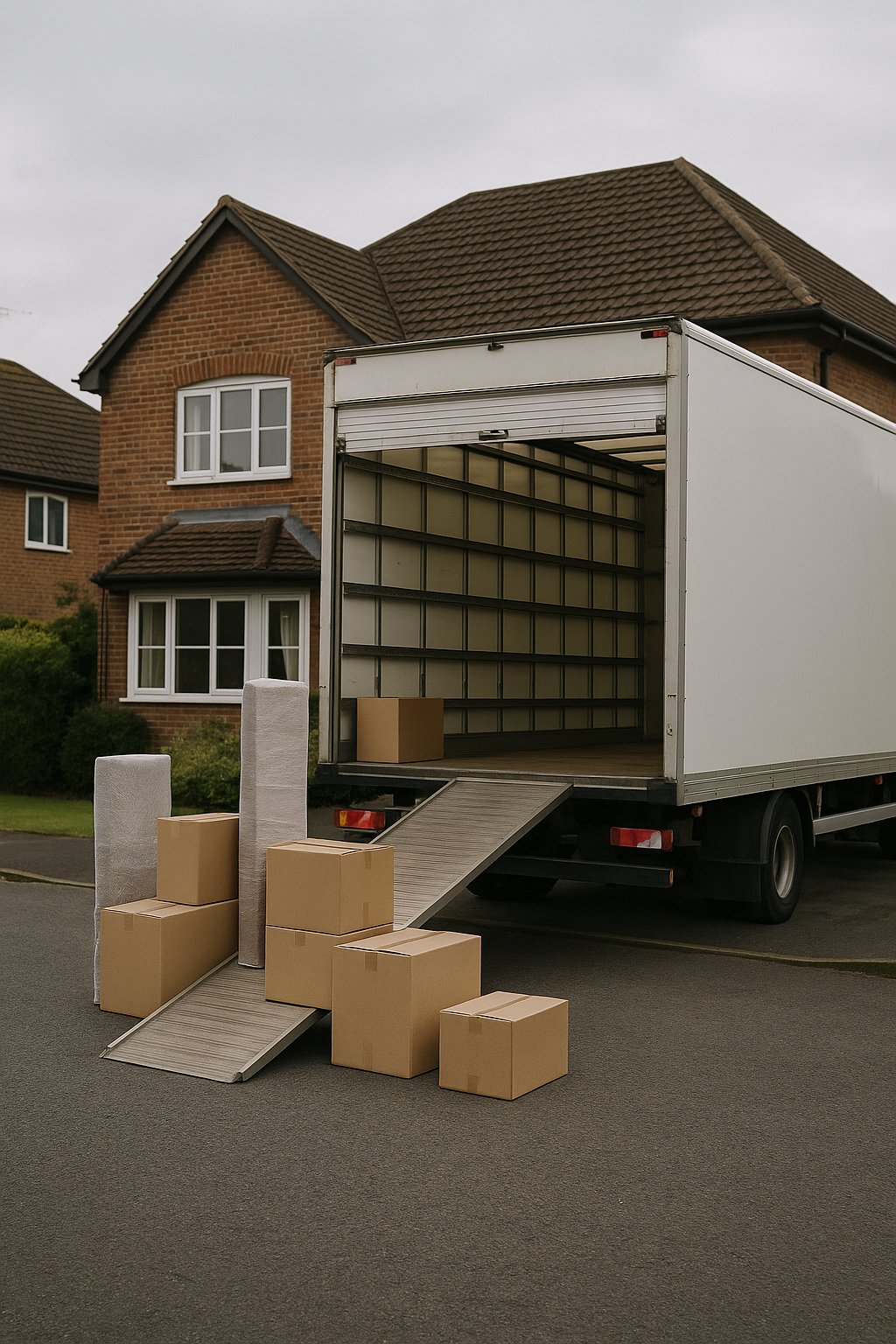
| If you... | The likely answer | Why |
|---|---|---|
| Own a 3-bed UK house with mid-range furniture, no antiques | Ship a part-load of 8 to 15 cubic metres; replace bulky items locally | Cheap flat-pack and old sofas cost more to ship than to replace at JYSK or Aiko in Sofia. |
| Own a high-quality, sentimental or antique-heavy household | Full international removal with customs broker | Replacement value is higher than the freight; the customs and insurance pay for themselves. |
| Are moving alone with a few boxes, books and tools | Pallet freight or trusted part-load operator | 800 to 2,500 euros gets a small load to Bulgaria without the cost of a whole lorry. |
| Are renting a Bulgarian flat short-term to "try it" | Bring documents, sentimental items, laptops, two suitcases; everything else stays in UK storage | You may move again or move home. Don't ship furniture into a temporary base. |
| Are buying or renovating a Bulgarian house and need tools | Ship the tools, leave the furniture | Quality UK tools are hard to replace in rural Bulgaria; Bulgarian DIY shops are better for materials than for high-end tools. |
| Own a UK car worth less than £6,000 | Sell in the UK, buy left-hand drive in Bulgaria | Bringing an ordinary right-hand-drive car is rarely worth the import, registration and resale-discount cost. |
| Own a near-new or specialist UK vehicle | Import under transfer-of-residence; check eligibility carefully | For a high-value vehicle the customs work pays for itself; for a campervan or specialist car the import may be the only option. |
| Are bringing pets | Separate plan, not part of removals | 21-day rabies wait + 10-day AHC validity; pets travel with you or via a specialist transporter. |
The rest of this guide is the detailed sequel to this table. If you are short on time, skip to Section 3 (The Four Piles) for the decision framework, Section 4 (Transfer-of-residence relief) for the customs rules, and Section 7 (What NOT to pack) for the list that catches British movers every year.
If your last memory of moving in or out of Bulgaria is from 2019, the world has changed. The single change that matters: Great Britain is now a third country for EU customs purposes, and UK-to-Bulgaria removals are a customs movement.
UK-to-Bulgaria removals involve two sets of authorities:
An experienced UK-to-Bulgaria removal firm handles both sides as part of the quote. A man-with-van or a one-off self-drive often does not, which is the most common cause of goods getting stuck at the Bulgarian end.
For the wider picture of how this fits the move calendar, see our 90-Day Countdown guide.
Before you call a single removals firm, sort the contents of your UK life into four piles. The Four Piles is the single most useful piece of mental work in this guide, and the one British movers most often skip.
| Pile | What goes in it | Test |
|---|---|---|
| 1. Bring | Documents and apostilles, sentimental items, specialist tools, disability or medical equipment, professional gear, irreplaceable heirlooms, quality hand tools, computers and backups, photo albums, good bedding (if you know Bulgarian bed sizes), warm clothing. | "Would I pay 200 euros to ship this to a friend's house in London?" If yes, ship to Bulgaria. |
| 2. Sell or donate | Cheap flat-pack furniture, old sofas and mattresses, UK-only appliances with plug/voltage issues, anything bulky and replaceable, half-used paint and chemicals, exercise equipment, garden furniture, anything that costs more to ship than to replace. | "Can I buy a perfectly good version of this in Bulgaria for less than the shipping cost?" If yes, sell it. |
| 3. Store in the UK | Anything you'd want back if Bulgaria doesn't work out. Family heirlooms, photographs, important documents in a safe deposit box, professional licences/certificates not yet apostilled. | "Am I sure enough about this move to commit this item to a 2,000-mile journey?" If hesitant, store. |
| 4. Replace in Bulgaria | Mattresses, sofas, dining tables, white goods (fridge, washing machine, dishwasher), TVs, ordinary kitchenware, lamps, rugs, garden tools, planters, BBQ. | "Is this item easily and cheaply available from JYSK, IKEA Sofia, Praktiker, Technopolis, Aiko or a local Bulgarian shop?" If yes, replace. |
If you take only one rule from this section, take this one: never ship a mattress or sofa from the UK to Bulgaria. They are bulky, heavy, dirt-cheap to replace at JYSK or local Bulgarian retailers, and prone to damp damage in transit. A new king-size mattress at JYSK Sofia costs €200 to €500; shipping a used UK king-size mattress adds €300 to €600 to your removals invoice and arrives compressed. The exception is a specialist medical or adjustable bed; everything else, replace locally.
Pile 3 (Store in the UK) has a hidden cost. UK storage units run £100 to £300 per month for a typical 50 to 100 cubic feet, indefinitely. Within 18 months, a stored UK pile usually costs more than its contents are worth on UK eBay. Set a hard review date at 6 months, 12 months and 18 months: at each milestone, decide to keep paying, ship the lot to Bulgaria, or sell. Indefinite UK storage is one of the quiet expensive mistakes of British movers.
Most British movers underestimate Pile 2 (Sell or donate) by half. The honest sweep is more aggressive than feels comfortable in week one. The 50-litre dehumidifier you never run, the spare bed you keep "just in case", the bicycle that hasn't moved since 2019, the rower in the spare room: each of those is €30 to €80 of freight you do not want to pay. The British mover's quiet promise to themselves: "I'll be ruthless next weekend." Be ruthless this weekend.
Council Regulation (EC) No 1186/2009 is the EU law that lets a person moving from a third country into the EU bring their existing personal property duty-free. It is the single rule that turns a customs nightmare back into a household move.
The relief is governed by three time-based conditions in Articles 3 to 11 of the Regulation. Memorise them; the rest is paperwork.
Relief covers "personal property" in the everyday sense:
The exclusions are specific:
Goods imported under relief cannot be lent, pledged, hired out or transferred within 12 months of the date of acceptance, without notifying the Bulgarian customs authorities. Selling the UK sofa to a Bulgarian neighbour in month 6 voids the relief on that item and triggers a duty and VAT assessment. The relief is for your own continued use; it is not a back-door commercial import.
Bulgarian Customs Agency guidance for personal property under transfer-of-residence states that release for free circulation with relief from import duties is subject to authorisation from the chief of customs in whose district the new normal residence is located. In practice this means:
Some British movers try to ship goods before their residence permit is issued, on the basis that they are "moving" and the residence-permit application is in progress. Bulgarian Customs treats the established new normal residence as the trigger, evidenced by the residence-permit application or visa plus the rental contract or notarial deed. If your goods arrive before any of that, they may be parked in bonded storage at your cost until your residence file catches up. Plan the shipment to arrive after your Bulgarian address and visa are documented.
Source documents: EUR-Lex Council Regulation (EC) No 1186/2009 (Articles 3-11 on personal property of natural persons); Bulgarian Customs Agency, transfer-of-residence guidance; European Commission duty-relief portal.
Six broad routes get British belongings to Bulgaria. Each has a sweet-spot use case, a price point and a failure mode. Match your Four Piles output to the right mover type.
Three quotes is the minimum; five is the right number for a full-house move. Variation between quotes is more about service inclusion than mileage; ignore the headline price and read the line items.
For a transfer-of-residence movement under Council Regulation 1186/2009, this is the document pack the Bulgarian Customs Agency office for your district will want. Carry one physical copy, one encrypted cloud copy, and brief your removals firm on what they need from you.
Bulgarian regional offices, including the Customs Agency, KAT, the Migration Directorate and the municipality, run on physical paper with a wet blue ink stamp (the pechat, печат) and a handwritten signature on top. A British arrival who walks in with a PDF on a smartphone, however perfectly formatted, is in for a long afternoon. Print every document in the customs pack in two paper copies, signed in blue ink, with passport photocopies stapled where applicable. Keep the digital cloud copy as backup; the office takes one paper copy, stamps the other, and hands it back to you as your proof. Bulgaria is digitising fast in the cities, but the customs and migration counters still belong firmly to the paper era.
Some categories of goods cannot be in your removals load at all. Others can be, but only with specific paperwork that ordinary household-goods movers do not have. Here is the candid list of British-mover traps.
Travellers entering the EU from a non-EU country cannot bring meat or dairy products, with very narrow exceptions for baby food, foods required for medical reasons, and specific pet feed (each subject to strict weight and packaging conditions). EU plant-health rules generally prohibit the introduction of plants, plant products and other regulated items in personal luggage from non-EU countries unless accompanied by a phytosanitary certificate. Detection by customs inspection routinely results in confiscation, in serious cases a fine.
Source: Your Europe: animal products, food and plants; European Commission plant health.
Personal-use quantities can be brought into the EU with normal travel allowances declared at the border, but commercial quantities packed in a removals load are excluded from transfer-of-residence relief under Article 4 of Council Regulation 1186/2009. A wine cellar of 200 bottles in your removals will be assessed for duty and excise.
Antiques and musical instruments that contain ivory, certain woods (Brazilian rosewood, Cuban mahogany), reptile skins, coral or other CITES-listed materials need specific permits to cross EU borders. A Victorian dressing table with ivory inlays, a pre-CITES guitar with rosewood fingerboard, a tortoiseshell hairbrush: each can be impounded without paperwork. If in doubt, get a CITES re-export certificate from the UK Animal and Plant Health Agency (APHA) before packing.
EU cash controls require declaration of €10,000 or more in cash (or equivalent in other currencies, bearer cheques or valuable items like gold coins) when entering or leaving the EU. Failure to declare can result in seizure of the entire amount. The pragmatic answer: move money by bank transfer or specialist FX service (Wise, Revolut, OFX), keep proof of funds, and never drive across borders with undeclared bricks of fifty-pound notes in the glove box.
Carry essential medicines with you (not in the removals load), in original packaging, with the prescription and a GP letter explaining the condition and dosage. Controlled drugs (opioids, certain benzodiazepines, ADHD medication) need an additional UK Home Office personal-licence document for export and may need Bulgarian Ministry of Health authorisation for import; check with your prescriber at least 30 days before the move. See Health guide for the prescription-equivalence picture once you arrive.
After the banned, restricted and "replace locally" lists, what is left for the Bring pile? The items that pass the Four-Piles test: hard to replace, high quality, sentimental, specialist or personal.
Carry these in your arrival kit (Section 9 of the Moving guide), not in the removals load. Removals can be delayed; documents you might need on day one cannot.
Anything that would be a real loss: family heirlooms, the photograph albums, the box of children's drawings, the favourite books your father gave you. The financial maths of the Four Piles is helpful, but it should not override the simple "I would miss this" test for genuinely sentimental items. Ship them with insurance and tracking, photograph them before packing, and trust the removal firm to honour the inventory.
If an item is on the Bring list because you might need it in five years' time but not now (the second car-seat for the grandchildren who might visit, the spare desk for the office you might set up), reconsider. Bulgaria has the same shops as everywhere else, and shipping items you might not use for years is one of the quiet wastes of a UK-to-Bulgaria move. Ship for now, not for hypothetical future you.
Bringing a UK vehicle to Bulgaria is its own project, separate from the household goods. The economics rarely favour an ordinary used car; they sometimes favour a specialist vehicle. Here is the picture.

For an ordinary used UK car (right-hand drive, mid-spec, 5 to 10 years old), the costs of bringing the vehicle stack up:
Then add the implicit cost: a right-hand-drive car loses 15 to 30 percent of UK value at Bulgarian resale because the local market is thin. If you intend to sell the car within 3 years of arrival, the cost of bringing it usually exceeds the cost of selling in the UK and buying locally.
GOV.UK rules: if you take a vehicle out of the UK for 12 months or more, you must tell DVLA. Complete the permanent-export section of the V5C log book and post it to DVLA. Keep the rest of the log book because you need it to register the vehicle in Bulgaria. DVLA cannot post a V5C to a non-UK address, so if you do not have your V5C, request a replacement before leaving the UK.
Once the vehicle is in Bulgaria under the transfer-of-residence relief authorisation:
Typical lead time after customs release: 2 to 4 weeks to get from "imported" to "fully Bulgarian-registered and on the road". See our Driving guide for the technical inspection, vignette, winter-tyre law (15 November to 1 March) and the licence-exchange process.
Same legal route, simpler economics. Motorcycles are lighter and cheaper to transport (a UK-Bulgaria specialist bike transporter runs €300 to €700), and the right-hand-drive issue does not apply (motorcycles have no "side"). Specialist or sentimental UK motorcycles are usually worth bringing. Trailers are covered by the same transfer-of-residence relief as personal property; ensure the trailer was registered to you for at least 6 months before the move.
Council Regulation 1186/2009 includes "camping caravans" and "pleasure craft" in the personal-property relief. The Bulgarian Customs Agency specifically requires a certificate from the UK authorities showing the vehicle, caravan or pleasure craft was registered to the person concerned. The same import-then-register process applies.
Pets are never in the removals load. They travel with you, or with a licensed specialist pet transporter, on their own paperwork timeline. The short version is here; the long version is in our Pets guide.
An old EU pet passport issued before 2021 cannot be used by Great Britain-resident pets for entry to the EU. Use the AHC route only.
Plan the pet timeline from day −60, not week −1. See our Pets guide for the airline rules, the April 2026 EU pet-rule changes, the Bulgarian vet network and tick-disease risk.
Medicines travel with you, not in the removals load. Customs and storage conditions in transit are not suitable for prescription drugs, and you may need them on day one.
Controlled drugs (opioids, certain benzodiazepines, methylphenidate and ADHD medication, certain sleeping pills) need additional paperwork:
Removal insurance is not the same as your home contents policy, and the cheap headline cover that comes with a removal quote often does not pay the price of the items inside the boxes. Read the small print before signing.
Two hours of photography saves three months of insurance argument:
Some items should never go in the removals load, regardless of insurance:
Insurance is the safety net for the average box; the irreplaceable items travel with you.
Shipping should be planned alongside the 90-day move calendar, not after it. Here is the parallel timeline.
For the wider move calendar this fits into, see the 90-Day Countdown guide; for the location decision the goods are being delivered to, see Where to Live in Bulgaria.
Most UK-to-Bulgaria moves arrive without incident. A small percentage hit a customs hold, an inventory query, a duty assessment, or a delivery delay. Here is the practical response.
The customs broker or removal firm should be able to tell you within 24 hours why the goods are held. Common reasons:
Holding charges accumulate daily at Bulgarian customs depots (typically €15 to €50 per cubic metre per day). Resolution speed matters. If the customs broker asks for a clearer inventory, provide it within 24 hours. If they ask for proof of residence, send it the same day. Most holds are resolved within 3 to 7 days when the response is quick.
If Bulgarian customs assesses duty or VAT and you believe transfer-of-residence relief should apply:
Very occasionally, a customs dispute escalates to the point where the duty plus holding charges plus legal fees exceed the value of the goods. In that case the legal options include abandoning the shipment to customs (the goods are sold or destroyed; you owe nothing further), or re-exporting the goods to the UK at your cost. Walk-away is rare and almost always avoidable with proper paperwork at the start.
Parcels from the UK to Bulgaria via Royal Mail, Hermes, ParcelForce or DPD can sit in Bulgarian customs or postal sorting for weeks, especially during holiday periods. Tracking often stops at the Bulgarian border. The pragmatic advice: do not send irreplaceable, urgent or time-sensitive items by ordinary post. Use a courier with full customs handling (DHL, UPS, FedEx) and pay the duty up front if it applies. For household removals, this is not relevant; the dedicated removal firm handles the customs in one go.
Bulgaria is a full Eurozone member as of 1 January 2026. Once you land, you withdraw and spend euros directly at JYSK, Technopolis, Kaufland and the local bakery; no mental conversion at the till, no dual-currency wallet, no FX faff at the supermarket. The historical fixed rate of 1 EUR = 1.95583 BGN still matters only for translating older lev-priced documents (property deeds signed before 2026, historical guidebooks, the occasional lingering dual-pricing tag), not for daily life. All figures below are in euros as the reader will encounter them on the ground in 2026.
| Route | Typical cost | Transit time | Best for |
|---|---|---|---|
| Full international removal, 3 to 4 bed house | €6,500 to €12,000 | 7 to 14 days | Whole-house moves, high-value households. |
| Full international removal, 2 bed flat | €4,500 to €7,000 | 7 to 14 days | Standard household moves with mover packing. |
| Part-load / groupage, 5 to 15 m³ | €2,200 to €4,500 | 10 to 21 days | Boxes plus some furniture; shared lorry. |
| Pallet freight, per Euro-pallet | €200 to €500 | 7 to 14 days | Small dense loads; needs packing and hub delivery. |
| Man-with-van, mid-size load | €1,200 to €3,500 | 5 to 10 days | Small to medium loads; check insurance/customs. |
| Self-drive van, return trip | €1,500 to €3,500 | 4 to 6 days drive each way | Maximum control, maximum admin. |
| 20-foot sea container UK to Varna | €3,500 to €6,000 | 3 to 5 weeks | Large loads, heavy equipment. |
| 40-foot sea container UK to Varna | €5,500 to €9,500 | 3 to 6 weeks | Full-house moves with workshop or vehicle. |
For a typical British couple moving to Bulgaria with a 2-bed flat's worth of carefully-sorted possessions (the Four Piles applied), plan €3,500 to €6,500 total for the removals side: a part-load with a good UK-to-Bulgaria operator, customs included, transit insurance for declared value, and a small allowance for delivery extras.
For a 3-bed house move with a fuller load, plan €6,500 to €12,000 total, including a full-service quote with packing.
For minimum-shipment movers (some boxes, the laptops, the sentimental items), €1,500 to €3,000 total is realistic on a pallet-freight or trusted part-load route.
Add at least €3,000 of emergency reserve in accessible funds for fix-it costs in the first month after arrival (delivery surprises, missing furniture replaced from JYSK, the boiler that fails in week three). See our Cost of Living guide for the monthly running cost picture in Bulgaria.
The questions Shumen.UK readers ask most about UK-to-Bulgaria shipping, with sourced answers.
Not in most cases, if you qualify for EU transfer-of-residence relief under Council Regulation (EC) No 1186/2009 and complete the paperwork correctly. Relief applies to personal property when transferring normal residence from a third country (which the UK now is) to the EU customs territory, subject to three numbers: the mover must have had normal residence outside the EU for at least 12 continuous months, the goods must have been owned and used at the former residence for at least 6 months, and the import must take place within 12 months of establishing new residence in Bulgaria. Alcohol, tobacco, commercial means of transport and articles for use in a trade or profession (other than portable instruments) are excluded from relief. The Bulgarian Customs Agency requires authorisation from the chief of customs in whose district your new normal residence is located.
Yes, but it is now a customs movement from a third country into the EU. Used personal furniture genuinely owned and used at your UK home for at least 6 months will typically qualify for transfer-of-residence relief under Council Regulation 1186/2009, provided you have the supporting paperwork: inventory, proof of UK residence, proof of new Bulgarian address, residence-permit evidence, and a declaration that the goods are for personal use. Most established UK-to-Bulgaria removals firms include the customs clearance in the quote; if yours does not, budget for a separate Bulgarian customs broker. Cheap flat-pack furniture is rarely worth the freight; high-quality, sentimental or specialist furniture often is.
Only sometimes. The honest test: would you pay 200 euros to ship the item to a friend's house in London? If no, it is rarely worth paying to ship it 2,000 miles to Bulgaria. Cheap bulky furniture, old sofas, low-value white goods and flat-pack are almost always better sold or donated in the UK and replaced from JYSK, IKEA Sofia, Technopolis, Praktiker or local Bulgarian makers, where mid-range furniture and appliances cost roughly 20 to 40 percent less than UK equivalents. High-quality solid wood, antiques, specialist tools, professional kitchen equipment, hobby gear and irreplaceable sentimental items are the right things to ship.
Yes, with the right preparation. UK-to-Bulgaria is roughly 2,000 miles, typically Dover-Calais-France-Germany-Austria-Hungary-Romania-Bulgaria, four to five days at a sensible pace. You still need: a UK export declaration (for personal goods this is usually informal but check with HMRC for high-value items), Bulgarian customs clearance with the transfer-of-residence inventory, route-country motorway vignettes (Austria, Hungary, Romania, Bulgaria all require them), van insurance covering each country, a Green Card if your insurer asks for one, and an honest assessment of whether a 30-year-old non-EU passport-holder can confidently navigate the Hungary-Romania border at 11pm. Self-drive is the maximum-control, maximum-admin option.
Do not pack meat, dairy or fridge/freezer food. Under EU rules, travellers entering the EU from a non-EU country cannot bring meat, milk or dairy products into the EU at all, with only limited exceptions for baby food, medical foods and specific pet feed (each under tight weight and packaging conditions). Plant products, seeds and houseplants are restricted under EU plant-health rules and generally require a phytosanitary certificate. In practice: empty the fridge and freezer before the move, donate sealed long-life goods to a UK food bank, and buy what you need on arrival. The Bulgarian supermarket scene is competent and well-stocked; see our cost-of-living guide for what costs what.
Usually not worth it. EU plant-health rules generally prohibit introducing plants, plant products and other regulated items into the EU in personal luggage from non-EU countries, unless accompanied by a phytosanitary certificate, with only narrow exceptions (bananas, coconuts, dates, pineapples, durians). Getting a phytosanitary certificate for ordinary houseplants is expensive, slow and impractical. The pragmatic answer is to gift the plants to a UK friend, take cuttings if you legally can (still subject to phytosanitary rules for live plant material), and start fresh in Bulgaria. Bulgarian garden centres are good and cheap.
In principle yes, in practice usually no for ordinary cars. The chain is: tell DVLA you are exporting the vehicle permanently (the permanent export section of the V5C; keep the rest of the log book because you need it to register the vehicle in Bulgaria, and DVLA cannot send a V5C to a non-UK address), bring the vehicle as part of your transfer-of-residence with Bulgarian Customs authorisation and a certificate showing the vehicle was registered to you, then register at KAT (Bulgarian traffic police) with technical inspection. Right-hand-drive cars are legal in Bulgaria but unpopular: harder to overtake on two-lane roads, higher insurance premiums, smaller used-resale market. For an ordinary used UK car, the honest answer is sell in the UK and buy left-hand drive in Bulgaria. For a near-new high-value vehicle or a specialist car, bringing it can make sense.
No. Pets are not part of a household-goods removal under any circumstance. Pet movement from Great Britain to the EU has its own separate process: microchip first, rabies vaccination at the same time or after the chip, at least 21 full days wait after a first rabies vaccination before EU entry, and an Animal Health Certificate (AHC) issued by an official UK vet within 10 days of travel. The AHC is valid for 10 days for EU entry, 6 months for onward EU travel and 6 months for re-entry to Great Britain. Pets should travel with the owner or with a licensed specialist pet transporter, in cabin or cargo depending on size and airline. See our pets guide for the detailed chain.
For a transfer-of-residence under Council Regulation 1186/2009, the standard pack is: passport copy, proof of previous UK residence (utility bills, council tax bills, employer letters covering at least the 12 months before the move), proof of new Bulgarian residence (rental contract, notarial deed, address registration), Bulgarian Type D visa or residence-permit evidence, a detailed inventory in English (and ideally translated to Bulgarian) with descriptions, quantities, approximate values and serial numbers for high-value items, evidence that the goods were owned and used at the former residence (purchase receipts and photographs for valuable items), a signed declaration that the goods are for personal use and not for sale, vehicle documents (V5C, proof of registration to you) if importing a vehicle, the removal contract and the insurance schedule. Authorisation is issued by the Bulgarian Customs Agency office for the district where your new residence is located.
For small loads (under 5 cubic metres), groupage shipping or pallet freight typically runs 800 to 2,500 euros depending on volume and timing. For medium loads (the contents of a 2 or 3 bedroom flat, 15 to 30 cubic metres), a part-load with an established UK-to-Bulgaria mover runs 3,500 to 6,500 euros door-to-door. For full-house moves (40+ cubic metres), expect 6,500 to 12,000 euros. Self-drive van rental for a 2,000-mile round trip with diesel, vignettes and overnight stops can run as low as 1,500 to 2,500 euros if you do not value the time, but loses the customs expertise of a professional mover. The expensive part is rarely the mileage; it is the customs clearance, the inventory, the access at delivery and the problem-solving when something goes wrong.
Goods can be held for inspection, missing paperwork, valuation queries or suspected restricted items. The remedies are: contact the customs broker on your removal contract immediately and ask for the specific reason in writing; provide any missing documents promptly (a clearer inventory, a missing residence proof, a vehicle registration certificate); if duty or VAT is assessed and you believe relief should apply, lodge an objection with the Bulgarian Customs Agency within the time limit on the assessment notice; appoint a Bulgarian customs lawyer if the amount involved justifies it. Holding charges accumulate daily, so resolution speed matters. Most cases are solved in a few days; the few that escalate are usually because the mover did not file the transfer-of-residence relief paperwork at all.
Personal hand and power tools used at your UK home for at least 6 months are covered by transfer-of-residence relief. Articles intended for use in a trade or profession (commercial workshop machinery, builders' tools used for a business, specialist commercial equipment) are excluded from the personal-property relief under Article 4 of Council Regulation 1186/2009, with a narrow exception for portable instruments of the applied or liberal arts. If you are bringing a workshop's worth of equipment for self-employed use in Bulgaria, you may need a separate commercial import declaration with VAT and duty assessment; a Bulgarian customs broker can advise on which line your equipment falls under.
Three things that will save almost every British mover crossing the Channel with a household behind them:
And the bonus rule: the removals lorry is not the move. It is one piece of the move. The day the lorry arrives is sometime in your second week in Bulgaria; the move properly ends six months later, when you have heated the flat through a Bulgarian November, bought your sofa from a Sofia furniture shop because the one you considered shipping would have cost €800 to crate, and called the customs broker exactly never since they cleared the goods on day three. That is the smooth version of this move, and it is entirely available if the Four Piles are honest.
Related guides: Moving to Bulgaria: The 90-Day Countdown · Sending post abroad from Bulgaria · Where to Live in Bulgaria · Residency · Pets · Driving · Health · Banking · Cost of Living · Village House Renovation · Legal Deep-Dive · All guides.