📅 ON THIS DAY IN BULGARIA, Thursday 17 September
Today's calendar is unusually loaded: a poet who died at twenty-four and is still taught in every Bulgarian school, the name day that treats faith, hope and love as actual first names, and four towns marking their city day, the capital among them.
What happened on this day
Hristo Smirnenski was born Hristo Izmirliev on 17 September 1898, a date the Bulgarian record also gives as 30 September once the calendars are reconciled, in Kukush in Ottoman Macedonia, the town that is now Kilkis in Greece. His father had done time in a Salonica prison over his politics. When Greek troops burned Kukush during the Balkan wars, the family joined thousands of other refugees making for Sofia.
He was writing for satirical papers by 1915, at sixteen, and settled on the name Smirnenski in 1917. Then comes the part that reads strangely now: in May 1917 he enrolled as a cadet at the Military School and carried on filing comic verse from the barracks. What ended that was the Soldiers' Revolt of 1918 and specifically the bloodshed near the Sugar Factory in Sofia. He walked out of the Military School that November, and his father had to pay compensation for the privilege.
His first collection, in April 1918, was humorous verse he later disowned. The work he is remembered for came after 1920 in the magazine Red Laughter: "The First of May", "Red Squads", "The Street", "Herald of the New Day", "Johan". He joined the Communist Youth League that year and the party in 1921. He died on 18 June 1923, aged 24, with roughly three years of mature writing behind him. As a boy in Sofia he had met Elin Pelin.
Today's name days
Today is Вяра, Надежда, Любов и София, and it is one of the largest name days in the Bulgarian year.
Vyara, Nadezhda and Lyubov are not decorative names. They are simply the Bulgarian words for faith, hope and love, and they belong to three sisters martyred as children in the early church alongside their mother Sofia, whose name is the Greek for wisdom. Bulgarians have been naming daughters Faith, Hope and Love for centuries, which is worth a thought if the English versions ever struck you as quaint.
Sixteen variants celebrate in all. Beyond those four you will meet Vera and Verka, Nadya and Nadin, Sofi and Soka, and the Lyubov family in both genders: Lyubomir and Lyubomira, Lyuba, Lyubo, Lyubcho and Lyuben. The Bulgarian name-days guide carries the full list.
Towns celebrating today
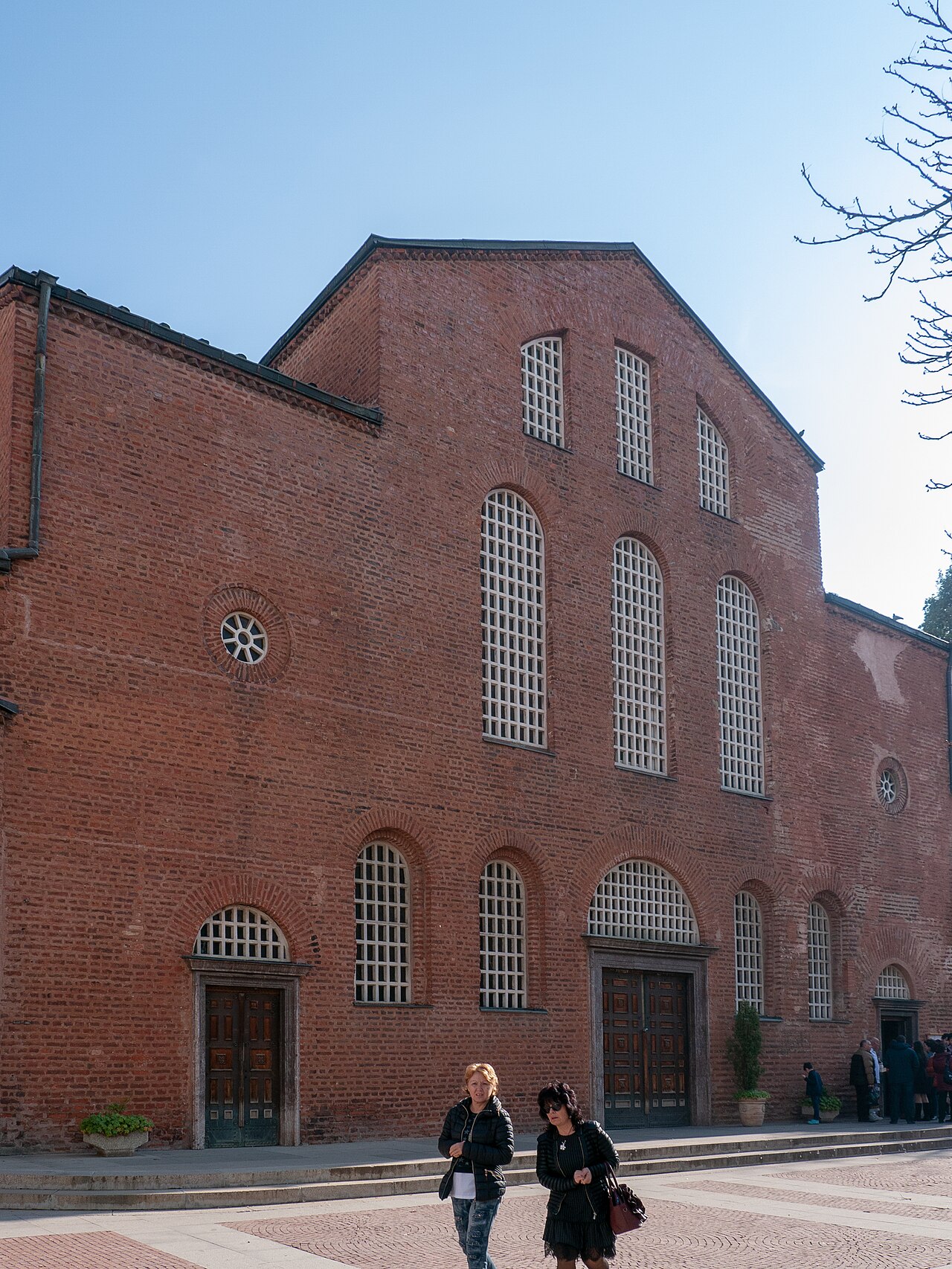
Four places take their city day from the same saints. Sofia is the obvious one, the capital being named for the same Sofia. Lom marks it too, a working Danube port in the north-west. So do Kostinbrod and Novi Iskar, both on the capital's doorstep, the second of them inside Sofia's own municipality.
Why this matters for British expats
If you work in an office here, today is a diary event. The chance that nobody in the room is a Sofia, a Vera, a Nadya or a Lyubomir is slim, and the cake will arrive whether or not you saw it coming. The phrase is честит имен ден (ches-TEET ee-MEN den), happy name day, and the phrasebook has the rest of it.
The etiquette is the genuinely surprising part. In Britain you wait to be invited. On a big Bulgarian name day the celebrant keeps open house, and friends, neighbours and colleagues simply turn up unannounced, which is the expected thing rather than an intrusion. The one firm rule is that you never arrive empty-handed: cake, banitsa, wine or chocolates all pass, and if you bring flowers, bring an odd number. As for Smirnenski, every Bulgarian adult you know studied him at school, so the name is worth recognising even if the poems never reach you in English.
Sources and further reading
The childhood in Kukush, the flight to Sofia and the Military School episode come from the Bulgarian Wikipedia entry on Hristo Smirnenski and the English entry, which between them also list the poems and the dates. The name-day and city-day listings follow the standard Bulgarian calendar.