
📅 ON THIS DAY IN BULGARIA, Saturday 16 May
Bulgaria runs on two calendars at once. There's the practical one (work, banks, taxes) and there's the cultural one (saints, ancestors, the slow turn of the agricultural year), and the cultural calendar is the one your Bulgarian neighbours actually pay attention to. 16 May 2026 is a Saturday with no public holidays, no processions, no municipal fairs. The banks are shut because it's Saturday, the roads into Shumen are clear of festival traffic, and you can go about your weekend shopping entirely undisturbed.
The value is purely cultural. If you're the kind of expat who enjoys impressing colleagues with localized knowledge, mentioning that today marks the death of Georgi Markov the literary critic will earn you a quiet moment of respect from anyone over forty who studied Bulgarian literature at school.
What happened on this day
Asking which Georgi Markov someone means is the Bulgarian equivalent of asking a British person which John Smith they're talking about, except one John Smith was assassinated by the KGB and the other wrote the definitive history of the Romantic poets. I've been here 13 years and I still have to double-check which Markov someone means when the name pops up.
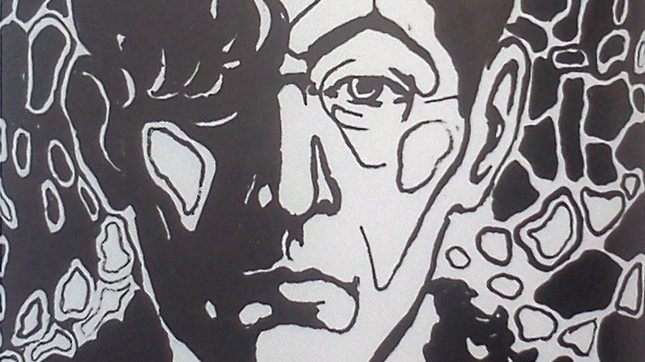
Georgi Mitrev Markov died on 16 May 1987. He was a literary critic, a professor, and for sixteen years the head of the Department of Literary Theory at Sofia University. He graduated from the same university in 1951, became an assistant that year, and worked his way up: associate professor in 1967, full professor in 1975. From 1970 to 1972 he lectured on Bulgarian language and literature at the University of Göttingen, one of those Cold War cultural-exchange postings where quiet diplomacy happened in seminar rooms rather than embassies.
His real work, the thing that kept him at his desk until he died, was reconstructing the intellectual life of Bulgaria between the two World Wars. He wrote monographs on Dimcho Debelyanov (the poet killed in WWI whose work became the standard for Bulgarian lyric verse), on the modernist Geo Milev (executed by the police in 1925), and on the history of Bulgarian literary criticism itself. He edited Geo Milev's collected works, often in collaboration with Leda Mileva (the poet's daughter), and in 1986 he produced the foreword to a facsimile edition of the radical journal _Plamŭk_ (_Flame_), which Geo Milev had edited in the 1920s before the authorities shut it down.
Revival-period writers like Ivan Vazov and Hristo Botev are taught in schools today with the kind of reverence the British reserve for Shakespeare. Markov spent his career writing the user manual for how to read them, and for how to read the generation that came after them. His daughter, Milena Kirova, is herself a literary critic and historian, which suggests the family business involves long hours in archives rather than anything resembling normal working hours.
Why this matters for British expats
Shumen's old gymnasium (the secondary school that predates the university) still teaches the National Revival canon Markov spent his life analysing. If you've walked past the Dobri Voynikov museum in the National Revival quarter, or stood at the base of the Founders of the Bulgarian State monument on the plateau, you've been in the middle of the cultural terrain Markov mapped. Voynikov was a playwright and educator; the Founders monument commemorates the First Bulgarian Empire's intellectual and military elite. Both are part of the same cultural scaffolding that produced the poets and critics Markov studied.
The practical day-of-week reality is simple: it's Saturday, so if you need the bank, you're waiting until Monday. If you're planning a trip to Sofia and want to see the Bulgarian Academy of Sciences (where Markov spent stretches of his career) or Sofia University's main building, today's weather looks fine for it, but the archives are shut and won't reopen until the working week.
Knowing one or two of the names Markov wrote about, even if you never read their books, is the kind of thing that earns you a nod of respect over coffee. It signals you're not just here for the cheap property and the sunshine. English-language material on this particular Markov is thin, meaning tracking down translations of his work requires some persistence. The umbrella-Markov, by contrast, has entire true-crime books written about him in English, which tells you everything you need to know about whose story travels better internationally.
Sources and further reading
Details for the literary critic draw on his Bulgarian Wikipedia biography, which lists his major monographs and his work on Geo Milev. The Bulgarian Academy of Sciences holds some of his archive, though access requires a researcher pass and a working command of Bulgarian.