📅 ON THIS DAY IN BULGARIA, Wednesday 20 May
On 20 May 1935, in a maternity ward in Istanbul, Dimităr Nikolov Kirov was born. By the time he was in his mid-twenties he'd graduated from Sofia's Art Academy and started covering Bulgaria in frescoes, mosaics, and sgraffito that still define the visual landscape of entire towns. If you've spent any time in Plovdiv, Dobrich, or anywhere near the Buzludzha Monument, you've stood under his work.
What happened on this day
Kirov, who signed his work DiKiro, was born into the Turkish-Bulgarian diaspora community and arrived in Bulgaria proper as a young man. He enrolled at the Art Academy in Sofia (now the National Academy of Art) and studied monumental and decorative painting under Professor Georgi Bogdanov, graduating in 1959. The training positioned him squarely in the post-war Bulgarian tradition of public art, where monumental frescoes, mosaics, and architectural decoration were state-funded and ideologically loaded.
His early commissions included the secco fresco and sgraffito facade in Old Town Plovdiv (1968), a sweeping piece that integrated the city's Revival-period architecture with contemporary visual language. In 1969 he completed a monumental secco panel titled "From the Cultural History of Plovdiv" in the foyer of the Plovdiv Party House concert hall, establishing the pattern his career would follow for the next three decades: large-scale, site-specific work that fused Bulgarian historical themes with the aesthetics of socialist monumentalism.
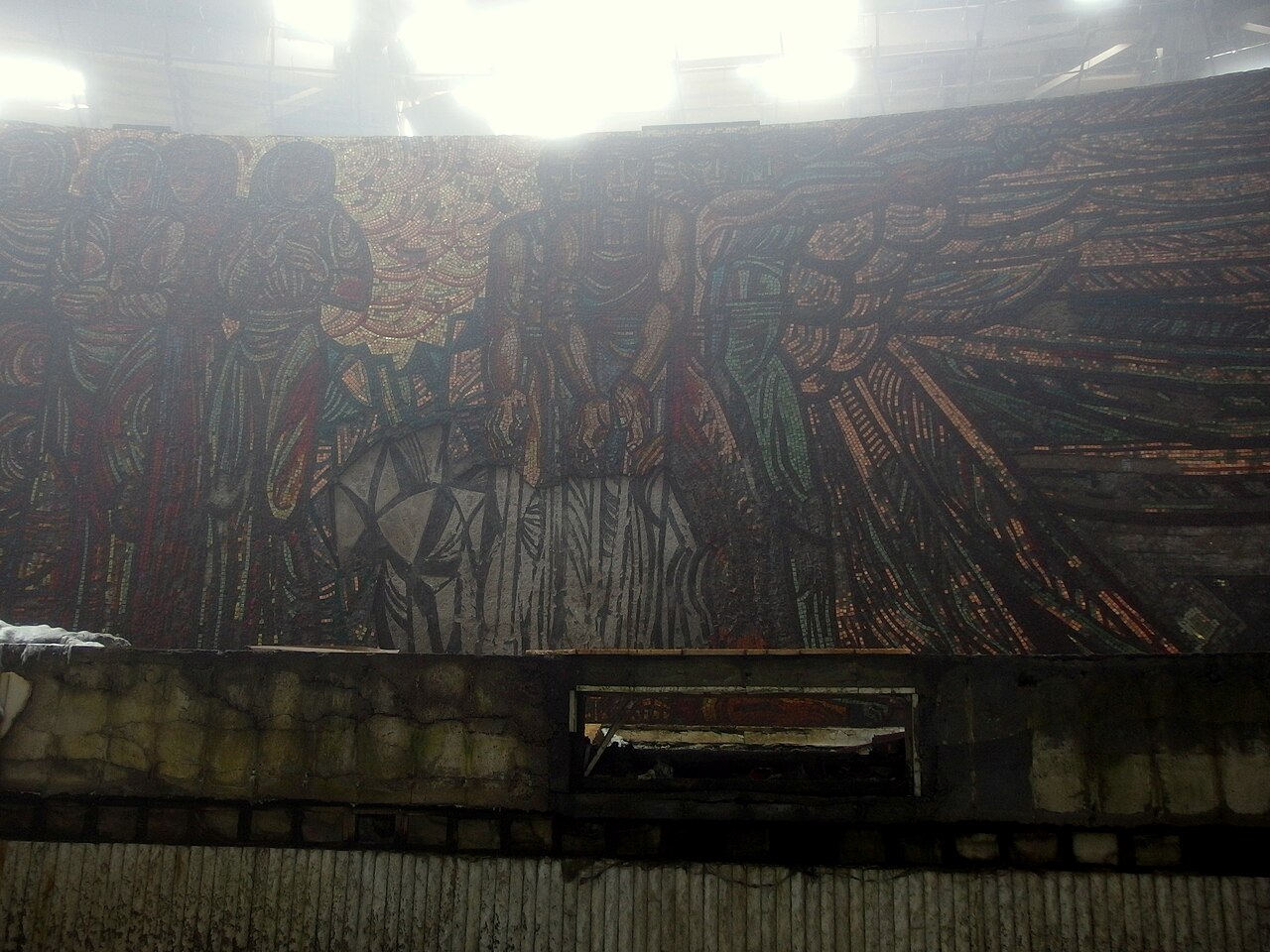
The commission that cemented his reputation came in 1981, when he was tasked with designing the interior mosaic for the Buzludzha Monument, the iconic flying-saucer-shaped structure on Buzludzha Peak commissioned to mark the founding of Bulgarian socialism. Kirov's contribution was an 8-metre-by-3-metre stone-and-smalt mosaic titled "April Uprising", depicting revolutionary imagery in the central hall. The mosaic used traditional Bulgarian iconographic elements but rendered them in the angular, heroic register the Party favoured. Architect Georgi Stoilov designed the building; Kirov designed the visual theology inside.
Other major works include the "Rhodope Song" mosaic in the foyer of NDK Sofia (the National Palace of Culture, 1981), a secco fresco in the Zlatyu Boyadzhiev House Museum in Plovdiv (1983), and the "Dobrudzha" fresco in the central foyer of the Party House in Tolbukhin, now Dobrich (1985). Each piece was embedded in its architecture, designed to be walked past daily by the public, not hung in a gallery.
Kirov held multiple leadership roles in the Union of Bulgarian Artists between 1968 and 1989, served as chairman of the state commission on visual arts in 1987, and was named Honoured Artist in 1974 and People's Artist in 1985. He was made an honorary citizen of Plovdiv in 1984. His work is held in the National Gallery in Sofia, the State Hermitage in St. Petersburg, the Vatican collection, the Museum of Contemporary Art in Fukuyama, Japan, and dozens of state and private collections worldwide. He died in Plovdiv on 23 October 2008.
Why this matters for British expats
Most British expats wouldn't know Kirov's name off the top of their head, but if you've walked through Plovdiv's Old Town, visited the Zlatyu Boyadzhiev museum, or made the pilgrimage to Buzludzha (and most expats do, eventually), you've stood under his work. The frescoes and mosaics he created aren't tucked away in galleries; they're embedded in the architecture of daily life.
This matters because understanding Bulgaria's monumental art tradition is part of understanding why public buildings here look the way they do. The British instinct is to dismiss socialist-era murals as propaganda, which they often were, but they were also craftsmanship at scale. Kirov's generation trained in classical fresco and mosaic techniques, then applied them to buildings designed to last. Buzludzha is crumbling now, but the 8-metre mosaic inside is still intact, which tells you something about the standard of work.
For expats living in Plovdiv specifically, Kirov is the painter whose hand shaped the visual identity of the city's Revival quarter and its cultural institutions. The Zlatyu Boyadzhiev museum's interior fresco is his; the Party House concert-hall panel is his; the Old Town sgraffito you walk past on Saborna Street is his. Knowing that the same artist worked across all three sites gives you a thread to follow through Plovdiv's architectural history.
If you're planning a visit to Buzludzha, the April Uprising mosaic is the centrepiece of the main hall. The site is abandoned and officially off-limits, but it remains one of the most-photographed pieces of socialist architecture in the Balkans, and the mosaic is the reason. Kirov's work survives him; the buildings he decorated outlasted the state that commissioned them.
If this is your kind of context, the Shumen.UK health guide is the natural next read.
Sources and further reading
The biographical details and career timeline draw on the Bulgarian Wikipedia biography of Dimităr Kirov. Additional context on the Buzludzha Monument and Plovdiv's cultural institutions comes from regional municipal listings and the standard Bulgarian monumental-art catalogue.