
📅 ON THIS DAY IN BULGARIA, Monday 18 May
What happened on this day
On 18 May 1872, in the hamlet of Vlahi near Kresna in what was still Ottoman territory, a boy was born who would grow up to become one of the most fiercely disputed figures in Bulgarian and Macedonian history. Yane Ivanov Sandanski's life reads like a political thriller: shoemaker's apprentice turned revolutionary tactician, kidnapper of American missionaries, socialist visionary, Ottoman politician, and finally murder victim at the hands of his own movement's right wing.
Sandanski's father Ivan fought in the Kresna-Razlog Uprising of 1878-79 as a standard-bearer, and when that rebellion was crushed the family fled north to Dupnitsa, which had just been incorporated into the new Principality of Bulgaria after the Russian-Turkish Liberation War. The young Yane finished elementary school there, spent two years in a trade gymnasium, then trained as a shoemaker's apprentice when the family's money ran out. From 1892 to 1894 he did compulsory military service with the Bulgarian army's 13th Regiment in Kyustendil, rising to corporal.
In 1895 he joined the Supreme Macedonian-Adrianople Committee (SMAC), the externally-based organisation that ran armed incursions into Ottoman Macedonia from Bulgarian territory. The Committee's strategy was provocation: send in armed bands, attack Ottoman targets, force the Great Powers to intervene and demand autonomy for the region under Article 23 of the Berlin Treaty. Sandanski went with a SMAC detachment into the Rhodopes, attacking and burning the Pomak village of Dospat (40 villagers killed), then retreating under heavy Ottoman pursuit. He was wounded in a later skirmish at Lopovo and his elder brother Todor brought him back to Bulgaria for treatment.
The turning point came in 1899 when Sandanski met Gotse Delchev, the charismatic leader of the rival Internal Macedonian-Adrianople Revolutionary Organisation (IMARO). Delchev's vision was fundamentally different from SMAC's: a mass revolutionary organisation built from within the occupied territories, not raiding parties launched from Bulgaria. Sandanski was so impressed he switched sides entirely, swearing loyalty to Delchev and building IMARO's network of committees across the Serres and Gorna Dzhumaya districts.
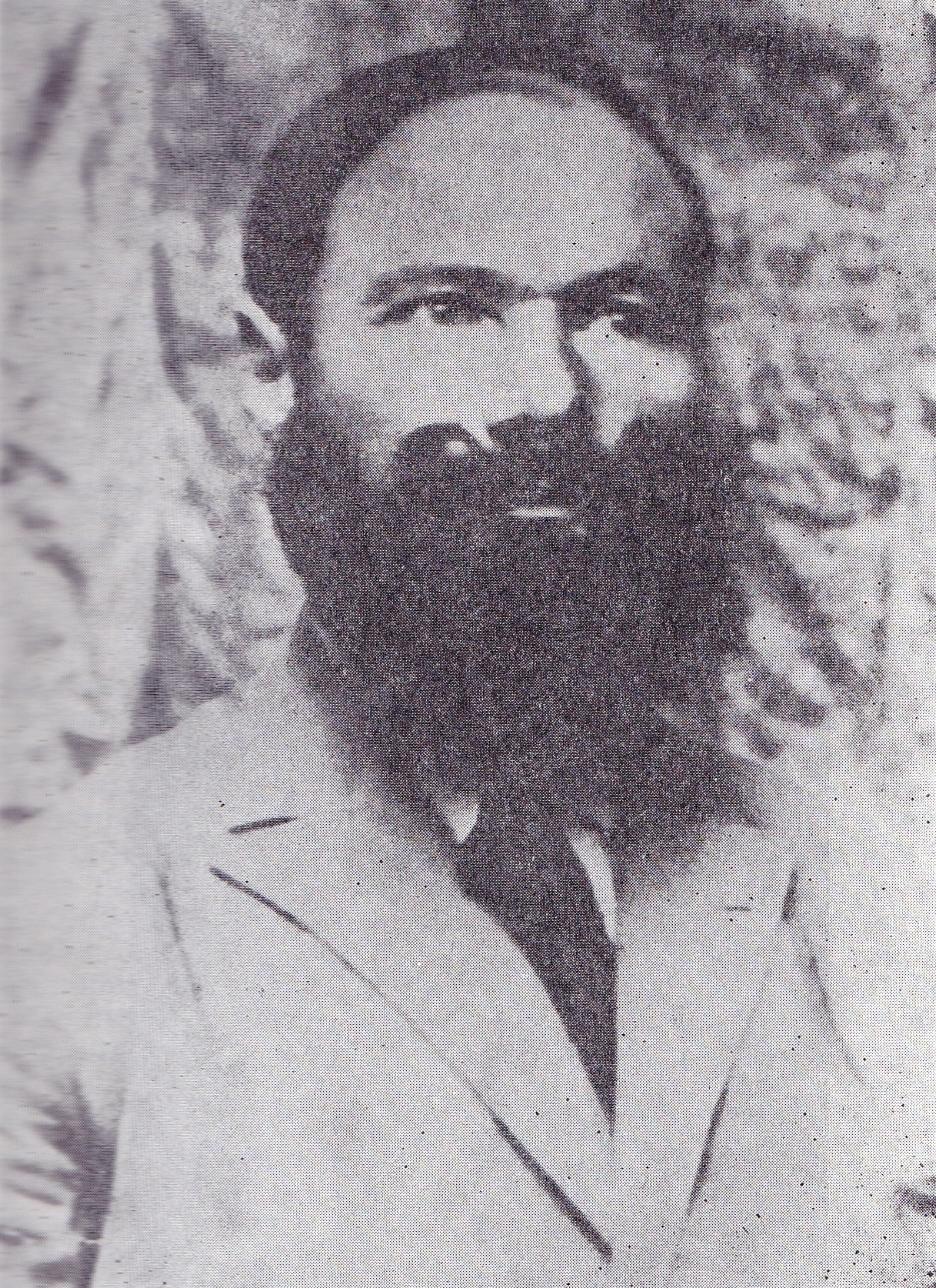
By 1901 IMARO was desperately short of funds. Sandanski proposed a solution that shocked even his colleagues: kidnap a wealthy foreigner and ransom them. On 3 September 1901, his detachment abducted Ellen Stone, an American Protestant missionary, along with her pregnant colleague Katerina Tsilka, near Bansko. The ransom demand was $110,000 (roughly $4 million in 2026 terms). The American public was outraged, the U.S. government negotiated, and after six months in captivity Stone was released. The money funded IMARO operations for years.
After the failed Ilinden Uprising of 1903, Sandanski emerged as leader of the Serres revolutionary district and head of IMARO's left-wing socialist faction. His political vision diverged sharply from the organisation's original Bulgarian-nationalist core. Where the right wing wanted eventual unification with Bulgaria, Sandanski advocated for an autonomous Macedonia within a federated Balkan socialist republic, with equality for all nationalities. He established what historians describe as a "state within a state" in northeastern Ottoman Macedonia: his own courts, tax system, and administration, all running parallel to Ottoman authority.
During the Young Turk Revolution of 1908, Sandanski collaborated with the new constitutional government, founding the People's Federative Party (Bulgarian Section) and serving as an Ottoman politician. This alliance with the Turks enraged the Bulgarian nationalist wing of IMARO. When the Balkan Wars broke out in 1912, Sandanski fought on Bulgaria's side, but afterwards his plotting to assassinate Tsar Ferdinand I made him a marked man.
On 22 April 1915, near the village of Rozhen in Pirin, Sandanski was ambushed and killed by IMARO right-wing activists on the orders of Todor Aleksandrov. He was 42. The assassination was internal: one revolutionary faction eliminating another for ideological betrayal.
Why this matters for British expats
It's a Monday, the banks are open, the roads are clear, and there's no procession blocking traffic into Shumen. The practical impact of Yane Sandanski's birthday on your week is precisely zero: his stomping ground was the southwest of the country, a good five hours' drive away from us, where every other street, school and statue carries his name.
The cultural impact is rather more significant. Sandanski is one of those figures whose legacy you cannot escape if you spend any time in Bulgaria or North Macedonia. A major town in southwestern Bulgaria carries his name (Sandanski, the spa town near the Greek border, population 26,000). Streets, schools, monuments, and plaques commemorate him across the region. In Bulgaria he's simultaneously a national hero and a controversial figure, depending on which historian you ask. Post-communist nationalist scholarship sometimes frames him as a traitor who collaborated with Turks and opposed Bulgarian national unity. In North Macedonia, where the Yugoslav-era positive portrayal still dominates, he's celebrated as a fighter against both Ottoman and Bulgarian domination.
For British expats, understanding Sandanski is useful precisely because his story defies the tidy nationalist narratives both countries now prefer. He was a socialist who kidnapped an American missionary to fund his cause, a Bulgarian who fought against Bulgarian annexation, an Ottoman politician who then took up arms against the Ottomans again, and a revolutionary assassinated by his own movement. The contradictions are the point. Balkan revolutionary history in the late 19th and early 20th centuries was ideologically messy, tactically ruthless, and driven by men whose personal loyalties shifted faster than the borders did.
If you're the kind of expat who reads the plaques on statues rather than just walking past them, Sandanski's name will come up. Knowing he masterminded the Ellen Stone kidnapping (which made international headlines at the time) and that his own side killed him for ideological deviation gives you the two-sentence summary that impresses Bulgarian colleagues over coffee. It signals you're paying attention to the country's history, not just its property prices.
The phrasebook section on Shumen.UK covers the etiquette of revolutionary commemoration days if you ever find yourself at one, though 18 May itself is not a public holiday.
Worth a look if you haven't already: the Shumen.UK money guide.
Sources and further reading
Details for Sandanski's early life and revolutionary career draw on the Bulgarian Wikipedia biography, which is significantly more detailed than the English version. The Ellen Stone kidnapping is well-documented in American diplomatic archives from the period, and the internal IMARO factional split that led to Sandanski's assassination is covered in Bulgarian revolutionary historiography, though interpretations of his legacy remain fiercely contested.