
📅 ON THIS DAY IN BULGARIA, Saturday 26 September
The last prime minister of communist Bulgaria was shot dead outside his own front door in Sofia, and thirty years on nobody has been convicted of it. Andrey Lukanov was born on this date in 1938, in Moscow.
What happened on this day
His father, Karlo Lukanov, was a Bulgarian communist émigré who had ended up in the Soviet Union, and the family came back only after the communist takeover of 1944, when Andrey was six. The father went on to serve as Bulgaria's foreign minister from 1956 to 1961, which tells you the world the son grew up in.
Lukanov joined the party in 1963 and went into the foreign service, representing Bulgaria at the United Nations and at Comecon, the Soviet bloc's economic organisation. He became minister of foreign economic affairs in 1987 and resigned in 1989, by which point he was one of the leading figures of the party's reformist wing and involved in the removal of Todor Zhivkov, who had run the country for thirty-five years.
He became prime minister in February 1990 and was gone by December. The two Wikipedia entries disagree on the exact boundaries, the Bulgarian one counting two consecutive governments rather than one term. In those ten months the Communist Party renamed itself the Bulgarian Socialist Party, and Bulgaria held its first democratic election since 1931. The BSP came out of it as the largest party. Lukanov offered the opposition a coalition and was turned down flat, on the grounds that his party had to answer for what had gone before. The months that followed brought shortages, accusations of corruption and unrest, and after mass demonstrations and a general strike he resigned in favour of a technocratic government under Dimitar Popov.
He was charged with embezzlement in 1992 and arrested; the charges were dropped. On 2 October 1996 he was shot in the head and chest by a lone gunman outside his Sofia flat. The gunman was never caught. A building contractor, Angel Vassilev, was later charged with organising the killing along with others, convicted, and then acquitted by the Court of Appeal. The case is formally unsolved, and it is worth being precise about that: nobody has been shown in a Bulgarian court to have killed him.
Towns celebrating today
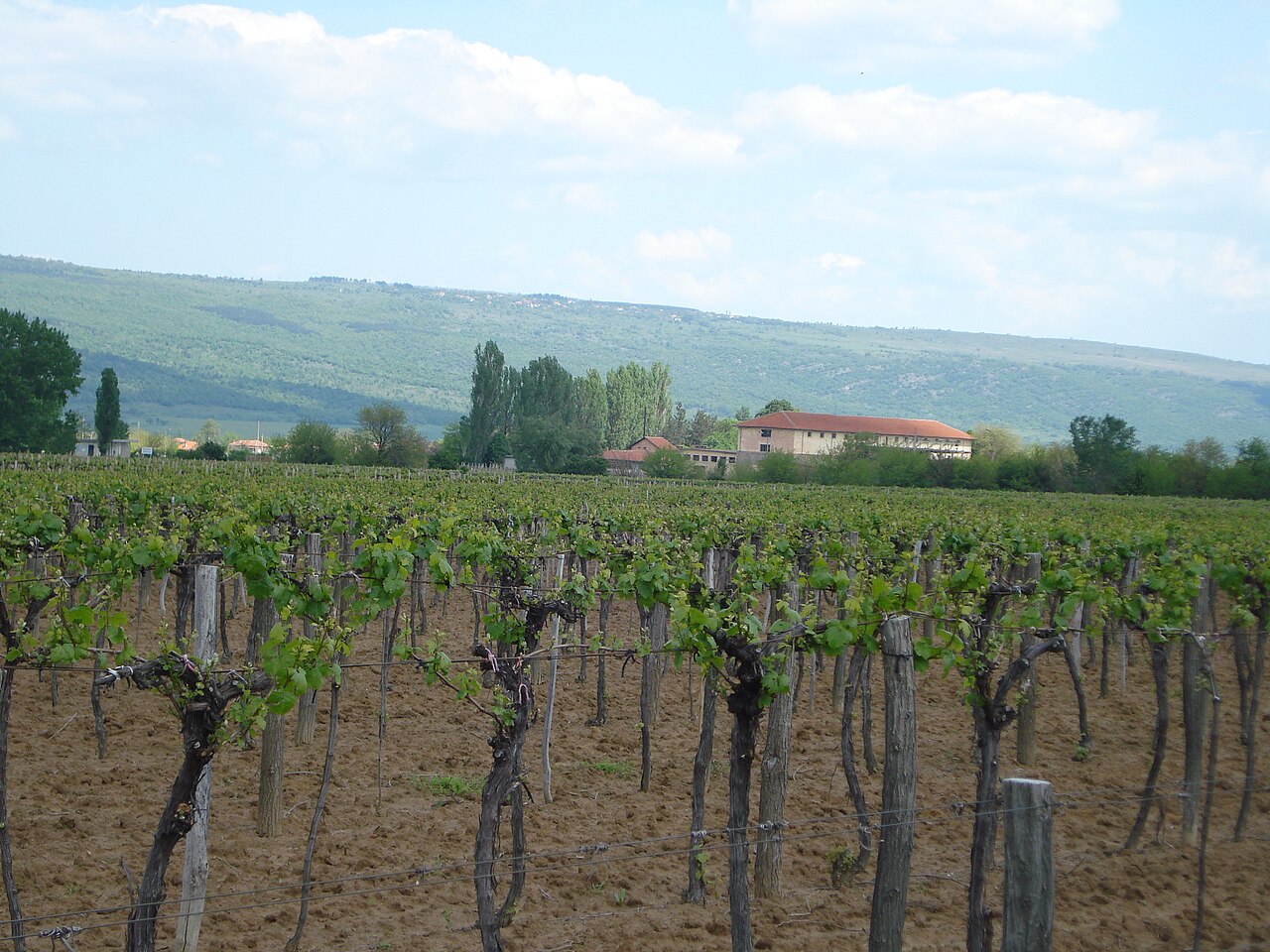
Karnobat in Burgas province keeps its day, dedicated to St John the Theologian. It sits in its own valley almost equidistant from Burgas, Sliven and Yambol, and its oldest and best-developed trade is the vine. If you have ever picked up a bottle of rakia or mastika with the town's name on it, that is why.
Why this matters for British expats
There are two British threads here. The first is that Lukanov's business dealings in the late communist period brought him into contact with western businessmen including Robert Maxwell, which places a Bulgarian minister squarely in one of the murkier stories in recent British commercial history.
The second is more useful. Lukanov's obituary in The Independent was written by Richard Crampton, the British historian whose concise history of Bulgaria remains the standard English-language account. If you have been looking for a way into this country's twentieth century that is neither a tourist pamphlet nor a textbook in Bulgarian, Crampton is where to start, and the transition years he covers are still the unfinished argument underneath most Bulgarian politics today. We say more about why that history matters to us on our about page. For the lighter side of Karnobat, our Bulgarian wine regions guide covers the country's vineyards.
Follow-on reading: the Shumen.UK driving guide.
Sources and further reading
The family background, the career and the circumstances of the killing come from the English Wikipedia entry on Andrey Lukanov, which also cites Crampton's obituary in The Independent, with the Bulgarian entry giving fuller detail on his ministerial years.