
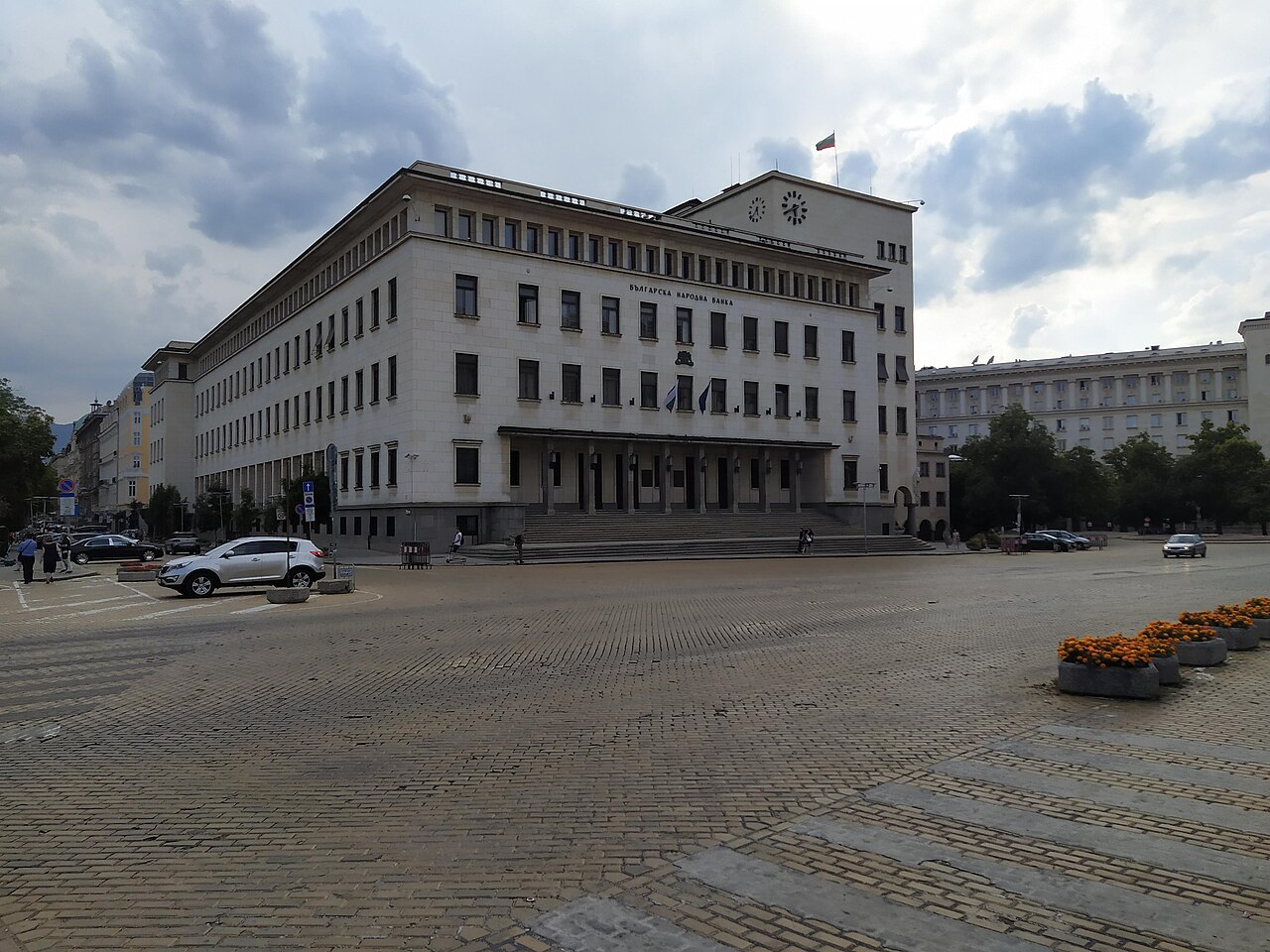
Speaking in Washington at an Atlantic Council event held alongside the IMF and World Bank spring meetings, Bulgarian National Bank (BNB) governor Dimitar Radev asserted that Bulgaria’s euro adoption was a marathon, not a sprint. His core argument was as sharp as it was significant: "The euro does not create trust: it strengthens it."
For British expats in Bulgaria, this is more than just central-banker poetry. It serves as a litmus test for what happens next in the routine of daily life: supermarket prices, monthly bills, rental agreements, and card payments.
What Radev actually said
Radev framed the accession as the result of a long-term process rather than a hasty political manoeuvre. He noted that the country has effectively been preparing for decades, supported by three institutional pillars:
- The currency board arrangement, the long-standing peg of the lev to the euro.
- Participation in ERM II, the mandatory waiting room for the single currency.
- Membership of the EU Banking Union, bringing Bulgarian banks under closer European supervision.
He stressed that public confidence is the final ingredient, requiring transparent communication with businesses, universities, and civil society to ensure the transition remains stable.
Jargon buster: what this means in plain English
Financial policy terms can be dense. Here is the short version for the non-specialist:
- Currency board: A strict system that tied the lev’s value to the euro. It stopped the government from printing money to solve problems.
- ERM II: The exchange-rate mechanism where a country proves its currency is stable enough to join the euro permanently.
- EU Banking Union: A framework ensuring that big banks across Europe play by the same rules and are overseen by the same referees.
Radev’s point is that Bulgaria did not wake up and decide to be euro-ready overnight; the country has been operating under euro-style discipline for years.
Why this matters to Brits in Bulgaria
For British retirees, remote workers, landlords, and business owners, the shift is practical rather than ideological. The removal of the lev eliminates a layer of routine friction in daily life. The immediate benefits include:
- End of conversion costs: For those receiving pensions or incomes in euros or sterling, the removal of the lev–euro spread means fewer pennies lost in every transaction.
- Transparent pricing: It becomes easier to compare the cost of a Bulgarian property or a monthly shop directly with prices in Spain, France, or Ireland.
- Simplified contracts: Rental agreements and service contracts in a universal currency reduce the risk of confusing financial clauses during currency fluctuations.
While Radev highlights record-low public debt and stability, these are official assessments. For the expat community, the real-world success of the switch will be judged at the checkout, not in a Washington ballroom.
The expat watch-list
Trust in the new currency is not built at the central bank, it is built at the local supermarket or the ATM. For British households, the transition requires a watchful eye on:
- Supermarket prices: Watch for stealth price hikes or opportunistic rounding-up during the dual-pricing period.
- Bank and card fees: Ensure that Bulgarian banks do not introduce new service fees to offset the loss of currency exchange revenue.
- Rent and utilities: Check that landlords and utility providers have converted deposits and monthly rates at the official fixed rate (1 EUR = 1.95583 BGN).
- Recurring payments: Audit standing orders and direct debits to make sure the conversion has not caused errors in your banking app.
Lessons from Croatia
Bulgaria is not the first to walk this path. Recent entrants like Croatia saw a familiar pattern: long administrative preparation followed by a very human debate about whether the weekly shop suddenly felt more expensive. It is a useful reminder that while the institutional groundwork is done, the public judgment phase is only just beginning.
The bottom line
Governor Radev’s message is straightforward: Bulgaria’s euro move was the product of decades of discipline, not a last-minute political decision. For Brits in Bulgaria, the takeaway is equally clear. The country is moving into a more integrated financial era, and while central bankers provide the strategy, it is the fairness of daily pricing and billing that will ultimately determine whether the public accepts the change.