📅 ON THIS DAY IN BULGARIA, Saturday 8 August
If your neighbour is called Emil, today is the day you find out whether you have understood how this country works. Because he is not going to invite you. He is going to be at home, with food out, assuming that anyone who thinks well of him will simply turn up. That is the whole system, and it catches Brits out every single time.
Today's name days
Emil is the common one, and the one you are most likely to meet. Emilia is its feminine pair and just as widely used. Miron is the third, less common but properly established, and worth recognising when it comes up.
Four other variants celebrate alongside them: Emilian, Emiliyan, Emiliyana and Emiliana. The Bulgarian name-days guide has the full list, the saint origins and the etiquette in more detail if you want to keep it to hand.
Now the part that actually matters, and the part no Bulgarian will think to explain because it is too obvious to them. In Britain, you wait to be invited. On a Bulgarian name day, the person celebrating keeps an open house: friends, neighbours, colleagues and the odd person they barely know all just arrive, without warning and without an invitation, and are fed. Turning up is the compliment. Not turning up is the thing that gets noticed.
The one rule you must not break: never arrive empty-handed. A cake, a banitsa, a box of chocolates, a bottle of wine, or flowers. If you bring flowers, bring an odd number. Even numbers are for funerals, and handing a Bulgarian household an even bunch on a name day is the sort of mistake that gets retold affectionately for years. Since 8 August is a Saturday this year, nobody has work to get back to, and these things run considerably longer than a British drop-in would.
What happened on this day
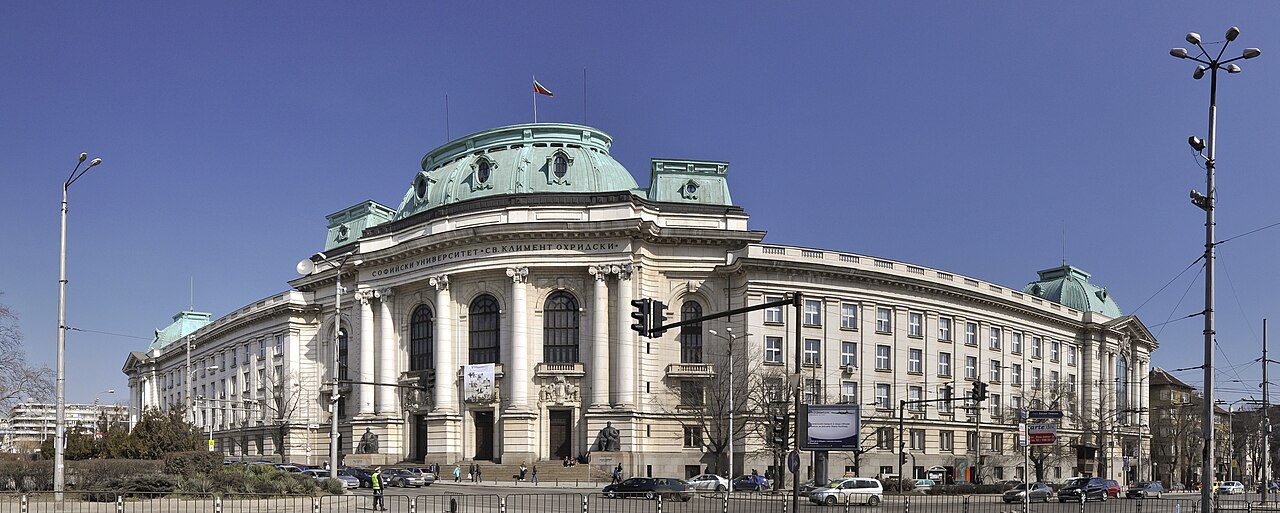
The historical entry for today is a quiet one, and it is more interesting than it first looks. Bogdan Dushkov Kesyakov, a Bulgarian diplomat and jurist, died in Sofia on 8 August 1966.
He was born in Sofia in 1886, read law at the University of Berlin, and spent his working life in the diplomatic service: the Bulgarian legations in Paris and Belgrade, and then the Ministry of Foreign Affairs from 1918 to 1945. That span is worth sitting with for a second. He was at the ministry through the end of one world war, the whole of the interwar period, and the whole of the next war. Whatever the government of the day was doing, Kesyakov was the man handling the paperwork behind it.
And he wrote it all down. His four-volume contribution to the diplomatic history of Bulgaria, published between 1925 and 1936, collects the treaties, conventions, protocols and diplomatic acts of the period. The first volume alone runs to well over five hundred pages. It is not a book anyone reads for pleasure, but it is the sort of book that historians of the Balkans still have to go through, which is a decent definition of a career that mattered. He also, and this is the detail I cannot quite let go of, published a short book about the Sahara in 1963.
The surviving public record on him is thin. That is most of what has reached the open web, and pretending otherwise would mean making things up.
Why this matters for British expats
The name-day etiquette is the genuinely useful part, and it is worth getting right this weekend if you know an Emil or an Emilia. British social instinct says do not intrude on someone's celebration uninvited. Bulgarian social instinct says the absence of an invitation is the invitation. Acting on the British instinct reads, from the other side, as not bothering.
The Kesyakov half is a different sort of use. If you have ever tried to work out why a Bulgarian border sits where it does, or why a particular treaty gets mentioned with such feeling, somebody had to compile the documents that argument rests on, and often it was a career civil servant nobody has heard of. It is a reminder that the loud history has a quiet paper trail underneath it, kept by people who never got a statue.
Sources and further reading
The name-day list comes from the Bulgarian name-day calendar we maintain across the site, drawing on Nestful and Imen-den.net. The biographical detail on Kesyakov, the birth year, the Berlin law degree, the postings in Paris and Belgrade, the ministry years and the four volumes, comes from his Bulgarian Wikipedia entry, which is short enough to read in a minute and is, as far as the open web goes, most of what there is.