📅 ON THIS DAY IN BULGARIA, Tuesday 22 September
Nothing official is open today, and that is worth knowing before you set out rather than after. 22 September is Independence Day, a fixed national holiday, and this year it falls on a Tuesday.
What happened on this day
Bulgaria had been running its own affairs since the Berlin settlement of 1878. It had a constitution, a flag, an anthem and a foreign policy, and from 1880 its own money. In 1885 it absorbed Eastern Rumelia. What it did not have was legal independence: on paper the country remained a vassal under the suzerainty of the Sultan, a fiction everyone acknowledged and nobody had yet troubled to end.
Ending it required a moment when the Great Powers were looking elsewhere, and 1908 provided one. The Young Turk Revolution had left the Ottoman government in disarray. At a meeting at Buchlov that September, Austrian and Russian envoys settled their own business and agreed not to obstruct a Bulgarian declaration.
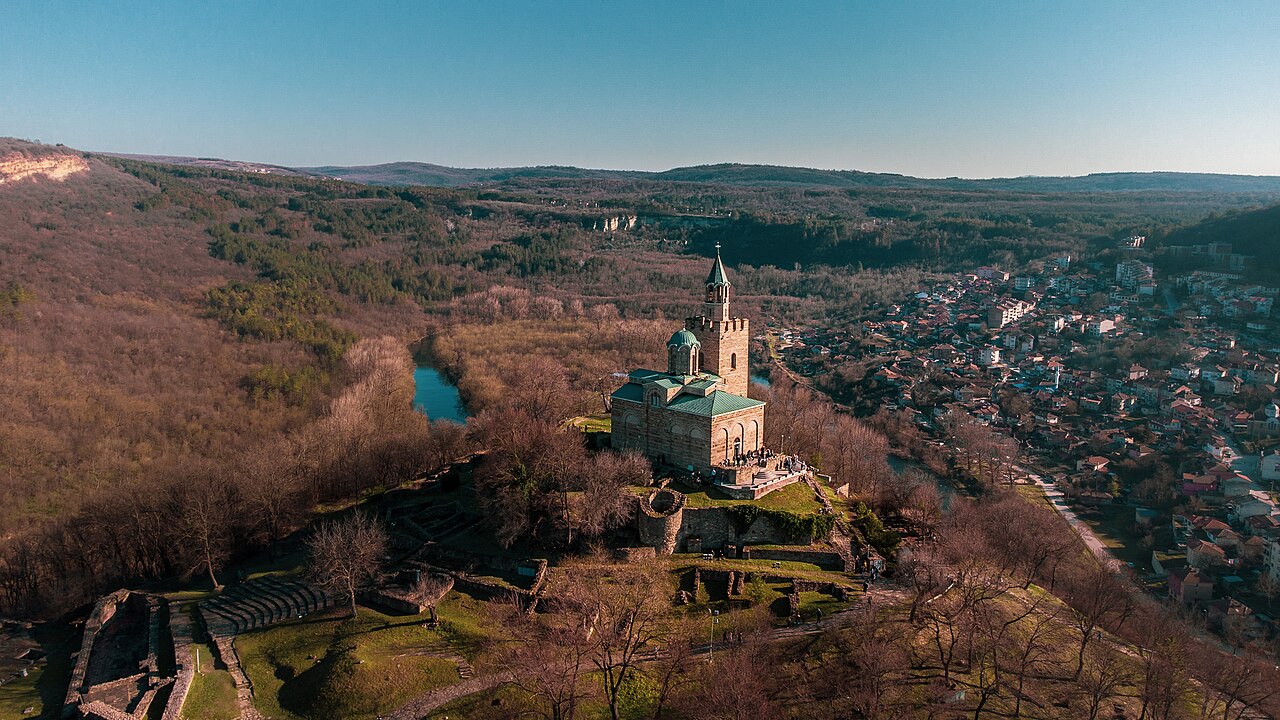
What followed reads more like a farce than a founding. Prince Ferdinand came back from his estate in Hungary to Rousse, where the government of Aleksandar Malinov was waiting to agree the final wording aboard a ship called the Krum. The party then took the train towards Tarnovo, and recent research places the completion of the manifesto itself at Dve Mogili railway station, somewhere along the line. It was read out at the Holy Forty Martyrs Church in the old capital. Ferdinand raised the principality to a kingdom and took the title of tsar, which the rest of Europe simply rendered as king.
Austria-Hungary annexed Bosnia and Herzegovina the following day. Bulgaria's independence was recognised by the Great Powers in the spring of 1909, and the Ottoman side asked for no compensation.
Today's name days
A quiet one after the crowds earlier in the month: Galabin and Galabina, from galab, the Bulgarian for dove. The usual rule still applies, and arriving empty-handed is still the wrong move.
Towns celebrating today
Dobrinishte in the south-west marks its day, a spa and winter-sports town at 850 metres with Rila, Pirin and the Rhodopes around it and Bansko six kilometres up the road. Kocherinovo in Kyustendil province celebrates, and so does Merichleri, near the Maritsa, whose mineral water comes with a local legend attached: that a princess called Mery, said to have been of English origin, was cured by the springs and left her name to the place in gratitude.
Why this matters for British expats
The practical part first. Banks, government offices, KAT, the tax office and schools are all closed today and were open yesterday, which is the sequence that catches people out. Supermarkets, cafes and restaurants run normally, and pharmacies keep their duty rota. If you need anything stamped, it waits until tomorrow, and the money and banking guide is worth reading before you plan a week around a Bulgarian holiday.
The second thing is a calendar puzzle you will meet repeatedly. The declaration was made on 22 September by the Julian calendar Bulgaria used at the time, which corresponds to 5 October in ours. The holiday kept the old date rather than shifting, so the anniversary and the modern date sit about a fortnight apart. The same offset explains a good deal of what looks like inconsistency elsewhere in the Bulgarian cultural calendar.
For more of the practical picture, see the Bulgarian name-days guide.
Sources and further reading
The Berlin settlement, the Buchlov meeting, the journey from Rousse and the proclamation at the Holy Forty Martyrs Church are set out in Wikipedia's article on the Bulgarian declaration of independence. The town details follow the standard municipal listings and each town's own entry.