
📅 ON THIS DAY IN BULGARIA, Tuesday 11 August
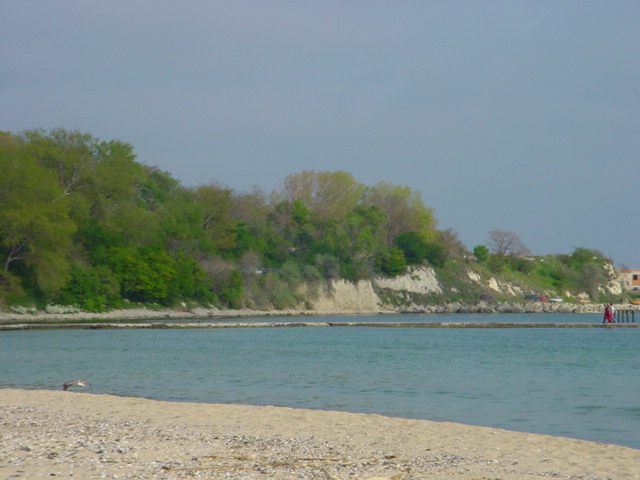
Most British expats have been to Cape Kaliakra, or at least been driven past the turning for it. Long red headland, big drop into the sea, birds everywhere, a café at the end. What almost nobody mentions is that the water you are looking down at is where somebody worked out a piece of naval tactics that Horatio Nelson would use to win two of the most famous battles in British history.
What happened on this day
The Battle of Cape Kaliakra was fought on 11 August 1791, just off this coast, and it was the last naval action of the Russo-Turkish war of 1787 to 1792.
The Russian fleet was under Fyodor Ushakov: fifteen ships of the line, two frigates and assorted smaller craft, 990 guns between them. They had sailed from Sevastopol on 8 August. Around midday on the eleventh they came upon the combined Ottoman and Algerian fleet under Hussein Pasha, anchored just south of the cape: eighteen ships of the line, seventeen frigates, somewhere between fifteen hundred and sixteen hundred guns. On any reasonable arithmetic Ushakov was outgunned by a factor of well over half again.
What he did about it is the interesting part. Rather than form up at a respectful distance, he took his fleet in three columns straight through the gap between the anchored Ottoman ships and the cape itself, despite there being guns mounted on the cape that could fire down on him as he passed. It is the kind of move that either works completely or ends your career.
How it played out
Said Ali, commanding the Algerian squadron, cut his cables and ran east, with Hussein Pasha and the eighteen ships of the line following. The Russians turned south onto a roughly parallel course and formed a line. Said Ali, at the head of his line, turned north to try to get round the Russian van, and Ushakov pulled out of his own line and went straight at him while the rest of the fleet came up. That was at a quarter to five in the afternoon. The Turks were gradually pushed south, and when darkness ended the fighting at half past eight they were in full retreat towards Istanbul.
Neither side lost a single ship. Russian casualties were seventeen dead and twenty-eight wounded, and the Alexander Nevsky was knocked about. Ottoman losses were never properly recorded, but their rigging took a beating. The war ended shortly afterwards with the Treaty of Jassy, and Ushakov was given the Order of Saint Alexander Nevsky for the action.
And then the part that should interest anyone who grew up on Trafalgar Day. The manoeuvres Ushakov used off Kaliakra, breaking his own line to attack, going for the enemy's lead ships rather than trading broadsides at range, were later used to considerable effect by Horatio Nelson at the Nile in 1798 and at Trafalgar in 1805. The tactical vocabulary that Britain tends to file under Nelson's genius had been demonstrated seven years earlier, in sight of a Bulgarian headland most people here have had a beer on top of.
Why this matters for British expats
This is the rare one where the Bulgarian anniversary and the British schoolbook actually meet. If you have friends or family visiting and you are looking for something to say at Kaliakra beyond the scenery and the sad legend about the forty maidens, this is it: point at the water south of the cape and tell them Nelson borrowed his best move from what happened out there.
Practically, the cape is an easy day out from the northern coast, up past Kavarna, and it is at its best out of season when the coach parties have gone. Take a jacket even in August. It is a headland sticking a long way into the Black Sea and it does its own weather.
There is also a decent lesson about how history gets distributed. This battle is well documented in Russian and Bulgarian sources and gets a couple of paragraphs in English. Nelson gets libraries. Which is not a complaint about Nelson so much as a reminder, one you keep running into out here, that the version of European history most of us arrived with has some very large gaps in the east.
For more of the practical picture, see the Shumen.UK guides hub.
Sources and further reading
The account of the battle, the fleet strengths, the timings, the casualty figures and the later influence on Nelson's tactics, comes from the Bulgarian Wikipedia entry for the Battle of Kaliakra and its English counterpart, which draw on R. C. Anderson's naval history of the Levant and on Tredrea and Sozaev's reference work on Russian sailing warships.