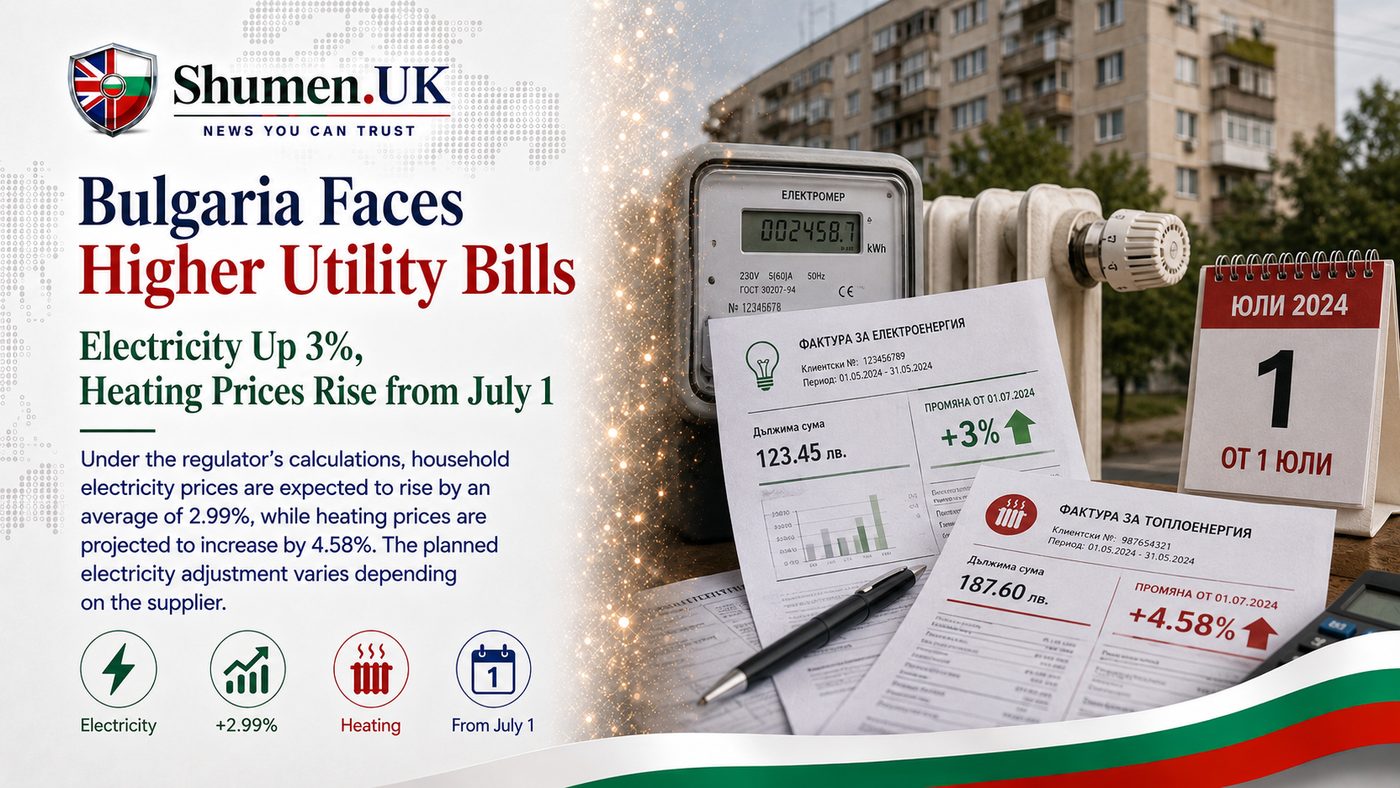
Bulgaria's energy regulator has confirmed household electricity and heating bills will rise from 1 July 2026, though by considerably less than energy companies demanded. The Energy and Water Regulatory Commission published its draft decision 2 June, and anyone checking their summer utility statement will see the increase quantified.
Electricity Up 3%, Heating Up 5%
Household electricity prices will rise by an average of 2.99% under the draft proposal. The increase varies by supplier: 3.11% for Electrohold Sales customers, 3.24% for EVN Bulgaria Elektrosnabdyavane subscribers, 2.38% for ENERGO-PRO Sales clients, and 5.80% for ESP Zlatni Pyasatsi customers, the steepest adjustment in the residential electricity market.
District heating users face an average increase of 4.58% for the period 1 July 2026 to 30 June 2027, according to the draft proposal. The regulator's figures show the highest increases for Toplofikatsiya Pleven at 5.54% and Toplofikatsiya Sofia at 5.50%, followed by Veolia Energy Varna at 5.19% and Toplofikatsiya Sliven at 5.18%. For households served by Toplofikatsiya Sofia, the draft decision proposes heat energy rising from €69.48 per megawatt-hour to €73.30 per MWh.
These heating figures come from the regulator's published draft and have not been independently confirmed by other sources at this stage. The proposals remain subject to revision during public hearings before final approval, and the EWRC has historically made minor adjustments after consultation feedback.
What This Means for British Expats
If you pay Bulgarian utility bills directly, budget for a modest uptick from July. The percentage increases are small enough that most households will notice the change without seeing a dramatic monthly shock, though it adds to the cumulative cost-of-living pressure that has been building since the euro changeover.
If you rent, check whether utility costs are included in your lease or billed separately. If you own property and pay directly, the July statement will reflect the new tariff. District heating customers in Sofia, Pleven, Varna and Sliven will see the sharpest increases, though still well below what the suppliers originally sought.
For context: Bulgaria maintains some of the lowest household energy prices in the EU. The regulator noted this specifically when defending the increases, and while "lowest in Europe" offers limited consolation when your own bill is heading upward, it does mean the absolute figures remain manageable compared to what British expats might have paid at home. Our cost of living tracker monitors the broader picture, and these increases sit within the wider European energy pricing landscape where Bulgaria consistently ranks among the most affordable markets.
What Suppliers Actually Requested
The EWRC's proposed increases are considerably lower than what energy companies asked for. Heating suppliers requested an average price hike of 30.65%, according to the regulator's data. Some demands were dramatically higher: Toplofikatsiya Ruse sought a 69.05% increase, Yuliko-Eurotrade requested 64.61%, and the regulator noted that "in certain cases, the requested increases approached 70%".
The gap between what was requested and what is being proposed suggests either significant financial strain in the heating sector, or that companies routinely inflate initial demands knowing the regulator will cut them back. Possibly both. The heating sector's financial health remains unclear, but demands approaching 70% are not made lightly, particularly in a market where district heating remains essential infrastructure for much of urban Bulgaria.
The EWRC claims it adopted a "restrictive approach" when assessing company expenses, despite continued pressure from energy market prices. The stated goal: limit the burden on household consumers while preserving Bulgaria's position among European countries with the lowest household electricity prices.
Public Hearings Before Final Decision
The proposals are not yet final. The EWRC will review them during open meetings and public hearings before adopting definitive pricing decisions. The approved tariffs are scheduled to take effect 1 July 2026.
If you have views on the increases, the public consultation process is the formal avenue, though historically these sessions have rarely resulted in the regulator reversing course on draft decisions. Practically: plan for the increase, but track whether the final figures match the draft. British expats concerned about the impact can monitor the EWRC's website for hearing schedules and final tariff announcements, though the consultation process typically yields minor adjustments rather than wholesale reversals.
The familiar queue outside the Shumen energy office suggests others are already doing the arithmetic on what July will cost.