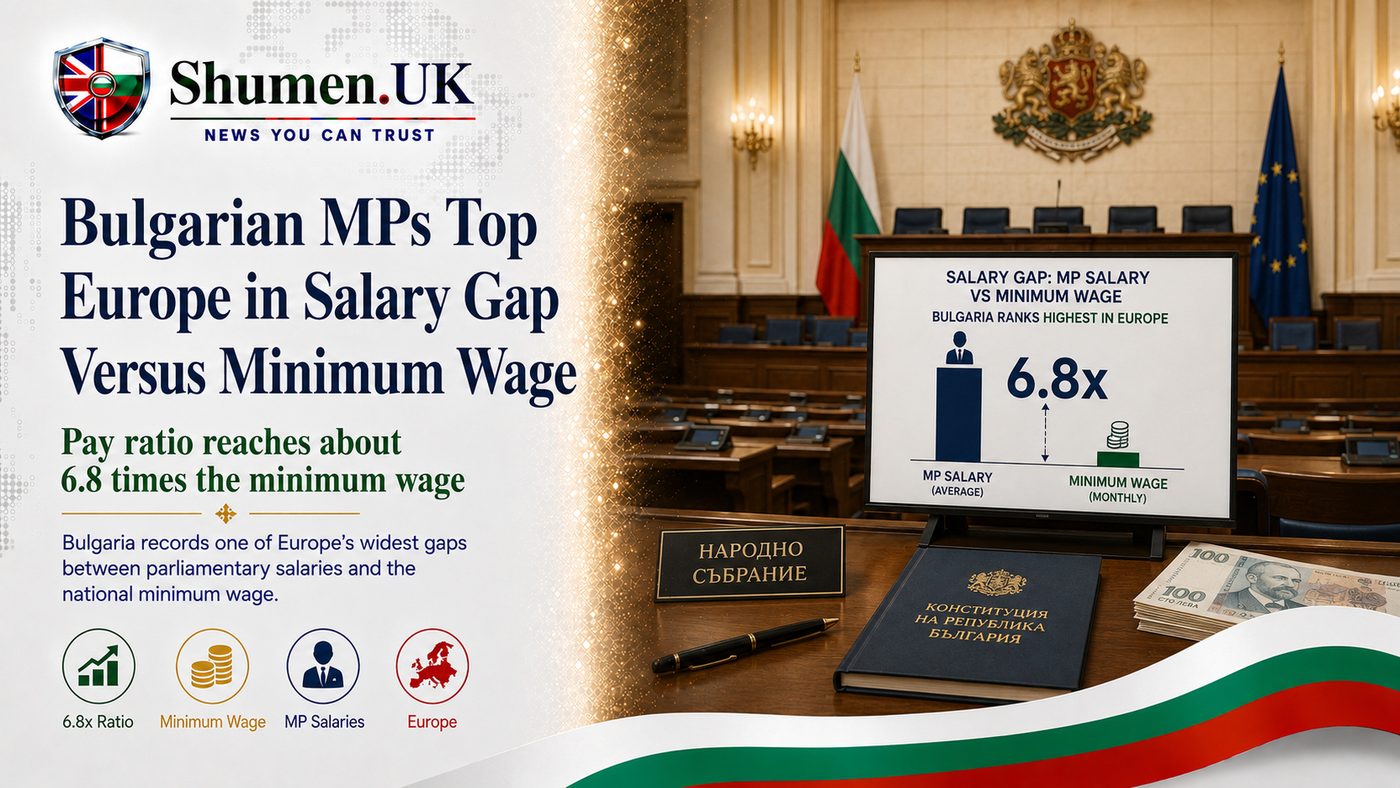
Bulgarian MPs earn salaries roughly 6.8 times the national minimum wage, the widest gap between parliamentary pay and the lowest legal earnings of any European country, according to a comparative study reported by Novinite.com. The ratio places Bulgaria at the top of this metric across Europe, despite the country ranking among the EU's poorest by income.
Anyone who's queued outside the National Assembly or listened in a Sofia kafene knows how this pay gap weighs on public sentiment. The study has now confirmed the scale of the disparity in European terms.
Important note on sourcing: The specific salary ratios for Bulgaria and the comparative figures for other European countries cited below come solely from the Novinite.com report and have not been independently verified through official government or EU data sources. This article clearly labels claims that remain single-sourced.
The European Context
According to the study, no other European state shows a wider gap between what MPs earn and what the minimum wage floor guarantees. Romania, where the minimum wage sits close to €800, records a ratio of approximately 2.7 to 1 (per the Novinite.com report, unverified). Spain's ratio stands at around 2.5 times, France at roughly 4 times, and Germany at about 5 times the minimum wage (all figures from the same source).
Bulgaria's 6.8-times multiple stands out not because Bulgarian MPs are the highest-paid in absolute terms (they are not), but because the baseline minimum wage in Bulgaria remains so low relative to the rest of the EU.
How Bulgarian MPs' Salaries Are Set
Bulgarian parliamentary pay is recalculated every three months based on average wages in the public sector, making it more sensitive to short-term income changes than the annual indexing typical across most of Europe. The quarterly adjustment mechanism means MPs' salaries can rise (or theoretically fall) four times a year, tracking fluctuations in public-sector earnings.
Parliament has recently moved to freeze MPs' salaries at March 2026 levels on a temporary basis. The freeze offers a pause in salary growth. The Novinite.com report states the underlying formula remains embedded in the budget framework, meaning future increases may be possible depending on fiscal decisions made during the adoption of the state budget. This claim about the formula's continued existence has not been independently confirmed.
What This Means for British Expats
The salary gap has sparked broader discussion in Bulgaria about whether parliamentary remuneration should reflect the country's economic reality and living standards. For British expats in Bulgaria, the figures offer a window into one aspect of Bulgarian political economy: the distance between political pay and average (or minimum) earnings is wider here than anywhere else in Europe, according to the study.
This disparity shapes the broader political climate and public trust in institutions, factors that can indirectly affect everything from the reliability of public services to the tone of policy debates British nationals encounter in daily life. Whether the freeze holds or the formula reasserts itself in the next budget cycle will test how seriously Parliament takes public sentiment on the issue.
Our cost of living tracker carries the underlying wage and price data for Bulgaria and updates as official figures land.
The Numbers Without the Rhetoric
Bulgaria is one of the lowest-income countries in the European Union, a status confirmed both by the source reporting and by independent economic data. The parliamentary salary ratio sits against that backdrop. The March freeze addresses the immediate optics but leaves the adjustment formula intact (according to the source), meaning the ratio could widen again if public-sector wages rise and the freeze is lifted.
The study did not provide an analysis of why the gap exists or what consequences it may have for political trust or social cohesion. It reported the numbers; the interpretation is left to readers and observers.