📅 ON THIS DAY IN BULGARIA, Monday 8 June
What happened on this day
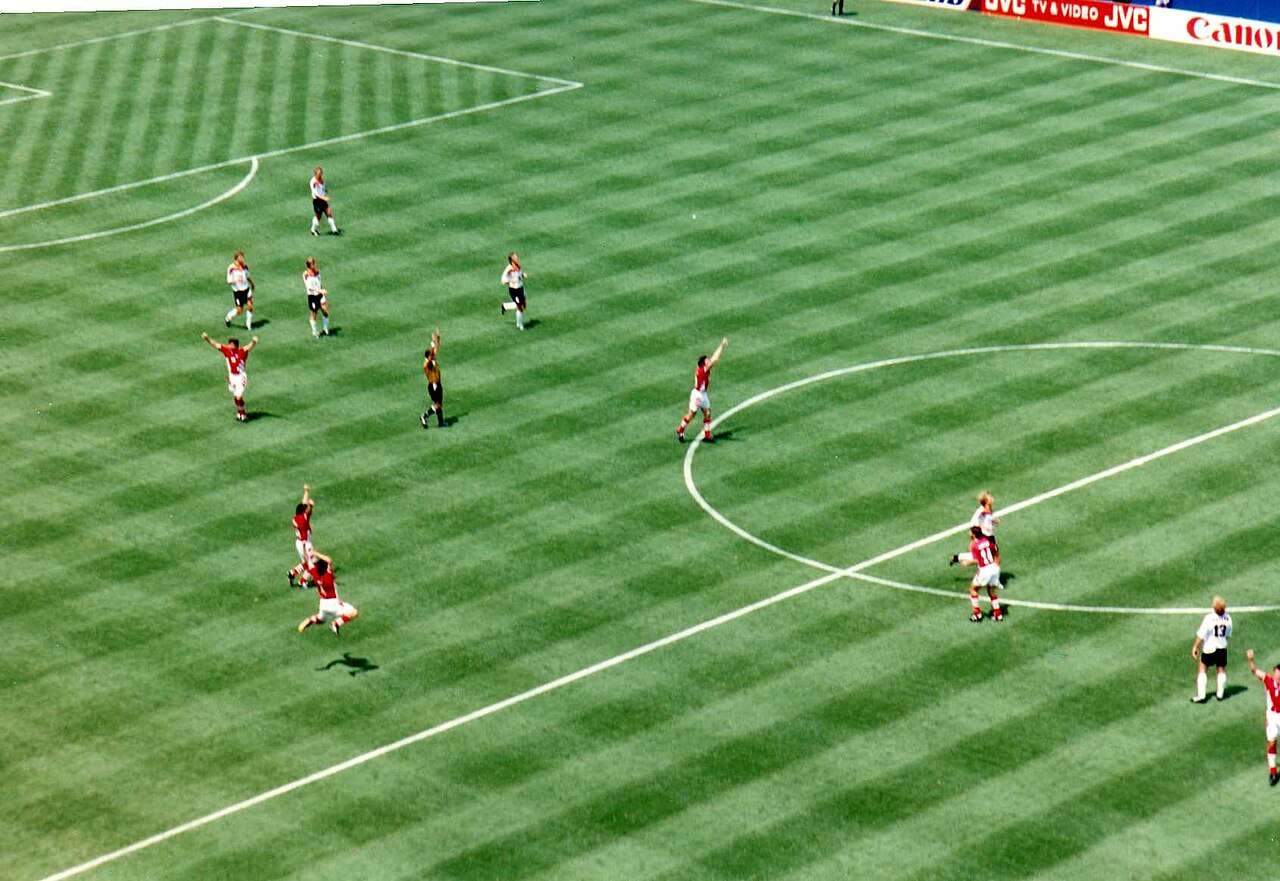
On 8 June 1997, Bulgaria's national football team hosted Luxembourg at the Vasil Levski Stadium in Sofia for a World Cup qualifying match. The Bulgarians won 4-0, which at first glance looks like a comfortable victory over a minnow. But here's the thing about beating Luxembourg in 1997: it was roughly as impressive as beating a particularly motivated Sunday league side who'd been given the wrong directions and arrived late.
Luxembourg's entire population at the time was around 420,000 people, smaller than the city of Plovdiv. They'd lost 7-2 to the Czech Republic just three days earlier. The Bulgarian squad, by contrast, still carried several players from the legendary team that had reached the World Cup semi-finals in USA 1994, knocking out holders Germany along the way. Hristo Stoichkov, arguably Bulgaria's greatest ever player, was still in the side. The talent gap wasn't a gap so much as a continental shelf.
The match was part of Group 5 of the European qualifying campaign for the 1998 World Cup in France. Bulgaria won the group, finishing ahead of Russia, and qualified directly for France 1998. At the finals the following summer they went out in the group stage, the closing chapter of Bulgaria's most successful international period.
The 4-0 scoreline, then, sits in a peculiar historical position. It was a win that meant nothing on its own, came against opposition so weak the victory was essentially pre-ordained, and formed part of a campaign that ultimately ended in failure. Most Bulgarian football fans who remember 1997 remember the playoff loss to Germany, not the routine dismantling of Luxembourg on a warm June evening in Sofia.
Why this matters for British expats
It matters, in a small way, because it's a useful calibration point for how Bulgarian football is discussed here versus how British football is discussed back home. In Britain, a 4-0 win over Luxembourg would be filed under "job done, move on". In Bulgaria, where international football success is rarer and the 1994 semi-final remains the high-water mark of the national sport, even a workmanlike qualifier gets remembered with a certain wistfulness.
If you're watching the World Cup this summer in a Bulgarian bar or café, and the conversation turns to Bulgaria's absence from major tournaments, 1997 will eventually come up. Not because of Luxembourg, but because it was the last qualifying campaign where Bulgaria genuinely expected to reach a tournament. The next Euros are in 2028; Bulgaria last qualified for a major tournament in 2004. That's a 24-year gap if they miss again, which is a long time to live on the memory of Hristo Stoichkov.
The broader takeaway is about sporting identity. British expats arriving in Bulgaria often underestimate how much the 1994 World Cup matters here, because Britain has never had a single tournament define its footballing self-image in quite the same way. The closest equivalent would be England's 1966 World Cup win, except Bulgaria's 1994 run was a semi-final, not a victory, and happened in living memory of nearly everyone over 35. The fact that a routine 4-0 win over Luxembourg in 1997 can still be looked up on Wikipedia tells you something about how thoroughly that era is archived, catalogued, and remembered.
One last note: if you're planning to attend a football match at the Vasil Levski Stadium in Sofia, the atmosphere is significantly better when the opposition is someone other than Luxembourg. CSKA Sofia and Levski Sofia both use the ground for big matches, and the Sofia derby is worth experiencing once if you can handle the noise and the occasional flare. Just don't turn up in red if you're sitting in the blue section, or vice versa. The rivalry is affectionate in the way a blood feud is affectionate.
Worth a look if you haven't already: the Shumen.UK cost-of-living tracker.
Sources and further reading
Details of the match come from the Wikipedia entry for the fixture, which records the date, venue, and scoreline but offers no further narrative context. The broader context of Bulgaria's 1997 qualifying campaign and the 1994 World Cup semi-final draws on the standard football reference sources and the collective memory of Bulgarian sports commentary, which revisits the 1994 team with the kind of reverence the British reserve for 1966.