📅 ON THIS DAY IN BULGARIA, Wednesday 27 May
On 27 May 1884, Bulgarian voters went to the polls in what would become one of the pivotal elections of the young nation's first decade. The result looked straightforward at first glance: the hardline liberals swept to a commanding victory, winning around 100 of 171 seats. But that apparent unity masked a schism that would split Bulgarian liberalism permanently and reshape the country's political landscape for the next decade.
I've been here 13 years, and the pattern still holds: Bulgarian politics is rarely about winning elections cleanly; it's about what happens the morning after when the victors realise they can't stand each other.
What happened on this day
Prince Alexander I called the election by decree on 28 March 1884. Voting took place across two rounds, 27 May and 3 June, under the Tarnovo Constitution's electoral rules. Turnout was 28.9%, staggeringly low even by 19th-century standards, which tells you something about the mood of the electorate eight years after liberation. The principality was still finding its footing, the economy was precarious, and most voters had concluded that whoever sat in the National Assembly would make little difference to the price of bread.
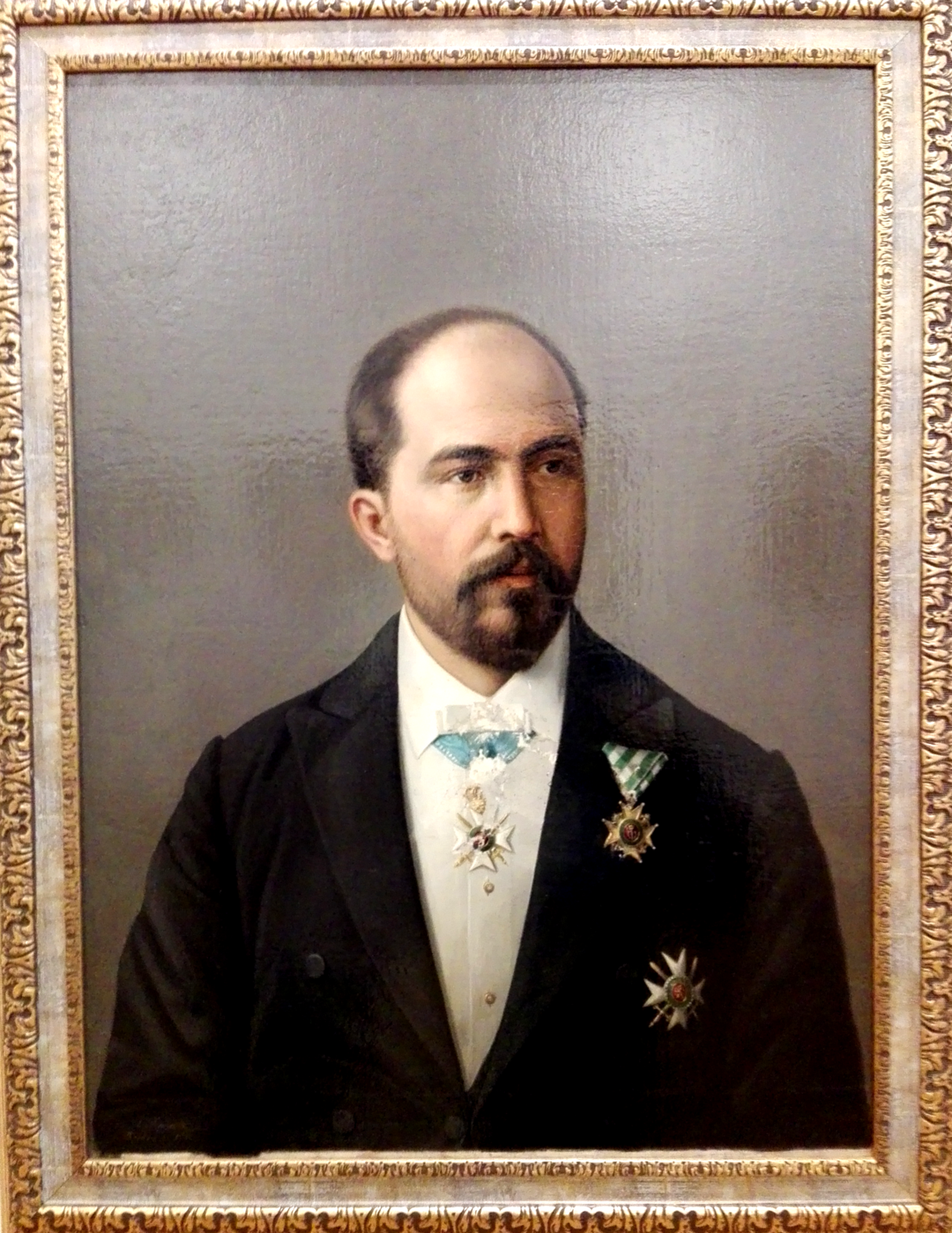
The hardline liberals (the karavelisti, followers of Petko Karavelov) won decisively. But the broader Liberal Party had already fractured into hardliners and moderates, and the election results made the split formal. When the IV Ordinary National Assembly convened, the ruling moderate liberals and conservatives backed Stefan Stambolov for Chairman of Parliament. The hardliners backed Karavelov. Karavelov won, 99 votes to 66, and was elected Prime Minister shortly afterwards. Stambolov, pragmatist to his core, accepted the chairmanship after Karavelov vacated it for the premiership.
Karavelov's government oversaw Bulgaria's unification with Eastern Rumelia in 1885 and the subsequent Serbo-Bulgarian War later that year. In May 1886, after unification had been achieved and the Serbian threat repelled, Eastern Rumelia held its own elections and sent 91 additional members to join the IV Ordinary National Assembly, bringing the total to 286.
Then came the 1886 coup. Karavelov and Prince Alexander were overthrown in August by Russian-backed officers. The coup collapsed within days due to lack of support; Karavelov returned as head of a national unity government three days later, then stepped aside four days after that for Vasil Radoslavov. Prince Alexander abdicated. New elections were called for a Grand National Assembly to elect a new monarch. The Stambolovist liberals, who had formally split from Karavelov's faction in 1886, dominated Bulgarian politics until 1894.
The 1884 election was the last Bulgarian election held under the traditional liberal-versus-conservative divide. After this, Bulgarian politics realigned around personalities and Russia policy rather than ideological camps. The Russophile conservatives and moderate liberals merged into the Tsankovist Party. The Stambolovists became the ruling faction for a decade, known for their pro-Western orientation and their willingness to defy Russian interference.
Bozhurishte celebrates today
Bozhurishte (population around 7,000) is a small city in Sofia oblast, roughly 20 kilometres west of the capital along the road to Pernik. Most British expats living in Sofia will have driven through it at least once without realising it has municipal-day status. The town sits near Sofia Airport and has grown rapidly in recent years as warehouse and logistics firms have moved into the area, drawn by cheap land and proximity to the capital's transport links.
Bozhurishte holds its municipal day on 27 May. There's no record of a major historical event tying the town to this date, which suggests the occasion was chosen administratively rather than ceremonially. Expect a small municipal procession, speeches by local councillors, and a modest fair if the weather holds. The town's Culture Home (Дом на културата) typically hosts the formal events.
The signature item here is proximity rather than product. Bozhurishte doesn't have a famous local food or craft; it has the Sofia Ring Road and the airport access route. For British expats working in logistics or considering warehouse space outside Sofia's increasingly expensive centre, Bozhurishte is where you end up looking.
Why this matters for British expats
It's a working Wednesday in late May. The banks are open, the roads into Shumen are clear, and if you're planning a trip to Sofia this week, Bozhurishte's municipal-day procession won't delay you materially unless you're driving through the town centre mid-morning.
The value is historical and political rather than practical. The 1884 election marks the moment Bulgarian liberalism split into hardliners and moderates, a fracture that shaped the next decade of the country's development. Karavelov and Stambolov are both household names in Bulgaria today: streets, schools, and monuments carry their names in every major city. Their rivalry began formally on 27 May 1884, when Karavelov's hardliners swept the election and the moderate-liberal coalition fell apart.
For British expats living here, understanding this split helps decode modern Bulgarian politics. The pattern recurs: a party wins decisively, immediately fractures, and the factions spend the next election cycle fighting each other rather than the opposition. GERB's internal schisms in the 2020s follow the same script the Liberal Party wrote in the 1880s. Bulgarian political history doesn't repeat itself exactly, but it rhymes often enough that knowing the 1884 baseline makes the evening news less bewildering.
The broader takeaway: Bulgaria's first post-liberation decade was politically chaotic, with coups, abdications, wars, and party splits following each other in rapid succession. The Tarnovo Constitution held, just barely. The state survived. The 1884 election was a milestone in that survival, not because it resolved tensions but because it surfaced them clearly enough that the country could navigate them. If you're the kind of expat who enjoys knowing why the street names are what they are, today's the day that Ulitsa Karavelov and Ulitsa Stambolov began their long, grudging coexistence.
If this is your kind of context, the Shumen.UK weather page is the natural next read.
Sources and further reading
Details on the 1884 election draw primarily on the Bulgarian Wikipedia entry on the 1884 parliamentary election and the English Wikipedia summary. The regional municipal listings provided the Bozhurishte municipal-day date.