
📅 ON THIS DAY IN BULGARIA, Tuesday 26 May
On 26 May 1876, somewhere along the Yantra River near the town of Byala, a 25-year-old school inspector from Shumen drowned trying to reach Romania. His name was Panayot Volov, and by the time he hit the water he had spent two years building the clandestine networks that launched the April Uprising against Ottoman rule. The uprising failed, spectacularly. Volov's death was one of thousands that spring, but his story is worth knowing if you live in Bulgaria today, because it's the kind of National Revival biography that gets carved into monuments and stamped onto football-stadium gates.
What happened on this day
The April Uprising of 1876 collapsed within weeks of its launch. Poorly armed rebel bands with homemade cherry cannons faced modernly equipped Ottoman regulars and irregular bashibozuk militias who burned entire villages in reprisal. Volov had spent the uprising moving between insurgent camps around Panagyurishte, Klisura, Karlovo and Koprivshtitsa, trying to hold the fractured rebellion together. By late May, it was over. The rebels scattered, the surviving organisers fled north toward the Danube and Romania.
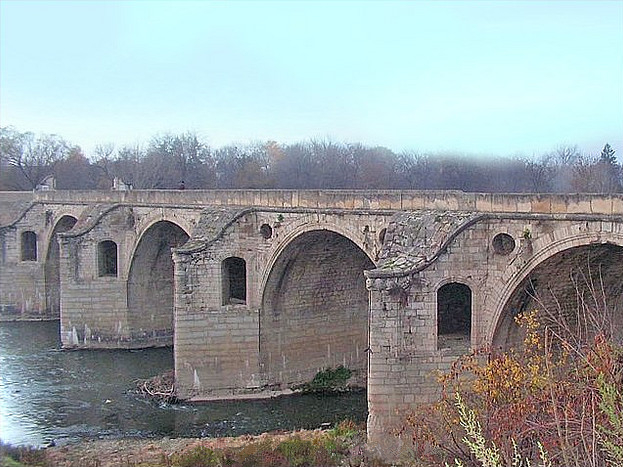
Volov's group reached the Yantra near Byala on 26 May. Accounts differ on the specifics, most drawn from survivor testimony and Ottoman records pieced together decades later, but the outline is consistent: betrayed to the authorities during the crossing attempt, Volov drowned in the river with Ottoman troops closing in. He was roughly 25 years old. His body was never recovered.
The date matters because it sits at the tail end of the April Uprising's bloodiest month, the moment when the last of the revolutionary generation either made it across the Danube or didn't. Volov didn't. His name entered the canon anyway, the kind of martyr-revolutionary the National Revival produces in bulk, though he earned it more than most.
The Shumen school inspector who ran a secret committee
Panayot Volov was born in Shumen around 1850 (the exact year is disputed, 1847, 1850 and 1851 all appear in different sources, though 1850 or 1851 is likeliest). His family were craftspeople. His father, Vicho Simeonov, earned the nickname "Volov" after accidentally killing someone else's ox and having to pay for it, a surname-origin story that feels both mundane and faintly absurd given what his son later did. The boy finished Dobri Voynikov's class school in Shumen, then continued his education in Bucharest, Bolhrad, Odessa and Mykolaiv with financial backing from a wealthy uncle, Marincho Benli. He studied at the South Slavic boarding school in Mykolaiv between 1869 and 1873, interrupted once by illness, and returned to Shumen six months before graduation.
The Shumen locals offered him the position of head teacher and director of the town's class school. He accepted. He also organised a night school, supported the local chitalishte (reading room, the cultural-hub institution that defined National Revival civic life), and staged theatrical productions. For one performance of "The Rise of Krum the Terrible", Volov took fencing lessons to play the medieval Bulgarian khan convincingly. He later used "Khan Krum" as his pseudonym when signing revolutionary committee correspondence, a bit of theatre-prop mythology turned operational security.
By August 1874, Volov was in Bucharest attending the general assembly of the Bulgarian Revolutionary Central Committee (BRCK). He was elected chairman of the Shumen local revolutionary committee. Under cover of his school-inspector duties, he built or revived committees in fourteen Shumen-region villages: Kaspichan, Kyulevcha, Novi Pazar, Preslav, Osmar, Smyadovo, Varbitza, Dragoyevo, Hasu (now the village of Dobri Voynikov), Divdyadovo. The pattern was standard for the period: travel to inspect schools, recruit sympathetic teachers, leave pamphlets and instructions, move on.
In early 1875, Volov was arrested and jailed over his role in a local conflict between Shumen youth and the European engineers building the Kaspichan–Shumen–Yambol railway. The specific flashpoint was a French engineer named Simon Ferry who planned to marry a local girl, Vasilka Konstantinova, considered a beauty and also a member of the Shumen revolutionary committee. Volov led the opposition to the wedding, either because he didn't want to lose her to the revolutionary cause or because the locals simply didn't want the marriage to happen. The Bulgarian bishop Simeon refused to bless the union despite Ferry's willingness to marry in an Orthodox ceremony and raise the children Orthodox. The situation escalated, Volov ended up in prison for several months, and upon release he left for Romania.
He returned for the Stara Zagora Uprising in 1875, which also failed. By early 1876, Volov was one of the co-founders of the Gyurgevo Revolutionary Committee, a cross-Danube coordinating body preparing the April Uprising. He was initially appointed as the main "apostle" (organiser) for the 4th revolutionary district around Plovdiv, but contradictions with his assistant Georgi Benkovski (another famous name in the uprising's mythology) led Volov to step aside. He remained active, helping convene the Oborishte Assembly near Panagyurishte in early April 1876, the meeting that set the uprising's start date.
When the rebellion broke out in late April, Volov was in Panagyurishte inciting locals to join. He organised a rebel band at Klisura armed with a homemade cherry cannon (a wooden tube reinforced with cherry-tree rings, effective range 20–30 metres, wildly outmatched by the Ottoman army's German-made Krupp artillery firing at a kilometre). His 200-strong band fought a three-hour defensive action at Zli Dol (Evil Valley) outside Klisura against an Ottoman force ten times larger. The rebels broke, Klisura burned, and Volov spent the next month trying to rally villages around Karlovo and Koprivshtitsa before fleeing north.
He drowned on 26 May 1876 near Byala, betrayed during the Yantra crossing. The river kept his body.
Why this matters for British expats
It's a working Tuesday. The banks are open, the roads into Shumen are clear, the municipal offices are running their usual hours. There are no processions, no closures, no lamb roasts. The 26th of May is not a public holiday in Bulgaria; Volov's death is commemorated quietly if at all outside specialist circles and the occasional school history lesson.
The practical relevance is narrow. If you're walking through central Shumen, you'll pass Stadion Panayot Volov, home ground of FC Volov Shumen, the local football club. The stadium's named after the man who drowned today in 1876. Most British expats who notice the name assume it's a sponsor or a local businessman. It isn't. It's the school inspector who spent his evenings building the April Uprising's Shumen networks and his final month running from Ottoman troops through the Balkan spring.
Knowing one or two of these revolutionary biographies, even in outline, is useful if you want to follow Bulgarian political rhetoric or understand why certain place names (streets, schools, stadiums) recur. The April Uprising failed militarily but succeeded symbolically: it drew enough international attention (particularly the Batak massacre, where between 3,000 and 5,000 civilians were killed in reprisal) that the subsequent Russo-Turkish War of 1877–78 became politically viable. Bulgaria's independence in 1878 has a direct causal line back to the April Uprising's bloodshed, which is why figures like Volov, Benkovski, and Vasil Levski (the uprising's intellectual architect, hanged in 1873 before it began) occupy the cultural position they do.
The story also clarifies something about Bulgarian civic naming conventions that puzzles British expats early on: the frequency with which schools, stadiums, and streets are named after young men who died violently in their twenties. Volov was 25, maybe 26, when he drowned. That's not unusual for the revolutionary generation. The National Revival was demographically young, operationally desperate, and lethally short on time. The names you see everywhere reflect that.
If you're the kind of expat who likes to know what the monuments mean and why the stadium's called what it's called, this is the user manual. Volov didn't live long enough to see Bulgaria independent, but he's part of the foundational mythology anyway, which in a National Revival context is often more durable than surviving.
For more of the practical picture, see the Shumen.UK cost-of-living tracker.
Sources and further reading
The biographical details draw on the Bulgarian Wikipedia entry on Panayot Volov, which synthesises accounts from Stiliyan Chilingirov (Volov's first biographer, working from his sister Vichka's memoirs) and the National Revival teacher Iliya Blaskov. The English Wikipedia article provides a shorter summary. Both sources note the contested birth year (1847, 1850, or 1851) and the lack of primary documentation for some episodes. The April Uprising itself is extensively documented; the individual biographies of its organisers rely heavily on survivor testimony collected in the decades afterward, which is why certain details (the cherry cannon's range, the exact mechanics of the Yantra crossing) appear in multiple slightly-different versions.
For the wider context of the April Uprising and its place in Bulgarian independence, the standard English-language histories (Richard Crampton's Bulgaria; R.J. Crampton's A Concise History of Bulgaria) cover the 1876 events in detail. The Batak massacre, which shifted European public opinion decisively against the Ottomans, is well-attested in contemporary British and Russian diplomatic correspondence and remains one of the uprising's most-studied episodes.