
📅 ON THIS DAY IN BULGARIA, Monday 22 June
Some people get a statue. Ivan Shishmanov got something rarer and more useful: he helped assemble the very idea of Bulgarian culture as a thing you could study, teach and take pride in. Born in Svishtov on 22 June 1862, he spent his life writing down the folk songs, customs and Revival-era literature that a young nation was still in the middle of deciding mattered.
What happened on this day
Shishmanov was a serious academic long before he was anything else. He trained at the Pedagogical School in Vienna, studied philosophy and literature at Jena and Geneva, and in 1888 took his doctorate in Leipzig under Wilhelm Wundt, the man usually credited with founding experimental psychology. That is roughly the academic equivalent of doing your apprenticeship under the person who invented the trade.
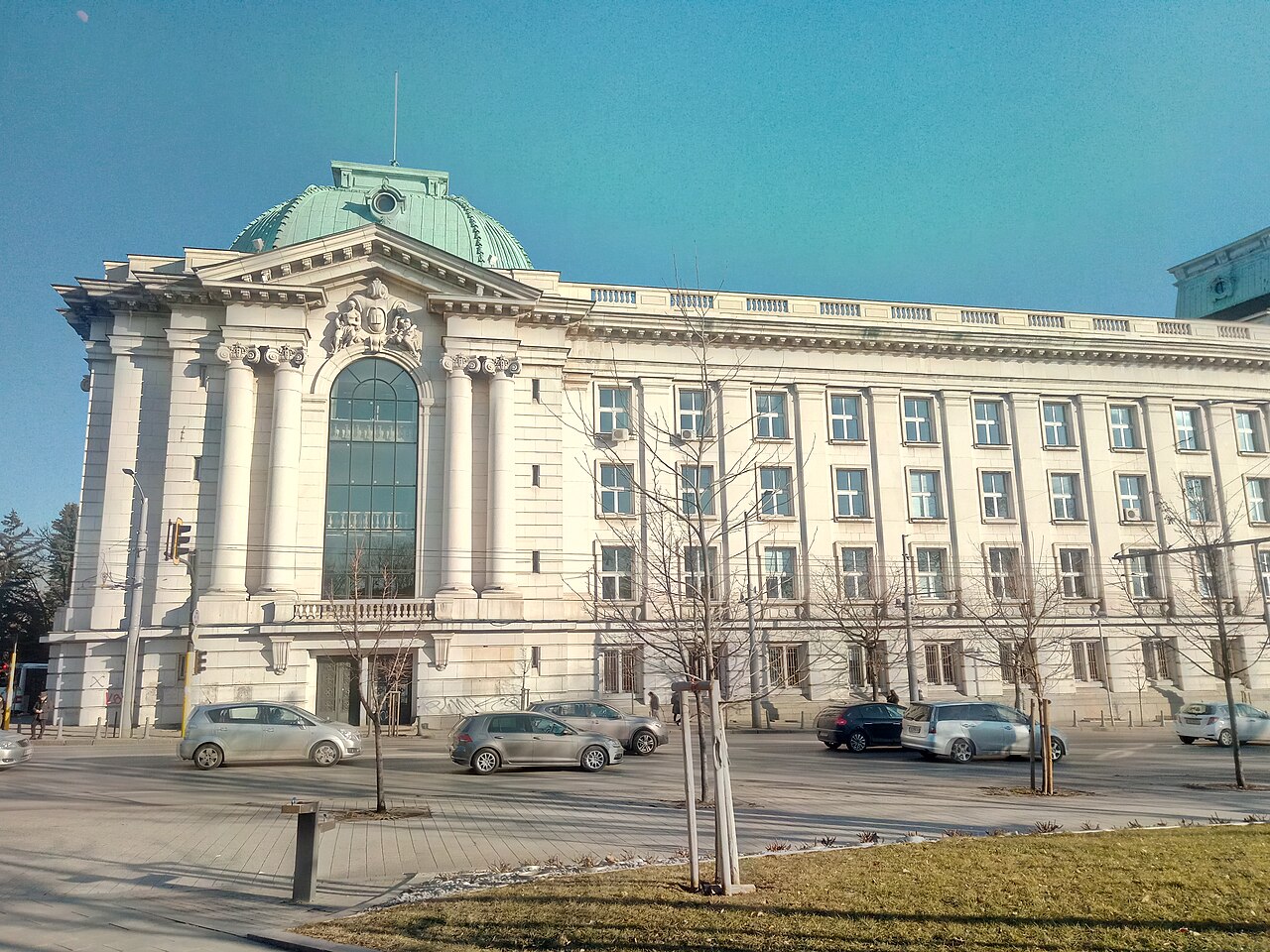
Back home, that same year, he became one of the founders of the Higher Pedagogical Course (Висш педагогически курс), the institution created on 1 October 1888 that grew into Sofia University, and a professor of comparative literary and cultural history. From 1889 he founded and edited the Folklore and Ethnography Collection (СБНУНК), which did the unglamorous, essential work of recording the oral culture of Bulgarian villages before it slipped away. He sat in the Bulgarian Academy of Sciences and helped found the State Drawing School that later became the National Academy of Art.
Then he went into government. As Minister of Public Education from 1903, he resigned in early 1907 over the so-called University crisis, a clash with the government whose actions he would not put his name to. During his time in the ministry, Bulgaria's first specialist school for the blind opened in Sofia in 1905, and it still carries his name today (the school was later moved to Varna in 1952).
The most unexpected chapter came near the end. In 1918, Tsar Ferdinand I sent him to Kyiv as Bulgaria's plenipotentiary minister to the short-lived Ukrainian People's Republic. It was not a random posting. Shishmanov had married Lidia, daughter of the Ukrainian writer and revolutionary Mykhailo Drahomanov, and he was a genuine scholar of Ukrainian literature, above all Taras Shevchenko, whose influence on the Bulgarian Revival he traced in a 1916 study. A century on, a Bulgarian intellectual acting as a bridge between Sofia and Kyiv reads with a resonance he could never have predicted.
There is a darker coda to the family story. His son Dimitar Shishmanov, also a writer, rose to become Bulgaria's foreign minister and was executed by the communist People's Court after 1944. The father spent his life building the nation's cultural institutions; a generation later the son was killed by the regime that set about tearing many of them down.
Why this matters for British expats
You will almost certainly never need to know who Ivan Shishmanov was to get through a day in Bulgaria. He is woven into the furniture all the same. There is a street named after him in Sofia, his name is on that school (now in Varna), and the whole apparatus of Bulgarian cultural self-confidence, the folklore collections, the academies, the conviction that village songs deserve a professor's attention, owes him a real debt.
If you live in Shumen, that scaffolding is all around you: the chitalishte (the community cultural house that every Bulgarian town keeps alive), the Revival-era schools, the folk customs that still surface at weddings and name-day lunches. Shishmanov was born on the Danube and made his career in Sofia, so there is no Shumen statue to point at. But the city's deep Revival heritage is exactly the kind of material he spent a lifetime taking seriously.
Worth a look if you haven't already: the Shumen.UK weather page.
Sources and further reading
This piece draws on the Bulgarian Wikipedia entry on Ivan Shishmanov, which is fuller than the English one on his Bulgarian career, while the English Wikipedia article is useful for the Ukrainian chapter. His own diaries, published long after his death, remain the closest thing to hearing him in his own voice.