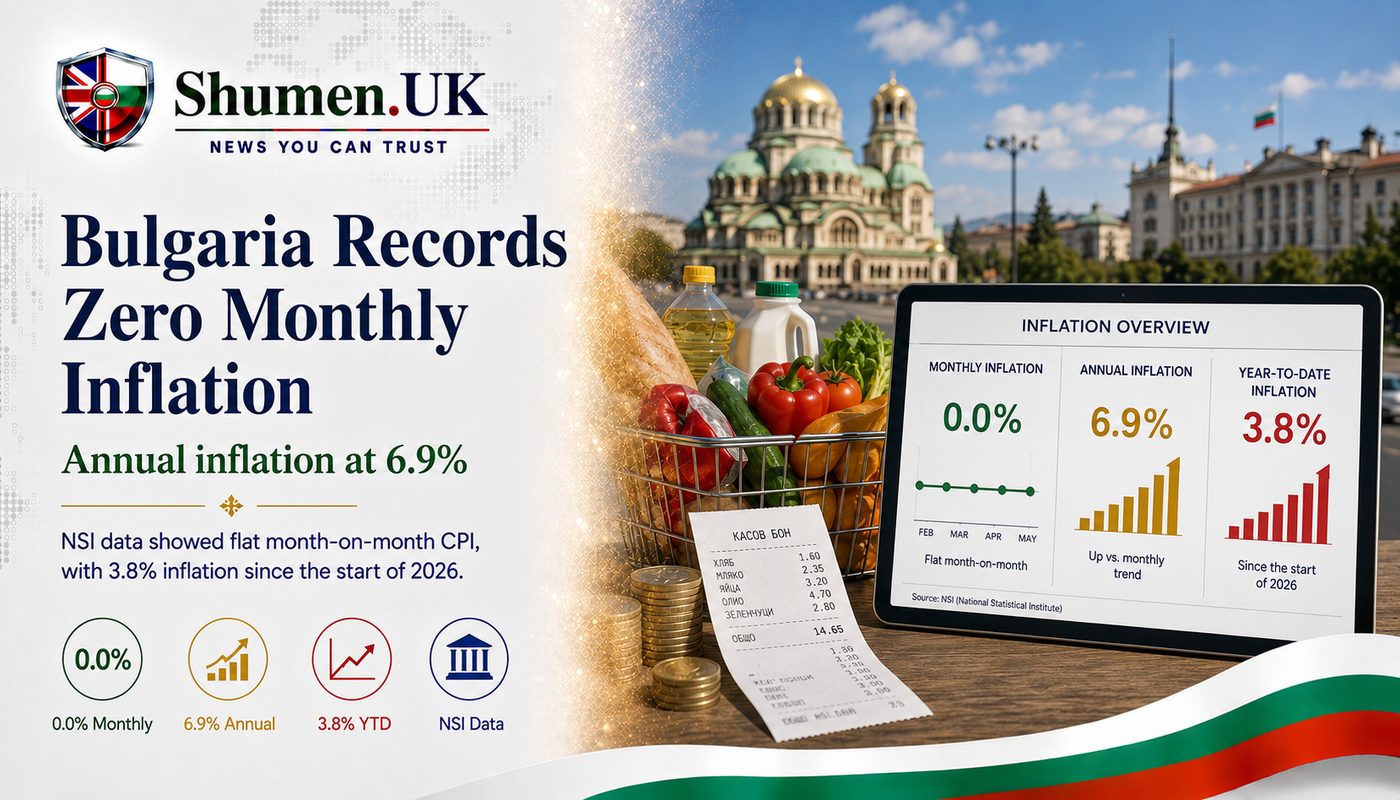
Bulgaria just posted its first month of zero inflation since the start of 2026. Anyone filling up at a Lukoil or paying a Toplofikatsia bill this fortnight already knew the picture was mixed; the National Statistical Institute has now put numbers on it.
In May 2026, the Consumer Price Index held flat month-on-month, according to NSI data published 15 June. Annual inflation crept up to 6.9% from 6.8% in April, while inflation since the start of the year reached 3.8%. The average rate over the past twelve months, June 2025 to May 2026, was 5%.
Where Prices Moved
The zero headline masks wildly different sector trends. Restaurant and hotel services, alcoholic beverages, tobacco, transport, communications, healthcare, utilities, household goods and clothing all recorded price increases in May. Entertainment, cultural activities, food and non-alcoholic beverages, and personal care items fell.
The NSI reports specific product movements but these details come solely from official statistics and have not been independently verified by other sources. That said, the pattern is clear: potatoes, citrus fruits, apples, carrots, beetroot, pasta, cocoa, margarine, cabbage, onions, fish, beer, coffee, bananas, cheese, beans, sugar and meat products climbed. Peppers, tomatoes, cucumbers, eggs, beef, olives, yogurt, dairy fats, pork, lentils, flour, leafy vegetables, rice, milk and bread became cheaper. If your Lidl receipt looks lighter than last month's, seasonal vegetable prices are the likely reason.
Non-food costs showed the same divergence. Identity document fees, courier services, fuels, gas, household appliances, veterinary services, cleaning products and vehicle maintenance rose. Package holidays, electronics, detergents, flowers, some transport services, personal care products, footwear and entertainment services fell. The NSI reports modest increases in medical, dental, laboratory and pharmaceutical services.
What This Means for British Expats
The figures matter most at the household level. The NSI tracks a small consumption basket representing lower-income households; that basket declined 0.5% in May, driven by cheaper food and non-food items, while services rose slightly. If you shop at the pazar and cook at home, May was marginally cheaper. If you eat out and run a car, it was not.
Accumulated inflation over three years now stands at 13.4%; over five years, 44.3%. Those longer timespans are more useful for anyone planning a move or deciding whether to stay. The euro changeover on 1 January 2026 has not altered the underlying trajectory. Bulgaria's inflation remains persistently above the EU average and has been for three years running.
April's figures, which are preliminary and not independently confirmed by other sources, reportedly came in at 1.8% monthly and 6.8% annual. May's zero monthly reading is the first pause since the start of the year, when January annual inflation was 3.5%. Whether this is a genuine plateau or a temporary lull will depend on summer fuel prices, harvest yields and services inflation, all of which move seasonally.
For British expats budgeting in euros, the practical takeaway is this: May was the first month in 2026 where the overall price level did not move, but the composition of what costs more and what costs less shifted considerably. Healthcare, utilities and transport continue to push upward; groceries, entertainment and package holidays pulled the other way. Household costs depend sharply on where you spend.
Harmonised Data and the Bigger Picture
Separate harmonised inflation data (HICP), used for EU comparisons and differing slightly in basket composition from standard CPI, showed similar readings but followed the same overall trend: moderate price growth with sharp sectoral divergence. Education and financial services held steady in May. The NSI did not explain the forces behind specific movements; the report is a snapshot, not an analysis.
The overall inflation indicators showed that accumulated inflation over the past three years reached 13.4 percent, while over five years it stood at 44.3 percent.