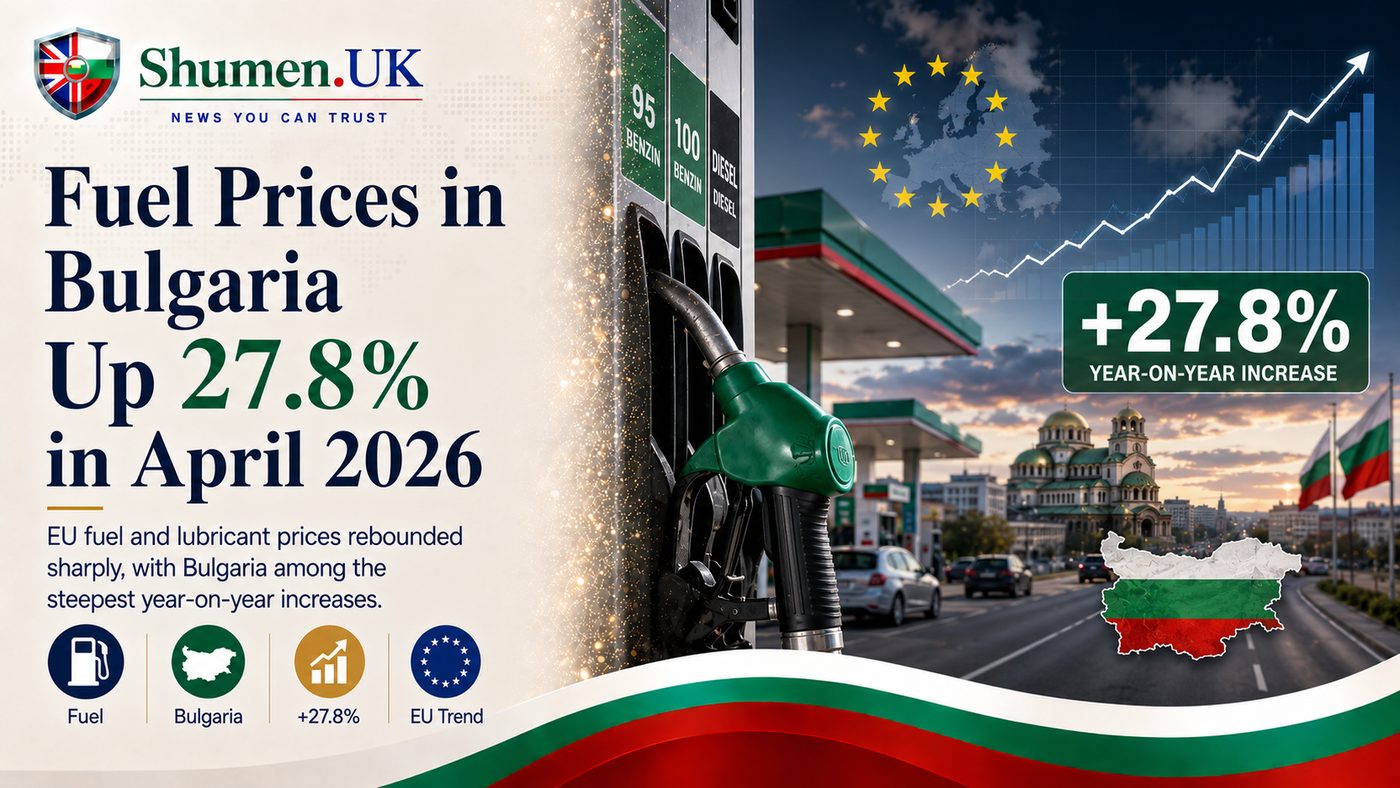
Anyone who's filled up at a Lukoil or OMV this month already knows the story. Eurostat put a number on it on 22 May: fuel prices in Bulgaria rose 27.8% year-on-year in April 2026, the fifth-highest increase among EU member states.
The EU average for fuels and lubricants climbed 20.8% in the same period, following a 12.9% rise in March. Up to February 2026, prices had been trending downward across most of the bloc. That reversed sharply.
Fifteen EU countries recorded year-on-year increases above 20% in April. The steepest were Luxembourg (+33.8%), France and Sweden (both +29.3%), and Latvia (+28.1%). Bulgaria's 27.8% placed it just behind Latvia. The smallest increases were Hungary (+1.5%), Poland (+8.8%), and Italy (+12.9%).
Diesel Climbed Faster Than Petrol
Diesel drove the EU-wide surge. Eurostat reported diesel prices up 33.7% year-on-year in April, compared to 13.6% for petrol. On a monthly basis, diesel rose 7.9% from March to April, petrol 2.4%.
All EU countries saw diesel price increases between March and April 2026. The original Eurostat release lists Bulgaria's monthly diesel increase as both +19.5% (among the highest) and +2.6% (among the lowest) in the same paragraph without explanation. That contradiction remains unresolved. Practically: if you filled a diesel tank in April, you paid more than in March. The exact percentage is unclear.
Petrol prices rose in 23 EU countries month-on-month, ranging from +12.9% in Slovenia to +1.3% in Ireland. Romania (-1.2%), Spain (-4.6%), and Poland (-6.1%) recorded decreases.
The Bulgarian Pump, Late February to Late May
According to fuelo.net, a fuel price aggregator, the average price of A95 petrol in Bulgaria was €1.25 per litre on 27 February 2026. By 25 May, it had reached €1.55. Diesel went from €1.29 to €1.73 over the same period. These are industry aggregator figures, not official statistics, but they track the direction clearly enough.
The 27 February date is notable: the source article references it as "the day before the beginning of the US-Israeli attacks on Iran". Eurostat does not provide an analysis of the causes of the price surge, and neither do we without further evidence. The timing and the scale are both in the public record.
What This Means for British Expats
British expats in Bulgaria who drive regularly have seen the impact at the till for three months. The year-on-year figure confirms what the receipt already showed. For households budgeting in euros post-changeover, the cost of living tracker carries the underlying numbers and updates as official figures land.
If you're planning a move or extended travel within Bulgaria this summer, factor the current fuel environment into your transport costs. The month-on-month trend from February to May has been upward. Whether you're driving Sofia to Varna or just commuting within the city, fuel is a bigger line item than it was six months ago.