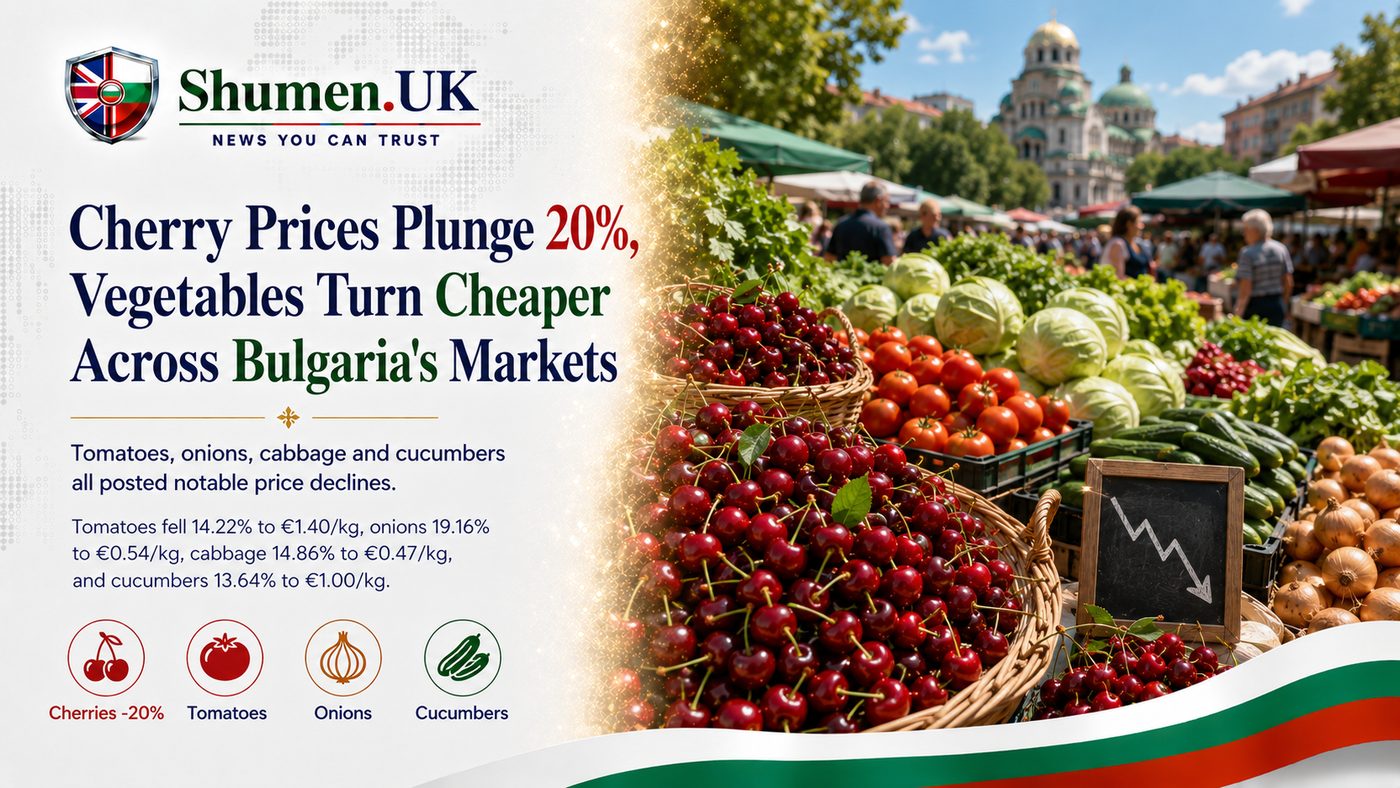
Bulgaria's fruit and vegetable prices took a noticeable dip over the past week, with cherries leading the way down. According to the State Commission on Commodity Exchanges and Markets, cherries fell 20.26% to a wholesale 2.00 euros per kilogram, the sharpest single drop in the latest weekly figures.
Anyone who has walked past a market stall in the last few days will have seen the cherry crates stacked high; the commission has now put a number on it. The same data show several everyday vegetables easing at the same time, even as a handful of staples quietly climbed.
What Got Cheaper
The vegetable aisle did most of the falling. The commission's figures put onions down 19.16% to 0.54 euros a kilogram, tomatoes down 14.22% to 1.40 euros, cabbage down 14.86% to 0.47 euros and cucumbers down 13.64% to 1.00 euro a kilogram. Peppers, lettuce and zucchini all eased by smaller margins.
The fruit bowl followed. Beyond the cherry slide, apples fell 8.29% to 1.15 euros a kilogram and lemons fell 8.26% to 2.40 euros. Strawberries were the one fruit going against the grain, up 6.35% to 2.78 euros a kilogram. Other Bulgarian outlets reported the same broad picture over the week, so this is not a number sitting on a single bulletin.
What Did Not
Not everything cooperated. Type 500 flour posted one of the strongest rises of the week, up 9.79% to 0.74 euros a kilogram, and potatoes climbed 9.28% to 0.73 euros. Beans rose 2.91% to 2.19 euros a kilogram and sugar edged up 2.51%, while cooking oil softened 3.08% to 1.70 euros a litre. Carrots, alone among the cheaper vegetables, nudged up 2.09%.
Dairy and meat barely registered. Cheese, butter, yogurt, milk, chicken and eggs all moved by a percentage point or so in either direction, which on a weekly basis amounts to standing still.
What It Means for Your Shop
For British expats doing the weekly shop, the practical read is simple enough: seasonal produce is the place to look for value right now, and the cupboard staples are the ones to watch. The makings of a shopska salad, a couple of kilos of tomatoes, the cucumbers, the onions, a pepper or two, are all cheaper to buy this week than last; the flour for the banitsa and the bag of potatoes are not.
One caveat worth keeping in mind. These are wholesale prices from the commodity markets, not the figure on the till receipt at Lidl or Kaufland or the local pazar. Retail prices lag and add their own margins, so treat the numbers as a signal of which way the wind is blowing rather than a shopping list with euro stickers attached. Our cost of living tracker follows the prices British households here actually pay, and updates as the official figures land.
The commission did not offer a reason for the produce falls, and on a single week's data it is not worth guessing at one. What the figures do show is a market pulling in two directions at once: cheaper on the stall, dearer in the baking cupboard.