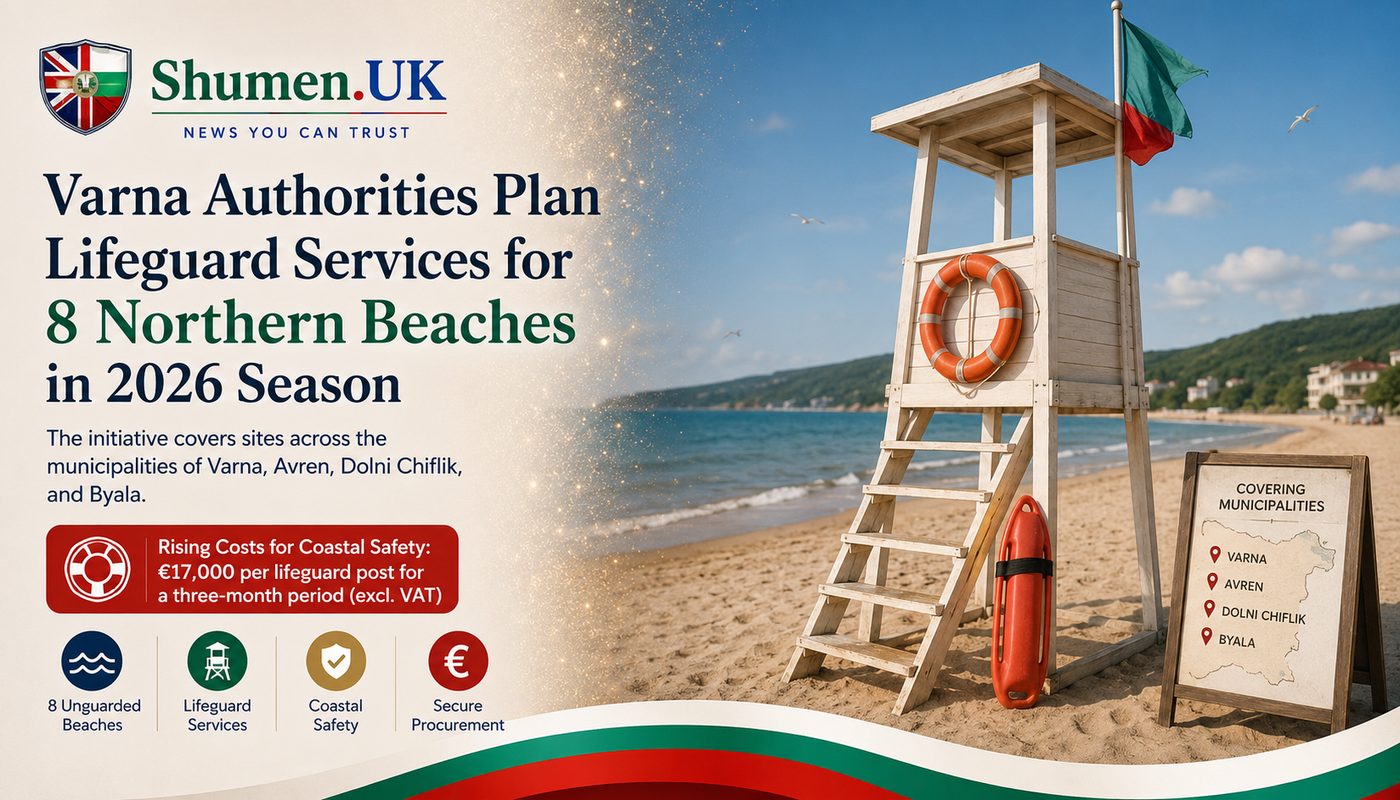
Varna authorities have opened a public tender to secure lifeguard services for eight beaches along Bulgaria's Northern Black Sea coast for the 2026 summer season, as the cost of coastal safety operations continues to rise. The tender covers sites in Varna, Avren, Dolni Chiflik, and Byala municipalities, according to the regional governor's office, as reported by BGNES.
The move comes as the price of maintaining a single lifeguard post for three months has climbed to around €17,000 excluding VAT, up from roughly 30,000 leva (about €15,300) last year, according to the latest Bulgarian Red Cross report. That is a notable increase ahead of the summer season and reflects broader pressures on municipal budgets.
Despite the new tender, 27 beaches in the Varna region will remain without permanent lifeguard coverage in 2026, unchanged from the previous year. From that list, eight locations have been selected for staffing after site inspections, input from municipal authorities, and evaluation of past contracts by a regional commission. The slow progress would test the patience of anyone accustomed to more comprehensive RNLI coverage back home.
Which Beaches Are Covered
The designated beaches are:
- Fichoza Beach (section 2) in Varna municipality
- Romantika, Kamchia-North 1, and Kamchia-North 4 in Avren municipality
- Shkorpilovtsi North in Dolni Chiflik municipality
- Byala-Kara Dere, Byala-Central 3, and Byala-Central 4 in Byala municipality
The deadline for submitting bids is 28 May 2026, with the operational period expected to run until mid-September. All rescue posts will be established in accordance with national regulations governing water rescue operations and public water safety standards.
New Medical Insurance Requirement
For the first time, the regional governor's responsibilities now include ensuring medical insurance coverage for unguarded beaches. However, no official policy documentation has been published and implementation details remain unclear. A separate tender to select medical service providers will be launched following completion of the lifeguard contract, though no timeline has been announced.
The policy change appears to reflect growing concern over public safety at beaches without permanent lifeguard staffing. Whether this translates into meaningful improvements in emergency response remains uncertain.
What This Means for British Expats
British expats in Bulgaria or visiting the Northern Black Sea coast should note the limited lifeguard coverage and plan accordingly. The 27 beaches without lifeguards represent a significant portion of the Varna region's coastline.
For context, UK coastal safety typically involves comprehensive lifeguard coverage through bodies such as the Royal National Lifeboat Institution (RNLI) and local councils. Bulgaria's approach, with selective coverage based on municipal contracts and cost constraints, means beachgoers need to exercise far greater personal caution, particularly at unguarded sites.
If you plan to visit beaches in the Varna region this summer:
- Check in advance whether your chosen beach has lifeguard staffing
- Avoid swimming alone at unguarded beaches
- Monitor weather and sea conditions before entering the water
- Supervise children closely at all times
- Remember the operational period runs only until mid-September, after which all coverage ends
The new medical insurance framework is not yet operational, so emergency response times at unguarded beaches remain uncertain.
Background
The cost increase reflects broader inflationary pressures and the challenges of recruiting and retaining qualified lifeguards for seasonal work. Bulgaria adopted the euro on 1 January 2026, and the conversion from leva to euro-denominated budgets has made cost comparisons more transparent, though it has not eased the underlying funding squeeze.
The Bulgarian Red Cross, which provides lifeguard services under contract to municipalities, has reported rising costs year-on-year. The Varna regional authorities have selected eight beaches for coverage based on past incident data, beach usage patterns, and municipal input, but the remaining 27 sites will rely on signage and self-regulation rather than trained lifeguards.
Whether the new medical insurance requirement will improve emergency response times or reduce risks at unguarded beaches remains to be seen. The separate tender for medical providers has not yet been launched, and authorities had not published a timeline at the time of publication.