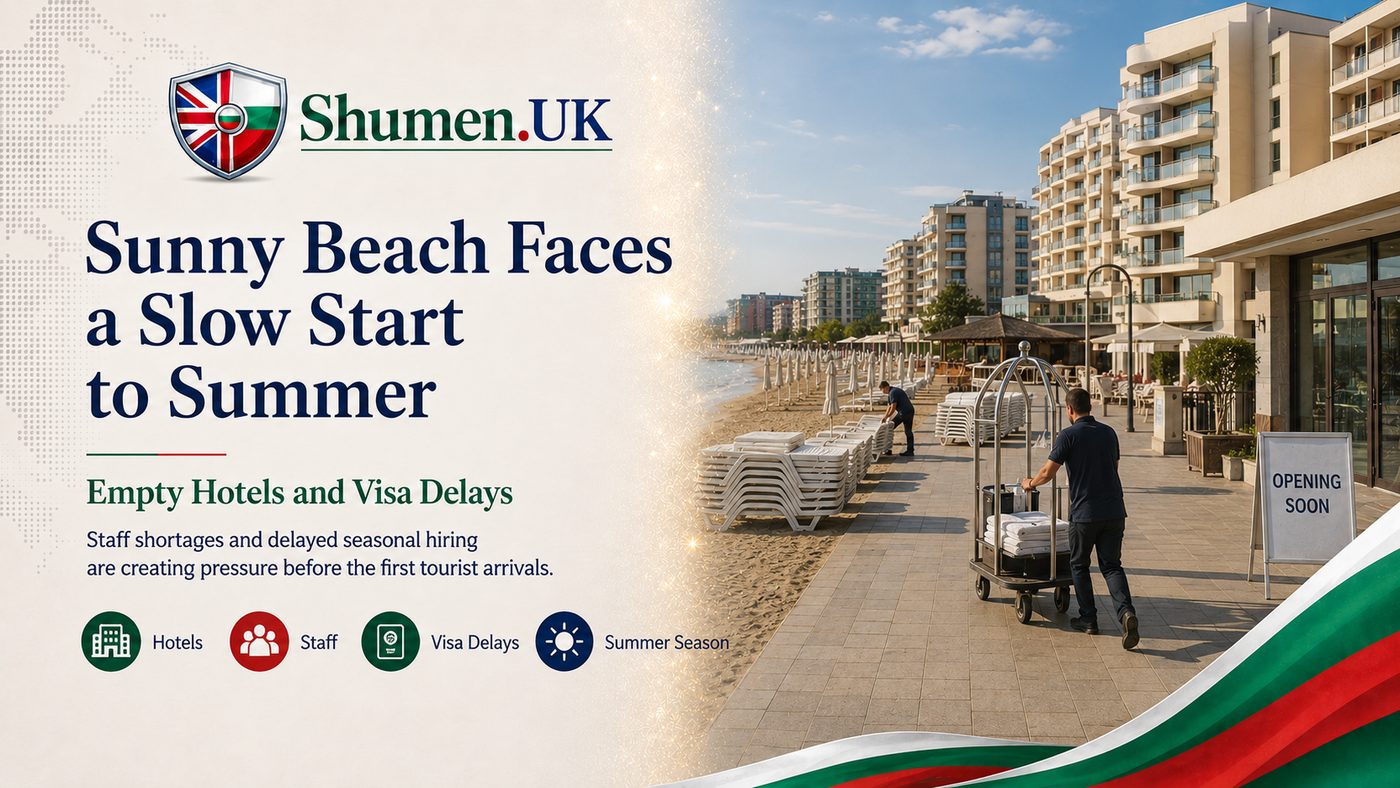
Consular Bottleneck Stalls Foreign Workforce
Sunny Beach is heading into the 2026 summer season with a labour crisis. Many hotels along Bulgaria's largest Black Sea resort remain closed or only partially staffed, according to industry representatives speaking to bTV this week.
The bottleneck is visa processing. Hotel operators say applications for foreign seasonal workers from Kyrgyzstan, Uzbekistan and Nepal are stuck at consular offices despite all employer paperwork being complete. One hotel owner told the broadcaster that roughly 80% of planned seasonal staff for his property were expected from abroad. "Everything is ready on our side, but when we reach the consular offices, there is no movement," the owner said.
The Bulgarian government had not released official data on visa processing times, workforce statistics, or the number of hotels affected at the time of publication. Industry claims about consular delays and staffing shortfalls remain unconfirmed by official sources.
First organised tourist groups are expected around 2 June, but the sector acknowledges many properties may open with reduced capacity and limited service levels. The exact scale of hotel closures or delayed openings remains unconfirmed.
Domestic Staff Shortage Persists
Alongside the visa delays, hoteliers report persistent difficulty filling essential roles with Bulgarian workers. Positions such as waiters, bartenders and reception staff remain unfilled, according to industry representatives.
Employers also point to a lack of training and experience among younger candidates entering the labour market. "This is not simple work, it requires training and skills," industry representatives told bTV, emphasising the gap between demand and available workforce capability.
The challenge is not new. Bulgaria's Black Sea coast has relied on foreign seasonal labour for years, but the combination of shrinking domestic availability and administrative slowdowns abroad is now described by the tourism sector as a structural issue rather than a temporary blip. Similar visa and labour challenges have been reported in other European seaside resorts dependent on foreign seasonal workers (including parts of Greece, Croatia and Spain), suggesting a broader regional pattern in which consular backlogs and skill shortages are proving harder to shift than the deckchairs.
What This Means for British Expats
For British tourists planning a Sunny Beach holiday this summer, the practical impact may include reduced hotel availability, slower service or properties opening later than advertised. If you have bookings at smaller hotels or family-run properties, it is worth confirming staffing levels and opening dates directly with the hotel before you travel. Expect some patience to be required, particularly in the first weeks of June.
For British business owners or investors in Bulgaria's hospitality sector, the visa and workforce issues highlight a persistent operational risk. Planning for 2027 and beyond will likely require earlier engagement with consular processes and possibly investment in domestic training programmes to reduce reliance on foreign labour pipelines vulnerable to administrative delays.
Industry Calls for Visa Reform
The tourism sector is calling for faster visa processing and broader reforms to work permit procedures. Representatives describe labour shortages as no longer temporary but a structural challenge affecting the entire Bulgarian Black Sea coast.
Whether authorities respond in time to ease the 2026 season remains to be seen. For now, Sunny Beach is bracing for a summer that may test visitor patience as much as hotel capacity.