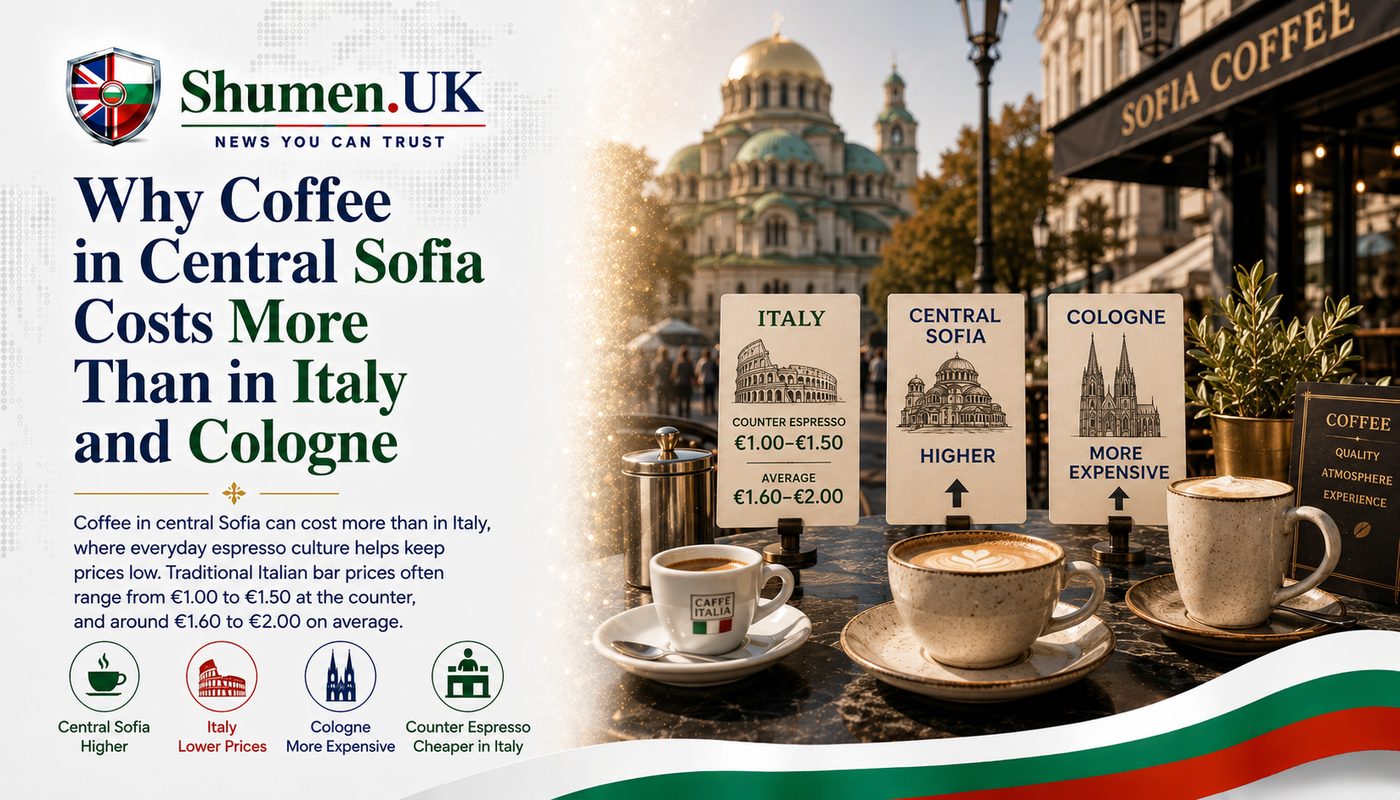
A standard espresso or milk-based coffee in central Sofia costs between €3.50 and over €4.00, with plant-based milk pushing the figure higher still. By contrast, the same coffee in Italy averages €1.60 to €2.00, and in Cologne's central districts around €3.00, according to Novinite.com. These specific price comparisons have not been independently verified, and no recent official consumer price surveys or indices were found to corroborate the figures.
The Sofia pricing holds across Bulgaria's main tourist zones. In Varna, coffee plus bottled water has reportedly reached €4.80. Low-cost alternatives exist only at the periphery: kiosks, vending machines, late-night shops. Premium urban locations maintain consistently elevated prices compared to Western European benchmarks, according to the report.
Why the Italian Comparison Matters
Italy's coffee culture is built around the counter: stand, drink, leave. Espresso at the bar can drop to €1.00 to €1.50. Sit at a table and you trigger coperto, an additional service charge that raises the total bill. Coperto is a customary fee applied to table service in Italian cafes and restaurants, it varies by venue but often adds €1.00 to €2.00 or more to the final cost. Even accounting for coperto, overall spending in Italy often remains below Bulgarian levels for similar coffee experiences, according to Novinite.com.
Sofia's model is different. The bill climbs before you choose a seat. Anyone who's queued at a Vitosha Boulevard cafe this spring will have felt the pinch now accounted for in euro terms. The queue hasn't sped up since the lev disappeared.
What This Means for British Expats
British expats in Bulgaria, and those considering a move, should note that daily coffee spending in Sofia can now exceed what they'd budget for in Rome or Cologne. If you're cafe-hopping in Sofia or Varna, expect the espresso price you'd find in a mid-tier European capital as the baseline, not the ceiling. Germany's average income is significantly higher than Bulgaria's, yet the coffee price is lower.
Novinite.com links the pricing gap to questions about local consumer purchasing power and profit margins within Bulgaria's hospitality sector, but no independent economic analysis or official data has been found to corroborate this explanation. Whether margins are unusually high or operating costs are unusually inflexible remains an open question.
British expats already know this from their till receipts. Novinite.com has now put the comparison in print. Readers should interpret these price points as reported estimates rather than confirmed facts.
The Broader Context
Novinite.com's report does not analyse the root causes of the pricing pattern, and recent independent price surveys or hospitality sector data were not found in supplementary research. The comparison is straightforward: Sofia's coffee costs more than Italy's and Cologne's, despite Bulgaria's lower income levels. The question of why is open, but the pricing reality is confirmed across multiple cities and outlet types in the original report.
Bulgaria adopted the euro on 1 January 2026. Some Bulgarian sources and officials still quote prices in leva, all figures here are converted at the fixed rate of 1 EUR = 1.95583 BGN. The pricing pattern predates the euro changeover and appears to have persisted through it.
What To Do
If you're in Bulgaria and want cheaper coffee, peripheral kiosks, vending machines, and late-night shops remain the fallback. Premium central locations are priced premium. British tourists should adjust their daily budget estimates upward from what they'd expect in Italy or Germany, bearing in mind that these comparisons rest on a single news source without independent recent corroboration.