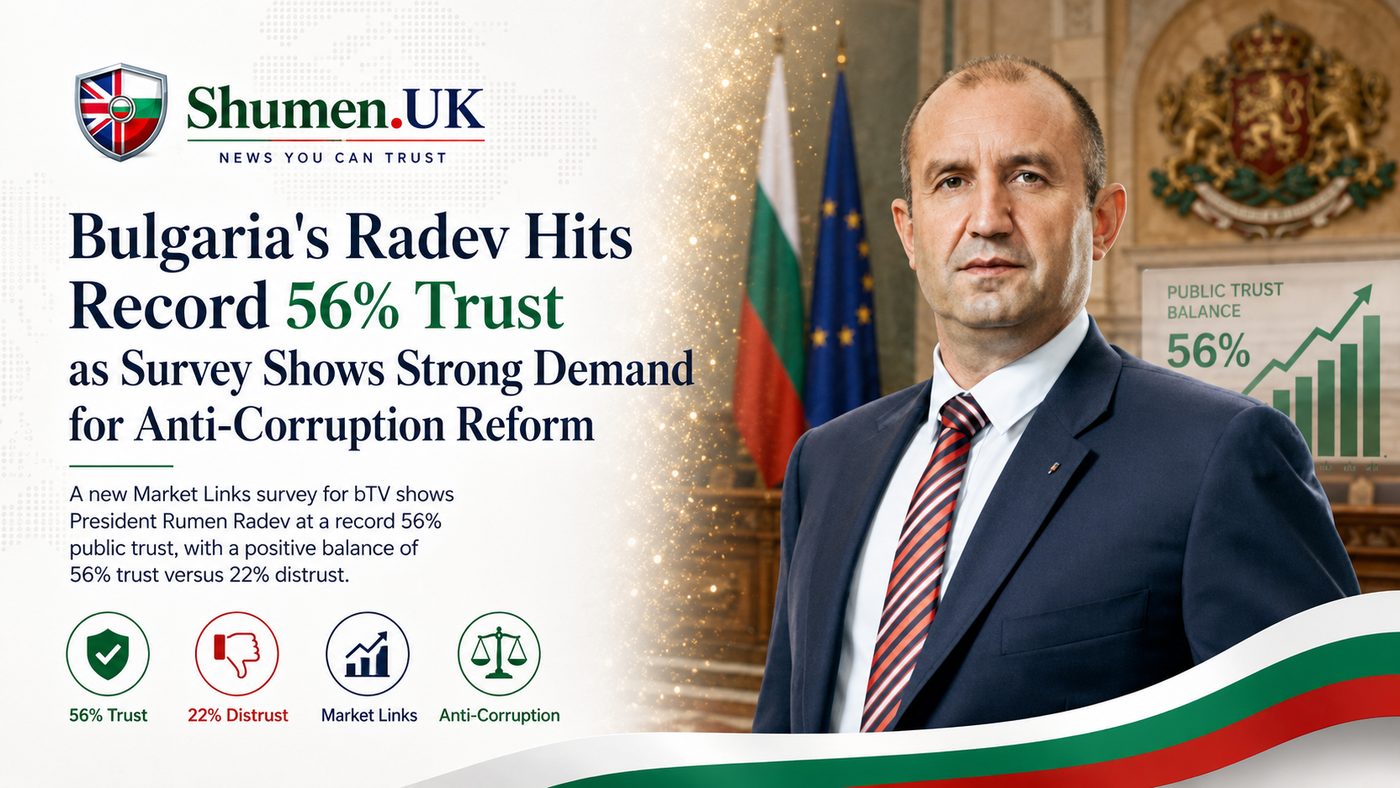
A Market Links poll commissioned by bTV shows Rumen Radev with a 56% public trust rating, the highest figure recorded for any political figure in recent years. He is the only leader with a positive trust balance: 56% trust versus 22% distrust. The figures come from a single survey without independent corroboration, but they mark the first time the numbers have broken this way since Bulgaria's eighth election in five years.
Radev resigned from the presidency in January 2026, formed the Progressive Bulgaria coalition in March, and was sworn in as prime minister on 8 May 2026 following the coalition's parliamentary election victory in April. His rapid transition from head of state to head of government explains why public trust still centres on him rather than on the cabinet or parliamentary institutions. Anyone following Bulgarian politics already knows the pattern of revolving governments. This is the first time the approval trajectory points upward.
Parliament's approval rating climbed from 6% in April to 19% in May 2026, a threefold rise in a month. It remains well below trust in the executive, but the direction of travel is upward. The survey notes that confidence is improving mainly due to expectations of systemic reform rather than institutional performance to date. The optimism is forward-looking, not retrospective.
What Bulgarians Want: Prosecutions, Not Promises
The poll reveals a clear hierarchy of priorities. Three out of four Bulgarians want a functioning justice system and convictions for high-level corruption, according to Market Links. Judicial reform and anti-corruption prosecutions rank above economic concerns including prices and living costs. The message to government is unambiguous: show us the trials.
When asked about fiscal policy, respondents rejected additional state borrowing. Only 11% support new loans to cover salaries and pensions; around 70% favour reducing public expenditure and improving efficiency in state finances first. The message on spending is equally blunt: fix the system before asking for more money.
Trust Concentrated Around Radev Personally
Public confidence in the newly formed government stands at a historic high, but the survey analysis flags a potential vulnerability. Trust remains largely tied to Radev personally rather than to individual ministers or institutional structures. Market Links describes this as a risk to long-term political stability. If one person holds the confidence and the institutions do not, the structure becomes brittle.
The survey also notes a large share of undecided voters, including supporters of Progressive Bulgaria who have not firmly confirmed their electoral preferences. The source article cites a figure of over 300,000 such voters, though this has not been independently verified. The political environment remains fragmented despite the recent election result. The coalition won the vote, but it has not yet consolidated the electorate.
What This Means for British Expats
British expats in Bulgaria should note the strong public mandate for anti-corruption reform. If the government delivers on prosecutions and judicial accountability, the business and governance environment may improve. If it does not, the current optimism will likely reverse quickly. The expectations are high, which means the potential for disappointment is equally high.
The fiscal prudence signals matter for anyone dealing with Bulgarian public services or local government. Expect efficiency drives rather than spending increases in the near term. The 70% rejection of new borrowing suggests belt-tightening ahead, not expansion. If you are planning any interaction with state bureaucracy, assume lean budgets.
The concentration of trust around one leader rather than institutions is worth watching. British expats planning long-term residency or business operations in Bulgaria should track whether institutional confidence grows or whether the current optimism remains personality-dependent. The latter would make for a less stable environment if Radev's standing changes. Anyone who has lived through Bulgaria's recent electoral cycle knows that political capital can evaporate quickly. This matters if you are evaluating the country for property investment, business expansion, or permanent residence. Strong institutions outlast individual politicians. Popularity does not.