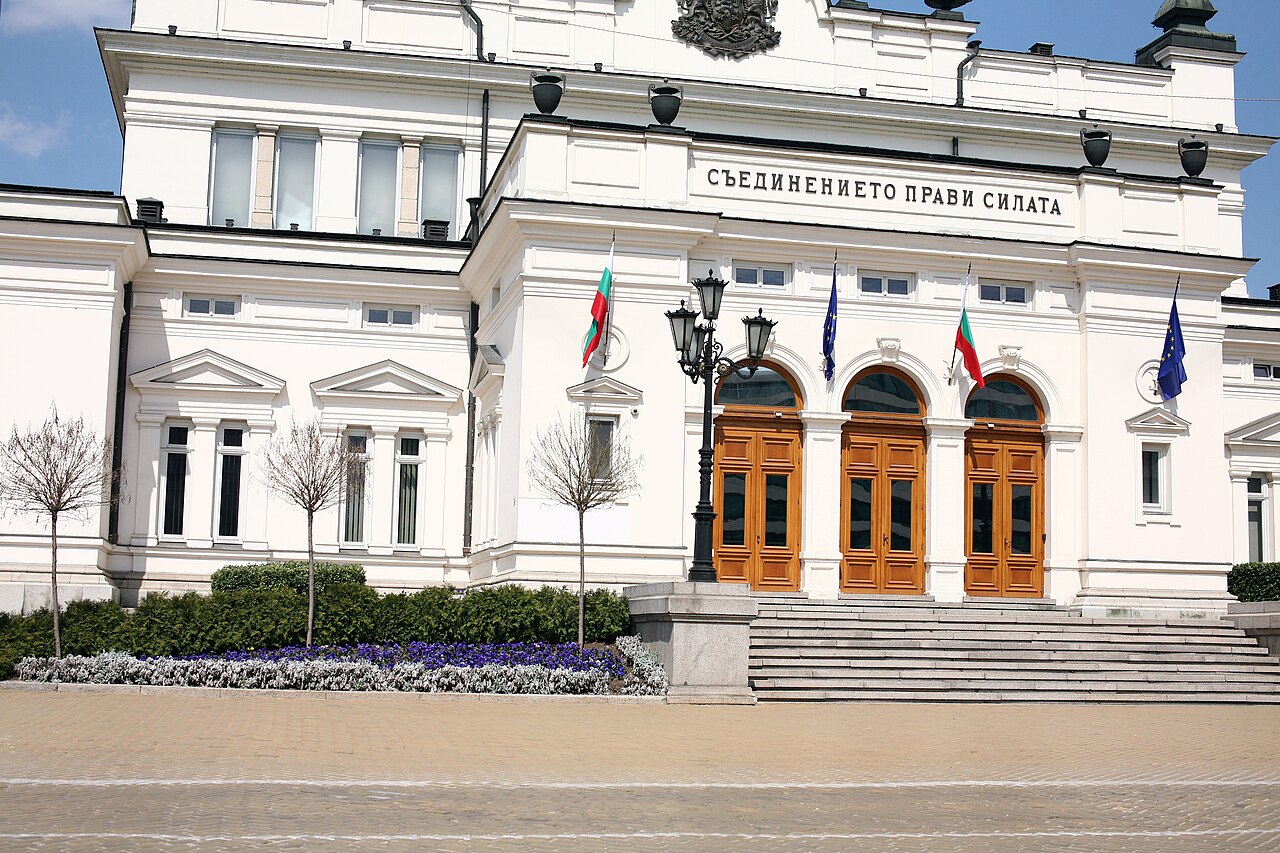
The Central Election Commission has published the final results of Bulgaria’s 19 April 2026 parliamentary election, confirming a decisive win for Rumen Radev’s Progressive Bulgaria and a five-party National Assembly.
According to the commission’s final tally, Progressive Bulgaria took 1,444,924 votes, or 44.594%, and will hold 130 seats in the 240-seat 52nd National Assembly. That is enough for an outright parliamentary majority.
What the final result shows
The rest of the chamber is some way behind.
GERB finished second with 433,755 votes or 13.387%, giving it 39 seats. We Continue the Change-Democratic Bulgaria, usually shortened to PP-DB, came third with 408,845 votes or 12.618% and won 37 seats.
DPS took 230,693 votes or 7.120%, which translates into 21 seats. Revival was the last party over the line, with 137,940 votes or 4.257%, and enters parliament with 13 seats.
The gap between second-placed GERB and PP-DB was 24,910 votes. The gap between first and everyone else was rather less subtle.
Which parties missed out
Several parties fell below Bulgaria’s 4% threshold for entering parliament.
They included:
- Morality, Unity, Honour on 3.225%
- Greatness on 3.104%
- the Bulgarian Socialist Party on 3.017%
- Siyanie on 2.887%
The commission’s published figures also show 50,732 voters chose the ballot option “I do not support anyone”.
For anyone trying to work out what the next parliament looks like in practice, the short answer is simpler than usual: one dominant bloc, four much smaller ones, and fewer moving parts than Bulgaria has offered in many recent votes.
Vote abroad
The final count also shows Progressive Bulgaria came first among voters abroad.
According to the Central Election Commission, it won 70,995 votes overseas, or 38.038% of the external vote. PP-DB followed with 42,635 votes or 22.843%, while DPS took 15,860 votes or 8.498%.
That matters in part because overseas voting has often been a useful signal of where more mobile and younger Bulgarian voters are leaning, including many with lives split between Bulgaria and other European countries.
Why this matters now
A result of 130 seats gives Progressive Bulgaria the numbers to govern without needing a coalition partner, at least on paper. That sharply reduces the arithmetic that usually dominates the days after a Bulgarian election, when party leaders spend their time counting possible allies and pretending not to.
For British readers in Bulgaria, the practical significance is not that they can influence the outcome. They cannot, unless they also hold Bulgarian citizenship. It is that a clear parliamentary majority usually means faster government formation, quicker ministerial appointments and less uncertainty over the handling of ordinary state business, from administration to regulation.
That may prove more relevant than the grand rhetoric in the coming days, particularly for people dealing with Bulgarian institutions, business paperwork or local administration. A parliament with a clear centre of gravity is still political, obviously, but it is at least easier to locate.
International reaction
The result has already drawn reactions from abroad.
Novinite reported separately that European Commission President Ursula von der Leyen congratulated Radev on his victory and said she looked forward to working with him on prosperity and security. It also reported congratulations from European Council President Antonio Costa.
The same outlet reported that the Kremlin welcomed the result and spoke positively about maintaining pragmatic dialogue with Moscow.
Those responses do not by themselves define the next government’s policy. They do, however, show that Bulgaria’s election result was being watched closely both in Brussels and in Moscow, which is not unusual for a country that sits inside the EU and NATO while remaining politically important on the Black Sea flank.
What happens next
With the final seat allocation now confirmed, attention will shift from counting to governing.
The key immediate questions are likely to be:
- when the 52nd National Assembly first sits
- how quickly a government is formally proposed and approved
- which ministries and senior parliamentary posts go to Progressive Bulgaria figures
- whether the opposition parties coordinate inside the new chamber or fragment further
Those are the points worth watching if you live in Bulgaria and want to know whether this result produces a stable administration or simply a different style of argument.
The numbers, at least, are no longer in dispute.