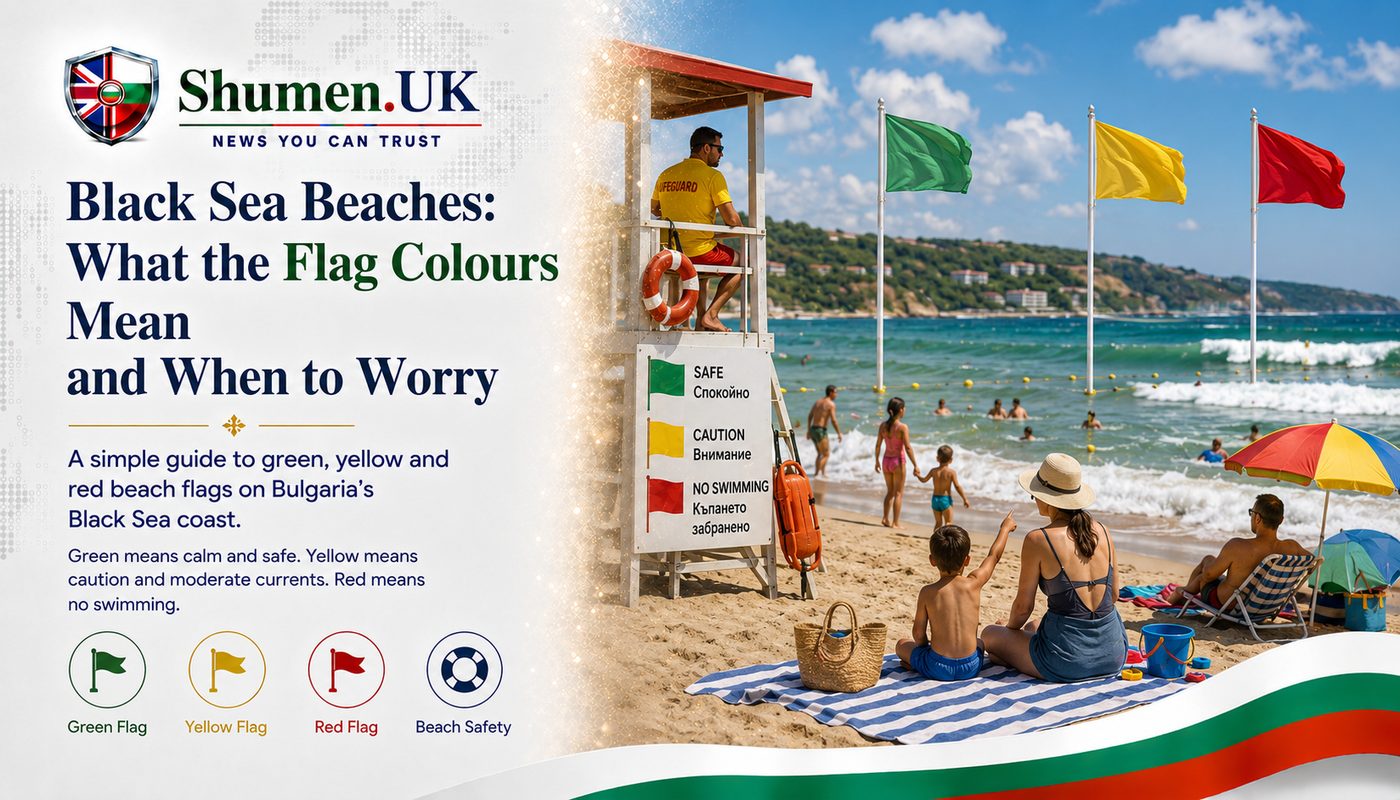
The Black Sea resorts run on a rhythm that starts quietly in May, peaks hard through July and August, then tapers into September when the water stays warm but the crowds thin. For British expats making a long weekend of it or hosting visitors, the infrastructure feels reassuringly organised once you know the signals. Lifeguards sit the towers daily through peak season, but the sea has moods, and jellyfish warnings materialise faster than any official app can update you.
Reading the flags
Every staffed beach entrance flies a colour-coded flag, and checking it before you unpack the towels saves backtracking. Green means calm conditions and safe swimming. Yellow signals choppy water or moderate currents; strong swimmers proceed, but children and anyone uncertain should stay shallow. Red means no swimming full stop, usually because of rip currents or storms offshore. The lifeguards enforce red flags more strictly than you might expect, whistles included, and ignoring one can earn you a lecture in rapid Bulgarian.
The fourth flag is less common but more useful when it appears: a purple or violet pennant, sometimes with a jellyfish symbol, warns of confirmed blooms in the water. These warnings go up fast when the current shifts, often within an hour of the first sightings, and they come down just as quickly once the drift moves on. The Aegean gets more press for jellyfish, but the Black Sea has its own species, and while most stings are mild, a bad encounter with a barrel jellyfish can ruin a day.
The purple ribbon system
Official flags cover the general zone, but locals add a second layer: purple or dark blue ribbons tied to railings, posts or lifeguard tower legs. These mark where a bloom has been spotted drifting close to shore in the past few hours. The ribbons are informal, placed by guards or beach staff who know swimmers ignore abstract warnings but respond to something visible and specific. If you see them, ask a lifeguard which direction the jellyfish are moving. Blooms follow currents, so a patch drifting north past Sunny Beach might miss Nessebar entirely or arrive there by evening.
This system works because the coastline is long and the blooms are patchy. A beach five hundred metres south can be perfectly clear while yours is off limits. The guards usually know, and a two-minute conversation in broken English or sign language tells you whether to move or wait it out. The Black Sea's main jellyfish season runs June through early September, peaking in the warmest weeks when surface temperatures climb and currents slow.
When the beach becomes unworkable
There are days when the combination of crowds, heat and closed swimming makes the coast feel like a bad idea. Nessebar old town, twenty minutes north by bus from Sunny Beach, offers the standard escape: a UNESCO-listed peninsula of stone churches, timber houses and restaurants with Thracian-era foundations. The problem is that every other beachgoer has the same thought, and arriving at one in the afternoon during peak season means a forty-minute queue for a table at any restaurant with a sea view.
The trick is to go early or go late. A nine-thirty start gets you breakfast or coffee on an empty terrace, and you can walk the cobbled lanes before the tour coaches arrive. Alternatively, aim for four in the afternoon when day-trippers are heading back and the early-dinner slot opens up. The peninsula is small enough that you can see the main churches and the harbour in ninety minutes if you move briskly, but it benefits from a slower pace and a second coffee halfway through.
Taxi meters and flat fares
The short taxi ride from Sunny Beach to Nessebar should cost between eight and twelve euros depending on where you start, but drivers at the resort ranks still quote flat fares to tourists, often fifteen or eighteen euros. The meter law applies everywhere in Bulgaria, and you are within your rights to insist. The usual script is to ask "Taksametar?" and point at the device. If the driver refuses or claims it is broken, walk to the next car in the rank. Most will start the meter once they realise you know the system.
The flat-fare habit persists because it works often enough, and because some visitors assume Bulgarian taxis operate on haggling. They do not. Meters are mandatory, rates are regulated, and a receipt is your legal right. For British expats familiar with the drill this is background noise, but it catches newcomers every time, and the resentment lingers longer than the overcharge.
What first-timers miss
If you are heading to the Black Sea coast for the first time, the single most useful preparation is low expectations for the beach infrastructure outside the major resorts. Sunny Beach, Golden Sands and Albena have lifeguards, flags, sunbeds and the full apparatus. Smaller beaches south toward Sozopol or north toward Balchik often have none of that, and the ones that do might staff the tower only at weekends. The water is the same, the sand is often better, but you are responsible for your own safety.
Bring reef shoes if you plan to swim anywhere with rocks. The Black Sea floor is not coral, but stones, mussels and the occasional broken bottle make barefoot wading unpleasant. A small first-aid kit with vinegar or baking soda handles minor jellyfish stings; the lifeguard stations stock it, but not every beach has a lifeguard. And if you are driving, check the parking situation before you arrive. Coastal car parks fill early on weekends, and the roadside verges turn into improvised overflow lots where ticket inspectors work methodically.
The Black Sea will never have the Caribbean's charm or the Med's infrastructure polish, but it works if you read the signals, ask the questions and accept that the jellyfish bloom intel comes from ribbons on railings, not an app.
FAQ
What do the beach flag colours mean on Bulgarian beaches?
Green signals safe swimming, yellow indicates moderate currents or choppy conditions, red means no swimming allowed, and purple warns of jellyfish in the area. Lifeguards enforce these strictly at staffed beaches.
How do I know if jellyfish are present at my specific beach?
Check the flag at the entrance, and look for purple or dark blue ribbons tied to railings or posts. Ask a lifeguard for the bloom's direction and whether it is moving closer or drifting away.
Should I insist on the taxi meter between Sunny Beach and Nessebar?
Yes. Meters are legally required in Bulgaria, and the metered fare is usually eight to twelve euros. If a driver refuses, walk to the next taxi.