
📅 ON THIS DAY IN BULGARIA, Thursday 25 June
If you learn one piece of Bulgarian twentieth-century history while you live here, it could reasonably be this one. Dimitar Peshev, born in Kyustendil on this day in 1894, is the man most associated with the moment Bulgaria did not send its Jews to the death camps. It is a story the country is rightly proud of, and it is more complicated and more honest than a simple tale of heroism, which is exactly why it is worth telling properly.
What happened on this day
Dimitar Yosifov Peshev was born on 25 June 1894 into an affluent family in Kyustendil, in Bulgaria's far west. He studied languages in Saloniki and law in Sofia, fought in the First World War on the southern front, and came home to become a judge. In politics he had a reputation for being honest and honourable, served as Minister of Justice in the mid-1930s, and in 1938 became Deputy Speaker of the National Assembly. He cared, by all accounts, about the constitution and the rule of law. The wartime prime minister, Bogdan Filov, strongly disliked him.
Honesty requires the uncomfortable part first. When Tsar Boris III tied Bulgaria to Hitler's Axis in March 1941, Peshev did not object, and when parliament passed the Law for the Protection of the Nation, an anti-Jewish statute modelled on the Nuremberg Laws, he voted for it. That law stripped Jews of citizenship, forced name changes, capped Jewish university places below one percent and barred Jews from most jobs. Peshev was not a lifelong resister. He was a man of the system who, when the system reached its logical conclusion, could not follow it there.
March 1943
The conclusion came in 1943. The government had agreed that on 10 March 1943 all of Bulgaria's 48,000 Jews would be deported from Kyustendil railway station to the death camps in German-occupied Poland, an operation run by the SS officer Theodor Dannecker. At the start of March, the Jews of Kyustendil were ordered from their homes. The town's citizens sent a delegation to Sofia, and on 8 March they walked into Peshev's office. One of them, his Jewish friend Jakob Baruch, told him what was planned. Peshev did not believe it at first, then telephoned senior officials who confirmed it.
By the morning of 9 March he had decided to stop it. The prime minister refused to see him, so Peshev and his colleague Petar Mihalev went instead to the interior minister, Petar Gabrovski, and pressed him until he gave way. Gabrovski telephoned the governor of Kyustendil and ordered the preparations halted. By half past five that afternoon, the deportation order for Bulgaria proper was cancelled.
The part that is not a clean triumph
This is where the story stops being comfortable. The cancellation did not reach everywhere in time, and it did not cover the lands Bulgaria then occupied. On 10 March the roundups went ahead in Thrace and Macedonia. Around 11,343 Jews from Bulgarian-held territories were deported to extermination camps in Nazi-occupied Poland and murdered. The 48,000 within Bulgaria's pre-war borders survived. Many thousands beyond them did not.
Both halves of that sentence are the history. Peshev's intervention was real and it saved a great many lives, and it sits alongside a deportation it did not prevent. He was later honoured as one of the Righteous Among the Nations, the recognition Israel gives to those who risked themselves to save Jews, and the honour is deserved. It is simply not the whole of the ledger.
Why a Brit here should know this
The rescue of the Bulgarian Jews is one of the things this country holds onto most tightly, and you will hear it referenced with real feeling. Knowing the fuller version, the early complicity, the frantic two days in March, the lives saved and the lives that were not, is part of understanding the place you have chosen to live, and of taking it seriously rather than as a postcard.
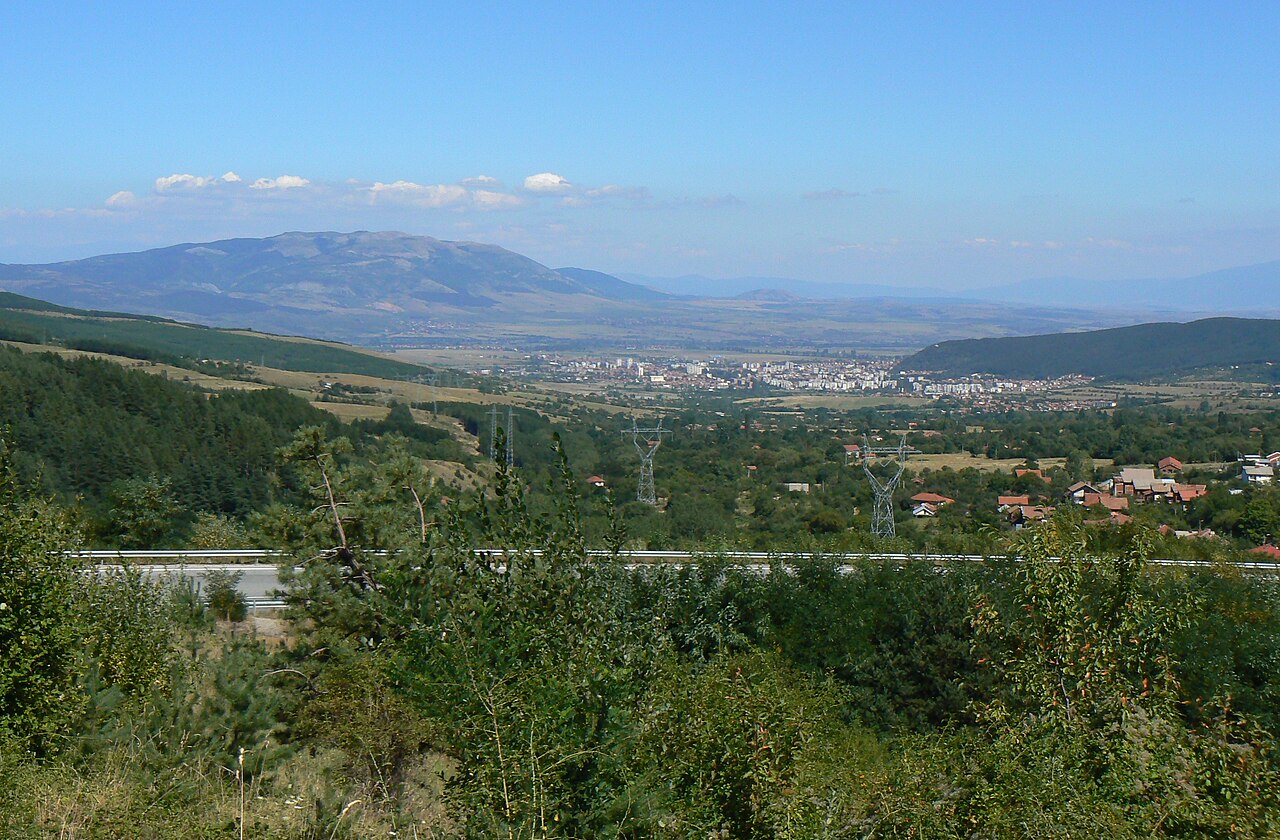
Peshev died on 20 February 1973, out of public life and largely unthanked at home for decades. Kyustendil, a couple of hours west of Sofia, keeps his memory now. If you ever pass through, it is worth knowing whose town it is.