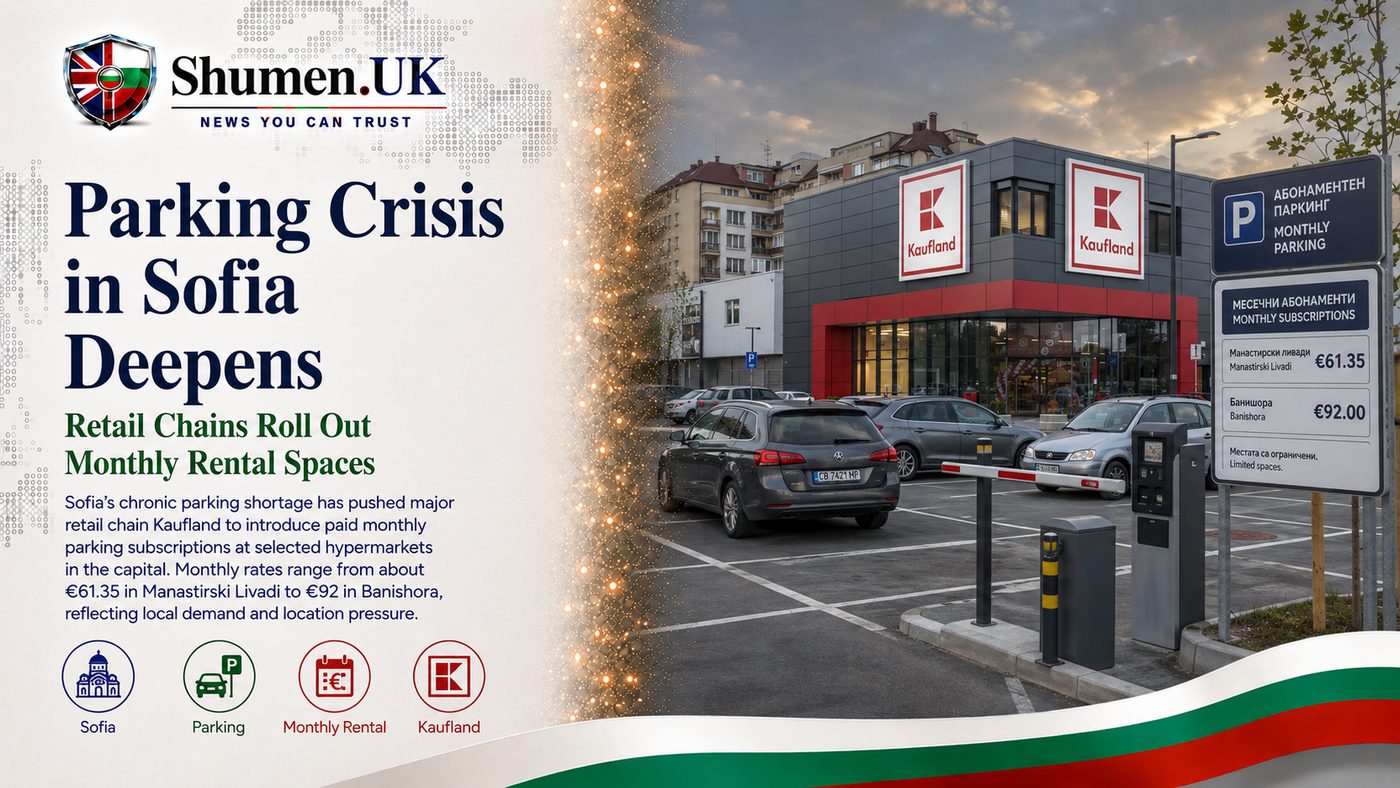
Kaufland, the German retail chain part of the Schwarz Group alongside Lidl, has launched a paid monthly parking subscription service at selected Sofia hypermarkets. The service is now live at five branches: Iztok, Ovcha Kupel, Manastirski Livadi, Izgrev, and Banishora. According to the company, the 46-space Iztok lot sold out within hours, though this claim has not been independently confirmed.
Anyone who's circled a Sofia residential district at 7pm already knows the problem. Kaufland has now monetised it.
How the System Works
Customers reserve a space by scanning a QR code at the store, logging in with a Google account or creating a new profile, and entering their vehicle registration number. The space is then tied to that specific vehicle for the duration of the contract. Payments are made online via bank card, Google Pay, or Apple Pay, with fees calculated proportionally based on the remaining days of the month.
Contracts run until the end of each calendar month, regardless of purchase date. Renewals or new subscriptions can be bought during the final week of the month, and the system sends automatic email reminders seven days before expiry to prompt users to extend.
Pricing and Demand
Monthly prices vary by location, reflecting local parking pressure. Manastirski Livadi costs €61.35 per month, while Banishora reaches €92. Kaufland reports that demand has been strongest in residential neighbourhoods where finding a free space has long been difficult, with early sign-ups exceeding expectations in some locations.
The company states the service is intended to make parking more predictable and easier to manage in densely populated areas.
What This Means for British Expats
British expats living in or visiting Sofia's residential districts should be aware that certain Kaufland hypermarkets now allocate parking to monthly subscribers. Casual shoppers may find fewer spaces available during peak hours, particularly at stores in high-demand neighbourhoods like Iztok and Banishora. The shift reduces the pool of spaces available to walk-in customers, a practical concern for anyone who cannot afford or does not want a monthly commitment.
The system is straightforward for users comfortable with digital payments and QR codes. British expats accustomed to UK supermarket parking regimes will find the process familiar, though the monthly subscription model is less common in British retail. The vehicle registration requirement prevents space-sharing, so families with multiple cars will need multiple subscriptions.
For short-term visitors or those in Sofia for less than a month, the system may not be cost-effective. Contracts run to the end of the calendar month regardless of purchase date, and fees are calculated proportionally. If you buy on 20 June, you pay for the remaining 10 days, but you'll need to renew or purchase a new subscription for July. Standard hourly or daily parking may be cheaper for stays under a week.
British expats should also note that the system ties vehicle registration to personal digital accounts (Google or Kaufland profiles), which may raise data privacy considerations for users unfamiliar with such arrangements. If you're uncomfortable with linking vehicle details and payment methods online, traditional parking remains available at other locations.
The Broader Context
Kaufland's move is part of a wider pattern among Sofia retailers. Multiple stores in the city are experimenting with similar parking subscription models, reflecting a commercial response to insufficient municipal parking provision and growing vehicle ownership.
Whether this eases or exacerbates the overall parking shortage depends on how many spaces were previously available to casual shoppers versus how many are now locked behind subscriptions. The service is clearly filling genuine demand, but it also means fewer spaces are available to walk-in customers. The impact on residents who cannot afford or do not want a monthly subscription is a practical concern worth monitoring as the model spreads across the city.