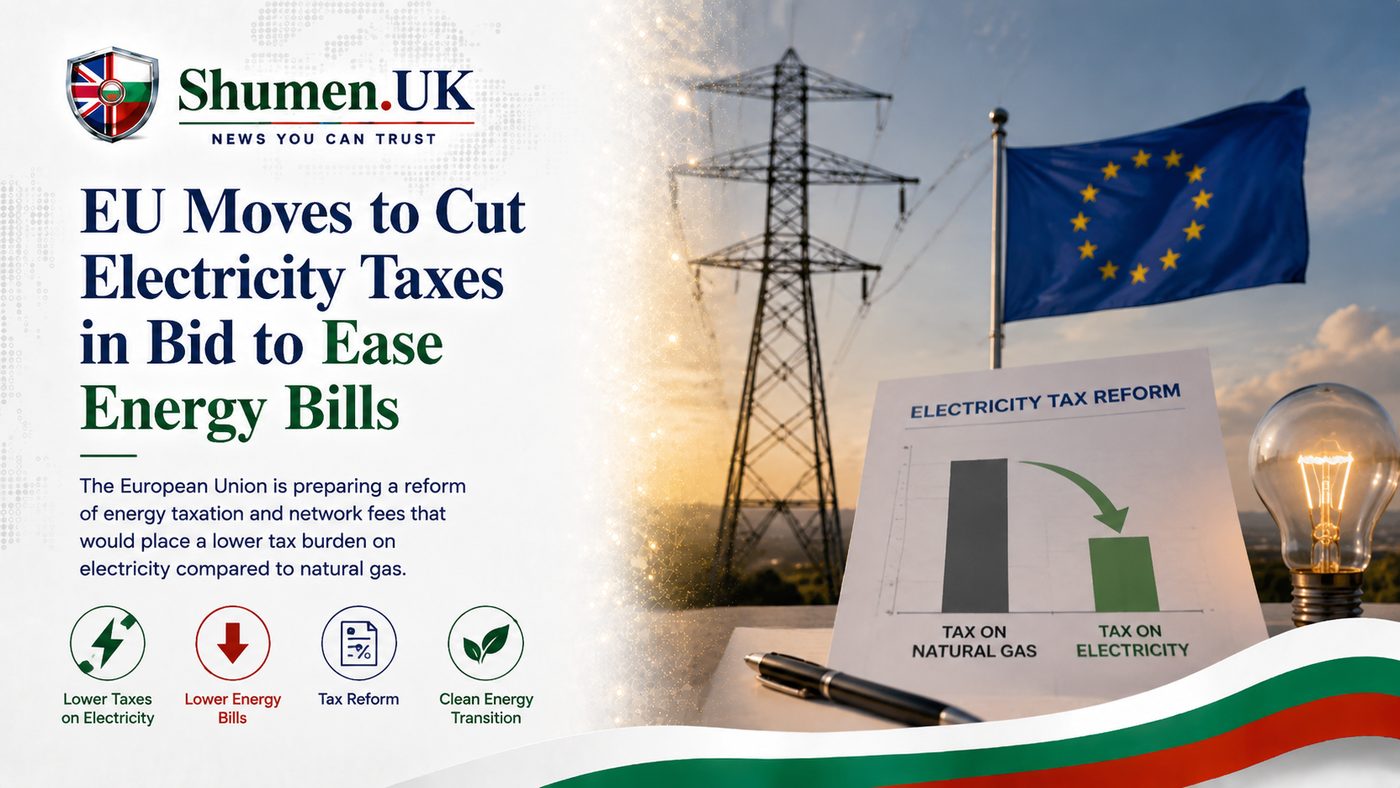
The European Union is preparing a reform of energy taxation that would require member states to apply lower tax rates to electricity than to natural gas, according to a draft proposal reported by Reuters. The move is intended to reduce household energy bills and accelerate the shift from fossil fuels to low-carbon electricity across transport, industry, and heating.
Anyone tracking energy policy will recognise the pattern: Brussels sets the framework, national governments retain control over exact rates, and the hope is that price signals nudge behaviour in the desired direction. This proposal does exactly that, forcing a structural tilt toward electricity while leaving capitals free to decide how far below gas the electricity rate should sit.
Why the EU Is Pushing This Now
The draft stresses urgency, stating that swift action is necessary "to reduce household bills and the EU's dependence on fossil fuels," as reported by Reuters. Energy prices across the bloc have been under pressure, with the source material noting disruptions linked to the Iran conflict and its impact on oil and gas supplies, though this connection is reported by Reuters rather than independently confirmed elsewhere.
The goal is to strengthen the competitiveness of electric vehicles, heat pumps, and other low-carbon technologies by narrowing the price gap between electricity and gas. Oil and natural gas still dominate in key sectors. By making electricity relatively cheaper through the tax system, the EU hopes to make electrification the economically rational choice for households and businesses.
Anyone who has been to a Zorniya supermarket in Bulgaria lately will have noticed electricity prices have barely budged despite rising gas tariffs. This proposal aims to make that gap official policy across the EU.
Smart Meters and Off-Peak Pricing
The proposal also targets smart metering. The EU aims for at least half of electricity consumers to be equipped with smart meters by 2030, enabling households to track consumption in real time and benefit from off-peak pricing schemes. The text states: "Consumers of electricity grids should change their habits in a way that is favorable to the system, by adapting their energy consumption or redirecting it to times and places where the cheapest sources of energy are available."
Network charges, which fund the operation and modernisation of electricity infrastructure, currently account for roughly one quarter of an average EU household electricity bill, according to the proposal. The smart meter push is intended to give consumers the tools to shift usage away from expensive peak periods, reducing both their own bills and strain on the grid.
The UK had its own smart meter rollout, and the gap between target and reality was considerable. The 2030 target is ambitious.
What Needs to Happen for This to Pass
Any changes to taxation rules would require approval by EU lawmakers and a reinforced qualified majority in the Council, representing at least 72% of member states and 65% of the EU population. Some governments, however, argue that such reforms should require unanimity, warning that a lower threshold could set a precedent for rapid adoption of similar measures, EU diplomats told Reuters.
That is the sticking point. If unanimity becomes the requirement, the timeline stretches and the risk of a blocking minority increases. If the reinforced qualified majority holds, the proposal could move relatively quickly, at least by Brussels standards. This uncertainty makes any firm timeline difficult to predict.
The proposal is expected to be formally presented on 22 July 2026.
What This Means for British Expats
British expats in EU member states will see the effects if and when this reform passes. Household electricity bills should, in theory, become relatively cheaper compared to gas, though the actual savings will depend on how aggressively each national government lowers electricity tax rates. The smart meter rollout, if it reaches your member state on schedule, will give you more control over when you run appliances and heating, potentially cutting costs further.
For British expats in Bulgaria specifically, electricity prices are already among the lowest in the EU, but the relative tax treatment of electricity versus gas would still change. The practical impact depends on how the Bulgarian government implements the rule and whether the smart meter rollout reaches your area by 2030. Bulgaria's infrastructure record suggests caution on timelines, and the national government's discretion over implementation means the reforms could look quite different on the ground than on paper in Brussels.
For anyone tracking EU energy policy as a guide to what might happen in the UK, this is worth noting. Brussels is betting that tax incentives can shift consumption patterns and accelerate electrification. Whether that works in practice depends on how much cheaper electricity becomes and whether households actually change behaviour in response. It is worth remembering that the UK itself is outside this system, though energy market dynamics and cross-border trade mean EU policy shifts can still have ripple effects.