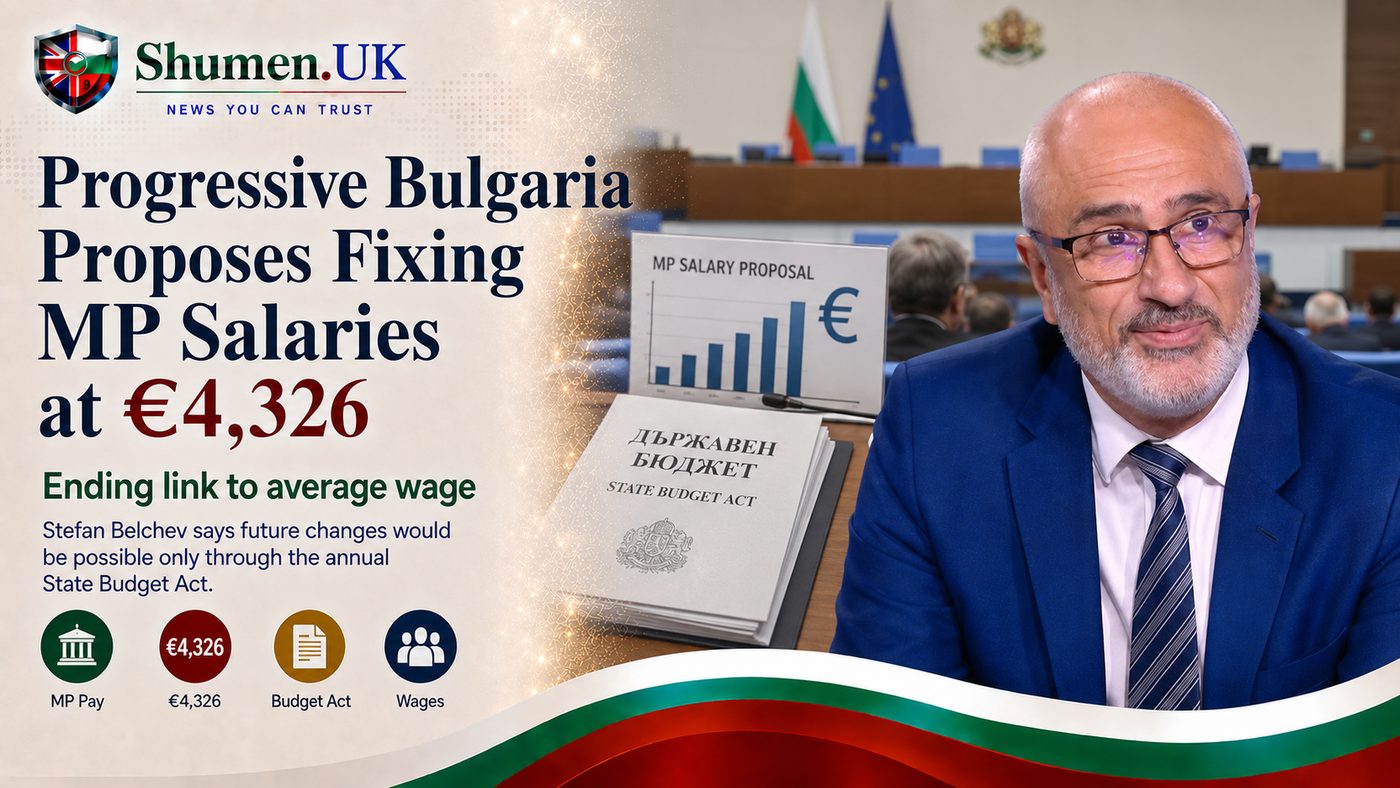
Bulgaria's ruling Progressive Bulgaria coalition has tabled a proposal to fix MPs' salaries at €4,326 per month, ending the automatic link between parliamentary pay and the national average wage. Stefan Belchev, an MP and member of the parliamentary budget and finance committee, told bTV on 28 May that future adjustments would require explicit approval through the annual State Budget Act, though this procedural detail has not been independently confirmed outside the party's statements.
"With this proposal, we are practically fixing salaries at one level," Belchev said, adding that the aim is to bring predictability and stability to MPs' pay.
Under the current system, MPs' salaries rise in line with shifts in Bulgaria's average wage. The new mechanism would replace that automatic indexation with a static figure, requiring a budget vote for any change. Conversations in Sofia kafene this week have turned to the proposal, with more than one diner noting that €4,326 is a figure few expect to rise without considerable fuss.
Procedural Reforms to Follow
Alongside the salary freeze, Progressive Bulgaria also plans changes to the National Assembly's rules of procedure. Belchev said the reforms are designed to restore what he called normal functioning and improve legislative efficiency. "In recent years, the parliament has been more of a show than a place for creative actions," he stated.
Opposition parties have criticised the procedural changes as an attempt to restrict parliamentary debate and limit MPs' speaking rights. Belchev rejected that interpretation. "I wouldn't say this is a form of suppression. The goal is to stop the harassment and the delay in work," he said.
Details of the planned procedural amendments have not been made public. The claims about both the reforms and their intent come solely from Progressive Bulgaria's statements, with no opposition or external viewpoints available in the source material.
What This Means for British Expats
The salary proposal itself has no direct impact on British expats in Bulgaria. However, parliamentary efficiency affects the pace at which legislation moves. Delays in the National Assembly have in the past slowed administrative reforms, including changes to residency procedures and tax rules. If the procedural reforms do reduce legislative gridlock, the knock-on effect could be faster processing of bills relevant to foreign nationals.
Progressive Bulgaria, the coalition led by Prime Minister Rumen Radev, won a majority in the April 2026 parliamentary election, the country's seventh snap vote since April 2021. The government has framed both the salary freeze and the procedural changes as responses to public frustration with political instability and corruption.