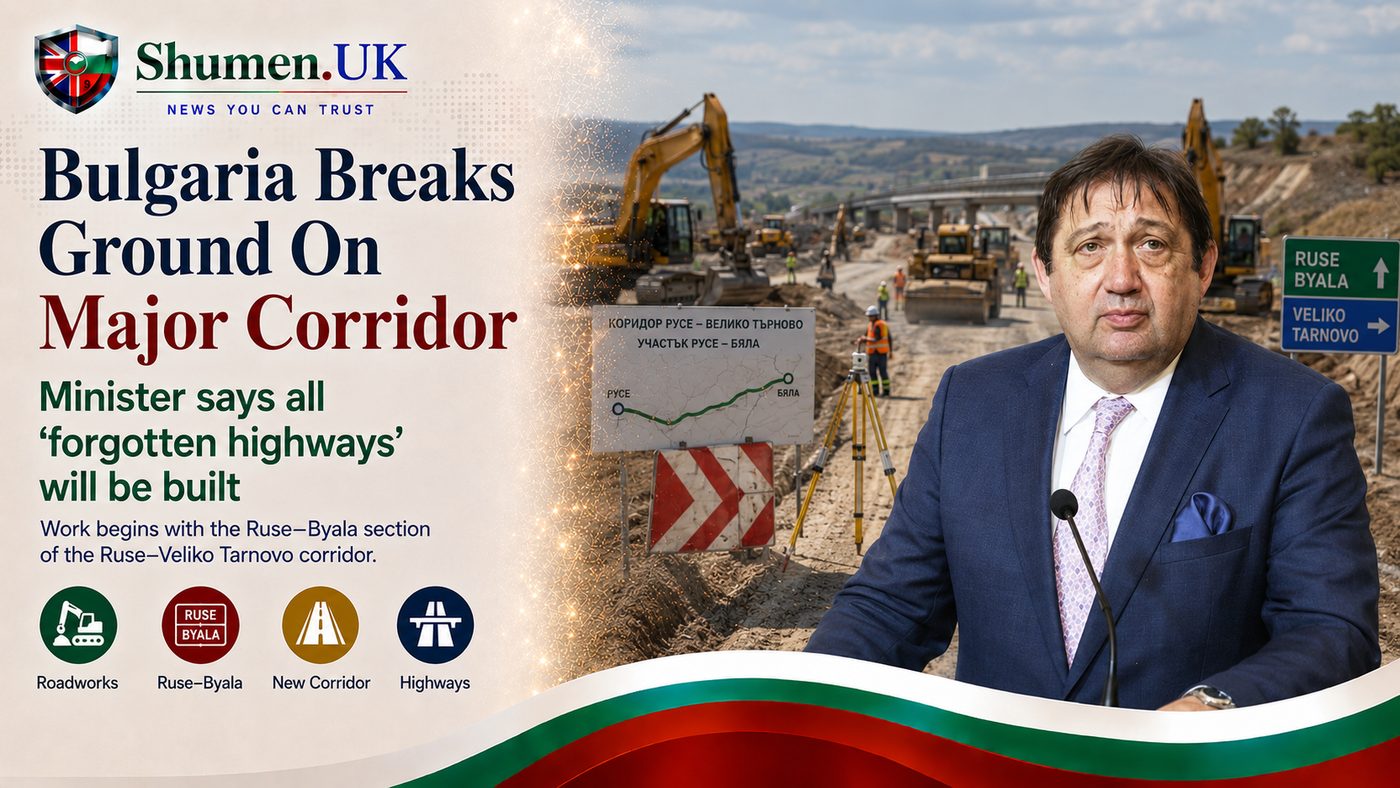
Bulgaria broke ground on the Ruse to Byala motorway section on Wednesday, launching what Regional Development Minister Ivan Shishkov is calling the "forgotten highways" programme. The preparatory work, including detailed development plans, expropriation conditions and commissioned technical designs, was completed three years ago. Construction didn't start. Until now.
Shishkov made his frustration plain at the ceremony. "We are launching the construction of the forgotten highways. For the Ruse to Byala section, the procedures were prepared three years ago, but the actual construction did not begin," he said. The minister described the moment as a shift from symbolic ribbon-cutting to tangible delivery, the most important stage of infrastructure work. Commuters along other Bulgarian motorways have long shaken their heads waiting for similar promises to materialise.
What It Is and Why It Matters
The Ruse to Byala stretch, along with the Byala bypass, carries a combined price tag of approximately €525 million in European and national funding. It is part of the Ruse to Makaza corridor, a key link in the EU's Trans-European Transport Network (TEN-T), the continent-wide system designed to connect member states and facilitate seamless cross-border movement of goods and people.
The TEN-T framework aims to eliminate bottlenecks, improve safety and reduce journey times across Europe. Bulgaria's highway projects sit within this wider infrastructure strategy, linking Romania via the Danube crossing at Ruse, down through Bulgaria to Greece and Turkey. The European Commission's Bulgaria representative, Yordanka Chobanova, emphasised the project's strategic importance, noting it forms part of this critical network with a 2029 completion target.
"The Ruse to Veliko Tarnovo motorway is more than infrastructure. It is an investment in connectivity, opportunities, and Bulgaria's future within the European transport system," Chobanova said.
Timeline and Delivery
Contractors have assured Shishkov the Ruse to Byala section could be completed by the end of 2029, possibly earlier if construction progress remains steady. That is contractors' assurance rather than independently tracked milestones, and Bulgaria's infrastructure delivery record suggests caution. Other sections of the Ruse to Veliko Tarnovo corridor, including the stretch toward Veliko Tarnovo itself, are still in earlier planning stages, some without finalised development plans.
The government intends to accelerate planning and construction across multiple highway projects simultaneously. Shishkov suggested future highway developments could be structured through concession models, with the state responsible for planning, expropriation and documentation, leaving construction and operation to private partners. This is a policy intention, not yet implemented.
Cross-Border Links
Shishkov said discussions with Romania regarding a third Danube Bridge are expected to continue. He framed the broader highway programme as catching up on infrastructure planning that, in his view, should have been developed years earlier. Renewed cooperation with EU partners and neighbouring countries would be essential for completing transport links across key European corridors, he added. Cross-border infrastructure in the Balkans has historically been complex and slow-moving, requiring sustained diplomatic and logistical coordination.
The groundbreaking ceremony on 28 May was attended by European Commission representatives, regional authorities, local municipalities and construction companies. A religious service was also conducted as part of the official launch, a customary but secondary aspect to the real indicator: actual construction start.
What This Means for British Expats
For British people living in Bulgaria or considering the move, improved motorway connectivity means shorter, safer journeys across the country and into neighbouring states. The Ruse corridor will eventually link the Danube crossing at Ruse with Greece and Turkey, reducing travel times for anyone moving goods or travelling overland through the Balkans.
British businesses engaged in trade or supply chains across Southeastern Europe could benefit from improved logistics efficiency. For British tourists travelling overland through Bulgaria, the infrastructure upgrades promise better road safety and smoother journeys on routes that currently remain functional but slow.
The current road network in northern Bulgaria works but crawls. A modern motorway changes that calculation. The 2029 timeline is contractors' assurance rather than independently confirmed progress tracking, and Bulgaria's history of stalled highway projects suggests tempering expectations. That said, the funding is in place, the plans are approved, and the diggers are now on site. That is further than most stalled Bulgarian highway projects have reached in the past decade.