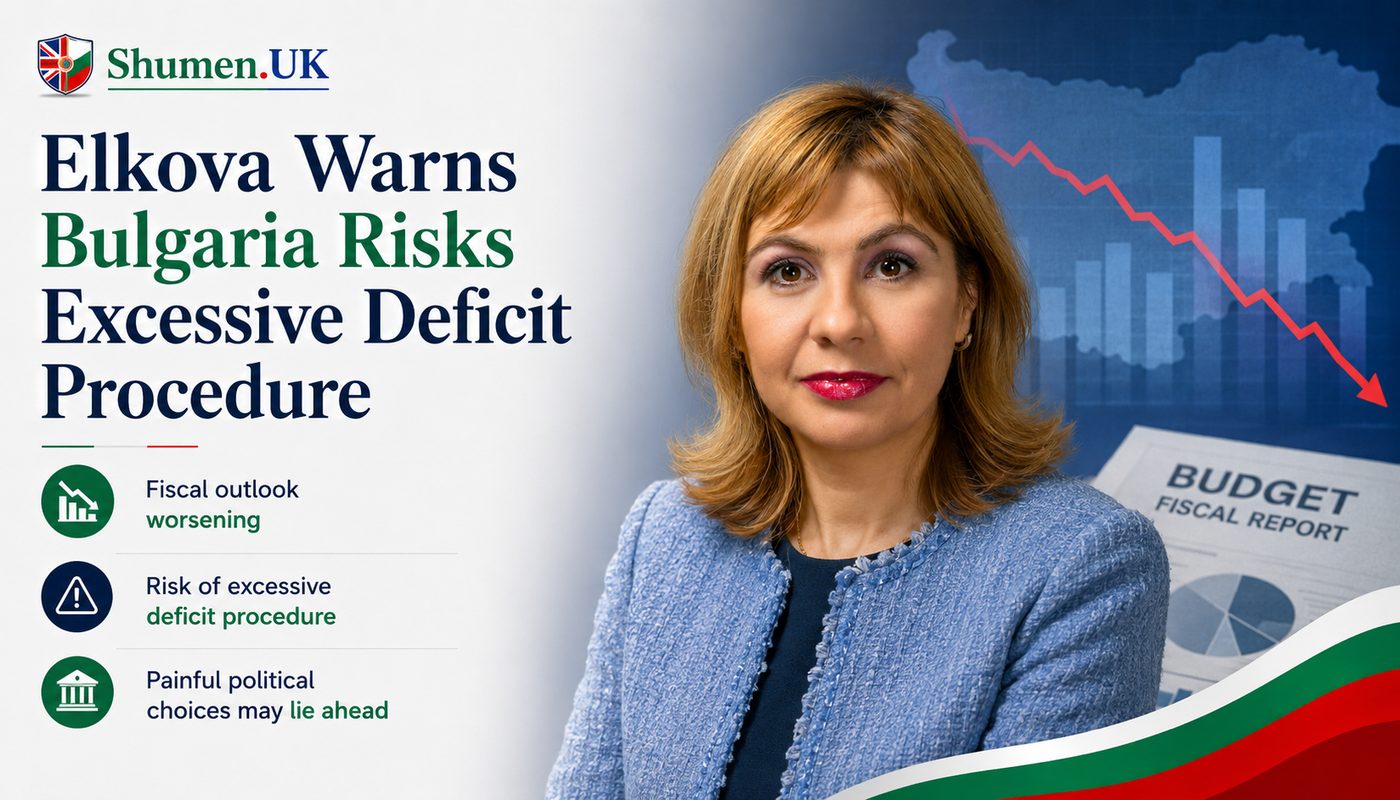
Bulgaria may breach the European Union's 3% budget deficit threshold by the end of 2026, according to former Deputy Finance Minister Lyudmila Elkova, potentially triggering a formal excessive deficit procedure. The assessment represents an expert warning about fiscal risks rather than a confirmed outcome.
Speaking to Bulgarian National Radio on 12 May, Elkova warned that the country's fiscal position is deteriorating and that opportunities to reduce the deficit during 2026 are limited. She argued that most corrective measures would require legislative changes likely to provoke social tension.
"We are in danger of entering an excessive deficit," Elkova said, describing the scenario as "particularly disappointing" given Bulgaria's earlier fiscal discipline and the difficult reforms carried out in previous decades.
What This Means for British Expats
Bulgaria's fiscal health affects economic stability and investor confidence, factors that matter to British nationals living in or doing business with Bulgaria. An excessive deficit procedure imposes EU oversight and typically requires spending cuts or tax rises that can affect public services, wages, and business conditions.
British expats in Bulgaria cannot vote in Bulgarian elections but remain exposed to policy changes arising from fiscal pressures. Budget cuts could affect infrastructure investment, healthcare quality, and administrative services. Social tensions over austerity measures, if they materialise, could also affect day-to-day life in Bulgaria. British business owners and investors should monitor the situation for potential impacts on the investment climate.
What an Excessive Deficit Procedure Means
The EU's Stability and Growth Pact sets a 3% of GDP ceiling for annual budget deficits. Member states that breach this threshold can face an excessive deficit procedure, which involves formal monitoring, corrective action plans, and in theory financial penalties, though sanctions have rarely been applied in practice.
Elkova stressed that entering such a procedure would not be catastrophic if the government acts quickly. She called for a medium-term fiscal strategy lasting three to five years, focused on cutting spending, improving revenue collection, and gradually stabilising the budget.
However, she noted that success would require a stable parliamentary majority and a full four-year government term, political conditions Bulgaria has struggled to maintain in recent years.
Bulgaria's Fiscal Record
Elkova, a former member of the Bulgarian National Bank's Executive Board, recalled the period when Bulgaria implemented strict financial measures under International Monetary Fund oversight, eventually achieving budget surpluses.
"We tightened our belts, repaid everything, and ended up being an excellent example," she said. "Now we are once again moving down a negative path, which is unpleasant and offensive."
According to Elkova, spending has permanently exceeded revenue since 2025, creating an ongoing structural imbalance. "It is not a disaster, but the picture is not optimistic," she said.
The National Statistical Institute reported in April that Bulgaria's government debt for 2025 reached €34.6 billion, corresponding to 29.9% of GDP. While this remains among the EU's lowest debt ratios, the trend of rising deficits is causing concern among economists and former officials.
Wage Policy Risks
Elkova also warned against across-the-board salary increases, arguing they could deepen both inflationary and budgetary pressures. "Raising wages can be like pouring gasoline on a fire," she said, while acknowledging that some sectors still require pay rises.
At the same time, she said there are people receiving what she described as "cosmic wages" that should be reviewed as part of a broader reassessment of public spending.
The government will face pressure from both trade unions and employers' organisations, she noted. "The unions will defend their members, employers will defend theirs, but the government is the one that carries responsibility for what happens in the country."
What Happens Next
Elkova argued that the first task for Bulgaria's leadership is to establish the true state of public finances and present an honest assessment. She warned that delaying corrective action could make the fiscal imbalance significantly harder to control in the future.
Official deficit data for 2026 has not yet been published. Elkova's warnings represent expert assessment of current trends rather than confirmed figures. Whether Bulgaria actually breaches the 3% threshold will depend on government action over the remainder of the year.
Inflation has also been rising sharply. Simeon Dyankov, chairman of Bulgaria's Fiscal Council and another former finance minister, said in early May that inflation needs to be addressed immediately, pointing to a recent monthly spike above 7%.