The Cut
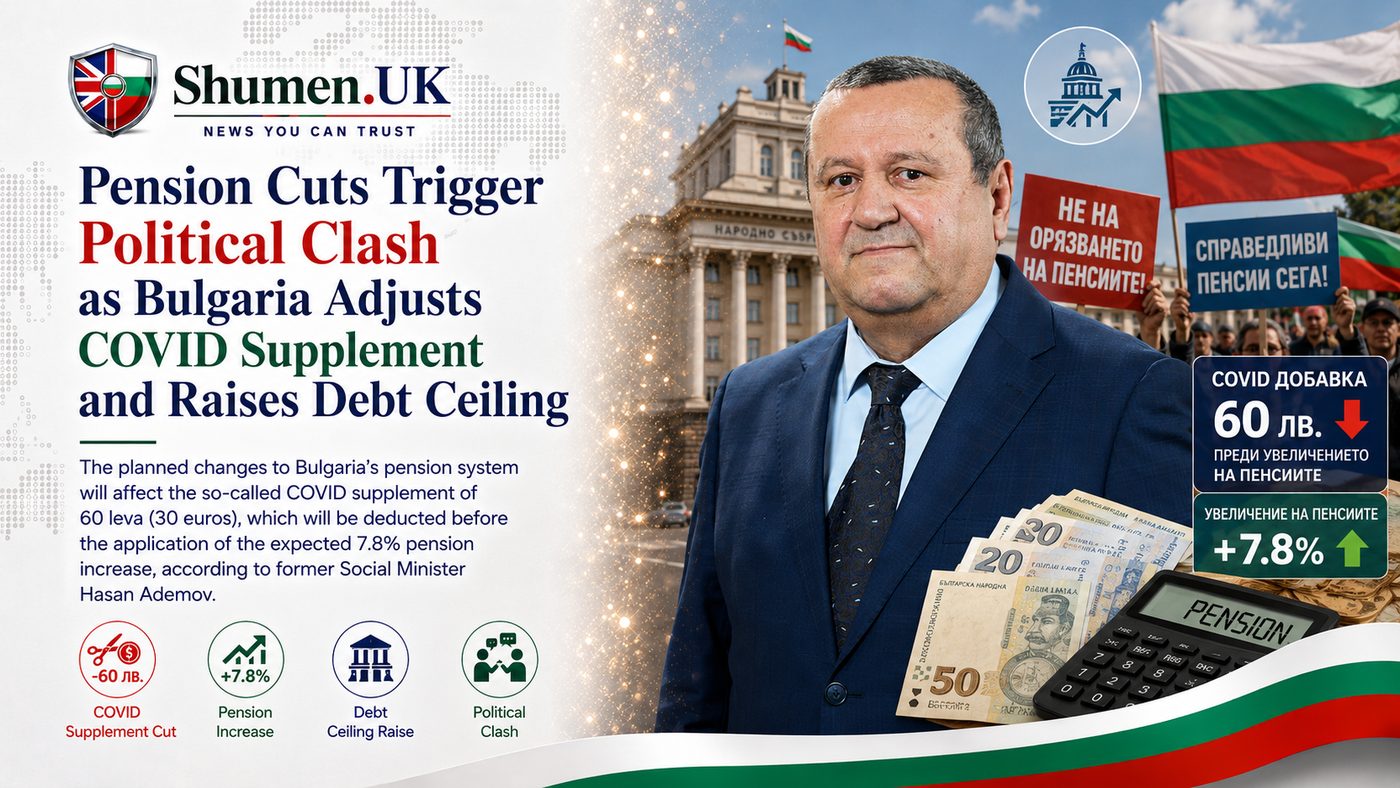
Bulgaria's government has confirmed that new pensions granted from July 1, 2026, will no longer include the 60 leva (€30) COVID supplement, a policy introduced during the pandemic. The change leaves current pensioners unaffected but removes the supplement from the base used to calculate indexation for anyone whose pension is approved after that date.
According to former Social Minister Hasan Ademov, who explained the measure, the supplement will be excluded before applying Bulgaria's expected 7.8% pension increase under the Swiss rule indexation system. The supplement was temporary relief when pensioners were isolated and healthcare costs spiked. Now, as fiscal pressure mounts, the government is quietly taking it back for anyone not yet drawing a pension.
The fiscal impact is modest. Ademov estimates the change will save around €12 million over six months, a small sum measured against Bulgaria's multi-billion euro social security budget. By May 2026 the Bulgarian Ministry of Finance had projected a budget deficit of approximately €2.5 billion, equivalent to 2% of GDP. Pension reform is being framed by the government as part of broader fiscal consolidation, though critics argue the scale of the saving does not justify the symbolic cost.
This information is primarily sourced from Novinite.com. Independent confirmation from official Bulgarian government sources or other outlets is currently limited.
Opposition Questions Fiscal Justification
Former Finance Minister Asen Vassilev, now a leading opposition voice, rejected the government's reasoning. He argued that existing fiscal reserves are sufficient to cover spending under Bulgaria's Recovery and Resilience Plan without needing to raise the debt ceiling or chip away at pensioners' expected increases. In his view, the policy sacrifices pensioners for optics rather than necessity.
"Instead of helping pensioners reach the poverty line, they are cutting a small amount from each pension increase," Vassilev said, adding that the government should focus on revenue growth and broader fiscal priorities. He noted that budget revenues have risen strongly, and suggested alternative budget reallocations rather than leaning on pensioners.
Bozhidar Bozhanov of the Yes, Bulgaria party described the companion measure (a reduction in party subsidies) as equally symbolic. He argued that subsidy cuts have limited budgetary impact relative to the proposed new debt and act primarily as political cover. Real reforms in public finance management, healthcare funding, and the interior system remain unaddressed, according to Bozhanov.
Coordination Issues and Frequent Revisions
Ademov acknowledged that fiscal consolidation discussions have lacked coordination and are often revised shortly after being announced. The pension supplement change is part of a package that includes the debt ceiling increase and party subsidy reductions, but the political messaging has been inconsistent. Petar Vitanov from Progressive Bulgaria highlighted that some measures received heavy emphasis while others, including the pension adjustment itself, were underplayed.
If you walk into a pension office in Sofia or Plovdiv this week, the atmosphere is confusion rather than outrage. The clerks behind the counters are fielding questions they cannot yet answer with certainty. The policy is announced, the date is set, but the administrative detail has not caught up. This is normal in Bulgaria. The politics happens first, the paperwork later.
What This Means for British Expats in Bulgaria
For British expats receiving or applying for Bulgarian pensions, the July 1 deadline is the practical detail. Anyone already drawing a pension will continue to receive the full €30 supplement. Anyone whose pension is approved from July 1 onward will not, and the base amount used for future increases will be correspondingly lower.
The change does not affect UK state pensions or private pensions paid into Bulgaria. The Bulgarian pension system operates under the Swiss rule, which adjusts pensions annually based on a weighted formula combining inflation and wage growth. Removing the supplement before applying the indexation percentage reduces the starting figure but does not eliminate the increase itself. The net effect for new pensioners is a lower base and correspondingly smaller annual adjustments.
British expats uncertain about their pension status or eligibility should contact their local pension office directly or reach out to British community groups in Bulgaria for guidance. The administrative rollout is ongoing, and clarity may take weeks.
Fiscal Pressure and Deficit Context
Bulgaria's projected €2.5 billion budget deficit by May 2026 has intensified political debates over debt and spending. The government faces pressure over a possible excessive deficit procedure, and spending growth remains the primary concern despite rising revenues. Ademov argued that vulnerable groups should not face reductions in already acquired rights, acknowledging the political and social sensitivity of such changes.
Critics have raised broader concerns about governance practices and inefficiencies in state institutions, warning of continued lack of accountability in key sectors. The political row over pension supplements sits within this wider context of fiscal management, with opposition parties united in their criticism of the government's approach but divided over alternative priorities.
What Happens Next
The policy takes effect from July 1, 2026. The government has not indicated any review or phase-out plan beyond that date. Opposition parties have signalled continued criticism, but no formal legislative challenge has been tabled. Fiscal consolidation measures, including the debt ceiling increase, are proceeding through parliament alongside the pension changes.
The debate reflects broader tensions in Bulgarian politics over fiscal priorities, debt management, and the distribution of austerity burdens. The supplement cut is small in fiscal terms but symbolically significant, and the political fallout suggests the issue will remain contested.