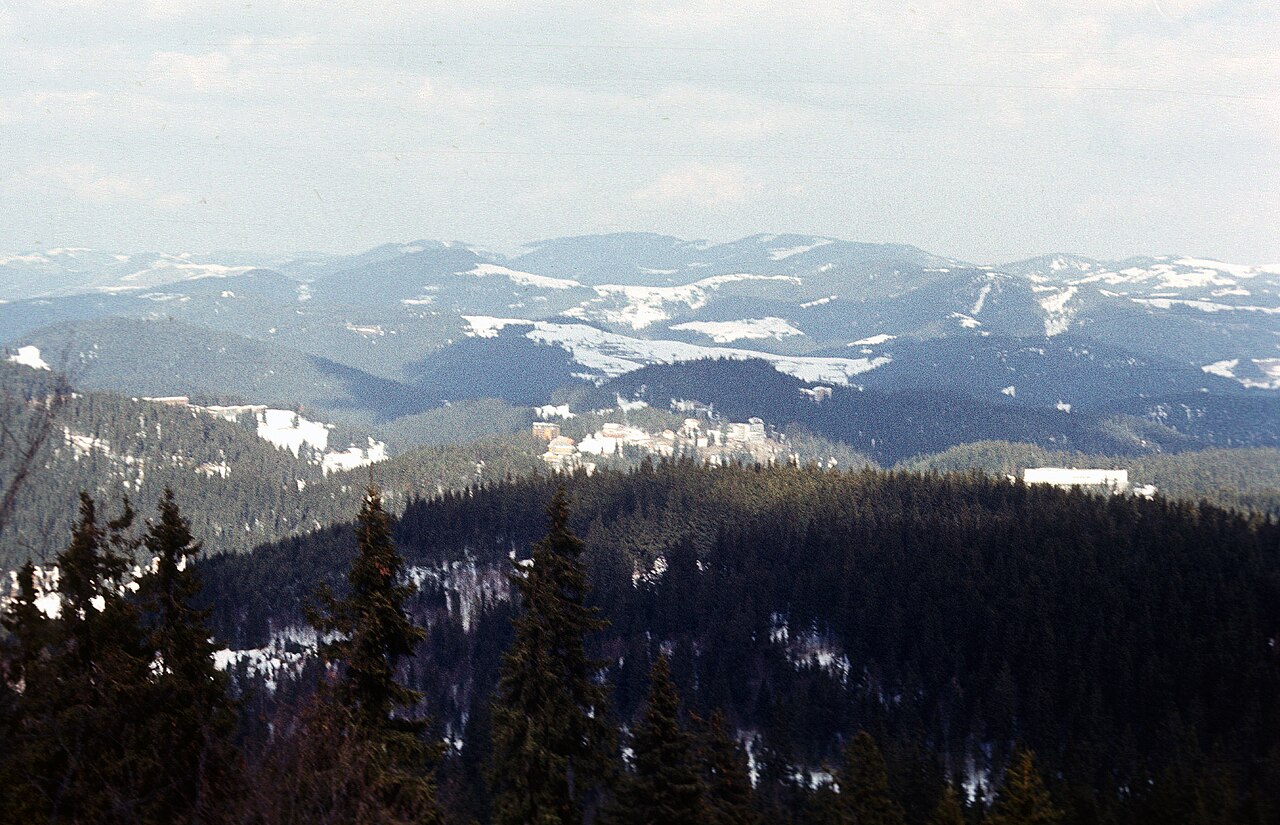
300 Metres of Road Torn Away in Hours
Around 300 metres of the Pamporovo-Smolyan road were destroyed by a massive landslide on 2 May 2026, severing gas pipelines and electricity lines and forcing authorities to close the route for at least a year. No casualties were reported.
The collapse began around 8 a.m. when cracks 30 to 40 centimetres wide appeared in the asphalt. Traffic was immediately halted. Within hours, a large volume of earth gave way and slid down the slope, taking hundreds of trees and electricity poles with it.
To clarify the scale: the broader affected zone covers roughly 5,000 to 6,000 square metres, but the section of road completely wiped out measures nearly 70 metres. The remaining 230 metres remain structurally compromised and unsafe.
Regional governor Zarko Marinov confirmed no state of emergency has been declared, though the affected section has been secured and closed to traffic. Alternative routes remain operational via Stoykite and the Rozhen pass, though both are under strain.
Infrastructure Damage and Gas Supply Halted
The landslide severed a gas pipeline and local gas connection, forcing supply to be cut in the area. Eng. Marin Kushev, head of the Regional Road Administration, confirmed damage to both the gas pipeline and power grid during the collapse.
Utility services in Pamporovo remain largely unaffected. Electricity and water supply are functioning normally. Temporary solutions for the gas pipeline are already underway, with restoration expected quickly.
An abandoned multi-storey concrete structure near the landslide site has raised concerns about structural instability. No formal risk assessment has been released yet, so the extent of the hazard remains unclear.
Ground Still Shifting, Fresh Cracks Appearing
Smolyan mayor Nikolay Melemov warned that the ground is still shifting. "The processes are not over yet, so we are all worried," he said, urging immediate action and faster institutional response given the limited time window before seasonal changes.
Fresh cracks have appeared in nearby sections of road, suggesting the landslide may still be expanding. Monitoring equipment will be installed to track ground movement over the coming months before any permanent reconstruction begins.
Authorities confirmed no intervention can begin until the terrain stabilises. A dam located above the landslide is under close observation. While officials say the dam remains stable and unchanged, independent confirmation is not yet available and monitoring is ongoing.
Repairs Expected to Take One to Two Years
Regional Minister Nikolay Naydenov estimated that restoring the destroyed road could take between one and two years due to the complexity of the terrain. Exact timelines remain uncertain and depend on terrain stabilisation and further assessments.
Experts including geologists and engineers have inspected the site to assess whether temporary stabilisation measures or a provisional bypass road can be constructed. Kushev said the most urgent task is determining whether a bypass route is feasible, though this depends on safety evaluations and potential impacts on nearby properties.
Marinov described the event as "the largest landslide in Bulgaria, possibly even in the Balkans." He attributed it to excessive moisture and natural geological processes typical for the Rhodope Mountains, rather than any issues with the nearby dam. This is not human error or negligence, but a natural hazard endemic to the region.
Alternative Routes Under Pressure
Vehicles are being rerouted through Pamporovo-Stoykite-Smolyan and via the Rozhen pass, though both routes are narrow mountain roads less suited to high traffic volumes. Police patrols have been deployed to manage traffic flow and prevent congestion. Public transport operators have adjusted their routes accordingly.
Access to Pamporovo resort is currently maintained, but the alternative routes add significant travel time. The Rozhen pass route, in particular, may prove challenging for coaches or larger vehicles, which is worth noting if you're planning to hire anything bigger than a hatchback.
What British Visitors and Homeowners Need to Know
Pamporovo is one of Bulgaria's most popular ski and summer resorts, attracting many British tourists. The road closure and long-term repairs will affect access and may disrupt travel plans for visitors heading there later in 2026 or into 2027.
If you're planning a trip to Pamporovo, check route information before you set off. The resort itself remains accessible, but journey times via the Rozhen pass are longer and the road is narrower than the destroyed main route. Allow extra time and exercise caution, particularly in poor weather. If you've booked a coach transfer from Sofia or Plovdiv, confirm with your operator that they're using the Stoykite route, which can handle larger vehicles more comfortably.
British holiday home owners or investors in the Rhodope region should note that alternative routes remain open but are under strain. Ground instability is ongoing, and further closures or restrictions cannot be ruled out. The fresh cracks appearing near the site suggest the landslide is still expanding, meaning the situation remains volatile.
For updates on route status, check the Regional Road Administration's announcements or consult local Bulgarian traffic information sources. British expat community groups in Bulgaria may also provide timely on-the-ground updates.
The Rhodope Mountains are geologically prone to landslides, particularly after periods of excessive moisture. This event, while unusually large, is part of a longer-term pattern in the region. Similar upland areas in the UK, such as the Lake District or Scottish Highlands, face comparable challenges with terrain stability and road closures after heavy rainfall, so the dynamics here won't be entirely unfamiliar to anyone who's driven the A591 after a wet winter.
The source material does not cover broader impacts on local residents (displacement, economic effects beyond infrastructure damage) or the full tourism and economic consequences for Pamporovo, so those angles remain unclear at this stage. As more information becomes available, we'll update accordingly.