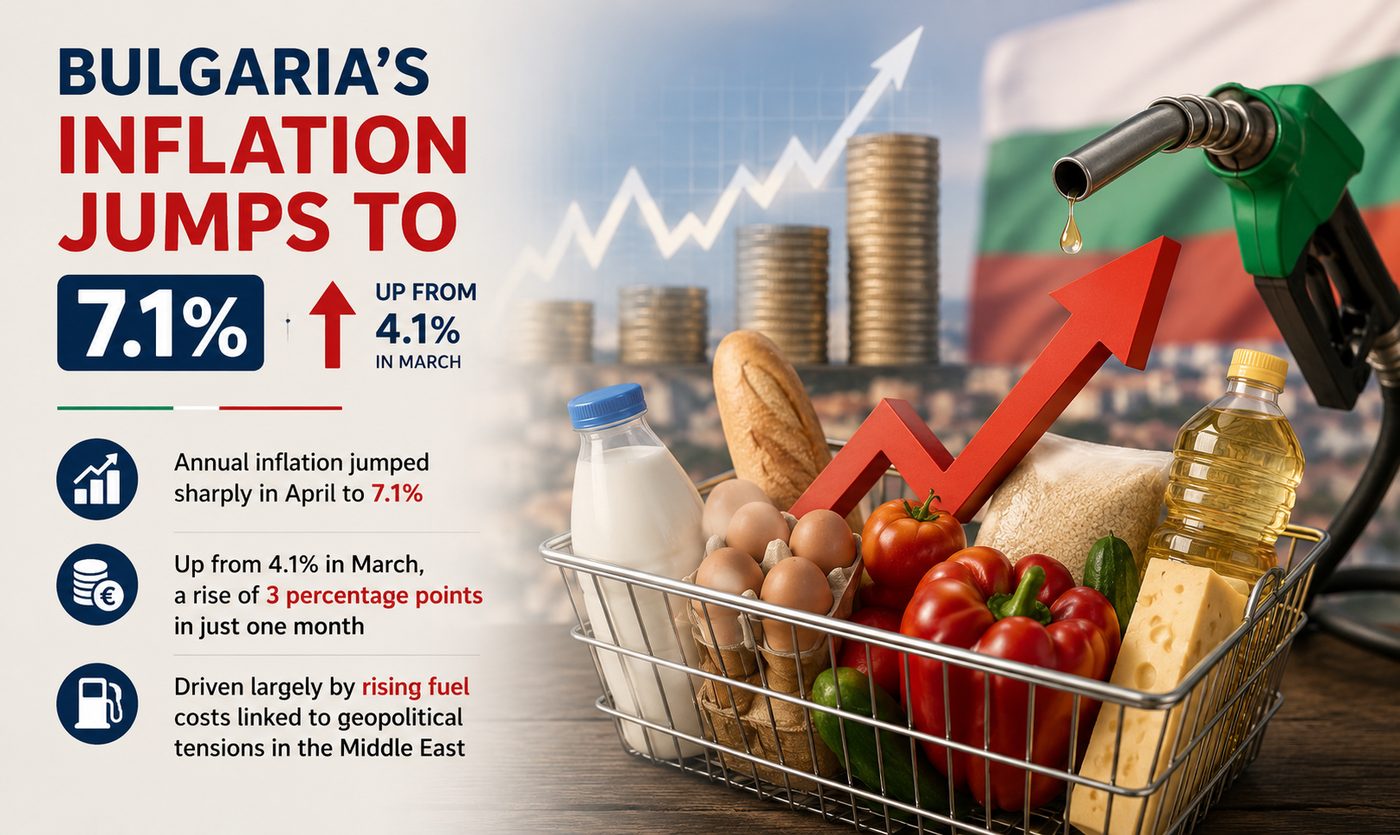
Inflation Jumps Three Points in a Month
Bulgaria's annual inflation rate surged to 7.1% in April 2026, up from 4.1% in March, according to preliminary figures from the National Statistical Institute. The three-percentage-point increase in a single month marks the highest inflation reading since August 2023.
Consumer prices rose 2% in April alone, an unusually strong monthly gain that exceeds the 2% annual inflation target typically set by central banks. The acceleration follows a period of relative stability earlier in the year, when inflation had eased to around 3.5%.
Transport and Fuel Lead the Surge
The transport sector recorded the steepest price increases, with costs rising 7.2% in March and another 10.6% in April. This brought annual transport inflation to 20.3%, making it the fastest-rising component of the consumer basket.
Fuel costs showed the most dramatic increases within the category. Diesel prices are now 45% higher than a year earlier, while petrol has risen 21.6%. The NSI data shows these increases concentrated over the past two months, a pattern analysts link to ongoing conflict in the Middle East disrupting global oil markets. This is attributed expert analysis rather than directly proven causation, though the timing of price spikes matches the period of heightened tensions.
Airfares jumped 23% month-on-month based on preliminary estimates, contributing further to transport sector inflation. Courier services also recorded notable increases, though smaller in scale.
Broader Price Pressures Spread Across Sectors
Inflation is accelerating beyond transport. Entertainment remains among the highest categories, with prices up 17% year-on-year. Hotels and restaurants follow with a 9.3% annual increase.
A notable shift occurred in clothing and footwear, which had previously shown declining prices but surged 7.9% in April alone. Food prices, which account for the largest share of household spending, increased 2.1% in a single month, the strongest pace since early 2025.
Official Forecasts Point to Persistent Pressure
The Bulgarian National Bank projects average inflation of 3.7% in 2026 under its baseline scenario, rising to 4.9% if energy disruptions persist. The Ministry of Finance anticipates inflation around 4.3% for the year.
Harmonized inflation, the EU-comparable measure, stood at 3.4% in April according to preliminary NSI data.
The Vienna Institute for International Economic Research forecasts Bulgaria's economic growth will slow to 2% in 2026, down from 3.1% in 2025. The institute expects inflation to average 4.5% this year, about one percentage point higher than the previous year. Despite weaker momentum, Central and Eastern Europe is still expected to grow faster than the eurozone average.
Government proposals for price controls to contain inflation are under debate among economists and business representatives, with warnings that increased regulation could push prices even higher. Details of these proposals and their likely effects remain uncertain.
What This Means for British Expats
British expats in Bulgaria face sharply higher living costs, particularly for fuel and transport. The 45% diesel increase and 21.6% petrol rise will affect daily commuting, especially for those in rural areas or smaller towns with limited public transport. If you're driving regularly between Sofia and the coast, or anywhere beyond the tram lines, you're feeling this.
Airfare inflation of 23% month-on-month makes travel between Bulgaria and the UK considerably more expensive. The 2.1% monthly rise in food prices adds pressure to household budgets, while the 7.9% jump in clothing and footwear costs reverses a period of declining apparel prices that many British nationals had been quietly banking on.
For British nationals running businesses in Bulgaria, transport cost inflation of 20.3% year-on-year will increase logistics and supply chain expenses. The broader inflation picture, with entertainment up 17% and hotels and restaurants up 9.3%, affects both personal spending and business operating costs.
The Bulgarian National Bank's forecast range of 3.7% to 4.9% inflation suggests price pressures will remain elevated through 2026, depending on how long energy market disruptions continue. If you're planning budgets or weighing investment decisions, factor in persistent inflation rather than a quick return to the 3.5% levels seen earlier this year.