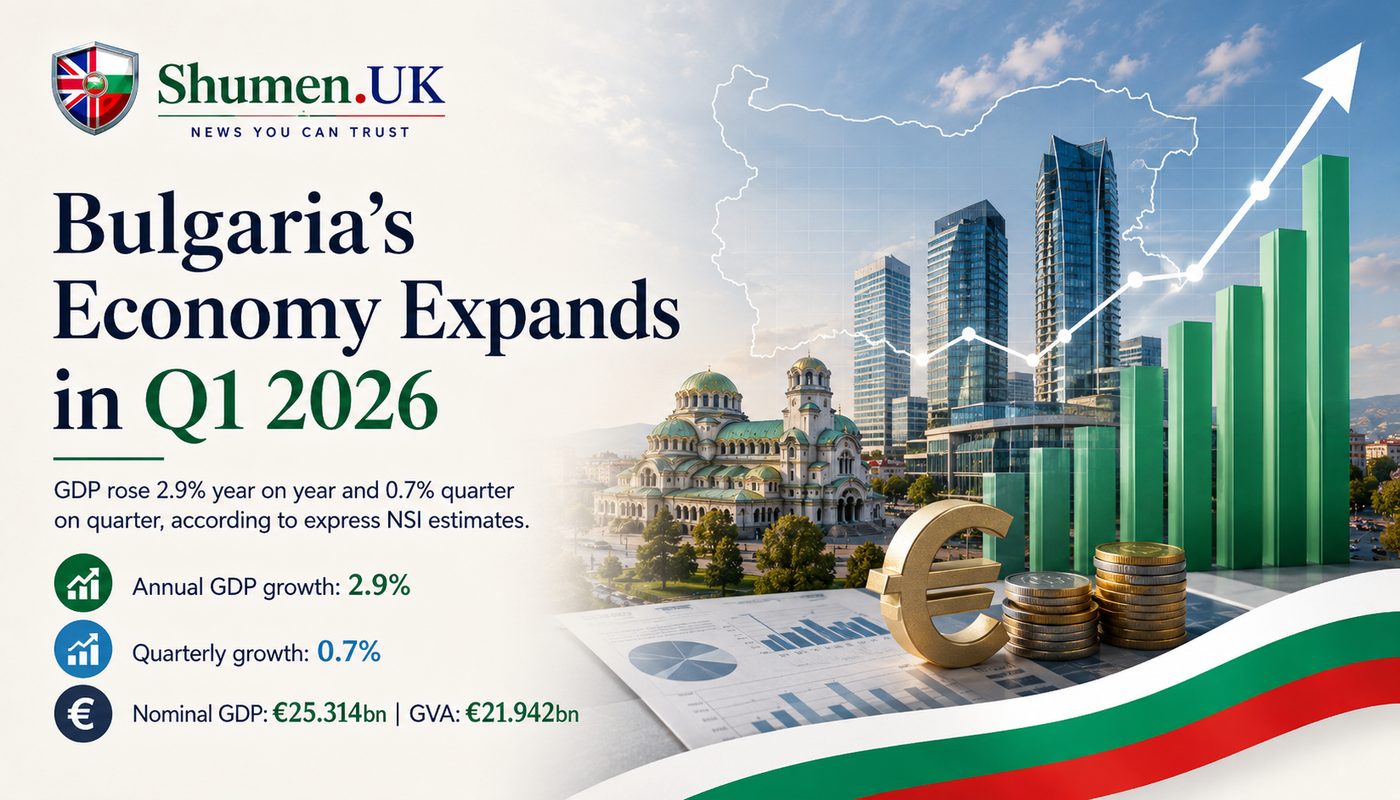
Bulgaria's economy expanded by 2.9% year-on-year in the first quarter of 2026, according to preliminary estimates from the National Statistical Institute. The figures, reported by state news agency BTA, show GDP increased by 0.7% compared with the final quarter of 2025 on a seasonally adjusted basis.
The NSI data are express estimates and may be subject to revision in future releases.
Nominal GDP reached €25.3 billion in the January to March period, with gross value added standing at €21.9 billion. The growth was heavily weighted toward domestic demand, with household consumption and investment both recording strong gains.
Consumption and Investment Drive Growth
Final consumption accounted for 88.8% of GDP, amounting to €22.5 billion. Gross capital formation reached €4.4 billion, representing 17.3% of economic output.
On an annual basis, final consumption increased by 6.9%, while gross fixed capital formation recorded stronger growth of 8% compared with the same quarter a year earlier. Gross value added rose by 2.6%.
The quarterly figures show that growth was driven mainly by a 1.4% rise in final consumption and a 1.1% increase in gross fixed capital formation, both seasonally adjusted.
Trade Balance Remains Negative
The external balance remained negative during the period, with imports growing faster than exports. Export growth was modest at 0.4%, while imports expanded more sharply by 6.4% year-on-year.
The widening trade deficit reflects Bulgaria's strong domestic demand pulling in imports, even as export performance remained weak. The gap between import and export growth could put pressure on Bulgaria's external accounts and currency stability, particularly if the trend continues through the year. Consumption-driven growth, while indicating economic vitality, carries risks if it persistently outstrips productive capacity and export competitiveness.
Ministry Forecasts 2.6% Annual Growth
The Ministry of Finance, in its latest Spring Macroeconomic Forecast, projects real GDP growth of 2.6% for the full year 2026. The first quarter figure of 2.9% suggests the economy is performing slightly above that forecast, though the government's projection accounts for potential headwinds later in the year.
Bulgaria's growth rate compares favourably with many eurozone economies in early 2026, though the composition of growth (heavily reliant on consumption and investment rather than exports) raises questions about sustainability. The trade deficit and rising imports may constrain future expansion if external demand does not improve or if fiscal pressures mount.
What This Means for British Expats
For British nationals living in Bulgaria, strong household consumption growth suggests a buoyant domestic economy, which may translate into job opportunities and wage growth in consumer-facing sectors. However, the surge in imports and domestic demand could also feed into higher inflation, particularly for goods and services reliant on foreign supply chains. That means higher prices at the checkout and potentially increased costs for everyday essentials.
The widening trade deficit may put pressure on the euro (Bulgaria adopted the euro on 1 January 2026), though the country's participation in the eurozone should provide currency stability that was less certain under the lev. British investors with Bulgarian assets or business interests should monitor fiscal policy responses, particularly if the government faces pressure to tighten spending or adjust taxation to manage the external balance.
The Ministry of Finance's 2.6% growth forecast for the full year suggests officials expect moderation from the first quarter's pace. British expats and businesses should watch for any signs of slowing momentum or fiscal adjustments that could affect cost of living or operating conditions. A consumption boom that outpaces export growth is heartening in the short term but less reassuring if it persists without productivity gains to support it.