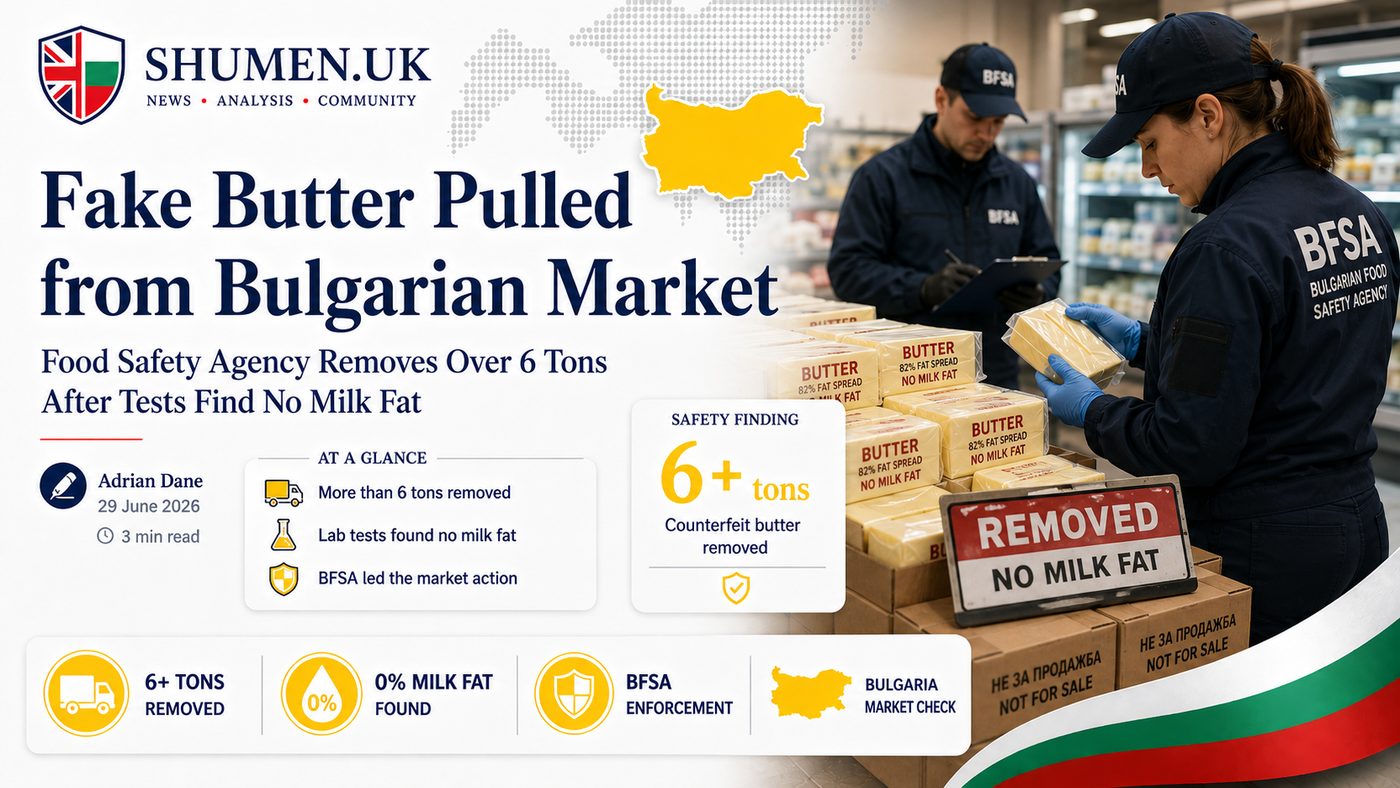
The Bulgarian Food Safety Agency has seized and destroyed more than six tonnes of fake cow butter after laboratory tests found it contained no milk fat at all. The product, sold under the label Deutsche Markenbutter, was marketed as dairy butter but turned out to be over 95% non-dairy fat: a mixture of palm, coconut and palm kernel oils, soybean and sunflower oils, and lard.
The agency's Food Control Directorate, headed by Dr Kremena Stoeva, opened the case after a tip-off triggered inspections and testing that exposed the gap between what the label claimed and what was in the pack. Inspectors then ran nationwide checks at more than 70 retail sites, retested samples, and pulled the product from shelves before destroying it.
"We seized about six tons of butter. I think we covered a large part of the market, but I cannot say for sure that we have identified all the places the product reached," Stoeva said. Two companies have been fined more than 300,000 euros between them, and the file has gone to investigators.
If you have spent any time food shopping here, the broad shape of this will be familiar. Bulgarians have long learned to squint at the back of a pack of "sirene" or "butter" for the words that mean vegetable fat, and the gap between what a wrapper promises and what is inside it is an old national sport. What makes this case sting is the label the fraudsters chose to hide behind.
The cruel irony of the label
Deutsche Markenbutter is not a made-up name. It is a genuine German quality seal, roughly "German branded butter", and in Germany it sits at the top of the tree. To carry it, butter must be at least 82% milk fat, made in approved dairies, and checked every month by official inspectors on everything from taste and texture to water content. It is, in other words, one of the most tightly policed butter marks in Europe.
So the shopper reaching for this pack was not chasing a bargain. They were paying for the reassurance of a premium German standard, and getting a block that was almost entirely palm oil and pork fat. That is the part the headline figure misses: the fraud worked precisely because the label was one most people would never think to doubt.
Lard in the butter: a problem the wire skipped
Buried in the list of substitute fats is one word that deserves its own line: lard. A product sold as butter that actually contains pork fat is not just mislabelled, it is a genuine problem for anyone who avoids pork on religious or ethical grounds. For Muslim and Jewish shoppers, and for vegetarians who would never knowingly buy lard, an undeclared animal fat in something labelled dairy butter is exactly the kind of substitution that consumer law exists to stop. The source named the lard but did not draw out who it actually affects.
How much got through, and for how long
The BFSA was honest that it could not put a precise figure on how much was sold before the investigation began, and that paperwork on the product's origin and distribution was missing. Separate reporting by the Bulgarian outlet Capital filled in some of that gap: it put the fraud at roughly a year and four months in operation, with at least 77,000 packages reaching consumers, distributed by a company it named as Class Food, with a second firm, Alpha SD, said to lack proper documentation and to have used inconsistent batch numbers.
Investigators suspect old packaging or labels from a previous producer were reused to mislead buyers. Missing paperwork, recycled labels, a referral to the prosecutor: this reads less like a one-off labelling slip and more like a deliberate, sustained operation. The reassuring half of the BFSA's message is that the rest of the brand checked out. Stoeva said every other batch and size tested contained genuine milk fat and met the rules, and that no similar problems had turned up in other dairy products.
What this means for British expats
The practical bottom line is calmer than the headline. The fake butter has been withdrawn and destroyed, so it should not be on shelves now, and the agency said short-term consumption poses no immediate danger, though it warned that prolonged intake of such products could be harmful, particularly for people with cardiovascular conditions. Our health guide covers finding English-speaking medical help if you are ever worried about something you have eaten.
The harder lesson is about trust. The BFSA itself admitted you are unlikely to spot this kind of swap by eye: the giveaways are texture and taste, because vegetable-fat blocks melt faster and soften more easily than real butter. The surest defence is the dull one, reading the ingredients list rather than the front of the pack, whether you shop at the supermarket or the local pazar. And if you do believe you have been sold something falsely labelled, the consumer-protection commission (KZP) is the body that takes the complaint, as set out in our money and consumer rights guide.
None of this should put anyone off Bulgarian dairy, which at its genuine best is very good. It is a reminder that the country's food-safety system mostly works after the fact, catching the fraud and destroying the stock, rather than before the pack reaches your trolley.